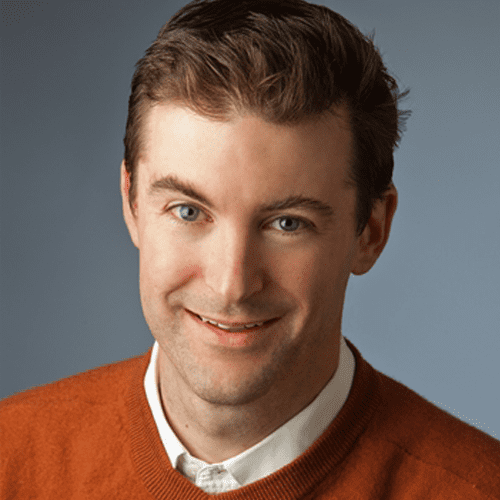
Marco Cuturi is a Research Scientist at Apple ML Research in Paris and Professor of Statistics at CREST-ENSAE, Institut Polytechnique de Paris. His work bridges machine learning , optimal transport , and optimization , with applications in time-series analysis , kernels , and multiresolution methods . He has held academic roles at Kyoto University and Princeton University, and previously worked in the financial industry. Research Interests: Optimal transport theory and computational methods Kernel design for structured data and histograms Time-series alignment and soft-DTW Entropic regularization in optimization Applications to computer vision and genomics Teaching: Cuturi has taught courses on linear optimization at Princeton, geometric methods in machine learning at Kyoto, and scientific English. He has also organized machine learning summer schools in Kyoto, Les Houches, and other international venues. Recent Trends: His 2024-2025 publications focus on entropic optimal transport solvers, disentangled representation learning via Gromov-Monge gaps, and applications to text-to-image diffusion models. Collaborative work with institutions like Google Research, MIT, and University of Tokyo highlights his interdisciplinary impact.
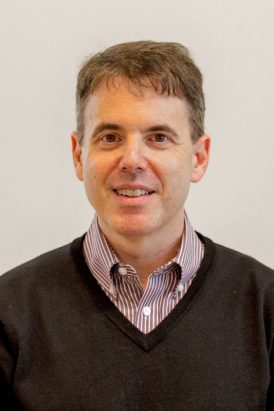
Sean Z. Qian is a Professor at Carnegie Mellon University with joint appointments in the Department of Civil and Environmental Engineering (College of Engineering), Heinz College of Information Systems and Public Policy, and the Department of Electrical and Computer Engineering. He directs the Mobility Data Analytics Center (MAC) and founded the spinoff firm TraffiQure Technologies in 2020 to commercialize AI/ML technologies in infrastructure and mobility services. His academic credentials include: 2012: MS in Statistics, Stanford University 2011: Ph.D. in Civil Engineering, University of California, Davis 2006: MS in Civil Engineering, Tsinghua University 2004: BS in Civil Engineering, Tsinghua University Qian's research centers on large-scale dynamic network modeling and data analytics for multi-modal transportation systems, applying AI, network flow theory, and economics to address aging infrastructure challenges. His work spans Infrastructure Resilience under climate stress, Urban Systems Interdependency , and Intelligent Transportation Systems , with emphasis on sustainable network optimization and cyber-physical-social system integration. Key methodologies include remote sensing, transportation economics, and digital twin technologies for infrastructure management. His notable scientific awards include: NSF CAREER Award (2018) Greenshields Prize, Transportation Research Board (2017) Research funding has been secured from diverse sources: Federal Agencies: National Science Foundation (NSF), U.S. Department of Energy (DOE), U.S. Department of Transportation (DOT) State Agencies: Pennsylvania Department of Transportation (PennDOT), Maryland Department of Transportation (MDOT), Pennsylvania Department of Community and Economic Development (DCED) Industry Partners: IBM, Honda Research Institute, Fujitsu Inc. Foundations: Benedum Foundation, Hillman Foundation As Director of the Mobility Data Analytics Center (MAC), Qian leads collaborations with Fujitsu on digital twin technologies for infrastructure management in southwestern Pennsylvania, while actively mentoring graduate students and recruiting Ph.D. candidates with strong quantitative backgrounds for Fall 2025.
Claes Beckman is a part-time senior researcher in the Division of Communication Systems at KTH Royal Institute of Technology. He was appointed Professor in antenna systems at KTH in 2013 and previously served as Professor in microwave engineering at HIG in 2004. Beckman was the founding director of the research center Wireless@kth in 2001. His career spans over 40 years across academia, government, and industry, with significant contributions to wireless communications, antenna systems, and spectrum management. Beckman's research interests focus on wireless communications systems, particularly antenna design, MIMO technology, 5G networks, and mobile connectivity solutions for challenging environments including transportation systems and remote regions. His work bridges theoretical research with practical implementation, resulting in numerous patents, products, and industry standards. Recent research has examined satellite-cellular integration, high-reliability communication for transportation systems, and private 5G networks for industrial applications. Analysis of his recent publications reveals a strong focus on practical wireless communication challenges, with particular emphasis on real-world implementation issues in mobile and transportation environments. His work spans theoretical antenna design, field measurements, network performance analysis, and spectrum policy considerations, reflecting his unique position at the intersection of academic research, industry application, and regulatory frameworks. Beckman has advised close to 100 M.Sc. students, 7 licentiate, and 3 PhD theses throughout his career. He has secured over $30 million in research funding through multiple Vinnova, KK-foundation, and SSF projects, including serving as KTH's Principal Investigator for the EU FP7 METIS project on 5G. His industry experience includes roles as a microwave design engineer for Ericsson and research manager for Allgon Systems. Beckman serves as a technical expert for Icomera AB and technical consultant to Proan t AB. He has significant regulatory experience, having served on international standards committees (ETSI and 3GPP) and consulted for the Swedish National Regulator for Post- and Telecommunications (PTS), the Swedish Competition Authority, Swedavia, Teracom, and the Swedish Armed Forces.
Jason Ostanek is an Assistant Professor at Purdue University's School of Engineering Technology and Environmental and Ecological Engineering. He directs the Applied Thermofluids Laboratory and Powertrain Technology Laboratory, focusing on battery safety and thermal management systems. Ph.D. in Mechanical Engineering from Penn State M.S. in Mechanical Engineering from Penn State B.S. in Mechanical Engineering from Virginia Tech His research explores energy storage systems, thermal runaway phenomena, heat transfer mechanisms in Li-ion batteries, fluid dynamics, and internal combustion engine thermal management. He has developed analytical models for battery degradation, thermal abuse simulations, and innovative cooling strategies for large-scale energy systems. Key publication trends show expertise in: Li-ion battery thermal runaway modeling Heat transfer in confined geometries Thermal management for energy storage systems Renewable energy forecasting Computational fluid dynamics applications Scientific awards include: 2020 Purdue Teaching Academy's Award for Exceptional Teaching and Instructional Support during the COVID-19 Pandemic 2020 SOET Outstanding Faculty in Engagement 2019 SOET Outstanding Faculty in Discovery 2015 NAVSEA Commander’s Award for Innovation 2013 ASME IGTI Young Engineer Travel Award 2007 DOD SMART Fellowship Recipient As director of Purdue's Applied Thermofluids Laboratory, he leads research on battery safety mechanisms, combustion dynamics, and thermal systems optimization. His work spans fundamental and applied research with industrial collaborators.
Dr. Andy Nguyen is a Senior Lecturer in the School of Engineering at the University of Southern Queensland. He holds a PhD from Queensland University of Technology (QUT), an MEng from the National University of Civil Engineering (NUCE), and a BEng from NUCE. His research focuses on structural health monitoring, integrating machine learning and deep learning techniques to assess infrastructure integrity. Key areas include damage detection in bridges, pavements, and buildings, as well as sustainable construction materials like bamboo. Nguyen leads projects such as the 'Next Generation Living Laboratory for Engineering Education and Engagement,' emphasizing real-world applications of technology in civil infrastructure. His work spans crack detection algorithms, finite element model updating, and vibration-based structural analysis. He collaborates on AI-driven solutions for autonomous vehicle object detection and smart maintenance planning. Nguyen’s contributions include over 50 peer-reviewed publications and active supervision of postgraduate research in composite materials and transport infrastructure. His research outputs highlight advancements in computational mechanics, sensor technologies, and data-driven methods for infrastructure resilience. Nguyen’s expertise bridges civil engineering challenges with cutting-edge machine learning, advancing both theoretical and applied solutions for sustainable and safe structures.
Elisa Riedo is a tenured Professor of Chemical and Biomolecular Engineering at New York University (NYU) Tandon School of Engineering, with joint appointments as Professor of Physics in NYU’s College of Arts and Science and as affiliated Professor of Mechanical Engineering at Tandon. She serves as Director of Faculty Development at NYU Tandon and has held prior tenured positions at Georgia Tech (2003–2015) and CUNY ASRC (2015–2018). Her academic career spans over two decades, with a Ph.D. in Physics from the University of Milano (2000) and postdoctoral work at EPFL. Her research focuses on nanotechnology , graphene and 2D materials , and thermal scanning probe lithography (tSPL) , with applications in biomedical diagnostics quantum electronics electromagnetic interference shielding mechanical reinforcement of materials She pioneered tSPL for sustainable nanofabrication and discovered diamene—a single-layer diamond structure from graphene under pressure. Her recent work involves transparent infrared electrodes using silver nanowires (2025) and self-organized graphene stacking domains for quantum technologies (2024). She has secured major grants from National Science Foundation , Department of Defense , and Army Research Office . Scientific honors include: 2023 NYU Tandon Excellence in Research Award 2013 American Physical Society Fellow 2005 CREA Innovation Award Membership in the Academy of Europe (2023) She contributes to editorial boards for journals like 2D Materials and Applications and advises companies such as Mirimus Inc. and SwissLitho AG .
Andrea Fumagalli is a Professor in the Department of Electrical Engineering at the Erik Jonsson School of Engineering and Computer Science , The University of Texas at Dallas. He earned his Ph.D. (1992) and Laurea (1987) in Electrical Engineering from Politecnico di Torino, Italy. Research Interests: All-Optical Network Architectures, Photonic Slot Routing, Wavelength Routing and Protection, Sensor Networks, Cooperative Wireless Networks, Network Optimization, Next Generation Internet (NGI), and Multi-hop Optical Networks. Education: Ph.D., Electrical Engineering, Politecnico di Torino (1992) Laurea, Electrical Engineering, Politecnico di Torino (1987) Key Research Trends: His recent publications focus on 5G networking, optical network automation, elastic optical networks, network reliability, and cross-layer optimization. He explores FPGA acceleration in 5G Low-PHY functions, live migration of containerized network components, and spectral fragmentation mitigation in EONs. Scientific Awards: Best Teaching Award, Electrical Engineering, UTD (2002) Best Thesis Award for Ph.D. Advisee Isabella Cerutti (2002) IEEE ComSoc Distinguished Lecturer Tour (2000) Best Paper Award (1999): 'An Optimal Design Algorithm for Photonic Slot Routing Networks Migrating to Optical Packet Switching' Advising and Grants: He advised Ph.D. student Isabella Cerutti. In 2001, he secured a $300,000 grant from FUNDACAO CPqD for optical network reliability research. He leads the Optical Networking Advanced Research (OpNeAR) Lab at UTD, collaborating on international projects like the Italian government-funded grid computing initiative (2002) and the OMEGA Test-bed for differentiated reliability. Laboratories and Teams: He directs the OpNeAR Lab , which develops tools for optical network emulation and reliability testing. His projects involve partnerships with institutions in Brazil (Unicamp), Sweden (KTH), Italy (Politecnico di Torino, Scuola Superiore Sant'Anna), and CNR/CNIT.
Philipp Otto is a Professor of Statistics and Data Science at the University of Glasgow. Previously, he was a Reader in Statistics and Data Analytics (2023–2024) and held a Junior Professorship in Big Geospatial Data at Leibniz University Hannover (2018–2023). He earned his PhD in Statistics (summa cum laude) from European University Viadrina in 2016 and a B.Sc. in International Economics, with study visits to Saint Petersburg State University. His research focuses on spatial and spatiotemporal statistics, environmetrics, network modeling, and machine learning applications. Education: PhD in Statistics (2016), European University Viadrina, Frankfurt (Oder) B.Sc. in International Economics (with study visits to Saint Petersburg) Research Interests: Philipp’s work centers on spatial statistics, spatiotemporal volatility modeling, environmental data analysis, and network processes. He develops statistical methods for geo-referenced and network data, with applications in climatology, finance, and environmental risk assessment. His contributions include advancements in GARCH models, spatiotemporal clustering detection, and statistical process monitoring for AI systems. Grants & Projects: He has secured €1,038,847 in research grants, leading projects on historical map time series analysis, agricultural air quality impacts, and high-dimensional spatial dependence structures. Industry collaborations include survival analysis for building information models. Awards: 2017 Fellowship to attend the Lindau Nobel Laureate Meeting (Economic Sciences) 2017 Best Presentation Award (Data Science, Statistics, and Visualisation) Teaching: He teaches statistics and data science across disciplines, including economics, engineering, and mathematics, at both undergraduate and postgraduate levels. Professional Activities: Editorial Boards: Environmetrics (2021), AStA Advances in Statistical Analysis (2020) Member of German Statistical Society (Treasurer, 2013)
Anne Staples is an Associate Professor in the Department of Mechanical Engineering at Virginia Tech, leading the Laboratory for Fluid Dynamics in Nature (FINLAB). Her research focuses on fluid mechanics in biological systems, medical fluid dynamics, and bioinspired engineering, leveraging computational modeling and microfluidic technologies to innovate in healthcare and engineering. Education: B.S. in Mechanical and Aerospace Engineering, Cornell University (2000) M.Eng. in Mechanical and Aerospace Engineering, Princeton University (2001) Ph.D. in Mechanical and Aerospace Engineering, Princeton University (2006) Postdoctoral Researcher at the Naval Research Laboratory (2006–2008) Research Interests: Her work spans bioinspired microfluidics, medical device design, and fluid dynamics in biological systems. Notable projects include developing pulse-driven micropumps for drug delivery and studying insect respiratory systems to inform engineering solutions. Publications: Over 50 peer-reviewed articles, focusing on topics like microfluidic systems, insect-inspired flow control, and hemodialyzer modeling. Recent work emphasizes wearable drug delivery and biomechanical innovations. Awards & Service: NIH Trailblazer Award (2024) Virginia Tech Dean’s Fellow (2023–present) Editorial Board Member, PLOS ONE and Scientific Reports (2021–present) Fulbright Scholar (2016) Grants & Collaborations: Leads a NIH-funded project to develop lightweight drug delivery devices. Collaborates with statisticians and biomedical engineers to simulate and optimize prototypes. Active in interdisciplinary teams at Virginia Tech and Georgia Tech. Labs & Teams: Directs the FINLAB, which integrates computational modeling, experimental microfluidics, and biological principles to address challenges in healthcare and environmental engineering.
Abraham D. Stroock is an Assistant Professor at the School of Chemical and Biomolecular Engineering, Cornell University, since 2003. He holds a B.A. in Physics (Cornell, 1995), M.S. in Solid State Physics (University of Paris, 1997), and Ph.D. in Chemical Engineering (Harvard, 2002). His research bridges microfluidics, biophysics, and sustainable energy. Education: B.A., Physics, Cornell University (1995) M.S., Solid State Physics, University of Paris VI/XI (1997) Ph.D., Chemical Engineering, Harvard University (2002) The Stroock Lab explores micrometer-scale chemical processes inspired by plant biology, focusing on liquid manipulation, negative-pressure water properties, vascular development in tissue engineering, and fluid mechanics in microsystems. Key technologies include microtensiometers and nanoporous membranes . His recent work (2025-2024) spans optical phenotyping using soft robotics, hydromechanical signaling in plants, tissue scaffolds for regenerative medicine, and advanced models for transpiration control. These studies integrate bioengineering, nanotechnology, and environmental science. Scientific Awards: Van Ness Lectureship (2010) Camille Dreyfus Teacher Scholar Award (2009) NSF CAREER Award (2008) MIT Technology Review TR35 (2007) ONR Young Investigator Award (2004) 3M Non-Tenured Faculty Award (2006) Beckman Young Investigator Award (2006) Dreyfus New Faculty Award (2003) He has led projects on superheated loop heat pipes , phosphorescent oxygen sensors , and synthetic tree-on-a-chip systems. His teaching includes advanced biomolecular engineering (ChemE 7770), and he contributes to policy through the Chemistry and Chemical Biology (CBE) Policy Committee.
Jan Engelhardt serves as Assistant Professor in the Department of Wind and Energy Systems at the Technical University of Denmark (DTU), specializing in e-mobility and prosumer integration within power and energy systems. His work directly contributes to UN Sustainable Development Goals through grid modernization and renewable energy integration. His research focuses on electric vehicle-grid integration , with core expertise in battery energy storage systems, DC microgrids, and virtual power plants. Key investigation areas include smart charging architectures for EV clusters, frequency response services, phase balancing techniques, and V2X management strategies. His experimental approach combines theoretical modeling with real-world validation of control systems for enhanced grid stability. Recent publications demonstrate a clear trend toward distributed control solutions for electric vehicle clusters, emphasizing user-centric scheduling while providing grid services. His work increasingly incorporates experimental validation of frequency control architectures and explores high-power reconfigurable battery applications for fast-charging infrastructure. Dr. Engelhardt actively supervises PhD candidates on projects including Hybrid Energy Solutions (EV charging and battery storage synergies) and Provision of Grid Services through EV Aggregation. He participates in major EU initiatives like EV4EU (Electric Vehicles Management for Carbon Neutrality in Europe) and GREAT (GRid Enhancement for Ancillaries in Tomorrow’s power systems), securing substantial research funding through Horizon Europe frameworks.
Navid Bayati is an Associate Professor at the University of Southern Denmark, affiliated with the Institute of Mechanical and Electrical Engineering and the Centre for Industrial Electronics. He leads the Control and Protection of Smart Grids (CAP-SG) group and focuses on renewable/hybrid power systems, microgrid protection, and grid code compliance. Education: Ph.D. in Power Systems & Microgrid Protection (2020, Aalborg University); M.Sc. in Power Systems (2017, Amirkabir University of Technology) His research spans renewable energy integration , transient analysis , grid interconnection , and digital twin applications . Recent work includes machine learning for carbon emission prediction, fault localization in DC microgrids, and supercapacitor resilience in hybrid systems. Collaborations include projects like IEA Wind Task 50 and RePoSys , addressing grid renovation, life cycle assessment, and digital twin resilience. His teaching portfolio covers power electronics , energy management , and microgrid control .
Mikael Rinne is an Associate Professor in the Department of Civil Engineering at Aalto University's School of Engineering. His research focuses on rock fracture mechanics and its applications in various engineering contexts including nuclear waste repositories, geothermal energy systems, and underground construction. His expertise spans time-dependent rock failure mechanisms, fracture propagation models, and rock mechanics applications in energy storage and disposal systems. His work has direct applications in projects with Posiva Oy (nuclear waste repository), St1 Deepheat (geothermal energy), and mining operations with companies like First Quantum Minerals. Rinne's research integrates advanced numerical modeling with field applications, particularly in Finnish crystalline bedrock conditions. He has contributed significantly to understanding fracture initiation and propagation in rock masses under various stress conditions, with particular emphasis on long-term stability considerations for deep underground structures. His scholarly work demonstrates strong connections between theoretical fracture mechanics and practical engineering applications, with a focus on ensuring safety and reliability in rock engineering projects. His research has evolved from fundamental fracture mechanics studies to application-focused investigations addressing contemporary challenges in energy and waste management. Rinne has supervised doctoral research in rock mechanics and collaborates with researchers specializing in photogrammetry, virtual reality applications, and energy storage systems, creating a multidisciplinary approach to complex rock engineering problems.
Fred Feinberg is the Joseph and Sally Handleman Professor of Marketing and Professor of Statistics (by courtesy) at the University of Michigan, where he is also an Affiliated Faculty member of the Center for the Study of Complex Systems. His work integrates advanced Bayesian methods with large-scale marketing data to illuminate how people make choices under uncertainty. Education Ph.D., Sloan School of Management, Massachusetts Institute of Technology (1989) Doctoral program in Mathematics, Cornell University (1983–84) S.B. Mathematics & S.B. Philosophy, Massachusetts Institute of Technology (1983) Research Focus Feinberg’s scholarship centers on discrete choice models that leverage real-world decisions to infer latent attributes such as demographics, product appeal, and socioeconomic status. Methodologically, he employs Hierarchical Bayes (HB) models and cutting-edge MCMC algorithms to handle massive data sets, while theoretically he advances dyadic utility theory and optimal search under uncertainty. Applications span click-through behavior, menu-based choice, online dating preferences, spatial marketing, and consumer reactions to intangible or aesthetic product features. Recent empirical studies explore the wearout versus weariness effects of online advertising, the impact of data breaches on consumer behavior, and dynamic pricing for digital media subscriptions. Across these projects, Feinberg couples rigorous statistical innovation with actionable managerial insights, bridging marketing science, operations, and engineering. Scientific Awards & Leadership Joseph and Sally Handleman Endowed Professorship Past President, INFORMS Society for Marketing Science Departmental Editor, Production and Operations Management Former Co-Editor, Marketing Science Co-author (with T. Kinnear & J. Taylor) of the textbook Modern Marketing Research: Concepts, Methods, and Cases Grants & Collaborations While explicit grant lists are not provided, Feinberg’s prolific publication record in top-tier journals (e.g., Journal of Marketing Research , Marketing Science , Management Science ) and editorial board service imply sustained external funding and interdisciplinary partnerships, particularly with operations, engineering, and computer-science groups. Laboratories & Teams Feinberg is formally affiliated with the Center for the Study of Complex Systems (CSCS) at the University of Michigan, where he collaborates on network-based choice frameworks and large-scale behavioral data analytics. He maintains active ties to the Ross Marketing faculty and the Department of Statistics, fostering joint workshops and doctoral training initiatives.
Noa Pinter-Wollman is a Professor in the Department of Ecology and Evolutionary Biology at the University of California, Los Angeles, within the College of Life Sciences . Her work integrates field experiments, laboratory assays, computational modeling, and social network analysis to understand how individual variation among animals translates into emergent collective behavior, and how these dynamics intersect with conservation challenges. Research Focus: Mechanisms underlying collective decision-making in social insects (especially Argentine ants and harvester ants) Social network structure and its ecological consequences in endangered griffon vultures Interface between spatial ecology and social behavior, including impacts on disease transmission and conservation management Biomimetic insights from social animals to inform resilient human-designed systems Across 2023–2025, her team has produced a steady stream of high-impact articles that collectively advance four thematic pillars: (1) microbiome–behavior feedbacks in ants, (2) conservation technology for scavengers, (3) network-analytic methods for disentangling spatial versus social drivers of interaction, and (4) cooperative strategies that underlie invasion success in ants. The work is notable for integrating high-resolution tracking technologies with rigorous statistical modeling. Funding & Collaborations: Current NSF awards include the collaborative grant “ The causes and consequences of Higher Order Interactions (HOI) ” and prior support for “ Uncovering how links between social and spatial interactions affect ecological processes .” These grants foster interdisciplinary partnerships spanning ecology, computer science, and conservation practice. Laboratory & Team: The Pinter-Wollman Lab at UCLA houses graduate researchers, post-docs, and undergraduates who conduct integrative studies on ants, paper wasps, spiders, and vultures. The lab website ( https://pinter-wollmanlab.weebly.com ) provides protocols, data resources, and outreach materials that translate basic findings into actionable conservation guidance for wildlife managers.