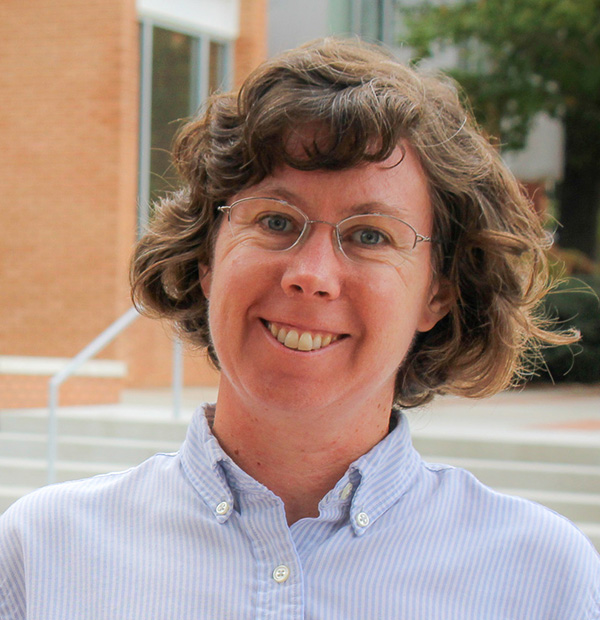
Dr. Pamela Murray-Tuite is a Professor of Civil Engineering at Clemson University's College of Engineering, Computing and Applied Sciences. Her work bridges transportation systems, disaster resilience, and emergency response modeling. Education: B.S. (1998), M.S. (1999), and Ph.D. (2003) in Civil Engineering from the University of Texas at Austin and Duke University Teaching: Courses include CE 3110 Transportation Engineering and CE 8930 Mathematical Modeling for Civil Infrastructure Systems Analysis Her research focuses on transportation resilience , with emphasis on evacuation modeling, emergency response, and infrastructure interdependence. She explores the impact of disasters on mobility patterns, utilizing mathematical modeling and simulation tools to enhance urban systems' robustness. The 15 most recent articles span hurricane evacuation behavior, agent-based modeling, and infrastructure resilience under climate change. Keywords include transportation systems, disaster management, and behavioral modeling, while subfields cover evacuation routing, network analysis, and risk perception dynamics. Dr. Murray-Tuite's work integrates statistical methods with transportation policy, addressing challenges in both natural disasters and public sector disruptions. Her contact details include office location (210 Lowry Hall) and phone (864-656-3802).
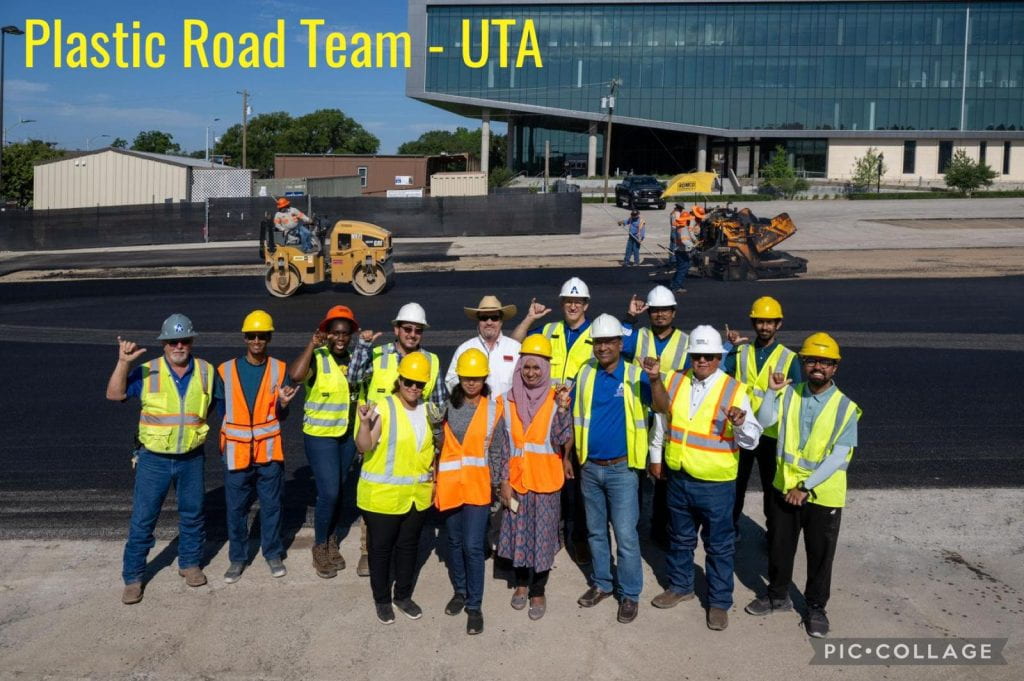
Dr. Md S Hossain is a Professor of Civil Engineering at The University of Texas at Arlington, directing the Solid Waste Institute for Sustainability (SWIS). He holds a B.S. from IIT Bombay, an M.E. from AIT Bangkok, and a Ph.D. from North Carolina State University. His research focuses on sustainable waste management, bioreactor landfills, geotechnical engineering, and slope stabilization, with notable contributions to landfill gas-to-energy and recycled materials utilization. He has over 6 years of professional experience in geotechnical and geoenvironmental projects globally. Research Interests: Sustainable waste management, landfill engineering, slope stabilization, recycled materials, geotechnical site investigations. Key Roles: Director of SWIS, Principal Investigator on numerous grants, and advisor to over 50 graduate students. Dr. Hossain has secured millions in grants from agencies like NSF, EPA, and TxDOT, focusing on waste-to-energy, landfill mining, and slope stabilization using recycled plastics. His awards include the ISWA Leadership Award and Distinguished AIT Alumni recognition. He actively collaborates with international organizations like CCAC and ISWA, advocating for sustainable waste solutions in developing countries. His work spans 50+ projects in Bangladesh, Singapore, Hong Kong, and the U.S., emphasizing practical applications like recycled plastic pins for slope stabilization and ET cover systems for landfills. SWIS, under his leadership, promotes global sustainable waste management through education, research, and policy advocacy.
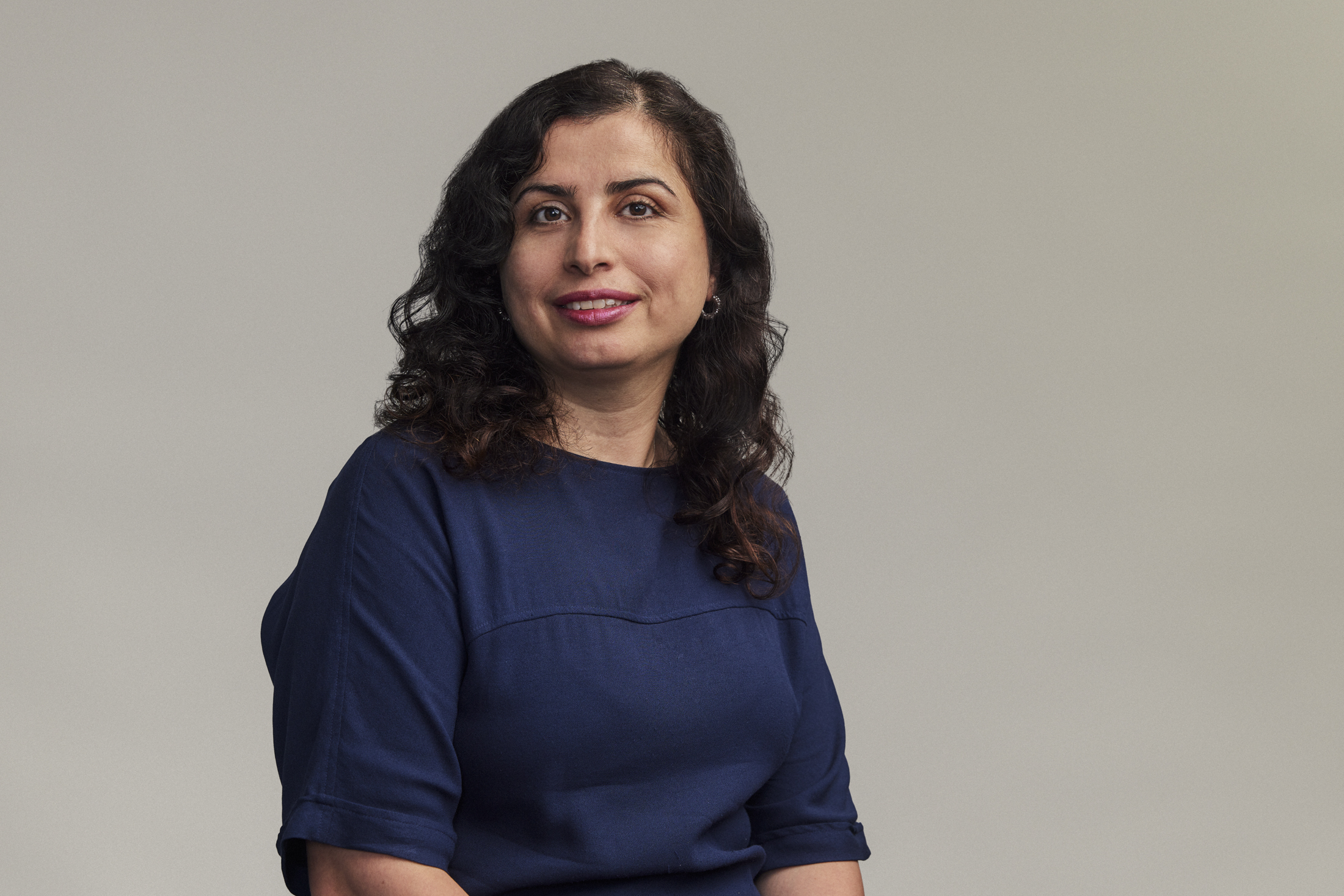
Dr. Mojgan A. Jadidi serves as Associate Professor in the Teaching Stream and Director of Common Engineering & BSc Science within the Department of Civil Engineering at York University's Lassonde School of Engineering. A Professional Engineer (P.Eng) and founder of the GeoVA Lab, she leads research at the intersection of geospatial analytics, digital infrastructure, and innovative engineering education aligned with UN Sustainable Development Goals. Education: PhD in Geomatics, Université Laval (2014) MSc in Earthquake and Seismology Engineering, ROSE Center (Italy) & Université Joseph Fourier (France) BSc in Civil-Survey Engineering, Iranian University of Science and Technology Research Focus: Her pioneering work in Geospatial Visual Analytics spans 2D/3D environments, Building Information Modeling (BIM) and 3D GIS integration, and Spatial Quantum Computing applications for smart cities. She develops Infrastructure Digital Twins using sensor data fusion while revolutionizing engineering education through gamification and augmented/virtual reality pedagogies that transform complex spatial concepts into immersive learning experiences. Research Trends: Recent publications (2021-2023) demonstrate convergent innovation across three domains: (1) Building energy optimization through BIM-graph analytics, (2) Transportation safety via AI-driven situational awareness, and (3) Educational technology using VR sandboxes and visual-verbal comics. These works consistently integrate quantum computing principles and UN SDG frameworks to solve urban sustainability challenges. Scientific Recognition: ASEE Zone III Best Paper Award (2023) ASEE Saint Lawrence Best Research Paper & Poster (2022) 3D GeoInfo Conference Best Paper (2018) NSERC Postdoctoral Fellowship (2016) ESRI Student Award (2011) Erasmus Mundus Scholarship (2006) Research Leadership: As Associate Director of York's ESRI Center of Excellence, she manages multi-source funding from NSERC, Mitacs, and York University internal grants. Her professional service spans global organizations including ISPRS Commission IV (Secretary), IEEE Women in Engineering (Member), PEO Etobicoke (Chair), and buildingSMART Canada (Committee Member), driving standards for BIM and digital twin implementation in urban infrastructure. Lab Innovation: The GeoVA Lab develops cutting-edge tools including the TopoSurvey Game for immersive surveying education, PAN-Lassonde XR Sandbox for virtual lab experiences, and quantum computing frameworks for bike-sharing optimization, establishing new paradigms in spatial data interaction and engineering pedagogy.
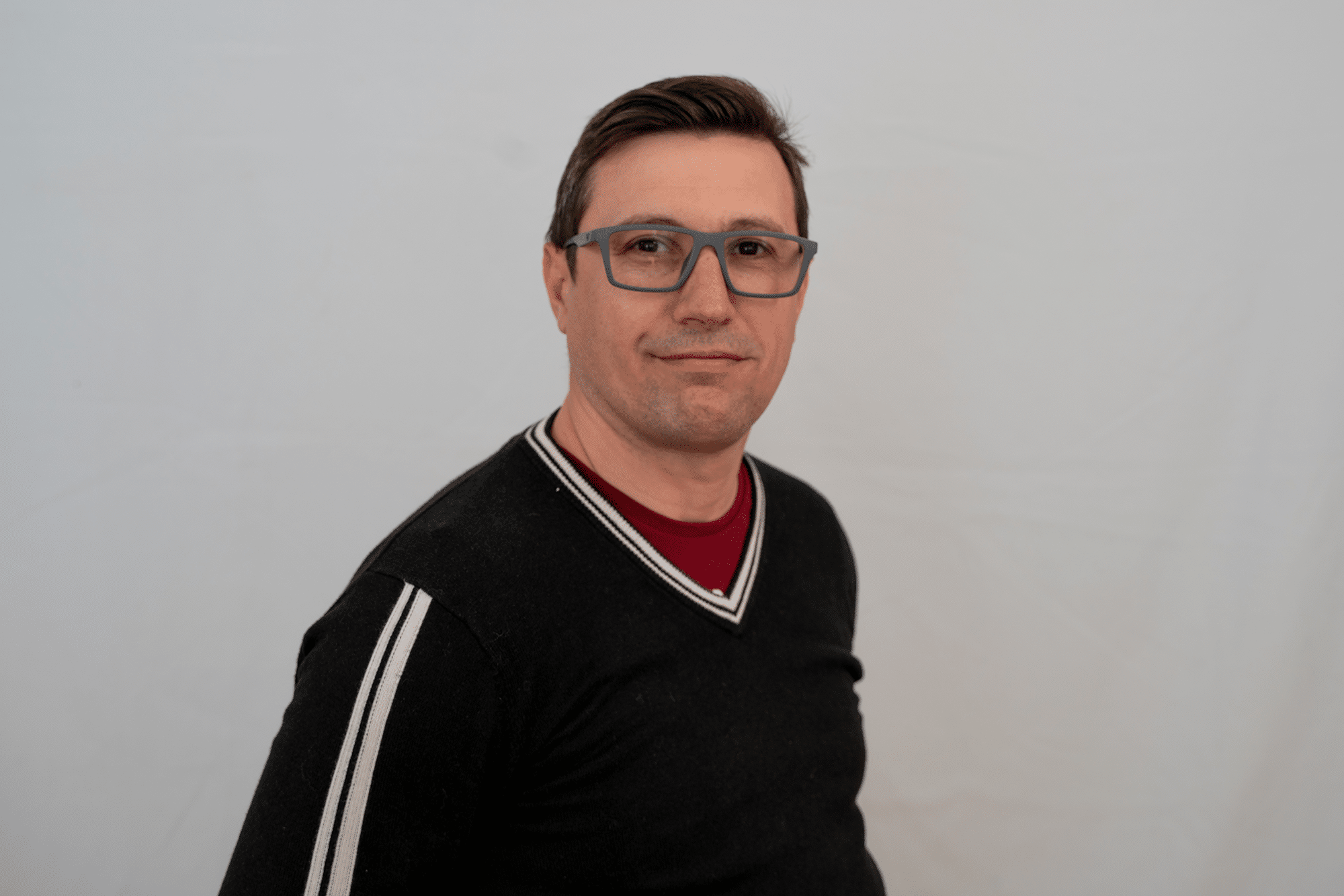
Olivier FARGES is a Senior Lecturer and HDR (Habilitation à Diriger des Recherches) holder at the University of Lorraine, affiliated with ENSGSI (École Nationale Supérieure de Géologie et Sciences Industrielles) within the Groupe INP. He serves as Director of Industrial Partnerships at ENSGSI and is part of the LEMTA Laboratory (CNRS-University of Lorraine), focusing on multiphysics and multiscale modeling of heat transfer in complex environments. His academic roles include teaching courses such as Heat and Mass Transfer, Fluid Mechanics, Scientific Computing Modeling, and Renewable Energy. Dr. FARGES holds a Ph.D. in Energy and New R&D (2014) and an Engineering degree in Energy Engineering (2010), both from the École de Mines Albi. His research emphasizes coupled conductive-radiative heat transfer in porous media, thermal property characterization of heterogeneous materials, and Monte Carlo-based computational methods for energy systems. He has contributed to advancements in photovoltaic system modeling, solar thermal power optimization, and urban climate studies. His work bridges theoretical and applied thermal engineering, with applications in sustainable energy systems, material science, and industrial partnerships. Key research themes include radiative transfer modeling, multiphysics simulation frameworks, and the development of innovative tools for thermal property measurement and energy performance assessment.
Tae Eun Kim is an Associate Professor in Maritime Safety Management at UiT The Arctic University of Norway, working within the Department of Technology and Security. Her research, teaching, and industrial collaboration focus on maritime safety and human factors, with particular expertise in maritime safety management, accident analysis, Maritime Autonomous Surface Ships (MASS), and human factors in maritime operations. Dr. Kim's research spans four interconnected domains: maritime safety management and leadership, maritime accident and casualty analysis, Maritime Autonomous Surface Ships (MASS), and human factors in maritime operations. She has developed assessment instruments like the Safety Leadership Self-Efficacy Scale (SLSES) and conducted STAMP-based causal analyses of maritime accidents. Her work on MASS addresses safety challenges in mixed navigational environments and examines leadership competencies for autonomous shipping operations. Her human factors research explores how technological advancements impact navigators' performance, crew dynamics, and safety outcomes, including gender parity issues in the maritime industry. Dr. Kim's publication record reveals a strong focus on the intersection of maritime safety, technology, and human performance. Her recent work increasingly addresses autonomous shipping technologies, with numerous publications on AI decision transparency, learning analytics in maritime simulator training, and multi-modal data analysis for nautical skill development. She has conducted systematic reviews on simulator training approaches and scenario design, contributing significantly to methodology development in maritime education and training. Her research demonstrates a clear trajectory toward integrating emerging technologies with traditional maritime safety practices as the industry transitions toward greater automation. Dr. Kim is actively involved in several significant research projects, including the i-MASTER EU Horizon Europe Research and Innovation Project, the REFRAME project, and the SPRICE project (Multidisciplinary approach for spray icing modelling). She is a member of both the Advanced Maritime Ship Operations research group and the Maritime Safety Science (MARSCI) Research Group, demonstrating her commitment to collaborative research in maritime safety science. Dr. Kim teaches several specialized courses at UiT, including SVF-3206 Safety Management and Accident Investigation, TEK-3014 Navigation Technology, MFA-2100 Maritime Digitalization, MFA-8010 Maritime HTO (Human-Technology-Organisation) and Innovation, and MFA-2018 Maritime Administration and Leadership. Her teaching portfolio reflects the interdisciplinary nature of her expertise, bridging engineering, safety science, and organizational behavior in maritime contexts.
Yogi Vidyattama is an Associate Professor at the Canberra School of Politics, Economics and Society, University of Canberra. He specializes in spatial microsimulation modeling, economic growth, income distribution, and fiscal decentralization. Previously affiliated with the University of Indonesia, he contributed to regional economic analysis in Indonesia. His research focuses on linking economic policies with spatial outcomes, including corruption determinants, healthcare access, and disaster resilience. Education: PhD in Patterns of Provincial Economic Growth from Australian National University (2008), Master's from ANU (2003), and Bachelor's in Fiscal Decentralisation from University of Indonesia (2000). Research interests include microsimulation modeling, regional economic disparities, and policy impacts. He has led 49 projects, including studies on electric vehicle policy, disaster capability mapping, and regional fast rail economic impacts. His work contributes to UN SDGs related to economic growth, inequality reduction, and disaster resilience. Publications span over 117 outputs, analyzing topics like Indonesia's regional corruption, Australian housing crises, and pandemic policy effects. Awards and recognitions are unspecified, but his roles in executive councils of ANZRSAI and PRSCO highlight peer recognition. Advised 10 students and maintains NATSEM's spatial models and GIS systems.
Dr. Scott Banks is a Lecturer in Chemical Engineering & Applied Chemistry at Aston University's College of Engineering and Physical Sciences. He is affiliated with the Energy and Bioproducts Research Institute (EBRI), where he researches thermochemical conversion technologies with a focus on sustainable bioenergy solutions. Education: PhD in Ash control methods to limit biomass inorganic content and its effect on fast pyrolysis bio-oil stability, Aston University (2014) Aston University Modular Award – Introduction to Learning and Teaching Practice (2020-2021) Research Focus: His work centers on catalytic pyrolysis, biomass ash control, bio-oil stabilization, and gasification char utilization. He develops advanced thermal conversion methods to create circular economy solutions and supports greenhouse gas reduction through renewable energy systems. Current work explores hydrogen production pathways from biomass derivatives. Publication Trends: Recent articles demonstrate a strong focus on biomass pyrolysis optimization, renewable policy frameworks, and sustainable feedstock development. His research employs experimental thermochemical analysis and reactor design to advance bioenergy conversion efficiency. Teaching: Module leader for Life Cycle Analysis, Renewable Energy, and Research Methods in the MSc Sustainable Engineering program.
Manuel Crespo-Ballesteros is a Research Fellow at the Aston Institute of Photonic Technologies (AiPT) within the College of Engineering and Physical Sciences at Aston University. He holds a BEng in Electronics and Automation Engineering from the Technical University of Cartagena (2007), an MSc in Theoretical Physics from the University of Murcia (2012), and a PhD in Radar Systems from the University of Birmingham (2016). His research focuses on Surface Nanoscale Axial Photonics (SNAP) technology, particularly microresonators, nonlinear optics, and optical frequency combs. He has contributed to advancements in microresonator fabrication, resonant tunneling phenomena, light-by-light transportation, and parametrically modulated frequency combs. His work bridges quantum mechanics and photonics, with applications in sensing, communications, and optical computing. Education: BEng in Electronics and Automation Engineering, Technical University of Cartagena, Spain (2007) MSc in Theoretical Physics, University of Murcia, Spain (2012) PhD in Radar Systems, University of Birmingham, UK (2016) Research Interests: Crespo-Ballesteros investigates microresonators created via SNAP technology, emphasizing their picometer precision and quantum-mechanical analogies. Key areas include resonant tunneling, nonlinear soliton-based light transport, and parametric frequency comb generation. His work explores applications ranging from high-speed communications to quantum physics simulations, such as black hole analogues using time-dependent potentials. Grants and Labs: Active in AiPT’s advanced photonics research, his lab develops cutting-edge SNAP microresonators with applications in precision spectroscopy and sensing. Collaborations include projects on fiber-optic bending-induced tunability and soliton-based transportation systems.
Justin Leidwanger is an Associate Professor of Classics at Stanford University with a courtesy appointment in Oceans at the Doerr School of Sustainability, specializing in Mediterranean maritime archaeology through fieldwork in southeast Sicily and southwest Turkey. His educational background includes: Ph.D. in Art and Archaeology of the Mediterranean World from the University of Pennsylvania (2011) M.A. in Nautical Archaeology and Anthropology from Texas A&M University B.A. in History & Classical Studies from Loyola University Chicago Leidwanger's research centers on Mediterranean mobilities, maritime communities, and exchange systems from the Roman period through late antiquity, using shipwrecks and port sites to analyze socioeconomic dynamics. His work integrates ceramic analysis, port network studies, and digital heritage methods to explore ancient technologies of distribution and long-term maritime interactions. Recent publications reveal consistent focus on Roman/late antique maritime economies with growing emphasis on digital documentation (3D modeling, GIS) and contemporary relevance through migration studies. Key trends include transport amphorae standardization, underwater survey methodologies, and the intersection of ancient maritime heritage with modern migration patterns in the central Mediterranean. Leidwanger actively advises students in classical archaeology while leading major field projects including the Marzamemi 'church wreck' investigation (2013-2019) and ongoing 'U Mari research in Sicily. His work combines underwater survey, community-based archaeology, and heritage activism addressing both ancient tuna fishing traditions (mattanza) and contemporary migration routes. He directs the Maritime Archaeology and Digital Heritage Lab (MEDLab) at Stanford's Archaeology Center, which supports advanced digital modeling (photogrammetry, laser scanning, network analysis) and ceramic analysis (petrography, pXRF, computational morphometrics) for field research and museum collaborations.
Prof. Patrick Jenny is a Full Professor at the Department of Mechanical and Process Engineering and Head of the Institute of Fluid Dynamics at ETH Zurich. His research focuses on computational fluid dynamics (CFD), numerical methods for turbulent and multiphase flows, and reservoir simulation. He has held positions at ChevronTexaco and Cornell University, and received the National Latsis Prize 2005. PhD in CFD from ETH Zurich (1997) Postdoctoral work at Cornell University (1997–1999) Senior Researcher at ChevronTexaco (1999–2003) Research interests include: turbulent reactive flows, PDF modeling, multi-scale reservoir simulation, and data assimilation in engineering systems. He teaches courses on fluid dynamics, turbulence, and computational methods. Over 100 peer-reviewed publications span topics like fracture modeling, LES/RANS coupling, and particle-laden flows. His work bridges academia and industry, addressing challenges in energy systems, environmental engineering, and numerical algorithms. Winner: National Latsis Prize 2005 Led over 20 PhD projects and collaborates with institutions globally. His lab develops open-source tools for CFD and energy systems analysis.
Zachary E. Ross is a Professor of Geophysics at the California Institute of Technology (Caltech) and holds the William H. Hurt Scholar distinction since 2021. His research integrates machine learning, computational mathematics, and seismology to analyze earthquakes and fault zones using large seismic datasets. Education B.S., University of California, Davis (2009) M.S., California Polytechnic State University, San Luis Obispo (2011) Ph.D., University of Southern California (2016) His research focuses on high-resolution imaging of fault zones, understanding earthquake sequences in space and time, and applying artificial intelligence to seismic data analysis. He develops scalable algorithms for waveform inversion, ground-motion synthesis, and real-time seismic monitoring. Recent publications highlight his work on neural operators for wave propagation, AI-driven seismicity analysis, and induced earthquake dynamics. He teaches advanced courses including Ge 264 – Machine Learning in Geophysics and Ge 271 – Dynamics of Seismicity . Scientific Awards William H. Hurt Scholar (2021–present)
Dr. Hyungwoong Ahn is a Senior Lecturer in Chemical Engineering at the University of Edinburgh and an Adjunct Professor at Yonsei University. His expertise lies in adsorption process engineering, particularly for CO2 capture and gas separation. He leads the Carbon Capture Group and coordinates exchange programs for chemical engineering students. Dr. Ahn holds a BSc, MSc, and PhD in Chemical Engineering from Yonsei University. Roles: Senior Lecturer (Edinburgh) & Adjunct Professor (Yonsei) Research Focus: Pressure Swing Adsorption (PSA), CO2 capture technologies, hydrogen purification, and industrial decarbonisation Key Projects: PSA-SPUR technology development, ship-based carbon capture, and collaboration with HD Korea Shipbuilding Awards: KOFST Brain Pool Fellow, IChemE Global Awards finalist, and Honeywell UniSim Design Challenge winner His research integrates equilibrium theory analysis, numerical simulation, and experimental validation to advance carbon capture systems. He has authored over 50 publications (H-index 32) and secured funding from EPSRC, BEIS, KETEP, and others.
Yuxia Hu is a Professor at the University of Western Australia, affiliated with the School of Engineering (Civil, Environmental and Mining Engineering) and the School of Social Sciences, Planning and Transport Research Centre. Her research focuses on geotechnical engineering, particularly in large deformation FE analysis, offshore foundation systems, and soil-structure interaction. She has contributed to advancements in suction caissons, plate anchors, and computational mechanics, with applications in offshore wind energy and infrastructure stability. Research Interests: Large deformation FE analysis of soils, soil-structure interaction, offshore foundation systems, soil mechanics, and pavement engineering. Awards: Telford Premium, British Geotechnical Association Prize, and Significant Junior/Senior Paper Award. Grants: Leads projects on offshore anchors, carbon capture in pavements, and road maintenance optimization. Her work addresses challenges in geotechnical design and sustainable infrastructure, with a focus on numerical modeling and experimental validation. Collaborations span academia and industry, emphasizing practical solutions for complex soil-structure systems.
Ed Chien is an Assistant Professor at Boston University's Department of Computer Science within the College of Arts & Sciences. He specializes in applying differential geometry and topology to graphics, computational engineering, and machine learning. Previously, he was a postdoctoral researcher at MIT's CSAIL and Bar-Ilan University. His work focuses on mathematically rigorous solutions to problems in geometric data processing and optimal transport. Education PhD in Mathematics, Rutgers University (2015) A.B. in Mathematics & Physics, Dartmouth College (2009) Research Highlights Dr. Chien's research includes fundamental studies on hexahedral mesh topology for Finite Element Modeling, optimal transport applications in machine learning, and singularity-free geometric algorithms. His work bridges theoretical mathematics with computational tools for engineering and graphics. Publications span top venues like NeurIPS, Eurographics, and SIGGRAPH, reflecting contributions to geometry processing and machine learning intersections. Program committee roles include Eurographics SGP (2019) and AAAI (2020). Awards & Recognition No specific awards listed, but notable service includes program committee memberships and peer-reviewed contributions to leading conferences. Grants & Advising Active in mentoring through academic positions but no explicit grant details provided. Research focuses on advancing geometric algorithms and optimal transport methodologies.
Lillian T. Chong is a Professor in the Department of Chemistry at the University of Pittsburgh, affiliated with the Kenneth P. Dietrich School of Arts and Sciences. She leads the Chong Lab, focusing on computational biophysics and biomolecular simulations. Her research emphasizes developing advanced simulation methods like weighted ensemble (WESTPA) for studying rare events in biomolecules, such as protein folding, binding pathways, and conformational switches. Research Interests: - Development of weighted ensemble algorithms for long-timescale simulations - Protein-protein binding kinetics and unbinding pathways - Design of switchable proteins with enhanced dynamic properties - Integration of experimental data (e.g., NMR, EPR) with simulations Recent Article Trends: Recent work explores ligand unbinding mechanisms, glycan-mediated spike protein dynamics, and force field validation. The lab’s methods are applied to drug discovery, viral entry mechanisms, and enzyme catalysis. Awards & Honors: Gordon Bell Special Prize for HPC-Based COVID-19 Research (2020) NSF CAREER Award (2009-2014) Bellet Teaching Excellence Award (2017) Advising & Grants: Advised students including Darian Yang (PhD 2023) and Jeremy Leung (PhD 2023). Funded by NSF and industry grants, including work on SARS-CoV-2 spike protein dynamics and force field development. Labs & Teams: The Chong Lab collaborates with groups at CMU and NIH, developing open-source tools like WESTPA and LPATH . Research spans Pittsburgh’s computational biophysics community, with interdisciplinary projects in drug design and protein engineering.