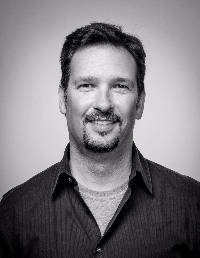
Craig B Clements is a Professor in the Department of Meteorology and Climate Science and Director of the Wildfire Interdisciplinary Research Center at San José State University . He specializes in wildfire meteorology, fire weather, and extreme fire behavior, with a focus on turbulence and meteorological instrumentation. Education: B.S. in Geography (University of Nevada, Reno), M.S. in Meteorology (University of Utah), Ph.D. in Geophysics (University of Houston) Key Research Areas: Fire-Atmosphere Interactions, Plume Dynamics, Boundary-Layer Meteorology, and Climate-Wildfire Feedback Clements leads the Fire Weather Research Laboratory , which develops mobile Doppler lidar systems for real-time wildfire monitoring. His work includes the FireFlux II and RaDFIRE experiments, and he has collaborated on international projects like New Zealand's field-scale burns. He has been featured in Scientific American , NPR , and PBS NOVA . Scientific Awards: Erskine Fellowship (2024) NSF CAREER Award (2012) SJSU Early Career Investigator Award (2010) His courses include Wildfire in the Earth System , Meteorological Instrumentation , and Mountain Meteorology . He has mentored students on smoke dynamics, turbulence during wildfires, and fire-induced wind systems.
Thomas Dreibholz is a Chief Research Engineer at Simula Metropolitan's Center for Resilient Networks and Applications. He specializes in cyber sovereignty, network security, and internet testbeds, with extensive work on distributed systems, cloud computing, and 5G networks. Affiliation: Simula Metropolitan, Oslo, Norway Research Focus: Multi-path transport protocols, network resilience, and privacy-preserving frameworks His research explores the intersection of network security, cloud/fog computing, and next-generation communication protocols. Recent work includes HiPerConTracer for network analysis, privacy-aware fog platforms , and multi-layered federated learning security . He contributes to testbed development, including the NorNet infrastructure for real-world multi-path transport research. Publications reflect expertise in multi-path TCP , 5G network optimization , and cloud/fog security . He has delivered invited talks at institutions like Hainan University and Princeton University, emphasizing open-source testbed deployment and educational outreach.
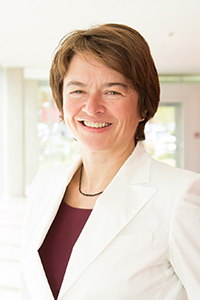
Professor Jenny leads the Jenny Research Group at ETH Zürich, specializing in turbulent reactive flows, rarefied gas kinetics, and biomedical fluid dynamics. Her work bridges fundamental research with industrial applications in energy systems and fluid mechanics. Develops advanced turbulence models (TDDM, hybrid LES/RANS) for multi-scale flows Pioneers data assimilation frameworks for RANS simulations using adjoint methods Advances particle-based stochastic algorithms for fractured porous media transport Her recent publications emphasize adaptive time integration techniques, probabilistic modeling of non-linear transport phenomena, and optimized simulation tools for hydrogen storage systems. The group's methodological innovations focus on reducing computational costs while maintaining physical accuracy through novel regularization strategies. Key applications include combustion device optimization, high-pressure tank filling analysis, and fractured reservoir simulations. Current projects integrate machine learning with traditional CFD methods to address challenges in droplet clustering, flame surface density propagation, and supersonic spray dynamics. The research framework spans from direct numerical simulations of fundamental flow physics to industrial-scale hybrid modeling implementations.
Prof. Dr. Regina Schreiber is a Professor and Vice President for Research and Transfer at Kempten University of Applied Sciences , affiliated with the Faculty of Mechanical Engineering and Competence Center for Applied Research in Food and Packaging Technology . She serves as Institute Management and Scientific Management, while also holding the role of Practical Officer for Food and Packaging Technology and Process Engineering and Sustainability bachelor programs. Primary Research Areas: Food Technology Project Management Product Life Cycle Engineering Additive Manufacturing Recent Publications focus on additive manufacturing with polymer powders, sustainable packaging solutions, and e-commerce logistics for perishable goods. Her work includes patents like the Dosierspender (EP3844094) for precision food dispensing systems. Contact : Office: Room S1.01 Email: regina.schreiber@hs-kempten.de
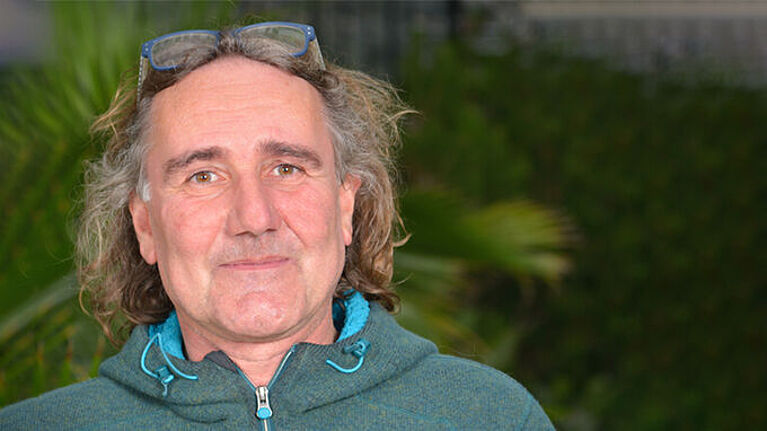
Prof. Dr. Thomas Eichert serves as Professor of Horticulture within the School of Landscape Architecture, Horticulture and Forestry at the University of Applied Sciences Erfurt since October 2017. His subject area focuses on Physiology and Practice of Plant Nutrition, and he actively contributes as a member of the LGF Audit Committee. His academic journey spans over two decades with continuous appointments at German agricultural institutions. His educational foundation includes a Diplom in Geoecology (1996) and Dr. rer. nat. (2001) from the University of Bayreuth, followed by Habilitation in Plant Nutrition/Agricultural Chemistry at the University of Bonn (2010). Prior to his current professorship, he served as Temporary Academic Councillor (2011-2017) and Research Associate (1997-2011) at the University of Bonn's Institute of Crop Science, while maintaining partnership at HGoTECH GmbH since 2010. Eichert's research establishes him as a leading authority in foliar nutrient uptake mechanisms, particularly regarding boron and zinc transport across plant cuticles. His work bridges fundamental plant physiology with practical agricultural applications, examining nanoparticle interactions, nutrient speciation, and environmental impacts on crop nutrition. The recurring themes across his publications demonstrate exceptional expertise in leaf surface properties and their role in nutrient absorption efficiency. His teaching portfolio spans critical horticultural disciplines including Botany I/II, Ecological Basics, Plant Nutrition and Protection (BGA2040/BGA3030), Scientific Work methodology, and advanced Master's courses in Climate Change Adaptation and Statistical Methods in Crop Production. This comprehensive curriculum reflects his integrated approach to plant science education. While no formal student advisement is documented in the provided materials, Eichert's industry partnership at HGoTECH GmbH indicates applied research translation. His laboratory work focuses on advanced nutrient delivery systems and plant surface analysis, though specific team structures aren't detailed in the source text.
Professor Radhakrishna Prabhu is a distinguished academic at Robert Gordon University's School of Computing, Engineering & Technology, where he leads the Instrumentation & Sensors Research Group and is affiliated with the Robotics & Autonomous Systems Research Group. With over 20 years of applied research experience, his work spans optical technologies, environmental sensing, and clean energy systems. His research expertise encompasses Optical Materials & Waveguides , Optical Imaging , Optical Security , Subsea Sensing , Optoelectronics , Microscopy , Spectroscopy , Lasers , Fluorescence Instrumentation , Lab-on-a-chips , and Renewable Energy Systems . Recent publications (2024-2025) reveal a strong focus on underwater optical communication systems, microplastic environmental impact studies, and building-integrated photovoltaic technologies. Professor Prabhu's scientific contributions are recognized through his professional affiliations: Fellow of Higher Education Academy (FHEA) Chartered Engineer (EC-IET) Member of Institute of Physics (IOP) Member of The Institution of Engineering & Technology (IET) Member of Institute of Electrical and Electronics Engineers (IEEE) He currently supervises multiple PhD students across diverse projects including underwater wireless networks, microplastic soil studies, and building-integrated photovoltaics. His active research portfolio includes the 'Portable Luminescent Chemical Compass' project (2025-2027) and 'Reusing Subsea Natural Gas Pipeline Infrastructure for Bulk Hydrogen Transportation' (2022-2023), demonstrating his commitment to addressing contemporary environmental and technological challenges through innovative research. The Instrumentation & Sensors Research Group under his leadership develops cutting-edge sensing technologies with applications ranging from environmental monitoring to security systems, contributing significantly to Robert Gordon University's research themes in Environment, Energy & Sustainability.
Associate Professor Biplob Ray serves as Head of Course for Postgraduate ICT Courses at the School of Engineering and Technology, Central Queensland University. With over 15 years of academic experience, he has progressed from ICT Lecturer (2015-2019) to Senior Lecturer (2020-2022) and currently holds the position of Associate Professor (2023-Present). His research is centered at the Centre for Intelligent Systems within the Institute for Future Farming Systems, where he leads multidisciplinary projects with significant industry and government funding. Dr. Ray holds a PhD from Deakin University (2015), Master of Information Technology from University of Ballarat (2008), and Graduate Certificate in Education Tertiary Teaching (2013). His academic journey began with a BSEng in Computer Engineering, followed by professional experience as Analyst Programmer at Telstra and Systems Programmer in the Philippines. His research focuses on the intersection of Artificial Intelligence, Internet of Things, and Cybersecurity, with practical applications spanning smart farming, environmental monitoring, and energy systems. His multidisciplinary approach has secured over $3 million in research funding from Australian federal government and industry sources since 2016, including significant projects like the $1.28 million 'Intelligent, Adaptable, and User-Friendly Weed Management system' and the $513,268 'AI-SSPCAS' project with CSIRO Data61. Dr. Ray's publication record shows consistent high-quality output with approximately 15-20 papers annually, primarily in IEEE and Elsevier journals. His work demonstrates strong translational impact, with multiple projects featured in media outlets including ABC News, Channel 7, and Australian Tree Crop magazine. His research has directly contributed to practical implementations such as smart irrigation systems for Cairns Regional Council and cybersecurity solutions for small businesses. 2025 Australian Awards for University Teaching (AAUT) 2024 Vice-Chancellor's Award of Commendation for Outstanding Researcher (Mid-Career) 2023 Vice-Chancellor's Award for Exemplary Practice in Learning and Teaching 2021 Vice-Chancellor's Award for Exemplary Practice in Learning and Teaching (Tier 1) 2019 Vice-Chancellor's Award for Exemplary Practice in Learning and Teaching 2016 'RISING STAR of 2016' award from CQUniversity Dr. Ray currently supervises fifteen research students across PhD and Master's programs, with active grants supporting multiple research positions. His leadership extends to professional service as Vice-Chair of IEEE Victorian Section (2024-2025), former Chair of IEEE Victoria IoT Community, and member of the Engineering Institute of Technology Course Advisory Committee. The Centre for Intelligent Systems fosters interdisciplinary collaboration with regular seminars, industry partnerships, and international research connections, providing students with rich opportunities for professional development.
Donald R. Reising serves as a Guerry and UC Foundation Professor of Electrical Engineering in the College of Engineering and Computer Science at the University of Tennessee at Chattanooga (UTC). He holds appointments in both the Electrical Engineering department and the Computational Science program, with active roles in university governance as Faculty Senate Chair (2022-2025) and member of multiple strategic committees including the PhD Computational Science Committee. B.S. in Electrical Engineering, University of Cincinnati (2006) M.S. in Electrical Engineering, Air Force Institute of Technology (2009) Ph.D. in Electrical Engineering, Air Force Institute of Technology (2012) Dr. Reising's research spans three interconnected domains: wireless security through Specific Emitter Identification (SEI) and RF fingerprinting, smart grid intelligence for real-time disturbance analysis, and radiation effects characterization in microelectronics. His work integrates machine learning with signal processing to solve critical infrastructure protection challenges, particularly in adversarial environments where traditional security measures fail. Recent publications demonstrate increasing focus on deep learning countermeasures against SEI spoofing attacks and edge-computing solutions for power grid resilience. His 15 most recent publications reveal strong emphasis on adversarial machine learning (6 articles), SEI robustness under environmental stressors (5 articles), and smart grid data analytics (3 articles), with growing interdisciplinary work in quantum correlations and transportation safety. This trajectory shows evolution from foundational RF fingerprinting techniques toward comprehensive security frameworks for critical infrastructure. IEEE Chattanooga Chapter's Outstanding Engineer Award (2022) UTC’s Outstanding University Service Award (2018) AFRL Sensors Directorate Dr. Samuel M. Burka Award (2013) Association of Old Crows Research Excellence Award (2009) MASINT Committee Academic Excellence Award (2009) Dr. Reising leads multiple research initiatives including the RF Security Lab and Smart Grid Analytics Group, securing consistent funding from DoD agencies (AFRL, ARL), NSF, and industry partners like EPRI. His service extends to advising graduate students through the Computational Science PhD program and directing undergraduate research in radiation effects characterization. Current projects focus on SEI resilience against deep learning attacks, quantum-enhanced signal processing, and edge-computing solutions for grid cybersecurity.
Professor Antonio Torija Martinez is a leading academic in Acoustic Engineering and Psychoacoustics at the University of Salford's School of Science, Engineering & Environment. He serves as a key researcher at the Acoustics Innovation Institute and leads multiple high-impact projects focused on noise issues related to e-mobility and decarbonization. His international collaborations include work with NASA, Virginia Tech, TU Delft, University of Bristol, and University of Cambridge. Professor Torija Martinez obtained his PhD in Environmental Acoustics from the University of Granada (Spain) in 2010 and was awarded a prestigious Marie Curie EU Postdoctoral Fellowship in 2012. His academic journey has positioned him as an internationally recognized expert in bridging engineering with noise perception. His research program centers on developing Perception-Driven Engineering tools to address noise challenges in emerging transportation technologies. His work on drone noise has been featured by the University as an example of 'Emerging Areas of Global Leadership and Excellence (EAGLEs).' He believes in putting users at the center of engineering decisions to ensure responsible innovation. His interdisciplinary approach combines acoustic engineering, psychoacoustics, and environmental considerations to create solutions that balance technological advancement with community acceptance. Analysis of his recent publications reveals a strong focus on unmanned aircraft systems noise, with particular attention to human perception, measurement methodologies, and noise reduction techniques. His work spans laboratory studies, field measurements, and theoretical modeling, creating a comprehensive approach to understanding and mitigating noise impacts from emerging transportation technologies. John Connell Award Andres Lara Award from the Spanish Society of Acoustics Research Impact Fund Award 2025 Marie Curie EU Postdoctoral Fellowship Recognition as world's most relevant author on drone noise Professor Torija Martinez has secured over £12 million in research grants since joining Salford in 2019, with projects funded by UKRI, Horizon Europe, EPSRC, and industry partners. He supervises PhD students and contributes approximately £190k in enterprise income through contracts with the UK Government and industry. His 13 active projects include Noise Network Plus, The Leverhulme Trust Aural Diversity Doctoral Research Hub, and EPSRC Centre for Doctoral Training in Sustainable Sound Futures. As leader of the Acoustics Research Centre, Professor Torija Martinez oversees a dynamic team working at the intersection of acoustic engineering and human perception. His role as UK representative in international standard-setting groups and member of NASA's UAM Noise Working group positions his team at the forefront of developing methodologies for assessing and mitigating noise from emerging aerial transportation systems.
Sathish Kumar is an Associate Professor in the Department of Electrical Engineering and Computer Science at Cleveland State University's Washkewicz College of Engineering. He serves as Director of the Intelligent Secure Cyber-Systems Analytics and Applications Research (ISCAR) Lab and holds editorial positions with PLOS One, IEEE Access, and Nature Scientific Reports. With over a decade of industry experience prior to joining academia in 2013, Dr. Kumar has established himself as a prominent researcher in cybersecurity and emerging technologies. Dr. Kumar's research spans Cybersecurity, Machine Learning, Distributed Systems, and Quantum Computing, with applications in Intelligent Cyber Physical Social Systems, Smart Cities, Blockchain, Disaster Resilience, and Health Informatics. His work demonstrates a consistent focus on practical security solutions for emerging technologies, particularly in IoT and IIOT environments. Recent publications show increasing emphasis on quantum machine learning applications and reinforcement learning approaches to security challenges. His research program has attracted significant funding, including multiple NSF grants as PI and Co-PI, CDC and NIH funding for public health applications, and industry partnerships. Dr. Kumar has published over 80 technical papers and co-edited a book on IoT security challenges. His editorial roles with major journals reflect his standing in the research community. National Science Foundation Grant ($799,985) as PI for quantum sensor research (2022-2025) National Science Foundation Grant ($434,431) as Co-PI for HPC infrastructure (2022-2025) Multiple additional NSF, CDC, and industry-funded projects Dr. Kumar actively mentors students at all levels, currently supervising multiple PhD students, postdoctoral researchers, and undergraduate honors students. His lab provides opportunities for students to engage in cutting-edge research with practical applications in cybersecurity and emerging technologies, supported by substantial external funding that ensures resources for student participation.
Simon Thiele is a prominent researcher at Forschungszentrum Jülich GmbH in Germany, focusing on electrochemical energy conversion systems for hydrogen technologies. His work spans both fundamental materials science and practical engineering applications in fuel cells and electrolyzers. His research interests center on membrane science , electrocatalysis , and electrode engineering for proton exchange membrane systems. Thiele investigates novel hydrocarbon-based ionomers as alternatives to conventional perfluorinated membranes, develops catalyst systems with reduced precious metal content, and optimizes electrode structures for improved performance. His work addresses critical challenges in hydrogen production via water electrolysis , fuel cell operation , and liquid organic hydrogen carrier systems . Analysis of his recent publication trends shows a strong focus on iridium reduction strategies for electrolyzers, advanced membrane development , and scalable manufacturing techniques . His work bridges fundamental materials science with practical engineering considerations, with particular attention to the relationship between material properties, electrode structure, and electrochemical performance. Thiele's scientific contributions have been recognized through a substantial citation record, with over 6,487 citations and an h-index of 48 according to Scopus data. His publications appear consistently in high-impact journals across electrochemistry, materials science, and chemical engineering disciplines. His research group likely focuses on experimental development and characterization of electrochemical materials and components, with strong emphasis on practical applicability and scalability. The work involves sophisticated materials synthesis, electrochemical testing, and advanced characterization techniques including tomography and spectroscopy. Current projects appear to address the critical challenges of cost reduction, durability improvement, and performance enhancement for hydrogen technologies, with particular attention to membrane development, catalyst optimization, and manufacturing process innovation.
Ilknur Aydin serves as a Full Professor in the Computer Systems Department at Farmingdale State College, State University of New York. Holding a Ph.D. and M.S. in Computer Science from the University of Delaware alongside a B.S. in Computer Engineering from Marmara University, she brings extensive industry experience from her software engineering role in Istanbul and prior academic appointments at SUNY Plattsburgh. Education: PhD in Computer Science, University of Delaware, 2010 MSc in Computer Science, University of Delaware, 2002 BSc in Computer Engineering, Marmara University, 1999 Research Focus: Dr. Aydin pioneers work in wireless/mobile networks with specialized expertise in transport layer protocols (SCTP, multihoming, congestion control) and network coding. Her development of the publicly available SCTP module for QualNet simulator underpins experimental IoT research using Arduino/Raspberry Pi platforms. She actively leverages national cyberinfrastructure testbeds like CloudLab and FABRIC while championing computer science education reform and diversity initiatives through the Women in Computing club. Academic Leadership: As long-time faculty co-advisor for FSC's Women in Computing club, she mentors undergraduate and high school students in IoT projects while teaching core courses spanning programming (Java/C++/C#), networking, database systems, and software engineering. Her outreach specifically targets underrepresented groups in computing fields. Research Infrastructure: Current projects utilize distributed testbeds including CloudLab and FABRIC for large-scale networking experimentation, reflecting her commitment to accessible cyberinfrastructure in academic research.
Professor Michael Scharf is a faculty member at Esslingen University of Applied Sciences, where he serves as Professor for Communication Networks since September 2018. His expertise lies in communication networks, with a particular focus on TCP/IP protocols, network management, and optimization techniques. Esslingen University of Applied Sciences, School of Computer Science and Information Technology Professor for Communication Networks (2018-present) Laboratory Management of Communication Technology Laboratory Dr. Scharf's research interests span applied communication networks, with special emphasis on modern TCP/IP applications for IoT and Automotive Ethernet, as well as network management and data modeling using NETCONF/YANG frameworks. His work bridges theoretical networking concepts with practical implementations, particularly in the areas of congestion control, multipath transport, and application-layer traffic optimization. His publication portfolio demonstrates consistent contributions to networking research, with recent focus on YANG data modeling for TCP, IoT networking standards, and ALTO protocol extensions. The research trajectory shows evolution from congestion control mechanisms to modern network data modeling and IoT applications. Best presentation/demo award for 'Monitoring and Abstraction for Networked Clouds', Proc. ICIN, Oct. 2012 Chair of the TCPM working group in the IETF from 2011 to 2022 Reviewer for TCP/UDP port numbers allocation by IANA since 2022 Dr. Scharf has supervised numerous student works including Bachelor's and Master's theses, study projects, and research projects. His industry experience prior to academia included significant roles at Alcatel-Lucent Bell Labs and Nokia, where he worked on network management systems and was recognized as a Distinguished Member of Technical Staff. He leads the Communication Technology Laboratory (KTlab) at Esslingen University, which focuses on practical implementations and testing of communication network technologies, particularly in the areas of cyber-physical networks, embedded systems communication, and automotive communication networks.