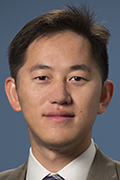
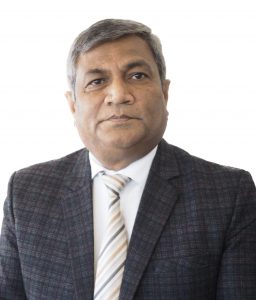
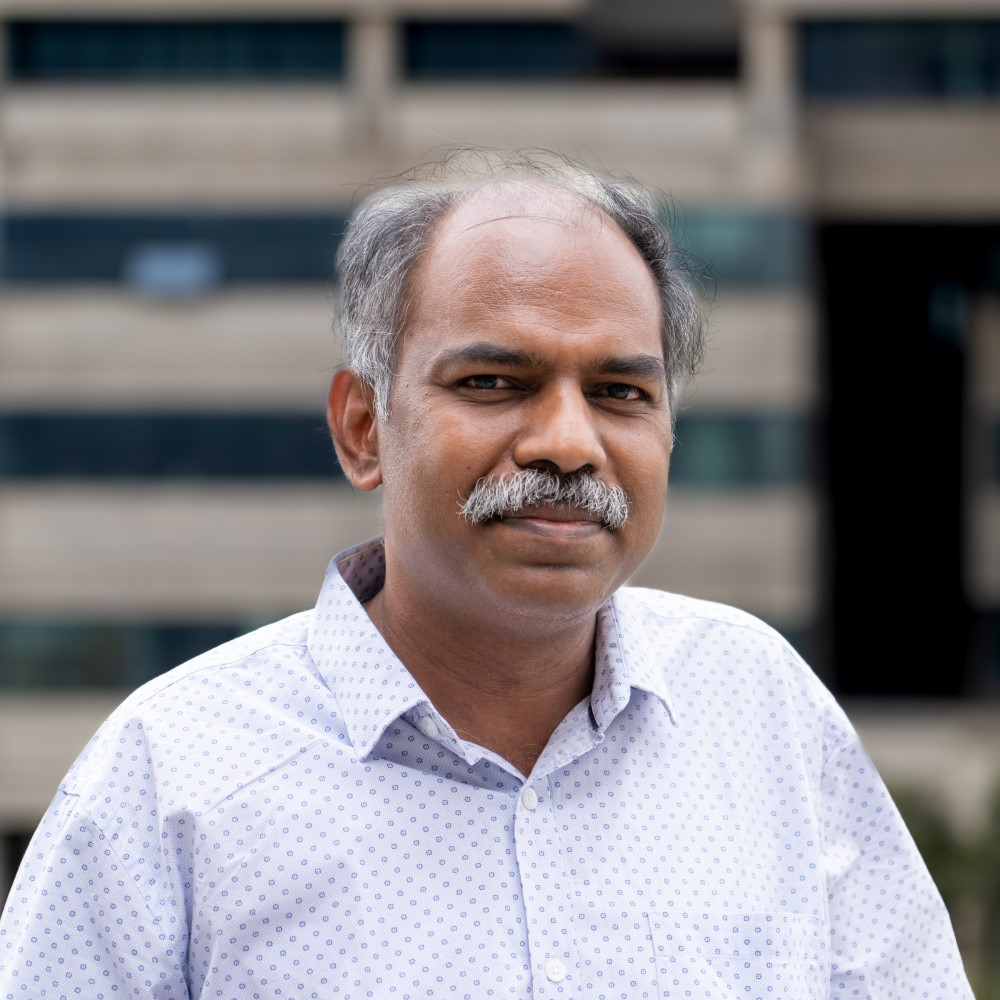
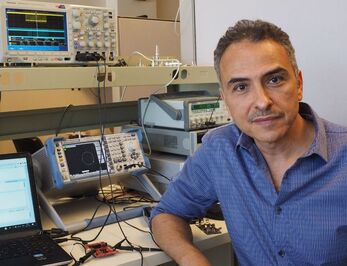
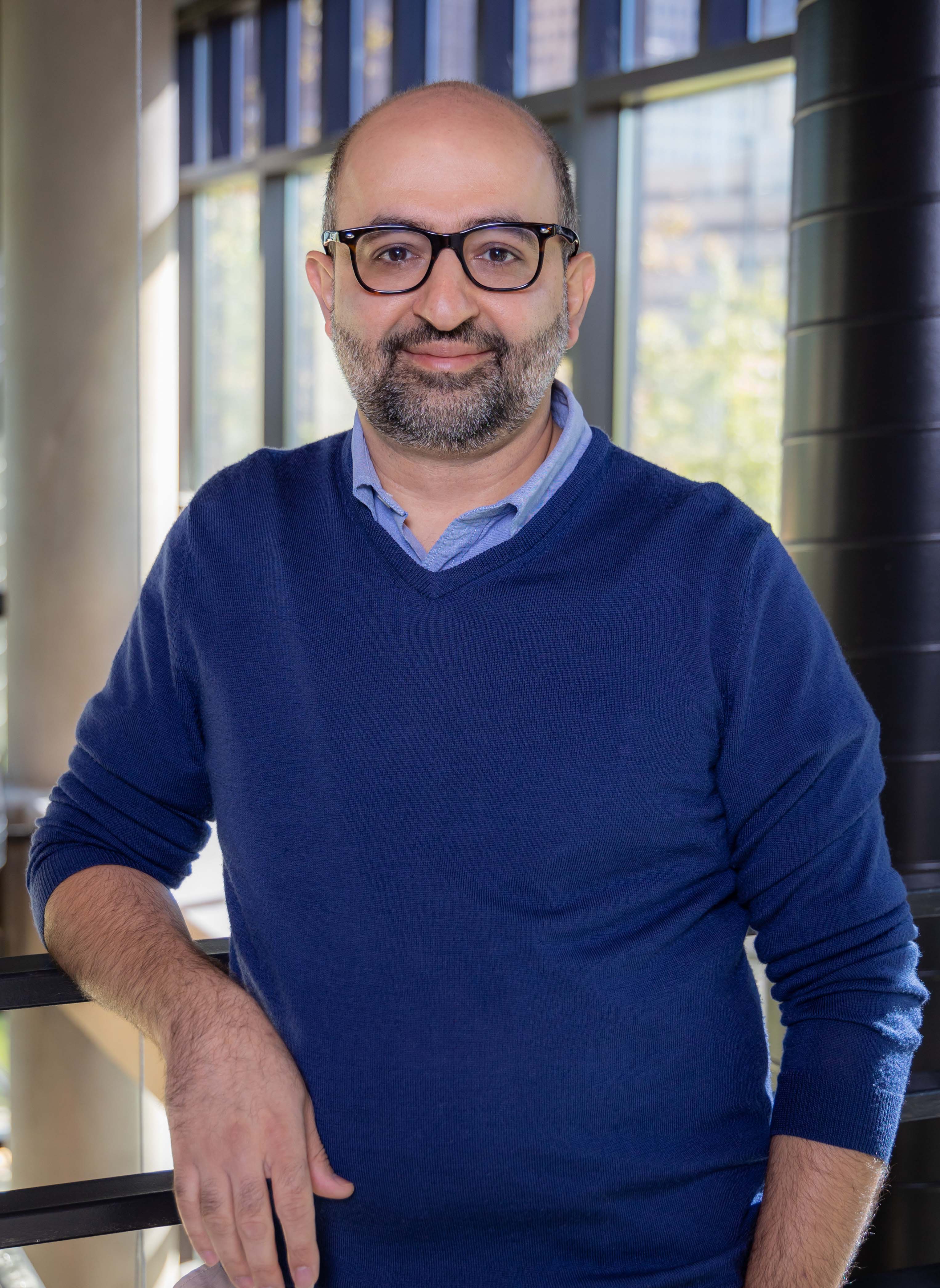
David Mazières is a Professor at Stanford University , affiliated with the School of Engineering and the Department of Computer Science . He serves as a software engineer at the Stellar Development Foundation . His work bridges academic research and industry applications in distributed systems and security. University: Stanford University Academic Rank: Professor Email: dm@scs.stanford.edu Research Interests: David Mazières' research focuses on distributed systems , cryptocurrencies , and computer security . Key areas include consensus protocols (e.g., Stellar ), low-latency scheduling ( Syrup , Shinjuku ), and cryptographic techniques for privacy and security ( SafetyPin , CCFI ). Key Achievements: His notable works include: TCP-ENO (RFC 8547) for secure transport protocols Stellar Consensus Protocol for decentralized finance SOSP 1999 Best Paper for 'Separating key management from file system security' Teaching Contributions: He has taught core and advanced courses at Stanford since 2005, including CS212 (Operating Systems) , CS240h (Functional Systems in Haskell) , and CS251 (Cryptocurrencies and Blockchain Technologies) . Previously taught courses at NYU (2001-2005).
Gilbert Fridgen is Full Professor in Digital Financial Services and holder of the PayPal-FNR PEARL Chair at the University of Luxembourg's Interdisciplinary Centre for Security, Reliability and Trust (SnT). He leads the FINATRAX research group focusing on blockchain, digital identity, and sustainable digital solutions. His research explores decentralized technologies in finance, energy systems, and public administration. Current projects investigate blockchain applications in industrial demand response, NFT markets, EU digital identity wallets, and DeFi institutional adoption. Prof. Fridgen examines the intersection of technology with regulatory frameworks and user behavior in energy and financial systems. He collaborates extensively with industry partners including PayPal and Spuerkeess. Prof. Fridgen actively contributes to EU digital policy discussions, particularly regarding the European Digital Identity Wallet framework and decentralized finance governance.
Henrik Sandberg is a Professor at the Division of Decision and Control Systems , KTH Royal Institute of Technology , Stockholm, Sweden. He holds the title of Deputy Head of Division and is affiliated with the School of Electrical Engineering and Computer Science . Education: MSc in Engineering Physics (1999) PhD in Automatic Control (2004) from Lund University Postdoctoral position at Caltech (pre-2007) Research Interests: Focus on cyber-physical systems security , power systems , model reduction , and fundamental limitations of control systems . Key sub-areas include attack detection , networked control , privacy-preserving estimation , and resilient control architectures . Publications: Over 150 papers across IEEE Transactions and Automatica , covering topics like stealthy attacks , distributed control , LQG optimization , and thermodynamic costs in filtering . Recent work includes LWE-based encrypted control and Bayesian deception mechanisms . Scientific Awards: Best Student Paper Award Finalist at IEEE CASE 2014; Best Student-Paper Award at IEEE CDC 2004. Grants & Projects: Leads the DYNACON project (WASP Cybersec cluster) and collaborates on CERCES (critical infrastructure resilience). Serves as examiner for multiple advanced courses in cybersecurity and control systems. Contact: Email: hsan@kth.se Phone: +46 (0)8 790 7294 Room: A:607, Malvinas Väg 10, Stockholm
Fei Fang is an Associate Professor in the Software and Societal Systems Department at Carnegie Mellon University (CMU) , where she explores the intersection of artificial intelligence and multi-agent systems . Her work integrates machine learning with game theory to address challenges in security , sustainability , and mobility , aligning with the AI for Social Good mission. Ph.D. in Computer Science, University of Southern California (2016) B.Eng. in Electronic Engineering, Tsinghua University (2011) Recent research focuses on reinforcement learning , large language models (LLMs) , and human-AI collaboration . Her team’s work has been recognized with 15+ awards across prestigious venues like IAAI, AAAI, and IJCAI. Notable accolades include the 2023 Allen Newell Award , 2022 Sloan Fellowship , and NSF CAREER Award (2021) . She actively contributes to educational initiatives , including teaching "Demystifying AI for Everyone" at CMU, and has sought part-time teaching assistants for course development. Her research spans 15+ domains , including AI ethics , cyber defense , traffic optimization , and public health .
University of California, Los AngelesUnited States
Achuta Kadambi, Ph.D., is an Associate Professor at UCLA in Electrical Engineering and Computer Science, leading an interdisciplinary research group focused on AI, computational imaging, and bias mitigation in medical technologies. He recruits PhD students from EE, CS, and Bioengineering departments and has commercialized research through two California-based companies. His research investigates the intersection of physics and artificial intelligence, with a focus on unbiased low-level vision systems. Current projects explore how light transport interacts with human skin variations to identify and correct imaging biases in facial recognition and medical devices. His work has produced over 70 patents, with 30+ issued, and a textbook Computational Imaging (MIT Press, 2022). NSF CAREER Award (2021) for light transport bias research DARPA Young Faculty Award (2021) for AI and medical imaging innovations ARO Young Investigator Program (2021) for computational sensing IEEE-HKN Under 35 Award (2022) for inclusive EECS inventions Forbes 30 Under 30 recognition His recent publications focus on polarization imaging, 3D Gaussian splatting, synthetic data generation for healthcare, and bias mitigation in machine learning. Collaborations with UCLA medical school faculty, including Dr. Laleh Jalilian, aim to deploy these innovations in clinical settings. Current teaching includes ECE 149: Foundations of Computer Vision (Fall 2024, Spring 2025) and ECE 102: Signals and Systems (Winter 2024).
Wei Xiang is an Assistant Professor of Economics at the University of Michigan's Department of Economics, housed within the College of Literature, Science, and the Arts. He earned his Ph.D. in Economics from Yale University in 2024, focusing on international trade, macroeconomics, and environmental economics. His research bridges economic theory with applied analyses, addressing global trade dynamics, macroeconomic policies, and environmental sustainability. Education: Ph.D. in Economics, Yale University (2024). Research Interests: His work explores the intersection of international trade policies, macroeconomic stability, and environmental regulations. He examines how trade agreements influence economic growth and environmental outcomes, with a focus on empirical methodologies to assess policy impacts. Additionally, he investigates macroeconomic models to understand global economic fluctuations and their implications for sustainable development. Publications: His recent articles highlight contributions to vehicle communication systems, signal processing, and wireless technologies, reflecting interdisciplinary engagement with engineering applications. These include real-time prediction models for GPS errors and beamforming optimization in vehicular networks. Labs/Teams: Not explicitly stated, but his research collaborations likely involve interdisciplinary teams in economics, engineering, and environmental science.
University of North Carolina at Chapel HillUnited States
Dr. Stan Ahalt serves as the inaugural Dean of the UNC School of Data Science and Society (SDSS) and holds a professorship in the Department of Computer Science at UNC-Chapel Hill. He previously directed the Renaissance Computing Institute (RENCI) and currently acts as its executive advisor. Additionally, he is the associate director of informatics and data science at NC TraCS, the translational research institute at UNC. His academic journey includes a 22-year tenure as professor of electrical and computer engineering at Ohio State University and leadership roles at the Ohio Supercomputer Center. Ahalt’s research focuses on applying data science to societal challenges such as healthcare, climate, and judicial reform. Key initiatives include the National Consortium for Data Science and the iRODS project, which advanced enterprise data management systems. Ahalt has secured over $34.5M in grants to lead high-impact projects like the NHLBI BioData Catalyst (unifying biomedical data), the NCATS Translator (accelerating clinical discovery), and the NIH HEAL Initiative (ensuring FAIR data standards). He mentors students across doctoral and master’s programs, teaching data science fundamentals in courses like COMP 116: Introduction to Scientific Programming. His work emphasizes interdisciplinary collaboration, evidenced by roles in RENCI, NC TraCS, and the SDSS. Ahalt’s contributions span cyberinfrastructure development, educational innovation, and translational research, positioning UNC as a national leader in data science.
Dr. Liang Cheng is the Department Chair and Professor in the Department of Electrical Engineering and Computer Science at the University of Toledo. He leads a department with ~700 students across CS, CSE, and EE programs. His research focuses on Cyber-Physical Systems (CPS), IoT, AI/ML, and intelligent infrastructure, supported by over $30M in funding from NSF, DOE, DOT, and industry. Notable projects include CPS Breakthrough initiatives and underground sensing systems. He co-edited a multidisciplinary book on Underground Sensing and contributed to smart grid cybersecurity. Dr. Cheng has held leadership roles at Lehigh University, shaping faculty governance and equity policies. His 100+ publications span networking, real-time systems, and sensor networks. He advises on funded projects totaling $30M+ and has pioneered pedagogical approaches in computer science education. Research Interests: Cyber-Physical Systems (CPS): Focuses on autonomous drones, energy systems, and real-time infrastructure Networking: Expertise in TSN, DTN, and wireless protocols Cybersecurity: SCADA systems, PLC attack detection, and blockchain energy modeling Underground Sensing: Geo-sensing via wireless signals and subsurface tomography Grants & Projects: Over 20 sponsored projects including NSF CPS Breakthrough (2018-2023), ABB smart grid projects, and DARPA-funded EDIFY systems. Key contributions include reconfigurable wireless architectures and network calculus tools for real-time systems. Teaching: Courses span senior design, compiler design, parallel computing, and wireless sensor networks. Developed pedagogical patterns for non-CS programming education. Awards: Recognized for leadership in academic governance and interdisciplinary research collaboration.
Qi Alfred Chen is an Assistant Professor in the Department of Computer Science at the University of California, Irvine (UCI), within the Donald Bren School of Information and Computer Sciences. He also holds affiliations with the Department of Electrical Engineering and Computer Science (EECS), the Institute of Transportation Studies at UC Irvine (ITS-Irvine), the Center for Embedded and Cyber-physical Systems (CECS), the Institute for Software Research (ISR), and the UC Irvine Cybersecurity Policy & Research Institute (CPRI). His research focuses on network and systems security, with particular emphasis on autonomous vehicle and IoT security. Dr. Chen received his Ph.D. from the University of Michigan in 2018. His educational background has prepared him for his current research in security of critical computer systems. His work bridges theoretical security principles with practical implementations in real-world systems. Chen's research interests center on network and systems security , with a major focus on smart systems and IoT security , particularly in transportation and autonomous vehicle systems . His work addresses security challenges through systematic problem analysis and mitigation, discovering and mitigating security problems in next-generation transportation systems, smartphone OSes, network protocols, DNS, GUI systems, and access control systems. His research has high impact in both academic and industry contexts, with over 10 top-tier conference papers, a DHS US-CERT alert, multiple CVEs, and coverage in major news media like Fortune and BBC News. His publication record shows a clear evolution from foundational work on network protocols and smartphone security toward increasingly sophisticated security analyses of autonomous vehicle systems and AI-powered transportation technologies. The research trajectory demonstrates growing technical sophistication and real-world impact, with recent work focusing on physical-world adversarial attacks against autonomous driving perception systems, LiDAR spoofing, and security of multi-sensor fusion in autonomous vehicles. NSF CAREER Award (2022) on securing the AI stack in emerging autonomous and connected CPSs Chancellor's Award for Excellence in Undergraduate Research Mentorship, UC Irvine (2021) 5th place nation-wide at National CCDC competition (2021, as faculty advisor) 1st place (Gold Medal) at CCDC Western Regional competition (2021) ProQuest Distinguished Dissertation Award, University of Michigan (2019) Dr. Chen has mentored numerous successful students, including PhD candidates and undergraduates who have gone on to positions at major tech companies like Meta, Uber, Amazon, and Intel. His research group has secured significant funding, including an NSF CAREER award, and has made substantial contributions to the field through high-impact publications and vulnerability disclosures. He is also the co-founder of the ISOC VehicleSec Symposium and has organized the AutoDriving CTF contest at DEF CON. Chen leads the AV & IoAT Security Research Group at UCI, focusing on security challenges in autonomous vehicles and the broader Internet of Autonomous Things. His team has developed numerous attack demonstrations and security analyses that have received significant media attention and influenced industry practices. The group maintains an active YouTube channel showcasing their security research.
Dr. Nanpeng Yu is a Full Professor at the University of California, Riverside , serving as Vice Chair and Graduate Advisor in the Department of Electrical and Computer Engineering . He maintains cooperative faculty affiliations with the Department of Computer Science and Department of Statistics , and directs the Energy, Economics, and Environment Research Center at UCR. Education : B.S. in Electrical Engineering from Tsinghua University (2006), M.S. in Electrical Engineering and Economics, and Ph.D. from Iowa State University (2010) Prior Industry Experience : Senior Power System Planner and Project Manager at Southern California Edison (2011-2014) Dr. Yu’s research bridges smart grid technologies , data-driven optimization , and machine learning for energy systems. Key areas include voltage control , renewable energy integration , transportation electrification , and grid resilience . His recent work focuses on physics-informed graph learning for unit commitment problems and adversarial purification in power system classifiers. The AI-Energy Nexus Laboratory under Dr. Yu has produced impactful publications in Applied Energy , IEEE Transactions on Power Systems , and Transportation Research series, covering topics like heavy-duty EV charging infrastructure and dynamic distribution network reconfiguration . Lab members have won the American-Made Digitizing Utilities Grand Prize ($300,000) from the U.S. DOE. Leadership Roles : Chair, IEEE Power and Energy Society Distribution System Operation and Planning Subcommittee Chair, IEEE Power and Energy Society Working Group on Data-Driven Modeling for Power Distribution Networks Associate Editor, IEEE Transactions on Smart Grid and IEEE Power Engineering Letters Scientific Awards : Regents Faculty Fellowship Regents Faculty Development Award Multiple IEEE Best Paper Awards
Dr. Mohammad Zulkernine is a Full Professor and Canada Research Chair in Cyber-Physical System Security at Queen’s University’s School of Computing (Faculty of Arts and Science). He leads the Queen’s Reliable Software Technology (QRST) research group and directs the Queen’s Centre for Security & Privacy. His research focuses on secure software systems for cyber-physical systems, including autonomous vehicles, IoT, and cloud computing. Dr. Zulkernine holds a cross-appointment in Electrical and Computer Engineering and is a licensed Professional Engineer in Ontario. Education: BSc (Bangladesh BUET), MEng (Japan), PhD (University of Waterloo). He joined Queen’s in 2003 and has held sabbaticals at University of Trento, Italy and Irdeto Canada. He has published over 250 papers, led 35+ research projects, and supervised 120+ students. Awards include Canada Research Chairs (Tier I and II), Queen’s Excellence in Graduate Supervision Award, and Distinguished Supervision Award from the School of Computing. Research Interests: Cyber-Physical System Security, Software Reliability, IoT Security, Vehicle Networks, Secure Software Engineering, and Cybersecurity Risk Assessment. Active industry collaborations include EU-funded projects and Canada-Africa initiatives.
Indian Institute of Technology Hyderabad (IITH)India
Antony Franklin is an Associate Professor and Head of the Department of Computer Science and Engineering at the Indian Institute of Technology Hyderabad (IITH), India. He leads the Networked Wireless Systems (NeWS) Lab and is actively involved in 5G research, wireless networks, and cybersecurity. He earned his Ph.D. from IIT Madras in 2010. Education: Ph.D. in Computer Science and Engineering, IIT Madras, 2010 Research Interests: His research spans wireless networks , 5G systems , mobile edge computing , low-latency transport protocols , and cybersecurity . He focuses on next-generation mobile systems, especially 5G, aiming to meet the demands of ultra-low latency, high data rates, and quality of experience for services like IoT, autonomous driving, and VR. He has been involved in developing testbeds and prototypes to validate real-world performance of 5G technologies, including network slicing, LTE-WiFi integration, and edge computing. Scientific Awards: Best Academic Demo Award, IEEE COMSNETS 2018 Second Best Paper Award, IEEE ANTS 2017 Grants & Projects: Network Slice Life-cycle Management for 5G Mobile Networks – SPARC, MHRD (2019–2021) DNS/IPv6 for IoT Security – NASSCOM (2018–2019) CCRAN: Energy Efficiency in Cloud RAN – Intel India (2018–2021) End-to-End 5G Test-Bed – DoT, GoI (2018–2021) M2SMART Smart Cities – SATREPS (2018–2023) Ultra-Reliable Low Latency Protocols – STINT, Sweden (2017–2018) Low Latency 5G Protocols – SERB ECR (2016–2019) Lab & Team: He leads the NeWS Lab (Networked Wireless Systems) at IITH, which focuses on 5G, wireless networks, and IoT systems. The lab is actively involved in developing real-world testbeds and publishing in top-tier conferences and journals.
Janne Lindqvist is an Associate Professor at the Department of Computer Science, Aalto University. His research bridges security engineering, human-computer interaction (HCI), and privacy, with a focus on making security systems usable and user-centric. University: Aalto University Department: Department of Computer Science Rank: Associate Professor Email: janne.lindqvist@aalto.fi Lindqvist’s work spans security engineering , privacy systems , and user research , emphasizing practical authentication methods, password management, and human behavior in security contexts. He explores how users interact with systems like TPM APIs, gesture passwords, and mobile authentication mechanisms. Recent publications highlight trends in authentication systems , ubiquitous computing security , and mobile user behavior . Key themes include biometric authentication, gesture-based security, and balancing usability with cryptographic robustness. CHI'25 Honorable Mention Award CHI'24 Best Paper Award His research integrates empirical studies with technical implementations, such as analyzing password forgetting patterns and developing acoustic sensing for vehicle detection (e.g., Auto++, BO-Ear). Collaborative efforts span machine learning, psychology, and embedded systems.
Hossam Hassanein is a Professor and Director of the School of Computing at Queen's University. He received his B.Sc. in Electrical Engineering from Kuwait University in 1984, M.Sc. in Computer Engineering from the University of Toronto in 1986, and Ph.D. in Computing Science from the University of Alberta in 1990. He joined Queen's University School of Computing in 1999 and has established himself as a leading researcher in telecommunications and networking. Dr. Hassanein's research interests span wireless sensor networks, mobile ad hoc networks, edge computing, Internet of Things (IoT), radio resource management, and data-centric networks. His seminal contributions include pioneering work on WSN planning, load-balanced routing protocols, and energy-efficient network designs. He has championed research in IoT, developing frameworks for smart spaces that use contextual information to enhance IoT applications in healthcare, transportation, and infrastructure. His recent publications (2023-2025) demonstrate a strong focus on cutting-edge areas including extreme edge computing, vehicular networks, and AI/ML integration in networking. Research trends show increasing emphasis on practical applications in telesurgery, digital twins, and industrial IoT, addressing challenges in resource allocation, task offloading, and real-time processing in constrained environments. Dr. Hassanein has received numerous recognitions for his work: Fellow of the IEEE Queen's University School of Graduate Studies Award for Excellence in Graduate Student Supervision (2015) Multiple best paper awards from top international conferences As founder and director of the Telecommunications Research Lab (TRL), Dr. Hassanein has supervised over 75 students who have made substantial contributions in academia and industry. The TRL is one of Queen's largest research groups with extensive international collaborations. Dr. Hassanein has successfully attracted significant research funding from government and industry sources in the competitive telecommunications field. The Telecommunications Research Lab has developed innovative platforms including SPROUTS, a rugged sensor platform used in mining, steel manufacturing, and smart-grid monitoring. TRL's work has had significant impact in WSN planning, data dissemination, and resource reuse in wireless networks, with contributions featured in IEEE Wireless Communications Magazine.
Farnoush Banaei-Kashani is an Associate Professor (Tenured) in the Department of Computer Science and Engineering at the University of Colorado Denver. She also holds an Adjunct Associate Professor position in the Department of Mathematical and Statistical Sciences. As the founder and director of the Big Data Management and Mining Lab (BDLab), she leads multiple GAANN Fellowship Programs, including BDSE (Big Data Science and Engineering), DDC (Data-Driven Cybersecurity), and II (Infrastructure Informatics). She directs the 'Data Science in Biomedicine' MS Track and focuses on data-driven decision systems (DDSs), integrating machine learning and big data analytics into healthcare, energy, transportation, and environmental applications. Education: Details not explicitly provided in the text. Her research spans data management cycles for DDSs, addressing challenges like big data volume, velocity, and variety. Key projects include iWatch (crime surveillance), POCM (mobility monitoring), and GeoSIM (urban texture documentation). She teaches courses such as Machine Learning Systems, Big Data Science, and Data Mining. Publications highlight advancements in sea ice classification, federated learning, proteomic networks, and privacy-preserving AI. Her work is funded by NSF, NIH, DOT, and industry partners like Google and IBM. She has advised numerous students and contributes to academic leadership as editor, conference chair (ACM SIGSPATIAL 2018/2019), and program committee member for venues like SIGMOD and KDD.