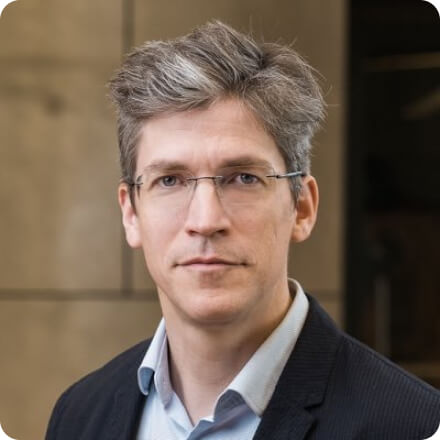
Sakari Kuikka is a Professor at the University of Helsinki, affiliated with the Faculty of Biological and Environmental Sciences and the Ecosystems and Environment Research Programme. He is a core member of the Helsinki Institute of Sustainability Science (HELSUS) and leads the Fisheries and Environmental Management Group. His contact details include the email sakari.kuikka@helsinki.fi and the address P.O. Box 65 (Viikinkaari 1), 00014 University of Helsinki, Finland. His research focuses on environmental sciences , particularly fisheries management , marine policy , and Bayesian risk assessment . He has pioneered the use of Bayesian networks in environmental decision-making, including oil spill risk management and seabed mining impact assessments. His work bridges ecological modeling and policy analysis , with applications to high-latitude ecosystems and sustainability governance. Recent publications highlight his expertise in toxicology data standardization for oil spill impacts on fish, economic integration in fisheries science , and Arctic shipping safety . He actively supervises doctoral students in Wildlife Biology and Interdisciplinary Environmental Sciences. Current projects (2023–2027) include WATERWAYS (marine sustainability) and GYROSCOPE (digital marine logistics).
Dr. Andreas Baur is a research associate at the Institute of Ethics and Technology (IZEW) , University of Tübingen, and a PhD candidate at the Amsterdam Institute for Social Science Research (AISSR) , University of Amsterdam. He serves as fellow at the Critical Infrastructure Lab Amsterdam and contributes to the DoingIPS communication team. Education: M.A. in Peace Research and International Politics, University of Tübingen B.A. in Political Science and Economics, University of Tübingen/Universidad de Guadalajara Research Focus: Interdisciplinary analysis of IT infrastructures' political implications, particularly cloud computing's role in power dynamics, digital sovereignty (including EU's Gaia-X initiative), technology ethics, and governance of socio-technical systems. His work bridges International Relations , Science and Technology Studies , and ICT Policy . Recent Research Trends: Examines cloud infrastructure politics through lenses of sovereignty claims, hybrid cloud architectures, and material manifestations of power in digital ecosystems. Publications explore European digital governance attempts, cloud imaginaries, and multi-cloud regulatory challenges. Academic Contributions: Co-editor of Feminist Data Protection special issue ( Internet Policy Review , 2021) Participant in EU Horizon 2020 HEIMDALL project Contributor to EU FP7 SECTOR initiative Member of BMBF-funded Privacy-Arena and digilog@bw projects Teaching & Outreach: Conducts seminars on security in modern information technologies and participates in public workshops regarding AI ethics, digital sovereignty, and cyber security challenges. Regularly contributes to public debates through media appearances and policy discussions.
Jim Dowling is a distributed systems researcher at KTH Royal Institute of Technology, focusing on large-scale distributed systems, machine learning, and big data. His work emphasizes improving system dependability, performance, security, and scalability through middleware, peer-to-peer systems, and cloud-native solutions. He leads courses such as Advanced Course in Large Scale Machine Learning and Deep Learning and Scalable Machine Learning and Deep Learning , demonstrating his commitment to education in AI and distributed computing. His research spans topics like feature stores, Kubernetes integration, and AI-driven environmental analytics (e.g., ANIARA project for edge infrastructure automation and ExtremeEarth for Copernicus data analysis). He has contributed to scalable ML pipelines, cloud storage systems (HopsFS-S3), and hyperparameter optimization tools like Maggy. Key projects include the Hopsworks platform for machine learning operations and the development of cloud-native tools for big data analytics. His work bridges theoretical distributed systems research with practical applications in AI, healthcare, and environmental science. He has advised on numerous collaborative initiatives but no formal students are listed. His grants and lab activities are centered around Hopsworks and the ANIARA project, reflecting his focus on scalable, self-managing systems.
Jasper Brinkerink is a Lecturer in Entrepreneurship and Innovation at the University of Edinburgh Business School. He also holds a research affiliation with the Centre for Family Business Management at the Free University of Bozen-Bolzano. His work focuses on entrepreneurial decision-making in family firms, new ventures, and privately-owned businesses. Lecturer at University of Edinburgh Research Affiliate at Free University of Bozen-Bolzano Teaching experience at Maastricht University Research Interests : Family business sustainability across generations Entrepreneurial capital in family firm contexts Research credibility and methodological practices Innovation and sustainability in SMEs Publication Trends : His work spans family business dynamics (2016-2024), research integrity (2021-2022), and sustainability in SMEs (2024). Key subfields include identity elasticity, P-hacking, absorptive capacity, and institutional reliance. Teaching Responsibilities : Course Organizer for "Doing Research for Business" (CMSE11538) Course Organizer for "Family Business Management" (CMSE11579) Course Organizer for "The Entrepreneurial Manager" (BUST10115) Research seminar organizer for Entrepreneurship and Innovation group
Dr. Wanlu Li is an Assistant Professor in the Department of Chemistry and Biochemistry at Montclair State University's College of Science and Mathematics. She holds a PhD from The Graduate Center-City University of New York and conducted postdoctoral research at Columbia University. Her work focuses on developing heteroatom-doped porous carbon materials for applications in sustainable energy and environmental remediation. Education: Bachelor of Science, Binzhou University Doctor of Philosophy, The Graduate Center-City University of New York Research Interests: Design of porous carbon materials for electrochemical CO₂ reduction Biowaste-derived supercapacitor applications Photocatalytic degradation of environmental pollutants Nickel-based catalysts for biomass conversion Her studies emphasize functional group engineering and porosity optimization to enhance material performance in energy storage and environmental remediation. Publications: Dr. Li has published over 20 peer-reviewed articles, with recent work exploring S,N-codoped carbon materials, biowaste-derived composites, and photocatalyst stability under environmental conditions. These studies highlight advancements in sustainable material design and energy conversion technologies. Affiliations: Member of the American Carbon Society, American Chemical Society, and Electrochemical Society. Lab & Teams: Leads the Wanlu Li Group focused on Material Chemistry for Environmental Remediation and Renewable Energy. Her lab investigates advanced carbon-based materials through collaboration with industry and academic partners.
Giuseppe Santucci is an Associate Professor at the Department of Computer, Control and Management Engineering Antonio Ruberti at Sapienza University of Rome. He teaches courses on Fundamentals of Computer Science, Software Engineering, and Visual Analytics. His office is located in Room B218 at Via Ariosto 25, Rome, and his contact email is santucci@diag.uniroma1.it. Dr. Santucci's research focuses on Visual Analytics, Information Visualization, Human-Computer Interaction, and Information Retrieval. His work spans theoretical aspects of visual query languages for semantic models to practical applications in visual analytics for cybersecurity, cryptocurrencies, and deep learning explainability. He has published over 130 articles in international journals and conferences, demonstrating his significant contributions to these fields. His recent publications show a strong trend toward applying visual analytics to increasingly complex domains including cybersecurity, cryptocurrencies, and explainable AI. The work demonstrates an evolution from theoretical foundations of visual query systems to practical applications that help users understand complex data and systems. His research bridges the gap between theoretical computer science and practical user-centered solutions. Dr. Santucci has received notable recognition including: IEEE VizSec 2018 Best Paper Award Human-Computer Interaction Cybersecurity Awards 2018 He actively mentors students through thesis projects focused on information visualization and visual analytics. His PROMISE project provides a framework for students to engage in cutting-edge research in information retrieval and visual analytics. He has supervised work on topics including visual evaluation techniques, visual mappings optimization, and user studies for Infovis systems. Dr. Santucci leads the A.WA.RE (Advanced Visualization & Visual Analytics REsearch) group at Sapienza University. This group conducts research on visual analytics tools for information retrieval evaluation, cybersecurity analysis, and deep learning explainability. Their work includes developing frameworks like CryptoComparator for cryptocurrency analysis and BUCEPHALUS for cybersecurity platform analysis.
Yan Huang is an Associate Professor of Business Technologies at the Tepper School of Business, Carnegie Mellon University. She holds a Ph.D. in Information Systems and Management from Carnegie Mellon University (2013) and a B.Sc. (with honors) in Information Systems and Management from Tsinghua University, Beijing, China (2009). Prior to joining Carnegie Mellon University, she served as an Assistant Professor of Technology and Operations at the University of Michigan–Ann Arbor, Ross School of Business (2013-2018). Her educational background includes: B.Sc. (with honors) in Information Systems and Management, Tsinghua University, Beijing, China (2009) Ph.D. in Information Systems and Management, Carnegie Mellon University, Pittsburgh, United States (2013) Dr. Huang's research examines the economic and social impacts of technologies and identifies effective designs and policies for technology-enabled markets and platforms. She employs economic theories, structural modeling, statistical modeling, machine learning methods, and an understanding of the underlying technologies in her research. Her recent work focuses on the economics of artificial intelligence (AI) and machine learning (ML), with particular attention to algorithmic fairness, transparency, and collusion. She is among the first to bring economic and social perspectives to research on fair ML. Additionally, she studies digital platforms and online markets, examining how firms can leverage data-driven strategies to optimize pricing, personalization, and user engagement. Her recent publications demonstrate a strong focus on the intersection of AI/ML with economic principles, particularly in areas like algorithmic bias, pricing strategies, and platform regulation. A significant portion of her work examines how machine learning algorithms impact financial lending decisions, housing markets, and content creation platforms. Her research methodology frequently combines structural econometric modeling with empirical analysis of real-world data, providing both theoretical insights and practical implications for platform design and policy. Dr. Huang has received several prestigious awards for her scholarly contributions: AIS Senior Scholar Best Publication of 2023 Award for "Algorithmic Transparency with Strategic Users" Runner Up, Best Paper Published in Information Systems Research for 2021 for "Crowds, Lending, Machine, and Bias" INFORMS Information Systems Society Sandy Slaughter Early Career Award Finalist, Best Student Paper Award, CIST 2021 for "Human-Algorithmic Bias: Source, Evolution, and Impact" Pounds Fellowship As an active member of the academic community, Dr. Huang serves on various committees at CMU including the MSBA Curriculum Review Committee and the Tepper School Strategic Plan Task Force. She has also held editorial positions for Management Science, Information Systems Research, and the International Conference on Information Systems. Her teaching portfolio includes courses on Human and Algorithmic Bias, Modern Data Management, and PhD-level instruction at the Tepper School.
Miklós Koren is a Professor of Economics at Central European University and Senior Research Fellow at the HUN-REN Centre for Economic and Regional Studies. His work bridges international trade , economic development , and managerial economics , focusing on trade policy, productivity spillovers, and the role of managers in development. Ph.D., Harvard University (2005) M.A., Central European University (2000) M.Sc., Budapest University of Economics (1999) His research explores trade facilitation , managerial impact on firm performance , and technological diversification . Recent work includes studies on expatriate managers, pandemic-related business disruptions, and the legacy of communist-era management practices. Key trends in his publications (2020–2024) emphasize managerial mobility and firm productivity (2024) machine learning vs. gravity models (2024) trade volatility and development (2023) data transparency standards (2022) Scientific awards include ERC Starting Grant (2012) Nicholas Káldor Prize (2014) Young Economist Award (2002, 2004) As Data Editor for Review of Economic Studies and Associate Editor for Journal of International Economics , he shapes methodological rigor in empirical research. His 2013 paper on technological diversification remains foundational for understanding volatility in developing economies.
Dr. CHEN Xia is a Full-time Faculty member and Lee Kong Chian Professor of Accounting at the School of Accountancy (SOA), Singapore Management University (SMU). She serves as Director of the SMU-ZJU Doctor of Business Administration (Accounting & Finance) Program and Recruiting Co-ordinator for the School of Accountancy. Her research focuses on institutional investors, financial analysts, family firms, and earnings restatements, with publications in top-tier journals like Journal of Accounting and Economics and Journal of Financial Economics . Education: PhD in Accounting, University of Chicago, US MBA, University of Chicago, US M.A. in Accounting, Tsinghua University, China B.S. in Management Information System, Tsinghua University, China Dr. Chen’s research interests span corporate governance, auditing, tax aggressiveness, and family firm dynamics. Her work explores how institutional investors and analysts impact corporate disclosures, and the governance mechanisms within family-controlled enterprises. Her awards include the Charles Horngren Fellowship and Deloitte & Touche Doctoral Fellowship. She actively contributes to the academic community through editorial roles at European Accounting Review and peer reviews for major journals like Journal of Accounting Research and Journal of Financial and Quantitative Analysis . Dr. Chen advises several PhD and DBA candidates in accounting, focusing on empirical research methodologies. She also oversees collaborative academic programs between SMU and ZJU.
Professor Catherine Easton serves as Professor in Information Technology and Intellectual Property Law at Lancaster University's School of Law, with additional affiliations at Security Lancaster and the Centre for Law and Society. Her work bridges legal scholarship with practical technology implementation, focusing on digital inclusion and governance frameworks. Her research centers on internet governance, domain name regulation, intellectual property law, and accessibility for disabled users. She examines how legal frameworks interact with human-computer interaction systems, particularly in crisis response scenarios and educational technology. Her scholarship consistently addresses the tension between regulatory compliance and genuine digital inclusion, with special attention to the UN Convention on the Rights of Persons with Disabilities. Her recent publications reveal growing emphasis on autonomous systems regulation, particularly regarding disability access in driverless vehicles, and ethical frameworks for cloud-based disaster response. The scholarly trajectory shows evolution from foundational website accessibility analysis toward complex systems governance in emerging technologies. Higher Education Academy International Scholarship recipient MMU Promising Researcher Fellow (2011) Co-chair of UN Internet Governance Forum's Internet Rights and Principles Dynamic Coalition Treasurer of British and Irish Law, Education and Technology Association Guest editor for Web Journal of Current Legal Issues Disability Special Edition Professor Easton actively develops legal education technologies, having created interactive teaching resources for major textbooks and pioneered clicker technology applications in law classrooms. She leads initiatives like the National Law Student Forum and has presented extensively on MOOCs and legal pedagogy. Her Security Lancaster affiliation connects her work to broader research on information transparency and crisis response ethics, where she examines big data's implications for inclusion and human rights.
Maxi Scherer is a Professor of Law and Chair in International Arbitration, Dispute Resolution, and Energy Law at Queen Mary University of London’s Centre for Commercial Law Studies (CCLS). She holds a PhD from Paris Sorbonne and LLM from Cologne University. Her academic roles include Global Professor at NYU Law, Visiting Professorships at SciencesPo, Georgetown, and others. She teaches in international arbitration and energy law, focusing on investment disputes, transparency, and energy sector arbitration. Research interests span international arbitration, energy law, and private international law. She is General Editor of the Kluwer Journal of International Arbitration and authored/co-authored books like International Arbitration in the Energy Sector and Transparency in International Investment Arbitration . Over 50 arbitrations as arbitrator (ICC, LCIA, etc.) and extensive practice in civil/common law systems. Her awards include being ranked in the top 20 Global Elite Thought Leaders and recognized by Who’s Who Legal. Key contributions address AI’s impact on dispute resolution, remote hearings, and third-party funding. Affiliations include CCLS, School of International Arbitration, and Energy and Climate Change Law Institute.
Laurie Mook is an Associate Professor and Associate Director in the School of Community Resources and Development (CRD) at Arizona State University (ASU). She is also affiliated with the Lodestar Center for Philanthropy & Nonprofit Innovation and the Center for Organization Research and Design (CORD). Her research focuses on the social economy, including nonprofits, cooperatives, social enterprises, volunteerism, and social accounting. She holds a Ph.D. in Adult Education and Community Development from the University of Toronto, along with an M.Ed. and B.A. from Canadian institutions. Dr. Mook’s academic contributions include co-authoring influential books such as Understanding the Social Economy: A Canadian Perspective (2018) and editing the Canadian Journal for Nonprofit and Social Economy Research . Her teaching spans courses like Social Marketing and Strategic HR Management, emphasizing online pedagogy and curriculum design. Her awards include the 2021 Distinguished Service Award from ANSER and multiple Outstanding Faculty Awards at ASU. She has been a leader in professional associations like ANSER and ARNOVA, contributing to conference organization, editorial roles, and policy discussions. Her work bridges academic research, nonprofit practice, and social innovation, addressing topics like volunteer management, impact measurement, and the role of technology in the social economy.
Professor John Zeleznikow is an Honorary Associate at La Trobe University's Law School, with a distinguished career spanning 49 years across multiple institutions including the University of Edinburgh and Victoria Business School. His research focuses on AI applications in legal decision-making, dispute resolution, and autonomous vehicle technology. He has secured over $8M in research grants and supervised 20 PhD graduates. Key projects include the Split-Up system (used in high-profile divorce cases like Prince Charles and Lady Di) and Family-Winner software, which won an ABC TV innovation award. His work bridges law, technology, and ethics, with publications in leading journals like the Harvard Negotiation Law Review and Artificial Intelligence and Law . Recent research explores AI-driven online dispute resolution (ODR), autonomous vehicle regulation, and the ethical implications of technology in legal systems. He advocates for transparent, user-centric legal tech solutions to enhance access to justice and improve decision-making processes.
Professor Tan Hun Tong is a Professor in the Division of Accounting at the Nanyang Business School, Nanyang Technological University (NTU), holding the UOB Chair in Banking. He is also Director of the Centre for Accounting & Auditing Research (CAAR). His academic journey includes a B. Acc (Honors) from NUS, M.A. in Psychology, and Ph.D. in Business Administration (Accounting) from the University of Michigan. Research focuses on judgment and decision-making in accounting, leveraging psychological theories and experimentation. Key interests include preparers, users, and intermediaries of accounting information, and institutional/environmental influences on financial judgments. His editorial roles include Editor-in-Chief of Accounting, Organizations and Society , and Editor of Journal of International Accounting Research . Recent work spans critical audit matters, investor decision-making, and auditing standards, reflecting themes in behavioral accounting and regulatory impact. Awards: 2021 ABO Notable Lifetime Contribution Award Public Administration Medal (Silver, 2016) Nanyang Award for Research (2008) Long Service Awards (2015, 2019) Advising and grants: No formal advisee list provided. Active in editorial and AAA committees, emphasizing professional standards and research advocacy. Labs/Teams: Leads CAAR, focusing on accounting and auditing research. Engaged in interdisciplinary projects merging psychology with financial decision-making.
James S. Duncan is the Ebenezer K. Hunt Professor of Biomedical Engineering at Yale University, with additional appointments in Electrical & Computer Engineering and Radiology & Biomedical Imaging. His research focuses on biomedical image processing, quantitative image analysis using geometrical models, and applications in cardiac function and neuro-structure analysis. He has pioneered image-guided interventions and developed computational frameworks for medical imaging challenges. He holds a Ph.D. from the University of Southern California. His work integrates AI, deep learning, and statistical decision-making to advance medical imaging technologies. Notable contributions include advancements in 3D image segmentation, deformable models, and MRI-based tumor response assessment. Dr. Duncan has received prestigious awards, including IEEE Fellow (2001) and induction into the American Institute for Medical and Biological Engineering (2000). His recent research spans AI-driven hemodynamics modeling, trustworthy healthcare AI guidelines, and molecular MRI innovations in immunotherapy monitoring. He collaborates across disciplines to address challenges in cardiovascular, neuroimaging, and oncological applications.