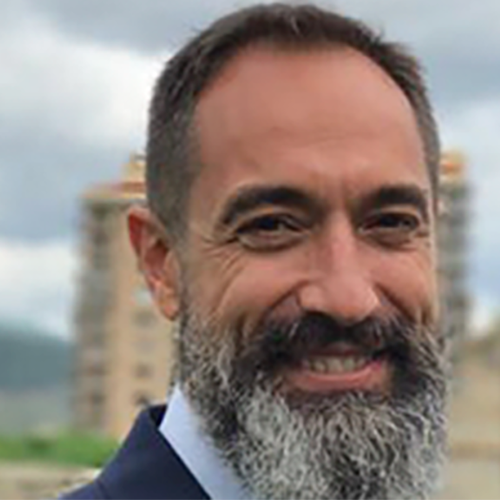
Roberto Berjón Gallinas is a Professor at the School of Computer Science, Deusto University. His research focuses on semantic technologies, internet of things, and data integration, with a strong emphasis on mobile applications and open data. He leads two research groups: ICS (Innovación en Ciencias Sociales) MARATON (Mobile applications, internet of things, data processing, semantic technologies, open data) His recent work includes developing smart tracking frameworks for IoT workflows and digital twins, event-driven architectures for IoT systems, and semantic integration solutions for university research. His projects often bridge technical innovation with practical applications in collaborative e-learning and spatial analytics. Key trends in his publications highlight advancements in IoT frameworks , semantic technologies for data integration, and real-time systems using BLE and open data. These works frequently intersect with collaborative e-learning , university transparency , and adaptive mobile platforms .
Li Azinovic-Yang serves as an Assistant Professor of Accounting and IBM Faculty Fellow at the University of Chicago Booth School of Business. Her research examines corporate disclosure dynamics through analytical modeling and data analysis, focusing on intersections with firm innovation, competition structures, and labor practices. Education: PhD in Accounting, Columbia Business School Master in Banking and Finance, University of Zurich Bachelor in Finance, Shanghai University of Finance and Economics Her research spans corporate disclosure antecedents and consequences, particularly investigating how information transparency affects firm innovation strategies, competitive market structures, and labor policy implementation. Current work analyzes disclosure regulation's welfare impacts and strategic communication in corporate experimentation contexts through rigorous analytical frameworks. Recent publications demonstrate strong focus on accounting standard evolution and diversity initiatives, revealing how regulatory stability shifts impact financial reporting and how diversity targets transform organizational behavior. Her work bridges theoretical accounting models with real-world corporate practices. Scientific Recognition: IBM Faculty Fellow As an active researcher, Azinovic-Yang maintains significant industry engagement through media coverage in outlets like Forbes and CBS Newsroom. Her work on innovation disclosure regulation generated podcast interviews on The Finance Bro, while diversity research received mainstream news attention. She contributes to academic discourse through Booth School publications and maintains an active research pipeline examining capital rationing incentives and strategic communication.
Dr. Steven Kemp is a Senior Lecturer in the Department of Public Law at the University of Girona, Spain. His research focuses on the intersection of criminal law, cybercrime, and criminological analysis, with affiliations to institutions like UNICRI, Open University of Catalonia, and the Institute of Public Security of Catalonia. His work spans digital security, fraud victimization, and sentencing disparities. Current roles: Serra Hunter Fellow, University of Girona (2023–present); Collaborating Teacher, UNICRI (2024–present) Previous roles: Associate Professor, University of Girona (2015–2021); Postdoctoral Researcher, Pompeu Fabra University (2021–2023) and University of Manchester (2021) His research interests include: Cybercrime dynamics during global crises (e.g., pandemic-related fraud trends) Victimization patterns in digital societies, particularly among older adults Legal implications of smart technologies and cybersecurity frameworks Comparative criminal justice systems, especially plea bargaining and sentencing disparities Key trends in his recent publications (2025–2019) highlight: Rising cyberfraud incidents and their societal impacts Interdisciplinary approaches to digital security and legal systems Statistical modeling of crime trends post-COVID-19 Behavioral responses to cybercrime risks Scientific recognition includes: Serra Hunter Fellow He actively collaborates with research groups like the Research Group in the Seminar of Criminal and Criminological Sciences and contributes to public policy initiatives in cybersecurity and fraud prevention.
Nicolò Cesa-Bianchi is a Professor of Computer Science at the University of Milan, where he serves as head of the Computer Science programs. He is also associated with the Department of Electronics, Information and Bioengineering (DEIB) at Politecnico di Milano. Cesa-Bianchi holds significant leadership roles including Board member, Fellow and co-director of the Milan unit of the European Laboratory for Learning and Intelligent Systems (ELLIS), and membership in the prestigious Accademia Nazionale dei Lincei. He is also involved with The European Lighthouse on Secure and Safe AI (ELSA), The European Lighthouse of AI for Sustainability (ELIAS), and The FAIR foundation. Professor Cesa-Bianchi's research focuses on the theoretical foundations of machine learning, with special emphasis on sequential decision making and online learning algorithms. His work spans multiple areas including multi-armed bandit problems, regret analysis, prediction with expert advice, and learning on graphs. He has made significant contributions to understanding the theoretical limits of learning algorithms and developing efficient methods for various learning scenarios. His research has important applications in online markets, social networks, and bioinformatics. His monographs 'Prediction, Learning, and Games' and 'Regret Analysis of Stochastic and Nonstochastic Multi-armed Bandit Problems' are considered seminal works in the field. His recent publications demonstrate continued leadership in advancing the theoretical understanding of machine learning, with 2024-2025 papers covering cooperative online learning, multitask learning, fair trade mechanisms, and refined analyses of bandit algorithms. The research shows increasing focus on practical economic applications while maintaining strong theoretical foundations. Google Research Award Xerox Foundation UAC Award Member of the Accademia Nazionale dei Lincei ELLIS Fellow Cesa-Bianchi has been deeply involved in academic service, having served as action editor for the Machine Learning Journal, IEEE Transactions on Information Theory, and the Journal of Machine Learning Research. He currently serves as associate editor for the Journal of Information and Inference and TheoretiCS. He has held leadership positions including President of the Association for Computational Learning and member of the steering committee for the EC-funded Network of Excellence PASCAL2. He was program chair of the 13th Annual Conference on Computational Learning Theory and the 13th International Conference on Algorithmic Learning Theory. He leads the Laboratory for AI and Learning Algorithms (ALGA) at the University of Milan, which focuses on theoretical and applied research in machine learning. His international collaborations are extensive, with visiting positions at UC Santa Cruz, Graz Technical University, Ecole Normale Supérieure in Paris, Google, and Microsoft Research. As an educator, he teaches advanced courses including Reinforcement Learning and Statistical Methods for Machine Learning, and has supervised numerous students through the years.
Bernhard Schölkopf is a Director at the Max Planck Institute for Intelligent Systems and holds a Professorship at ETH Zurich. He is one of Europe's leading researchers in Artificial Intelligence and serves as co-founder and president of ELLIS (European Laboratory for Learning and Intelligent Systems). His scientific interests focus on machine learning and causal inference, with applications spanning biomedical problems, computational photography, and astronomy. Schölkopf has conducted research at prestigious institutions including AT&T Bell Labs, GMD FIRST in Berlin, and Microsoft Research Cambridge before joining the Max Planck Society in 2001. Schölkopf's recent work examines the tangible risks of AI systems rather than speculative existential threats, highlighting important challenges including algorithmic bias, lack of transparency, privacy violations, worker exploitation, carbon footprint of AI systems, and job displacement across multiple publications in different languages. His scientific achievements have been recognized with numerous prestigious awards: Academy Prize of the Berlin-Brandenburg Academy of Sciences and Humanities Royal Society Milner Award Leibniz Award Koerber European Science Prize BBVA Foundation Frontiers of Knowledge Award Allen Newell Award Fellow of the ACM Fellow of the CIFAR Program "Learning in Machines and Brains" Schölkopf is a member of the German Academy of Sciences (Leopoldina) and co-founded the series of Machine Learning Summer Schools. His work bridges theoretical advances in machine learning with practical applications across diverse domains, while advocating for responsible AI development that addresses real-world challenges rather than speculative existential threats.
Guillermo Toral is an Assistant Professor of Political Science at IE University and a Faculty Affiliate at MIT GOV/LAB. He holds a PhD from MIT (2020), an MPhil from the University of Oxford (2011), and a Licenciatura from Universidad Complutense de Madrid (2009). His research focuses on comparative politics, political economy, and governance, with a regional emphasis on Latin America and Southern Europe. He examines relationships among state actors, anti-corruption policies, and their impact on public service delivery and human development. His academic experience includes tenure-track roles at IE University (2022–present) and Vanderbilt University (2020–2022). He previously worked at the World Bank (2011–2014) on education policy and human development programs. His research has been published in top journals like the American Journal of Political Science and Journal of Politics , earning awards such as the AJPS Best Article Award and APSA Health Politics Best Paper Award. Key research areas include bureaucratic accountability, political budget cycles, and the political uses of public employment. His book project explores how lame-duck governments disrupt bureaucracy and service delivery. Teaching evaluations highlight his expertise in comparative politics and political economy at both undergraduate and graduate levels. Awards: Harold D. Lasswell Award, AJPS Best Article Award, APSA Health Politics Best Paper. Grants: Ramón y Cajal fellowship (IE University). Labs/Teams: MIT GOV/LAB Affiliate.
Jordi Perelló Muntan is an Associate Professor in the Department of Computer Architecture at the Universitat Politècnica de Catalunya (UPC), Barcelona, Spain, where he is also affiliated with the Escola Tècnica Superior d'Enginyeria de Telecomunicació de Barcelona (ETSETB). He is a member of the Broadband Communications Systems and Architectures (CBA) and IDEAI-UPC research groups, focusing on advanced optical and future internet networking technologies. Research Interests: His research spans telecommunications networks, optical fiber and optical networking, resource optimization, network architectures, and the Future Internet. He investigates performance optimization in 5G transport networks, Spatial Division Multiplexing (SDM), Recursive Inter-Network Architecture (RINA), elastic optical networks, and cognitive networking. His work integrates SDN, network virtualization, and green networking principles for scalable and efficient infrastructures. Publication Trends: His recent publications focus on probabilistic constellation shaping in multicore fiber networks, cognitive strategies for optical margin reduction, RINA-based QoS assurance, and migration planning toward spectrally-spatially flexible optical networks. These reflect a strong trend toward intelligent, adaptive, and energy-efficient network design for future communication systems. Scientific Awards: Co-recipient of the 2020 Fabio Neri Best Paper Award Runner-up (Elsevier Journal of Optical Switching and Networking) Co-recipient of the ONDM 2021 Best Paper Award Co-recipient of the 2019 IEEE Communications Society Charles Kao Award Co-recipient of the ONDM 2012 Best Student Paper Award Advising and Grants: He has advised multiple PhD students on topics including RINA, optical network planning, and virtual provisioning. He has led or participated in major European (H2020, FP7) and national (PID, TEC) research projects such as SLICENET, PRISTINE, TRAINER, and ALLIANCE, focusing on 5G, RINA, and sustainable network infrastructures. Labs and Teams: He is an active member of the CBA research group at UPC, contributing to experimental and theoretical advancements in optical and programmable networks. His team collaborates internationally on testbed development and standardization efforts in next-generation networking.
Jose Antonio Gomez Hernandez is a Professor at the University of Murcia , affiliated with the Faculty of Communication and Documentation and the Department of Library and Documentation Science . He holds a Doctorate from the University of Murcia (2006), completing his thesis on the role of libraries in higher education. His research focuses on public libraries' societal roles, digital literacy, transparency in governance, and social inclusion. Key projects include the IRIS Program , which educates students on transparency and participatory governance. His work emphasizes libraries as hubs for digital empowerment, particularly for marginalized groups like migrant women and vulnerable populations. He has collaborated on projects funded by grants like OTRI 34820, addressing digital competencies and public library innovation. His publications explore topics such as public library functionality, citizen engagement, and the intersection of technology with civic rights. He is part of the Libraries, Archives and Information Culture research group. Recent articles highlight his contributions to understanding digital skills programs, social capital creation in libraries, and the alignment of libraries with UN Sustainable Development Goals. His work bridges academic research with practical initiatives, advocating for libraries as essential institutions in fostering equitable societies.
María da Alba Nogueira López is a Professor of Administrative Law at the University of Santiago de Compostela, affiliated with the Faculty of Law and Department of Public Law and Theory of the State. She holds a European Doctorate in Law (1997) and has conducted extensive research in Environmental Law, Administrative Economic Law, Social Rights, Linguistic Law, and Autonomous Public Law. She leads the ARMELA research network on equality, rights, and the social state and is part of the Center for Interdisciplinary Research in Environmental Technologies (CRETUS). Her work emphasizes sustainable governance, circular economy policies, and language rights in public administration. She has authored over 40 articles, 78 book chapters, and 13 books, focusing on legal frameworks and social equity. Doctorate: University of Santiago de Compostela (1997) Licence in European and International Law from Université Catholique de Louvain (1992-1993) Research Projects: Principal Investigator (PI) on 6 state/autonomous projects and contributor to 25+ others Her research interests include critical analysis of EU environmental policies, administrative practices in social vulnerability, and linguistic normalization in Galicia. She has contributed to legal reforms promoting equity, such as administrative transparency and housing rights. Her recent work highlights the limitations of voluntary approaches in circular economy policies and advocates for stronger regulatory frameworks. Member of the Real Academia Galega since 2012 Contributed to policy documents like “Una Administración para el 99%” (2023) Her legal expertise spans legislative critiques, such as analyzing Galicia’s legislative inaction on language policies and environmental protection. She also engages in public debates on migration policy and social welfare, reflecting her commitment to democratic governance and social justice.
Miguel Ángel Sotelo Vázquez is a full Professor at the University of Alcalá, leading the INVETT Research Group (Intelligent Vehicles and Traffic Technologies). He holds the Department of Automatic Control and specializes in autonomous systems, particularly in path planning, sensor fusion, and human-vehicle interaction. His research integrates machine learning, robotics, and control theory to address challenges in intelligent transportation systems. He earned his Ph.D. in 2001 with a thesis on autonomous vehicle navigation in partially known environments. His work emphasizes real-world deployment, explainable AI, and safety-critical systems. Recent projects focus on lane change prediction, pedestrian behavior modeling, and cybersecurity for autonomous systems. Key contributions include neuro-symbolic frameworks for decision-making, real-time multi-physics field reconstruction, and cross-cultural studies of pedestrian interactions. He collaborates internationally on urban mobility resilience and hydrogen refueling infrastructure. Research Highlights : Development of knowledge graph-based prediction architectures Experimental validation of human-vehicle interaction in VR environments Creation of the SCOUT trajectory prediction framework
Andrea Jamardo Lorenzo is an Assistant Professor at the University of León , affiliated with the School of Law and working within the Department of Public Law . Her research focuses on Procedural Law , with particular emphasis on Chain of Custody mechanisms, Technology in Law , and Legal Education innovations. Education : PhD in Law from the University of León (2023), thesis titled La cadena de custodia: análisis sistemático , supervised by Dr. Piedad González Granda. Her research explores the legal configuration and technological evolution of chain of custody systems in both national and European contexts. She investigates how digital evidence handling , AI applications , and cybersecurity protocols impact judicial integrity and procedural guarantees. Recent work also addresses pedagogical methods like flipped classrooms and role-playing in legal education. Analysis of her publications reveals trends in criminal procedure reforms , comparative chain of custody models (Spain vs. US), and ethical implications of legal technology . While no scientific awards are documented, her work contributes to debates on judicial efficiency , fundamental rights , and data protection in criminal contexts.
Haresh Sapra is the Charles T. Horngren Professor of Accounting at the University of Chicago Booth School of Business. His research focuses on the interplay between accounting measurement policies , disclosure regulation , and corporate governance mechanisms, particularly in the context of financial institutions. University of Minnesota PhD (2000) Editor of the Journal of Accounting Research Teaching awards across all Booth programs Sapra investigates how accounting rules impact bank stability , including mark-to-market accounting's role in procyclical behaviors and the design of CECL loan loss provisioning standards. His work bridges theoretical models with empirical regulatory challenges , examining how disclosure requirements affect market discipline and managerial decision-making. Recent publications address climate-related financial disclosures (2023), bank capital regulation (2023), and corporate governance effects on innovation (2013). His research has been featured in top-tier journals like The Accounting Review and Journal of Accounting Research, with media coverage in The Economist and Wall Street Journal. Scientific recognition includes the Ernest R. Wish Accounting Research Award for his influential work on hedge disclosures. Sapra teaches advanced courses on financial accounting and economic modeling of accounting issues to MBA and PhD students at Chicago Booth.
Prof. Valerio Pruneri is an ICREA Professor and Group Leader at the Institute of Photonic Sciences (ICFO), holding the Corning Inc. Chair in Optoelectronics. He leads a research group focused on quantum optics, nanophotonics, and biomedical imaging. His academic background includes a PhD in Laser Physics from the University of Southampton (UK). Research interests span quantum communication technologies, plasmonic sensors, and nanomaterials for optical applications. Recent advancements include work on quantum key distribution systems, graphene-based devices, and super-sensitive phase imaging techniques. Articles highlight innovations in quantum-enhanced imaging, integrated photonic circuits, and hyperbolic metamaterials. His team collaborates on EU projects like NANO-GLASS ITN and FLIGHT, with a strong emphasis on translational research. Over 50 students and researchers are advised, many funded by national and international grants (e.g., Agencia Estatal de Investigación, CELLEX Foundation). Key lab facilities include state-of-the-art cleanrooms and optical characterization tools.
Carolina Luis Bassa is a Research Professor at the Universitat Pompeu Fabra Barcelona School of Management (UPF-BSM), serving as Academic Director and leading the Department of Business and Strategic Management. She directs multiple master’s programs and heads the Mercadona UPF-BSM Chair of Circular Economy. Her expertise spans Marketing, Sustainability, and Technology applied to business strategy, with a focus on digital transformation and circular economy practices in industries like agri-food distribution. Her academic journey includes roles as Vice-Dean of Teaching Staff and Academic Director, reflecting her commitment to educational innovation. Research interests emphasize sustainable consumer behavior, data-driven business models, and the integration of technology in CRM and customer experience management. Over 35 years, she has advised students and professionals on strategic applications of marketing and technology. Research Trends: Recent publications highlight circular economy adoption in agriculture, transparency in sharing economies, and data-driven strategies in customer-centric models. She bridges academic insights with industry challenges, particularly in leveraging technology for sustainable business practices. Awards & Grants: No specific awards are listed, but her leadership roles and chair position indicate significant institutional recognition. Grants and partnerships likely stem from her involvement with initiatives like the Mercadona Chair. Labs & Teams: Leads the Mercadona UPF-BSM Chair, focusing on circular economy research and collaboration with industry partners.
Scott Nelson is an Associate Professor of Finance at the University of Chicago Booth School of Business. His research bridges consumer credit markets, regulatory frameworks, and behavioral economics, with a focus on how information asymmetries and algorithmic decision-making shape market outcomes. He has contributed to understanding the impacts of the 2009 CARD Act, eviction protections in housing markets, and fairness in credit scoring systems. PhD in Economics, Massachusetts Institute of Technology BA (summa cum laude) in Economics and Mathematics, Yale College Nelson's work employs diverse data sources, including credit reports, court filings, and tax records, combined with structural models to analyze consumer and firm behavior. Key themes include regulatory efficiency, validity disparities in predictive models, and the welfare implications of policy interventions. His articles reveal trends in algorithmic regulation (2025), eviction dynamics (2025), credit scoring disparities (2024), and public finance impacts on Chinese real estate (2023). These publications highlight interdisciplinary methodologies integrating economics, law, and data science. Scientific awards include the AQR Top Finance Graduate Award (2018) and National Science Foundation Graduate Research Fellowship. He has held postdoctoral roles at the Consumer Financial Protection Bureau/Princeton University and visiting research positions at the Federal Reserve Bank of Boston.