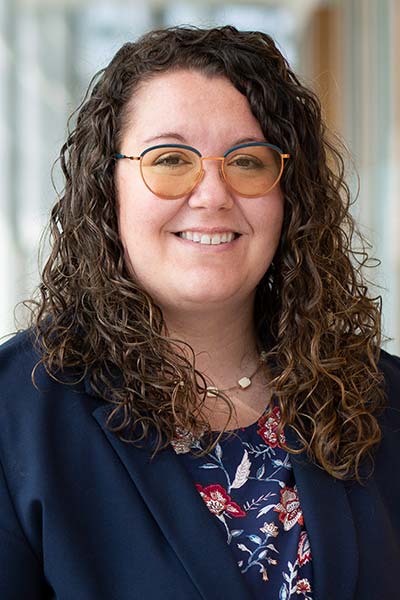
Dr Jenni Adams is a Research Associate at the University of Sheffield's School of Information, Journalism and Communication, specializing in open research practices and epistemic justice. She contributes to the MORPHSS project , a cross-institutional initiative addressing open research frameworks in humanities and social sciences. Key Focus: Qualitative data sharing, disciplinary boundaries, and transparency in research Education: BA, MA, PhD in interdisciplinary research and information studies from Sheffield Professional Roles: Member of UK Reproducibility Network, Center for Open Science Train-the-Trainer, and co-lead of Open Scholarship Community Sheffield Her research explores philosophical dimensions of open scholarship, emphasizing ethical considerations in data practices and disciplinary paradigms. Recent publications address FAIR data challenges in social sciences and historical trauma narratives. 2023: Co-authored study on cross-disciplinary FAIR data at Sheffield 2025: Preprint evaluating UK FAIR data stewardship programmes 2009-2014: Literature analyses focusing on magical realism in Holocaust texts Adams advocates for equitable research practices through her involvement in open scholarship communities and her critical examinations of epistemic justice frameworks.
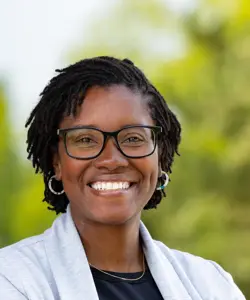
Julie P. Martin is a Professor of Engineering Education and Director of the Engineering Education Transformations Institute (EETI) at the University of Georgia. With a focus on elevating marginalized voices in STEM, she leads initiatives to expand research community capacity through methodological activism and asset-based frameworks. BS and PhD in Materials Science & Engineering (NC State University, Virginia Tech) Former NSF program director Editor-in-Chief of the Journal of Women and Minorities in Science and Engineering Her research spans: Asset-based approaches leveraging student strengths Qualitative methods for equity-focused studies Methodological activism transforming academic practices Recent articles analyze cultural wealth in engineering, critical research methods, and publishing ethics reforms. These works emphasize equity in STEM , reflexive research practices , and systemic change in academia. Scientific recognition includes: NSF CAREER Award (2009) ASEE Fellow National leadership roles in ASEE As EETI Director , she oversees initiatives like the Elevate team , which develops inclusive educational frameworks. Her editorial work promotes constructive review cultures in academic publishing.
Malin Houben is a Lecturer at Bielefeld University's Faculty of Sociology and a Research Associate at the Faculty of Health Sciences in Working Group 3 Epidemiology & International Public Health. She is also a doctoral researcher at the Bielefeld Graduate School in History and Sociology. Her academic journey began with a BA in Sociology (2013) and MA in Sociology (2017), both from Bielefeld University. Her research focuses on body and medical sociology, qualitative methods (particularly ethnography and interaction analysis), ethnomethodology, and sociological gender studies. Her ethnographic dissertation project examines gynecological practice, exploring mechanisms of creating and maintaining gynecological situations. As part of ethnomethodological Studies of Work, she reconstructs how medical work is organized interactively, physically-materielly, technically, and linguistically, with particular attention to practices of professional proximity and distance. Her recent scholarly output shows a strong emphasis on qualitative research methodology, medical sociology, and gender studies. The publications reveal a consistent focus on ethnographic approaches to medical settings, particularly gynecology, with increasing attention to material aspects of medical practice and technology. Her work bridges methodological innovation with substantive contributions to understanding medical encounters. German Sociological Association (Sections: Methods of Qualitative Social Research, Women's and Gender Studies, Sociology of the Body and Sports) Gender Studies Association Network for Women's and Gender Studies NRW Former spokesperson for the Working Group on Methods and Methodologies in the Network* Sexual and Gender Diversity in Health Research and Care NRW Certificate 'Professional Teaching Competence for Higher Education' (2024) Houben teaches across multiple institutions including Bielefeld University, Münster University, Duisburg-Essen University, and Dortmund University of Applied Sciences. She has developed innovative teaching projects, notably the 'Sociological History(s) in the Bielefeld Historical Museum' which resulted in a public exhibition in 2022. Her teaching integrates theoretical, methodological, and empirical questions with her research interests in medical sociology and gender studies. She is currently working on the ERC-funded research project 'GYNVEPI - Toward an epidemiology of gynecological violence' at the Faculty of Health Sciences.
Dr. Damiano Spina is a Senior Lecturer in the School of Computing Technologies at RMIT University, Melbourne, Australia. He serves as an Associate Investigator at the ARC Centre of Excellence for Automated Decision-Making and Society (ADM+S), the RMIT Research Lead at the Australian Internet Observatory (AIO), and a member of the International Panel on the Information Environment (IPIE). In June 2025, he began a 3-year appointment as an ACM Distinguished Speaker, recognizing his significant contributions to the computing field. Dr. Spina received his PhD in Computer Science from UNED (Spain) in 2014. His academic journey has established him as a leading researcher in information access systems and human-computer interaction. His educational background reflects a strong foundation in computer science with a focus on information retrieval systems. Dr. Spina's research focuses on Information Retrieval (IR), Text Analytics, and Human-AI interaction, with particular emphasis on interactive IR (including conversational assistants) and the evaluation of information access systems. His work bridges theoretical research with practical applications, addressing critical issues such as fairness-aware evaluation, bias detection, and the impact of generative AI on information access. He has developed innovative methodologies that incorporate physiological and cognitive data to better understand user interactions with information systems. His approach often integrates perspectives from cognitive science, behavioral analysis, and ethical considerations to create more effective and equitable information access solutions. His recent publications demonstrate a clear trajectory toward increasingly interdisciplinary research, combining traditional information retrieval with neurophysiological approaches, ethical frameworks, and societal impact assessments. The articles show growing attention to real-world applications, particularly in addressing misinformation, bias in search systems, and accessibility challenges for diverse user groups. His work increasingly incorporates multimodal data and human-centered evaluation methodologies that go beyond traditional relevance metrics. SIGIR 2025 LiveRAG Challenge - First Place Walert - Outstanding Achievement in the 2024 EIP-RACE Demonstrator Competition Award for Excellence in Reviewing ACM SIGIR 2024 Best Presentation Award NTCIR-17 (2023) Best Poster Award Ubicomp-ISWC 2023 RMIT Award for Research Impact (Technology) (2021) ARC Discovery Early Career Researcher Award (DECRA) (2020-2023) Best Short Paper Award ECIR 2020 Best Evaluation Paper Award ECIR 2019 Top Reviewer Award Information Processing & Management (2018) Dr. Spina has supervised numerous PhD and Master's students across diverse research areas including neurophysiological approaches to information retrieval, trust perception in social media, fairness-aware question answering, and sexism identification in social networks. His research has been supported by significant grants including the ARC DECRA award for 'Fair and Transparent Information Access in Spoken Conversational Assistants' (2020-2023) and ongoing projects through the ADM+S Centre. He has also received the 2021 RMIT Award for Research Impact (Technology) for his work's practical applications. Dr. Spina is actively involved with the Australian Internet Observatory (AIO), a national research infrastructure initiative developing tools to analyze digital social data across disciplines. He co-leads the EXIST project series on sexism identification in social networks and has contributed to the Cortana Intelligence Institute (2018-2020) which advanced knowledge on digital assistants. His work often bridges academia and practical applications, particularly in the areas of misinformation management, fairness in information access, and human-AI cooperation.
Jennifer Buckle is a Professor at the Memorial University of Newfoundland , affiliated with the School of Arts & Social Science and the Department of Psychology . She is a Registered Psychologist whose work bridges clinical psychology with scholarship of teaching and learning . Education: B.Sc. (Hons.) from Acadia University, M.A. and Ph.D. from York University. Research Focus: Buckle’s research examines grief, loss, and resilience , with a clinical guide on bereaved parents and methodological contributions to qualitative research. She explores how individuals process trauma through visual expression (e.g., memorial tattoos) and investigates positionality in cross-cultural studies . Publication Trends: Recent work addresses rural suicide prevention (2024), visual narrative methods (2023), and ethical challenges in trauma research (2009–2010). Her studies span clinical interventions, cultural dynamics, and pedagogical innovation . Scientific Awards: Grenfell Campus Student Union Teaching and Learning Award (2022) Grenfell Campus Engagement Award (2019) Grenfell Campus Teaching Award (2018) Teaching and Advising: Buckle teaches Psychopathology, Tests and Measurements, and Psychology of Death and Dying , and supervises honours students in clinical psychology. She advocates for scholarship of teaching and learning innovations.
Cassandra McCall is an Assistant Professor in the Engineering Education Department within the College of Engineering at Utah State University (USU), where she joined in August 2020. She teaches foundational undergraduate engineering science courses and graduate-level engineering education curriculum development and research seminars. Educational Background: PhD in Engineering Education, Virginia Tech, 2017 MS in Civil Engineering, South Dakota School of Mines & Technology, 2011 BS in Civil Engineering, South Dakota School of Mines & Technology, 2009 Certificate in Effective College Instruction, Association of College and University Educators, 2021 Her research focuses on enhancing diversity and inclusion in engineering by challenging normative conceptions of engineering identity. She employs qualitative and critical frameworks to study identity formation, particularly around disability and hidden identities, and promotes inclusive teaching through Universal Design for Learning. Her work emphasizes researcher positionality and equity in qualitative research design. Her recent publications reflect a strong trend in identity, equity, and methodological innovation in engineering education, with a particular emphasis on marginalized populations and inclusive pedagogies. She has published in top journals such as the Journal of Engineering Education , Engineering Project Organization Journal , and Australasian Journal of Engineering Education . Scientific Awards and Honors: Teacher of the Year Award, 2024, College of Engineering, USU Undergraduate Teacher of the Year Award, 2024, Engineering Education Department, USU Undergraduate Research Mentor of the Year Award, 2023 Outstanding Undergraduate Mentor Award, 2022 Star Reviewer Award, 2021, Journal of Engineering Education Wickenden Award for Best Manuscript, 2021 Journal Manuscript of the Year Award, 2020, Australasian Journal of Engineering Education Dr. McCall is a dedicated mentor to graduate students in engineering education, advising several students to completion. Her grants and research initiatives focus on interdisciplinary collaboration, accessibility in engineering, and improving mentoring practices. She is actively involved in advancing methodological rigor and ethical considerations in equity-focused research. She is affiliated with research teams exploring inclusive engineering education practices and is a key contributor to conversations on disability inclusion in STEM. Her lab and collaborative work emphasize participatory and community-engaged research designs that center the voices of marginalized individuals in engineering.
Anette Bringedal Houge is an Associate Professor at the Department of Criminology and Sociology of Law at the University of Oslo's Faculty of Law. Her research centers on gendered, political and collective violence, and institutional responses to such harms at local, national, and international levels. She is actively involved in the UiO:Life Science Convergence environment Evidently rape , where she leads the project From medical facts to legal evidence , examining how medical and forensic experts translate findings from sexual assaults for legal processing purposes. Her research interests include institutional responses to crime and victimization, sexual and political violence, torture and rehabilitation, supranational criminology, international criminal justice, sociology of knowledge, and research ethics. Houge approaches these topics through interdisciplinary lenses, connecting criminology, sociology of law, gender studies, and medical humanities. Houge's scholarly work reveals consistent engagement with the juridification of violence, particularly sexual violence, and how legal frameworks shape societal understanding of these phenomena. Her recent publications demonstrate growing focus on medical-legal interfaces in rape cases, ethical challenges in violence research, and rehabilitation systems for torture victims. She employs qualitative methods to explore how knowledge is constructed and translated across disciplinary boundaries within the criminal justice system. PhD in Criminology from the University of Oslo (2017) Former Head of Analysis at the Norwegian Red Cross Former postdoctoral researcher at the Department of Interdisciplinary Health Sciences, Faculty of Medicine, University of Oslo Houge actively contributes to public discourse through commentaries in medical journals and newspapers. She has notably engaged in debates about medical certificates for elderly drivers, demonstrating her commitment to connecting academic research with policy discussions. Her work on research ethics has resulted in co-editing the textbook Etisk ubehag. En ærlig lærebok om kvalitativ forskning på sensitive temaer (2024), addressing ethical challenges in sensitive research topics. She is affiliated with several research groups including Open Science: Democratizing knowledge production? (ReDemOS), Research Group on International Law, Society, Health and Power (SHEP), and the Thematic Group on Research Ethics and Global Criminology.
Noah Kenneally is an Assistant Professor at MacEwan University , affiliated with the Faculty of Health and Community Studies in the Department of Human Services and Early Learning . He specializes in childhood research with a focus on social justice dynamics in early childhood communities. PhD in Humanities, Social Sciences, and Social Justice Education from the Ontario Institute for Studies in Education/University of Toronto Former contract lecturer at Toronto Metropolitan University His research explores: Children’s rights and perspectives in educational contexts Relational sociology applied to family and socialization processes Comics research and creative methodologies for knowledge generation Family support and capacity-building for childcare professionals Recent publications span topics from: Gene therapy clinical trials and Dravet syndrome research Play-based curriculum and relational pedagogy Discursive analysis of educator-child interactions Visual narratives in childhood research through comics
Dr. Gianina Baker serves as Associate Director of Evaluation, Learning and Equitable Assessment at the Office of Community College Research and Leadership (OCCRL) within the University of Illinois Urbana-Champaign's College of Education. She leads the REACH Collaborative and provides assessment consulting services, public engagement, and research agenda development. Previously, she was Acting Director of the National Institute for Learning Outcomes Assessment (NILOA) and held leadership roles at Richland Community College including Director of Institutional Effectiveness & Planning. Her research pioneers equity-centered assessment frameworks in higher education, focusing on culturally responsive practices that center student identities and dismantle systemic barriers. She investigates how to reframe assessment to prioritize equity rather than compliance, develop inclusive pathways for STEM faculty in community colleges, and integrate student voices into learning assessment processes. Her work bridges theory and practice through community college leadership initiatives and national assessment scholarship. Recent publications reveal a decisive shift toward critical equity lenses in assessment, moving beyond traditional compliance models to frameworks that actively challenge power structures and validate marginalized experiences. Her scholarship emphasizes transparency, cultural responsiveness, and student agency as non-negotiable components of meaningful assessment. Notable awards include: Central Illinois 40 under 40 Woman of the Year (2020) Patricia and Richard Justice Award, College of Education (2012) William C. Bagley Award, College of Education (2010) Graduate College Fellowship, University of Illinois (2009) Dr. Baker actively shapes national discourse through keynote presentations and consultation, advocating for assessment practices that empower rather than surveil. Her work with NILOA and OCCRL drives institutional change by providing evidence-based frameworks for equitable student learning outcomes. She is embedded in OCCRL's research ecosystem and NILOA's national network, collaborating with community colleges on initiatives like the Aspire Regional Collaboratives to scale inclusive STEM faculty pathways. Her leadership centers community-engaged scholarship that transforms assessment from bureaucratic obligation to justice-oriented practice.
Dr. Anke Erdmann is a Research Fellow at the Institute of Experimental Medicine, Christian-Albrechts-University of Kiel, where she serves in the Medical Ethics Working Group. Her work integrates philosophical and sociological perspectives to address critical ethical challenges in contemporary medicine, particularly within the Cluster of Excellence "Precision Medicine in Chronic Inflammation." She maintains active roles in clinical ethics consultation and research ethics advisory services while contributing to medical ethics education. Her educational trajectory includes a Dr. rer. medic. (2010-2015) from the University of Witten/Herdecke, where her dissertation examined communication between dementia patients and caregivers through integrative validation. Earlier, she earned a Diploma in Sociology, Philosophy, and Social Work (1991-1998) from Gerhard-Mercator-University Duisburg. Her clinical background features nursing qualifications from Märkischer Kreis hospitals (1982-1985) and practical experience as a nurse in Zurich and Radevormwald (1986-1988), followed by nursing instruction roles in Switzerland (1988-1990). Dr. Erdmann's research centers on three interconnected domains: precision medicine ethics examining patient, clinician, and researcher perspectives on mobile health technologies in chronic inflammation; end-of-life ethics focusing on communication patterns, decision-making processes, and coping mechanisms in amyotrophic lateral sclerosis; and caregiving ethics analyzing truth-telling practices, deception dilemmas, and validation techniques in dementia care. Her methodological approach prioritizes qualitative inquiry including interviews, scoping reviews, and case-based analysis, consistently emphasizing patient autonomy and practical implementation of ethical principles. Her publication record reveals a progressive deepening of focus on precision medicine ethics since 2021, with increasing integration of qualitative insights from patient experiences. The 2023-2024 publications demonstrate particular attention to methodological ethics in research design while maintaining her dual specialization in end-of-life care and dementia ethics. Her work consistently bridges theoretical bioethics with clinical practice through collaborations with medical professionals across neurology, gastroenterology, and palliative care specialties. Within the Medical Ethics Working Group, Dr. Erdmann contributes to the Institute's comprehensive ethics infrastructure including Clinical Ethics Consultation services and Research Ethics Advisory functions. Her current project "Gutes Leben mit Präzisionsmedizin" investigates acceptability criteria for precision medicine from multiple stakeholder perspectives in chronic inflammatory conditions, extending her earlier work on patient views of bodily experience in IBD. She actively participates in doctoral thesis supervision as indicated by the Institute's open inquiries for graduate students.
Dr. Sacha Kendall Jamieson is a Visiting Fellow and qualitative health researcher at UTS School of Public Health. Her social work background informs studies on prison health, Aboriginal well-being, and mental health in marginalized populations. Research examines cultural safety in Aboriginal aging support, ethical complexities in eating disorder treatment, military suicide exposure impacts, and health system navigation challenges. Projects include evaluations of prison transition programs and Indigenous youth resilience. Publications demonstrate methodological innovation in cross-cultural qualitative research, community-led approaches with Aboriginal communities, and ethical frameworks for vulnerable populations. Recent work addresses linguistic challenges in focus groups and remote ethnography. Projects: Connections Program: Health and recidivism outcomes post-prison (2019) Recidivism, health and social functioning in prisoners with drug use (2016-2021) She teaches social work ethics, mental health practice, and qualitative methods, emphasizing participatory and trauma-informed approaches.
Professor Dr. Martina Klausner is a full-time faculty member at the Institute for Cultural Anthropology and European Ethnology, Goethe University Frankfurt am Main, within the Faculty of Linguistics, Cultures and Arts. She holds the professorship in Digital Anthropology and Science and Technology Studies, leading major interdisciplinary research initiatives including the Research Training Group Fixing Futures. Technologies of Anticipation and the Center for Critical Computational Studies. Her educational background includes studies in European Ethnology and Cultural Studies at Humboldt University in Berlin, where she also completed her PhD. Her research agenda centers on digital transformation processes in governance, healthcare, and urban environments, with a strong methodological focus on digital and collaborative ethnographic methods. Her research interests span Digital Anthropology , Science and Technology Studies (STS) , datafication in urban governance , AI regulation , digital health technologies , and participation rights of people with disabilities . She investigates how digital data infrastructures shape political processes, such as in the Verkehrswende (transport transition) in Frankfurt, and how AI is regulated across sectors like finance. Her work emphasizes the political dimensions of data production and the ethical, legal, and infrastructural challenges of digital technologies. Her recent publications from 2022–2024 reveal a strong trend toward critical data studies , digital ethnographic methods , and interdisciplinary governance of AI . Articles such as 'A More-than-digital Anthropology' and 'Digitalität und Ethnografie' advocate for methodological innovation in ethnography, while others analyze AI in financial systems and data politics in urban mobility, reflecting a cohesive research trajectory at the intersection of technology, power, and participation. She is actively involved in scientific leadership, serving as PI of major research groups and as an ERC Panel Member for Social Sciences & Humanities. She also contributes to academic discourse through editorial roles and collaborative publications. Martina Klausner supervises doctoral researchers, including Matthias Kloft, whose dissertation builds on her research on AI regulation in finance. She has secured significant research funding, including DFG and ZEVEDI grants, and leads collaborative projects involving law, computer science, and philosophy. Her work is deeply embedded in interdisciplinary networks, including the Laboratory: Anthropology Environment | Human Relations. She is affiliated with the Laboratory: Anthropology Environment | Human Relations , a long-standing research collective she was part of during her early career, and continues to engage in collaborative and co-laborative research models. Her current DFG-funded project on data politics in Frankfurt exemplifies her ongoing commitment to ethnographic inquiry into digital governance and civic participation.
Vivien BLANCHET serves as an Associate Professor and Coordinator of the Digital Leadership research axis at Burgundy School of Business (BSB), affiliated with the Digital Management department. Her academic work bridges digital transformation with ethical business practices, focusing on how organizations navigate social and environmental challenges through innovative leadership approaches. Her research interests center on Digital Leadership , Corporate Social Responsibility , Fair Trade systems , and Socio-ecological Transitions . BLANCHET critically examines how digital technologies intersect with ethical business models, particularly investigating fair trade qualification processes, social innovation during crises, and the justification mechanisms of social business within neoliberal frameworks. Her work often employs critical theoretical perspectives to analyze power dynamics in sustainable development initiatives. BLANCHET's publication record demonstrates consistent scholarly output in responsible organization studies, with recent work appearing in the Journal of Responsible Organization and Revue de l'Organisation Responsable. Her research shows a clear trajectory examining ethical dimensions of business practices, with increasing focus on digital leadership's role in sustainability transitions. Notable themes include the cultural mythology surrounding fair trade products, editorial practices in business & society research, and methodological considerations when studying vulnerable populations. As an active contributor to academic discourse, BLANCHET serves in editorial capacities for Revue de l'Organisation Responsable, where she has addressed critical issues such as Anglophone hegemony in academic publishing and the evaluation of business & society research fields. Her collaborative work with scholars like Berrier-Lucas, Coulibaly-Ballet, and Ramboarisata demonstrates strong interdisciplinary connections across sustainability, ethics, and digital management domains.
Prof. Alexandra Hartman is a Professor of Political Science at University College London (UCL), specializing in conflict resolution and development studies with fieldwork focused on Liberia, Syria, and humanitarian contexts. Her research examines violence dynamics, displacement, property rights, and community governance mechanisms through mixed-method approaches. Her research interests include Political Science , Conflict Resolution , Development Studies , Refugee and Migration Studies , and Community Governance . She investigates how community-based monitoring and alternative dispute resolution systems impact resource management and violence reduction in fragile states, aligning with UN Sustainable Development Goals 1 (No Poverty), 10 (Reduced Inequalities), and 16 (Peace, Justice and Strong Institutions). Analysis of her 2017-2023 publications reveals consistent empirical focus on post-conflict settings, particularly Liberia and Syria. Key trends include experimental evaluations of humanitarian aid allocation, community monitoring systems for natural resources, and the psychological dimensions of refugee-host relations. Her methodological contributions integrate qualitative depth with experimental rigor to assess poverty alleviation and governance interventions.
Aikaterini Mniestri is a Research Fellow at the University of Siegen and a PhD candidate at the London School of Economics (LSE). She holds a B.A. in Liberal Arts and Sciences from Leiden University College and an RMa in New Media and Digital Cultures from the University of Amsterdam. Her research focuses on power dynamics, participatory culture, and platform governance, particularly examining how marginalized groups navigate visibility and vulnerability on social media platforms like YouTube and TikTok. Her current PhD project, supported by the Onassis Foundation, critiques the intersection of data feminism and platformization, analyzing algorithmic discrimination and creator resistance strategies. She also co-organized the 'More than Data' summer school at the University of Siegen, exploring positionalities in digital research. Teaching responsibilities include the 'Start-up Prototyping' course at the University of Siegen’s EnableUS interdisciplinary centre, blending humanities perspectives with purpose-driven entrepreneurship. Her work emphasizes ethical digital methods, including digital ethnography and data visualization, while addressing sensitive data collection challenges in platform studies.