
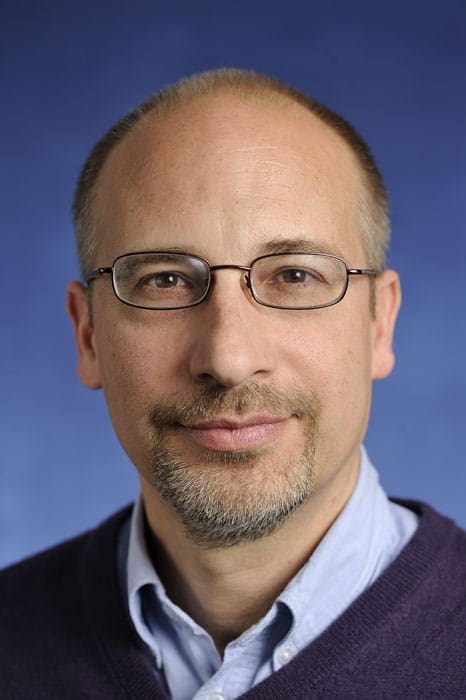
Joel Andreas is a Professor of Sociology at Johns Hopkins University since 2003, serving as Program Director of the East Asian Studies Program. His research focuses on political contention, social inequality, and social change in contemporary China. He holds a PhD in Sociology from UCLA and teaches social theory, political sociology, and courses on Chinese society. He has held visiting positions at universities including the University of Sydney, Hong Kong University, and Ningxia University. His work examines labor movements, rural land policies, and class dynamics in China. Recent research includes analyses of staff-worker congresses, rural land dispossession, and the persistence of militarism in U.S. policy. He critiques market reforms and explores the legacy of the Cultural Revolution. Andreas has contributed to debates on China’s transition to capitalism and the decline of socialist systems. His publications span topics from urbanization to state coercion in rural development. He maintains an active role in academic exchanges and policy-relevant research on China’s socio-political landscape.
جستوجوی استاد و پژوهشگر
استاد راهنما، استاد دانشگاه یا پژوهشگر مناسب برای مسیر پژوهشیتان را پیدا کنید و با او ارتباط بگیرید.
نمایش ۱-۱۵ از ۶۶۲ استاد راهنما
اطلاعات این پروفایلها از صفحات عمومی دانشگاهها جمعآوری شده و ممکن است بهروز نباشد.
- Soviet Nationality Policy
- Minority History in Eastern Europe
- Ukrainian History (20th Century)
- +۳ مورد دیگر
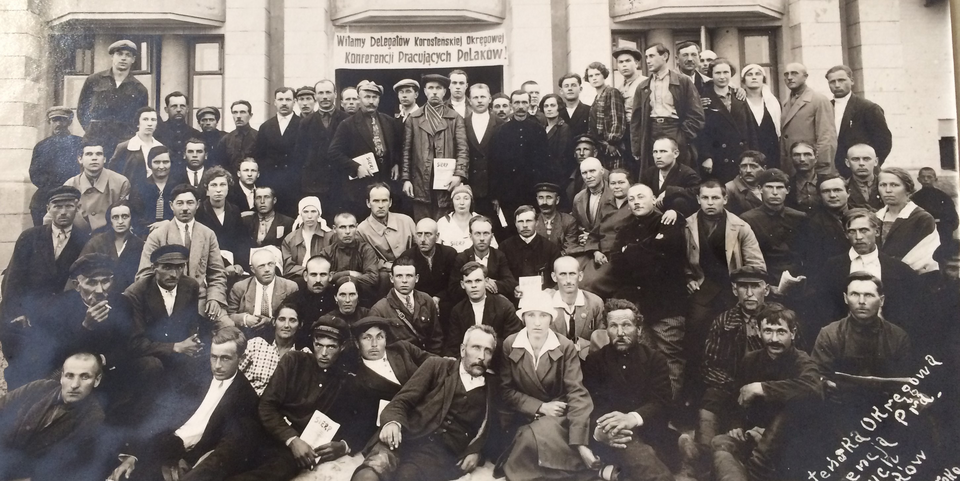
Prof. Dr. Olena Palko is a historian specializing in Eastern Europe, the Soviet Union, and Ukraine. She holds the SNSF Professorship at the University of Basel's Department of History, focusing on East European History. Her research emphasizes Soviet minority policies, cultural politics, and national identity formation in interwar Ukraine. She is a leading scholar with notable works including Making Ukraine Soviet (2021), awarded the 2023 Alexander Nove Prize. Her current SNF-funded project, Red Tower of Babel , examines Soviet minority experiments in Ukraine. Education: PhD from University of East Anglia (2017); Kandydat nauk from National Academy of Sciences of Ukraine (2013). Research Interests: Soviet nationality policy, minority history, Ukrainian twentieth-century history, transnational border dynamics. Her work bridges archival analysis with transnational perspectives, addressing contested borderlands between Poland and the USSR. Key publications include co-edited volumes like Making Ukraine (2022) and Ukraine's Many Faces (2023). She actively contributes to academic governance roles, including co-convening the BASEES Study Group for Minority History and serving on the Scientific Advisory Council of the Council of Europe's history observatory.

- Comparative Politics
- Democracy
- Development
- +۴ مورد دیگر
Jason Brownlee is a Professor in the College of Liberal Arts at the University of Texas at Austin. His research focuses on comparative politics, democracy, and authoritarianism, with a regional emphasis on the Middle East and Southeast Asia. Ph.D., Princeton University Contact: brownlee@austin.utexas.edu Research Interests : Brownlee investigates the persistence of authoritarian regimes, the political economy of repression, and the impact of foreign intervention on domestic politics. His work often analyzes Egypt, Iran, Malaysia, and the Philippines. Key Publications : Authoritarianism in an Age of Democratization (Cambridge, 2007) Democracy Prevention: The Politics of the U.S.-Egyptian Alliance (Cambridge, 2012) The Arab Spring: Pathways of Repression and Reform (Oxford, 2012, co-authored with Tarek Masoud and Andrew Reynolds) Teaching : Brownlee offers courses such as "War/Freedom in South Asia/Middle East" and "Issues & Policies in American Government," delivered both in-person and online.
- Asian Art History
- Chinese Art
- Japanese Art
- +۱۲ مورد دیگر
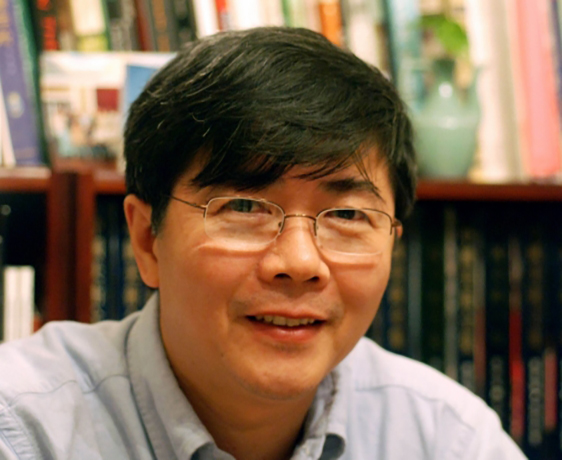
Kuiyi Shen is Professor of Asian Art History, Theory, and Criticism at the University of California, San Diego (UCSD), where he also serves as Vice Chair and Director of the PhD Program in the Department of Visual Arts. He is affiliated with the Division of Arts and Humanities and maintains an active research, teaching, and curatorial practice focused on Chinese and Japanese art, particularly modern and contemporary Chinese art and Sino-Japanese artistic exchanges. BA in Fine Arts, Shanghai Normal University MA and PhD in Art History, The Ohio State University Shen's research centers on the evolution of Chinese art in the modern era, with emphasis on ink art, unofficial art movements, and the interplay between tradition and modernity. His work explores how political, social, and transnational forces have shaped artistic expression in China, particularly during transformative periods such as the late Qing, Republican era, and post-Cultural Revolution decades. He is deeply engaged in the study of literati painting, Buddhist art, and mass visual culture, including posters and illustrated magazines. The 15 most recent publications and exhibition catalogs reflect a consistent focus on modern and contemporary Chinese ink art, unofficial art practices, and cross-cultural dialogues. Key themes include the reinvention of tradition, the role of Japan in modern Chinese art, and the emergence of independent artistic voices during politically repressive periods. His scholarly output spans academic monographs, co-edited volumes, and curatorial projects that bridge East and West. Notable scientific achievement: 2013 ICAS Book Prize in Humanities for Arts of Modern China Shen has advised numerous exhibition projects and served on international juries, including the Guggenheim Museum and the International Awards for Art Criticism. He has held academic positions at Ohio University, SUNY Buffalo, Rice University, and the University of Oregon before joining UCSD. He is Managing Editor of Brill’s Modern Asian Art and Visual Culture book series, underscoring his leadership in the global academic community. His teaching includes courses on Chinese and Japanese art, landscape painting, and contemporary art and mass culture. Shen has curated or consulted on over 20 major exhibitions worldwide, including A Century in Crisis (Guggenheim), Blooming in the Shadows (China Institute), and Light before Dawn (Asia Society), demonstrating his dual expertise in scholarship and curatorial practice.

Joel Wolfe is a Professor of History at the University of Massachusetts Amherst, based in Herter Hall. He holds a B.S. from Georgetown University, an M.A. in Latin American Studies from the University of New Mexico, and a Ph.D. in History from the University of Wisconsin–Madison. His research focuses on modern Brazil, Latin American history, and the cultural and political history of baseball and football. Wolfe is the author of three books, including *Working Women, Working Men* (1993) and *Autos and Progress* (2010), with his latest work *Brazil* (2023) examining national history. He is currently writing a book on the history of American football and a project on inter-American trade and culture in the 1920s. Wolfe’s teaching includes courses on modern Latin America, Brazilian history, and the history of baseball and football. His awards include the George R. Brown Prize for Excellence in Teaching (Rice University, 2003–2005) and the Residential First Year Experience Student Choice Award at UMass Amherst. His research integrates themes of labor, modernization, and transnational connections, with a focus on Brazil’s industrialization, populism, and cultural identity. His work bridges economic, social, and cultural history, often exploring how technology, politics, and everyday life shape national narratives. Ongoing projects emphasize the intersection of sport, national identity, and globalization in Latin America and the U.S.
Mahvish Ahmadمشاهده پروفایل
استادیار
- State Violence
- Militarism
- Decolonial Theory
- +۵ مورد دیگر
Mahvish Ahmad is an Assistant Professor in Human Rights and Politics at the London School of Economics and Political Science (LSE) , affiliated with the Department of Sociology. She previously held a Mellon Postdoctoral Fellowship at the University of the Western Cape's Centre for Humanities Research. Her PhD in Sociology from Cambridge University focuses on state violence in Balochistan, Pakistan. Research Interests: Her work critically examines state violence, militarism, decolonial theory, and anti-imperial thought. Core themes include: State destruction mechanisms in Balochistan Archiving marginalized resistance movements Leftist periodicals as counterhegemonic tools Transnational solidarity networks Teaching: Convenes courses on Lawful Violence and Contemporary Politics of Human Rights . Integrates anti-colonial perspectives into curricula. Key Projects: Sovereign Destruction : Explores state demolition of alternative social orders in Balochistan. Thought Under Siege : Recovers grassroots movement thought from banned materials. Co-convenes Archives of the Disappeared (with scholars at UWCape and SA). Publications: Over 20 peer-reviewed articles and edited volumes, including works in Radical History Review , Surveillance & Society , and South Asian History and Culture . Recent focus on Balochistan's conflict dynamics and global South periodicals.
Daniel Matlinمشاهده پروفایل
دانشیار
Dr. Daniel Matlin is a Reader (equivalent to Associate Professor) in the History of the United States since 1865 at King's College London, affiliated with the Faculty of Arts & Humanities and the Department of History. He joined King's in 2012 after previous academic positions at Queen Mary University of London (as Leverhulme Early Career Fellow) and Cambridge University, where he served as Director of Studies at the Centre for History and Economics. His research examines the intersection of race, intellectual life, and urban space in 20th-century America, with specializations in: African-American intellectual/cultural history Civil rights and Black Power movements Historical constructions of race and Black diasporic identity Urban history (particularly Harlem and New York City) Jazz history and cultural expression Publication analysis reveals consistent focus on Harlem as both physical space and cultural symbol, with interdisciplinary approaches bridging history, visual culture, musicology, and urban studies. His works critically analyze racial representation, community formation, and the politics of space. Awards & Honors: Arthur Miller Centre First Book Prize for On the Corner: African American Intellectuals and the Urban Crisis Leverhulme Early Career Fellowship He actively supervises PhD students in African-American history, civil rights, black nationalist thought, and 20th-century cultural history. Grant-funded projects include 'Race Capital? Harlem as Place and Symbol since 1900.' Matlin engages extensively with public history through lectures at institutions like the National Theatre and Black Cultural Archives.

- Transnational feminisms
- gender, labor, and affect
- religion, secularism, and the public sphere
- +۱ مورد دیگر
Zeynep K. Korkman is an Associate Professor in the Department of Gender Studies at the University of California, Los Angeles (UCLA), with a research focus on gendered intersections of affect, labor, religion, and feminist politics in Turkey and the Muslim Middle East. Her forthcoming book Gendered Fortunes: Divination, Precarity, and Affect in Postsecular Turkey (Duke University Press, 2023) examines fortunetelling economies as windows into neoliberal and authoritarian contradictions. Her educational background includes: Ph.D. in Sociology, University of California, Santa Barbara, 2011 B.A. in Sociology, Bosphorus University, Istanbul, Turkey, 2000 Dr. Korkman's research centers on Transnational feminisms , gender-labor-affect dynamics , religion/secularism in public spheres , and Turkey/Middle Eastern studies . She investigates how women and LGBTIQ individuals navigate heteropatriarchy, neoliberal capitalism, and anti-Muslim racism through affective labor and political resistance, critically engaging postsecular complexities in millennial Turkey. Her 14 recent publications (2014-2023) reveal consistent thematic evolution: early work analyzed commodified intimacy and divination in Turkey's political economy, while recent scholarship critically examines anti-Muslim racism, transnational feminist solidarities, and secularism's gendered politics. Methodologically grounded in ethnography and cultural analysis, her work bridges Gender Studies, Sociology, and Middle Eastern Studies with urgent interventions in global feminist discourse. Her awards include: Postdoctoral Research Leave Fellowship, American Association of University Women (2019) Hellman Fellows Award, UCLA (2019) Research Fellowship, NEH/American Research Institute in Turkey (2016) Faculty Career Development Award, UCLA (2017) Research Professorship, University of Arizona (2015) Dr. Korkman's grant portfolio demonstrates sustained support for transnational feminist research, including National Endowment for the Humanities funding and multi-institutional fellowships. Her editorial leadership in Meridians journal's special issue on anti-Muslim racism reflects active mentorship in emerging scholarly conversations, though specific student advising details remain undisclosed in available materials.

Serra Hakyemezمشاهده پروفایل
استادیار
Serra Hakyemez is Assistant Professor of Anthropology and Global Studies at the University of Minnesota, currently on leave until January 2023. Her research examines the intersection of counterinsurgency warfare and judicial violence in Turkey's Kurdish regions, focusing on prison solidarity networks and decolonial resistance. She employs interdisciplinary methods combining political anthropology, legal studies, and ethnography to analyze state violence and resistance movements. Education includes: Ph.D. in Cultural Anthropology, Johns Hopkins University, 2016 M.A. in Sociology and Anthropology, Central European University, 2008 M.Sc. in Social Policy, London School of Economics, 2006 B.A. in Political Science & Business Administration, Bogazici University, 2005 Her research investigates the juridical and visual economies of counterinsurgent violence, with ongoing work on prison-based solidarity and insurgent justice frameworks in Kurdistan. Publications explore themes including feminist resistance in conflict zones, archival politics of state violence, and the anthropology of dissent. Awards include: ACLS Fellowship Wenner-Gren-Hunt Fellowship

- Modern and Contemporary Chinese Literature
- Sinophone Literature
- Late Qing Fiction and Drama
- +۵ مورد دیگر
David Der-Wei Wang serves as Edward C. Henderson Professor of Chinese Literature and Comparative Literature at Harvard University, holding dual appointments in the Department of East Asian Languages and Civilizations. He directs the CCK Foundation Inter-University Center for Sinological Studies and holds prestigious Academician positions at both Academia Sinica and the American Academy of Arts and Sciences. His distinguished career includes prior faculty roles at National Taiwan University (1982-1986) and Columbia University (1990-2004), with continuous Harvard affiliation since 1986. His academic credentials include: B.A. in Foreign Languages and Literature, National Taiwan University M.A. in Comparative Literature, University of Wisconsin-Madison (1978) Ph.D. in Comparative Literature, University of Wisconsin-Madison (1982) Wang's research pioneers interdisciplinary approaches to Modern and Contemporary Chinese/Sinophone Literature, Late Qing fiction, and colonial Taiwanese studies. His work critically examines historical trauma , cultural identity formation , and transnational literary networks , particularly through the lens of political upheaval and diasporic experiences. Special attention is given to mid-20th century Chinese intellectuals navigating ideological crises, with methodologies blending comparative literary theory and historical analysis. His eight major publications (1997-2020) reveal consistent thematic evolution toward global frameworks for Chinese literary studies. Early works like Fin-de-Siècle Splendor established foundations in Late Qing modernities, while later volumes including A New Literary History of Modern China and Why Fiction Matters expand into transnational Sinophone networks and contemporary sociopolitical relevance. The corpus demonstrates increasing emphasis on diasporic perspectives and decolonizing methodologies across Chinese literary historiography. Wang's scholarly recognition includes: Academician, Academia Sinica Academician, American Academy of Arts and Sciences Changjiang Scholar Award (2008) Humanitas Visiting Professorship at CRASSH, Cambridge (2013-14) As Director of the CCK Foundation Inter-University Center for Sinological Studies, Wang coordinates international research initiatives connecting North American and Taiwanese institutions. This leadership role facilitates collaborative projects in digital humanities and comparative Sinology, supporting emerging scholars through cross-institutional fellowships and academic exchanges focused on reimagining Chinese studies through global perspectives.

- Southern African social and political history
- liberation movements and their legacies
- violence and memory
- +۴ مورد دیگر
Jocelyn Alexander is Professor of Commonwealth Studies and Head of Department at the University of Oxford's Department of International Development (ODID). She teaches primarily on the MPhil in Development Studies and the DPhil in International Development, and serves on the editorial board of the Journal of Southern African Studies and the publications committee of the International Africa Institute. Her research interests include: Southern African social and political history Liberation movements and their legacies Violence and memory Political imprisonment Rural politics and state-making Political & International Dimensions of Development Sub-Saharan Africa Professor Alexander is currently working on a Leverhulme-funded collaborative research project titled 'Global Soldiers in the Cold War: Making southern Africa's liberation armies', and writing a history of political imprisonment in Zimbabwe. Her research uses qualitative methodologies, notably oral history and archival research, and she is interested in cross-disciplinary approaches combining history, anthropology, politics, and literature. Her recent publications demonstrate a strong focus on transnational histories of Southern African liberation movements, political imprisonment in Zimbabwe, and the legacies of violence in post-colonial states. She has made significant contributions to understanding the connections between liberation movements, the Cold War context, and the formation of post-colonial states in Southern Africa. Scientific awards: Leverhulme grant for project on Cold War-era 'global soldiers' (2019) Professor Alexander has supervised numerous doctoral students working on topics related to Southern African politics, history, and development. She has also co-authored important works including 'Violence and Memory: One Hundred Years in the 'Dark Forests' of Matabeleland' (2000) and authored 'The Unsettled Land: The Politics of Land and State-making in Zimbabwe, 1893-2003' (2006). She has taught at Sussex and Bristol Universities and has been a Research Associate at the University of Zimbabwe, bringing extensive regional experience to her academic work.
.jpg)
Kristin Soraya Batmanghelichi is a Professor in Middle East Studies at the Department of Culture Studies and Oriental Languages (IKOS), Faculty of Humanities, University of Oslo. She is a feminist scholar with a PhD from Columbia University and has held academic positions at Leiden University, Columbia University, and Princeton University. Her research focuses on gender, sexuality, cyberactivism, and political Islam in Iran and the broader Middle East. PhD in Iranian Studies, Columbia University (2013) MA in Human Rights and MA in Middle Eastern Studies, Columbia University (2004, 2007) Postdoctoral Research Fellow, Institute of Religion, Culture and Public Life (IRCPL), Columbia University (2016–2017) Visiting Lecturer, Leiden University (2014–2016) Her research interests include feminist theory, postcolonial studies, cyberactivism, women's movements, and the politics of class, sex, and race in the Middle East. She explores how gendered public spaces and digital platforms shape resistance and identity in Iran. Her work bridges activism and academia, particularly through feminist engagements with digital culture and diasporic politics. Her recent publications and monograph Revolutionary Bodies: Technologies of Gender, Sex, and Self in Contemporary Iran (2021) examine the intersections of technology, gender, and selfhood in Iran. Articles span topics such as cyberfeminism, government morality, and feminist challenges on social media, reflecting a strong focus on digital publics and feminist epistemology in the Iranian context. Scientific Awards and Fellowships: Independent Research Fund Denmark (2023–2026), Co-PI President's Global Innovation Fund, Columbia University (2017) Whiting Foundation Dissertation Fellowship (2011–2012) Columbia University Jackson Fellowship (2008–09) Foreign Language and Area Studies Fellowship (2006) Multiple research and travel fellowships from Columbia University and the Houtan Foundation She has supervised master’s theses and taught courses such as Iran in the World , Gender & Revolutions , and Fieldwork in the Middle East . She is Co-PI on a major Danish-funded project on diasporic Iranian politics and digital publics (2023–2026). She has co-organized international conference series on populism and pluralism across Amman, Tunis, Paris, and New York. She is an original member of the Theory of the Margins Collective in Oslo and founder of the Digging Collective , both of which support critical and interdisciplinary feminist scholarship.
Ana Antic is a Professor in the Department of English, Germanic and Romance Studies at the University of Copenhagen, Faculty of Humanities. She is also affiliated with the Centre for Culture and the Mind, where she leads an ERC-funded project titled Decolonising madness: Transcultural psychiatry, international order and the birth of a ‘global psyche’ . Her academic journey includes a PhD in Modern European History from Columbia University (2012) and prior appointments at universities in the UK and US before joining the University of Copenhagen in August 2020. PhD in Modern European History, Columbia University (2012) Ana Antic’s research lies at the intersection of social and cultural history, focusing on the history of modern Europe, war and violence, and the 'psy' sciences—particularly psychiatry and psychoanalysis. Her work critically explores the decolonisation of psychiatric practices and concepts in the second half of the 20th century, examining how transcultural psychiatry emerged in the aftermath of WWII and during decolonisation. She investigates how Western and non-Western experts redefined the relationship between culture, race, and the individual psyche, and whether new frameworks succeeded in moving beyond colonial legacies. Her recent publications reflect a strong trend in global and transnational history, especially in the fields of transcultural psychiatry, Cold War science, and postcolonial mental health. The articles span interdisciplinary journals in history, global health, and medical humanities, often emphasizing decolonial critique and the politics of knowledge. A recurring theme is the role of experts from the Global South and Eastern Europe in shaping global psychiatric discourse. She has received multiple prestigious awards, including: Fraenkel Prize for Contemporary History (2016) British Academy Rising Star Engagement Award (2017) ERC Starting Grant (2019) Dan David Prize (March 2023) Ana Antic is actively involved in research leadership and academic collaboration. She currently heads the DNRF Centre for Culture and the Mind and leads a major ERC-funded project. She has organized international conferences and workshops, including the DECOLMAD Workshop and New Perspectives in Transcultural and Postcolonial Psychiatry . While no direct list of PhD students is provided, her leadership roles suggest active supervision and mentorship. Her work bridges history, psychiatry, and global health, contributing to a deeper understanding of the cultural and political dimensions of mental health. She is involved with the Centre for Culture and the Mind, a research environment that fosters interdisciplinary work on the intersections of culture, cognition, and history. Her project Decolonising madness brings together historians, anthropologists, and mental health professionals to re-examine the foundations of global psychiatric knowledge.

Kirsten Weld is a Professor of History at Harvard University, affiliated with the Faculty of Arts and Sciences. Her work focuses on modern Latin America, particularly struggles over inequality, justice, historical memory, and social inclusion. She holds a BA from McGill University and a PhD from Yale University. Her research has been recognized with prestigious awards, including the WOLA-Duke Human Rights Book Award (2015) and the Latin American Studies Association’s Best Book Award (2016). Her first book, *Paper Cadavers: The Archives of Dictatorship in Guatemala* (2014), examines the role of archives in shaping historical narratives during Guatemala’s civil war. Her current project, *Ruins and Glory: The Long Spanish Civil War in Latin America*, explores the war’s legacies in the Americas. She teaches courses on Latin American history, U.S.-Latin American relations, archival theory, and historical methods. Weld’s publications span journals like *Hispanic American Historical Review* and *Dissent Magazine*, addressing topics such as Cold War dynamics, memory politics, and surveillance. Her work bridges historical scholarship with activism, emphasizing archives as tools for justice and accountability. Her awards reflect her contributions to human rights scholarship and historical methodology. Weld’s research often intersects with contemporary issues, including post-conflict justice and the ethical use of archival materials.

Douglas C. Ligor is a Professor of Policy Analysis at the RAND School of Public Policy and Director of the Management, Technology, and Capabilities Program at RAND's Homeland Security Research Division. He holds dual roles as a Senior Behavioral Scientist and academic researcher, specializing in homeland/national security law, immigration policy, space governance, and international legal frameworks. Education: J.D. from University of Connecticut School of Law (2000s) and B.S. in Economics from U.S. Military Academy at West Point (1990s). Prior to RAND, he served in federal legal roles including Deputy Chief Counsel at USCIS and Assistant District Counsel at DOJ/ICE. Research focuses on border security, asylum processing, outer space regulation, and federal-state-local coordination. His work frequently addresses intersections between statutory compliance and operational realities in domains like immigration enforcement and space traffic management. Notable contributions include policy analyses on Title 42 immigration restrictions, ISIS prisoner management in Syria, and frameworks for international space traffic governance. He regularly engages in public commentary through podcasts and op-eds on topics like U.S. border policy and emerging space law challenges.