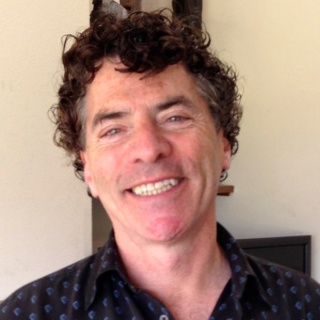
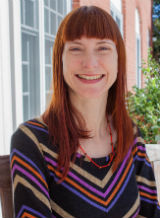
Jonathan Schooler is Distinguished Professor in the Department of Psychological and Brain Sciences at UC Santa Barbara, where he directs the META Lab and Center for Mindfulness and Human Potential. His research integrates empirical psychology with philosophical inquiry, examining: Meta-awareness and its role in regulating thought Creative benefits of mind-wandering Belief in free will and its behavioral consequences Anomalous cognition phenomena Meditation-induced cognitive changes Schooler leads multiple large-scale projects including research on digital attention training for adolescents and the neuroscience of creativity. His work has been supported by Templeton Foundation, National Institute of Mental Health, and Bower Foundation.
Lance Storm is a Researcher at the School of Psychology within the Faculty of Health and Medical Sciences at the University of Adelaide. He specializes in anomalistic psychology, focusing on research methodologies and statistical analyses to explore normal and paranormal phenomena. Storm is Chief Editor of the Australian Journal of Parapsychology and holds committee positions with the Australian Institute of Parapsychological Research. His work spans parapsychology, Jungian psychology, gambling behavior, and theories of perception. Storm has led numerous research projects, including investigations into imagery cultivation’s effects on mood and psi performance, and the phenomenology of altered states. He has secured grants totaling over AU$600,000 from institutions like the Bial Foundation and the Cardigan Fund. His research often employs meta-analytic approaches, analyzing decades of psi studies to assess methodologies like the Ganzfeld and forced-choice designs. Teaching experience includes lecturing on motivation, emotion, and perception. Storm’s publications span peer-reviewed journals such as Psychological Bulletin and Journal of Parapsychology , with key works addressing synchronicity, the sheep-goat effect, and the psychology of spiritual emergency. He advocates for rigorous empirical inquiry into parapsychological phenomena while critiquing methodological challenges in the field. Professional activities include editorial roles, grant review, and supervision of Honours, Masters, and PhD students. His work bridges theoretical perspectives with empirical research, exploring intersections between consciousness studies, existential psychology, and anomalous experiences.
Jakob Pietschnig is an Assistant Professor in the Department of Developmental and Educational Psychology at the Faculty of Psychology . His work focuses on intelligence research, meta-analytic methods, and measurement invariance across cultures and populations. He has contributed to understanding the Flynn Effect, generational changes in cognitive abilities, and the psychometric properties of psychological scales. Research Projects: Evolution of human intelligence: The Flynn effect (2024–2027) Computerdiagnostik (2024–2026) How biased is the literature in Psychological Science? (2018–2021) Reward: John B. Carroll Award for Research Methodology (2011) Research Interests: Pietschnig's research explores the structural and temporal dynamics of intelligence, including the Flynn Effect, measurement invariance of psychological scales, and cross-cultural comparisons of well-being and personality traits. He employs advanced statistical methods, such as meta-analyses and multiverse approaches, to address biases and variability in psychological science. Public Engagement: He has provided expert commentary on topics like intelligence trends and cognitive health in media outlets.
Spencer Arbige is a Researcher affiliated with the Faculty of Medicine, Health and Human Sciences at Macquarie University. He holds a Doctor of Philosophy and is actively involved in collaborative research projects. His work focuses on cognitive dissonance, scientific practice reform, and behavioral psychology. Recent contributions include a multilab replication study on cognitive dissonance and a co-authored review critiquing psychological research practices. Projects: He participated in the 2023-2024 project Does transliminality predict subperceptual information processing? , exploring psychological phenomena through interdisciplinary collaboration. His research integrates experimental methods with critical analysis of academic culture. Research Interests: Arbige’s work bridges theoretical psychology and methodological rigor. Key areas include cognitive dissonance theory, replication studies, and advocating for transparent scientific practices. His publications emphasize the importance of reproducibility and ethical research frameworks.
Christine Simmonds-Moore is a Professor of Psychology at the University of West Georgia, affiliated with the Department of Psychology in the College of Humanities, Arts, and Social Sciences. She holds a Ph.D. from the University of Northampton (UK) and has prior academic roles at Liverpool Hope University (UK) and the Rhine Research Center (USA). Her research focuses on anomalous experiences, parapsychology, transpersonal psychology, and the cognitive/neurobiological underpinnings of phenomena like schizotypy, transliminality, and aphantasia. She leads Bial Foundation-funded projects and has authored/co-authored books and articles on topics including exceptional experiences and health. Education: B.A., Psychology, University of Wales, Swansea (1993) M.Phil., Cognitive Science, Dundee University (1999) Ph.D., Psychology, University of Northampton (2003) Postgraduate Diploma, Consciousness and Transpersonal Psychology, Liverpool John Moores University (2008) Graduate Certificate, Transpersonal coaching psychology, Alef Trust (2023) Research Interests: Christine investigates personality traits linked to anomalous experiences (e.g., positive schizotypy), transpersonal states, parapsychology-mental health overlaps, and neurocognitive correlates of phenomena like synesthesia, ASMR, and aphantasia. Recent work explores interoception’s role in anomalous experiences and Bial-funded studies on aphantasia’s cognitive mechanisms. Teaching & Mentorship: Teaches courses on parapsychology, psychedelics, transpersonal development, and consciousness studies. Advises graduate students in research projects, including thesis supervision in parapsychology and transpersonal psychology. Professional Contributions: Editor of Exceptional Experience and Health , co-author of an anomalistic psychology textbook, and a frequent presenter at international conferences on parapsychology and transpersonal psychology.
Malcolm Schofield is a Senior Lecturer in Psychology at the College of Health, Psychology and Social Care. His research spans multiple psychology subfields including clinical, social, cognitive, health, and environmental psychology, with significant contributions to scale development and validation methodologies. Dr. Schofield maintains an active research profile focused on psychological assessment and belief systems. His primary research investigates personality traits (e.g., Dark Triad/Tetrad, narcissism), cognitive processes, and their intersection with supernatural beliefs, health behaviors, and social phenomena. Specific interests include sensory processing sensitivity, transliminality, anomalous experiences, and the psychological impact of health crises like COVID-19. He also develops assessment tools for pain management, conservation behavior, and caregiver quality of life. Publication analysis reveals Schofield's methodological expertise in psychometrics, longitudinal analysis, and cluster modeling. Recent works demonstrate strong emphasis on scale validation across diverse contexts—from paranormal beliefs to clinical pain management—reflecting his commitment to evidence-based psychological assessment. Research consistently integrates cognitive, personality, and health psychology frameworks.
Jon Nathan is a Senior Continuing Lecturer in the Department of Music at the University of California, Santa Barbara (UCSB). He serves as Director of the UCSB Jazz Ensemble and Lecturer in Percussion and Percussion Ensemble. With a B.M. in Jazz Studies from the University of Massachusetts, Amherst, and an M.M. in Percussion Performance from Cal State University at Northridge, Dr. Nathan completed his Doctor of Musical Arts at UCSB under William Kraft. His professional roles include principal timpanist with the Santa Barbara Grand Opera Association, Principal Percussionist with the Santa Barbara Civic Light Opera, and regular performances with regional orchestras like the Santa Barbara Symphony. He has taught at Moorpark College, Westmont College, and Santa Barbara City College, and contributed to the Jazz in July Improvisation Workshop. His expertise spans jazz ensembles, percussion performance, and music education, with a focus on ensemble direction and applied percussion techniques. Dr. Nathan’s career highlights include founding roles in the Animal Liberation Orchestra and the Nate Birkey Quintet, alongside extensive chamber and orchestral experience. His teaching philosophy integrates performance excellence with pedagogical innovation, emphasizing collaborative learning and technical mastery. He has held instructional roles in percussion techniques and ensemble leadership across multiple institutions, blending practical performance with theoretical music education. Education: B.M. in Jazz Studies, University of Massachusetts, Amherst M.M. in Percussion Performance, Cal State University, Northridge Doctor of Musical Arts, University of California, Santa Barbara His research interests bridge music performance and education, though his listed articles suggest interdisciplinary engagement in cognitive psychology and mindfulness—a potential dual focus or collaborative work. He has authored studies on attention training, free will beliefs, and the neuroscience of consciousness, reflecting a broader curiosity in human cognition and creativity. Professional Affiliations: Principal Timpanist, Santa Barbara Grand Opera Association Principal Percussionist, Santa Barbara Civic Light Opera Regular Performer, Santa Barbara Symphony and Santa Barbara Chamber Orchestra Dr. Nathan’s teaching extends beyond UCSB to community colleges and summer workshops, fostering jazz improvisation and percussion skills. His contributions to music education emphasize accessibility and interdisciplinary collaboration, blending traditional performance practices with modern pedagogical insights.
William McGeown is a Reader (equivalent to Associate Professor) in the Department of Psychological Sciences and Health at the University of Strathclyde, where he joined in August 2013. He leads the Dementia Research Network and runs the Neuroanalytics Laboratory, focusing on cognitive and neuropsychiatric symptoms in dementia and hypnosis research. He was promoted to Senior Lecturer in 2016 and to Reader in 2020. His educational background includes: PhD from University of Hull Postgraduate Certificate in Higher Education (PGCHE) from University of Hull Master in Research Methods (MRes) Diploma from University of Aberdeen BSc (Hons) Psychology from University of Aberdeen McGeown's primary research focuses on dementia, particularly Alzheimer's disease, vascular dementia, and fronto-temporal dementia. He employs neuroimaging, neurophysiological, and biomarker analysis methods, including cortical thickness measurements, functional connectivity assessment, and machine learning techniques. His secondary research interest involves hypnosis and suggestibility, where he has led two funded projects investigating the cognitive, neural, and genetic underpinnings of suggestibility. His work contributes to UN Sustainable Development Goals related to health and wellbeing. His research output shows a strong trend toward integrating advanced technologies with cognitive assessment and intervention, particularly in dementia diagnosis and treatment. Recent publications demonstrate increasing focus on AI applications, multimodal assessment frameworks, and novel treatment approaches like sensory stimulation for Alzheimer's disease. Professional honors include: Fellow of the Higher Education Academy (HEA) Associate Fellow of the British Psychological Society Chartered Psychologist status Senior Associate of the Royal Society of Medicine President Elect of the Section of Hypnosis and Psychosomatic Medicine McGeown currently supervises PhD students in dementia and hypnosis research areas, with two supervised research projects documented. He serves as Co-investigator on the EPSRC-IAA GSC Citizen Science Project Phase 1-B (2023-2025), a £29k research initiative. Previously, he co-developed and directed the MSc in Clinical Health Psychology program for three years. He directs the Neuroanalytics Laboratory within the Department of Psychological Sciences and Health and leads the Dementia Research Network at the University of Strathclyde. His research team employs advanced methodologies including cortical thickness analysis, voxel-based morphometry, functional connectivity assessment, event-related potential analysis, and machine learning techniques to investigate dementia and cognitive aging.
Simon Boag is an Associate Professor and Honorary Associate Professor at the School of Psychological Sciences, Macquarie University. He specializes in personality theory, psychodynamic research, and theoretical psychology. His research focuses on personality dynamics, dissociative disorders, and critiques of trait-based models. He has received awards including the 2013 Associate Dean’s Research Award and the 2005 H. Tasman Lovell Memorial Medallion. Education: PhD in Psychology from the University of Sydney (2004), focusing on Freudian repression. Current roles include coordinating BPhil/MRes programs and teaching courses like PSYU2234 (Theories of Personality) and PSYU3336 (Personality & its Disorders). He supervises over 25 PhD/MRes students, covering topics such as personality disorders, dissociation, and cross-cultural psychology. Research Interests: Personality pathology and dissociative identity disorder Defense mechanisms and attachment theory Psychoanalysis and philosophy of mind Psychology of religion and mindfulness Projects: Active research includes a Humboldt Fellowship (2018–2019) on trauma and dissociation, and a 2022 project on obsessive-compulsive personality traits. He leads the Personality Dynamics Research Group. Community Engagement: Editorial roles in Review of General Psychology , Frontiers in Psychology , and Springer’s Encyclopedia of Personality and Individual Differences .