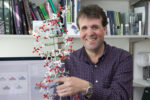
Julian Sale is a Professor at the University of Cambridge, leading the Vertebrate Mutagenesis Group at the MRC Laboratory of Molecular Biology (MRC-LMB). His research focuses on DNA replication mechanisms and mutagenesis, particularly how cells resolve replication stress caused by DNA damage or secondary structures like G-quadruplexes. Using vertebrate somatic cell genetics combined with biochemical and advanced imaging techniques, his lab investigates translesion synthesis (TLS), histone recycling during replication, and the molecular choreography at stalled replication forks. Key findings include TLS's dual role in mutagenesis and genome stability, as well as mechanisms for resolving non-B DNA structures during replication. The lab's recent publications highlight advancements in understanding replication origin efficiency, mutational landscapes, and structural DNA impediments. Collaborative studies with colleagues such as Murat, Guilbaud, and Lerner demonstrate interdisciplinary approaches integrating biophysics, genomics, and molecular biology.
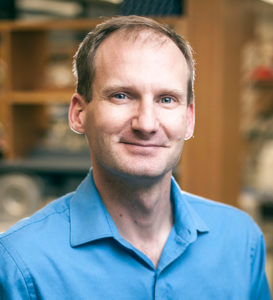
Dr. Hong Ling is a Professor in the Department of Biochemistry at Western University (Faculty of Science). With a Ph.D. from the University of Alberta and postdoctoral experience at the NIH, their research focuses on molecular mechanisms of DNA damage and repair, particularly translesion DNA synthesis (TLS) and error-free lesion bypass pathways. They employ X-ray crystallography and biophysical methods to study Y-family polymerases and their regulatory proteins. Research in the Ling Lab is funded by CIHR NCIC (now Cancer Research Society) NSERC Discovery Grant Key projects include TLS regulation, environmental carcinogen-induced mutagenesis, and homologous recombination mechanisms. Scientific recognition includes multiple national awards, such as the CIHR New Investigator Salary Award and Canada Foundation for Innovation grant. They teach advanced biochemistry courses like Protein Structure, Analysis and Design and Honor Thesis Research Project and Seminar .
Jun Che is a Research Associate Professor at the School of Medicine, Southern University of Science and Technology (SUSTech), where he has worked since December 2020. He previously worked as a Postdoctoral Fellow and Associate Research Fellow at the University of Texas Health Science Center (UTHSA) from 2015 to 2020 and completed his Ph.D. in Genetics there in 2015. His academic journey includes a Master’s in Cytogenetics from Kunming Institute of Zoology (2004–2007) and a Bachelor of Engineering in Bioengineering from Xi’an Jiaotong University (2000–2004). Research Focus: Dr. Che’s work revolves around DNA damage tolerance (DDT) in Saccharomyces cerevisiae , investigating how cells bypass DNA lesions during replication to maintain genome stability. His studies on translesion synthesis (TLS), template switching (TS), and PCNA ubiquitination have significant implications for understanding cancer, aging, and drug resistance. His publications span Nature Structural & Molecular Biology , PLoS Genetics , and EMBO Journal , with recent articles (2019–2021) focusing on DDT mechanisms and their biomedical relevance. Honors: CPRIT predoctoral fellowship (2011, 2012), 2021 Biomolecules publication on PCNA regulation. Email: chej@mail.sustech.edu.cn.
Satya Prakash, PhD, is a Professor in the Department of Biochemistry & Molecular Biology at the University of Texas Medical Branch (UTMB). He holds a BSc in Biology and Chemistry from Meerut College, an MVSC in Genetics from the Indian Veterinary Research Institute, and a PhD in Genetics from Washington University. His postdoctoral training was at the University of Chicago. Dr. Prakash's research focuses on DNA replication and repair mechanisms, particularly translesion synthesis (TLS) and their role in cancer. His work has been recognized with awards such as the Merit Award from NCI, the Distinguished Faculty Research Award, and Fellowships from AAAS and the American Academy of Microbiology. His research interests include understanding how TLS polymerases facilitate replication through DNA lesions, the interplay between DNA repair and cancer evolution, and mechanisms underlying genome instability. Key findings include the discovery of Pol η's role in XPV syndrome and the elucidation of TLS's role in preventing tumorigenesis. Current studies aim to target error-prone DNA repair pathways for cancer therapy. Dr. Prakash has an extensive publication record spanning DNA repair, TLS mechanisms, and cancer biology. His work bridges biochemical, genetic, and structural approaches to uncover fundamental biological processes and their clinical implications.
David K. Cortez is Professor of Biochemistry and Chair of the Department of Biochemistry at Vanderbilt University School of Medicine. He also holds the Richard N. Armstrong Ph.D. Chair for Innovation in Biochemistry and serves as Associate Director for Basic Science Research at the Vanderbilt-Ingram Cancer Center. His research is centered on genome maintenance, DNA damage response, and replication stress mechanisms. Institution: Vanderbilt University School: School of Medicine Department: Department of Biochemistry Leadership: Chair of Biochemistry, Associate Director (Basic Science), VICC Contact: david.cortez@vanderbilt.edu | 615-322-8547 | 613 Light Hall, Nashville, TN Dr. Cortez's research focuses on understanding how cells maintain genome integrity during DNA replication and in response to DNA damage. His work integrates genetics, biochemistry, cell biology, proteomics, and structural biology to dissect mechanisms involving ATR kinase signaling, replication fork remodeling, BRCA-related pathways, abasic site repair, and proteolysis . These processes are crucial for preventing cancer, developmental disorders, and aging. The 15 most recent publications highlight a consistent focus on DNA damage signaling, replication fork dynamics, and repair mechanisms . Key themes include the use of iPOND for proteomic mapping , fork regression and protection , ATR-mediated checkpoint control , and therapeutic targeting of DNA repair pathways in cancer. Subfields span molecular oncology, signal transduction, and structural enzymology. Scientific recognition includes: Richard N. Armstrong Ph.D. Chair for Innovation in Biochemistry Dr. Cortez leads an active research program with ongoing postdoctoral recruitment, indicating strong grant support and mentoring activity. His lab is embedded in multiple interdisciplinary centers, including the Genome Maintenance Program (Vanderbilt-Ingram Cancer Center), Vanderbilt Institute of Chemical Biology, and Center in Molecular Toxicology , reflecting broad collaborative and funding networks. He advises graduate and postdoctoral researchers in molecular cancer biology and DNA repair. Future work continues to explore therapeutic vulnerabilities in DNA repair-deficient cancers. The Cortez Lab maintains a strong presence in both basic and translational research, with ongoing projects aimed at identifying novel repair proteins, characterizing fork protection mechanisms, and developing cancer therapies targeting the DNA damage response. The lab utilizes cutting-edge techniques such as genetic screens, iPOND, structural biology, and preclinical models.
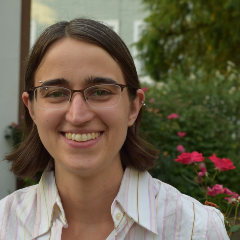
Elizabeth Thrall is an Assistant Professor in the Department of Chemistry at Fordham University, located within the College of Arts and Sciences. She is affiliated with the JMH 628/630 laboratory and holds office in JMH 632. Her research focuses on biophysical chemistry, particularly DNA replication mechanisms, translesion synthesis, and enzymatic interactions in organisms like Bacillus subtilis . She employs advanced techniques such as single-molecule imaging to study replication fork dynamics and TLS pathway regulation. Additionally, she develops machine learning-based approaches for undergraduate chemistry education, enhancing hypothesis-driven experimentation and functional group identification in spectroscopy. Her research interests include the roles of DNA damage tolerance factors, clamp-protein interactions, and replication stalling. Key findings involve the coordination of replicative polymerases with sliding clamps and the constitutive role of translesion polymerases in replication machinery. She also explores the compartmentalization of replication forks and the activation of single-stranded DNA-binding proteins during stress. Her publications highlight contributions to understanding TLS pathway choice, enzymatic gatekeeping, and methodological standards for DNA repair studies. Her work bridges fundamental biochemistry with pedagogical innovations, integrating computational tools into laboratory curricula. She leads a research lab focused on single-molecule visualization and bacterial DNA repair mechanisms.
Louise Prakash is a Professor in the Department of Biochemistry & Molecular Biology at the University of Texas Medical Branch (UTMB). Her research focuses on understanding how eukaryotic cells replicate damaged DNA, particularly through translesion synthesis (TLS) mechanisms. She has pioneered studies on TLS DNA polymerases like Pol η, ι, and ζ, which enable replication past DNA lesions caused by environmental agents and cellular processes. Education: B.A., Biology, Bryn Mawr College M.A., Molecular Biology, Washington University Ph.D., Microbiology and Molecular Biology, University of Chicago Post-doctoral training in Yeast Genetics at University of Rochester School of Medicine Research Interests: Dr. Prakash's lab investigates the roles of TLS polymerases in managing DNA damage. Key areas include: Mechanisms enabling replication through UV-induced pyrimidine dimers Structural basis for Pol η's Hoogsteen base pairing Cooperation between Rev1 and Pol ζ in lesion bypass Impact of polymerase mutations on cancer mutagenesis Recent Article Trends: Recent work emphasizes structural studies (e.g., cryo-EM of Rev1-Polζ complexes) and functional analyses of TLS polymerases' roles in chemotherapy resistance and genome stability. Research highlights interactions between Y-family polymerases and WRN exonuclease. Awards: National Institutes of Health Career Development Award Environmental Mutagen Society Award (2005) Fellow of AAAS (2005) and American Academy of Microbiology (2009) Grants & Advising: Leads NIH-funded projects on TLS mechanisms. Advised numerous postdoctoral researchers and graduate students in DNA repair studies. Collaborates with structural biologists like Dr. Aggarwal for cryo-EM analyses. Her laboratory is internationally recognized for defining TLS polymerase roles in cancer prevention and mutagenesis, with ongoing work on polymerase interactions during replication fork stalling.
Aneel K. Aggarwal is a Professor in Pharmacological Sciences and Oncological Sciences at the Icahn School of Medicine at Mount Sinai. His research focuses on understanding protein-nucleic acid interactions in cellular development and disease, particularly cancer. He holds an Endowed Chair in Structural Biology and has affiliations at the laboratory website http://www.protdnarna.org . His office is located at the Icahn (East) Building, Floor 16, Room 16-20C in New York, NY. Dr. Aggarwal earned his PhD from King’s College, University of London. His work integrates structural biology, biochemistry, and molecular biology to study DNA repair mechanisms, DNA replication fidelity, and transcription/translation regulation. Notably, he investigates how DNA polymerases bypass damage during replication and their roles in cancer development. His research interests span DNA repair, replication, transcription factors, translation, and structural biology. Key projects include studying enzymes’ specificity modulation, epigenetic regulators in bacteria, and mechanisms underlying signal-induced transcription. He employs cryo-EM, NMR, and small-angle scattering techniques to visualize molecular interactions. Publications highlight a focus on cancer mechanisms, viral biology, and enzyme structural studies, with recent work on CBASS immune pathways, eRNA checkpoints, and WDR5 inhibitors for pancreatic cancer. His research trends emphasize translational applications for therapeutic development alongside fundamental biology. Dean’s Award for Excellence in Basic Science Research (2012) Faculty Council Award for Academic Excellence (2010) Mount Sinai Professor in Structural Biology (Endowed Chair) (2007) Doctor Harold and Golden Lamport Award (1995) Irma T. Hirschl Career Scientist Award (1990) His advising and grants sections remain sparse in the provided text, though his research is supported by numerous awards. Collaborations include studies on influenza virus receptor specificity, Zika virus methyltransferases, and anti-pause enhancers in transcription. Industry relationships are noted, though specific details are not disclosed.