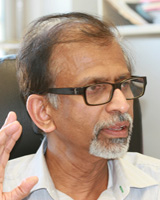
Professor Anthony Coates is Professor of Medical Microbiology at St George’s, University of London, specializing in antibiotic development and tuberculosis research. He co-invented a platform technology for novel antimicrobial combinations and founded Helperby Therapeutics. His research examines dormant tuberculosis metabolism and antibiotic combinations against drug-resistant pathogens. He received £7M in grants from MRC, Wellcome Trust, and EU consortia including BacATTACK and PredictTB. He chairs the International Consortium for Trials of Chemotherapeutic Agents in Tuberculosis and serves on the GARDP Scientific Advisory Committee. His inventions are protected by 128 international patents.
Marten Scheffer is a Full Professor at Wageningen University & Research , specializing in Aquatic Ecology and Water Quality Management . His work bridges ecology, climate science, and mental health, focusing on tipping points in ecosystems and social systems. He has received the prestigious Spinoza Prize 2009 , Netherlands' highest scientific honor. Research Interests: His research explores Anthropocene dynamics , ecological resilience , climate change impacts , and psychiatric disorders through dynamical systems theory . Notable projects include studying boreal forest collapse and trust dynamics in economies. His work also addresses global sustainability and early warning signals for critical transitions in social-ecological systems. Recent Articles: His 2025 publications highlight trust erosion in weak governance , ecological tipping points , and revolutionizing psychiatric diagnosis . 2024 work includes computational models of panic disorders and resilience indicators for disease outbreaks. Advising & Grants: He supervises PhD students including Agrawal (river commons), Capriati (marine protected areas), and Delecroix (infection warnings). Active in projects funded across ecosystem resilience , AI applications , and climate policy . Labs & Collaborations: Collaborates globally on tipping points research and mental health systems. Datasets include boreal forest dynamics and human climate niche models.
Hakan Karateke is the Kanuni Süleyman Professor for Ottoman and Modern Turkish Studies at the University of Chicago, affiliated with the Department of Near Eastern Languages and Civilizations. He has taught at UChicago since 2009 and serves as Admissions Chair. His research focuses on Ottoman cultural history, philology, and the evolution of Turkish language and historiography. Ph.D., University of Bamberg (1998) His methodological expertise bridges philology and historical analysis, emphasizing textual interpretation and contextual reconstruction. He is currently working on a monograph about 19th-century Ottoman historiography and a multi-year project tracing the cultural history of the Ottoman Turkish language. Recent publications include analyses of Evliya Çelebi’s travel account construction, Ottoman anti-Judaism discourse, and protocol evolution. He co-edits two major academic series: 'Ottoman and Turkish Studies' (Academic Studies Press) and 'The Ottoman Empire and its Heritage' (Brill). His courses cover Ottoman cultural history, language studies, and Near Eastern empires. Research themes span: Ottoman historiography transformation Language perception shifts Inter-ethnic relations Manuscript analysis Political rhetoric Ceremonial studies
Chia Lee, Ph.D., is a Professor in the Department of Microbiology and Immunology at the University of Arkansas for Medical Sciences (UAMS) College of Medicine. Their research focuses on understanding the molecular mechanisms of Staphylococcus aureus pathogenesis, particularly the regulation of virulence factors such as capsule and α-toxin. They completed their Ph.D. and postdoctoral training at Kansas State University. Key research interests include bacterial virulence regulation, antibiotic resistance, biofilm formation, and the transition from carriage to invasive disease. Their lab employs structural biology, mutagenesis, and proteomics to study regulatory networks like ClpC, SigB, and small RNAs. Recent work involves developing rat models for studying implant-associated biofilm infections. Publications highlight advances in understanding capsule regulation via SarZ, MgrA, and RbsR, as well as α-toxin regulation and biofilm matrix composition. Collaborators include M. G. Lei, R. K. Gupta, and D. D. Gudeta. Research has implications for developing novel therapeutics against staphylococcal infections. Lab activities emphasize translational research bridging basic science and clinical applications, with a focus on elucidating how regulatory pathways control virulence expression during infection. Current projects address in vivo regulatory dynamics and disease transition mechanisms.
Marjan Moosavi is the Roshan Clinical Assistant Professor in Persian Studies and Performing Arts at the University of Maryland, affiliated with the School of Languages, Literatures, and Cultures and the School of Theatre, Dance, and Performance Studies. She also serves as Associate Director of PersDig@UMD under the Roshan Institute for Persian Studies, leading digital humanities initiatives. Her research focuses on transnational theatre practices, Middle Eastern performance, and intersections with gender, history, and politics. Education: She holds a Ph.D. in Theatre and Performance Studies from the University of Toronto. Professional roles include Regional Managing Editor for TheTheatreTimes.com and leadership in projects like the Persian Digital Humanities Initiative. Research Interests: Her work explores Performance in Middle Eastern contexts Counter-sacred and political dimensions of Iranian theatre Transnational digital curation and pedagogy Shakespearean adaptations in Iranian culture Border challenges for MENA scholars in global conferences Advising and Grants: She mentors graduate students and designs curricula at the University of Maryland. Her grants include the Roshan Initiative supporting digital humanities projects. Recent work highlights include organizing the Woman, Life, Freedom lecture series on Iranian protest theatre and curating the Rebels and Revels virtual exhibit of MENA theatre photos. Labs/Teams: Core member of the Roshan Institute for Persian Studies and PersDig@UMD digital humanities team. Collaborates with the School of Theatre, Dance, and Performance Studies on transdisciplinary projects.
Professor Sarah Coulthurst is the Chair of Microbial Interactions and a Wellcome Trust Senior Research Fellow at the University of Dundee's School of Life Sciences. Her research focuses on understanding how Gram-negative bacterial pathogens cause disease, with a focus on protein secretion systems (especially the Type VI secretion system), inter-bacterial competition, and antimicrobial resistance mechanisms. She leads a molecular microbiology group using genetics, proteomics, and non-mammalian virulence models. Education: PhD in Molecular Microbiology from the University of Cambridge (2005), MSci in Natural Sciences (2000), and BA in Natural Sciences (1999), all from the University of Cambridge. Research Focus: Her work investigates the molecular mechanisms of the Type VI secretion system (T6SS), bacterial competition strategies, and antimicrobial peptide production. Key projects include studying Serratia marcescens's T6SS-mediated attacks and the role of lifestyle switches in clinical pathogen adaptation. Recent Work: Recent publications highlight discoveries in T6SS effector proteins, pore-forming mechanisms, and genomic regulation of bacterial competition. She also contributes to understanding antimicrobial resistance and Serratia's role in polymicrobial communities. Awards: Includes Fellow of the Royal Society of Edinburgh (2024), Wellcome Senior Research Fellowship (2020), and multiple prizes for contributions to microbiology and teaching excellence. Teaching & Supervision: Module manager for Advanced Molecular Microbiology and supervisor for PhD projects on T6SS mechanisms and bacterial adaptation. She also engages in public outreach and educational initiatives. Lab & Collaborations: Collaborates with institutions like the University of Newcastle and Heriot-Watt University. Her lab integrates cutting-edge omics approaches with traditional microbiology to study pathogen interactions.
Prof. Dr. Tania Singer is the Scientific Head of the Social Neuroscience Lab at the Max Planck Society in Berlin. She holds a PhD in Psychology and has held professorial roles, including the inaugural Chair in Neuroeconomics at the University of Zurich. Her work bridges social neuroscience with economics, arts, and contemplative practices. Key projects include the ReSource Project (studying mental training effects) and Caring Economics (exploring economic models informed by psychology and neuroscience). She has authored over 150 peer-reviewed publications and collaborates with institutions like the Mind and Life Institute. Recent initiatives include the Edu:Social School Project, applying socio-emotional training in education. Education: PhD in Psychology (Max Planck Institute for Human Development), Postdoc at UCL London Research Focus: Empathy, compassion, brain plasticity, and societal impacts of mental training Grants: European Research Council, Institute of New Economic Thinking Her research emphasizes translating findings into societal applications through programs like ReConnect! Masterclasses. She has organized high-profile conferences with the Dalai Lama and co-authored books such as Caring Economics and Power and Care . Art collaborations with Olafur Eliasson blend science with public outreach.
Dr. Nuno Oliveira is an Associate Professor in the School of Kinesiology and Nutrition at the University of Southern Mississippi since 2018. He holds a Ph.D. in Biomechanics/Motor Control from the University of Edinburgh (2014) and an MA from Teachers College, Columbia University (2009). His postdoctoral training focused on rehabilitation sciences at Kessler Foundation, NJ. His research emphasizes optimizing movement and function through biofeedback-based interventions for osteoarthritis patients and developing virtual reality (VR) and eye-tracking tools for balance assessments. Education : Ph.D. in Biomechanics/Motor Control, University of Edinburgh, 2014 MA in (unspecified field), Teachers College, Columbia University, 2009 Research Focus : Dr. Oliveira’s work spans three key areas: (1) biofeedback interventions to enhance functional recovery in osteoarthritis populations, (2) VR and eye-tracking technologies for movement analysis, and (3) motor control strategies to improve health outcomes. His NIH- and AHA-funded projects address translating biomechanical insights into clinical applications. Grants & Funding : National Institutes of Health (NIH) American Heart Association (AHA) He teaches advanced courses in kinesiology, motor development, and motor learning, reflecting his expertise in human movement science. His office is located at Joseph Greene Hall 366 in Hattiesburg.
Jakob Körbelin is a Principal Investigator at the University Medical Center Hamburg-Eppendorf (UKE), affiliated with the Faculty of Medicine and the II. Medical Clinic and Polyclinic. His research focuses on vascular biology, gene therapy, and neurological disorders, particularly targeting the blood-brain barrier using adeno-associated viral (AAV) vectors. He leads studies on pulmonary hypertension, neurovascular interactions, and genetic diseases like Niemann-Pick type C2. His work bridges basic science and translational medicine, emphasizing AAV engineering and therapeutic applications. Key research interests include endothelial cell biology, neuroinflammation, and the pathophysiology of vascular diseases. Notably, he received the UCCH Hubertus Wald Young Investigator Award 2013 for his contributions. His lab explores mechanisms of vascular dysfunction, gene delivery optimization, and the impact of viral vectors in treating rare diseases. Collaborations span molecular neurobiology, immunology, and translational oncology. Publications highlight breakthroughs in AAV-mediated therapies, such as reversing neurodegeneration in NPC2 models and identifying novel targets for pulmonary hypertension. Ongoing projects address microvascular brain pathology in SARS-CoV-2 infection and the role of transcription factors in vascular diseases.
Tom Zick serves as Director of Responsible AI at Charles Schwab and holds an academic affiliation as a Research Fellow at Harvard University's Berkman Klein Center for Internet & Society. Her work bridges technical AI development and legal frameworks, focusing on governance mechanisms for emerging technologies. She has advised organizations from startups to Fortune 500 companies while collaborating with frontier AI labs and public institutions like the City of Boston on AI deployment and data governance initiatives. Her educational foundation includes a JD from Harvard Law School and a PhD in Astrophysics from UC Berkeley, providing interdisciplinary expertise critical to her research. This dual background enables rigorous analysis of complex technology-policy intersections. Zick's research centers on creating accountable AI systems through technical oversight frameworks and regulatory compliance strategies. She investigates generative AI's societal impacts, reinforcement learning risks, and privacy-preserving identity solutions like personhood credentials. Her work emphasizes red teaming, model alignment, and global regulatory harmonization, addressing both immediate implementation challenges and long-term existential risks through law-technology integration. Analysis of her publication trajectory reveals escalating focus on governance scalability as AI capabilities advance. Early work examined foundational risks in reinforcement learning, while recent publications address generative AI's disruption of education systems and the urgent need for cross-jurisdictional regulatory frameworks. Her taxonomy development for AI regulation demonstrates systematic approaches to navigating fragmented global policy landscapes. As an advisor, Zick has guided corporate and municipal entities through AI implementation challenges, notably helping Boston operationalize data governance frameworks. Her Berkman Klein fellowship involved direct collaboration with major AI labs on alignment research and red teaming exercises. She contributes to industry-wide initiatives including Twitter's decentralized social media project (bluesky), focusing on protocol-level solutions for content integrity. Zick's collaborative ecosystem spans frontier AI companies, academic researchers, and public sector innovators. Her current work with the City of Boston demonstrates practical governance implementation, while ongoing personhood credentials research addresses AI-generated content verification challenges. These partnerships reflect her commitment to translating theoretical frameworks into operational systems across multiple sectors.
Wendy M. Murray is a Professor of Biomedical Engineering and Physical Medicine and Rehabilitation at Northwestern University's McCormick School of Engineering. She leads the ARMS Lab, focusing on biomechanical models of upper limb muscles to improve rehabilitation and prosthetic design. Her work addresses spinal cord injury, stroke, and orthopedic interventions. Education: Ph.D. and M.S. in Biomedical Engineering from Northwestern University, B.S. in Mathematics (summa cum laude) from University of Notre Dame. Research interests include musculoskeletal modeling, prosthetics control, and surgical simulations. Key contributions include widely cited anatomical databases and models for hand/wrist function. Current projects explore neuromuscular control, exoskeletons, and injury prevention in sports like baseball. Publications (selected 2024-2017) highlight advancements in motion capture, ultrasound imaging, and computational models for clinical applications. Her work bridges bioengineering with clinical practice to enhance functional recovery. Labs/Teams: Directs the ARMS Lab, collaborating with clinicians and engineers to translate biomechanical insights into real-world medical solutions.
Jamal Lewis, Ph.D., is an Associate Professor in the J. Crayton Pruitt Family Department of Biomedical Engineering at the University of Florida, within the Herbert Wertheim College of Engineering. His Immuno-modulatory Biomaterials Laboratory focuses on developing biomaterial systems to manipulate the immune system for treating autoimmune diseases, allergies, and transplant rejection. His work integrates biomaterials engineering, drug delivery, and immunology. Education: Ph.D. in Biomedical Engineering, University of Florida (2012) M.S. in Biomedical Engineering, North Carolina State University (2007) B.S. in Chemical Engineering, Florida A&M University (2004) Research interests include immunoengineering, biomaterials design for controlled immune responses, and drug delivery systems targeting dendritic cells. His lab explores how mechanical forces and biochemical cues influence immune cell behavior, with applications in vaccines and immunotherapies. Recent publications emphasize biomaterial-based strategies for immunomodulation, including polymeric particle therapies and sustained-release systems. His work spans topics like lactate modulation of immune cells, fungal pathogen interactions, and anti-inflammatory treatments for osteoarthritis. Notable awards include the University of Florida 40 Under 40 (2021), recognition as a 1000 Inspiring Black Scientist in America (2021), and Biomaterial Science RSC Emerging Investigator (2021). He has contributed to over 50 publications and holds multiple patents related to immunomodulatory materials. Dr. Lewis leads interdisciplinary collaborations, bridging engineering and immunology. His lab focuses on translating biomaterial innovations into clinical applications for autoimmune diseases and regenerative medicine. Current projects include developing nanoparticle-based vaccines and microfluidic fabrication methods for precision medicine.
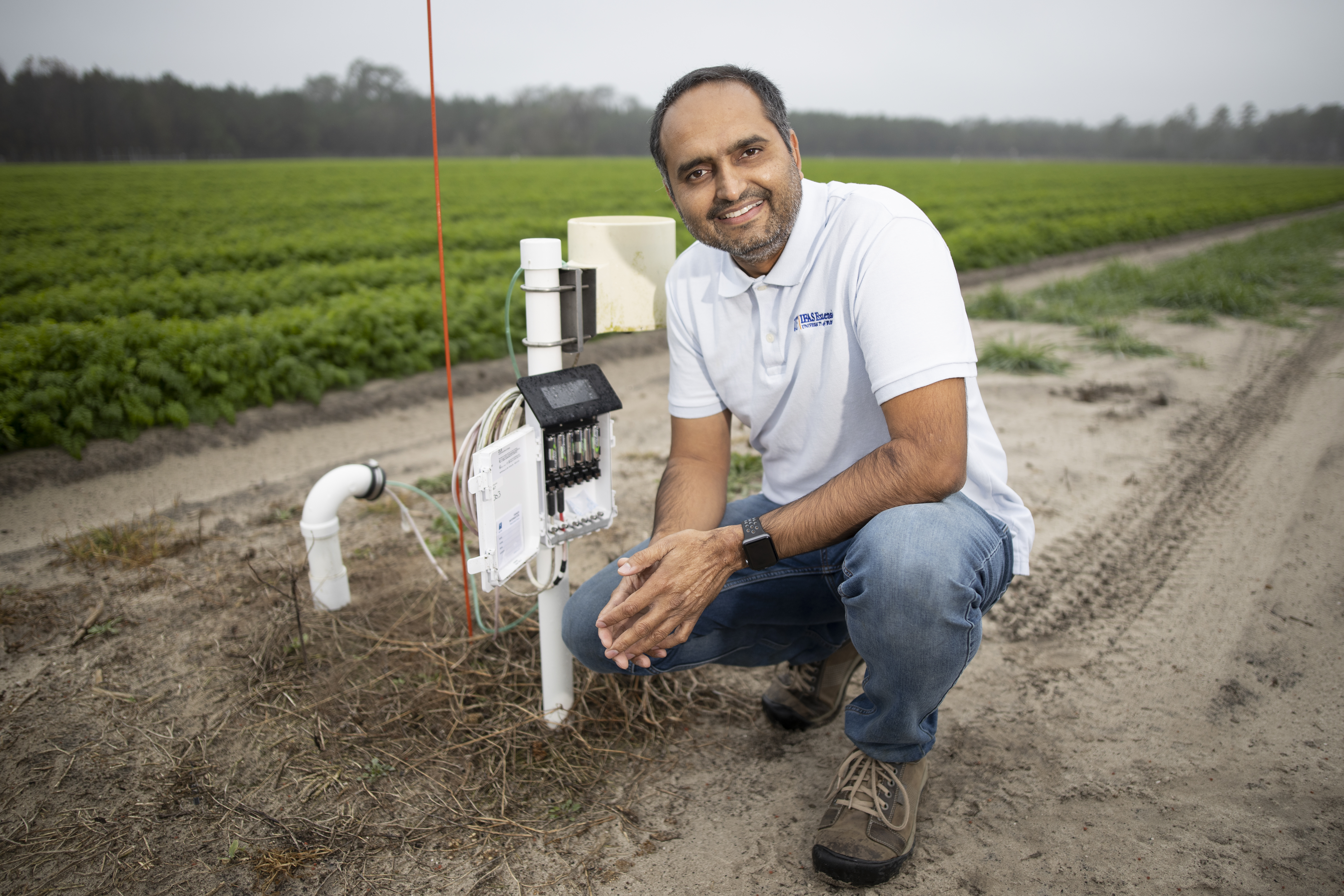
Dr. Sudeep Singh Sidhu is an Assistant Professor in the Agronomy Department at the University of Florida's North Florida Research and Education Center (NFREC) in Quincy, FL. His research focuses on developing site-specific nutrient and water management strategies for agronomic crops, with a particular emphasis on cropping systems in Florida, including peanut-cotton rotations and sod-based systems. He leads efforts in precision agriculture technologies, such as Veris MSP3 soil mapping, capacitance-based soil moisture probes, and sensor-based nitrogen management tools. His work aims to reduce nitrate leaching, improve soil health, and enhance crop sustainability through cover crops and integrated crop-livestock systems. Roles: Research and Extension Specialist, Lead on Sod-Based Rotation Demonstration, BMP Implementation Affiliations: NFREC-Quincy, UF/IFAS Extension Research Interests: Dr. Sidhu’s work spans precision agriculture, nutrient cycling, crop rotation impacts, and environmental stewardship. His projects address challenges in soil health, irrigation efficiency, and reducing agricultural runoff. He actively collaborates with growers to translate research into on-farm practices, such as nitrogen calibration strips and high-clearance equipment for sidedressing. Key Contributions: He has developed protocols for planting cover crops post-harvest to scavenge nitrogen, demonstrated the use of drain gauge lysimeters for nitrate monitoring, and evaluated new fertilizer technologies in corn, cotton, and peanuts. His extension efforts include organizing in-service trainings and field days to disseminate best practices. Grants and Partnerships: His projects are funded through collaborations with agricultural agencies and industry partners, focusing on BMP adoption and disaster resilience, such as post-Hurricane Idalia recovery strategies.
David Garlan is a Professor at the Software and Societal Systems Department within the School of Computer Science at Carnegie Mellon University , where he also serves as Associate Dean for Master’s Programs . He received his Ph.D. from Carnegie Mellon in 1987 after working in industry as a software architect. His research focuses on controlling complexity in large software systems through formalized architectural design, self-adaptive systems, and cyber-physical systems. He developed AcmeStudio , a widely used architecture design environment, and pioneered formal representation and analysis of software architecture. Education : Ph.D. in Computer Science (Carnegie Mellon, 1987) Research Interests include: Software Architecture: Formal methods for architectural design, end-user composition, and architectural styles Self-Adaptive Systems: Stochastic planning, model checking, security adaptation, and uncertainty reduction Cyber-Physical Systems: Multi-view design methods, consistency checking, and automotive systems Recent Article Trends address microservice resiliency, hybrid planning (combining formal methods and ML), simulation-augmented robotics, and sustainable machine translation. Themes include stochastic modeling , probabilistic verification , and adaptive decision-making . Scientific Awards : Stevens Award Citation (2005) ACM SIGSOFT Outstanding Research Award (2011) Allen Newell Award for Research Excellence (2016) IEEE TCSE Distinguished Education Award (2017) Nancy Mead Award (2017) Fellow of IEEE and ACM Advising and Grants : He has advised 25+ graduate students and collaborated on projects with Toyota and the Software Engineering Institute. His work includes model-based adaptation, automated planning, and formal verification of adaptive systems. Labs & Teams : Affiliated with the Institute for Software Research and works on tools like AcmeStudio, Rainbow, and IPL for architectural modeling and self-adaptation.
Dr. Raj Rajakumar is an Associate Professor at Western University's Department of Anatomy and Cell Biology, cross-appointed with the Department of Psychiatry. His work focuses on molecular mechanisms underlying schizophrenia symptoms and autism neurobiology, employing animal models to study drug effects and neural signaling. He holds a PhD from the University of Western Ontario, with prior degrees in M.B.B.S. (University of Peradeniya) and M.Sc. (University of Western Ontario). Educations: Ph.D., Anatomy and Cell Biology, University of Western Ontario M.Sc., Anatomy and Cell Biology, University of Western Ontario M.B.B.S., Medicine, University of Peradeniya Research Interests: Molecular pathways in schizophrenia symptom manifestation Neurobiological basis of autism spectrum disorders Pharmacological interventions using antipsychotics and psychotropic drugs Neuroimaging techniques (fMRI, MRS) to study brain connectivity His research combines molecular biology, neuroanatomy, and behavioral assays in animal models to explore schizophrenia pathophysiology. Recent work includes maternal immune activation effects on fetal brain development, cannabinoid impact on executive function, and white matter inflammation in Alzheimer's models. Collaborations with Dr. W.J. Rushlow and others highlight translational research in neuropsychiatric disorders. Key contributions include automated MRI algorithms for medial temporal lobe analysis and longitudinal studies of glutamatergic deficits in schizophrenia. His work bridges basic science with clinical applications in mental health. Dr. Rajakumar's lab focuses on understanding brain circuitry disruptions in psychiatric disorders, with implications for novel therapeutic targets. No formal advisees are listed, but his research team actively engages in interdisciplinary collaborations.