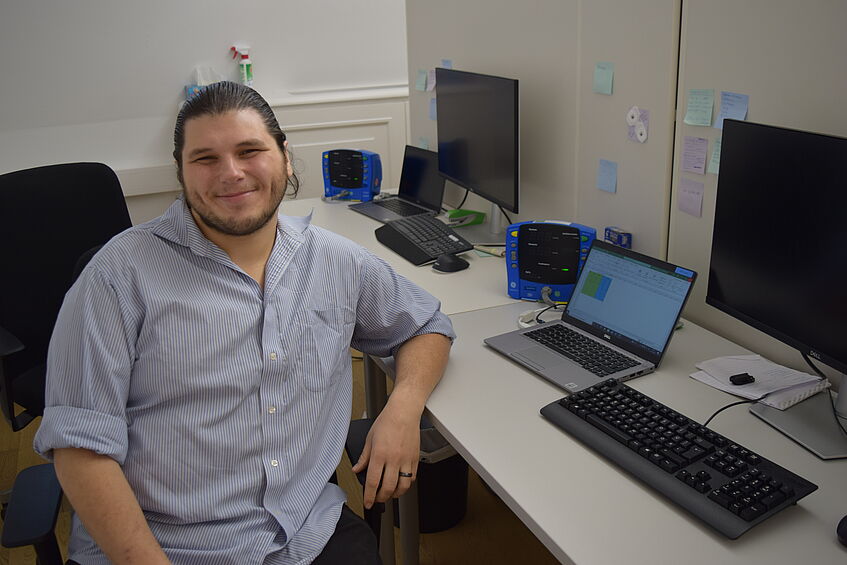
Christopher Mlynski is a researcher at the Department of Occupational, Economic and Social Psychology, Faculty of Psychology, University of Vienna. His work focuses on self-control mechanisms, cognitive fatigue, and environmental psychology, particularly how lay beliefs influence pro-environmental behavior and motivational shifts. His research spans psychophysiological responses to behavioral challenges, ego depletion, and the interplay between cardiovascular metrics and psychological effort. Recent publications highlight collaborations with Veronika Job and colleagues on disengagement strategies and reward systems in mental labor. Key trends in his 7 publications (2016–2025) include empirical investigations into inhibitory control, task disengagement, and the physiological correlates of motivation. His work bridges experimental psychology with practical applications in environmental behavior and self-regulation.
Edgar Weippl is a Professor at the Faculty of Computer Science, University of Vienna, where he serves as Vice Dean and Head of the Research Group Security and Privacy. His work spans cybersecurity, blockchain, and machine learning, with teaching roles in information security and software security courses. Current Positions: Vice Dean (Faculty of Computer Science), Head (Security and Privacy Research Group), Deputy Head (Neuroinformatics & Knowledge Engineering Groups) Research Interests: Cybersecurity, blockchain, IoT security, code obfuscation, privacy technologies, reinforcement learning, and socio-technical systems security Selected Publications: Focus on blockchain privacy, VoWiFi security, code obfuscation, and reinforcement learning applications
Gustavo Alberto Nader is a Professor of Kinesiology at The Pennsylvania State University , holding the Dorothy Foher and J. Lloyd Huck Chair in Molecular, Cellular and Integrative Physiology. His research focuses on skeletal muscle growth control , ribosome biogenesis , and transcriptional/epigenetic regulation in health and disease contexts. Affiliated with the Huck Institutes of the Life Sciences and College of Health and Human Development Principal Investigator on NIH-funded projects examining ribosomal control of muscle mass Research Interests span molecular mechanisms of muscle adaptation to exercise, cancer cachexia, chronic disease impacts on muscle, and cross-species Wnt signaling regulation by CO₂ levels. Key methodologies include human/animal/cell models, ribosomal analysis, and epigenetic profiling. Publication Trends show sustained focus on: Ribosome biogenesis in muscle hypertrophy (2012–2025) Cancer-induced muscle wasting mechanisms (2015–2024) CO₂/Wnt pathway interactions (2015–2019) Exercise-induced transcriptional responses (2001–2016) Scientific Awards include the Huck Chair, while his Grants & Collaborations involve NIH-funded studies on transcriptional/epigenetic mechanisms (2019–2026) with cross-disciplinary teams in physiology, oncology, and respiratory medicine.
Allon Guez is a Professor in the Department of Electrical and Computer Engineering at Drexel University. His research focuses on control systems, robotics, artificial intelligence, medical robotics, and automated decision making. He actively bridges academia and industry through high-tech entrepreneurship. Education PhD in Electrical Engineering, University of Florida MS in Electrical Engineering, University of Florida MBA in Finance, Drexel University BS in Electrical Engineering, Technion - Israel Institute of Technology His research portfolio spans medical robotics, automated decision making systems, and advanced control algorithms. Key areas include wearable safety devices, radiation control in imaging systems, and closed-loop brain stimulation technologies. Notable contributions include founding ControlRad (radiation reduction systems) and GraceFall (fall detection technology). His work demonstrates a strong emphasis on translating academic research into commercial medical devices. Recent publications highlight innovations in: Fetal brainwave monitoring Postural disturbance detection Seizure prediction algorithms Magnetic microrobotics Dynamic CT collimation Cardiac tissue modeling
Susanne E. Tanski is a Professor of Pediatrics at the Geisel School of Medicine at Dartmouth College. She holds additional leadership roles including Section Chief of General Academic Pediatrics, Vice Chair of General Pediatrics, and Associate Director of the C. Everett Koop Institute. Her research focuses on tobacco prevention, adolescent risk behaviors, media influence on youth, childhood obesity, and mental health in young people. Dr. Tanski's education includes an MD from the University of Connecticut, an MPH from the University of Rochester, and a BA from Vassar College. She completed her pediatric residency and fellowship at the University of Rochester/Strong Memorial Hospital. Her recent work examines vaccine hesitancy in pediatric care, ADHD care engagement, and respiratory health impacts of tobacco use. She contributes to large-scale population studies like the PATH Study, analyzing tobacco product effects on respiratory outcomes in diverse populations. Affiliated with Children's Hospital at Dartmouth and the Dartmouth Cancer Center, her contributions span clinical leadership, public health advocacy, and translational research. Current efforts emphasize improving communication strategies for parents and families in healthcare settings.
Professor Pauleen Bennett is a leading scholar in Anthrozoology at La Trobe University's Bendigo campus, serving in the Department of Psychology, Counseling and Therapy within the College of Science, Health and Engineering since 2018. Her research program centers on human-companion animal relationships, particularly focusing on the psychological dimensions of human-dog bonds, veterinary wellbeing, and child-pet interactions. Her research interests span Anthrozoology , Human-Animal Relationships , and Companion Animal Psychology , with particular emphasis on dog behavior, veterinary burnout, and the therapeutic applications of human-animal bonds. Bennett leads the Anthrozoology Research Group (www.anthrozoologyresearchgroup.com) and has made significant contributions to understanding how animals impact human mental health across diverse contexts from farms to universities. Analysis of her recent publications reveals three dominant research trajectories: (1) human-animal relationship measurement tools development, (2) veterinary workplace wellbeing challenges, and (3) practical applications of human-animal bonds in agricultural, educational, and healthcare settings. Her work consistently bridges theoretical psychology with practical animal welfare applications. Bennett previously served as Associate Editor for Anthrozoos and on the board of the International Society for Anthrozoology. She co-supervises higher degree students across multiple Australian universities and maintains active community engagement through the Anthrozoology Research Group. Her funded research includes the Wildlife Victoria Inc Mental Health and Wellbeing Review (2021-2024), which developed recommended good practice guidelines for wildlife volunteer support programs. Bennett also serves as a consultant on human-animal interaction projects, translating academic research into practical community applications. Bennett maintains a productive research laboratory focused on human-animal interactions, with current projects examining puppy socialization practices, veterinary technician burnout, and the psychological benefits of animal-assisted interventions in university settings. Her Bendigo-based laboratory operates in close collaboration with Australian farms, veterinary clinics, and community organizations.
Kimberly M. Ken, MD is an accomplished Assistant Professor in the Department of Dermatology at Penn State University College of Medicine. With dual clinical appointments at Penn State Health Dermatology in Hershey and the Lime Spring Outpatient Center in Lancaster, she provides specialized dermatologic care with a focus on Mohs micrographic surgery for skin cancer treatment. Dr. Ken's educational journey reflects her dedication to dermatologic surgery: Medical Degree: Southern Illinois University School of Medicine (2014) Internship: Preliminary Medicine, Southern Illinois University and Affiliated Hospitals (2015) Residency: Dermatology, University of Missouri Hospitals and Clinics (2018) Fellowship: Mohs Micrographic Surgery and Laser, University of Texas Southwestern Medical Center (2020) Her research program centers on advancing dermatologic surgical techniques and improving patient outcomes. Dr. Ken has established expertise in Mohs micrographic surgery, with particular focus on artifact identification in histopathology, infection prevention protocols, and innovative approaches to skin cancer management for immunocompromised patients. Her scholarly work bridges clinical practice with evidence-based improvements in surgical methodology. Analysis of Dr. Ken's publication record reveals a consistent trajectory of scholarly contributions focused on practical improvements in dermatologic surgery. Her work demonstrates particular attention to technical details that impact surgical outcomes, from proper hair retraction methods to identification of unusual presentations that might mimic malignancy. This focus on precision and safety characterizes her research approach. Dr. Ken's excellence in medical education was recognized with the prestigious Dean's Award for Excellence in Teaching in 2023, highlighting her commitment to training future dermatologists. Her teaching philosophy appears closely aligned with her research interests, emphasizing technical precision and patient safety in dermatologic procedures. At the clinical level, Dr. Ken maintains an active surgical practice with high patient satisfaction ratings (4.9 out of 5 from 506 patient reviews), demonstrating her ability to translate academic expertise into exceptional patient care. Her dual location practice allows her to serve patients across central Pennsylvania while advancing the field through research and education.
Saumik Basu is an Assistant Professor in the Department of Entomology at the University of Georgia (UGA), based at the Tifton Campus within the College of Agricultural & Environmental Sciences. His research focuses on developing sustainable integrated pest management (IPM) strategies for vegetable crops in South Georgia. He leads the Vegetable Entomology Lab, which investigates pest complexes like whiteflies, diamondback moths, and pepper weevils, along with their interactions with plant pathogens. His work emphasizes molecular ecology, plant defense mechanisms, and the role of abiotic factors (e.g., climate, soil microbiota) in pest management. Education: B.S. in Human Physiology, University of Calcutta M.S. in Biotechnology, Visva-Bharati University Ph.D. in Molecular Plant Virology, Jawaharlal Nehru University Postdoctoral Research: University of Nebraska-Lincoln (UNL) and Washington State University (WSU) Research Interests: Molecular mechanisms of plant-insect interactions Sustainable IPM for vegetable pests Plant defense signaling and phytohormonal crosstalk Impact of soil microbiota on pest-pathogen dynamics Climate change effects on agroecosystems Lab & Collaborations: The lab collaborates with county extension agents, growers, and other research groups to translate findings into practical solutions. Current projects address pest attack order effects on plant defenses and the role of biopesticides like Metarhizium fungus. Graduate students and postdocs work on topics such as soil amendments for pest resistance and vector-borne disease transmission. Advising & Grants: Advises Ph.D. candidate Sourav Pal and M.S. student Rajesh Udavant. Technical staff includes Charles Laney Gruver, an expert in field trials and insect rearing. Undergraduate Alexis Crossgrove supports lab activities. Labs/Teams: Vegetable Entomology Lab (UGA), previously affiliated with Molecular Plant Sciences at WSU.
Dr. Alexander Breuss is part of the Sensory-Motor Systems Professorship at ETH Zürich, focusing on developing innovative robotic and sensor technologies for medical applications, particularly in sleep disorder treatment and home healthcare. His work integrates biomedical engineering, robotics, and machine learning to address challenges in sleep medicine and cardiovascular diagnostics. Key projects include the Somnomat Care robotic bed for vestibular stimulation and the Somnomat Casa system for nocturnal interventions. His research spans sensorized devices for sleep monitoring, clinical trials for rhythmic movement disorders, and cardiovascular disease prognosis using imaging and hemodynamic analysis. Dr. Breuss collaborates on interdisciplinary projects, combining engineering and clinical insights to advance healthcare technologies. His research interests include the design of medical devices for home environments, non-invasive monitoring systems, and closed-loop robotic systems for therapeutic applications. Notable contributions include lightweight wearable sensors for movement disorders and automated sleep position classification using neural networks. He has published extensively on topics such as pleural effusion in aortic stenosis and ECG-based cardiac prognosis, highlighting his cross-disciplinary approach to biomedical challenges. No scientific awards are explicitly mentioned for Dr. Breuss. His work is centered at the Sensory-Motor Systems Lab, where he contributes to advancing technologies that improve patient care and sleep quality through robotics and sensor innovation.
Dr. Kanwarpal Singh is an Associate Professor in the Department of Electrical & Computer Engineering at McMaster University. His research focuses on developing novel endoscopic devices using advanced optical imaging techniques, including optical coherence tomography (OCT), hyperspectral imaging, and multiphoton microscopy. His work aims to improve imaging of internal organs for medical applications, particularly in gastrointestinal and cardiovascular diagnostics. Dr. Singh leads a lab dedicated to advancing biomedical technologies, with a strong emphasis on device innovation and clinical translation. He teaches courses such as ECE 6BB3 (Cellular Bioelectricity) and IBEHS 4QZ3 (Modelling of Biological Systems). His research interests span biomaterials, health technology, and imaging systems. He has developed endoscopic devices for longitudinal monitoring of inflammatory bowel disease and coronary artery crystal detection. His publications emphasize optical imaging advancements, including motion-corrected microscopy and three-dimensional luminal reconstruction. Dr. Singh collaborates on projects involving tissue engineering, drug delivery, and material science. His work bridges engineering and medicine, with applications in cardiology, dermatology, and neurology. Dr. Singh’s lab also explores elastography and Brillouin microscopy for biomechanical property assessment. He has contributed to portable OCT systems and smartphone-based imaging platforms. While no formal awards are listed, his extensive publication record reflects significant contributions to biomedical imaging and device development. His research addresses clinical challenges through cutting-edge optical technologies, aiming to improve diagnostic accuracy and patient outcomes.
Professor Anthony Coates is Professor of Medical Microbiology at St George’s, University of London, specializing in antibiotic development and tuberculosis research. He co-invented a platform technology for novel antimicrobial combinations and founded Helperby Therapeutics. His research examines dormant tuberculosis metabolism and antibiotic combinations against drug-resistant pathogens. He received £7M in grants from MRC, Wellcome Trust, and EU consortia including BacATTACK and PredictTB. He chairs the International Consortium for Trials of Chemotherapeutic Agents in Tuberculosis and serves on the GARDP Scientific Advisory Committee. His inventions are protected by 128 international patents.
Marten Scheffer is a Full Professor at Wageningen University & Research , specializing in Aquatic Ecology and Water Quality Management . His work bridges ecology, climate science, and mental health, focusing on tipping points in ecosystems and social systems. He has received the prestigious Spinoza Prize 2009 , Netherlands' highest scientific honor. Research Interests: His research explores Anthropocene dynamics , ecological resilience , climate change impacts , and psychiatric disorders through dynamical systems theory . Notable projects include studying boreal forest collapse and trust dynamics in economies. His work also addresses global sustainability and early warning signals for critical transitions in social-ecological systems. Recent Articles: His 2025 publications highlight trust erosion in weak governance , ecological tipping points , and revolutionizing psychiatric diagnosis . 2024 work includes computational models of panic disorders and resilience indicators for disease outbreaks. Advising & Grants: He supervises PhD students including Agrawal (river commons), Capriati (marine protected areas), and Delecroix (infection warnings). Active in projects funded across ecosystem resilience , AI applications , and climate policy . Labs & Collaborations: Collaborates globally on tipping points research and mental health systems. Datasets include boreal forest dynamics and human climate niche models.
Hakan Karateke is the Kanuni Süleyman Professor for Ottoman and Modern Turkish Studies at the University of Chicago, affiliated with the Department of Near Eastern Languages and Civilizations. He has taught at UChicago since 2009 and serves as Admissions Chair. His research focuses on Ottoman cultural history, philology, and the evolution of Turkish language and historiography. Ph.D., University of Bamberg (1998) His methodological expertise bridges philology and historical analysis, emphasizing textual interpretation and contextual reconstruction. He is currently working on a monograph about 19th-century Ottoman historiography and a multi-year project tracing the cultural history of the Ottoman Turkish language. Recent publications include analyses of Evliya Çelebi’s travel account construction, Ottoman anti-Judaism discourse, and protocol evolution. He co-edits two major academic series: 'Ottoman and Turkish Studies' (Academic Studies Press) and 'The Ottoman Empire and its Heritage' (Brill). His courses cover Ottoman cultural history, language studies, and Near Eastern empires. Research themes span: Ottoman historiography transformation Language perception shifts Inter-ethnic relations Manuscript analysis Political rhetoric Ceremonial studies
Marjan Moosavi is the Roshan Clinical Assistant Professor in Persian Studies and Performing Arts at the University of Maryland, affiliated with the School of Languages, Literatures, and Cultures and the School of Theatre, Dance, and Performance Studies. She also serves as Associate Director of PersDig@UMD under the Roshan Institute for Persian Studies, leading digital humanities initiatives. Her research focuses on transnational theatre practices, Middle Eastern performance, and intersections with gender, history, and politics. Education: She holds a Ph.D. in Theatre and Performance Studies from the University of Toronto. Professional roles include Regional Managing Editor for TheTheatreTimes.com and leadership in projects like the Persian Digital Humanities Initiative. Research Interests: Her work explores Performance in Middle Eastern contexts Counter-sacred and political dimensions of Iranian theatre Transnational digital curation and pedagogy Shakespearean adaptations in Iranian culture Border challenges for MENA scholars in global conferences Advising and Grants: She mentors graduate students and designs curricula at the University of Maryland. Her grants include the Roshan Initiative supporting digital humanities projects. Recent work highlights include organizing the Woman, Life, Freedom lecture series on Iranian protest theatre and curating the Rebels and Revels virtual exhibit of MENA theatre photos. Labs/Teams: Core member of the Roshan Institute for Persian Studies and PersDig@UMD digital humanities team. Collaborates with the School of Theatre, Dance, and Performance Studies on transdisciplinary projects.
Professor Sarah Coulthurst is the Chair of Microbial Interactions and a Wellcome Trust Senior Research Fellow at the University of Dundee's School of Life Sciences. Her research focuses on understanding how Gram-negative bacterial pathogens cause disease, with a focus on protein secretion systems (especially the Type VI secretion system), inter-bacterial competition, and antimicrobial resistance mechanisms. She leads a molecular microbiology group using genetics, proteomics, and non-mammalian virulence models. Education: PhD in Molecular Microbiology from the University of Cambridge (2005), MSci in Natural Sciences (2000), and BA in Natural Sciences (1999), all from the University of Cambridge. Research Focus: Her work investigates the molecular mechanisms of the Type VI secretion system (T6SS), bacterial competition strategies, and antimicrobial peptide production. Key projects include studying Serratia marcescens's T6SS-mediated attacks and the role of lifestyle switches in clinical pathogen adaptation. Recent Work: Recent publications highlight discoveries in T6SS effector proteins, pore-forming mechanisms, and genomic regulation of bacterial competition. She also contributes to understanding antimicrobial resistance and Serratia's role in polymicrobial communities. Awards: Includes Fellow of the Royal Society of Edinburgh (2024), Wellcome Senior Research Fellowship (2020), and multiple prizes for contributions to microbiology and teaching excellence. Teaching & Supervision: Module manager for Advanced Molecular Microbiology and supervisor for PhD projects on T6SS mechanisms and bacterial adaptation. She also engages in public outreach and educational initiatives. Lab & Collaborations: Collaborates with institutions like the University of Newcastle and Heriot-Watt University. Her lab integrates cutting-edge omics approaches with traditional microbiology to study pathogen interactions.