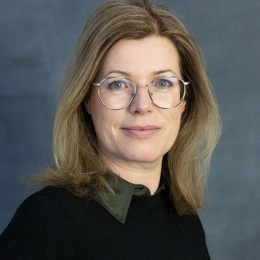
Danielle Ekman Ladru is a Senior Lecturer and Head of the Department of Child and Youth Studies at Stockholm University. Her research bridges childhood studies, human geography, and urban planning, focusing on children’s spatiality, mobility practices, and participation in public spaces. She leads the Formas-funded project Sustainable Vertical Childhoods? and co-led the research on The Whole City as a Preschool Yard , examining how dense urban environments shape children’s play and mobility. Research Interests : Spatiality, mobility, public space, urban planning, childhood geography Teaching : Lecturer in Child and Youth Studies master’s program Projects : Sustainable Vertical Childhoods? (2019–present) Learning in the City (funded by Vetenskapsrådet, 2015–2020) Her recent publications analyze urban inequalities during the pandemic, the role of materialities in mobile preschools, and national identity construction in Nordic curricula. She supervises doctoral students in childhood studies and collaborates with interdisciplinary networks on children’s geographies.
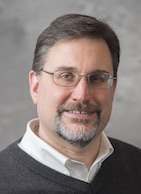
Jonathan Poggie is a Professor in the School of Aeronautics and Astronautics at Purdue University's College of Engineering, where he has been a faculty member since 2015. He previously spent over two decades at the Air Force Research Laboratory. His research group conducts high-fidelity simulations in hypersonic aerodynamics, turbulence, and plasma-based flow control, supported by major grants from DoD, DoE, AFOSR, and ONR. Ph.D., Mechanical and Aerospace Engineering, Princeton University, 1995 M.S.E., Mechanical and Aerospace Engineering, Princeton University, 1991 B.S., Mechanical Engineering, University of Rhode Island, 1988 Prof. Poggie's research focuses on high-speed fluid dynamics , particularly hypersonic flows , compressible turbulence , laminar-turbulent transition , and shock-wave/boundary-layer interactions . His group also investigates plasma-based flow control using electrical discharges. His work combines computational, experimental, and theoretical approaches to address challenges in aerospace vehicle design, especially for defense and space applications. The articles reflect a strong focus on computational fluid dynamics of high-speed flows, with particular emphasis on shock unsteadiness , boundary layer transition , and plasma actuation . The research spans from fundamental fluid mechanics to applied aerospace engineering, with increasing recent interest in military conflict modeling using fluid dynamics analogies. C. T. Sun Excellence in Research Award, 2023 University Faculty Scholar, 2023-2028 Outstanding Graduate Faculty Mentor Award, 2021 Elmer F. Bruhn Teaching Award, 2019 W. A. Gustafson Teaching Award, 2018 ASME Fellow, 2007 AIAA Associate Fellow, 2004 Prof. Poggie has advised 6 PhD students and 18 MS students at Purdue as of 2025. His research has been supported by multiple large-scale grants, including three DoD Frontier Projects and a DoE INCITE Award , providing supercomputing resources for high-fidelity simulations. He collaborates with researchers at The Ohio State University, Notre Dame, and various national laboratories. His group has developed novel approaches to operational mapping for military conflict analysis, creating continuous flow models of battlefield dynamics. The team has also secured two patents in hypersonic technology, one for inlet design and another for a hypersonic test facility. His research group investigates geometric imperfections in hypersonic vehicles (steps, gaps, roughness), laminar-turbulent transition prediction, and separation unsteadiness in shock-wave interactions. They use advanced computational methods like DDES and DNS, supported by massive computing allocations. The group has produced significant work on sidewall confinement effects , wall roughness , and gap flows in hypersonic configurations.
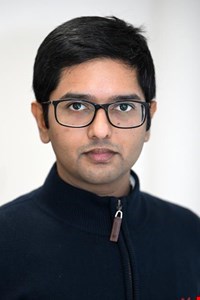
Dr. Utsa Mukherjee is a Senior Lecturer in Education at Brunel University London and serves as the Director of Equality and Diversity within the Department of Education. Previously, she held academic positions at the University of Southampton, Birkbeck University of London, and the University of Roehampton. Her research integrates Sociology and Social Geography to examine childhood/youth studies, social inequality, leisure, and migration through a social justice lens. Qualifications: PhD in Sociology (Royal Holloway, University of London), BA in English with Sociology and History (Presidency University Kolkata) Her work focuses on how structural inequalities shape the lived experiences of minoritized groups, particularly racialized minority children in the UK and sexual minority youth in India. She explores topics such as leisure practices, parenting cultures, childhood agency, and critical race/sexuality theories. Her research spans South Asia and its diaspora, employing ethnographic and critical methodologies. Recent publications analyze childhood masculinities, decolonizing leisure rights, and the intersection of race, class, and parenting. Awards include the British Sociological Association’s Philip Abrams Memorial Prize runner-up (2024) . She supervises PhD/EdD researchers in education-related projects and holds editorial roles in journals like Journal of Family Studies and Schole . Grants: Centring Families in Iceland’s Just Transition (Brunel University London, 2023-2024) Childhood Inequalities and Leisure (Froebel Trust, 2022-2024) Research and Development Fund (Leisure Studies Association, 2022-2023) Professional memberships include the British Sociological Association, American Sociological Association, and the Royal Geographical Society’s Geographies of Children, Youth and Families Research Group. Her outreach includes co-founding the Academy of Social Sciences and serving on the Leisure Studies Association executive committee.
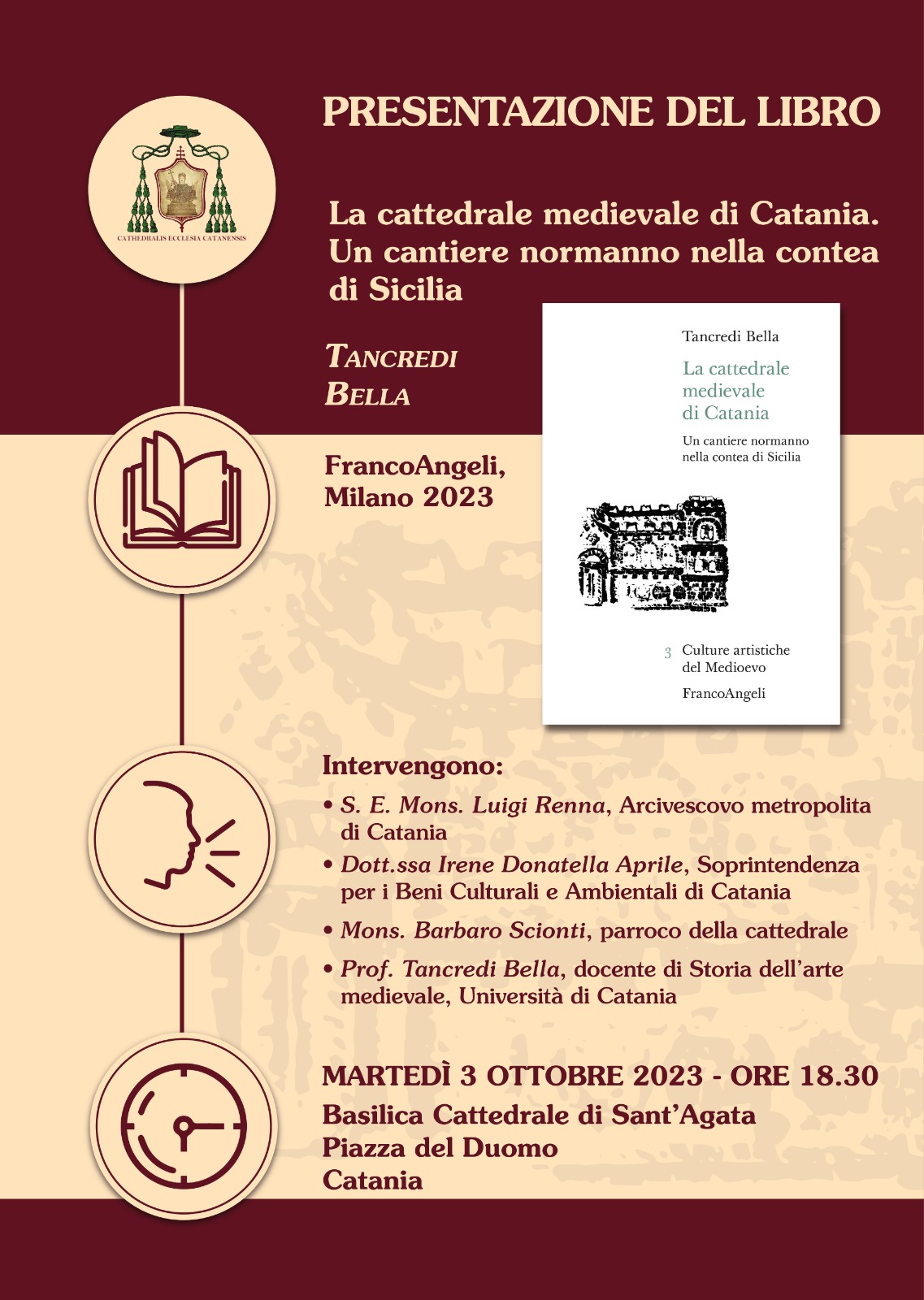
Tancredi Maria BELLA is an Associate Professor of Medieval Art History at the Department of Humanities, University of Catania, where he has been a faculty member since October 2020. He previously held research positions at the same department, including RTD-B researcher (2017–2020) and MIUR research fellow (2011–2017). He is also an associated external researcher at the Centre d'Études Supérieures de Civilisation Médiévale (CÉSCM), University of Poitiers (France), since 2012, where he was also a postdoctoral fellow. His research interests include: Norman architecture in eastern Sicily Medieval religious settlements linked to the Holy Land Lombard Romanesque architecture The work of art historian Fernand de Dartein 19th-century reception of Italian medieval art internationally The recent scholarly articles reflect a strong focus on Sicilian cathedral architecture, crypts, monastic spaces, and the transmission of medieval architectural forms across the Mediterranean and into the New World. His work combines architectural analysis with art historical interpretation, archival research, and cultural context. He frequently collaborates with scholars such as Giulia Arcidiacono and participates in international research networks. His scientific awards include a Congress Travel Award for the 55th International Congress on Medieval Studies. He has also led multiple research projects funded by the University of Catania and participated in international collaborations, including those with the Politecnico di Torino and French institutions. He has supervised several graduate students on topics related to medieval architecture in Sicily and has taught as a contract lecturer at the Catholic University of Milan. He is actively involved in academic conferences and public engagement, regularly presenting at national and international venues. His research is supported by affiliations with key institutions such as CÉSCM (Poitiers), CNRS (France), and participation in projects like the Cistercian Cultural Heritage (CCH) initiative.
Dr.-Ing. Martin Sondermann is a leading academic researcher in spatial planning and urban development, currently serving as Head of the Scientific Department "Society and Culture" at the Academy for Spatial Development (ARL) within the Leibniz Association . Previously, he was Head of Department II "Economy, Technology, Infrastructure" (2016-2017) and a Research Associate at the Institute for Environmental Planning, Leibniz University Hannover (2010-2016). His research focuses on planning cultures , democratic spatial development , cooperative urban strategies , and spatial justice . He has contributed extensively to debates on urban community gardens, integrated spatial approaches, and small town research, with recent works analyzing railway reactivation and retrofuturistic planning paradigms. Key trends in his publications include interdisciplinary studies on urban gardening (2016-2019), small town dynamics (2021), and sustainable planning governance (2018). He co-edited volumes on social and spatial justice (2019) and has published in journals like Sustainability and Raumforschung und Raumordnung . Internationally, Sondermann collaborates through the UK-German Frontiers of Humanities Symposium (2023) and COST Actions on homelessness (2016-2020) and urban allotment gardens (2012-2016). He has held guest lectures at institutions in Poland, Slovenia, and the UK.
Brandon Hamber is a Full Professor and holds the John Hume and Thomas P. O’Neill Chair in Peace at Ulster University, based in the School of Applied Social and Policy Sciences within the Faculty of Arts, Humanities & Social Sciences. He is a core member of the International Conflict Research Institute (INCORE) and the Transitional Justice Institute. He also serves as a Visiting Professor at the African Centre for Migration and Society, University of the Witwatersrand, South Africa. His educational background includes: PhD Master of Clinical Psychology, University of the Witwatersrand Bachelor of Arts, University of the Witwatersrand Professor Hamber’s research focuses on peacebuilding, transitional justice, psychosocial trauma, and reconciliation in post-conflict societies. His work spans Northern Ireland, South Africa, Colombia, Bosnia, and other regions affected by political violence. He explores how trauma is transmitted across generations and how urban environments influence conflict and peacebuilding. The analysis of his recent publications reveals a strong thematic focus on youth engagement in peace processes, intergenerational healing, spatial dimensions of conflict, and psychosocial support systems. His work bridges academic research with practical policy and community interventions, emphasizing societal transformation and mental health in post-conflict recovery. His notable scientific awards include: Paul Harris Medal for contributions to peace by Rotary (2013) Top 100: Most influential people in armed violence reduction (Action on Armed Violence Network, 2013/2014) Faculty Senior Distinguished Research Fellowship Award (2019) The Journal of Urban Affairs Best Paper Award (2024) Professor Hamber has advised several PhD researchers and has been actively involved in numerous international peace initiatives. He has secured significant research grants and has contributed to high-impact projects. His external roles include membership on the boards of Healing Through Remembering (Northern Ireland), Impunity Watch (Netherlands), and the British Council’s Society Advisory Group. He also serves on peer review colleges for the Arts and Humanities Research Council and ESRC. He leads and collaborates within multidisciplinary research teams, particularly through INCORE and the Transitional Justice Institute, focusing on policy-relevant research in conflict-affected regions. His work integrates academic rigor with public engagement, as seen in media contributions and curated exhibitions on memory and conflict.
Dr. Debbie Coney Pinder is a Principal Teaching Fellow at the University of Southampton's Winchester School of Art, where she leads the MA Luxury Brand Management programme. She combines academic expertise with extensive industry experience as a global luxury brand consultant, focusing on brand strategy, experiential design, and consumer behaviour in high-end retail environments. Research Interests: The New Luxury Consumer: Behaviour, Expectations, and Cultural Shifts Omni-Channel Strategies in Luxury Retail Reimagining the High Street and Urban Retail Constructing the Space of Luxury: Environments and Brand Expression Luxury Wellbeing and Emotional Dimensions of Luxury Airport Luxury Retail: Transient Spaces and Consumer Engagement Her recent research and publications explore evolving luxury landscapes, particularly in post-pandemic airport retail and digital-physical integration. Articles reflect trends in luxury consumer psychology, spatial branding, and experiential innovation, emphasizing emotional engagement and immersive environments. She is a contributing author to The Oxford Handbook of Luxury Business . Leadership and External Roles: Non-Executive Director, Winchester BID Chair, University Staff Engagement Board Chair, Athena Swan Equality Charter Global Luxury Consultant Creative Leader for Future World Start-ups Super Recruiter, University of Southampton Founder and Host of THE THING ABOUT LUXURY platform Debbie supervises PhD students and mentors emerging scholars in luxury studies. Her teaching includes Brand Identity & Strategic Positioning, Sustainable Futures in Luxury, and Digital Transformation in Boutique Innovation. She is actively accepting PhD applicants and contributes to shaping inclusive academic culture through her leadership roles. Labs and Teams: While no formal lab is mentioned, Debbie leads research initiatives within the Winchester School of Art, focusing on luxury consumer experience and spatial design. She collaborates with industry partners and academic networks, fostering interdisciplinary work in luxury branding and retail innovation.
Jamal Shahin serves as Associate Professor and Program Director at the Brussels School of Governance (Vrije Universiteit Brussel), Senior Lecturer at the University of Amsterdam, and Professorial Fellow at UNU-CRIS in Bruges. His academic career spans multiple prestigious institutions with a focus on European governance and digital policy. Dr. Shahin earned his PhD in Politics from the University of Hull in 2005 with a dissertation titled "Virtual Governance? The relationship between the Internet and Governance in the European Union." His academic journey reflects a deep commitment to understanding the intersection of technology, governance, and European integration. Shahin's research centers on digital sovereignty within the European Union context, examining how new forms of global social and political organization impact decision-making effectiveness and legitimacy. He investigates EU communication strategies in domestic and international arenas and explores interdisciplinary approaches to improve policy design. His work bridges theoretical governance frameworks with practical policy applications in the digital age, focusing particularly on internet governance, EU policy-making, and the evolving concept of sovereignty in digital spaces. His scholarly output demonstrates a clear evolution toward contemporary digital governance challenges, with recent publications focusing on EU digital sovereignty, internet governance frameworks, and regional digital policy coordination. The research shows increasing emphasis on the tension between state sovereignty and the global nature of digital infrastructure, reflecting current geopolitical debates in technology policy. As an academic supervisor, Shahin has mentored doctoral students including Penarrubia Manon (2017) and Clément Perarnaud (2021). His research is supported by multiple active projects including "Digital Sovereigns and the Non-Sovereign Internet" (2025-2027), "Negotiating State Sovereignty over the Internet" (2024-2027), and the "House of Sustainable Transitions" initiative (2024-2028). Shahin leads the Digital Governance cluster at UNU-CRIS and chairs the Global Internet Governance Academic Network (GigaNet) from 2025-2027. His work connects academic research with practical policy development through regular participation in conferences, workshops, and public lectures on digital sovereignty and EU governance.
Catarina Tente is an Associate Professor at the Department of History, Faculty of Social Sciences and Humanities, Universidade Nova de Lisboa. Her research focuses on Medieval Archaeology , particularly Rural Archaeology , Early Medieval Studies , and Landscape Analysis . She is affiliated with the Institute of Medieval Studies (IEM-NOVA FCSH) and has coordinated the Archaeology Degree Program since 2013. Research Interests span the analysis of medieval rural settlements, domestic material culture, landscape evolution, and the interplay between religious and secular power in urban contexts. Her work emphasizes interdisciplinary approaches, combining archaeological records with historical documentation and geospatial analysis. Key Themes : Household goods and economic activities Post-Roman settlement continuity Social complexity in non-monumental contexts Recent Publications explore trends in European medieval rural life, the role of small cities in shaping medieval Europe, and the archaeology of 10th-11th century Portuguese settlements. She has co-edited volumes on topics like Medieval Ritual and Votive Deposits and Urban and Rural Power Dynamics . Projects & Leadership : DESPAMED (2013-2016): Social inequality in rural Iberia Do Império ao Reino (2018): Viseu’s transition from Roman to medieval territory RURALIA XIV Conference (2021): Household archaeology in Europe
Tolga ERDEM is a Researcher at Trakya University's Faculty of Economics and Administrative Sciences, Department of International Relations. Holding a PhD in International Relations (2020) and two bachelor's degrees (2012) with full scholarships, his work bridges cybersecurity, international security, and geopolitical dynamics. Key affiliations include editorial roles in security anthologies and presentations at international conferences. PhD: Cyberspace as a Power Competition Domain Master's Thesis: Europeanization & Religious Identity in Turkey-EU Relations Research spans cybersecurity , space weaponization , AI-driven security , and energy geopolitics . Recent 2024-2025 publications analyze Balkan cybersecurity, water security, and biosecurity frameworks. His 2023 book Uluslararası İlişkilerin Yeni Güç Rekabet Sahası: Siber Uzay established him as a digital geopolitics expert. Journal trends show 2023-2024 focus on UN disarmament policies for AI weapons, space diplomacy frameworks, and EU-Turkey energy dynamics. Conference papers (2024) examine Central Asian water security and Balkan cyber threats. Teaching since 2020, courses include World Conflict Regions , EU-Turkey Relations , and Contemporary International Issues . No scientific awards listed.
Stephanie Hartwell (known as Steffi) is Dean of the College of Liberal Arts and Sciences at Wayne State University, Detroit, and holds academic appointments as Professor of Sociology and Adjunct Professor of Psychiatry. Her research focuses on urban transitions, trauma resilience, and community engagement for vulnerable populations, particularly formerly incarcerated individuals and gun violence survivors. She has secured $8 million in grants and published over 50 peer-reviewed works. Education: Ph.D. in Sociology, Yale University (1995) B.A. in Sociology and Art History, Bucknell University (1990) Her work bridges sociology, mental health, and environmental justice, examining how Detroit's periphery neighborhoods—marked by blight and service deserts—exacerbate health disparities and social decay. She emphasizes university-community partnerships like Auntie Na’s Village, a model for addressing trauma, resource gaps, and structural inequities through grassroots collaboration. Scholarly trends show her leadership in studying institutional-to-community transitions, with a focus on policy design, data harmonization, and behavioral health outcomes. Her 2020s research on post-incarceration education pipelines and trauma interventions underscores systemic solutions for marginalized groups. Scientific Awards: Chancellor's Medal for Distinguished Teaching (UMass Boston, 2012) Gary Burnstein Community Health Center Esteemed Woman of Michigan Grants & Collaborations: She led Kresge-funded projects creating Detroit community gardens, walking tracks, and tutoring spaces. Her lab teams partner with Auntie Na’s Village to address food insecurity, digital divides, and trauma resilience in underserved neighborhoods.
Mauricio Bustamante is an Assistant Professor at the Niels Bohr Institute , University of Copenhagen, specializing in theoretical high-energy astrophysics, astroparticle physics, and neutrino phenomenology. His research bridges cosmic phenomena with fundamental particle physics, focusing on ultra-high-energy neutrinos, cosmic rays, gamma-ray bursts, and new physics beyond the Standard Model. PhD in Physics (2012-2014) M.Sc. in Physics (2007-2010) B.Sc. in Physics (2001-2006) His work explores neutrino oscillations, self-interactions, and decay in extreme astrophysical environments. He contributes to major international collaborations like GRAND (Giant Radio Array for Neutrino Detection) and IceCube-Gen2, developing simulation pipelines and forecasting detection methods for EeV-scale neutrinos. Recent publications highlight energy-dependent flavor transitions, Lorentz invariance testing, and constraints on long-range neutrino interactions via DUNE and T2HK experiments. He actively participates in peer review for journals such as Physical Review D , Physical Review Letters , and Astrophysical Journal , and has attended conferences like TeV Particle Astrophysics (2017). His research emphasizes detector design, cosmic ray reconstruction via graph neural networks, and multi-messenger astronomy.
Dr. Mejrema Zatrić-Šahović is Assistant Professor at the International University of Sarajevo (IUS), Bosnia and Herzegovina. An architect and architectural historian, she also serves as Chair of Docomomo Bosnia and Herzegovina and co-founded the Archive of Modern Architecture of Bosnia and Herzegovina. Education PhD, ETH Zürich, Institute for the History and Theory of Architecture (Institut gta), 2013–2018 Master of Architecture and Urban Culture, Metropolis Programme, Universitat Politècnica de Catalunya & Centre de Cultura Contemporània de Barcelona Research Focus Her scholarly work interrogates the history of modern architecture and urbanism, with special attention to the Western Balkans. Key themes include the interplay between architecture and environment, the evolution of architectural regionalism, and the genealogies of modernism and modernity. She is actively engaged in the preservation of modernist heritage and holds a Getty Institute certificate in the conservation of modern architecture. Recent investigations explore how regional identities were negotiated within Yugoslav modernist projects, the impact of topography and infrastructure on Sarajevo’s urban form, and the endangered legacy of architect Juraj Neidhardt. Scholarly Output & Collaborations Since 2016 she has produced a steady stream of peer-reviewed articles examining modernist architects, urban planning ideologies, and post-socialist spatial transformations. Her research has been conducted in cooperation with leading institutions including MoMA New York, and her Google Scholar profile documents sustained publication activity through 2024. Professional Service & Outreach Beyond academia, Dr. Zatrić-Šahović leads Docomomo BH, steering national efforts to document and protect modernist buildings. She co-founded the Archive of Modern Architecture of Bosnia and Herzegovina, creating a vital repository for scholars and practitioners.
Ghyslain Gagnon is a Professor in the Department of Electrical Engineering at École de technologie supérieure (ÉTS) in Montreal, Canada. He leads research activities within the LACIME – Communications and Microelectronic Integration Laboratory, focusing on cutting-edge developments in microelectronics, sensors, and communication systems. His work bridges theoretical research and practical applications across multiple domains including health technologies, wireless communications, and quantum engineering. Education: B.Ing. from École de technologie supérieure M.Ing. from École de technologie supérieure Ph.D. from Université de Carleton Professor Gagnon's research spans several interconnected domains with emphasis on Radiofrequency circuits and antennas, Microelectronics, Wireless communications, Sensors and monitoring systems, Machine learning applications, Health technologies, and Quantum engineering. His work demonstrates a strong commitment to translating theoretical concepts into practical solutions with real-world impact, particularly in the areas of health monitoring systems and advanced communication technologies. His recent publications reveal a clear trajectory toward increasingly interdisciplinary research, combining traditional electrical engineering with machine learning, health monitoring, and quantum technologies. The trend shows growing emphasis on practical applications in automotive safety systems, wireless communications for next-generation networks, and health monitoring technologies that leverage flexible electronics and novel sensor designs. Professor Gagnon has successfully supervised numerous graduate students through their doctoral and master's research, with recent theses focusing on smart hearing protection devices, machine learning applications, energy monitoring systems, and flexible sensor technologies. His supervision record demonstrates consistent productivity and relevance to contemporary engineering challenges. He is an active member of the LACIME research laboratory, which focuses on six key areas: Functional materials, Micro- and nanofabrication processes, Conception and design of integrated circuits, Design and fabrication of hybrid components, Photonic and electronic microsystems, and Signal processing and communication. This environment provides students with access to cutting-edge tools and fosters innovation through interdisciplinary collaboration.
Thilo Stadelmann is the Founding Director of the Centre for Artificial Intelligence at the Zurich University of Applied Sciences (ZHAW) . A computer scientist by training, he earned his Doctor of Science degree from Marburg University, Germany, and has held engineering and leadership roles in the automotive industry before transitioning to academia. His research interests lie at the intersection of representation learning and the societal implications of artificial intelligence . He is particularly focused on understanding how AI systems can be designed to enhance human capabilities while addressing ethical concerns and societal challenges. Stadelmann is a prolific speaker and educator, delivering TEDx talks and lectures on topics such as "How Not to Fear AI" , "AI vs Human: Understanding the Fundamental Differences" , and "Decoding AI Fear: The Philosophy Behind It" . His work emphasizes the importance of demystifying AI and fostering a balanced perspective on its potential and limitations. His recent publications span a wide range of AI applications, from safety-critical network infrastructures and medical imaging to industrial process control and AI governance . Notable works include studies on AI risk assessment for public policy, document recognition, and the societal impact of AI technologies. Beyond his academic role, Stadelmann is actively involved in the digital ecosystem as a (co-)founder and senior leader in several organizations, bridging the gap between research and practical implementation in the AI space.