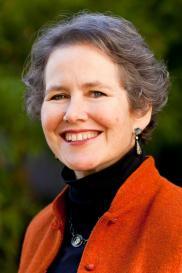
Dacia Viejo-Rose is a Senior Lecturer in Cultural Heritage and the Politics of the Past at the Department of Archaeology, University of Cambridge , and serves as Deputy Director of the Cambridge Heritage Research Centre . Her research focuses on cultural heritage in contexts of armed conflict, examining its role in division, exclusion, and post-conflict reconciliation. She integrates perspectives from memory studies, political science, and transitional justice. PhD (2009) in Cultural Heritage from University of Cambridge British Academy Post-doctoral Fellow (2012–2014) Her work analyzes the symbolic and ethical dimensions of cultural heritage destruction and reconstruction, particularly in post-civil war Spain, Bosnia, and Syria. She advocates for reparations frameworks in international law and critiques the instrumentalization of heritage in global conflicts. Key publication themes include: Post-conflict justice and cultural property law Cultural violence and socio-legal approaches Memory politics and identity formation Heritage conservation and ethical interventions Scientific awards: British Academy Post-doctoral Fellowship Her exhibitions, such as the 2015 Gernika Peace Museum display , highlight the interplay between heritage and peacebuilding. She contributes to debates on democratic memorial practices and international involvement in post-conflict societies.
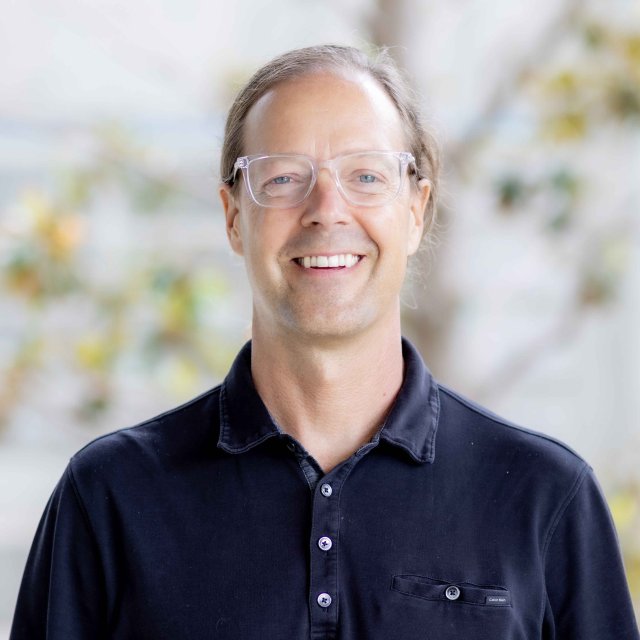
Mariane C. Ferme is a Professor in the Department of Anthropology at the University of California, Berkeley. Her research focuses on sociocultural dynamics in West Africa, particularly Sierra Leone, with expertise in political anthropology, legal studies, and material culture. She holds a PhD in Anthropology from the University of Chicago and has taught at prestigious institutions including the University of Cambridge and École des Hautes Études en Sciences Sociales. Education : PhD in Anthropology (University of Chicago), MA in Political Science (University of Milano), BA in Anthropology (Wellesley College). Ferme’s research spans the political imagination in conflict zones, agrarian transformations, and the interplay between humanitarian law and local justice systems. Her work has been supported by major grants from the National Science Foundation and the France-Berkeley Fund. She has published extensively on Sierra Leone’s post-war societies and the socio-cultural dimensions of the Ebola outbreak. Scientific awards include funding from the National Science Foundation, Hellman Family Faculty Fund, France-Berkeley Fund, Harvard Academy for International and Area Studies, and the Carter Woodson Institute for African and African-American Studies.
James Wicks serves as Professor of Media & Film Studies and Assistant Dean at Point Loma Nazarene University's School of Humanities, Arts, and Public Engagement. Teaching since 2009 and joining the Department of Communication Studies in 2021, he holds a Ph.D. in Film Studies with emphasis on Chinese Cinema from UC San Diego (2010). His academic career bridges administrative leadership with specialized instruction in narrative film, documentary production, and screenwriting. Dr. Wicks' educational background includes: Ph.D. in Film Studies (Cultural Studies section), University of California, San Diego, 2010 M.A., Oregon State University B.A., Oregon State University His research centers on Taiwan cinema history from the 1950s-1980s, exploring transnational representations, philosophical dimensions of martial arts films, and cultural identity. Additional interests include street culture in Hollywood, surf cinema history, and gender negotiation in early Taiwanese films. His methodological approach combines historical analysis with cultural studies frameworks. Publication trends reveal sustained focus on Taiwan cinema scholarship since 2010, with significant expansion into interdisciplinary urban studies (2019-2020) and contemporary director analyses (Ang Lee, Hou Hsiao-Hsien). His 2022-2016 output demonstrates consistent engagement with Cold War-era cinematic narratives while incorporating newer interests in ecological representation and punk cinema aesthetics. Notable recognitions include: Excellence in Teaching Award (PLNU, 2019) Two PLNU RASP grants for film preservation (2018-2019) Taiwan Ministry of Education research grant (2011) Chiang Ching-Kuo Foundation fellowship (2009-2010) As an active researcher, Dr. Wicks has secured substantial external funding for film preservation projects and maintains strong community engagement through the San Diego Asian Film Festival. His administrative role as Assistant Dean complements his scholarly work in media studies curriculum development. Through co-organization of the San Diego Asian Film Festival's Taiwan Showcase (2012) and UCSD Taiwan Film Festival (2009), he has built collaborative networks across academic and cultural institutions. His ongoing film reel preservation project demonstrates commitment to safeguarding historical cinematic materials.
Professor Helen Finch (University of Leeds) is a leading scholar in German Literature , with a focus on Holocaust Studies , Queer Memory , and German-Jewish Cultural Production . Affiliated with the School of Languages, Cultures and Societies and the Centre for Jewish Studies , she co-leads the LCS Queer Area Studies Network and contributes to equality initiatives through the LGBT+ staff network . Research: Holocaust representation in German works, queer identity in postwar literature, transnational memory studies, curriculum design in German studies Awards: Fellow of the Higher Education Academy (2014) Academic Output : Her 15 most recent publications span Holocaust poetics , queer life writing , translation ethics , and Sebaldian intertextuality , with a particular focus on intersections between trauma , identity , and intergenerational testimony . Supervision : Currently guides PhD research on topics including transnational transphobia , queer art practices , and LGBTQ+ cross-cultural representation . Her students explore areas from German exile photography to postcolonial queer narratives .
Dr. Bahar Baser is a Professor in Politics and International Relations at Durham University's School of Government and International Affairs, where she joined in 2021. She is also a member of the Institute for Middle Eastern and Islamic Studies. Previously, she served as Associate Professor at Coventry University's Centre for Trust, Peace and Social Relations, leading the "Peacebuilding and Conflict Transformation Research Group," and was a postdoctoral research fellow at the University of Warwick. Dr. Baser completed her PhD in Social and Political Sciences at the European University Institute in Florence, Italy. During her doctoral studies, she was a Visiting Research Fellow at multiple institutions including Humboldt University in Berlin, REMESO in Sweden, and the Instituto de Ciencias Sociais in Lisbon. Dr. Baser is an expert in diaspora studies, peacebuilding, and conflict transformation with a regional focus on the Middle East. Her research examines diaspora engagement in peace processes, post-conflict reconstruction, and state-building in the Global South. She has extensively studied stateless diaspora activism in Europe, particularly regarding host states' counterterrorism policies, radicalization of diaspora members, and transnationalization of homeland conflicts. Her recent publications demonstrate a strong focus on Kurdish diaspora studies, diaspora governance by authoritarian states, intergenerational trauma in diaspora communities, and peacebuilding processes. Her work spans multiple disciplines including political science, international relations, migration studies, and Middle Eastern studies, with particular attention to how diasporas interact with homeland conflicts and host state policies. Dr. Baser serves as editor of the Kurdish Studies Series published by Lexington Books and co-editor of the Diasporas and Transnationalism Series published by Edinburgh University Press. She is also a senior associate research fellow at the Security Institute for Governance and Leadership in Africa (SIGLA), Stellenbosch University, South Africa, and a visiting professor at Tampere Peace Research Institute, Tampere University, Finland. Dr. Baser has supervised multiple doctoral students including Abdullah Al-Khonaini, Mengqi Sun, Nannan Li, and Shorooq Al Zaabi. She has secured numerous research grants including projects funded by the British Academy, Academy of Finland, Allan and Nesta Ferguson Trust, and Horizon 2020 Marie Curie Fellowship. Her research projects span topics such as diaspora engagement in peace processes, youth violence and conflict transformation, and diasporic identity formation. Dr. Baser is actively involved with the Institute for Middle Eastern and Islamic Studies at Durham University, contributing to research initiatives focused on the Middle East and Islamic studies. Her multilingual capabilities (Turkish, English, Italian, Spanish, French, Portuguese, Azerbaijani) support her extensive fieldwork and collaborative research across multiple countries.
Kelly Askew is a Professor of Anthropology and Afroamerican & African Studies at the University of Michigan’s College of Literature, Science, and the Arts. She holds a PhD in Anthropology (Harvard, 1997) and a BA in Music and Anthropology (Yale, 1997), with over three decades of fieldwork in Tanzania and Kenya. Education PhD in Anthropology, Harvard University (1997) BA in Music and Anthropology, Yale University Key Roles Chair of the Department of Anthropology Niara Sudarkasa Collegiate Professor Her research bridges three primary domains: Postsocialist transitions (e.g., property rights formalization and land conflicts), art and political aesthetics (e.g., Swahili music, African visual arts, ethnographic filmmaking), and indigenous political movements (e.g., Maasai and Parakuyo pastoralists). She has produced award-winning documentaries like The Chairman and the Lions (2013) and Maasai Remix (2019), which examine cultural resilience and land rights. Scientific awards include being a finalist for the African Studies Association Herskovits Award (2002). Recent publications analyze land dispossession mechanisms, postsocialist cultural production, and media’s role in political identity. She has secured grants from the National Science Foundation, National Endowment for the Humanities, and Ford Foundation.
Jeff Sayer is a Professor in the Department of Forest and Conservation Sciences at the University of British Columbia (UBC) Faculty of Forestry . His research focuses on applied conservation science and the human dimensions of environmental change , with fieldwork spanning Indonesia, West and Central Africa, and Southeast Asia. Current projects include sustainable landscapes in Indonesia (since 2010), forest transitions in Ghana and the Congo Basin (since 2000), and new approaches to conservation science (since 2000). Research emphasizes integrated natural resource management, landscape-scale decision-making, and reconciling agriculture with biodiversity conservation. Key research themes: Integrated landscape approaches for multifunctional landscapes Forest governance and tenure conflicts Policy coherence for Sustainable Development Goals Human-environment interactions in tropical regions Recent publication trends show interdisciplinary focus on deforestation-free trade policies, agroforestry systems, forest governance challenges, and transdisciplinary science applications across tropical Asia, Africa, and Canada.
Britt Kramvig is a Professor at the School of Business and Economics , part of the Faculty of Biosciences, Fisheries and Economics (BFE) at UiT The Arctic University of Norway. Her research intersects decolonization , Indigenous (Sámi) studies, and creative industries , with a focus on storytelling, archive decolonization, and Arctic land-seascapes. She coordinates PhD studies in Tourism and Northern Studies and teaches courses on qualitative methods, climate change impacts on tourism, and knowledge co-production. Research Interests: Kramvig explores the decolonial potential of Indigenous archives , creative industries as decolonial praxis , and Arctic environmental humanities . Her work emphasizes ontology over epistemology , art-science collaborations (e.g., Dark Ecology, BAT), and indigenous survivance in tourism and cultural policy. She actively disrupts appropriation processes in Arctic landscapes through pluriversal storytelling. Key Collaborations: Kramvig contributes to international projects like Surviving the Unthinkable and The New Sámi Renaissance , advocating for indigenous data sovereignty and decolonial research ethics . She leads interdisciplinary efforts to integrate Sámi epistemologies into environmental science and policymaking. Recent Publications: Her 2023-2025 works address Arctic decolonization , indigenous archival practices , and co-creation in tourism , often published in journals like Environmental Research Letters and GeoHumanities . Notable topics include counter-mapping , indigenous survivance , and collaborative listening in Arctic soundscapes. Academic Affiliations: Member of the Norwegian Scientific Academy for Polar Research and the Indigenous Voices research group at UiT. She participates in the OKTA - Sami Art and Friction-Filled Communities on Festivals project.
Audrey Truschke is Professor of South Asian History and Director of Asian Studies at Rutgers University–Newark, within the Department of History, Faculty of Arts and Sciences. She holds a Ph.D. from Columbia University and specializes in the cultural, imperial, and intellectual history of early modern and modern India (c. 1500–present). Her scholarship bridges deep historical inquiry with urgent contemporary debates, particularly around religious identity, nationalism, and decolonization. Truschke earned her B.A. in Religious Studies from the University of Chicago (2004) and her Ph.D. in Middle Eastern, South Asian, and African Studies from Columbia University (2012). Her academic journey includes prestigious fellowships at Stanford University, the University of Cambridge, and the University of Sorbonne Nouvelle Paris III. Her research centers on South Asian history, with a focus on the Mughal Empire, Indo-Muslim rule, Sanskrit-Persian cultural exchanges, and the historical construction of Hindu identity. She critically examines how premodern histories are mobilized in modern political projects, especially Hindu nationalism (Hindutva). Her work spans cultural, intellectual, and religious history, emphasizing philology, translation, and the politics of historical memory. Truschke’s recent publications reveal a consistent trajectory: analyzing the evolution of religious and ethnic identities, particularly 'Hindu' and 'Han', through longue durée historical lenses. Her articles explore how empires, religions, and languages interacted in South Asia, and how these pasts are weaponized in the present. She frequently engages with themes of hegemony, identity formation, and the dangers of historical falsification, especially in the context of Hindutva ideology and its global manifestations. Scientific Awards and Honors: Karwaan Book Award (2022) National Endowment for the Humanities Public Scholars Fellowship (2021) Rutgers Board of Trustees Research Fellowship for Scholarly Excellence (2020) John F. Richards Prize in South Asian History, American Historical Association (2017) Andrew W. Mellon Postdoctoral Fellowship (2013–2016) Fulbright-Hays Doctoral Dissertation Research Abroad Fellowship (2009–2010) Truschke is an active advisor and mentor, though specific student names are not listed in the provided texts. She has secured significant research funding, including grants from the NEH and Princeton University Press. Her public scholarship includes contributions to the South Asia Scholar Activist Collective , the Hindutva Harassment Field Manual , and the Reporting Guide on Hindu Nationalism . She is currently writing a single-volume history of India for Princeton University Press, forthcoming in 2025. She is affiliated with several research initiatives, including the South Asia Scholar Activist Collective (SASAC), and maintains an active public presence through her personal website, media appearances, and public writings. Her work bridges the academy and public discourse, challenging dominant narratives and promoting historical accuracy in understanding South Asia.
Tatiana Sánchez Parra is an Assistant Professor of Cultural Anthropology at the University of Tennessee. Her research focuses on reproductive violence and justice in contexts of war and transitional justice, particularly in Colombia and Latin America. She employs feminist peacebuilding, social reproduction frameworks, and creative/arts-based methodologies in her work. Previously, she held a Marie Skłodowska-Curie Actions Fellowship at the University of Edinburgh and remains a visiting researcher there. Education: Ph.D. in Sociology, University of Essex (2018) M.A. in Theory and Practice of Human Rights, University of Essex (2013) M.A. and B.A. in Social Anthropology, Universidad de los Andes, Colombia (2007/2006) Key research interests include: Gendered victimhood in transitional justice Reproductive autonomy and social reproduction in militarized contexts Creative methods for knowledge production Environmental devastation and conflict legacies Her book ‘Born of War in Colombia’ (2024) examines how children born of conflict-related sexual violence remain marginalized in Colombia’s transitional justice systems. Recent publications analyze Colombia’s Truth Commission, feminist methodologies, and reparations frameworks. Awards include the prestigious Marie Skłodowska-Curie Actions Fellowship (2018-2020). She co-edits special journal issues on gender-based violence in Latin America and Colombia’s peacebuilding processes. Teaching includes courses on anthropology of human rights and reproduction/sexuality studies. She collaborates with Afro-Colombian communities and transitional justice actors to advance transformative justice measures for conflict-affected populations.
Ana Antic is a Professor in the Department of English, Germanic and Romance Studies at the University of Copenhagen, Faculty of Humanities. She is also affiliated with the Centre for Culture and the Mind, where she leads an ERC-funded project titled Decolonising madness: Transcultural psychiatry, international order and the birth of a ‘global psyche’ . Her academic journey includes a PhD in Modern European History from Columbia University (2012) and prior appointments at universities in the UK and US before joining the University of Copenhagen in August 2020. PhD in Modern European History, Columbia University (2012) Ana Antic’s research lies at the intersection of social and cultural history, focusing on the history of modern Europe, war and violence, and the 'psy' sciences—particularly psychiatry and psychoanalysis. Her work critically explores the decolonisation of psychiatric practices and concepts in the second half of the 20th century, examining how transcultural psychiatry emerged in the aftermath of WWII and during decolonisation. She investigates how Western and non-Western experts redefined the relationship between culture, race, and the individual psyche, and whether new frameworks succeeded in moving beyond colonial legacies. Her recent publications reflect a strong trend in global and transnational history, especially in the fields of transcultural psychiatry, Cold War science, and postcolonial mental health. The articles span interdisciplinary journals in history, global health, and medical humanities, often emphasizing decolonial critique and the politics of knowledge. A recurring theme is the role of experts from the Global South and Eastern Europe in shaping global psychiatric discourse. She has received multiple prestigious awards, including: Fraenkel Prize for Contemporary History (2016) British Academy Rising Star Engagement Award (2017) ERC Starting Grant (2019) Dan David Prize (March 2023) Ana Antic is actively involved in research leadership and academic collaboration. She currently heads the DNRF Centre for Culture and the Mind and leads a major ERC-funded project. She has organized international conferences and workshops, including the DECOLMAD Workshop and New Perspectives in Transcultural and Postcolonial Psychiatry . While no direct list of PhD students is provided, her leadership roles suggest active supervision and mentorship. Her work bridges history, psychiatry, and global health, contributing to a deeper understanding of the cultural and political dimensions of mental health. She is involved with the Centre for Culture and the Mind, a research environment that fosters interdisciplinary work on the intersections of culture, cognition, and history. Her project Decolonising madness brings together historians, anthropologists, and mental health professionals to re-examine the foundations of global psychiatric knowledge.
Joe Lockard is an Associate Professor of English at Arizona State University, affiliated with African & African American Studies and Jewish Studies. He holds a Ph.D. from the University of California, Berkeley (2000), and has taught at nine institutions across four countries, including UC Santa Cruz, UC Berkeley, and universities in Israel, Czech Republic, and China. His research focuses on antislavery literature, 19th-century American literature, and prison education advocacy. Lockard founded the Antislavery Literature Project (2003), which digitized abolitionist texts before transitioning into global translation initiatives, notably with Xi'an Jiaotong University. He co-edited three volumes of American slave narratives in Chinese translation. Current projects explore transatlantic slavery narratives and carceral literature. Lockard is a leading voice in prison pedagogies, co-authoring works on STEM education in prisons and death row literature's role in abolition movements. His work bridges literary scholarship with social justice activism, emphasizing global dialogue and educational equity.
Rana Jaleel is an Associate Professor in the Department of Gender, Sexuality, and Women's Studies at the University of California, Davis, within the College of Arts & Sciences. She holds multiple leadership roles, including Chair of the Cultural Studies Graduate Group, Chair of the Designated Emphasis in Feminist Theory and Research, Faculty Advisor for the Sexuality Studies Minor, and Co-Director of HATCH: The Feminist Arts & Sciences Initiative. She is also a 2021–2024 College of Arts & Sciences Dean's Faculty Fellow. Education: Ph.D. in American Studies, New York University J.D., Yale Law School MFA in Poetry, University of Michigan, Ann Arbor Rana Jaleel’s research centers on the politics of evidence, examining how harm is recognized or erased in legal, cultural, and political contexts. Her work critically engages with reproductive labor, race, gender, sexuality, property, and international law. She draws from feminist theory, critical ethnic studies, legal studies, and decolonial thought to interrogate the intersections of power, knowledge, and violence. Her interdisciplinary approach is reflected in her contributions across law, cultural studies, and creative writing. Her publications and editorial projects reveal a strong focus on racial capitalism, settler colonialism, queer/trans of color critique, and feminist legal theory. She explores how international legal frameworks for sexual violence are shaped by imperial and racial power. Her work frequently appears in journals such as Critical Ethnic Studies Journal , Cultural Studies , and Brooklyn Law Review . She has co-edited special issues on democracy, gendered citizenship, and racial capitalism, demonstrating a commitment to collective scholarly work. Scientific Awards: Author of Color First Book Award from Duke University Press for The Work of Rape Rana Jaleel is actively involved in academic service and mentorship. As Co-Director of HATCH and leader of the Write the Future! Lab, she fosters creative and critical scholarship among undergraduate students, particularly from women/queer/trans of color and transnational feminist perspectives. She serves on the Editorial Collective and Board of The Critical Ethnic Studies Journal and is a member of the American Association of University Professors’ Committee A on Academic Freedom and Tenure. Her leadership extends to admissions and curriculum development in interdisciplinary programs. She is co-editing a forthcoming issue of South Atlantic Quarterly on 'Queer/Trans of Color Transits and the Global Imaginaries of Racial Capitalism' and continues to develop projects that bridge creative practice, legal critique, and feminist theory.
Kristine Andra Avram is a Visiting Researcher at the Center for Conflict Research (ZfK) at Philipps University of Marburg, serving as a Post-doctoral fellow in the BMBF project 'Transformations of Political Violence' (2024-2025). Her work bridges peace and conflict studies, narratology, and social sciences with a focus on meaning-making in contexts of political violence and state repression. Her educational background includes a PhD in Political Science (summa cum laude, 2022) from Philipps University of Marburg, an MA in Peace and Conflict Studies (2010-2013) with study abroad at the University of Haifa, and a BA in Communication Science and Romance Studies (2007-2010) from the University of Erfurt, including Erasmus at Complutense University of Madrid. Avram's research examines how narratives shape interpretations of violence, influence reckoning with traumatic pasts, and inform transitional justice efforts. Using interdisciplinary narrative and (auto)ethnographic methods, she reveals storytelling as a site of agency and resistance—both for processing historical violence and envisioning just futures. Her work centers on concepts like responsibility, truth, and hope within post-communist contexts, particularly Romania. Her recent publications (2023-2025) demonstrate methodological innovation in narrative analysis applied to political violence, with increasing attention to researcher positionality and reparative methodologies. Articles span qualitative frameworks, courtroom narratives, postcolonial critiques of peacebuilding, and ethical dimensions of studying violence. Key scientific awards include: Dissertation Award from Südost-europagesellschaft (2023) Honorable Mention from Gert-Sommer-Award for Peace Psychology (2023) Mobility Grant from EISA (2023) Scholarships from MARA, Friedrich Ebert Foundation, and University of Haifa She has secured significant research funding including a Fritz Thyssen Foundation grant (2017-2022) as co-applicant and has taught courses on narrative reconstructions of the past at Philipps University Marburg and Goethe University Frankfurt. Her advisory work includes designing memory projects and conflict resolution initiatives with pax christi Rhein-Main. Avram actively collaborates within the Center for Conflict Research's interdisciplinary teams, focusing on political violence, transitional justice, and narrative methodologies in post-communist contexts through projects like 'Ascribing Individual Criminal Responsibility' and 'Transformations of Political Violence'.
Dr. Valerie Hebert is a Professor of History and Interdisciplinary Studies at Lakehead University, specializing in Holocaust photography, genocide studies, transitional justice, and human rights. She joined Lakehead in 2010 and previously held a SSHRC Post-Doctoral Fellowship at York University. Ph.D., University of Toronto (2006) M.A., McGill University (1999) H.B.A., McGill University (1997) Her research intersects 20th-century European history , legal historiography , and visual analysis , with a focus on post-atrocity justice (Nuremberg, Rwanda) and the role of photography in documenting human rights violations. She has presented internationally at conferences in Canada, the U.S., U.K., and Europe. Dr. Hebert has received multiple fellowships, including from the German Historical Institute , US Holocaust Memorial Museum , and Martin Buber Society . Her SSHRC Insight Grant -funded monograph project Five Shots from Sdolbunow examines Holocaust photography.