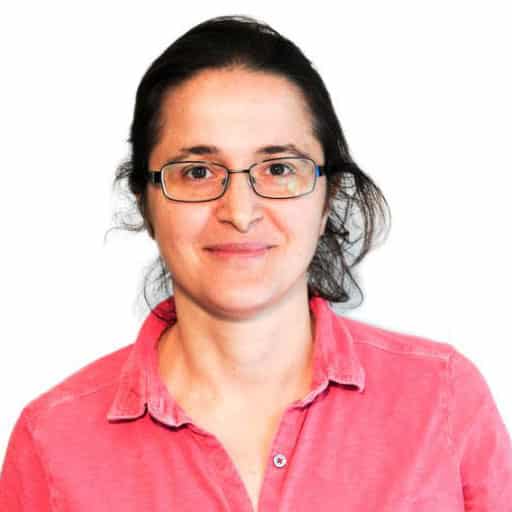
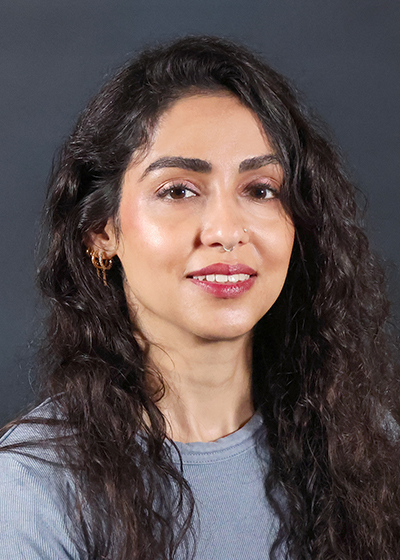
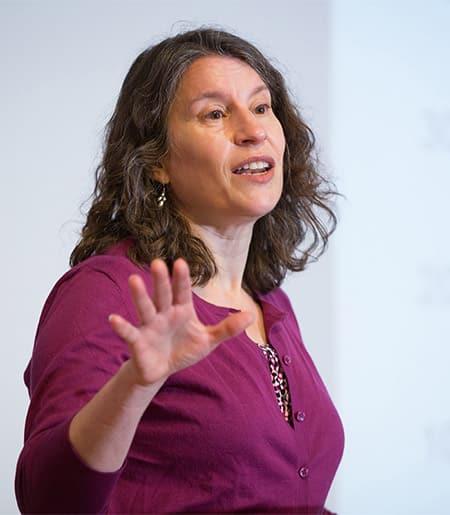
Michael A Osborne is Professor of Machine Learning at the University of Oxford and leads the Bayesian Exploration Lab . He serves as Director of the EPSRC Centre for Doctoral Training in Autonomous Intelligent Machines and Systems and co-directs the Oxford Martin AI Governance Initiative. His research focuses on Bayesian optimization, Gaussian processes, and probabilistic numerics with applications in quantum devices, battery modeling, and AI governance. Key Positions: Professor of Machine Learning, University of Oxford Official Fellow, Exeter College Co-founder of Mind Foundry Lead Researcher, Oxford Martin Programme on Technology and Employment Research Themes: Probabilistic modeling for quantum systems Uncertainty quantification in energy storage AI safety and societal impact analysis Automated experimental design Quantum device calibration Probabilistic numerical methods Technical Contributions: Bridging reality gap in quantum devices Efficient Bayesian quadrature techniques Personalized neurostimulation algorithms Automated measurement protocols Quantum-classical hybrid ML
Professor Sarah Hall serves as the 1931 Professor of Geography and a Fellow at St John’s College, University of Cambridge. She is a Senior Fellow and Deputy Director at UK in a Changing Europe , where she examines UK-EU relations and the economic geography of post-Brexit financial services. Her research integrates cultural economy and political economy frameworks to analyze the spatial impacts of global financial shifts on cities, particularly focusing on London’s role as a financial hub and its evolving ties with China and the EU. Education: MA, PhD Her work, funded by the ESRC, British Academy, Leverhulme Trust, and Nuffield Foundation, explores how macroeconomic transitions—such as Brexit, China’s financial rise, and finance-led capitalism—reshape regional economies. She employs geographically sensitive approaches to bridge academic, public, and policy debates. Research Trends across her 2023–2015 publications emphasize: Post-Brexit financial services job displacement and regulatory divergence State capitalism’s role in Chinese banking expansion into London Interlocking corporate-policy networks between EU financial centres Offshore RMB market dynamics in the UK Marketization of higher education and elite recruitment Scientific Recognition : British Academy Mid-Career Fellowship (2016–17) Fellow of the Academy of Social Sciences (2020) She contributes to Geoforum as Co-Editor-in-Chief and mentors prospective PhD students in economic geography and financial geopolitics.
Prof. dr. Steven Hoekstra is an Associate Professor of Atomic and Molecular Physics at the University of Groningen's Faculty of Science and Engineering, within the Van Swinderen Institute. His research focuses on precision measurements using cold molecules to explore fundamental physics, including Stark deceleration, laser cooling, and searches for physics beyond the Standard Model. He leads the NL-eEDM program at Nikhef, investigating the electron's electric dipole moment. Hoekstra is also involved in educational innovation, having received the Teacher of the Year award (2020) and a Senior Teacher Qualification (2023). He has supervised over 11 PhD theses and currently mentors 5 students. His work combines experimental techniques with theoretical insights, addressing questions like symmetry violations and quantum dynamics. Key projects include manipulating BaF molecules with electrostatic fields and exploring levitated nanoparticles as sensors. Hoekstra has secured major grants, including NWO VICI (2022) and VIDI (2013), and collaborates internationally on projects like the European Strategy for particle physics. Recent articles highlight advancements in molecular beam control, spin-precession methods for EDM searches, and opportunities in radioactive molecules. He actively participates in the Physics Olympiad Netherlands as chair, contributing to science outreach and education.
K. Rajibul Islam is an Associate Professor at the University of Waterloo, affiliated with the Institute for Quantum Computing (IQC) and the Department of Physics and Astronomy. He holds a joint appointment with the Perimeter Institute for Theoretical Physics and co-founded Open Quantum Design and Lightflow Optics Inc. His research focuses on quantum information processing, quantum simulation, and trapped ion systems, with applications in quantum computing and entanglement studies. Education: Ph.D. in Physics (2012, University of Maryland), M.Sc. in Physics (2007, Tata Institute of Fundamental Research), B.Sc. in Physics (2005, Jadavpur University). Postdoctoral research at Harvard University (2012–2015) and MIT (2015–2016). Research Interests : Quantum simulation of spin models, quantum computing with trapped ions, entanglement measurement, frustrated spin systems, and quantum materials. His lab, QITI (Quantum Information with Trapped Ions), develops scalable quantum simulators and open-access quantum computers like 'QuantumIon.' Awards : Fellow of the American Physical Society (2024), VAIBHAV Fellowship (2024), Excellence in Teaching Award (2024), Early Researcher Award (2019), and Distinguished PhD Dissertation Award (2012–13). Teaching : Courses include PHYS 701 (Graduate Quantum Physics), PHYS 234 (Quantum Physics I), PHYS 393 (Physical Optics), and PHYS 256 (Geometrical and Physical Optics). He emphasizes outreach via initiatives like Bigyan.org.in , a Bengali-language science platform. Lab and Collaborations : Active in developing trapped-ion quantum hardware, including ion trap designs, optical addressing systems, and holographic control methods. Collaborates on quantum algorithms, machine learning for quantum systems, and experimental quantum thermodynamics.
Professor Stefan Goedecker is a distinguished faculty member in the Department of Physics at the University of Basel, Faculty of Science. He holds the position of Professor of Computational Physics and leads an active research group focused on developing advanced computational methods for materials science and quantum physics. Dr. Goedecker received his physics education at the Technical University Munich and the College of William and Mary, followed by a Ph.D. from EPFL Lausanne. His postdoctoral training included positions at Cornell University and the Max-Planck Institute in Stuttgart. In 2003, he was appointed Professor of Computational Physics at the University of Basel, where he has established himself as a leading researcher in computational methods development. His research interests center on computational physics with emphasis on electronic structure calculations, atomistic simulations, and the development of novel algorithms for materials science applications. His work has strong interdisciplinary connections spanning physics, mathematics, material sciences, chemistry, and computer science. Current research directions include machine learning applications in catalysis, fourth-generation neural network potentials for molecular chemistry, and methods for quantifying material synthesizability. Analysis of his recent publications reveals a strong focus on advancing computational methods for electronic structure calculations, with particular emphasis on machine learning potentials, molecular dynamics optimization, and accurate modeling of material properties. His work bridges theoretical physics with practical applications in materials science and nanotechnology, with increasing integration of artificial intelligence techniques into traditional computational physics frameworks. Machine learning for Catalysis (Ongoing) Fourth-Generation Neural Network Potentials for Molecular Chemistry (Completed) Towards Quantifying the Synthesizability of Materials (Completed) Professor Goedecker's research group operates within the Department of Physics at the University of Basel, which is part of the NCCR SPIN initiative focused on silicon-based quantum computing development. The department hosts over 20 research groups with more than 180 teaching staff members, creating a vibrant research environment for computational physics and quantum technologies.
J. Daniel Kim is an Assistant Professor of Management at the Wharton School, University of Pennsylvania, where he teaches MBA and PhD courses on entrepreneurship and innovation. His research focuses on high-growth entrepreneurship, venture scaling, strategic human capital, mergers and acquisitions, innovation, and labor markets. PhD - MIT Sloan School of Management BA - Dartmouth College His research explores: Startup hiring challenges and firm-driven search strategies Timing and risks of venture scaling Post-acquisition employee retention patterns Founder impact on organizational change Immigrant founder contributions to entrepreneurship Key article trends show: Focus on talent dynamics in high-growth firms Analysis of organizational antecedents in acquisitions Quantitative approaches using population-level data Interdisciplinary connections between entrepreneurship, strategy, and economics Debunking myths about founder demographics Linkage between labor market mechanisms and startup performance Scientific recognition includes: Multiple Teaching Excellence Awards at Wharton (2024-2020) Best Paper Prize from Strategic Management Society (2020) Kauffman Dissertation Fellowship (2017) MIT Sloan Doctoral Thesis Prize (2019) Prof. Kim serves as an economist with the United States Census Bureau and has published in top journals including Strategic Management Journal , Organization Science , and American Economic Review: Insights . His work has been featured in The Wall Street Journal , New York Times , and Financial Times .
Michela Becchi is an Associate Professor in the Department of Electrical and Computer Engineering at North Carolina State University. She specializes in computer architecture, systems software, and applications, with a focus on heterogeneous systems, parallel algorithms, and acceleration techniques for bioinformatics, pattern recognition, and quantum computing. Her work spans multi-core CPUs, GPUs, FPGAs, and distributed clusters, emphasizing the boundary between hardware and software design. Dr. Becchi holds a Ph.D. and Master’s degree in Computer Engineering from Washington University in St. Louis (2009) and a Bachelor’s degree in Computer Engineering from Politecnico di Milano, Italy (2000). Her research has been recognized with prestigious awards, including the NSF CAREER Award (2015) and the University of Missouri System President Award for Early Career Excellence (2016). Her research interests include compiler and runtime techniques for heterogeneous systems, acceleration of bioinformatics algorithms, and high-speed networking applications. She has pioneered frameworks for efficient data transformation, GPU-accelerated compression, and memory-efficient graph algorithms for quantum computing. Her work also explores thread coarsening, mixed-precision auto-tuning, and secure multi-core processor design. Key contributions include the PILOT runtime system for GPU memory management, the GPU-FPtuner auto-tuner for floating-point applications, and innovative approaches to automata processors for genomic analysis. Her publications emphasize reproducible accuracy in scientific simulations and the optimization of irregular applications on many-core platforms.
Raquel E. Aldana is the Martin Luther King Jr. Professor of Law at UC Davis School of Law, where she rejoined as a full-time faculty member in 2020 after serving as Associate Vice Chancellor for Academic Diversity (2017–2020). She holds a J.D. from Harvard Law School and B.A. degrees in English and Spanish from Arizona State University (summa cum laude). Her academic career includes prior roles at the McGeorge School of Law and the University of Nevada, Las Vegas, as well as a Fulbright Scholarship in Guatemala (2006–2007). Her research focuses on transitional justice, criminal justice reform, sustainable development in Latin America, and immigrant rights. Aldana has authored or edited five books and over thirty law review articles, earning recognition through grants such as the UC Davis Academic Senate Interdisciplinary Grant for the project Building Bridges: Narrowing the Legal-Scientific Divide in Immigration Forensic Assessments . She teaches courses on immigration law, asylum, comparative forced displacement, and critical race theory. Aldana leads the Aoki Center for Critical Race and Nation Studies, co-directing its mission to advance interdisciplinary scholarship on race, ethnicity, and law. She co-founded the Critical Race Theory Book Series with UC Press, aiming to globalize and diversify critical race discourse. Her awards include the ABA’s Margaret Brent Women Lawyers of Achievement Award and the UC Davis Chancellor’s Achievement Award for Diversity. Her service includes roles on the American Law Institute, American Bar Foundation, and the Council on Foreign Relations. She chairs the ABA’s Latin America and Caribbean Council and co-chaired the UC Davis taskforce to achieve Hispanic Serving Institution (HSI) status, realized in 2024. Her work integrates legal education, policy reform, and grassroots advocacy to address systemic inequities in migration, criminal justice, and global development.
Benoît Mahault serves as a Group Leader and Researcher at the Max Planck Institute for Dynamics and Self-Organization (Göttingen, Germany) within the Department of Living Matter Physics, where he directs the Motile active matter research group. His work bridges theoretical physics and biological complexity through nonequilibrium statistical mechanics. His academic background includes a Ph.D. from Université Paris-Saclay (2018) under Hugues Chaté, followed by a postdoctoral position at the University of Tokyo in Prof. Masaki Sano's group. He joined the Max Planck Institute in 2019 as a postdoc and was promoted to Group Leader in 2021. Dr. Mahault's research centers on emergent self-organization in active matter systems , with focus areas including: Transition mechanisms to collective motion Bose-Einstein-like condensation via motility inhibition Topological defect dynamics in active nematics Navigation strategies for microswimmers in complex environments His theoretical framework reveals universal principles governing both synthetic and biological active systems. Analysis of his 15 most recent publications (2022–2025) shows a cohesive trajectory exploring nonreciprocal interactions , quorum sensing , and energy-accuracy tradeoffs in active matter. Key themes include phase separation in driven mixtures, defect-mediated pattern formation, and hydrodynamic optimization of microswimmer locomotion—demonstrating consistent innovation at the physics-biology interface. The Motile active matter group employs advanced theoretical modeling to dissect self-organization principles, contributing foundational insights through collaborations with experimental teams at the Max Planck Institute. Current projects investigate non-equilibrium steady states in confined active systems and topological constraints in collective navigation.
Solntsev Sergey Andreevich is an Associate Professor at the Department of Applied Economics within the Faculty of Economic Sciences at the National Research University Higher School of Economics (HSE). He also serves as Deputy Head of the Laboratory of Labor Market Research. With over 23 years of scientific and teaching experience since joining HSE in 2004, he specializes in labor economics, corporate governance, and personnel policy. Candidate of Economic Sciences (2006), Lomonosov Moscow State University Master's degree in Economics (2003), Lomonosov Moscow State University Bachelor's degree in Economics (2001), Lomonosov Moscow State University His research focuses on labor market dynamics, particularly examining wage structures, personnel policies in Russian companies, top management labor markets, and the relationship between higher education and labor market outcomes. He has conducted extensive empirical research on how Russian firms adjust wages, recruit employees, and manage executive turnover, with a particular emphasis on corporate governance mechanisms. His work often utilizes unique Russian enterprise and household survey data to provide insights into labor market functioning in the Russian context. His publication portfolio demonstrates a consistent focus on Russian labor market issues, with particular attention to higher education outcomes, wage setting practices, and executive labor markets. His research combines rigorous empirical methodology with practical policy implications, contributing significantly to understanding labor market dynamics in Russia during periods of economic transition and crisis. Letter of thanks from the Rector of HSE (December 2022) Gratitude from the Faculty of Economic Sciences of HSE (February 2020) Academic Work Allowance (2014-2015, 2008-2009) Bonus for publication in a List B journal (2023-2025) Professor Solntsev teaches multiple courses including Labor Economics, Labor and Personnel Economics (in Russian and English), and Russian Economy at both bachelor's and master's levels. His teaching reflects his research expertise, providing students with insights into contemporary labor market issues in Russia. His research has been supported through institutional mechanisms at HSE, including participation in the Laboratory of Labor Market Research activities and various research projects. As Deputy Head of the Laboratory of Labor Market Research at HSE's Faculty of Economic Sciences, he contributes to one of Russia's leading research centers focused on labor market analysis. The laboratory conducts empirical studies on various aspects of the Russian labor market, often in collaboration with government agencies like Rostруд (Federal Labor and Employment Service). Professor Solntsev works closely with colleagues including Professor Sergey Roshchin, the laboratory head, on multiple research initiatives.
Nazanin Tajik is an Assistant Professor in the Department of Industrial and Systems Engineering at Mississippi State University (MSU). She holds a Ph.D. from the University of Oklahoma, an M.S. from the University of Tehran, and a B.S. from Sharif University of Technology. Her research focuses on integrating artificial intelligence, machine learning, and social science concepts to develop cross-disciplinary frameworks for infrastructure resilience, smart transportation systems, and disaster management. Her academic journey includes a Ph.D. at the University of Oklahoma where she contributed to the Risk-Based Systems Analytics Laboratory. At MSU, she established a research center bridging AI/ML tools with socio-technical systems. Key research domains include cyber-physical-social infrastructure resilience, search-and-rescue planning, and game-theoretic robotic designs. Tajik's work emphasizes optimization algorithms for network vulnerability assessment, resource allocation in disaster scenarios, and adaptive recovery strategies. She is actively involved with professional organizations such as INFORMS, ISE, and POMS, reflecting her commitment to advancing operations research and systems engineering methodologies.
Benjamin F. Hobbs serves as the Theodore M. and Kay W. Schad Professor of Environmental Management at Johns Hopkins University, holding a primary appointment in the Department of Environmental Health and Engineering and a joint appointment in the Department of Applied Mathematics and Statistics. He is co-director of the USEPA Yale-JHU SEARCH Center and director of the NSF-funded Electric Power Innovation for a Carbon-free Society (EPICS) Center, focusing on interdisciplinary research at the intersection of energy systems, environmental management, and public health. Hobbs' educational background includes a BS from South Dakota State University (1976), an MS in Resources Management and Policy from SUNY-Syracuse (1978), and a PhD in Environmental Systems Engineering from Cornell University (1983). Prior to joining Johns Hopkins in 1995, he worked at Brookhaven and Oak Ridge National Laboratories and served as a professor at Case Western Reserve University, with additional visiting appointments at institutions including Cambridge University. His research integrates systems analysis, economics, and optimization to address critical challenges in electric utility planning, renewable energy integration, and environmental resource management. Key focus areas include solar forecasting using AI, green infrastructure for urban water management, health impacts of energy transitions, and grid reliability under high renewable penetration. His work emphasizes practical applications through engineering-economic modeling with rich technological and environmental detail. Analysis of his recent publications reveals a strong trend toward addressing grid reliability in decarbonizing systems, with increasing emphasis on market design innovations, resource adequacy under uncertainty, and storage-transmission tradeoffs. His research consistently bridges theoretical optimization with real-world policy implementation, particularly evident in his leadership of the EPICS Center's 100% renewable grid initiatives. Lifetime Achievement Award by Energy Systems Integration Group (ESIG), 2024 Fellow of the Institute of Electrical and Electronics Engineers (IEEE) Fellow of the Institute for Operations Research and Management Science (INFORMS) Hobbs advises graduate students through Johns Hopkins' interdisciplinary programs, with alumni employed as energy consultants, policy analysts, and researchers. His current grants include leadership of the NSF Global Center EPICS and co-direction of the USEPA SEARCH Center, focusing on energy-air-climate-health interactions. He chairs the Market Surveillance Committee for the California Independent System Operator and serves on editorial boards for Energy Economics and other leading energy journals. He leads the Hobbs Energy & Environment Decisions Research Group, which collaborates with institutions including IBM, National Renewable Energy Laboratory, and University of Texas at Dallas. The group participates in the Global Power Systems Transformation Consortium and Columbia-JHU Future Power Markets Forum, conducting fieldwork initially in California and the central United States.
Dr. Patrick Scholten is Professor of Economics at Bentley University, researching industrial organization, e-commerce economics, and applied game theory. His work analyzes firm behaviors in online markets using econometric methods. Education includes: PhD in Economics, Indiana State University MS in Student Affairs and Higher Education, Indiana State University Research examines price dispersion, network effects, ID verification impacts, and corporate social responsibility expectations. Recent publications focus on geo-cultural FDI determinants and business sustainability pressures.
Ruth Kanfer is a Professor of Psychology at the Georgia Institute of Technology's School of Psychology, specializing in adult learning, motivation, and career development. Her research addresses the impacts of technological advancements, demographic shifts, and global economic changes on work and career trajectories. She co-directs the PARK Lab, focusing on topics such as self-regulation in job search, motivational dynamics, and the psychology of workplace environments. Dr. Kanfer holds a Ph.D. in Psychology from Arizona State University and has contributed to seminal works on aging and workforce diversity. She is a Fellow of prominent organizations including the Academy of Management and the American Psychological Association, and has received prestigious awards such as the SIOP's William R. Owens Scholarly Achievement Award. Her research employs mixed-methods approaches, including experimental studies and large-scale field research. Key themes include adult learning efficacy, team-based motivation, and the design of workspaces to enhance employee well-being. Dr. Kanfer has led projects funded by the Sloan Foundation and the National Academy of Sciences, emphasizing interdisciplinary collaboration. Notable contributions include studies on the future of work, the role of future time perspective in career decisions, and the application of a 'whole-person' framework to adult learning. Her work has been published in journals like Journal of Applied Psychology and American Psychologist . She actively participates in professional committees, including the Sloan Research Network on Aging and Work and the National Academy of Sciences' How People Learn II initiative.
Sharon Sassler is a Professor in the Department of Policy Analysis and Management at Cornell University's Brooks School of Public Policy. She joined the Cornell faculty in 2005 and holds a Ph.D. in Sociology/Demography from Brown University (1995). Her research examines life course transitions of young adults across education, work, relationships, and parenthood, with critical attention to gender, race/ethnicity, and social class disparities. Education: Post-Doctoral Fellowship, Johns Hopkins University, Department of Population Dynamics (1995-96) Ph.D. in Sociology/Demography, Brown University (1995) M.A. in Sociology/Demography, Brown University (1991) B.A. in English & American Literature and Politics, Brandeis University (1984) Professor Sassler's research spans two interconnected domains: family demography and STEM gender dynamics. In family studies, she investigates cohabitation, marriage, and non-marital childbearing through publications like Cohabitation Nation: Gender, Class, and the Remaking of Relationships (2017), which demonstrates how cohabitation patterns exacerbate family inequality. Her work reveals how union transitions affect maternal health, child educational outcomes, and relationship stability across racial and socioeconomic lines. Concurrently, she examines women's retention in STEM fields, analyzing gender wage gaps, occupational attrition, and the impact of family formation on career trajectories in science and engineering professions. Her 2022-2025 publications reveal intensifying focus on cross-national comparisons of union formation and STEM career dynamics, with growing attention to policy impacts. Notable trends include state abortion policy effects on pregnancy outcomes, the retreat from marriage among college-educated STEM professionals, and intersectional analyses of job search strategies. Her work consistently centers gendered power dynamics within cohabiting relationships while documenting how racial and class inequalities shape family formation and STEM participation. Scientific Awards: No specific awards mentioned in source materials Professor Sassler actively mentors through collaborative research projects like Collaborative Research: Early Career Transitions into STEM Employment (2014), indicating grant-funded work examining structural barriers for women in technical fields. Her extensive co-authorship network suggests significant graduate student supervision, though formal advisee lists aren't documented. She teaches core sociology courses including Population and Public Policy (SOC 2030) and Population Controversies in Europe (SOC 3620), connecting demographic theory with contemporary policy debates. Based in Martha Van Rensselaer Hall, she contributes to Cornell's interdisciplinary research ecosystem through affiliations with both the Sociology program and Policy Analysis and Management department, bridging demographic methods with public policy applications to address pressing social inequalities.