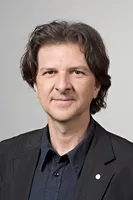
Franziska Thomasمشاهده پروفایل
استادیار
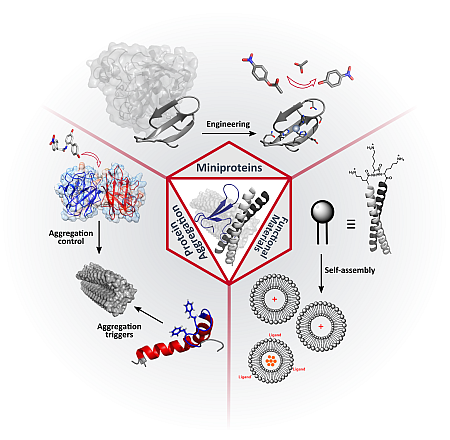
Jun.-Prof. Dr. Franziska Thomas is a Junior Professor at the Institute of Organic Chemistry, Heidelberg University, leading an active research group at the interface of organic chemistry, biochemistry, and biophysics. Her work centers on understanding protein folding mechanisms and their implications for biological function. Dr. Thomas established her independent research group at Georg-August-Universität Göttingen in June 2015 before moving to Heidelberg University in February 2020. She was offered her current tenure track position at Heidelberg on April 26, 2019. Her research program has two primary focuses: (1) designing peptide scaffolds with catalytic activity using de novo designed components that can be chemically synthesized and modified, and (2) studying protein aggregation mechanisms relevant to neurodegenerative diseases such as amyotrophic lateral sclerosis. She employs small, well-characterized self-assembling peptides to create novel materials and understand disease pathways. Analysis of her publication record reveals consistent advancement in peptide and protein engineering, with recent work emphasizing WW domains, β-sheet miniproteins, and innovative solid-phase synthesis techniques. Her research bridges fundamental protein science with applications in materials engineering and disease mechanism understanding. Her work has received significant funding including: The excellence cluster 3DMM2O for the project 'Design of Structured Adhesion Miniproteins for Tissue Engineering' The Deutsche Forschungsgemeinschaft for the research grant 'The WW-domain scaffold as a model system for the de novo design of miniaturized phosphate receptors, phosphatases and sulfatases' Dr. Thomas actively mentors a large research team including 11 PhD students and 2 Master's students, with numerous past students who have successfully completed their theses. She teaches courses including 'Chemische Biologie' and 'OC-Z6 Synthese und Retrosynthese' and participates in seminar series such as IMSEAM and 3DMM2O. The Thomas Lab maintains strong collaborative connections with multiple research groups including the Kivala, Kemerink, Blasco, Klein, Comba, and Gräter groups, reflecting an interdisciplinary approach to peptide and protein science.