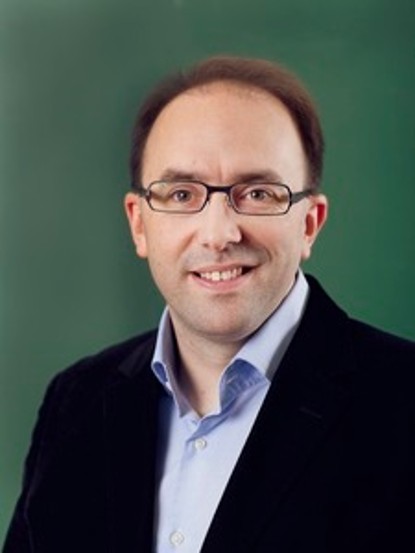
Achim Schwenk is a Professor at Technische Universität Darmstadt specializing in theoretical nuclear physics, strongly-interacting many-body systems, ultracold quantum gases, and nuclear astrophysics. His research bridges fundamental nuclear interactions with astrophysical phenomena like neutron stars. His work focuses on ab initio calculations, effective field theory, and dense matter properties. Recent publications highlight applications to neutron star equations of state, neutrinoless double beta decay, and nuclear structure uncertainties. Scientific awards and honors are not explicitly mentioned in the provided text. His research group at TU Darmstadt utilizes advanced theoretical frameworks like chiral effective field theory and many-body perturbation theory.
Claude Woods is a Professor of Chemistry at the University of Wisconsin–Madison , affiliated with the Department of Chemistry. His research spans laboratory and theoretical studies of molecular ions, with applications in interstellar chemistry and semiconductor manufacturing. Education : B.S. (Georgia Institute of Technology, 1961), A.M. (Harvard University, 1962), Ph.D. (Harvard University, 1965) Research Interests include: Microwave spectroscopy of molecular ions and transient species Quantum mechanical analysis of interstellar molecular clouds Plasma-aided manufacturing diagnostics High-precision ab initio quantum chemical calculations Publications highlight his work on: Spectroscopic properties of molecular ions (e.g., CO+, HCO+, SiF+) Quantum chemical modeling of potential energy surfaces Plasma diagnostics for semiconductor processing Contact : woods@chem.wisc.edu
Reika Katsumata is an Assistant Professor in the Department of Polymer Science and Engineering at the University of Massachusetts Amherst. Her research focuses on establishing design rules for extremely confined soft/hard interfaces, bridging precise polymer synthesis with nanoscale material miniaturization. She investigates how extreme confinement ( B.Eng. & M.Eng., Tokyo Institute of Technology (2009, 2011) Ph.D., Chemical Engineering, University of Texas at Austin (2016) Her work employs fluorescence spectroscopy, rapid thermal annealing, and film-stress measurements to address challenges in nanocomposites, ultra-thin coatings, and 2D materials. Recent studies explore defect healing in graphene, polymer-assisted porous carbon synthesis, and interfacial control of ferroelectric capacitors. She received an NSF CAREER award in 2021 for her work on multi-scale polymer dynamics. Key trends in her publications include polymer dynamics under nanoconfinement, interfacial interactions in hybrid materials, and scalable fabrication methods like roll-to-roll processing. Her research has implications for electronics, energy systems, and sustainable materials. Scientific Awards: NSF CAREER Award (2021)
Dr. Sofia Angeli is a Group Leader at the Institute of Catalysis Research and Technology (IKFT), Karlsruhe Institute of Technology (KIT), Germany, since March 2024. Previously, she held roles as Senior Scientist/Group Leader (2021–2024) and Postdoctoral Researcher (2017–2019) at KIT. Her research focuses on catalysis for energy transition, CO₂ valorization, kinetic modeling, and digitalization of catalytic processes. She leads interdisciplinary projects integrating experimental and computational methods to advance sustainable chemical processes. PhD in Chemical Engineering (2016): Aristotle University of Thessaloniki, Greece. Thesis: Hydrogen production via intensified methane steam reforming processes. M.Sc. in Advanced Materials (2012): Aristotle University of Thessaloniki. Diploma in Chemical Engineering (2009): Aristotle University of Thessaloniki. Research Interests : Sofia’s work spans kinetic modeling, CO₂ conversion, catalytic pollutant removal, and digital tools for catalysis research. She develops novel catalysts for methane reforming and designs data management systems like Adacta and CaRMeN to streamline reaction mechanism analysis. Her projects often address industrial challenges in emissions reduction and renewable energy. Her recent publications emphasize catalytic processes for energy sustainability (e.g., methane oxidative coupling) and automated modeling frameworks. She collaborates widely, contributing to journals like Chemical Engineering Journal and ACS Catalysis . Advising & Teams : As a Group Leader, she oversees researchers in catalysis and data-driven processes. Her team works on cutting-edge projects supported by KIT’s infrastructure and interdisciplinary networks. Labs/Teams : Active in the IKFT and the Deutschmann Group, focusing on catalyst design and process intensification.
Professor Kevin Kittilstved is a faculty member in the Department of Chemistry at Washington State University. His research focuses on chemically controlling the properties of inorganic materials through colloidal synthesis and advanced spectroscopic techniques. He earned his B.S. in Chemistry from Gonzaga University (2001), Ph.D. from the University of Washington (2006), and completed postdoctoral studies at the University of Washington (2010) and Université de Genève (2006–2010). Research interests include nanocrystal synthesis, semiconductor doping, and electronic structure analysis using techniques like X-ray diffraction and magneto-optical spectroscopy. His work explores applications in energy storage, electronics, and materials design. Key contributions include studies on ZnO nanocrystals, SrTiO3 systems, and molecular nanomagnets. Publications emphasize tunable electronic properties, dopant effects, and nanocrystal design. Advising has prepared students for careers in academia, industry, and engineering. His Kittilstved Lab supports interdisciplinary exploration of functional materials.
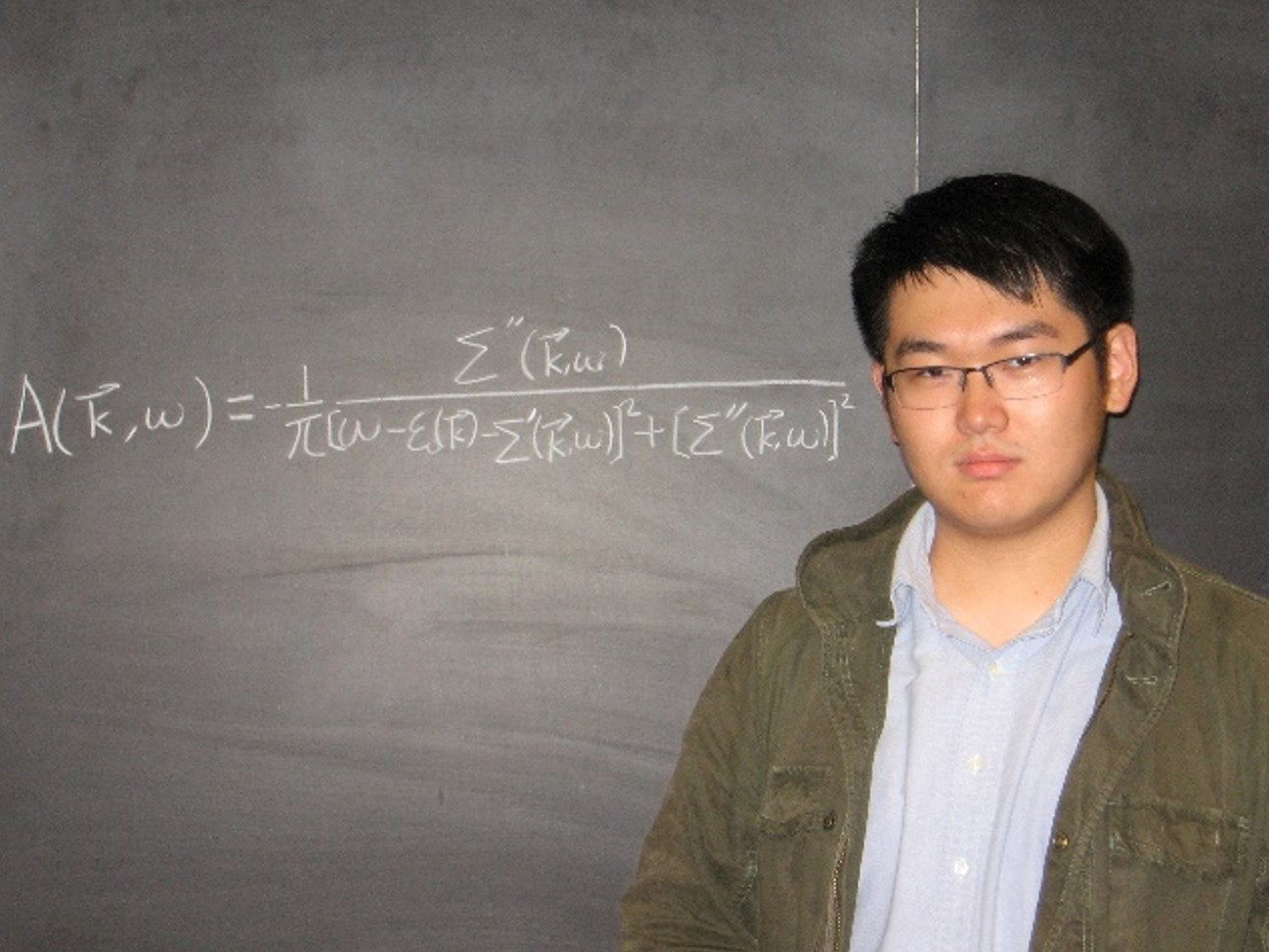
Dr. Lin Zhang holds the position of Postdoctoral Researcher at the Institute of Photonic Sciences (ICFO), specializing in the Quantum Optics Theory research group. He earned his PhD in Condensed Matter Physics from Peking University (CN). His work focuses on understanding ultrafast phase transitions, topological materials, and non-equilibrium quantum dynamics. Education: PhD in Condensed Matter Physics, Peking University, China Research Interests: Ultrafast dynamics in vanadium dioxide and TiSe systems Characterization of topological phases via quantum quenches High-harmonic spectroscopy for anisotropic phase detection Non-equilibrium dynamics in strongly correlated systems Research Highlights: Dr. Zhang’s work employs cutting-edge techniques such as Floquet engineering and tensor network methods to study phase transitions in condensed matter systems. His 2025 studies on femtosecond phase transitions in vanadium dioxide have advanced understanding of ultrafast material behaviors. Over 15 recent articles demonstrate a focus on topological classification , dynamical characterization , and quantum simulation of complex systems. Award Information: No scientific awards explicitly mentioned in the provided text. Advising/Grants: No advisees or grant information provided in the current dataset. Research activity is primarily conducted within the Quantum Optics Theory group at ICFO.
John Q. Xiao is the UNIDEL Professor of Physics & Astronomy at the University of Delaware's College of Arts & Sciences. His research focuses on spintronic devices, magnetism in nanostructured materials, metamaterials, and high-frequency magnetic materials. He is affiliated with the Physics & Astronomy department and has contributed to groundbreaking work on magnetic tunnel junctions, magnon dynamics, and terahertz spintronic systems. Xiao's work integrates experimental and theoretical approaches, often involving advanced characterization techniques like thin-film deposition and time-resolved spectroscopy. Research Areas: Spintronics, Magnetism, Metamaterials, Nanostructured Composites Affiliations: UNIDEL Professor role emphasizing interdisciplinary research His studies explore phenomena such as spin-polarized transport, ultrafast demagnetization, and magnon-photon interactions. Recent projects include developing flexible magnetic composites for microwave absorption and investigating quantum effects in layered materials like Fe5GeTe2. Xiao collaborates on projects involving advanced materials for high-frequency electronics and quantum sensing applications. Xiao’s publications span topics from topological insulators to nanomaterial synthesis, with a focus on practical applications in energy-efficient devices and electromagnetic systems. His work is supported by grants addressing spin-orbit torques, magnonics, and novel 2D materials.
William Y. C. Huang is an Assistant Professor in the Department of Biophysics at Johns Hopkins University. He received his B.S. in Chemistry from National Taiwan University (2010) and Ph.D. in Chemistry from UC Berkeley (2016) under Dr. Jay Groves. After postdoctoral work at Stanford University (2018-2023) with Dr. James Ferrell, he launched his independent research program at Hopkins in 2024. Education: B.S. in Chemistry, National Taiwan University (2010) Ph.D. in Chemistry, University of California, Berkeley (2016) Research Focus: Quantitative study of biochemical reactions at cell membranes Signal transduction mechanisms Single-molecule imaging and spectroscopy Development of reconstituted membrane assays Investigation of protein condensation phase transitions Kinetic modeling of membrane-bound biochemical systems Scientific Awards: NIH Pathway to Independence Award Searle Scholar Contact: Email: whuang@jhu.edu Office: 168 Mergenthaler Hall Phone: (410) 516-0166
Sergio Montoya is a researcher at the University of California, San Diego's Center for Memory and Recording Research (CMRR), where he has worked since 2021. Previously, he conducted research at the Naval Information Warfare Center Pacific from 2017 to 2021, focusing on spintronics, cryogenic devices, and electromagnetic packaging. Montoya earned his Ph.D. in Electrical Engineering from UCSD in 2016, specializing in chiral magnetic phases and hybrid skyrmions. Current Position: Scholar, CMRR, UC San Diego Past Affiliation: Naval Information Warfare Center Pacific Education: Ph.D. in Electrical Engineering (UCSD, 2016) His research spans topological phases in nanostructured materials , spintronics , secure magnetic storage erasure , and superconducting sensing . Key techniques include X-ray/neutron scattering and thin-film magnetism studies. Recent publications (2016-2022) focus on skyrmion dynamics, magnetic phase transitions, and metamaterials, with applications in secure data storage and advanced sensing. Articles appear in Phys. Rev. B , Nature Comm. , and ACS Nano . Scientific Awards: U.S. DoD SMART Scholarship Montoya's work addresses fundamental challenges in magnetic storage, spintronic device stability, and novel material phases. His collaborations span institutions like Stanford and Lawrence Berkeley National Laboratory.
Maxim S. Pchenitchnikov is Professor of Physics at the University of Groningen's Faculty of Science and Engineering, leading the Optical Condensed Matter Physics group within the Department of Physics. He joined the university in 1996 after completing his PhD at Moscow State University, transitioning from the Chemistry Department to Physics in 2006. His research focuses on ultrafast phenomena in organic materials at nanoscopic scales and femtosecond timeframes, with particular emphasis on exciton dynamics, molecular motors, and photon echo techniques. Pchenitchnikov's work bridges physics, chemistry, and materials science to develop advanced spectroscopic methods for studying energy transfer processes in complex molecular systems. His laboratory specializes in designing experiments that capture molecular dynamics occurring in quadrillionths of a second. Analysis of his 15 most recent publications reveals a strong trend toward biomimetic light-harvesting systems, molecular nanotube assembly, and dual-function molecular motors. His research increasingly integrates cryogenic imaging, linear dichroism microscopy, and advanced photon echo techniques to study non-equilibrium states in artificial photosynthetic systems. Recent work demonstrates significant progress in tracking molecular motors through photoluminescence while maintaining rotary function. Guinness Book of World Records certificate for shortest flashes of light (4.5 femtosecond) Pchenitchnikov has secured substantial research funding including a 3.8 MEuro European Innovative Training Network grant (SEPOMO) in 2016 with 8 academic and 3 industrial partners, and an NWO grant in 2020 for studying self-assembly pathways of artificial light harvesting complexes. His research contributes to UN Sustainable Development Goals through advancements in renewable energy materials and sustainable technologies. His laboratory maintains extensive national and international collaborations through memberships in the Optical Society of America, American Chemical Society, and Materials Research Society.
Dr. Priya Vashishta is a Professor with joint appointments in Computer Science, Materials Science, and Physics at the University of Southern California. His research integrates computational methods across multiple scales to address fundamental challenges in materials science and nanotechnology. Research focuses on multiscale simulation frameworks combining quantum molecular dynamics, machine learning interatomic potentials, and high-performance computing. Key areas include: energy storage materials, 2D materials characterization, catalytic processes, and AI-driven materials discovery. Publication trends reveal consistent development of computational methodologies: machine learning potentials for materials simulation, neural network quantum dynamics, GPU-accelerated computing, and multiscale modeling techniques. Recent work emphasizes practical applications in energy storage, nanoscale electronics, and advanced manufacturing. Research group activities include development of open-source simulation packages (PND, Allegro) and leadership in the MAGICS computational materials center. Contributions span fundamental theoretical frameworks to applied materials engineering.
Zach Berta-Thompson is a Professor of Astrophysical and Planetary Sciences at the University of Colorado Boulder. He leads research on exoplanet atmospheres and M dwarf stars, leveraging transit spectroscopy and data from missions like TESS and JWST. His work focuses on understanding planetary evolution and atmospheric composition. Teaching includes courses like ASTR1030, ASTR2600, and ASTR5810, emphasizing hands-on learning. He promotes public engagement through events like TEDx Boulder and educational outreach programs for K-12 students. Research collaborations include the Mega-MUSCLES Treasury Survey and the MEarth Project. Office hours are Monday 10AM-12PM and Wednesday 2PM-4PM in Duane D213.
Raphael D. Levine is a Professor at the Department of Chemistry, University of California, Los Angeles (UCLA). He holds affiliations in the Chemistry and Biochemistry departments, Molecular & Medical Pharmacology, and is a member of the California NanoSystems Institute and the JCCC Signal Transduction and Therapeutics Program Area. Primary Affiliation: Department of Chemistry, UCLA Secondary Affiliations: Chemistry and Biochemistry, Molecular & Medical Pharmacology Research Institutes: California NanoSystems Institute, JCCC Program Area Levine's research spans interdisciplinary domains such as: Information-theoretic approaches to gene networks and carcinogenesis Quantum and molecular computing via quantum dots, DNAzymes, and redox systems Entropy analysis in biochemical signaling and cellular dynamics Ultrafast spectroscopy for molecular logic devices Isotope effects in planetary and nebular chemistry His work emphasizes the convergence of physical chemistry, computational biology, and nanotechnology. Key methodologies include surprisal analysis, maximal entropy inference, and electrochemical spectroscopy. Levine's publications demonstrate expertise in translating quantum phenomena into practical computing frameworks, with applications in cancer biology, molecular electronics, and astrochemical modeling. Notable collaborations include James R. Heath and Françoise Remacle. Contact: rafi@chem.ucla.edu | Office: Geology 3608A | Mailing: Department of Chemistry, UCLA
Yifan Su is a postdoctoral research scientist at Columbia University in the Basov Lab, specializing in ultrafast dynamics of quantum materials. He joined Columbia in 2024 after completing his Ph.D. at MIT under Prof. Nuh Gedik. His research focuses on light-induced phenomena in quantum materials using advanced techniques such as ultrafast diffraction and time-resolved ARPES. Key interests include charge density waves, high-temperature superconductors, and magnetic materials. He previously studied at the University of Illinois Urbana-Champaign (theoretical physics) and Cornell University (experimental condensed matter physics). His work bridges momentum-resolved spectroscopy and imaging techniques to explore transient phases and phase transitions in materials. Recent projects involve studying photoinduced topological transitions and dynamical competition between electronic orders in kagome superconductors. The Basov Lab at Columbia provides a platform for integrating cutting-edge optical imaging with ultrafast methods to advance understanding of quantum materials' dynamic behavior. While no awards or grants are explicitly listed, his publications indicate contributions to topological materials, Floquet engineering, and ultrafast dynamics in layered systems. His educational background reflects a strong theoretical foundation combined with experimental expertise in quantum materials.
Professor Michael Templeton is a leading academic in Public Health Engineering at Imperial College London , affiliated with the Faculty of Engineering and the Department of Civil and Environmental Engineering . He also holds the Royal Academy of Engineering Research Chair in Global Sanitation Technology , working closely with organizations like Oxfam , Water For People , and the International Worm-Based Sanitation Association . His work addresses critical issues in water supply , sanitation , and public health , particularly in regions affected by schistosomiasis and water scarcity . Professor Templeton earned a Bachelor's degree with honours in Engineering Science and a PhD in Civil-Environmental Engineering , both from the University of Toronto . He is a chartered civil engineer , Fellow of the Institution of Civil Engineers , and elected Fellow of the African Academy of Sciences . His professional experience includes advisory roles for the World Health Organization , Ethiopian Federal Ministry of Health , and various research councils. Environmental Engineering : Water treatment Infectious Diseases : Schistosomiasis control Global Health : Sanitation in low-income settings Climate Resilience : Cold region sanitation Waste Valorization : Biochar from faecal sludge Diagnostic Innovation : Biosensors for pathogens His most recent research explores stormwater odorants , UV disinfection , and smartphone-based water quality monitoring . He has also advanced tiger worm toilets and citizen science approaches in data-scarce regions. His work spans 15 countries including Ghana , Sierra Leone , India , and Ethiopia . Scientific awards and honors include: Fellow of the Institution of Civil Engineers Elected Fellow of the African Academy of Sciences Royal Academy of Engineering Research Chair Professor Templeton has no listed students in the provided data but has contributed extensively to sanitation innovation , waterborne disease prevention , and capacity-building in developing nations. He has led field projects and published on vermifiltration systems , biochar production , and disinfection byproducts .