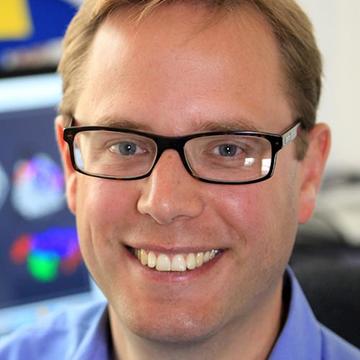
Dr. Ben Montet is a Senior Lecturer in the School of Physics at the University of New South Wales (UNSW), where he leads the NEarby Worlds and Their Stars (NEWTS) research group. He joined UNSW in October 2019 and actively seeks to supervise students at undergraduate, Honours, and PhD levels in exoplanet and stellar astrophysics research. His education includes a PhD in Astrophysics from the California Institute of Technology (2016) and a BS in Physics and Astronomy from the University of Illinois at Urbana-Champaign (2011). Dr. Montet's research focuses on detecting and characterizing exoplanets around nearby stars and studying stellar magnetic activity phenomena like starspots and flares. He leverages data from space-based missions (Kepler, TESS) and ground-based facilities, employing machine learning techniques and statistical methods to analyze large datasets. His work spans exoplanet detection methods, stellar activity evolution, and the application of advanced computational tools to astrophysical problems. His recent publications demonstrate a strong focus on exoplanet characterization (including atmosphere studies, transit timing variations, and dynamical interactions), asteroseismology (determining stellar masses and evolutionary states), and stellar activity cycles. A significant portion utilizes data from the TESS mission. Dr. Montet is actively involved in student advising and encourages prospective students interested in exoplanets or stellar astrophysics to contact him. He leads the NEWTS research group at UNSW.
Christiane Helling is Full Professor in Weltraumwissenschaften (Space Sciences) at Graz University of Technology and Director of the Institute for Space Research Graz (IWF) at the Austrian Academy of Sciences. She previously held leadership roles at the University of St Andrews, including Director of the Centre for Exoplanet Science, and has been a Senior Scientist at the Netherlands Institute for Space Research. Habilitation in Astrophysics (TU Berlin) PhD in Astrophysics (TU Berlin, with distinction) Diploma in Physics (TU Berlin) Her research focuses on exoplanet and brown dwarf atmospheres, cloud microphysics, charge processes, and atmospheric chemistry. She integrates hydrodynamic simulations with space observations from missions like CHEOPS, JWST, and PLATO to map cloud distributions and study planetary climate. Her recent publications emphasize time-dependent cloud formation, thermodynamic disequilibrium in planetary disks, and exoplanet atmospheric characterization using space telescopes. Key collaborations include the CHAMELEON project (virtual laboratories for exoplanet atmospheres) and the MSG model for cloudy sub-stellar atmospheres. ERC Starting Grant (LEAP Project: Lightning, Electrical and Atmospheric Processes on exoplanets) Marie-Curie Innovative Training Network (CHAMELEON)
David Kipping is an Associate Professor of Astronomy at Columbia University. His research focuses on exoplanetary systems, particularly the detection of exomoons, stellar dynamics, and astrostatistics. He holds a B.A. and M.Sc. in Natural Sciences from Cambridge University and a Ph.D. from University College London. Before joining Columbia, he was a postdoctoral fellow at Harvard University through the Sagan and Menzel fellowships. His research interests include extrasolar planets, moons, and rings, as well as stellar rotation and granulation. He has pioneered methods for analyzing transit timing variations (TTVs) and detecting exomoons using Kepler and TESS data. Recent work has explored the rapid abiogenesis hypothesis and the orbital stability of planetary systems. Key contributions include the discovery of potential exomoon candidates and the development of tools like the 'Democratic Detrender' for photometric data analysis. His articles emphasize rigorous statistical methods and critique common analytical pitfalls in exoplanet studies. David advises three graduate students: Emily Sanford, Alex Teachey, and Moiya McTier. Though no specific grants or awards are listed, his work is supported through academic and space agency collaborations. His research also touches on SETI and astrobiology, addressing questions about the likelihood of extraterrestrial civilizations.
Dr. Luc Schlangen is a University Researcher at Eindhoven University of Technology, working within the Human Technology Interaction group in the Industrial Engineering and Innovation Sciences faculty. His research focuses on visual and non-visual responses to light and lighting in various settings including workplaces, healthcare, homes, and educational environments. He serves as the Dutch Representative for CIE Division 6 "Photobiology and Photochemistry" and previously directed this division from 2019-2023. Dr. Schlangen's research spans multiple areas related to lighting and human health, with particular emphasis on circadian rhythms, melatonin regulation, and the development of metrics for quantifying light for its non-visual and ipRGC-influenced responses. His work contributes to UN Sustainable Development Goals related to health and well-being. He chaired the committee that developed the international standard CIE S 026:2018, which introduced new metrics for evaluating lighting beyond traditional visual performance. His recent publications demonstrate a strong focus on practical applications of lighting science, examining how light affects human behavior, sleep patterns, and cognitive performance in real-world settings. The research spans from classroom environments to daylight saving time transitions, showing how lighting can be optimized for both visual comfort and non-visual health benefits. CIE Wyszecki Gold Pin award (2023) Dr. Schlangen actively contributes to several major research projects including Bioclock (2021-2027), Intelligent Lighting (2020-2025), and LightCap: Light, Cognition, Attention, Perception (2020-2024). These projects explore biological rhythms, lighting applications, and the relationship between light and cognitive functions across multiple domains including healthcare, education, and workplace environments. He also serves as a consultant for Signify N.V. and has been active in numerous professional activities including keynote presentations at international conferences on topics such as integrative lighting, sleep health, and circadian-effective lighting solutions.
Robert Morehead serves as an Associate Teaching Professor in the Department of Astronomy and Astrophysics at Pennsylvania State University, where he maintains active research and teaching responsibilities. His institutional contact details include email rcm242@psu.edu and telephone 814-863-9684, reflecting his ongoing engagement with the academic community through both instructional and research channels within the university's astronomical sciences division. Dr. Morehead's primary research focus centers on exoplanet discovery and characterization through statistical analysis of Kepler mission data. His methodological expertise includes approximate Bayesian computation, transit timing variation analysis, and multi-band photometric validation techniques. Key research areas encompass exoplanet population statistics, false positive rate mitigation in transit surveys, multi-planet system architectures, and the development of simulation frameworks for modeling planetary system formation and evolution. His work bridges observational astronomy with advanced computational statistics to address fundamental questions in planetary science. Analysis of his publication record from 2013-2025 reveals consistent contributions to exoplanet population studies, with particular emphasis on statistical validation methods for Kepler candidates. His research demonstrates evolving sophistication in handling large datasets through simulation-based approaches, with increasing focus on software development (notably ExoplanetsSysSim) and Bayesian inference techniques. The thematic progression shows movement from initial candidate validation toward comprehensive population modeling, reflecting broader trends in the field toward data-intensive exoplanet characterization. Scientific Awards: No scientific awards documented in available source materials While the provided documentation contains no explicit references to doctoral advisees or formal student supervision, Dr. Morehead's active research program suggests potential involvement in graduate education through course instruction and research project guidance within the astronomy department. No grant funding information appears in the current source materials, though his publication record implies participation in collaborative research initiatives requiring external support. His current research trajectory, evidenced by the 2025 ExoplanetsSysSim publication, indicates ongoing development of computational frameworks for exoplanet system simulation, suggesting continued leadership in methodological approaches to exoplanet population studies within the Penn State astronomy community.
Elisabeth Newton is an Assistant Professor in the Department of Physics and Astronomy at Dartmouth College, where she leads a research group focused on stellar and exoplanet astrophysics. She holds a B.S. from the College of Creative Studies at UC Santa Barbara and a Ph.D. from Harvard University. Her research utilizes ground-based observatories (e.g., SALT, MDM) and space telescopes (e.g., TESS) to study stellar magnetic dynamos, exoplanet formation, and Galactic populations. Her work spans stellar rotation-activity relationships, M dwarf characterization, and the discovery of young exoplanets through the THYME collaboration, where she serves as co-PI. Research interests include: Physics of stellar magnetic fields and angular momentum evolution Formation and atmospheric evolution of exoplanets around young stars Dynamics of stellar populations in the Milky Way Her publications emphasize young planetary systems, stellar activity in low-mass stars, and spectroscopic methods. Recent work explores exoplanet atmospheric escape, cluster age dating, and multi-planet system dynamics, often leveraging large surveys and machine learning techniques. Group members have received recognition including: LSST Data Science Fellowship (Rayna Rampalli, 2022) AAS International Travel Grant (Keighley Rockcliffe) Christopher Reed Science Competition 3rd Place (Jack Duranceau) She mentors undergraduates through senior theses and advises graduate students on projects involving exoplanet detection, stellar spectroscopy, and Galactic archaeology. Research is supported by NASA TESS grants and collaborative programs. The Newton Lab develops open-source tools for spectral analysis (e.g., nirew for equivalent widths) and coordinates the THYME collaboration, which combines multi-observatory data to study planetary system evolution.
Ben Schuler is a Professor of Molecular Biophysics at the Department of Biochemistry, University of Zurich, Faculty of Mathematics and Natural Sciences. He joined as Assistant Professor in 2004, was promoted to Full Professor in 2009, and served as Head of Department from 2016 to 2020. His research focuses on understanding protein structure, dynamics, folding, and misfolding using innovative biochemical and spectroscopic approaches. His educational background includes: PhD in Physical Biochemistry, University of Regensburg (1998) Diploma (MSc) in Biochemistry, University of Regensburg (1995) European Student Exchange Program (Erasmus), University of Kent at Canterbury, UK (1993-1994) Professor Schuler's research centers on biomolecules with pronounced conformational heterogeneity, particularly intrinsically disordered proteins (IDPs), protein-nucleic acid interactions, and protein misfolding. His laboratory employs an integrative approach combining molecular biology, protein chemistry, biophysical methods, single-molecule spectroscopies, and computational modeling. A key focus is developing novel single-molecule techniques to probe biological macromolecules across diverse conditions and timescales. His work aims to establish quantitative physical models that explain biomolecular function at a mechanistic level. Analysis of Professor Schuler's recent publications (2023-2025) reveals a strong emphasis on intrinsically disordered proteins, biomolecular condensates, and the development of advanced single-molecule techniques. His research increasingly explores the material properties of biomolecular condensates, the role of electrostatic interactions in protein complex formation, and the nanosecond dynamics of biomolecules. The work often integrates experimental and computational approaches to understand conformational heterogeneity and its functional implications. Professor Schuler has received numerous prestigious awards: Member of the German National Academy of Sciences Leopoldina (since 2025) Fellow of the American Physical Society (since 2024) Kazuhiko Kinosita Award in Single-Molecule Biophysics (2023) Fellow of the Biophysical Society (since 2020) Human Frontier Science Program Research Grant (2019) Young Fluorescence Investigator Award of the Biophysical Society (2009) Professor Schuler leads an active research group comprising senior scientists, postdoctoral researchers, PhD students, and master's students from diverse scientific backgrounds including physics, chemistry, and biology. His group has secured significant funding through competitive grants including the European Research Council Starting Independent Researcher Grant (2007) and the Human Frontier Science Program Research Grant (2019). He has mentored numerous graduate students and has established collaborations with leading researchers in biophysics worldwide. The Schuler Group operates as a multidisciplinary team focused on single-molecule spectroscopy of protein folding, disorder, and dynamics. The laboratory features state-of-the-art instrumentation for single-molecule fluorescence measurements and develops novel methodologies for probing biomolecular dynamics. The team includes specialists in molecular biology, protein chemistry, biophysics, and computational analysis who work collaboratively to address fundamental questions in protein science.
Justin Benesch is a Professor of Biophysical Chemistry at the University of Oxford and Tutorial Fellow in Physical Chemistry at University College Oxford. His research integrates experimental and computational methods to study protein structure, dynamics, and evolution. Key areas include structural heterogeneity, molecular chaperones under stress, and the physico-chemical drivers of protein evolution. Education: BSc in Chemistry, University of Oxford PhD in Biophysical Chemistry, University of Cambridge (supervised by Dame Carol Robinson) Research Interests: His work explores protein dynamics and assembly using mass spectrometry, thermodynamic analysis, and evolutionary biology. Notable contributions include elucidating the evolutionary origins of hemoglobin (Pillai et al, Nature 2020) and mechanisms of small heat-shock proteins in muscle elasticity. Scientific Awards: Alfred Tiessieres Award (Cell Stress Society International) Howard Prize Lecture (Biophysical Sciences Institute) Norman Heatley Award (Royal Society of Chemistry, 2019) Lab/Teams: Leads the Benesch Group, focusing on biophysical chemistry innovations. Co-founded Refeyn Ltd, commercializing mass photometry tools for life sciences.
Barry Smalley is a Senior Lecturer and Programme Director for Physics and Astrophysics at Keele University. His research specializes in stellar atmospheres analysis and exoplanet detection through the SuperWASP survey. With extensive publications in astrophysics, he teaches scientific programming and data analysis while coordinating the physics undergraduate program.
Prof Jayne Birkby is the Associate Professor of Exoplanetary Science at the University of Oxford and a Tutorial Fellow in Physics at Brasenose College. She holds an ERC Starting Grant for her research on exoplanet atmospheres and low-mass stars. MSci in Physics & Astronomy (Durham University, 2007) PhD in Astrophysics (University of Cambridge, 2010) Postdoctoral roles at Leiden University, Harvard University (NASA Sagan Fellowship), and University of Amsterdam Her research focuses on: Observational techniques for exoplanet atmosphere characterization High-resolution infrared spectroscopy of hot Jupiters Stellar evolution models for M-dwarfs Design of next-generation instrumentation for ELTs Key publication trends include: Water vapor detection in exoplanet atmospheres Advances in ground-based high-dispersion spectroscopy Studies of M-dwarf binary systems and planetary habitability Instrumentation development for Extremely Large Telescopes Scientific awards: ERC Starting Grant Laureate (2020–)
Dr. Martin Jörg Burgdorf is a Researcher at the University of Hamburg's Meteorological Institute, part of the MIN Faculty of Earth System Sciences. He specializes in Climate, Radiation, and Remote Sensing, with a focus on satellite instrument calibration and planetary atmospheric studies. He holds a Ph.D. in Physics from the University of Heidelberg and has extensive experience in space missions including SOFIA, Spitzer, and ISO. Research Interests: Calibration of microwave and infrared satellite instruments Lunar and planetary thermal radiation modeling Microlensing exoplanet detection Asteroid dynamics and impact studies Instrument performance analysis Notable Achievements: Top 1% reviewer in Geosciences (Publons) Ranked top UK astronomy researcher (2001-2006) Developed empirical lunar radiative models Current Projects include establishing the Moon as a flux reference for microwave climate data and analyzing DART mission impact effects on Dimorphos.
Professor Lifan Wang is a leading astrophysicist at Texas A&M University, specializing in supernova studies, cosmology, and astronomical instrumentation. He leads the DECam Search for Intermediate Redshift Transients (DESIRT) and is part of the TAMIDS Scientific Machine Learning Lab. His research focuses on dark energy, cosmic distance scale measurements, and spectropolarimetry of supernovae. Wang is a key figure in the Antarctic observatory project at Dome A, aiming to deploy telescopes to study dark energy through distant supernovae observations. Research Team: Includes Peter Brown, Xingzhuo Chen, and Ping Yang Institutional Partnerships: Mitchell Institute for Fundamental Physics & Astronomy His work integrates machine learning with large astronomical datasets to analyze supernova properties. Recent studies include polarization surveys of Type Ia supernovae and radiative transfer modeling of SN 1987A light echoes. Wang’s research bridges observational astronomy with theoretical modeling, contributing to both cosmological parameter estimation and stellar explosion mechanisms.
Marko Mecina serves as a Researcher in the Department of Astrophysics within the Faculty of Earth Sciences, Geography and Astronomy, focusing on stellar evolution and exoplanetary systems. His work bridges observational astronomy with space instrumentation development for major ESA missions. His research centers on Asymptotic Giant Branch stars and carbon star phenomena , alongside pioneering studies of ultra-hot Jupiter exoplanets like WASP-76b. Current instrumentation work supports the ARIEL and Athena missions , emphasizing electrical systems for space-based telescopes. Recent publications reveal a dual trajectory: atmospheric characterization of extreme exoplanets using high-resolution spectroscopy, and engineering contributions to next-generation space observatories. This reflects growing interdisciplinary convergence between astrophysical research and aerospace engineering. Mecina actively participates in international consortia including the ARIEL FGS Instrument Application Software project (2023-2029), demonstrating sustained research funding. His collaborative work spans institutions across Europe as evidenced by co-authorship in large-team publications. He presents findings at major events like the SMILE SXI FM Integration meetings (Spain/Netherlands 2024) and public outreach initiatives including the Lange Nacht der Forschung, indicating strong engagement with both academic and public communities.
Professor Jan Pel is a distinguished astronomer at the University of Groningen's Faculty of Science and Engineering, where he specializes in the Astronomy department as part of the Kapteyn Astronomical Institute. With over two decades of research experience, Professor Pel has made significant contributions to the fields of photometry, stellar physics, and astronomical instrumentation. His work has been instrumental in advancing our understanding of Cepheid variables, infrared astronomy, and space telescope technology. Professor Pel's research interests span a diverse range of astronomical phenomena and methodologies. His primary focus lies in Photometry , where he has developed advanced techniques for differential photometry and light curve analysis. He has made substantial contributions to the understanding of Gravitational Microlensing , which has applications in detecting exoplanets and dark matter. His work with the Baade-Wesselink Method has refined our ability to determine stellar distances and radii, particularly for Cepheid variable stars. Professor Pel has also conducted extensive research on Metallicity effects in stellar populations and has utilized the Very Large Telescope for observational studies of the Galactic Bulge . His expertise in analyzing Polycyclic Aromatic Hydrocarbons has provided insights into the chemical composition of interstellar media. Professor Pel's publication record demonstrates a clear evolution from fundamental stellar physics to cutting-edge astronomical instrumentation. His early work focused on Cepheid variables and the Baade-Wesselink method, establishing precise period-radius and period-luminosity relations. More recently, he has contributed significantly to the development of the Mid-Infrared Instrument for the James Webb Space Telescope, showcasing his transition from pure research to instrumental development. His most recent publication on cloud lightning imaging represents an interdisciplinary expansion of his expertise into atmospheric physics. Collectively, his work spans observational astronomy, theoretical modeling, and instrumental innovation, with a consistent emphasis on precision measurement techniques. Professor Pel has supervised numerous graduate students and research fellows throughout his career, though specific names are not listed in the available documentation. His research has been supported by multiple grants from national and international funding agencies, including collaborations with NASA on the James Webb Space Telescope project and European research consortia focused on stellar astrophysics. Professor Pel is actively involved with the Kapteyn Astronomical Institute's research teams, particularly those focused on stellar astrophysics and instrumentation development. He has been a key contributor to international collaborations including the James Webb Space Telescope project and various European astronomical initiatives. His laboratory work has centered on precision photometric techniques and the development of instrumentation for space-based observatories.
Alexis Brandeker is a Lecturer at the Department of Astronomy , Stockholm University . Research focuses on star and planet formation , exoplanetary systems , and astrobiology , particularly methods for detecting biosignatures through impact ejecta analysis and optical albedo measurements. Recent publications emphasize CHEOPS space telescope observations of exoplanet atmospheres, PLATO 2.0 mission design for planetary system characterization, and theoretical modeling of exoplanetary dust dynamics . Articles span 2014–2022 , highlighting expertise in photometric transits, asteroseismology, and biosignature detection techniques. Current work involves reflected starlight analysis in exoplanets, cloud-free atmospheric modeling , and future applications of space telescopes for planetary habitability studies.