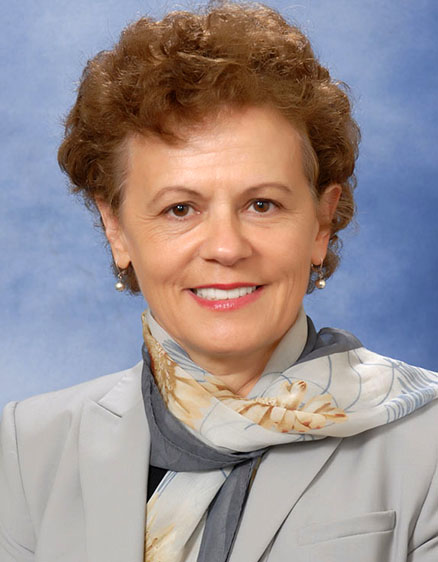
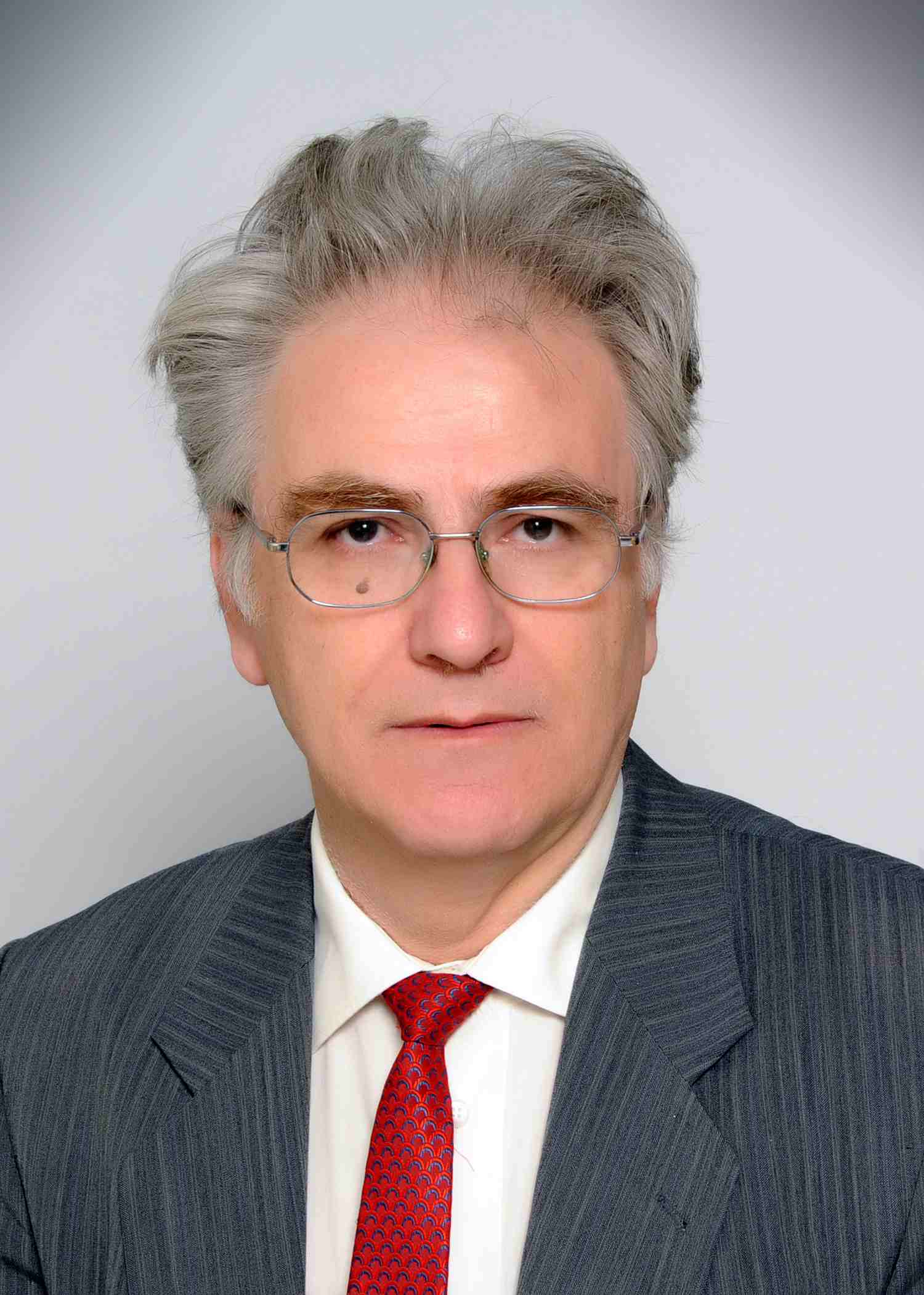
Libo Feng is a Researcher in the School of Mathematical Sciences at the Faculty of Science, Queensland University of Technology (QUT). His research focuses on applied mathematics, numerical methods, and fractional calculus with applications to fluid dynamics, heat transfer, and heterogeneous media. He holds a Doctor of Philosophy from QUT. Key research interests include: Development and analysis of fractional-order models for viscoelastic fluids and nanofluids Computational homogenization of heterogeneous media with memory effects Numerical simulation of anomalous diffusion in comb structures Magnetohydrodynamic (MHD) flow dynamics with non-Newtonian constitutive relationships His recent work emphasizes novel boundary condition techniques for fractional differential equations, with publications in high-impact journals like Journal of Computational Physics and Physics of Fluids . Research has practical applications in solar energy systems, biological tissues, and agricultural product mechanics. Notable contributions include: Advancements in fractional integrodifferential equation solvers Innovative finite volume methods for irregular domains Analysis of transient viscoelastic nanofluid behaviors Current research explores distributed-order fractional models and their applications in multi-layered systems.
Professor Mathias Broth at Linköping University's Department of Culture and Society (IKOS) specializes in multimodal interaction analysis, examining how humans coordinate communication through speech, gestures, and environmental cues. His research spans interaction in traffic environments, preschool mobility practices, and language-culture dynamics. Develops multimodal interaction analysis methodologies Studies traffic interaction between autonomous vehicles and human drivers Investigates preschool children's participation in traffic safety practices Explores communication in driver training contexts Research trends focus on embodied communication, showing how people coordinate gaze, gesture, and verbal cues in real-time interactions across different environments including: Traffic situations with autonomous vehicles Preschool group movements Driver training instruction Human-robot interaction Media production scenarios Second language classrooms Broth contributes to the Language and Culture research environment while supervising PhD students in interaction studies.
Christian Dietrich is a Professor at Technische Universität Braunschweig, specializing in operating systems, real-time systems, and software dependability. Previously affiliated with Friedrich-Alexander-Universität Erlangen-Nürnberg and Leibniz Universität Hannover, he leads the Systems Research and Architecture (SRA) group. His research focuses on dependable embedded operating systems, fault tolerance, static analysis, and compiler optimization. He has contributed to projects like dOSEK, cHash, and MELF, addressing challenges in real-time scheduling, redundancy reduction, and variability management in system software. Education: PhD in Computer Science from Leibniz Universität Hannover (2019). Research Interests: Embedded systems dependability, real-time OS design, static/dynamic analysis, fault injection, and compiler-driven optimization. His work bridges theory and practice, with applications in automotive and safety-critical systems. Recent Work: Recent articles explore compiler caching efficiency (IRHash), memory management (HyperAlloc), and fault-space pruning for hardware fault injection. His work on cHash reduced redundant compilations by 80%, earning a USENIX ATC Best Paper Award. Awards: ECRTS 2018 Outstanding Paper, RTAS 2015 Best Paper, and multiple teaching accolades. Supervised over 30 theses, including topics like live patching, fault injection frameworks, and stack-sharing mechanisms. Lab/Team: Heads the SRA group, collaborating on projects like AHA (Hardware Abstraction), CLASSY-FI (fault injection), and CADOS (RTOS variability management). Active in conferences like OSDI, EuroSys, and RTSS.
Yilu Liu is the UT-ORNL Governor’s Chair Professor at the Min H. Kao Department of Electrical Engineering and Computer Science, Tickle College of Engineering, University of Tennessee, Knoxville. Her research focuses on smart grids, power systems, renewable energy integration, and cybersecurity in energy infrastructure. She holds a PhD (1989) and MS (1986) from The Ohio State University and a BS (1982) from Xian Jiaotong University. Her work emphasizes synchrophasor technology, AI-driven grid stability assessment, and high-renewable grid resilience. She has pioneered methods for real-time grid monitoring, inertia estimation, and fault-tolerant systems. Her research addresses challenges in integrating renewables and ensuring grid reliability through advanced measurement, compression, and control techniques. Recent studies include pulsar-based timing synchronization, low-inertia system analysis, and hybrid energy storage solutions. Her contributions span cybersecurity defenses against data spoofing and machine learning applications for grid optimization. Liu leads projects like CURENT, advancing ultra-wide-area grid resilience and real-time data analytics. Her advising and grant activities reflect her leadership in energy research, though specific student names or grant details are not listed here. She is affiliated with the Center for Ultra-wide-area Resilient Electric Energy Transmission Networks (CURENT), driving collaborative innovations in smart grid technologies.
Pavel Kudinov is an Associate Professor at the Department of Nuclear Science & Engineering, KTH Royal Institute of Technology. He specializes in nuclear thermal-hydraulics, severe accident analysis, and computational fluid dynamics (CFD). His research focuses on phenomena such as steam explosions, containment venting, thermal stratification in suppression pools, and debris coolability during severe accidents. He actively contributes to experimental validation efforts using facilities like PPOOLEX and PANDA. His work integrates advanced modeling techniques with experimental data to improve safety assessments for boiling water reactors (BWRs) and lead-cooled reactors. He has collaborated on projects like SAFEST and SESAME, addressing core degradation, melt relocation, and ex-vessel accident management strategies. Key areas of expertise include: CFD modeling of multiphase flows, uncertainty quantification in severe accident codes (e.g., MELCOR), and risk-oriented accident analysis methodologies (ROAAM+). He teaches courses on nuclear reactor technology and applied modern physics at KTH.
Dr. Maria Barrufet is a Professor of Petroleum Engineering at Texas A&M University, holding roles as Assistant Department Head for Staff Administration and Director of Online Learning in Petroleum Engineering. She also serves as the Baker Hughes Endowed Chair and Affiliated Faculty in Chemical Engineering. Her research focuses on reservoir engineering, enhanced oil recovery (EOR), and CO2 capture/storage technologies, with expertise in multiphase flow and shale reservoir simulation. Education: Ph.D. in Chemical Engineering, Texas A&M University (1987) M.S. in Chemical Engineering, Universidad Nacional de Salta, Argentina (1983) B.S. in Chemical Engineering, Universidad Nacional de Salta, Argentina (1979) Research Interests: Integration of capillary pressure and thermodynamics for reservoir fluid analysis Simulation of near-critical fluids and compositional reservoirs Equations of state (EOS) modeling for multiphase equilibria CO2 storage and EOR mechanisms in unconventional reservoirs Flow assurance and leak detection in multiphase systems Publications Trends: Her recent work emphasizes CO2 sequestration in shale reservoirs, molecular sieving phenomena in nanoporous media, and advanced EOR techniques for unconventional resources. Key themes include phase behavior modeling, reservoir simulation of complex fluid systems, and energy-efficient production strategies. Awards: Charles Crawford Distinguished Service Award (2006, 2012-2013) Faculty Fellow, Texas A&M Engineering Experiment Station (2004-2005) Assessing Technology in Teaching Award (2004) Advising & Teaching: As a leader in online education, Dr. Barrufet has pioneered distance learning initiatives in petroleum engineering. Her academic leadership includes staff administration roles and curriculum development for international programs.
Nebojša Raičević is a Full Professor at the Faculty of Electronic Engineering, University of Niš, Serbia, specializing in Theoretical Electrical Engineering. He has been a permanent faculty member since his graduation in 1989, achieving Full Professor status in 2021 after serving as Associate Professor since 2016. His career is deeply rooted in the Department of Theoretical Electrical Engineering, where he also served as Department Head. His educational journey at the University of Niš includes: Bachelor's degree in Theoretical Electrical Engineering (1989) Master's degree in Theoretical Electrical Engineering (1998) PhD in Theoretical Electrical Engineering (2010) Raičević's research centers on computational electromagnetic field theory with emphasis on high-voltage systems. He pioneered the Hybrid Boundary Element Method (HBEM) for electrostatic/magnetostatic problems and developed novel cable accessories with reduced dielectric stress. His work bridges theoretical modeling with practical power engineering applications, particularly in electric field distribution, grounding systems, and electromagnetic compatibility. He maintains active collaboration through eleven international research stays. Analysis of his recent publications reveals consistent innovation in numerical methods for electromagnetic field problems. His work increasingly integrates multi-physics approaches for high-voltage applications, with growing focus on optimization techniques for electrostatic shielding and pulse phenomena in conductors. The research demonstrates strong industry relevance through applications in substation safety and cable engineering. His scientific recognition includes: Best Paper Award at international conferences (twice) As an academic leader, Raičević has mentored two doctoral dissertations and participated in 18 doctoral thesis defenses, plus numerous master's and bachelor's theses. He has secured substantial research funding through participation in nine domestic and five foreign projects, personally managing two initiatives. Currently, he leads two national and two international projects while serving as president of the IEEE EMC chapter for Serbia and Montenegro. He also acts as guest editor for the SCI-listed journal Electronics (MDPI) and reviews for multiple prestigious publications. His practical contributions extend to developing patented cable accessories and computational tools adopted in power engineering. Through his leadership in the IEEE EMC chapter and collaborations with international research groups, he maintains strong industry-academia links focused on electromagnetic compatibility solutions for power systems.
Dr. Yi Li is a Lecturer in Applied Mathematics at the School of Mathematical and Physical Sciences, University of Sheffield. His research focuses on fluid mechanics, particularly turbulence, with emphases on flow optimization, simulation, and stochastic modeling. He explores topics such as downscaling in multi-scale systems, data assimilation for turbulence modeling, and chaos synchronization in turbulent flows. Research Themes: Downscaling: Explores self-similarity properties in turbulent flows to improve subgrid-scale modeling. Flow Optimization: Combines machine learning and data assimilation to enhance turbulence predictions, addressing challenges like pollution control and weather forecasting. Stochastic Modelling: Investigates particle and bubble dynamics in turbulent flows to understand mixing and dispersion processes. Teaching: Dr. Li teaches advanced modules including Operations Research, Magnetohydrodynamics, and Topics in Advanced Fluid Mechanics. Publications: His work spans fluid dynamics, computational methods, and signal processing, with notable contributions to turbulence modeling, ultrasonic applications, and data-driven approaches. Recent publications focus on machine learning applications in bubbly flows and 4DVAR data assimilation techniques. PhD Supervision: Offers supervision in fluid mechanics, turbulence, and interdisciplinary projects combining data science with fluid dynamics. Prospective students can contact him via email .
Dr. Andrew Wade is a Postdoctoral Fellow at the Centre for Gravitational Astrophysics, The Australian National University (ANU). His research focuses on gravitational wave detection, quantum optics, precision metrology, and weak light interferometry. He has contributed to projects like the Laser Interferometer Space Antenna (LISA), developing critical technologies such as arm- and cavity-locking systems for gravitational wave detectors. His work emphasizes improving interferometric sensitivity through innovations like subfemtowatt laser phase tracking and thermal noise mitigation in mirror coatings. Wade has collaborated across international detector networks including LIGO, Virgo, and KAGRA, publishing over 178 peer-reviewed articles. His research spans topics from binary black hole mergers (e.g., GW150914, GW170817) to cosmic string constraints and Hubble constant measurements using gravitational wave standard sirens. Notably, his team's work on LISA's locking systems addresses challenges for future space-based gravitational wave observatories. His technical expertise includes cavity frequency stabilization for geodesy applications and optimizing laser interferometers for low-noise operation. While no specific student names are listed, he is registered to supervise research students at ANU. His publications highlight interdisciplinary strengths in both experimental and theoretical gravitational wave physics, with implications for multi-messenger astronomy and fundamental physics tests.
Dr. Vanille Ritz is a postdoctoral researcher at the Swiss Seismological Service (SED), ETH Zurich, with a split position between the Modelling Group and the GeoBest team. Her expertise lies in developing hydro-geomechanical and statistical models to understand and forecast induced seismicity in geothermal systems. She focuses on projects like GeoBest, which provides seismological support for Swiss geothermal energy initiatives, and has been a key contact for cantons Vaud, Jura, and Geneva. She holds a Ph.D. from ETH Zurich (2023) and a M.Sc. in Seismology from Université de Strasbourg (2017). Research interests include induced seismicity mitigation, geothermal reservoir engineering, and real-time seismic monitoring. Her work integrates data-driven approaches with physics-based models to optimize energy production while minimizing seismic risks. Notable contributions include the 'Transient Evolution of Earthquake Size Distributions' study (2022), recognized with the SSA Student Award. Education: Ph.D., ETH Zurich (2018–2023): Modelling Induced Seismicity in Deep Geothermal Systems M.Sc., Université de Strasbourg (2015–2017): Seismology Geophysical Engineering, Ecole et Observatoire des Sciences de la Terre (2014–2017) Professional activities include leadership in projects like DEEP (2021–2024), COSEISMIQ (2018–2021), and DESTRESS (2017–2018), advancing de-risking strategies for geothermal energy. Awards include the 2023 SSA Student Presentation Award for seismic risk indicator research. Her work bridges geoscience and engineering, emphasizing collaboration with cantonal governments and energy stakeholders to ensure sustainable geothermal development. Current efforts focus on synthetic benchmark datasets and real-time forecasting tools for induced seismicity management.
Sam N Coday is an Assistant Professor in the Department of Electrical Engineering and Computer Science (EECS) at MIT. His research focuses on advanced power converter technologies for aerospace, space, and high-density applications. He leads the Coday Research Group, which develops innovative solutions for radiation-tolerant systems, GaN-based converters, and multilevel converter architectures. His work emphasizes high-efficiency power conversion , miniaturization of passive components , and robust operation in extreme environments . Key areas include resonant switched-capacitor converters, flying capacitor multilevel topologies, and wireless power transfer for battery charging. Recent publications highlight advancements in space robotics power systems, hybrid DC-DC converters for aviation, and radiation-hardened electronics. Coday's team collaborates on flight-qualified hardware for electric aircraft and space applications, prioritizing both theoretical analysis and practical implementation.
Andrea Barbarulo is a researcher at the University of Paris-Saclay Mechanics Laboratory, specializing in computational mechanics and acoustics. His work focuses on advanced numerical methods such as Proper Generalized Decomposition (PGD), Variational Theory of Complex Rays (VTCR), and finite element methodologies applied to vibration analysis, acoustic modeling, and additive manufacturing. He has pioneered developments in mid-frequency vibration modeling for railway systems and 3D-printed synthetic materials. Key Expertise: PGD-based model order reduction, vibro-acoustic coupling, ultrasonic imaging, and computational material science Lab Affiliation: Paris-Saclay Mechanics Laboratory His research addresses challenges in railway track dynamics, noise propagation, and medical applications of 3D printing through innovative numerical frameworks. Recent work includes open-source software (pyTVRC) for medium-frequency simulations and high-fidelity models for patient-specific anatomy replication. Collaborative projects span disciplines including aeroelastic systems, laser powder bed fusion, and material characterization for biomedical applications. Current focus areas involve advancing digital twin technologies for additive manufacturing and improving accuracy in transient thermal simulations.
Goce Arsov is a Full Professor at the Department of Electronics, Faculty of Electrical Engineering, University 'St. Cyril and Methodius' in Skopje. He has held academic positions since 1971, progressing from Assistant to Full Professor by 1997. His research focuses on power electronics, semiconductor device modeling, and control systems. He has authored numerous publications, including influential works on cycloconverters, PSpice modeling, and switched-capacitor converters. His work bridges theoretical analysis and practical applications in energy systems and automotive electronics. Education: Doctor of Technical Sciences (1992), Faculty of Electrical Engineering, Skopje. Master of Science in Electrical Engineering (1983), University of Belgrade. Diploma in Electrical Engineering (1970), Faculty of Electrical Engineering, Skopje. Research Interests: Prof. Arsov specializes in power electronic systems, semiconductor device modeling, and advanced converter topologies. His work emphasizes practical implementations in automotive systems, renewable energy, and industrial drives. Key areas include cycloconverter control, switched-capacitor circuits, and PSpice-based simulation models. Recent Research Trends: His articles from 2000–2004 highlight advancements in automotive power supplies, bidirectional converters, and fuel-cell applications. Earlier work (1990–1999) focused on triac/BJT modeling and cycloconverter optimization. His contributions span both theoretical and applied aspects, with a focus on energy efficiency and system reliability. Grants and Advising: While specific grants are not listed, his extensive publications suggest sustained research funding. No explicit student advising details are provided. Labs/Teams: Active in the Institute of Electronics at his faculty, collaborating with researchers on semiconductor device analysis and power system design.
Professor David Sims-Williams is a faculty member at the Department of Engineering within the Faculty of Science at Durham University . His research focuses on Aerodynamic Unsteadiness , Road and Racing Car Aerodynamics , and the Development of Advanced Wind Tunnel Instrumentation and Analyses . He is actively involved in experimental and computational studies of fluid dynamics, vehicle aerodynamics, and aeroacoustic noise. Academic Rank: Professor Research Keywords: Aerodynamics, Fluid Mechanics, Automotive Engineering, Computational Fluid Dynamics, Noise Control His recent work includes studies on flow-induced vibration of polygonal cylinders , piezoelectric actuator integration in wind turbines , and beamforming techniques for noise source localisation . He frequently publishes in journals like SAE International Journal of Passenger Vehicle Systems , Journal of Fluids and Structures , and Physics of Fluids . His collaborations span fluid-structure interactions, transient flow analysis, and automotive noise reduction strategies. He has presented at major conferences including the International Vehicle Aerodynamics Conference , UK Fluids Conference , and SAE World Congress . His methodologies combine large eddy simulations , wind tunnel experiments , and machine learning for flow visualisation .
James Friend is a Professor at the University of California, San Diego, holding dual appointments in the Department of Mechanical and Aerospace Engineering, Jacobs School of Engineering and the Department of Surgery, School of Medicine. He serves as the Stanford S. and Beverly P. Penner Endowed Chair in Engineering and leads the Medically Advanced Devices Laboratory in the Center for Medical Devices at UCSD. Prior to joining UCSD in November 2014, he spent 14 years as a faculty member in Japan and Australia, where he founded micro/nanofabrication facilities including the $45 million Melbourne Centre for Nanofabrication and served as inaugural director of RMIT University's $35 million MicroNano Research Facility. Jacobs School of Engineering, Department of Mechanical and Aerospace Engineering School of Medicine, Department of Surgery Stanford S. and Beverly P. Penner Endowed Chair in Engineering Director, Medically Advanced Devices Laboratory Professor Friend's research focuses on exploring and exploiting acoustic phenomena at small scales, primarily for biomedical applications. His work spans acoustofluidics, medical device development, micro/nanofabrication, and the application of surface acoustic waves for diagnostics, drug delivery, and therapeutic interventions. He has pioneered techniques for ultrasound neuromodulation, point-of-care diagnostics, and microscale fluid manipulation with applications in neurology, oncology, and pediatrics. His research bridges fundamental acoustic science with practical clinical solutions, emphasizing translational impact. His recent publications reveal a strong emphasis on advancing acoustofluidic technologies for biomedical applications. Key trends include developing point-of-care diagnostic platforms for neurodegenerative diseases, creating novel ultrasound-based neural modulation techniques, and engineering microscale propulsion systems. His work also explores fundamental aspects of acoustic wave behavior at micro and nanoscales, with applications ranging from cell manipulation to battery technology enhancement. The interdisciplinary nature of his research spans engineering, physics, neuroscience, and clinical medicine. AIAA Jefferson Goblet Student Paper Award and ASME Best Paper Award Multiple excellence awards from Monash Faculty of Engineering (2006, 2008, 2011) Future Leader award from Davos Future Summit (2008) Top 10 emerging scientific leader of Australia (2009) Top 50 papers of Applied Physics Letters past 50 years (2012) IEEE Carl Hellmuth Hertz Ultrasonics Award (2015) IEEE Fellow (2018) Highly cited author by Royal Society of Chemistry (2020) UCSD Distinguished Teaching Award (2021) Professor Friend currently supervises 7 PhD students and 1 post-doc in his Medically Advanced Devices Laboratory. Over his career, he has successfully completed 37 postgraduate students and supervised 23 postdoctoral researchers. His research has been supported by over $29 million in competitive grant funding, reflecting the significance and impact of his work. His laboratory operates at the intersection of engineering and medicine, with strong collaborations across disciplines to translate fundamental discoveries into practical medical solutions. The Medically Advanced Devices Laboratory, which Professor Friend leads, focuses on developing innovative medical devices that leverage acoustic phenomena. The lab has developed handheld acoustofluidic circuits, novel centrifugation and separation techniques using omnidirectional spiral surface acoustic waves, and acoustogeometric streaming technologies. Recent projects include superfast battery recharging systems using surface acoustic waves and point-of-care diagnostic platforms for Alzheimer's disease detection. The laboratory maintains strong industry and clinical partnerships to accelerate the translation of research into practical medical applications.