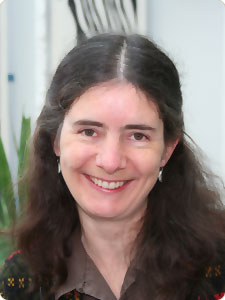
Mary Lou Zeeman is the R. Wells Johnson Professor of Mathematics at Bowdoin College, specializing in geometric dynamical systems, mathematical biology, and climate modeling. Her work bridges theoretical mathematics with real-world applications in ecology, sustainability, and neuroendocrinology. Education: PhD in Mathematics from the University of California, Berkeley; MA and BA in Mathematics from the University of Oxford. Research focuses on population dynamics, resilience in ecosystems, and interdisciplinary approaches to sustainability. She co-leads initiatives like the Mathematics and Climate Research Network (MCRN) and contributed to the Mathematics of Planet Earth (MPE) 2013 initiative. Her teaching includes Biomathematics (MATH 1758/BIOL 1175) and Multivariate Calculus (MATH 1800). Key contributions include modeling hormone oscillations in the menstrual cycle, climate change impacts, and fisheries management policies. Her work emphasizes decision-support frameworks for environmental challenges. Grants and collaborations span NSF-funded projects on computational sustainability and climate change research, reflecting her commitment to applied interdisciplinary science.
Dr. Shahab Mehraeen is a Professor and holder of the Newton B Thomas Professorship in the Division of Electrical and Computer Engineering at Louisiana State University's College of Engineering. He directs the Renewable Energy and Smart Grid Laboratory, focusing on power systems stability, renewable energies integration, smart grid technologies, energy conversion, and nonlinear/adaptive/decentralized control systems. His research explores innovative solutions for modern power grids, including hybrid AC-DC systems, microgrid stability, and advanced protection mechanisms. He has developed experimental testbeds like the IEEE 14-bus power system and DC microgrid setups for validating control algorithms. Dr. Mehraeen's publications demonstrate consistent focus on renewable integration, grid protection, and smart grid innovations with recent emphasis on DC circuit breakers and co-simulation techniques. His work integrates theoretical development with practical implementation. Research Areas Power systems stability and control Renewable energy grid integration Smart grid technologies Microgrid design and optimization Advanced circuit protection systems Awards and Recognition National Science Foundation CAREER Award recipient Holder of a US patent for infrastructure inspection and rehabilitation Research Team Leads a team of 11 graduate students working on projects related to power systems, renewable energy integration, and smart grid technologies.
Veysel Murat İstemihan Genç is a Professor in the Department of Electrical Engineering at Istanbul Technical University (ITU), College of Engineering. His research is centered on modern power systems, with a focus on transient stability, cybersecurity, and integration of renewable energy sources. He actively leads multiple research projects and supervises graduate students in advanced power system technologies. Research Interests: His work spans key areas including transient stability assessment, machine learning applications in power systems, cyber-attack detection in AGC systems, and dynamic security evaluation under high renewable penetration. He employs cutting-edge techniques such as ensemble learning, deep neural networks, and hybrid optimization algorithms. Publication Trends: Recent publications (2023–2025) highlight a strong trend toward integrating AI and machine learning for real-time transient stability prediction, cybersecurity in distributed energy systems, and performance optimization of solar and wind-integrated grids. His work frequently addresses challenges in low-inertia systems and false data injection attacks. Scientific Projects: Strengthened Machine Learning-Based Dynamic Security Evaluation for Transient Stability under False Data Injection Attacks (BAP, 2025) Analysis and Control Methods for Stability of Large-Scale Low-Inertia Power Systems (BAP, 2023–2024) Dynamics Security Evaluation of Renewable-Rich and Cyber-Attacked Power Systems (BAP, 2022–2024) Risk-Based Stability Assessment and Corrective Control Methods in Power Systems (BAP, 2019–2022) Wide-Area Monitoring Protection and Control System Design Using Advanced Signal Processing and Machine Learning (TÜBİTAK, 2018–2020) Advising and Grants: He is the principal investigator (PI) on multiple funded research projects from BAP and TÜBİTAK, indicating strong grant acquisition and leadership. His supervision of 27 ongoing theses reflects an active role in mentoring graduate students in electrical engineering and power systems. Labs and Teams: While specific lab names are not mentioned, his projects suggest leadership in a research group focused on smart grid technologies, AI-enabled power system security, and renewable integration at Istanbul Technical University.
Professor Chongmin Song is a faculty member at the University of New South Wales (UNSW), affiliated with the School of Civil and Environmental Engineering. His academic rank is Professor, and he specializes in computational mechanics with a focus on innovative numerical methods. He holds a BE and ME from Tsinghua University and a DEng from the University of Tokyo. His research explores computational mechanics, fracture analysis, wave propagation, and soil-structure interactions. Key methodologies include the Scaled Boundary Finite Element Method (SBFEM), image-based modeling, and dynamic simulations of infrastructure systems. He leads significant ARC-funded projects like 'A scaled boundary framework for nonlinear dynamic analysis of structures' (DP250100955) and 'Developing sustainable graded porous cementitious structures' (LP240100123), totaling over $1M in recent grants. Recent publications emphasize adaptive modeling techniques, multiphysics simulations, and high-performance computing applications. Trends include topology optimization for structural dynamics, phase-field fracture modeling for brittle materials, and GPU-accelerated elastodynamics. His work integrates computational efficiency with real-world engineering challenges, particularly in geomechanics and material failure analysis. Professor Song collaborates extensively on projects involving computational fracture mechanics and maintains laboratories focused on numerical simulation advancements. Future work targets scalable algorithms for 3D crack propagation and multiphysics coupling in infrastructure systems.
Robert M. Weikle, II is a Professor in the Charles L. Brown Department of Electrical and Computer Engineering at the University of Virginia, with a courtesy appointment in the Department of Physics. He earned his B.S. from Rice University (1986), M.S. (1987), and Ph.D. (1992) in Electrical Engineering from Caltech, followed by postdoctoral work at Chalmers University of Technology (1992). His research focuses on millimeter-wave and terahertz electronics , applied electromagnetics, integrated antennas, low-noise sensors, and heterogeneous integration of compound semiconductors. His work bridges electronics and photonics for spectrum access, with applications in astronomy, spectroscopy, and metrology. He has published extensively on micromachined silicon substrates, superconducting materials, and emerging technologies. Scientific Awards: IEEE Microwave Prize (1993) David A. Harrison III Award (1999) University of Virginia All-University Outstanding Teaching Award (2000) Edlich-Henderson Innovator of the Year (2016) Fulbright Scholar (2001) As Chief Technology Officer and co-founder of Dominion Microprobes, Inc., he commercializes micromachined wafer probes for high-frequency metrology. His lab, located in E220 Thornton Hall and the Jesse W. Beams Physics Building, has produced 15+ recent publications on submillimeter-wave devices, THz probes, and calibration techniques.
Professor Dragan Jovcic is the Chair in Engineering at the University of Aberdeen's School of Engineering , where he has been a faculty member since 2004 and a full professor since 2012. Concurrently he serves as Director of the Aberdeen HVDC Research Centre , a role he has held since 2015. Education: PhD in Electrical Engineering, University of Auckland, 1999 Diploma Engineer in Control Systems, University of Belgrade, 1993 Postgraduate Certificate in University Teaching, University of Ulster, 2003 Research Interests: Professor Jovcic’s research centres on high-power electronics and HVDC transmission systems , with particular emphasis on the development of DC transmission grids that will enable large-scale integration of offshore wind energy . His work spans DC/DC converters , DC circuit breakers , modular multilevel converters (MMC) , flexible AC transmission systems (FACTS) , and advanced power system modelling and control . The overarching goal is to underpin the transition from fossil-fuel generation to renewable-dominated power systems, especially in the North Sea and European contexts. Publication Trends: Recent publications (2020-2023) reveal a strong focus on DC protection technologies —notably circuit breakers and energy absorbers—and on modelling methodologies for HVDC grids and offshore wind integration. The works address both theoretical advances (phasor and state-space models) and experimental validation (kV-level prototypes), reflecting a balanced portfolio of fundamental research and practical demonstration. Scientific Awards & Recognition: IEEE Fellow (2021) IEEE PES Distinguished Lecturer (since 2015) IET Fellow (2019) and Chartered Engineer (2018) Research Funding & Supervision: With over £5.5 million in external research income, Professor Jovcic is principal investigator or work-package leader on numerous EU Horizon Europe and EPSRC projects. He has supervised 9 PhDs to completion and is currently mentoring 2 PhD students and 2 post-doctoral fellows . Major grants include the €35 million PROMOTioN project on multiterminal DC networks and the €4 million MoWiLife project on wide-bandgap power electronics. Laboratory & Facilities: The Aberdeen HVDC Research Centre hosts a 0.9 kV DC grid demonstrator , 30 kW thyristor- and IGBT-based DC/DC converters , and 5 kV, 2 kA DC circuit breaker test benches , providing a world-class platform for experimental research and student training.
Naveen Tiwari is a Professor in the Department of Chemical Engineering at the Indian Institute of Technology Kanpur. His research focuses on transport phenomena, instabilities in micro-scale free surface flows, flow through porous media, and numerical modeling and simulation. He maintains active research collaborations and has published extensively in leading fluid dynamics journals. His research interests encompass Transport Phenomena , Instabilities in micro-scale free surface flows , Flow through porous media , and Numerical modeling and simulation . His work primarily investigates thin liquid film dynamics, interfacial phenomena, and stability analysis of coating flows over heterogeneous surfaces. His research has significant applications in coating technologies, microfluidics, and thermal management systems. His recent publications demonstrate a strong focus on Thin film stability analysis over heated surfaces Effects of substrate topography on liquid film behavior Nonlinear dynamics of volatile liquid films Dip-coating processes on patterned surfaces His work bridges fundamental fluid dynamics with practical engineering applications. His notable scientific achievements include: Young Scientist Research Award from the Department of Atomic Energy (2014) Membership in the Honor Society of Phi Kappa Phi (2007-2008) Invitation to present at the International Union of Theoretical and Applied Mechanics symposium in Bangalore (2014) Prof. Tiwari received his PhD from the University of Massachusetts Amherst (2003-2008) with a thesis on 'Dynamics and Stability of Non-Inertial Coating Flows over Heterogeneous Surfaces' under Prof. Jeffrey M. Davis. Prior to his current position, he worked as a Senior Research Engineer at Saint-Gobain, MA (USA) from 2008-2012, where he worked on Diesel Particulate Filter regeneration modeling, methane ignition modeling, sapphire crystal growth, and solid-oxide fuel cells.
Carsten Rott is a Professor in the Department of Physics & Astronomy at the University of Utah and holds the Jack W. Keuffel Memorial Chair until December 2025. His academic journey began with a Ph.D. in Physics from Purdue University (2004), preceded by undergraduate studies at the Universität Hannover. Rott has held academic positions at institutions including The Ohio State University (CCAPP Senior Fellow 2009-2013), Penn State University (postdoc 2005-2008), and Sungkyunkwan University in South Korea (Assistant Professor 2013-2017, Associate Professor 2017-2025). He has been a member of the IceCube Neutrino Telescope collaboration since 2005 and serves on committees like the IceCube-Gen2 Coordination Committee and JSNS2 Speakers Board. His research spans Particle Physics , Neutrino Astronomy , and Dark Matter Detection . Key projects include analyzing IceCube data for sterile neutrino signatures, studying cosmic-ray anisotropy, and investigating terrestrial gamma-ray flashes. Notable achievements include the Bruno Rossi Prize (2021) for high-energy astrophysics contributions. Rott's work involves multimessenger observations (neutrinos, gamma-rays, radio signals) and detector calibration innovations, such as those for the JSNS2 experiment. Recent publications focus on atmospheric neutrino oscillation parameters, TGF spectroscopy, and dark matter constraints. He employs machine learning techniques (CNNs) for event reconstruction and leads initiatives like the IceCube Master Class for student engagement. Grants include funding for IceCube upgrades (2024-2026) and Hyper-Kamiokande collaborations (2023-2026). As department chair since 2023, Rott continues to bridge experimental particle physics with astrophysical discoveries.
Stefano Grivet-Talocia is a Full Professor at the Department of Electronics and Telecommunications at the Polytechnic University of Turin, where he also serves as Director of the Doctoral School and President of the Doctoral School Council. He is a member of the Interdepartmental Center SmartData@PoliTO - Big Data and Data Science Laboratory, the University Committee for Research, Technology Transfer and Services to the Territory, and the Commission for the Promotion of Library, Archive and Museum Heritage. His academic career spans over two decades at Politecnico di Torino, where he has established himself as a leading researcher in electromagnetic modeling and signal integrity. Grivet-Talocia earned his Laurea degree (summa cum laude) in Electronic Engineering in 1994 and his Ph.D. in Electronic and Communication Engineering in 1998, both from the Polytechnic University of Turin. Between 1994 and 1996, he conducted research at NASA/Goddard Space Flight Center in Greenbelt, Maryland. His educational background laid the foundation for his expertise in electromagnetic modeling, wavelet analysis, and signal processing. His research focuses on behavioral modeling, electromagnetic compatibility, macromodeling, model order reduction, numerical modeling, passivity, power integrity, signal integrity, transmission lines, and wavelets . Grivet-Talocia is particularly renowned for his work on passive macromodeling of interconnect structures, development of the TOPLine technique for transmission line simulation, and pioneering contributions to passivity enforcement algorithms. He has co-authored the first book entirely dedicated to Macromodeling (2016) and developed innovative approaches to waveform relaxation and wavelet-based signal processing. His recent publications (2024-2025) demonstrate continued leadership in model order reduction, with significant contributions to data-driven modeling of linear and nonlinear systems, power integrity analysis, and electromagnetic compatibility. His work spans both theoretical advances in numerical methods and practical applications in circuit design, with strong industry relevance particularly for semiconductor and electronic design automation companies. IEEE Fellow (2018-present) Three Intel SRS Grants (2022-2024) Three IBM SUR Grant Awards (2007-2009) Best Associate Editor Award - IEEE Transactions on Components, Packaging and Manufacturing Technology (2020) Multiple Best Conference Paper Awards (2006-2020) URSI Young Scientist Awards (1999) Ranked among the "top 2% worldwide researchers" (Stanford) since 2019 Grivet-Talocia actively supervises doctoral students including Michele Cusano, Sara Paknezhad Panahi, Antonio Carlucci, and Kun Zhao. He has secured numerous research grants from competitive national calls (PRIN) and commercial contracts with industry partners including Intel, IBM, Nokia, Hitachi, Infineon, and Cadence. His technology transfer activities include co-founding the spin-off IdemWorks (2007-2016), which was acquired by CST in 2016. He also developed the autoCircuits web service for automated circuit problem generation, widely used in electrical engineering education. He leads the EMC Group (Electromagnetic Compatibility) at DET and has been instrumental in establishing the Compact Dynamical Modeling research area. His work has practical applications in high-speed electronics design, with algorithms embedded in commercial tools like IBM PowerSPICE. Grivet-Talocia maintains strong industry connections through his research projects and serves as Associate Editor for IEEE Transactions on Components, Packaging and Manufacturing Technology.
Professor Antonio Griffo holds the position of Professor of Power Electronics and Electric Drives at the University of Sheffield's School of Electrical and Electronic Engineering. He leads the Electrical Machines and Drives Research Group and is involved in the High Reliability Drives Group. His academic journey includes a MSc (2003) and PhD (2007) in Electrical Engineering from the University of Naples, followed by research roles at Bristol and Sheffield Universities before becoming a Lecturer in 2013 and later a Professor. His research focuses on advanced control of electric drives, SiC-based power electronics for aerospace/renewables, fault detection in machines, and thermal management. Key projects include modeling hybrid AC/DC power systems for 'More Electric Aircraft', sensorless control techniques, and real-time simulation methodologies. He has pioneered work on SiC converter reliability, insulation monitoring, and condition-based maintenance systems. Publications (15+ in top journals like IEEE Transactions) emphasize innovative solutions for power electronics challenges, including voltage stress mitigation, thermal modeling, and fault tolerance. His work bridges theory and application, addressing critical issues in aerospace, renewable energy, and electric vehicle systems. Griffo also contributes to educational advancements through modular training platforms for power electronics education. Labs/Teams: Active in the Electrical Machines and Drives Research Group, focusing on high-reliability drive systems and sustainable energy technologies. Collaborates with industry on projects like the EPSRC Offshore Wind Prosperity Partnership.
Alakesh Chandra Mandal is a Professor at the Department of Aerospace Engineering, Indian Institute of Technology Kanpur. He holds a PhD in Aerospace Engineering (2011) and an M.Sc. in Aerospace Engineering (2005) from IISc Bangalore, and a B.E. in Mechanical Engineering from Jalpaiguri Government Engineering College (2001). His research focuses on experimental aerodynamics, flow instability, transition phenomena, and turbulent shear flows, with publications in high-impact journals like the Journal of Fluid Mechanics . His work centers on boundary layer dynamics, including roughness-induced transitions, wake turbulence, freestream turbulence effects, and skin-friction relationships. Research methodologies emphasize experimental validation in fluid mechanics. He teaches courses including AE-601, AE-201A, AE-614, AE-411, and ESO204A (as a tutor).
Prof. Dr. Ioachim Pupeza serves as Group Leader in the Department of Spectroscopy/Imaging at the Leibniz Institute of Photonic Technology (Leibniz-IPHT) in Jena, Germany. His research focuses on advanced optical measurement techniques, particularly in the field of field-resolved spectroscopy and precision optical measurements. Dr. Pupeza's research interests center around optical spectroscopy with a particular emphasis on field-resolved techniques that capture the complete electric field waveform of light-matter interactions. His work spans infrared spectroscopy , molecular fingerprinting , ultrafast laser technology , and precision optical measurements . He has made significant contributions to electro-optic sampling techniques, which enable characterization of electric-field waveforms across the terahertz to visible spectral range. His research also extends to mid-infrared light generation , terahertz spintronic emitters , and cavity-enhanced spectroscopy , with applications ranging from fundamental physics to medical diagnostics. Analysis of Dr. Pupeza's recent publications reveals a strong trend toward increasingly sophisticated field-resolved spectroscopy techniques with applications in both fundamental science and practical diagnostics. His work has evolved from basic measurement techniques to applications in cancer detection through molecular fingerprinting of biofluids. A consistent theme across his publications is the pursuit of higher precision, broader bandwidth, and improved sensitivity in optical measurements, often achieving attosecond-level precision. His research bridges physics, engineering, and medical applications, demonstrating how fundamental optical advances can translate to real-world diagnostic tools. Dr. Pupeza leads the research group "Field-Resolved Optical Precision Measurement Methods" at Leibniz-IPHT, which appears to collaborate extensively with other research institutions and groups. His work involves sophisticated laser systems including high-power Yb:YAG thin-disk oscillators, femtosecond enhancement cavities, and dual-oscillator systems for precision measurements. The group's research has implications for molecular spectroscopy, medical diagnostics, and fundamental studies of light-matter interactions at the most fundamental time scales.
Mark MacLachlan is a distinguished Professor and currently serves as the Dean of the Faculty of Science at the University of British Columbia (UBC). He leads a vibrant research group in the Department of Chemistry focused on supramolecular materials, with expertise spanning organic, inorganic, and polymer chemistry. His work bridges fundamental molecular design with practical applications in energy, electronics, and sustainable materials. Dr. MacLachlan's research interests center on supramolecular chemistry and materials science, with emphasis on nanomaterials, porous structures, and cellulose-based systems. His group develops novel organic and inorganic molecules and materials with applications in electronics, photonics, catalysis, and environmental technologies. Key research areas include mesoporous materials for optics and catalysis, supramolecular chemistry with macrocycles, structurally interesting molecules, and self-assembled systems including gels. His work often addresses environmental challenges and alternative energy applications such as solar energy conversion and hydrogen fuel cells. Analysis of his recent publications reveals a strong focus on cellulose nanocrystals and their applications in photonic materials, energy storage, and responsive systems. His work integrates supramolecular chemistry with platinum-based systems for molecular machines and recognition. The research demonstrates interdisciplinary approaches combining chemistry, materials science, and nanotechnology to create functional materials with precisely controlled properties. Fellow of the Royal Society of Chemistry (UK) (2016) Tier 1 Canada Research Chair in Supramolecular Materials (2015-2029) Elected Fellow of the Royal Society of Canada (FRSC) (2014) Rutherford Memorial Medal (Royal Society of Canada) (2013) Killam Award for Excellence in Graduate Student Mentorship (UBC) (2013) NSERC Steacie Memorial Fellowship (2012-14) Dr. MacLachlan has mentored numerous graduate students and postdoctoral researchers, fostering a collaborative research environment that spans multiple disciplines. His group employs a wide range of characterization techniques including electron microscopy, spectroscopy, and X-ray crystallography. The MacLachlan research group maintains active collaborations with institutions worldwide, including the WPI Nano Life Science Institute at Kanazawa University where he serves as a Visiting Professor. The MacLachlan group operates state-of-the-art facilities for synthesizing and characterizing novel materials, with particular expertise in chiral nematic structures, mesoporous materials, and supramolecular assemblies. Their work on cellulose nanocrystals has led to innovative applications in photonic materials, energy storage devices, and responsive systems.
Gregory M. Shaver is the Reilly Professor of Mechanical Engineering and Director of Herrick Laboratories at Purdue University's School of Mechanical Engineering. He holds a Ph.D. (2005) and M.S. (2004) in Mechanical Engineering from Stanford University, and a B.S. (2000) from Purdue University where he graduated with highest distinction. His research focuses on model-based control of sustainable transportation systems, with emphasis on: Commercial vehicle powertrain optimization Internal combustion engine and after-treatment controls Flexible valve actuation for diesel/natural gas engines Connected/automated vehicle systems Battery modeling for energy storage Fundamental areas include thermodynamics, combustion, and control systems, applied to sustainable energy and transportation challenges. Publication analysis reveals consistent focus on engine efficiency innovations (cylinder deactivation, valve control), electrified transportation (hybrid systems, battery modeling), and emission reduction strategies. Recent work emphasizes real-world applications in medium-duty vehicles and thermal management. Awards and honors: 2014 Early Career Excellence in Research Award (Purdue Engineering) 2014 University Faculty Scholar 2011 Max Bentele SAE Award for Engine Technology Innovation Purdue BSME with Highest Distinction (2000) He leads research initiatives at Herrick Laboratories, supervising graduate students in projects funded by industry and government grants. Current work explores AI-enabled control for hybrid vehicles and low-emission combustion strategies.
Chasalevris Athanasios is an Assistant Professor at the School of Mechanical Engineering, National Technical University of Athens (NTUA), specializing in Rotordynamics and Tribology. His research focuses on nonlinear dynamics of machines, active bearings, and turbomachinery design. He holds a Ph.D. in Rotordynamics from the University of Patras (2009) and a Diploma in Mechanical & Aeronautical Engineering (2004). Research Interests: Machine Dynamics, Turbomachinery, Active Bearings, Bifurcation Analysis, Crack Detection. Teaching: Dynamics of Rotating Machines, Kinematics and Dynamics of Mechanisms, Machine Elements I. Collaborations: KIT (Germany), RPI (USA), MTU Aero Engines (Germany), and Cleveland State University (USA). Awards include the Humboldt Foundation Fellowship (2010), GE's 'Beyond and Ahead' Award (2017), and recognition as a Top 2% Scientist (2023). He has authored over 40 publications and supervised numerous graduate students. Current roles include Academic Advisor at DOATAP and Associate Editor for journals like ASME Journal of Tribology.