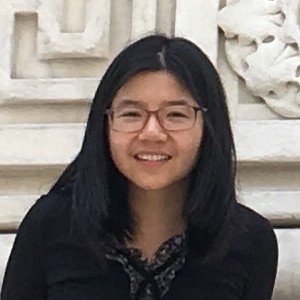
Yuyin Zhouمشاهده پروفایل
استادیار
- Biomedical Artificial Intelligence
- Medical Image Analysis
- Foundation Models for Healthcare
- +۹ مورد دیگر
Yuyin Zhou is an Assistant Professor in the Department of Computer Science and Engineering at the University of California, Santa Cruz (UCSC), within the Baskin School of Engineering. She previously held a postdoctoral fellowship at Stanford University, collaborating with Prof. Lei Xing and Prof. Matthew Lungren. She earned her Ph.D. in Computer Science from Johns Hopkins University under the supervision of Bloomberg Distinguished Professor Alan Yuille. Her research is centered on advancing biomedical artificial intelligence to match medical experts in decision-making. Key focuses include developing medical multimodal models, building fair and trustworthy real-time learning systems for clinicians and patients, enabling one-shot/few-shot adaptation of foundation models to diverse medical tasks, and generating synthetic data aligned with clinical knowledge. Dr. Zhou’s recent publications span top-tier venues such as Nature Medicine , Medical Image Analysis , ICLR, CVPR, NeurIPS, MICCAI, and ECCV, reflecting a strong trend in foundation models for medical imaging, trustworthy AI, and efficient deployment. Her work bridges computer vision, deep learning, and clinical applications, with notable projects including TransUNet, BioMedGPT, and MicroSegNet. She has been recognized with the Google Research Scholar Award and the Hellman Fellowship . Dr. Zhou actively contributes to the academic community as an Area Chair for CVPR, ICLR, MICCAI, and CHIL. She organizes workshops and tutorials, including the CVPR 2024 Workshop on Foundation Models for Medical Vision and MICCAI 2024’s FOMMIA tutorial. Google Research Scholar Award Hellman Fellowship Dr. Zhou is actively recruiting self-motivated PhD students and interns to work on machine learning, computer vision, and AI for healthcare. She leads a dynamic research group focused on pushing foundation models into real-world clinical settings. Her team has launched public datasets, such as a micro-ultrasound dataset for prostate segmentation, and open-sourced tools to foster community collaboration.