Jinwoo Hwang is an Associate Professor in the Department of Materials Science and Engineering at The Ohio State University. He joined OSU as an Assistant Professor in 2014 and was promoted to Associate Professor in 2020. Prior to this, he was a Postdoctoral Research Fellow at the University of California Santa Barbara (2011-2014). His educational background includes a Ph.D. in Materials Science from the University of Wisconsin-Madison (2011), an M.S. from the University of Pennsylvania (2005), and a B.S. from Hongik University in Seoul, Korea (2002). Professor Hwang's research focuses on developing advanced atomic-scale characterization techniques using scanning transmission electron microscopy (STEM) to investigate structure-property relationships in materials. His group specializes in fluctuation microscopy, electron nanodiffraction, and 4D-STEM combined with computational simulations. Major research areas include: Defect engineering in wide bandgap semiconductors Magnetic interface phenomena and property control Structural analysis of amorphous/glassy materials Nanoscale thermal transport mechanisms Phase transformations in functional oxides His recent publications (2023-2025) demonstrate strong focus on oxide semiconductors (Ga 2 O 3 , LiGa 5 O 8 ), battery materials degradation, metallic glasses characterization, and thin-film interface engineering. The work consistently applies advanced STEM techniques with growing integration of machine learning for materials analysis. Professor Hwang leads the STEM Research Group at Ohio State, though no specific students, awards, or grants are detailed in the source materials. His laboratory develops novel microscopy methods to advance understanding of materials behavior at atomic scales.
Bernhard Girsule serves as a Junior Researcher at the Department of Media and Digital Technologies within the Institute for Creative Media/Technologies at the University of Applied Sciences St. Pölten. His research spans critical technological domains including: Computer Vision for industrial quality control Human-Computer Interaction in emergency assistance systems Machine Learning applications in smart manufacturing Digital Health solutions for active assisted living Inclusive technology design Current projects demonstrate his applied focus: Eden (sustainable food systems), QUAKE-iP (sensor-based production quality control), TRAAK 4.0 (tracking knowledge systems), Smart Waste Management, and the Open Solar House App. His Smart Companion 2 project transforms everyday devices into emergency response systems through embedded AI. He operates within two key research ecosystems: the Digital Technologies Research Group focusing on computer vision and smart manufacturing, and the Center for Digital Health and Social Innovation where he bridges AI with social inclusion initiatives through collaboration with the Ilse Arlt Institute.
Marilyn Brown is a Regents' and Brook Byers Professor of Sustainable Systems in the School of Public Policy at Georgia Institute of Technology. Her career spans academia and high-impact energy policy analysis, with prior leadership roles at Oak Ridge National Laboratory. She focuses on accelerating sustainable energy technology deployment through policy evaluation, emphasizing electric utilities, demand response, and climate resilience. Ph.D., Ohio State University, Geography M.R.P., University of Massachusetts, Regional Planning B.A., Rutgers University, Political Science Her research integrates energy systems, climate policy, and socioeconomic equity. Key areas include smart grid governance, low-carbon technology diffusion, and energy affordability frameworks. She has contributed to global building code standards and U.S. electricity decarbonization strategies. Recent publications analyze residential decarbonization pathways, decentralized ammonia production, and equity in demand-response programs. She examines how climate change affects energy consumption patterns and policy effectiveness across regions. Scientific Awards Elected to National Academy of Engineering (2020) Elected to National Academy of Sciences (2020) Alliance to Save Energy 'Star of Energy Efficiency' (2016) Southface Energy Institute Award of Excellence (2012) DOE Ambassador for Clean Energy Education (2013-2017) As editor of Energy Policy and board member of energy organizations, she shapes policy discourse. Her work bridges technical energy analysis with socioeconomic equity considerations.
Edgar Rodríguez-Huerta serves as a Senior Research Fellow in Social Sustainability and Complex Systems at the Rights Lab, University of Nottingham, where he contributes to the Measurement and Geographies Programme. His research examines critical intersections between socio-ecological systems, climate change, and modern slavery within global supply chains. Holding a PhD in Sustainability Science, he leverages data science and Business Intelligence expertise through methodologies including Social Life Cycle Assessment, climate modelling, societal metabolism, and complex network analysis. His work specifically investigates human dimensions in food, solar panel, and brick kiln supply chains to identify vulnerabilities and ethical risks. A strong advocate for data visualization, he transforms technical research outcomes into accessible formats for stakeholders, enabling evidence-based decision-making toward sustainable and slavery-free supply chain practices. His interdisciplinary approach bridges environmental science, social justice, and quantitative analytics to address systemic challenges in modern slavery eradication.
Thomas Whittles is a postdoctoral researcher in the Department of Solid State Quantum Electronics at the Max Planck Institute for Solid State Research, Stuttgart, Germany (since 2018). He completed his PhD in Physics at the University of Liverpool (2013-2017), specializing in electronic characterization of earth-abundant sulphides for solar photovoltaics. Education MPhys in Physics (University of Durham, 2009-2013) PhD in Physics (University of Liverpool, 2017) Research Interests focus on photovoltaic materials , particularly condensed matter physics of earth-abundant sulphides like CuSbS₂, Cu₃BiS₃, SnS, and CZTS. His work investigates electronic structures, band alignments, and material properties via XPS and inverse photoemission, aiming to improve solar cell efficiency through thin film characterization and surface electronic property optimization . Scientific Contributions include Springer Theses publication (2018), Best Thesis Prize (2017), and Woodruff Thesis Prize (2017). His publications span materials science , solid state physics , and photovoltaic device engineering , with key studies on work function tailoring, sapphire surface morphology, and transparent conducting oxides. Awards & Memberships Best Thesis Prize (University of Liverpool, 2017) Woodruff Thesis Prize (Institute of Physics, 2017) Thesis Publication in Springer Theses (2018) Member of the Institute of Physics (MInstP, since 2018) Publications show a focus on photovoltaic materials (CuSbS₂, Cu₃BiS₃, SnS) and thin film characterization , with recent work on heterostructure work functions and sapphire surface processing . His research bridges experimental material science and theoretical band structure modeling .
Jose Francisco Torres Maldonado serves as an Associate Professor in the Department of Sports and Information Technology at the School of Engineering, Pablo de Olavide University. He concurrently holds teaching positions at the National University of Distance Education (UNED) and as an invited lecturer for master's programs in Artificial Intelligence (AEPIA) and Internet of Things (Instituto Politécnico de Beja, Portugal). Torres Maldonado earned his Bachelor's (2017) and Master's (2018) degrees in Computer Science from Pablo de Olavide University, followed by a PhD in Computer Science from the same institution in 2022. His doctoral research focused on predictive models based on deep learning for massive temporal data, supervised by Dr. Alicia Troncoso Lara and Dr. Francisco Martínez-Álvarez. His research centers on Data Science, Big Data analytics, and Deep Learning applications for time series forecasting, with emphasis on energy consumption prediction, water resource management, and environmental monitoring. He develops advanced machine learning models addressing real-world challenges in smart city infrastructure and sustainable resource management, particularly through LSTM networks and ensemble methods. Analysis of his 15 most recent publications reveals consistent innovation in temporal data analysis, with 60% focused on energy applications (electricity markets in Algeria/Spain) and 30% on environmental systems (water management, wildfires, forestry). His work increasingly integrates transfer learning, metaheuristic optimization, and quantum-classical hybrid approaches, demonstrating methodological evolution from pure deep learning toward cross-domain adaptation techniques. No specific scientific awards were documented in the available materials. He participates in Spanish Ministry-funded projects including "Big Data Streaming" and "Big Time-Aware Data", alongside industry collaborations with DETEA (CONBIDA construction analytics), ISOTROL (ANAMERLEC electricity forecasting), and Lantia IOT (smart city initiatives). While specific student supervisees aren't listed, his active research program and teaching roles across bachelor's, master's, and PhD programs indicate significant mentoring responsibilities in computer science education. As a core member of the Data Science & Big Data Lab, Torres Maldonado contributes to predictive modeling research for massive temporal datasets. The lab maintains European Union partnerships (POCTEP-funded earthquake resilience projects) and industry collaborations focused on transforming theoretical AI advancements into practical solutions for urban infrastructure and environmental sustainability.
Nekane Ione Sainz Bedoya is a lecturer and researcher at the University of Deusto , College of Engineering , in the Computing, Electronics and Communication Technologies department. She received her M.S. in Telecommunications Engineering from the University of Deusto in 2001 and PhD in Engineering from the University of Navarra in 2005. Dr. Sainz's research focuses on Industrial Internet of Things (IIoT) Blockchain applications in industry and education Wireless sensor networks Intelligent transport systems Smart cities Renewable energy systems Her work spans over 20 years with significant contributions in vehicular communication systems and recent innovations in blockchain integration for Academic credential verification Food supply chain traceability Green hydrogen certification She has co-authored 10+ journal articles and 22+ conference papers, developing energy-efficient protocols for wireless networks and practical IoT-blockchain platforms. Dr. Sainz collaborates with industry leaders like Telefónica and Accenture on projects including Smart energy systems Industrial 4.0 Circular food systems Public lighting management She supervises research projects such as ACM2024_21 (AI Models for Early Dropout Prediction) Urban Adaptation Solutions (2024-2028) Green Hydrogen Blockchain Management (2024) European Circular Food Systems (2020-2024)
Nataša Ćuković Ignjatović (born 1969 in La Chaux de Fonds) is a full Professor at the Department of Architectural Technologies within the Faculty of Architecture at the University of Belgrade. She completed her undergraduate studies at the same institution in 1996, followed by her Master's degree in 2009 and Doctoral degree in 2016. Her primary research interests focus on green building design and renovation, sustainable and resilient architecture, with recent emphasis on green building certification systems and strategic analyses of existing building stock. Professor Ćuković Ignjatović has developed expertise in sustainable building improvement modalities and energy efficiency in diverse building types. She actively contributes to the advancement of sustainable architectural practices through both theoretical research and practical implementation. Her publication record demonstrates a clear progression toward increasingly sophisticated sustainable design approaches, with recent works focusing on certification systems (LEED and WELL) and comprehensive building typology studies. The publications reveal a strong emphasis on practical applications of sustainable principles across various building types including educational facilities, residential buildings, and urban contexts. Professor Ćuković Ignjatović serves as the regional editor for Archnet-IJAR: International Journal of Architectural Research and is a member of the editorial board for Open House International published by Emerald Publishing. She is also an active member of the scientific advisory board of SDEWES (Sustainable Development of Energy, Water and Environmental Systems). She is the founder of the research unit SaRA (Sustainable and Resilient Architecture) and actively coordinates international collaborations including bilateral cooperation with the University of Maribor and ERASMUS+ mobility projects with the IUAV University of Venice. Her leadership extends to numerous international projects including ERASMUS+ Strategic Partnership HERSUS (2020-2022), ERASMUS+ project KLABS (2015-2018), and Horizon 2020 project EmBuild. She has organized significant extracurricular activities such as the Solar Decathlon Middle East 2018 (TwistBox team), WAVe Abroad workshop, and ESTP Summer School in 2023 and 2024. Her professional practice encompasses architectural design projects across diverse cultural and climatic contexts including Gabon, Equatorial Guinea, Serbia, Montenegro, Russia, and Greece. She holds professional licenses as LEED AP BD+C (since 2012), responsible architectural designer (since 2002), and responsible energy efficiency engineer (since 2013).
Dr. Paola Domínguez Fernández is a Future Faculty Leaders (FFL) Fellow at the Institute for Theory and Computation (ITC) within the Center for Astrophysics | Harvard & Smithsonian. She specializes in large-scale magnetic fields, cosmic rays, and non-thermal phenomena in galaxy clusters using cosmological magneto-hydrodynamics (MHD) simulations. Education: Ph.D. in Astrophysics (Universität Hamburg, 2021), M.Sc. in Astrophysics (University of Bonn, 2017), B.Sc. in Physics (UNAM, 2015) Her research focuses on magnetic field evolution, shock dynamics, and synchrotron emission in galaxy clusters, employing tools like ENZO, PLUTO, and FLASH codes. Recent publications analyze AGN jet interactions, radio relic substructures, and turbulence effects in the intracluster medium (ICM). She is a committed mentor, co-directing the Science and Research Mentoring Program (SRMP) and serving as Deputy Co-Chair of the Postdoc Council at CfA. Her awards include the Future Faculty Leaders Fellowship and HmbNFG doctoral funding.
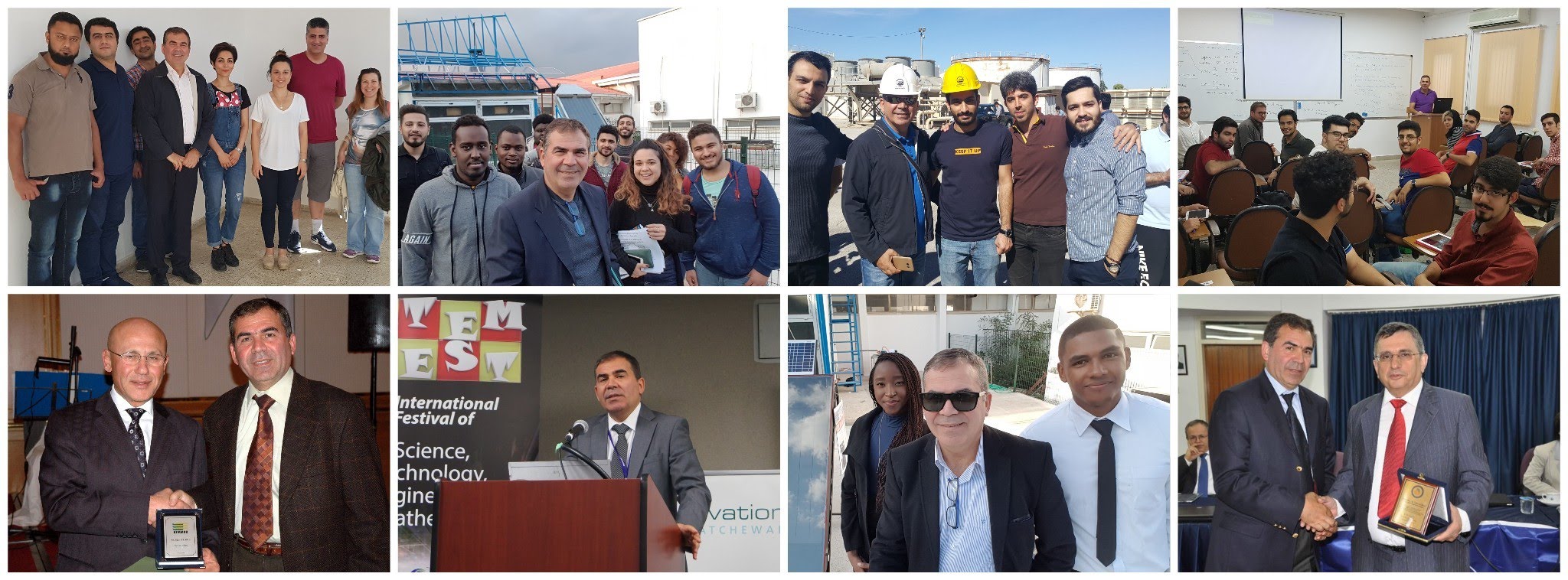
Prof. Dr. Uğur Atikol is a Professor of Thermodynamics, Energy Management and Building Services at Eastern Mediterranean University's Department of Mechanical Engineering within the College of Engineering. As Director of the Energy Research Center (ERC) since 2004 and former Head of Mechanical Engineering Department (2010-2016), he has established himself as a leading expert in sustainable energy implementation. A Certified Energy Auditor with extensive HVAC engineering experience, Dr. Atikol has contributed significantly to energy projects sponsored by USAID and the EU, particularly focused on improving living standards in the Turkish Cypriot community. Dr. Atikol's research expertise spans Thermodynamics, Energy Management, and Building Services , with particular emphasis on transferring clean and efficient energy technologies to developing countries. His work addresses critical challenges in sustainable energy implementation through projects like the Resource Efficiency Achievement Project (REAP) and EU-sponsored renewable energy initiatives. He recently co-chaired a working group developing a strategic plan for energy efficiency across all sectors in northern Cyprus. His scholarly output demonstrates consistent focus on practical energy solutions, with research trends showing strong emphasis on demand-side management strategies, solar energy applications, desalination technologies, and thermodynamic optimization of energy systems. The progression of his work reveals increasing sophistication in system integration and practical implementation of theoretical concepts. Certified Energy Auditor First President of Cyprus Chapter of Association of Energy Engineers (2006) Co-founder of Energy Professionals Association in northern Cyprus Dr. Atikol has successfully supervised five PhD students to completion and currently mentors three ongoing PhD projects focused on demand-side management and solar thermal technology transfer. His research has been supported by significant international projects including USAID's REAP and EU renewable energy programs, demonstrating his ability to secure and manage substantial research funding. As Director of the Energy Research Center, Dr. Atikol leads multidisciplinary teams focused on sustainable energy solutions for the region. His leadership extends to professional organizations, where he co-founded both the Cyprus Chapter of the Association of Energy Engineers and the Energy Professionals Association in northern Cyprus, significantly contributing to the development of energy professionals in the region.
Kostis Velonis is an Associate Professor at Athens School of Fine Arts, where he has established himself as a significant figure in contemporary sculpture and installation art. His academic background includes an MRes in Humanities and Cultural Studies from London Consortium (Birkbeck College, ICA, AA, Tate), studies in Arts Plastiques/Esthétiques at Université Paris 8 (D.E.A), and a PhD from the Department of Architecture at NTUA University of Athens. His practice bridges academic theory with artistic creation, maintaining an active exhibition schedule while contributing to the educational mission of ASFA. MRes in Humanities and Cultural Studies, London Consortium (Birkbeck College, ICA, AA, Tate) Arts Plastiques/Esthétiques, Université Paris 8 (D.E.A) PhD in Architecture, NTUA University of Athens Velonis's research centers on the comic and awkward condition of objects as subjects, exploring moral implications of failure and clumsiness through daydreaming and frustrated reality. His systematic vocabulary references modernity via architectural typologies including ancient Greek theatre structures, podium politics, avant-garde propaganda booths, and domestic subpolitics. His work investigates slapstick aesthetics as a framework for understanding contemporary political and social structures, with particular emphasis on how failure and clumsiness function within modern architectural and social systems. Analysis of Velonis's recent fifteen works reveals consistent engagement with slapstick as conceptual framework, environmental concerns, and reinterpretations of mythological narratives through contemporary materials. His installations frequently utilize architectural forms to examine political structures, with recurring motifs of domesticity, precarious dwelling, and marine environments. The works demonstrate a sophisticated integration of material studies with theoretical frameworks, particularly in how everyday objects become vessels for complex political commentary. His exploration of Buster Keaton's cinematic techniques translated into sculptural practice represents a unique contribution to understanding failure as productive rather than merely negative. While no specific scientific awards are documented in the provided materials, Velonis's work has been featured in significant international exhibitions including documenta 14, Fridericianum in Kassel, and major institutions such as the DESTE Foundation, Whitechapel Gallery, and Kunsthalle Osnabrück. His participation in the Onassis Festival and residency at Akademie Schloss Solitude represent notable professional recognition. Velonis has actively engaged with students through workshops including the 'Sensory Ecologies' Workshop with graduate students from École supérieure d'art et de design Talm-Angers at the Hydra Island art station (2022) and the 'Wind Methodologies' project. His teaching extends beyond traditional classroom settings into collaborative exhibition projects and theoretical discussions on sculpture, modernity, and political narratives. Though specific grant information isn't detailed, his international residencies at institutions like Princeton University's Seeger Center for Hellenic Studies indicate significant research support. Velonis's practice operates through collaborative networks rather than traditional laboratory settings. His work with HEAD2HEAD connects Athens and Reykjavik art scenes, while projects like 'Life Without Tragedy' at Governor's Island demonstrate interdisciplinary team approaches. His engagement with artist-run initiatives like State of Concept and collaborations with institutions such as NEON Foundation and DESTE Foundation create dynamic ecosystems for his artistic research, often transforming domestic and historical spaces into sites of critical inquiry.
Merve ATMACA is an Assistant Professor at Beykent University within the Faculty of Engineering and Architecture , Department of Interior Architecture. She has been actively contributing to academic duties since 2016, teaching courses such as Design Studio, Physical Environmental Control, and Smart Indoor Systems. Academic focus: Energy efficiency, smart building systems, and climate-responsive design Active in international conferences (e.g., REHVA World Congress, Clima, ICEBO) Her research explores sustainable design solutions, including passive cooling strategies, energy retrofitting of historical buildings, and renewable energy integration in commercial structures. She has supervised master’s theses on topics like healthcare facility transformations and corporate identity in interior design. Key article trends include energy performance analysis, climate-balanced architectural parameters, and post-pandemic adaptable design. She frequently collaborates with researchers like Ayşe Zerrin YILMAZ and Gülten MANİOĞLU.
Dr. Ivor Lončarić is a Senior Research Associate at the Ruđer Bošković Institute in Zagreb, Croatia, working within the Division of Theoretical Physics, specifically in the Laboratory of Condensed Matter and Statistical Physics. His research spans multiple areas of condensed matter physics, materials science, and computational chemistry, with a particular focus on molecular dynamics, surface science, and machine learning applications in materials science. Dr. Lončarić's research interests primarily focus on condensed matter physics and statistical physics, with specific expertise in nanoporous graphene, perovskite materials, thermosalient phase transitions, and crystal structure prediction. His work often combines experimental approaches with computational modeling, particularly utilizing machine learning potentials to study complex molecular systems and surface phenomena. He has made significant contributions to understanding molecular dynamics on metal surfaces, light-induced processes in coordination polymers, and the structural properties of various crystalline materials. His publication record demonstrates a strong trend toward integrating machine learning with traditional computational methods to tackle complex problems in materials science. Recent work shows increasing focus on perovskite solar cell materials, thermosalient crystals that exhibit jumping behavior during phase transitions, and surface science phenomena. His research often bridges fundamental physics with practical applications in energy materials and nanotechnology. Dr. Lončarić has been actively involved in major collaborative research efforts, including the CCDC seventh blind test of crystal structure prediction. His work appears in leading journals across physics, chemistry, and materials science disciplines, demonstrating the interdisciplinary nature of his research. He regularly presents his research at international conferences on surface science, condensed matter physics, and materials science, with recent presentations focusing on machine learning applications in materials research and molecular dynamics simulations. His laboratory work involves both computational modeling and experimental characterization of materials, particularly focusing on surface phenomena and phase transitions in crystalline systems.
Dr. Aisulu Aitbekova serves as a KNI Postdoctoral Scholar Research Associate in the Department of Applied Physics and Materials Science at the California Institute of Technology, conducting research within the Atwater Group. Her work centers on developing advanced nanomaterials for sustainable energy applications, with a primary focus on carbon dioxide conversion technologies for producing renewable fuels and chemicals. Education Ph.D. in Chemical Engineering, Stanford University (advised by Assistant Professor Matteo Cargnello) M.S. in Chemical Engineering Practice, Massachusetts Institute of Technology (2016) B.S. in Chemical Engineering, Nazarbayev University, Kazakhstan (2015) Aisulu's research integrates photocatalysis , nanomaterials engineering , and CO2 conversion to address climate change through sustainable fuel synthesis. Her experimental approach combines materials characterization, catalyst design, and reactor engineering to optimize solar-driven and electrochemical processes for transforming carbon dioxide into valuable hydrocarbons and oxygenates. She particularly investigates structure-property relationships in nanocatalysts to enhance selectivity and stability under operational conditions. Analysis of her 15 most recent publications (2018-2025) reveals a concentrated research trajectory in CO2 valorization technologies, with dominant themes including photothermocatalytic reactor design, tandem process integration (photovoltaic-electrochemical systems), and nanoparticle stabilization mechanisms for high-temperature applications. Her work consistently bridges fundamental materials science with practical energy solutions, emphasizing catalyst selectivity engineering for ethanol and butene production while addressing critical challenges in catalyst sintering and degradation. Aisulu actively participates in STEM mentoring and outreach initiatives, contributing to the development of future scientists through knowledge sharing and educational programs, though specific advisees are not documented in available sources. As a key member of Caltech's Atwater Group, she leverages cutting-edge resources at the Kavli Nanoscience Institute (KNI) to advance nanophotonic and catalytic materials research, collaborating within an interdisciplinary team focused on renewable energy conversion technologies.
Olof Samuelsson is a Professor at the School of Engineering (Lund University), serving as Director of Third Cycle Studies and Coordinator for the LTH Profile Area: The Energy Transition. His work focuses on modernizing power systems to support renewable energy integration and electromobility infrastructure. Division for Industrial Electrical Engineering and Automation UN SDG: Clean Energy & Climate Action Research Themes: Grid Capacity, Reliable Power Supply, Blackstart Operations His research interests span power systems analysis , electrical machines , power electronics , and smart grid automation , with a focus on enabling renewable energy integration and electric transport networks. Key subtopics include: Wind/solar grid integration Electric vehicle charging impacts System integrity protection schemes Probabilistic grid modeling Space weather resilience Recent Scientific Trends His research group analyzes 15+ publications since 2023, emphasizing: Electrified transport grid impacts (2025) Renewable energy congestion management (2023) Probabilistic modeling of sub-transmission systems System integrity schemes across Nordic grids Awards : IEEE PES Chapter Outstanding Engineer (2017) Projects : Leads SPS4SE (2023–2026) and co-leads VINST (2020–2023) with the Swedish Energy Agency.