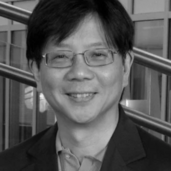
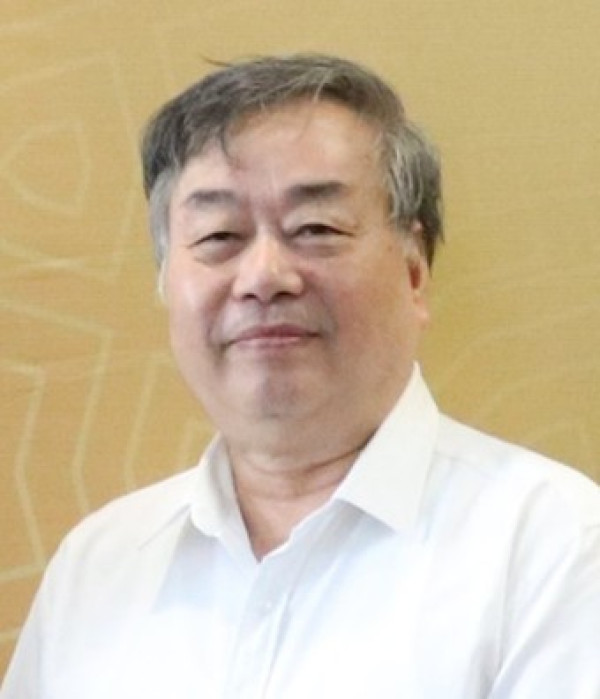
David Harvey is a Distinguished Professor of Anthropology and Geography at the City University of New York (CUNY) Graduate Center and Director of Research at the Center for Place, Culture and Politics. He has been teaching and writing about Karl Marx’s Capital for over 50 years, earning recognition as a leading Marxist scholar and urban theorist. Research Interests Cultural anthropology Political economy Urbanization and capitalist development Environmental justice Geographical theory Advanced capitalist countries Publications & Trends Harvey’s work spans Marxist theory, neoliberalism, and urban studies, with recent focus on Grundrisse and capitalist contradictions. His scholarship connects historical materialism to contemporary crises, emphasizing spatial fixes, environmental limits, and anti-capitalist resistance. Awards & Honors Outstanding Contributor Award (Association of American Geographers) Centenary Medal (Royal Scottish Geographical Society, 2002) Isaac and Tamara Deutscher Book Prize (2010) for The Enigma of Capital Honorary degrees from University of Bristol, Goldsmith College, Kent, Buenos Aires, Roskilde, Uppsala, and Ohio State University
Arvind Karunakaran is an Assistant Professor at Stanford University in the Department of Management Science and Engineering. He holds affiliations with the Center for Work, Technology, and Organization (WTO) , Stanford Technology Ventures Program (STVP) , Stanford Institute for Human-centered Artificial Intelligence (HAI) , and the Digital Economy Lab (DEL) . His research focuses on authority and accountability in the workplace , particularly under technological change and human-AI augmentation. Education: Ph.D. from MIT Sloan School of Management (2018) His work employs ethnographic and field-based methods to study empirical puzzles in workplace dynamics, complemented by comparative-historical analysis and quantitative/textual data analysis . Key research areas include social/algorithmic evaluation of workers , human-AI reskilling , and conflicts in symmetrical relations . Recent publications analyze AI's impact on workplace inequality , platform governance , and crowd-based accountability . His findings are published in top journals like Administrative Science Quarterly and Organization Science . Scientific Awards & Recognitions: Best Published Paper Award (ASA, 2025) Gerard J. Tellis Best Junior Faculty Paper Award (AIM Conference, 2025) W. Richard Scott Article Award (ASA, 2024) Responsible Research in Management Award (RRBM, 2024) Future of Organizations Fellowship (2024) Professor Karunakaran advises doctoral and master's students in areas related to technology and organizations , and teaches courses on organizational behavior , organizational theory , and innovation management .
Martin Jakobsson is a Professor of Marine Geology and Geophysics at Stockholm University's Department of Geological Sciences. His career spans international research expeditions and leadership roles, including Dean of Earth Science (2021) and Head of Department (2012-2018). A key member of the Marine Geology group, he studies Arctic and Antarctic glacial history through sediment analysis and seafloor mapping. PhD from Stockholm University (2000) Academy Fellow, Royal Swedish Academy of Sciences (2004-2009) Professor II position at University Centre of Svalbard (2011-) His research focuses on marine geological archives to reconstruct glacial cycles, ice-ocean interactions, and bathymetric mapping. As GEBCO Vice-Chair (2013-2020), he led initiatives for global seabed mapping through the Seabed 2030 project. Recent publications reveal expertise in: Arctic Ocean paleocirculation Methane release from thawing permafrost Ice sheet sensitivity to oceanic warming High-resolution bathymetric analysis Scientific recognition includes: Election to Royal Swedish Academy of Sciences (2012) 1st Vice President, Royal Swedish Academy of Sciences (2016-2019) Membership in Norwegian Scientific Academy for Polar Research (2016) He leads international collaborations on polar research vessels, with over a year of cumulative ship time and multiple Co-Chief Scientist roles on Arctic expeditions.
Mushtaq Khan is a Professor in the Department of Economics at SOAS University of London . His research focuses on governance, corruption, industrial policy, and structural transformation in developing countries, with particular emphasis on Bangladesh, Nepal, and Nigeria. Research Interests : Corruption and Anti-Corruption Strategies Political Settlements and Governance Industrial Policy Design Climate Adaptation and Public Health Systems Policy Contributions : His work addresses challenges such as collusive contracting in energy sectors, doctor absenteeism in rural healthcare, and dual-use climate projects as anti-corruption tools. Advising : He has supervised theses on industrial policy in Nigeria, economic transformation in Rwanda, and federalism in Nepal.
William Hurst is the Chong Hua Professor of Chinese Development in the Department of Politics and International Studies (POLIS) at the University of Cambridge . He is a Governing Body Fellow at Wolfson College and is affiliated with the Centre for Development Studies and the Centre for Geopolitics . Hurst has been a faculty member at the University of Cambridge since 2013. Prior to this, he held positions as a postdoctoral fellow at the University of Oxford and as an assistant professor at the Universities of Texas and Toronto. His research spans four major themes: labor politics , contentious politics , political economy , and the politics of law and legal institutions , with a regional focus on China and Indonesia . He is currently completing a book manuscript on the comparative politics of law and legal institutions in China and Indonesia since 1949, based on over a year of fieldwork in each country since 2006. Hurst’s publications reflect a deep engagement with the evolution of Chinese and Indonesian governance, labor rights, urban development, and legal reform. His work critically examines how authoritarian regimes manage legal institutions, labor unrest, and urban transformation, offering comparative insights into state-society relations in East and Southeast Asia. While no specific students or awards are listed in the provided text, Hurst’s academic trajectory and publication record indicate a strong commitment to both research and pedagogy in development studies and comparative politics.
Kathleen R. McNamara is Professor of Government and Foreign Service at Georgetown University, where she also co-founded the Global Political Economy Project with Professor Abe Newman. Her work centers on the European Union, globalization, and the cultural and political foundations of market authority. Her research interests include the political economy of the European Union, monetary politics, culture and identity in global markets, institutional change, and the democratic legitimacy of supranational governance. She examines how ideas, norms, and collective identities shape economic integration and state formation, especially in Europe. Her recent publications (2020–2024) reveal a strong focus on the EU’s geopolitical turn, industrial policy transformation, the impact of crises like COVID-19 on globalization, and the interplay between democracy and populism. These works reflect a deep engagement with both theoretical and policy-relevant dimensions of contemporary European and global political economy. International Studies Association 2018 Distinguished Scholar in International Political Economy ISA 2020 SWIPE Award for Mentoring Women in International Political Economy German Marshall Fund Fellow Fulbright Fellow Simone Veil Fellow at the European University Institute (2023) McNamara has been a visiting scholar at the Russell Sage Foundation, taught at Princeton University and Sciences Po (Paris), and advised the US National Intelligence Council. She is active in public scholarship, writing for Foreign Affairs , Foreign Policy , and The Washington Post . She is a founding figure in the Global Political Economy Project, which aims to reframe the study of global markets through interdisciplinary and critical lenses.
Dr. Herb Lin is the Hank J. Holland Fellow in Cyber Policy and Security at the Hoover Institution and Senior Research Scholar for Cyber Policy and Security at the Center for International Security and Cooperation (CISAC), both at Stanford University. He also serves as Chief Scientist, Emeritus for the Computer Science and Telecommunications Board of the National Academies, where he worked from 1990 to 2014, and as Adjunct Senior Research Scholar and Senior Fellow in Cybersecurity at Columbia University's Saltzman Institute for War and Peace Studies. Dr. Lin received his doctorate in physics from MIT, providing him with a strong technical foundation that informs his policy work at the intersection of technology and national security. His academic background bridges the gap between deep technical understanding and policy application in the cybersecurity domain. Dr. Lin's research focuses on the policy dimensions of cybersecurity and cyberspace, with particular emphasis on offensive cyber operations as instruments of national policy, information warfare, and influence operations affecting national security. His work addresses critical challenges at the intersection of emerging technologies like artificial intelligence, quantum computing, and their implications for nuclear security, election integrity, and democratic processes. He has been instrumental in analyzing how cyber capabilities are transforming traditional security paradigms and how policy frameworks must adapt to these changes. His extensive publication record reveals a consistent focus on the evolving relationship between cyber capabilities and national security strategy. Lin's work demonstrates increasing attention to the implications of artificial intelligence for warfare, the vulnerabilities created by quantum computing for current cryptographic systems, and the growing threat of cyber-enabled information warfare to democratic institutions. His research trajectory shows a progression from traditional cybersecurity issues toward the broader implications of digital technologies for national and international security. Member of Science and Security Board of Bulletin of the Atomic Scientists Served on President Obama's Commission on Enhancing National Cybersecurity (2016) Regular congressional testimony on cybersecurity matters Contributor to Stanford Emerging Technology Review As a mentor and collaborator, Dr. Lin works extensively with policymakers, military officials, and technology experts to translate complex cybersecurity concepts into actionable policy recommendations. His approach emphasizes practical solutions to emerging threats while recognizing the technical limitations and policy constraints that shape real-world security outcomes. Dr. Lin is associated with multiple research initiatives including Stanford's Center for International Security and Cooperation and the Stanford Emerging Technology Review, which aim to connect technological advances with policy considerations for national security decision-makers.
Min Hu is an Assistant Professor in the Department of Economics, Philosophy, and Political Science at the University of British Columbia, Okanagan Campus. He holds an adjunct position at Dalhousie University's School of Health Administration. His primary research focuses on Health Economics, Applied Microeconomics, and Labour Economics, with an emphasis on vulnerable populations in Canada, Indigenous health, income inequalities, and cancer economics. He teaches courses in Microeconomics, Health Economics, and Statistics. Education: PhD in Economics (2019), Dalhousie University; Postdoctoral Fellowship in Health Economics (2019–2020), Dalhousie University. Previous degrees include an M.A. (2014–2016) and B.A. in Economics from Dalhousie University. Research interests include the socio-economic determinants of health disparities, particularly among Indigenous peoples and immigrants, and the economic impacts of cancer-related policies. He employs applied econometric methods to analyze labor market outcomes and social policy effectiveness. His recent articles explore sustainable biomass utilization, energy policies, and environmental engineering innovations. Key themes include biomass supply chain optimization, CO₂ reduction strategies, and waste-to-energy technologies. Scientific Awards: Recipient of SSHRC New Frontiers Grant (2023–2026), CIHR Team Grant (2024–2026), and multiple UBC startup grants. His work is supported by SSHRC, CRDCN, and Indigenous Services Canada. He advises students in Economics and Global Studies (IGS) programs. Grants and funding span health economics, Indigenous well-being, and sustainable energy systems. Collaborations include interdisciplinary teams in health administration and environmental policy. Labs/Teams: Engaged with UBC's Okanagan Sustainability Initiatives and Dalhousie's Health Economics Research Group. Affiliated with professional organizations like the American Economic Association and Canadian Health Economics Study Group.
Christopher L. Tucci is a Professor of Digital Strategy & Innovation at Imperial College London's Business School and currently serves as Interim Vice Dean of Education. He is also the Founding Dean of NEOM's College of Business & Innovation in Saudi Arabia. Previously, he held the Chair in Corporate Strategy & Innovation at École Polytechnique Fédérale de Lausanne (EPFL), where he served as Dean of the College of Management from 2013 to 2018. His academic qualifications include a PhD in Management from MIT and multiple degrees from Stanford University: an AB in Music, BS in Mathematical Sciences, and MS in Computer Science and Computer Science. His research focuses on digital strategy, innovation management, open innovation, and business model innovation, with particular emphasis on how firms transition to new technologies and organizational forms. He has pioneered work on crowdsourcing, inter-networking, and AI-driven innovation. His award-winning article 'Crowdsourcing as a Solution to Distant Search' (co-authored with Allan Afuah) has received multiple accolades, including the AMR Decade Award in 2022. Professor Tucci teaches courses such as AI Ventures, Co-Creation in AI & Robotics, and Design Thinking. He actively contributes to academic leadership roles, including serving on the Academy of Management's Board of Governors and leading initiatives like Imperial's I-X (Artificial Intelligence and Digital Innovation hub). His work integrates technology, strategy, and organizational dynamics to address modern business challenges. Educations: PhD in Management, MIT (1992–1997) SM in Technology & Policy/EECS, MIT (1989–1991) BS in Mathematical Sciences, Stanford (1978–1982) AB in Music, Stanford (1979–1983) MS in Computer Science, Stanford (1982–1984) Labs/Teams: Co-Director of Imperial's I-X initiative, focusing on AI, data science, and digital innovation.
Pol Antràs serves as the Robert G. Ory Professor of Economics at Harvard University, where he has been a faculty member since 2003. He holds significant research affiliations as a Research Associate at the National Bureau of Economic Research (NBER), where he directed the International Trade and Organization Working Group, and as a Research Affiliate at the Centre for Economic Policy Research (CEPR). He also contributes to the Barcelona School of Economics as a member of its Scientific Council. His academic foundation includes a BA and MSc in Economics from Universitat Pompeu Fabra in Barcelona and a PhD in Economics from MIT (2003). Antràs specializes in international economics and applied theory, with recent research focusing on global value chains, the interplay between globalization and interest rates, market power in global markets, and international relations. His work examines how firms organize cross-border production, the implications for trade policy, and the structural transformations in international trade following events like pandemics. He bridges rigorous theoretical modeling with empirical analysis to address contemporary economic challenges. His publication record reveals a sustained focus on the evolution of global trade architecture, particularly the rise of production networks and their vulnerability to disruptions. Recent work explores unconventional intersections such as monetary policy's impact on trade flows and the political economy of ideology-driven foreign influence. His major scientific distinctions include: Alfred P. Sloan Research Fellowship (2007) Fundación Banco Herrero Prize (2009) Fellow of the Econometric Society (2015) Member of the American Academy of Arts and Sciences (2024) As Editor of the Quarterly Journal of Economics (2015-2020) and contributor to multiple editorial boards, Antràs shapes scholarly discourse in economics. His research is institutionally supported through NBER and CEPR affiliations, though specific grant details aren't publicly itemized. He maintains an active role in mentoring graduate students at Harvard. He drives collaborative research through leadership in the NBER's International Trade and Organization Working Group and CEPR's research networks, fostering international scholarly exchange on trade and globalization.
Dr. Heather Inwood serves as University Associate Professor in Modern Chinese Literature and Culture within the Faculty of Asian and Middle Eastern Studies at the University of Cambridge. She is also a Fellow and Director of Studies at Trinity Hall, maintaining dual institutional affiliations that support her teaching and research activities across undergraduate and postgraduate programs. Her educational background includes a BA in Chinese Studies from the University of Cambridge (Trinity Hall), followed by advanced studies at Tsinghua University and Peking University, culminating in a PhD in modern Chinese literature from SOAS, University of London in 2008. Prior academic appointments include Assistant Professor at The Ohio State University (2008-2013) and Lecturer in Chinese Cultural Studies at the University of Manchester before returning to Cambridge in 2016. Professor Inwood's research program investigates the dynamic interactions between digital media and literary production in contemporary China, with particular focus on poetry communities, genre fiction, and transmedia storytelling. Her work bridges traditional literary analysis with digital humanities approaches, examining how online platforms transform authorship, reception, and cultural value. She has pioneered scholarship on internet poetry scenes, demonstrating their vitality despite public perceptions of poetry's decline in modern China. Her publication trajectory reveals a clear evolution from early work on poetry communities ( Verse Going Viral: China's New Media Scenes , 2014) toward broader investigations of digital narrative forms, game studies, and Sinophone cyberspace. Recent publications increasingly engage with science fiction, transmedia storytelling, and the algorithmic structures shaping literary production, reflecting both the changing digital landscape and her expanding methodological toolkit. Professor Inwood actively supervises five PhD students working on diverse projects spanning Misty poetry, queer narratives, gender studies, and poetic animality, demonstrating her commitment to nurturing next-generation scholarship in Chinese literary studies. Her research has been supported by British Academy Small Grants and similar funding mechanisms that enable sustained fieldwork and publication. Her teaching responsibilities include undergraduate courses on East Asian media and popular culture, Modern Chinese texts, and Modern Chinese literature, connecting classroom instruction directly to her research expertise. She also maintains public engagement through Chinese-language columns for BBC China and other media outlets, bridging academic and public discourse on contemporary Chinese culture.
Pamela J. Hinds is the Rodney H. Adams Professor and Fortinet Founders Chair in Stanford University's School of Engineering, holding a joint appointment in the Department of Management Science and Engineering. She co-directs the Center on Work, Technology, and Organization and serves on the Director's Council for the Hasso Plattner Institute of Design. Her research focuses on technology's impact on teams, collaboration, and innovation in global and cross-cultural contexts. She earned her Ph.D. in Organizational Science and Management from Carnegie Mellon University (1997). Research Interests: Dr. Hinds explores cross-boundary work teams, particularly those spanning national borders, examining cultural dynamics, language barriers, and site visits' role in knowledge sharing. She investigates human-robot interaction in workplaces and emerging technologies' effects on work practices, including AI, 3D printing, and open innovation systems. Her work bridges organizational behavior, human-computer interaction, and global work dynamics. Awards & Recognition: Lasting Impact Award (2018) Senior Editor of Organization Science Co-editor of Distributed Work (MIT Press) Advising & Leadership: As department chair, Hinds shapes educational and research agendas. Her grants include NSF-funded studies on digital technologies in agriculture and crowd-based innovation. She advises initiatives at the intersection of technology, work design, and global collaboration. Labs & Teams: Co-leads the Center on Work, Technology, and Organization, fostering interdisciplinary research on modern work environments. Engages in Stanford's Design School (d.school) to integrate human-centered design principles into workplace innovation.
Sheila Jasanoff is the Pforzheimer Professor of Science and Technology Studies at the Harvard Kennedy School of Government, where she founded and directs the STS Program. Previously, she was the founding chair of the STS Department at Cornell University. She holds AB, JD, and PhD degrees from Harvard University, along with honorary doctorates from the Universities of Twente and Liège. Current Position: Pforzheimer Professor of Science and Technology Studies (2002-present) Previous Position: Professor of Science Policy and Law at Cornell University (1991-1998) Education: AB (Mathematics) from Radcliffe College, PhD (Linguistics) and JD from Harvard University Professor Jasanoff's research explores the role of science and technology in the law, politics, and policy of modern democracies, with particular attention to environmental and biotechnology regulation in Europe and the U.S. She is a pioneer in the field of Science and Technology Studies (STS), having authored over 130 articles and chapters and written or edited more than 15 books, including The Fifth Branch , Science at the Bar , Designs on Nature , The Ethics of Invention , and Can Science Make Sense of Life? Her recent scholarly work focuses on climate communication, genome editing ethics, and the integration of STS perspectives into engineering and public policy. Jasanoff's publications demonstrate a consistent engagement with how different societies conceptualize scientific knowledge and incorporate it into governance structures, with particular attention to sociotechnical imaginaries and civic epistemologies. Holberg Prize (2022), often dubbed the 'Nobel Prize for social science and humanities' SSRC's Hirschman Prize Humboldt Foundation's Reimar-Lüst Award Guggenheim Fellowship Ehrenkreuz from the Government of Austria Foreign memberships in the British Academy and the Royal Danish Academy Jasanoff has served on the AAAS Board of Directors and as President of the Society for Social Studies of Science. She is a member of the Council on Foreign Relations. Her sponsored projects include the Global Observatory on Genome Editing funded by the John Templeton Foundation and Belmont Forum Collaborative Research on Governance of Sociotechnical Transformations funded by the National Science Foundation. She has held distinguished visiting appointments at leading universities worldwide and serves on numerous scientific advisory boards including at the Holberg Foundation, National Academy of Sciences, and University of Cambridge.
Professor Nguyen Van Chinh is a distinguished scholar in anthropology at the University of Social Sciences and Humanities, Vietnam National University (VNU-USSH), specializing in the Department of Anthropology and Religious Studies. With a PhD from the University of Amsterdam and extensive international research experience including a postdoctoral fellowship at the National University of Singapore, he has established himself as a leading expert in Southeast Asian anthropology, migration studies, and ethnic relations. His academic career spanning over four decades includes numerous visiting professorships at prestigious institutions worldwide. Professor Chinh's research interests encompass Anthropology Research Methods , History of Anthropology , Migration and Poverty Studies , Ethnic Identity , and Cross-border Ethnic Groups in Southeast Asia. His scholarly work demonstrates a particular focus on the intersection of economic development, cultural preservation, and social transformation in Vietnamese and Southeast Asian contexts. Through extensive fieldwork and theoretical contributions, he has shaped contemporary understanding of ethnic minorities, migration patterns, and socio-economic changes in the region. His extensive publication record shows a clear evolution toward contemporary issues including China's growing influence in the Mekong region, ethnic Chinese migration, and the challenges of poverty reduction in Vietnam. The research demonstrates increasing engagement with transnational phenomena, border studies, and the impact of China's economic expansion on Southeast Asian societies. His most recent work addresses pressing contemporary issues such as disability rights, academic publishing challenges, and urban migration dynamics. Distinguished PhD dissertation awarded by NVMC (Netherlands Association of Social Sciences and Cultural Sciences), 2000 Certificate of Merit from the President of National University for outstanding achievements, 2007 Asian Leadership Fellow (ALFP) awarded by the Japan Foundation, 2004 Asian Public Intellectual Fellow (API) awarded by the Nippon Foundation, 2010 Multiple research grants from prestigious foundations including Toyota, Rockefeller, and Japan Foundation Professor Chinh has served as an independent consultant for numerous national and international development projects implemented in Vietnam. His advisory work spans multiple sectors including labor, health, agriculture, and ethnic minority affairs, working with organizations such as WHO, World Bank, Asian Development Bank, UNDP, DFID, IUCN, UNICEF, and UNESCO. His expertise in ethnographic research methods and understanding of Vietnamese society has made him a valuable resource for policy development and implementation across multiple domains.
Sascha van Schendel is an Assistant Professor in Data Protection & Cybersecurity at the Department of Law & Markets, Erasmus School of Law, Erasmus University Rotterdam. She is affiliated with the Erasmus Centre of Law and Digitalization and contributes to the Sectorplan SSH-Breed research initiative on the influence of digitalization on work, prosperity, and entrepreneurship. Her research lies at the intersection of law, technology, and fundamental rights, with a focus on data protection, privacy, algorithmic governance, and the regulation of emerging technologies in public and environmental domains. She has published widely on topics including GDPR compliance, privacy by design, smart energy systems, AI in criminal justice, and the legal implications of predictive policing. The recent publications reflect a strong trend toward the regulation of data in public infrastructure (e.g., energy grids), algorithmic accountability in law enforcement, and the integration of legal and technical perspectives in privacy-preserving systems. Her work spans environmental law, criminal procedure, and digital constitutionalism, demonstrating interdisciplinary reach. Scientific Awards: No awards explicitly mentioned in the provided text. Advising and Grants: While no formal PhD or Master’s students are listed, Dr. van Schendel has been involved in significant research projects such as the NWO-funded Megamind project on smart energy grids, indicating experience with competitive grant funding. She actively collaborates with legal scholars and contributes to public policy debates, including responses to national legislation like the Dutch Cybersecurity Bill. Labs and Teams: She is a core member of the Erasmus Centre of Law and Digitalization, a research hub focusing on the legal challenges of digital transformation. Her work is embedded in interdisciplinary collaborations involving law, technology, and public policy experts.