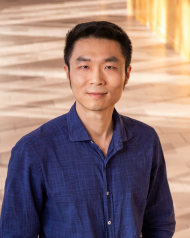
Vittorio Solina is a Researcher at the Department of Mechanical, Energy and Management Engineering (DIMEG) of the University of Calabria, specializing in industrial systems simulation and digital twin technologies. His work spans Industry 4.0/5.0 applications, supply chain optimization, and human-robot collaboration. Affiliation: University of Calabria Academic Role: Researcher (Legge 240/10) Research Focus: Digital twins, simulation modeling, sustainable manufacturing His research emphasizes advanced simulation tools for decision support, including applications in Industry 4.0 , Smart Manufacturing , and Agri-Food Supply Chains . Recent work explores adaptive simulation optimization for Industry 5.0 and 5G-enabled robotics. Key publication trends include: (1) Digital twin integration for supply chain resilience (2024-2025), (2) Simulation automation methodologies (2025), and (3) Human-robot collaboration frameworks (2024).
Professor Jo Barraket is a leading academic and researcher in social equity, social innovation, and public policy. As Director of the Melbourne Social Equity Institute and member of the Dilun Duwa Centre for Indigenous Business Leadership, she focuses on improving social equity through organizational innovation, cross-sector collaboration, and policy design. Her research addresses social procurement, health equity, digital inclusion, and employment pathways for marginalized groups. Her work includes landmark projects such as the Australian Digital Inclusion Index and evaluations of Commonwealth Social Enterprise Development Funds. She has secured over $11M in research grants, including multiple ARC grants, and produced over 75 scholarly publications. Her current projects compare social procurement policies in Australia and Scotland, and study youth unemployment in construction via employment-focused procurement. Key research themes include: social enterprise scaling strategies, cross-sector partnerships for policy implementation, and the role of philanthropy in equitable housing. She advises governments and OECD on inclusive employment policies and chairs major research initiatives like the Social Enterprise Impact Lab. Prof Barraket’s transdisciplinary approach combines rigorous academic research with practical outputs like policy guides and digital tools to maximize societal impact. She previously founded the Centre for Social Impact Swinburne, now a global leader in social economy research.
Andrea Vedaldi is a Professor of Computer Vision and Machine Learning at the University of Oxford's Department of Engineering Science, affiliated with the Visual Geometry Group (VGG). He specializes in unsupervised methods for understanding images and videos, focusing on 3D geometry and semantics. His research bridges foundational AI and practical applications, with contributions to generative models, neural fields, and self-supervised learning. Education: PhD in Computer Science (2008), University of California, Los Angeles MSc in Computer Science (2005), UCLA BSc in Information Engineering (2003), University of Padua Research Interests: Unsupervised learning, 3D perception, generative AI, neural rendering, and scalable vision systems. His work emphasizes ethical, responsible AI aligned with ERC-funded projects like UNION (ERC Consolidator Grant). Key Contributions: Co-developer of VLFeat and MatConvNet libraries Leader in 3D reconstruction and diffusion models (e.g., CatFree3D) Recipient of the PAMI Thomas S. Huang Prize and multiple best paper awards Grants & Service: Principal Investigator on £2.3M ERC Consolidator Grant (UNION) Co-organizer of major conferences (ECCV 2020 Program Chair, CVPR 2023 Area Chair) Reviewer for top journals/conferences (PAMI, CVPR, NeurIPS) Labs & Teams: VGG Group at Oxford, collaborating on projects like Meta 3D Gen and Common Objects in 3D (CO3D).
Dr. Chang Xu is an Associate Professor in Machine Learning and Computer Vision at the University of Sydney's School of Computer Science. He holds a Bachelor of Engineering from Tianjin University and a PhD from Peking University. His research focuses on machine learning, data mining, and their applications in AI and computer vision, including multi-view learning, visual search, and face recognition. He is an ARC Future Fellow and a member of the Sydney Southeast Asia Centre and The Net Zero Institute. Education: B.E. in Engineering (Tianjin University), Ph.D. in Computer Science (Peking University). His research interests emphasize handling heterogeneous data, exploring data variety, and developing algorithms for robust AI systems. His work includes adversarial robustness, neural architecture search, and efficient deep learning models. Research trends in his articles include adversarial robustness in neural architectures, efficient vision transformers, multimodal 3D style transfer, and underwater image restoration. Key contributions span image restoration, video super-resolution, and lightweight network design. He has advised multiple PhD and master's students on topics like diffusion models, radar image synthesis, and graph similarity. Awards: ARC Future Fellow. Collaborations focus on cross-domain data integration and AI applications. His labs and teams explore generative models, robust learning, and scalable robotics policies. Recent work includes diffusion models for action segmentation and robust vision-language systems.
Boris Hanin is an Associate Professor at Princeton University's Department of Operations Research and Financial Engineering (ORFE) and Associated Faculty at the Program in Applied and Computational Mathematics (PACM). Prior to Princeton, he held academic positions at Texas A&M University (Assistant Professor of Mathematics), MIT (NSF Postdoctoral Fellow), and Northwestern University (PhD in Mathematics under Steve Zelditch). He works part-time at Foundry, an AI/computing startup, leading the Foundry Institute. PhD in Mathematics, Northwestern University NSF Postdoctoral Fellowship, MIT Mathematics Associate Professor, Princeton ORFE Part-Time Leader, Foundry Institute His research spans machine learning, probability theory, and mathematical physics, focusing on neural network theory (approximation power, optimization guarantees), random matrix theory, and spectral asymptotics. He has made foundational contributions to understanding gradient behavior, initialization, and infinite-width limits in deep learning. Boris has supervised numerous PhD students and postdocs, with former members securing prestigious positions at Harvard, MIT, and Huawei. He serves as Associate Editor for journals like Pure and Applied Analysis and Mathematics of Operations Research , and has taught short courses at Oxford, Luxembourg, and Tor Vergata on statistical physics of neural networks and deep learning theory. 2024 Sloan Fellowship in Mathematics NSF CAREER grant DMS-2143754 NSF grant DMS-2133806 His research group collaborates on topics including hyperparameter transfer, architecture-aware scaling, and spectral analysis of random waves and neural networks. He actively contributes to theoretical machine learning through foundational publications in venues like Probability Theory and Related Fields , Journal of Machine Learning Research , and Communications in Mathematical Physics .
Prof. Ingmar Posner is a leading figure in applied artificial intelligence at the University of Oxford, where he serves as Principal Investigator for the Applied Artificial Intelligence Lab (A2I) and founding Director of the Oxford Robotics Institute. His work focuses on enabling robots to operate effectively in complex real-world environments through experience-driven learning. Key research areas: robot learning, scene interpretation, data-efficient learning, and transfer learning Applications in manipulation, autonomous driving, logistics, and space exploration His team has produced groundbreaking work in world models, sim-to-real transfer, and constraint-based manipulation systems (e.g., COMBO-Grasp). Notable contributions include the TWIST distillation framework and foundational research in tactile data generation (TactGen). He has received multiple best paper awards at top robotics venues. Publications reveal evolving research themes: 2025 work emphasizes language-conditioned learning (Lumos) and multi-agent decision-making, while 2024 focused on diffusion models for locomotion and differentiable simulators. Earlier work spans from urban scene analysis to physically plausible scene synthesis (RELATE).
Robert West is an Associate Professor at EPFL (École polytechnique fédérale de Lausanne) in the School of Computer and Communication Sciences , leading the Data Science Lab (dlab) . His research focuses on Natural Language Processing , Machine Learning , and Computational Social Science , analyzing human-generated data from the web, social media, and online platforms. Education : PhD in Computer Science (2016) - Stanford University MSc in Computer Science (2010) - McGill University BSc in Computer Science (2007) - Technische Universität München Research Interests : West develops algorithms for analyzing large-scale web data, with emphasis on multilingual NLP , social network analysis , and AI ethics . His work bridges machine learning with social science to understand digital human behavior. Scientific Awards : ICWSM’22 Adamic–Glance Distinguished Young Researcher Award Google Faculty Research Award Facebook Research Award Multiple Outstanding Paper Awards at ICWSM and WWW Advising & Grants : He advises 12 PhD students and has secured funding from the Swiss National Science Foundation , Swiss Data Science Center , and industry partners. His lab maintains collaborations with Microsoft Research and CROSS . Labs & Collaborations : West leads the Data Science Lab at EPFL, which focuses on web-scale data analysis , privacy-preserving machine learning , and AI for social good . The lab develops tools like Wikispeedia and Quotebank for public data exploration.
Jason D. Lee is an associate professor of Electrical Engineering and Computer Sciences (EECS) and Statistics at the University of California, Berkeley. Previously, he held academic positions at Princeton University as an associate professor, and was a research scientist at Google DeepMind. He completed his Ph.D. in Computational and Mathematical Engineering at Stanford University under the advisement of Trevor Hastie and Jonathan Taylor. For students and collaborators, his primary contact email is jasonlee@princeton.edu, though prospective students and postdocs are asked to include "filter_student" in the subject line. Ph.D., Computational and Mathematical Engineering, Stanford University (2015) B.Sc., Mathematics, Duke University (2010) Lee's research lies at the intersection of machine learning, statistics, and optimization, focusing on the theoretical foundations of artificial intelligence. His work addresses fundamental questions in deep learning, including optimization landscapes, representation learning, and reinforcement learning theory. He has made significant contributions to understanding how gradient descent operates in neural network training and has developed provably efficient algorithms for various learning scenarios. His ten most recent publications represent a diverse yet coherent body of work across machine learning theory, focusing on topics such as Gaussian multi-index models, transformer learning capabilities, shallow neural networks, and optimization techniques. These publications appear in top venues including COLT, ICML, NeurIPS, and JMLR. Among his notable accolades are: Samsung AI Researcher of the Year Award (2023) NSF Career Award (2022) ONR Young Investigator Award (2021) Sloan Research Fellow in Computer Science (2019) NIPS Best Student Paper Award (2016) Princeton Commendation for Outstanding Teaching (ECE538B) Lee has advised numerous students including Alex Damian, Wenhao Zhan, Eshaan Nichani, Tianle Cai, Zixuan Wang, and Yunwei Ren. Former advisees have gone on to positions at institutions like NYU Courant, Facebook AI Research, UW, MIT, Duke, and Microsoft Research. His research group and collaborators span multiple institutions, working on theoretical and applied aspects of machine learning and artificial intelligence, with a particular focus on the optimization and learning dynamics of neural networks and transformer models.
Prof. Dr. Roland Büchi is a Professor at the School of Engineering, Zurich University of Applied Sciences (ZHAW), specializing in control systems engineering and applied AI. His affiliation includes leadership roles in research projects such as the ongoing 'Digital Bridge to Computer Science' initiative. With a career spanning decades, he maintains active research output and industrial collaborations. Research Interests: Büchi focuses on control systems optimization , particularly PID controller tuning using AI methods, system identification, and applications in robotics and drone technology. His work bridges theoretical control theory with practical implementations in mechatronics. Recent efforts explore machine learning for hysteresis modeling and swarm optimization for control systems. Publication Trends: His 15 most recent works (2018-2024) emphasize AI-driven control optimization , drone technology advancements, and engineering education. Dominant themes include PID parameter tuning for time-delayed systems, drone telemetry, and adaptive learning algorithms. A notable shift toward AI/ML applications in control engineering emerged post-2020. Labs and Teams: Büchi collaborates with researchers like Lukas Gruber and has historical ties to ETH Zurich’s robotics projects. His work involves experimental validation at ZHAW’s engineering facilities, with patents in turbocharger magnetic bearing systems.
Adrian Weller is a prominent researcher and academic at the University of Cambridge, serving as a Director of Research in Machine Learning within the Department of Engineering. He holds multiple significant leadership roles including Programme Director for Trust and Society at the Leverhulme Centre for the Future of Intelligence (CFI), and previously served as Programme Director for AI at The Alan Turing Institute, the UK national institute for data science and AI. His work bridges theoretical machine learning research with practical applications and societal implications of artificial intelligence. Weller's research interests span a broad spectrum of AI and machine learning topics with a particular focus on ensuring beneficial societal outcomes. His work encompasses explainability, fairness, robustness, scalability, privacy, safety, and ethics in AI systems. He has made significant contributions to trustworthy machine learning, including developing frameworks for AI governance, certification, and human-AI collaboration. His research group actively investigates neuro-symbolic approaches, privacy-preserving techniques, and methods for improving the reliability and interpretability of AI systems. His recent publications demonstrate a strong trend toward addressing the practical challenges of deploying AI systems in real-world contexts, particularly focusing on certification frameworks, governance mechanisms, and human-centered approaches. His work spans theoretical advances in machine learning architectures while maintaining a strong connection to societal impact, with publications appearing in top venues across AI, machine learning, and interdisciplinary applications. Scientific Awards: MBE for services to digital innovation (2022 Queen's Birthday Honours) Turing AI Fellowship for Trustworthy Machine Learning Weller actively supervises a large group of PhD students and postdocs, with current students including Juyeon Heo, Yanzhi Chen, Katie Collins, Isaac Reid, Yichao Liang, Herbie Bradley, and Shoaib Siddiqui. His former students have gone on to positions at leading institutions including Google DeepMind, ETH Zurich, NYU, and MPI-IS Tübingen. He has served on numerous advisory boards including the Centre for Data Ethics and Innovation, UNESCO's expert group on AI ethics, and the World Economic Forum's Global Future Council on AI. His research has been supported through his Turing AI Fellowship and various collaborative projects focused on safe and ethical AI development. Weller leads a vibrant research group focused on trustworthy machine learning, which actively organizes workshops and conferences including ICML 2024 (where he served as Program Chair), multiple workshops on responsible AI, and events through the ELLIS network. His group collaborates extensively across disciplines, working with researchers in computer science, social sciences, law, and policy to address the multifaceted challenges of developing beneficial AI systems.
Jia Deng is a Professor of Computer Science at Princeton University and directs the Princeton Vision & Learning Lab. His research focuses on computer vision, machine learning, and robotics, with an emphasis on advancing 3D vision and synthetic data generation. Ph.D., Princeton University, 2012 B.Eng., Tsinghua University, Computer Science His work spans optical flow, depth estimation, and visual reasoning, leveraging procedural scene generation and robust neural architectures. Recent publications highlight advancements in multi-layer depth estimation, stereo matching, and simulation environments for embodied AI. Alfred P. Sloan Research Fellowship, 2018 NSF CAREER Award, 2020 ONR Young Investigator Award, 2020 Multiple Best Paper Awards (ECCV, ICCV, 3DV) Deng leads the Princeton Vision & Learning Lab, which develops foundational tools for computer vision and machine learning. His mentorship extends to advising students and collaborating on interdisciplinary projects.
Manik Varma is a Distinguished Scientist and Vice President at Microsoft Research India, and an Adjunct Professor at the Indian Institute of Technology Delhi. He is a Fellow of the Indian Academies of Science (IASc, INSA, NASI), the Indian National Academy of Engineering (INAE), and the Association for Computing Machinery (ACM). He has received prestigious awards such as the Shanti Swarup Bhatnagar Prize and Microsoft Gold Star Award. Education : BSc in Physics from St. Stephen's College (David Raja Ram Prize) BA in Theoretical Physics from the University of Oxford (Rhodes Scholar) DPhil in Computer Vision and Machine Learning from the University of Oxford (University Scholar) Post-doctoral Fellow at the Mathematical Sciences Research Institute (MSRI), Berkeley Visiting Miller Professor at UC Berkeley His research focuses on Machine Learning (Extreme Classification, Resource-efficient ML, Supervised Learning), Information Retrieval (Computational Advertising, Dense Retrieval, Recommender Systems), and Computer Vision (Image Search, Object Recognition). Recent work includes graph-regularized encoders, label variance reduction, and multimodal classification frameworks. His publications span extreme classification algorithms like NGAME , SiameseXML , and DECAF , with applications in IoT, web search, and recommendation systems. He leads a research group at Microsoft Research India and advises PhD students at IIT Delhi. Scientific Awards : Shanti Swarup Bhatnagar Prize (Government of India) Microsoft Gold Star and Achievement Awards WSDM 2019 Best Paper Prize BuildSys 2019 Best Paper Runner-up Fellow of ACM, IASc, INSA, NASI, INAE He has supervised numerous PhD students, including Sonu Mehta and Suchith Prabhu, and collaborates with institutions like Microsoft Research India, IIT Delhi, and UC Berkeley. His research has led to scalable solutions for billion-label classification and resource-constrained IoT applications.
Prof. Niki Kilbertus is an Assistant Professor at the Technical University of Munich (TUM) in the Department of Informatics, and Group Leader at Helmholtz AI. His research focuses on causal machine learning, ethical AI systems, and applications in healthcare, climate science, and dynamical systems. He earned his PhD from the University of Cambridge (2020) and has held positions at DeepMind, Google, and Amazon during his studies. His research interests include causal discovery, fairness in AI, counterfactual reasoning, and integrating physics-based constraints into neural networks. Key contributions include foundational work on fair machine learning (e.g., avoiding discrimination through causal models) and developing methods for causal inference in complex systems like healthcare and climate modeling. Recent work emphasizes generative models for causal interventions, robust treatment effect estimation, and physically consistent neural differential equations. He leads a large interdisciplinary group with over 20 students and postdocs working on projects funded by Helmholtz Association, ERC, and industry collaborations. Notable awards include the Leopoldina Prize for Young Scientists (2024) and membership in the Junge Akademie. His lab maintains active partnerships with ELLIS, MCML, and the Zuse Institute Berlin.
Huan Zhang serves as an Assistant Professor in the Department of Electrical and Computer Engineering at the University of Illinois Urbana-Champaign (UIUC), with affiliate appointments in the Department of Computer Science and the Coordinated Science Laboratory. His research focuses on building trustworthy AI systems with formal verification techniques to provide provable guarantees for safety-critical applications, particularly in machine learning and neural networks. Dr. Zhang received his Ph.D. in Computer Science from UCLA in 2020, advised by Professor Cho-Jui Hsieh. His academic journey includes an M.S. in Computer Engineering from UC Davis (2014) and a Bachelor of Engineering from Zhejiang University (2012). Prior to joining UIUC, he completed a postdoctoral fellowship at Carnegie Mellon University (2021-2023) with Professor Zico Kolter. Huan Zhang's research program centers on formal verification of machine learning systems, with particular emphasis on neural network verification, AI safety, robustness, and reliability. He pioneered the linear bound propagation-based verification framework that enables formal verification for networks with millions of neurons. His work spans five major research categories: formal verification of machine learning, training trustworthy ML models, machine learning safety and adversarial attacks, reinforcement learning safety, and optimization for scalable machine learning. His CROWN framework (NeurIPS 2018) established a foundational approach for neural network verification through efficient linear bound propagation. His recent publications demonstrate a strategic expansion from foundational verification techniques toward increasingly complex systems including large language models, vision-language models, and robotic control systems. The research trajectory shows a clear progression from theoretical frameworks to practical implementations with real-world applications, particularly in safety-critical domains. His work increasingly bridges formal methods with practical AI deployment requirements. Winner of International Verification of Neural Networks Competition (VNN-COMP) as team leader (2021-2024) Schmidt Futures AI2050 Early Career Fellowship ($300,000 research grant) Adversarial Machine Learning (AdvML) Rising Star Award (2021) IBM PhD Fellowship (2018) Dr. Zhang leads the development of α,β-CROWN, a neural network verifier that has won VNN-COMP 2021-2023, and auto_LiRPA, a PyTorch-based library for perturbation analysis on general computational graphs. He has mentored numerous graduate students from CMU, UCLA, UIUC, and Columbia University. His research is supported by significant funding including the Schmidt Futures fellowship and industry collaborations. He teaches courses including ECE 120, ECE 484, ECE 584, and ECE 598 HZ on topics ranging from computing fundamentals to safe autonomy and machine learning. Dr. Zhang maintains active research collaborations across multiple institutions and is affiliated with UIUC's Coordinated Science Laboratory. His work has significant implications for safety-critical AI applications in autonomous systems, healthcare, and other mission-critical domains where reliability guarantees are essential. He regularly gives guest lectures at institutions including Yale, Stony Brook, and the University of Nebraska Lincoln on formal verification techniques.
Lerrel Pinto is an Assistant Professor of Computer Science at the Courant Institute of Mathematical Sciences at New York University (NYU), where he leads the General-purpose Robotics and AI Lab (GRAIL) as part of the CILVR research group. His work bridges the gap between theoretical machine learning and practical robotics applications, with a focus on enabling robots to generalize and adapt in real-world environments. Dr. Pinto received his undergraduate degree from IIT Guwahati, followed by a PhD from the Robotics Institute at Carnegie Mellon University (CMU). He then completed a postdoctoral fellowship at the University of California, Berkeley before joining NYU as faculty. His research program centers on robot learning and decision making, with several key thrusts that demonstrate his innovative approach to robotics. Pinto's work emphasizes large-scale learning techniques that leverage both extensive data and sophisticated model architectures. A significant portion of his research focuses on representation learning for sensory data, particularly developing methods that enable robots to make sense of visual, tactile, and auditory inputs. His lab has made notable contributions to reinforcement learning algorithms that allow robots to adapt to new scenarios with minimal retraining. Pinto also champions open-source robotics , developing affordable robot platforms that democratize access to robotics research. Analysis of Pinto's recent publications reveals a strong trend toward multimodal perception in robotics, integrating visual, tactile, and auditory information to create more robust robot systems. His work increasingly focuses on zero-shot and few-shot learning capabilities, enabling robots to handle novel situations without extensive retraining. There's also a clear progression toward general-purpose robotics , moving away from task-specific solutions toward more flexible systems that can handle diverse real-world challenges. Dr. Pinto's scientific contributions have been recognized with several prestigious awards: Sloan Research Fellowship (2025) NSF CAREER Award (2024) RAL Early Career Award (2024) Best Student Paper Award at ICRA (2016) Outstanding Paper Award at MFM-EAI workshop at ICML (2024) Best Paper Award at NGSM workshop at ICML (2024) Best Student Paper Award at RSS (2023) As an advisor, Pinto has mentored numerous students who have gone on to impactful careers in both academia and industry. His former PhD student Denis Yarats co-founded Perplexity.AI, while Mahi Shafiullah became a postdoc at UC Berkeley and Meta AI. Many of his Masters students have pursued PhDs at top institutions like CMU, MIT, and Stanford, or joined leading robotics companies including 1X, Fauna Robotics, and NVIDIA. Pinto's lab has secured significant research funding, including the NSF CAREER award and likely other grants supporting his robotics research program. The General-purpose Robotics and AI Lab (GRAIL) that Pinto leads brings together a diverse team of researchers working on cutting-edge robotics challenges. The lab maintains strong collaborations with industry partners and other academic institutions, facilitating technology transfer and real-world impact. GRAIL's research spans multiple robotics platforms and focuses on developing algorithms that enable robots to learn from diverse experiences and generalize across environments.