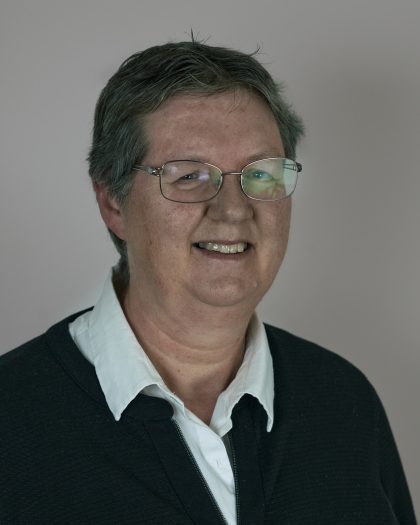
Maj Schian Nielsen is a Senior Research Librarian at the University Library of the University of Agder. Her work focuses on multilingualism, crosslinguistic awareness, and German language pedagogy. She is affiliated with the research groups 'Media and Communication Studies' and 'Multilingualism in Society and Education (MUSE).' University of Agder Research Groups: Media and Communication Studies, MUSE Her research explores how multilingual awareness can enhance grammar instruction in German third-language (L3) teacher education programs across Denmark and Norway. Recent publications analyze curriculum structures, educational materials, and the integration of generative AI tools like ChatGPT in multilingual education contexts. Scientific output trends reveal a focus on: Cross-linguistic pedagogy L3 German acquisition Grammar teaching methodologies AI applications in language learning Teacher training for multilingual classrooms Systemic Functional Linguistics (SFL) frameworks She has not been publicly recognized with scientific awards listed in the available data.
Kari Ingstad is a Professor of Sociology at the Faculty of Nursing and Health Sciences, Nord University, and currently serves as Vice-Dean for Research. Her work bridges academia, clinical practice, and policy, focusing on healthcare organization, leadership, and innovation in Norway's health sector. She holds a PhD in Sociology from NTNU (2011) and has extensive clinical experience in municipal and specialist healthcare. Education: PhD in Sociology, NTNU, 2011 Nursing background from municipal and specialist healthcare sectors Research Interests: Workforce planning and staffing strategies in healthcare Impact of shift scheduling on employee well-being and patient safety Integration of artificial intelligence in healthcare operations Cross-sectoral collaboration and innovation in health services Recent Research Trends: Her 2024 publications emphasize strategic staffing solutions, AI-driven shift planning, and long-shift work-life balance. Key projects include the OptiCare-AI initiative (Norwegian Research Council-funded), exploring AI applications for optimizing healthcare resource allocation. Leadership & Grants: Leads the Acute Care, Innovation and Patient Safety (AKIP) research group Principal Investigator on OptiCare-AI (2023–present) Labs/Teams: Active collaborations with the AKIP group and national/international networks on healthcare workforce issues.
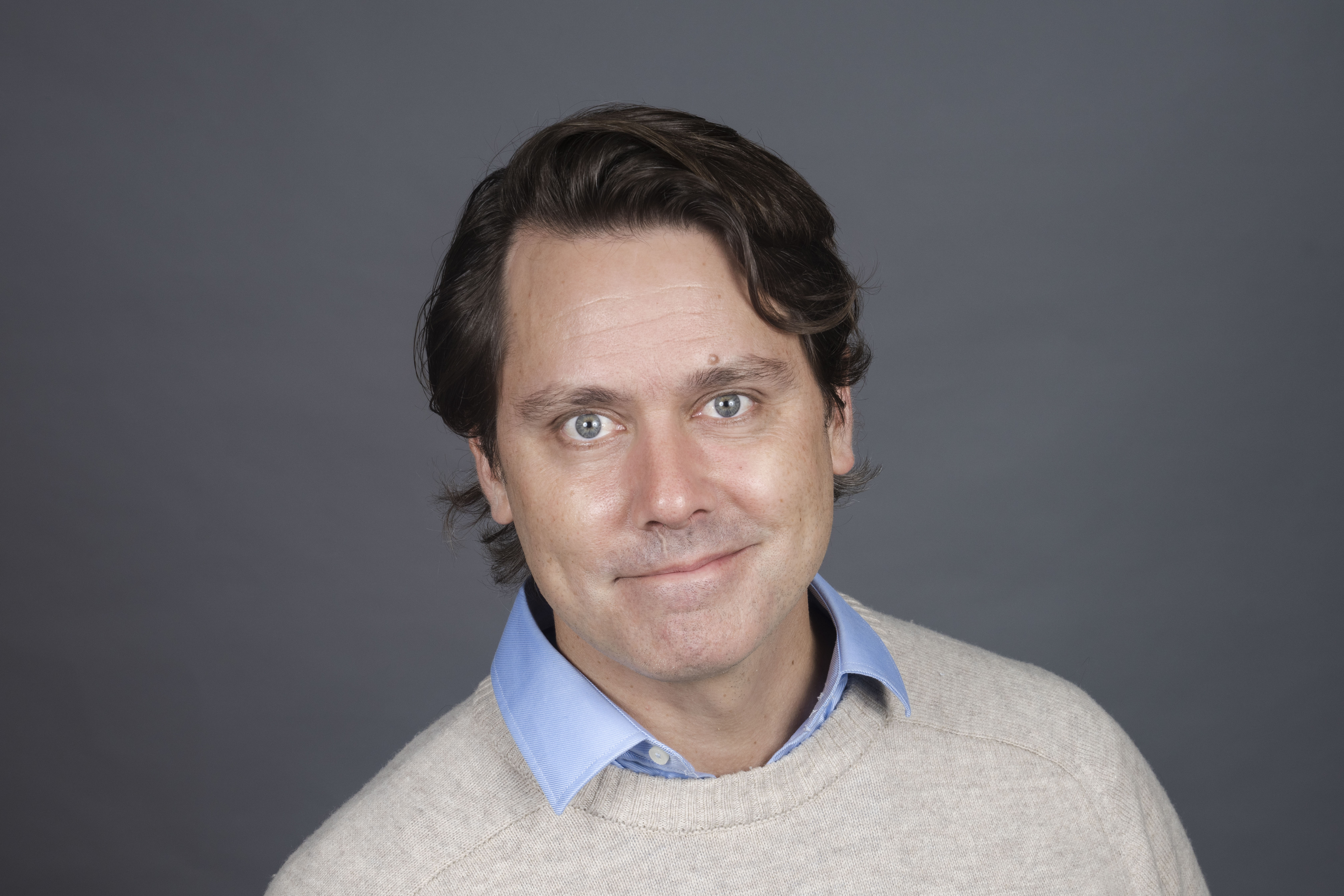
Anders Åkerman is a Professor in the Department of Economics and Finance at the UiS School of Business and Law, University of Stavanger. He is an active researcher in applied economics with a focus on labor, trade, technology, and environmental policy. His research interests span applied microeconomics , international trade , labor economics , and environmental economics . He investigates how technological change, market structure, and global shocks affect firms, workers, and policy outcomes. His work often combines empirical methods with policy relevance. The recent articles reflect a strong trend in analyzing digital transformation (e.g., broadband and trade), environmental impacts of trade and production , and economic resilience during crises such as the pandemic. His publications appear in leading journals like the Quarterly Journal of Economics and American Economic Journal: Applied Economics . He has contributed to public discourse through op-eds in Dagens Nyheter and Svenska Dagbladet , and has been involved in policy commissions like Sweden's Coronakommissionen. He regularly presents research at seminars and international conferences, including the Nordic International Trade Seminar and Stockholm Institute of Transition Economics. Anders Åkerman has advised or collaborated with several researchers and policy experts, including Torsten Persson, Magne Mogstad, and Karolina Ekholm. While formal student advisees are not listed, his collaborative work suggests active mentorship and team leadership. He is affiliated with research networks and institutes such as IFN (Research Institute of Industrial Economics) and participates in interdisciplinary teams focused on economic policy and transition. His upcoming work continues to explore the intersection of technology, environment, and labor markets.
Inland Norway University of Applied SciencesNorway
Agnieszka Malgorzata Moraczewska is Assistant Professor at University of Inland Norway's Department of Scandinavian Languages and Literature. Her research examines how students' and teachers' linguistic repertoires contribute to development of subject knowledge, language skills, and identity formation in multilingual educational contexts. Research specialties: Pedagogical translanguaging strategies Cross-linguistic awareness development Bilingual instructional scaffolding Multilingual classroom practices Epistemic inclusion frameworks She holds a master's degree in Didactics of Cultural and Language Subjects from Inland University College (2017) and previously served as lecturer in Norwegian at the same institution (2016-2019), specializing in Norwegian as a second language and language didactics. Her work spans teacher education programs and Norwegian language courses for international students.
Norwegian University of Science And TechnologyNorway
Hans Petter Hildre is Head of Department at the Department of Ocean Operations and Civil Engineering , part of the Faculty of Engineering at the Norwegian University of Science and Technology (NTNU). His work focuses on maritime engineering, digital twin technology, and marine operations. Research interests include: Digital Twin Applications in Maritime Industry Offshore Operations and Wind Turbine Installation Marine Robotics and Autonomous Systems Wave Field Estimation and Environmental Load Analysis Human-Machine Interaction in Maritime Contexts Co-simulation and Real-time Monitoring Recent publications highlight trends in: Wave shielding effects for offshore vessels Knowledge transfer from automotive/aviation to maritime Crane path planning using digital twins Visual attention zone recognition systems Hydrodynamic modeling and sensitivity analysis Smart city-maritime integration Scientific collaborations span institutions including: European Commission (Future Skills Reports) Royal Institution of Naval Architects The American Society of Mechanical Engineers (ASME) IEEE Transactions on multiple domains Springer Publishing
Vibeke Grøver is a Professor at the Department of Pedagogical Research, University of Oslo. Her work focuses on language and reading comprehension development for language minority children, with a emphasis on bilingual education, shared book reading interventions, and sociolinguistic factors influencing literacy. Education: Dr.polit., University of Oslo (1992) Master in Educational Psychology, University of Oslo (1982) Elementary School Teacher, University of Oslo (1977) Research Interests include second-language acquisition, early literacy for dual-language learners, home literacy environments, and teacher talk features in preschool settings. She leads projects like Teaching for text comprehension and has contributed to the DEAL (Development, Equality, and Literacy in Learning Contexts) research group. Article Trends show longitudinal studies on bilingual profiles, shared reading interventions, code-switching dynamics, and neighborhood demographic impacts on vocabulary. Key themes include scaffolding language minority students, cross-cultural comparisons (e.g., Chinese-Norwegian families), and teacher-student interaction patterns in multilingual preschools. Leadership Roles include Dean of the Faculty of Educational Sciences (2009–2012) and advisory positions for the Peder Sather Center at UC Berkeley (2012–2014). Research visits span Harvard, UC Berkeley, NYU, and East China Normal University.
Norwegian University of Science and TechnologyNorway
Stig Arve Sæther is a Professor of Sports Science at the Department of Sociology and Political Science, Norwegian University of Science and Technology (NTNU), Faculty of Social and Educational Sciences. His research focuses on talent development, elite sports, and sports psychology, with specific emphasis on transitions from junior to senior elite, stress, perfectionism, and coach-athlete relationships. He leads the research group Skill and Performance Development in Sports and School (SPDSS) and the NTNU Sports Network. Primary research areas: Talent development environments, dual careers, relative age effects, and athlete stress Ongoing projects: Female athlete development, Norwegian football club mergers, international youth football environments, senior transitions in school sports, and destructive leadership in sports Collaborations: Rosenborg Ball Club, Kristiansund Ball Club (NEAS Academy), Norwegian Handball Association, Norwegian Ice Hockey Association Editor-in-Chief: Scandinavian Journal of Sport and Exercise Psychology His recent research explores gender differences in talent environments (handball/ice hockey), parental impacts on biathlon transitions, and communication barriers around menstrual cycles in female football. With 60+ international journal articles and multiple books, his work bridges academic rigor and practical sports insights. Media presence spans 200+ TV/radio/podcast appearances (TV2 Sporten, NRK, GameChanger) and newspapers (Wall Street Journal, Aftenposten). Key students include Max Bergström (PhD) and 46+ master’s graduates. Awards not explicitly mentioned, but his editorial and research group leadership highlight institutional recognition.
Jon Andoni Duñabeitia is a Full Professor at the School of Languages and Education of Universidad Nebrija in Madrid. He serves as Director of the Centro de Investigación Nebrija en Cognición (CINC) and the International Chair in Cognitive Health . With an h-index of 43 (Scopus), he has published 170+ articles across psycholinguistics, multilingualism, cognitive training, and virtual reality applications in education. His research examines how language processing interacts with cognitive load, emotional modulation, and technological innovation. Principal Investigator for 8+ projects funded by Spanish Government, Basque Government, BBVA Foundation Associate Editor and Editorial Board Member of high-impact journals Recognized among Spain's top 3% scientists across all disciplines Recent publications span topics including: Second-language reading dynamics in VR environments Multilingual cognitive interactions in neurological conditions Emoji/typographic effects on word processing Computerized cognitive assessment and training systems He actively contributes to scientific meetings as invited speaker across Europe, Asia, and Americas. His work bridges basic research in psycholinguistics with applied technologies for cognitive health.
Rune Andersen is a Senior Lecturer at the University of Agder , affiliated with the Department of Information and Communication Technology . He has pioneered Europe's first holistic Bachelor's program in Academic Esports and serves as its Program Head, while also leading external communication and innovation initiatives within the department. Education: General Teacher (1999) Master's in Educational Use of ICT (2008) Guidance Pedagogy (2012) Welfare Technology (2018) His research interests focus on ICT integration in education , gamification , and leveraging transferable skills from esports for workforce development. He emphasizes interdisciplinary collaboration and industry partnerships to bridge academic and professional transitions. Recent publications highlight esports as a pedagogical tool, gamification in higher education, and skill transfer from digital environments to real-world applications. His work spans game-based learning, universal design, and curriculum innovation.
Mark Joseph O'Sullivan is an Associate Professor at the Norwegian School of Sport Sciences , affiliated with the Institute for Sport and Social Sciences. He combines academic rigor with practical expertise as a qualified UEFA A football coach and leading researcher in player development frameworks. Current PhD candidate at Sheffield Hallam University (focus: research frameworks in sports organizations) Specializes in ecological dynamics, coaching pedagogy, and skill acquisition Active in coach education and developmental research His research focuses on: Ecological dynamics in football training Constructive alignment in coach education Complex systems approaches to player development Contextual learning in youth sports Artistic inquiry in sport science Practice design optimization Recent publications demonstrate a consistent focus on ecological dynamics (4/6 papers) and innovative coaching frameworks. Key collaborations include researchers from Sheffield Hallam University, La Trobe University (Australia), and Karolinska Institutet (Sweden). Teaching areas: Football coaching, skill acquisition, pedagogy, and coach education.
Professor Odd Jarl Borch is a prominent academic at Nord University specializing in emergency preparedness, crisis management, and Arctic security. His work bridges theoretical research with practical implementation through international collaborations and policy contributions. Education: Harstad Gymnasium Norwegian School of Economics Umeå University, Sweden Indiana University, USA Bodin Maritime College Professor Borch's research focuses on emergency preparedness systems in high-complexity environments, particularly in the Arctic region. His work examines civil-military cooperation, hybrid threats, and organizational management during crises. He has pioneered research on maritime safety in polar regions and developed frameworks for cross-border emergency response coordination. His approach integrates theoretical organizational models with practical crisis management applications, emphasizing the unique challenges of Arctic operations. His recent publications (2020-2024) reveal a strong trajectory toward hybrid threat analysis and collaborative security frameworks. The research consistently addresses Arctic-specific challenges while developing universally applicable emergency response models. Key themes include virtual network intelligence, civil-military coordination mechanisms, and structural adaptations for high-complexity environments. His work demonstrates increasing emphasis on digital transformation in emergency management and the evolving nature of security threats in polar regions. Professor Borch leads significant research initiatives including the NORDLAB Center for Emergency Preparedness and Cooperation and coordinates a network of 25 European researchers on civil-military preparedness. He has initiated major international collaborations such as the Arctic Safety and Security network with 22 universities and the ARCSAR innovation network. His practical impact extends to public service through membership on the Corona Commission, the Total Emergency Preparedness Commission, and the cruise industry safety investigation committee. He has supervised numerous bachelor's, master's, and PhD students in organization and management subjects related to security and crisis management. His teaching portfolio includes fisheries economics, vessel operations, financial management, and crisis management. Professor Borch's laboratory work centers on the NORDLAB emergency management facility, which conducts advanced simulation training for Arctic emergency response professionals.
Grete Rusten is a Professor of Economic Geography at the University of Bergen's Department of Geography, specializing in industrial and regional development, circular economy, and sustainable development. Her research focuses on corporate geography, location strategies, and green economic transitions, with emphasis on Norway and Western economies. She supervises master’s theses on topics like industrial symbiosis, coworking spaces, and plastics in the circular economy. Her work integrates interdisciplinary approaches, addressing challenges such as industrial symbiosis in Årdal, greenwashing strategies, and the role of municipalities in eco-innovation. She collaborates with organizations like Årdal Utvikling and the Plastics Network at UiB. Her teaching includes supervision of over 30 master’s theses, emphasizing practical industry partnerships and policy analysis. She has published extensively on green taxation, regional development, and service economies, with contributions to books like *Design Economies and the Changing World Economy* (2011) and *Services and the Green Economy* (2016). Rusten’s research bridges theory and practice, addressing contemporary issues such as energy policy dissonance at Mongstad and the socio-economic impacts of green transitions. Her projects often involve cross-sector collaboration and regional innovation strategies, reflecting her commitment to applied sustainability research.
Bjarte Hannisdal is an Associate Professor in the Department of Geosciences at the University of Bergen, Norway, and affiliated with the Bjerknes Centre for Climate Research. He plays a key leadership role in iEarth, a national Centre of Excellence in geoscience education, serving as the iEarth Education Chair and Head of Focus Area 1, which aims to develop innovative frameworks for higher education in geosciences. Department of Geosciences, University of Bergen Bjerknes Centre for Climate Research iEarth – Centre of Excellence in Geoscience Education His research lies at the intersection of geobiology, paleontology, and Earth system science, with a strong focus on quantitative methods. He investigates Earth system evolution, causality in dynamical systems, and the co-evolution of life and the planet using advanced statistical and information-theoretic approaches applied to geological and fossil records. His work spans microbial ecology in deep-sea sediments, paleoclimatology through isotope analysis, and the detection of causal interactions in deep time. Hannisdal has made significant contributions through a high-impact publication record, with articles in top journals such as Science , Nature Geoscience , PNAS , and Physical Review E . His recent publications highlight trends in applying machine learning and information theory to geoscience problems, including microbial responses to oxygen, causality detection in incomplete records, and the calibration of geochemical proxies. These works reflect a strong interdisciplinary trend, integrating biology, physics, and computational methods into Earth sciences. He is actively involved in higher education, having developed and taught courses such as GEOV114 (Introduction to Geobiology) and GEOV302 (Data Analysis in Geosciences), and contributes to others like GEOV344 and BIO318. His educational research explores student-centered learning and computational skill development. He has supervised doctoral research, including Dario Blumenschein’s project on educational change. His work is supported by funding from the Research Council of Norway, Trond Mohn Foundation, and EU Horizon 2020. Hannisdal collaborates widely across institutions and disciplines, as evidenced by his co-authorship with researchers from Norway, the US, Germany, and others.
Åste Marie Mjelve Hagen is a Professor at the Department of Special Needs Education within the Faculty of Educational Sciences at the University of Oslo. Her work focuses on evidence-based interventions for language and reading development in children, particularly those with special educational needs. Her educational background includes: Ph.D in Educational Psychology, University of Oslo, 2012 M.A. in Educational Psychology, University of Oslo, 2005 B.A., University of Oslo, 2003 Professor Hagen's research centers on language acquisition trajectories, vocabulary development in preschool settings, strategic reading comprehension, and school-based psychological interventions. She investigates how early childhood education impacts language outcomes and develops assessment tools for at-risk populations. Her methodology frequently employs systematic reviews and randomized controlled trials to establish causal relationships in educational interventions. Analysis of her 15 most recent publications reveals dominant themes in vocabulary interventions for second language learners, long-term language prognosis studies, and writing support for students with intellectual disabilities. Her work consistently bridges theoretical linguistics with practical classroom applications, emphasizing measurable outcomes through standardized assessments and treatment-inherent metrics. She leads significant research initiatives including “Better equipped for school”, “Inference skills in children”, and “Preventing and Improving Special Needs Education in Children with Language Problems”. As a core member of the Literacy and Numeracy in Context (LiNCon) research group, she contributes to Norway's national framework for evidence-based special education practices.
Mari Johanne Wikhaug Andersen is an Associate Professor at the Department of Language, Literature and Culture, Oslo and Akershus University College of Applied Sciences (HiOA). Her academic work focuses on multilingualism in vocational education, Norwegian as a second language, and teacher agency within educational policy frameworks. She holds a master's degree (2014) and recently completed a doctoral project (2024) exploring multilingualism in Norwegian vocational classrooms through linguistic ethnography. Her research integrates sociolinguistic theory with practical classroom dynamics, addressing challenges such as anglonormativity, monolingual policy constraints, and teacher-student interactions in linguistically diverse settings. Key areas include curriculum implementation in vocational education, language policy enactment, and strategies for supporting multilingual learners in technical programs like hairdressing and mechanics. Andersen has published extensively on teacher perspectives, policy gaps, and pedagogical innovations in multilingual vocational contexts. Recent work emphasizes the role of vocational teachers as policy actors negotiating between national language mandates and classroom realities. Her findings highlight systemic barriers to multilingual inclusivity and propose actionable frameworks for enhancing teacher agency in diverse classrooms. Teaching responsibilities include courses on second language pedagogy, multilingualism in education, and Norwegian for vocational educators at bachelor's and master's levels. She actively supervises master's students in applied linguistics and teacher education programs.