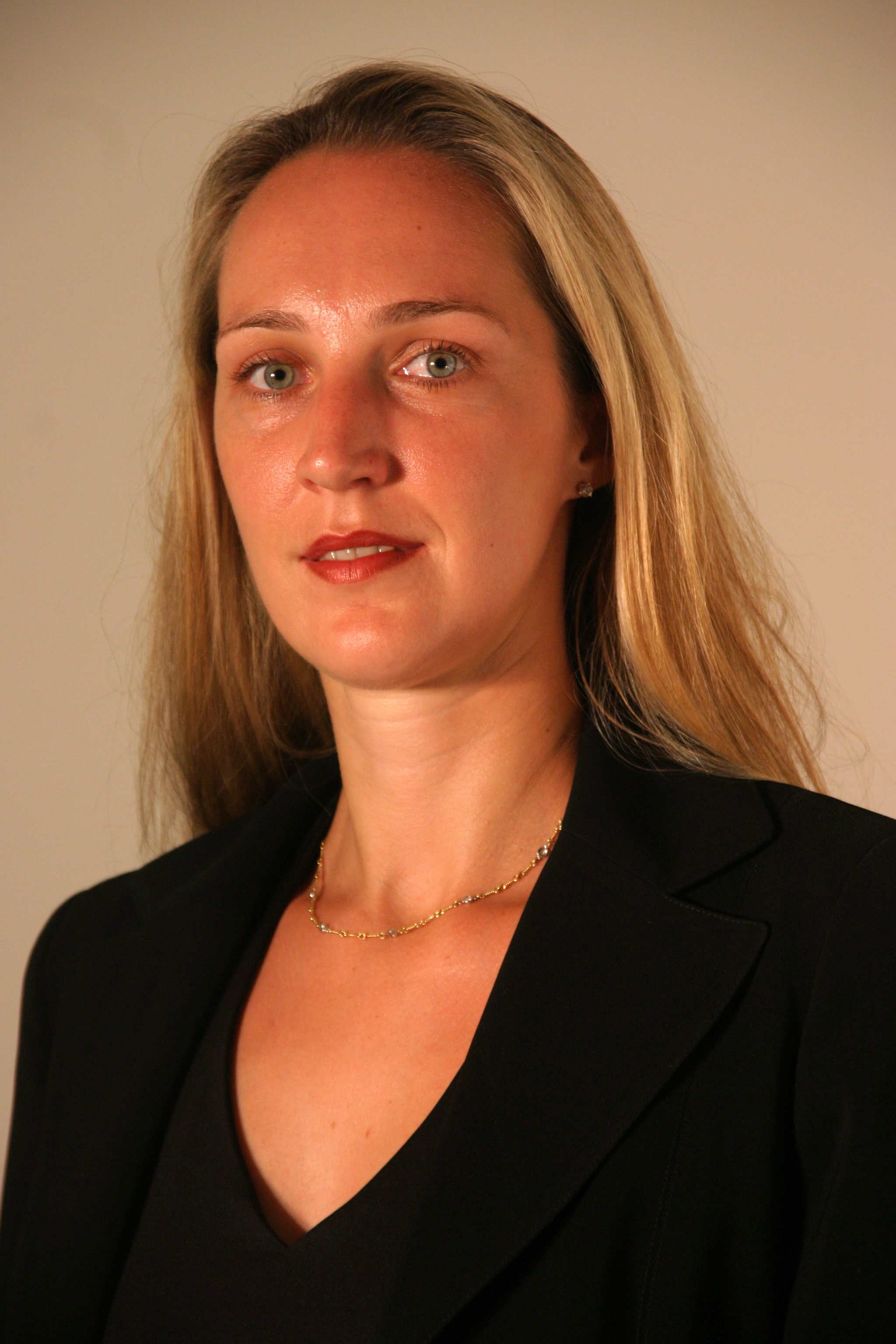
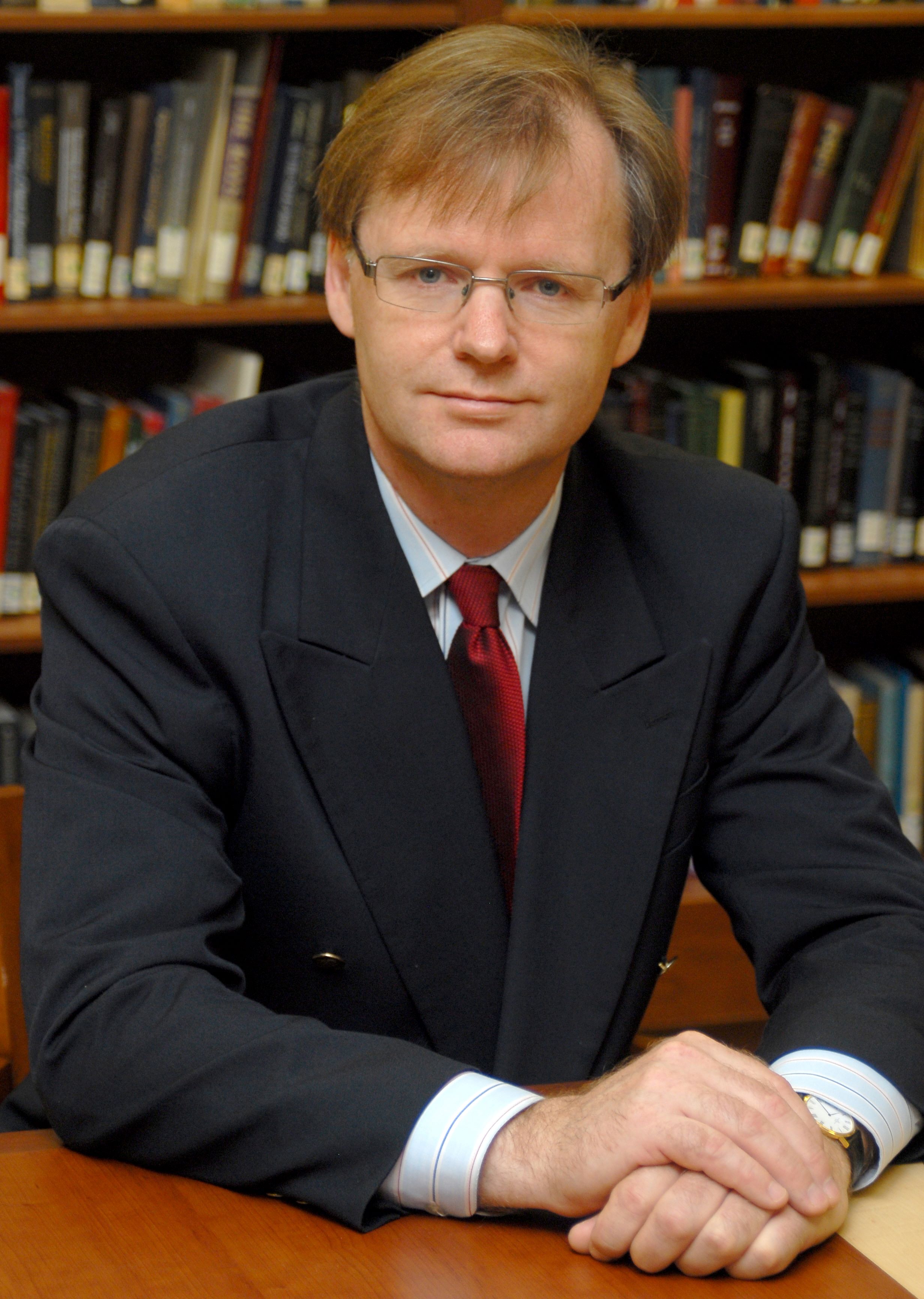
Ada Gavrilovska is a Professor at Georgia Tech's School of Computer Science under the College of Computing. Her work focuses on systems software for emerging technologies, including hybrid memory systems, edge computing, and cloud infrastructure. She leads projects in the PRISM Center and ADA Center , with funding from NSF, DoE, SRC, and industry leaders like Cisco and VMware. Education: PhD in Computer Science, Georgia Tech (2004) Research Interests: Designing systems for new hardware and applications, including edge computing, heterogeneous memory management, and LEO satellite platforms. Her work bridges low-level OS mechanisms with high-level distributed systems challenges. Recent Publications highlight trends in LEO satellite resource scheduling Edge-based ML preprocessing Hybrid memory OS abstractions Disaggregated graph analytics Compiler-assisted performance optimization Scientific Awards: Best paper, NFV World Congress (2016) Spotlight paper, IEEE Transactions on Cloud Computing (2014) ISCA-50 25-year retrospective (2023) Advising & Grants: Ada has mentored over 15 PhD students and 10 MS students, with research supported by NSF, DoE, SRC, and industry grants. She serves as PI in the SRC/DARPA PRISM Center.
Stefano Grivet-Talocia is a Full Professor at the Department of Electronics and Telecommunications at the Polytechnic University of Turin, where he also serves as Director of the Doctoral School and President of the Doctoral School Council. He is a member of the Interdepartmental Center SmartData@PoliTO - Big Data and Data Science Laboratory, the University Committee for Research, Technology Transfer and Services to the Territory, and the Commission for the Promotion of Library, Archive and Museum Heritage. His academic career spans over two decades at Politecnico di Torino, where he has established himself as a leading researcher in electromagnetic modeling and signal integrity. Grivet-Talocia earned his Laurea degree (summa cum laude) in Electronic Engineering in 1994 and his Ph.D. in Electronic and Communication Engineering in 1998, both from the Polytechnic University of Turin. Between 1994 and 1996, he conducted research at NASA/Goddard Space Flight Center in Greenbelt, Maryland. His educational background laid the foundation for his expertise in electromagnetic modeling, wavelet analysis, and signal processing. His research focuses on behavioral modeling, electromagnetic compatibility, macromodeling, model order reduction, numerical modeling, passivity, power integrity, signal integrity, transmission lines, and wavelets . Grivet-Talocia is particularly renowned for his work on passive macromodeling of interconnect structures, development of the TOPLine technique for transmission line simulation, and pioneering contributions to passivity enforcement algorithms. He has co-authored the first book entirely dedicated to Macromodeling (2016) and developed innovative approaches to waveform relaxation and wavelet-based signal processing. His recent publications (2024-2025) demonstrate continued leadership in model order reduction, with significant contributions to data-driven modeling of linear and nonlinear systems, power integrity analysis, and electromagnetic compatibility. His work spans both theoretical advances in numerical methods and practical applications in circuit design, with strong industry relevance particularly for semiconductor and electronic design automation companies. IEEE Fellow (2018-present) Three Intel SRS Grants (2022-2024) Three IBM SUR Grant Awards (2007-2009) Best Associate Editor Award - IEEE Transactions on Components, Packaging and Manufacturing Technology (2020) Multiple Best Conference Paper Awards (2006-2020) URSI Young Scientist Awards (1999) Ranked among the "top 2% worldwide researchers" (Stanford) since 2019 Grivet-Talocia actively supervises doctoral students including Michele Cusano, Sara Paknezhad Panahi, Antonio Carlucci, and Kun Zhao. He has secured numerous research grants from competitive national calls (PRIN) and commercial contracts with industry partners including Intel, IBM, Nokia, Hitachi, Infineon, and Cadence. His technology transfer activities include co-founding the spin-off IdemWorks (2007-2016), which was acquired by CST in 2016. He also developed the autoCircuits web service for automated circuit problem generation, widely used in electrical engineering education. He leads the EMC Group (Electromagnetic Compatibility) at DET and has been instrumental in establishing the Compact Dynamical Modeling research area. His work has practical applications in high-speed electronics design, with algorithms embedded in commercial tools like IBM PowerSPICE. Grivet-Talocia maintains strong industry connections through his research projects and serves as Associate Editor for IEEE Transactions on Components, Packaging and Manufacturing Technology.
Dushan Boroyevich is a University Distinguished Professor at Virginia Tech's Bradley Department of Electrical and Computer Engineering and serves as Deputy Director of the Center for Power Electronics Systems (CPES). He holds adjunct roles at Tsinghua, Xi'an Jiaotong, Zhejiang, and National Cheng-Kung Universities. His research focuses on power electronics systems, including multi-phase power conversion, electronic power distribution, and modular multilevel converters. He pioneered the geometric modeling approach for high-frequency converters and has led over 200 students in generating 1000+ publications and 20 patents. Education: Dipl. Ing. (University of Belgrade, 1976), M.S. (University of Novi Sad, 1982), Ph.D. (Virginia Tech, 1986). Awards include IEEE Fellow, IEEE William E. Newell Award, and election to the U.S. National Academy of Engineering (2014). His CPES leadership has driven global advancements in power electronics integration and modularization. Research emphasizes high-power density, EMI mitigation, and next-gen SiC-based converters. Recent work includes medium-voltage PEBB designs, common-mode noise reduction, and grid-interface systems. He collaborates closely with industry through CPES's 80+ member consortium. Awards: IEEE Fellowships, Owen Distinguished Service Award, European Power Electronics Association Awards Labs/Teams: CPES, Virginia Tech Power Electronics Research Group Grants/Projects: NSF National Engineering Research Center funding, Industry Consortium projects
Hans Steenackers is an Associate Professor at the Faculty of Bioscience Engineering, KU Leuven, where he leads the MICA Lab within the Department of Microbial and Molecular Systems. His research focuses on innovative antimicrobial strategies targeting microbial communities, including socio-active, anti-resistance, and observation-guided approaches. Key research areas include biofilm dynamics antimicrobial resistance evolution in situ microbial monitoring Salmonella Typhimurium pathogenesis anti-virulence therapies His recent publications highlight advancements in biofilm inhibition, triggered antimicrobial release systems, and evolutionary robustness of probiotics. The majority of his work involves interdisciplinary collaborations, particularly in projects like TARDIS, ULTiMatE-MS, and MICROTUNe, with a focus on translating fundamental research into clinical applications. As an educator, he teaches advanced courses in microbial physiology, biofilm research, and applied biotechnology. The MICA Lab actively partners with academic and industrial stakeholders in initiatives such as the Flemish Scientific Research Network on Biofilms and the Bioclean H2020 project.
Univ.-Prof. Aiko Voigt is a Professor and Head of the Department of Meteorology and Geophysics at the University of Vienna. Her research focuses on climate dynamics, cloud physics, and atmospheric processes. She leads the Environment and Climate Research Hub and teaches advanced courses like 'Climate Modelling Lab' and 'Cloud Physics.' Her work explores cloud-radiative interactions, climate change impacts, and extreme weather dynamics. Recent studies analyze energy imbalances, high-cloud feedbacks, and tropical precipitation patterns. Voigt's contributions bridge climate modeling with observational data, emphasizing high-resolution simulations and interdisciplinary approaches. Teaching includes courses such as 'Climate System of the Earth,' 'Scientific Communication,' and 'Introduction to Computational Meteorology.' Her research spans from present-day climate to Snowball Earth scenarios, addressing both modern and paleoclimatic challenges. Publications highlight advancements in radiative transfer algorithms, cyclone dynamics under warming, and uncertainties in climate model predictions. Her work underscores the critical role of clouds in amplifying climate sensitivity and reshaping atmospheric circulation patterns.
Michael Organ is a Full Professor at the University of Ottawa's Department of Chemistry and Biomolecular Sciences, affiliated with the Faculty of Science. He also serves as Director of the Centre for Research and Innovation in Catalysis. His research focuses on catalysis, flow chemistry, and medicinal chemistry, emphasizing sustainable and efficient synthesis methods. Organ has held adjunct roles at the University of Toronto and has extensive industry collaborations, including with GlaxoSmithKline and Abbvie. Education: PhD (University of Guelph, 1992), MSc (University of Guelph, 1988), Hons. BSc (University of Guelph, 1986). Research Interests: Catalysis, microwave-assisted continuous synthesis, reactive intermediates in flow systems, and drug discovery methodologies. His work bridges organic chemistry with engineering, developing scalable and green processes. Publications & Impact: Over 200 publications, including seminal works in Journal of the American Chemical Society and Chemistry – A European Journal . Key contributions include the Pd-PEPPSI-IPent catalyst and the MACOS flow chemistry platform. Awards: NSERC John C. Polanyi Award (2018), Encyclopedia of Reagents Best Reagent Award (2017), Raymond Lemieux Award (2016). Recognized internationally for catalytic innovations. Grants & Funding: Over $45M in research funding, including NSERC Discovery Grants and industry partnerships. Notable projects include CFI JELF grants for sustainable manufacturing and pandemic-related flow chemistry for SARS-CoV-2 diagnostics. Labs & Teams: Leads the Organ Group, collaborating with chemical engineers and industry partners. Specializes in reactor design, catalyst development, and continuous processing systems.
Asli Göçmen is an Associate Professor at the University of Wisconsin–Madison in the Department of Geography & Nelson Institute for Environmental Studies. Her work focuses on environmental planning, sustainable land development, and GIS applications. She holds a Ph.D. from the University of Michigan and has expertise in spatial analysis and urban planning. Education: Ph.D., Urban, Technological, and Environmental Planning, University of Michigan Certificate in Spatial Analysis & GIS, University of Michigan Master of Community Planning, University of Cincinnati Bachelor of City Planning, Middle East Technical University, Turkey Research Interests: Examines human dimensions of environmental sustainability, particularly how stakeholders' attitudes and policies influence land development patterns. Current projects include planner perspectives on sustainable development and conservation subdivisions' ecological benefits. Teaching: Urban & Regional Planning 622: GIS Applications in Planning Urban & Regional Planning 841: Planning for the Ecological City Urban & Regional Planning 590: Resilience to Natural Hazards Advising & Students: Advised over 20 graduate students in urban planning and environmental studies programs. Current advisees include Colleen Henegan and Alex Jeffers. Former students have contributed to ecological design and policy research.
Prof. Dr. Ir. Andy van den Dobbelsteen is a Professor of Climate Design & Sustainability at Delft University of Technology's Faculty of Architecture and the Built Environment . His work focuses on integrating sustainable energy systems , climate adaptation strategies , and urban development through innovative design solutions. Department: Architectural Engineering + Technology Expertise: Energy systems, climate-responsive architecture, urban sustainability He actively translates research findings into actionable concepts for heritage building retrofitting , data center energy alternatives , and vertical urban farming , emphasizing interdisciplinary collaboration and knowledge transfer. His recent publications explore parametric modeling for energy efficiency, renewable backup systems , and synergetic urban design . He received prestigious awards including the edX Prize and Knight of the Netherlands Lion . 2020 edX Prize for Zero-Energy Design MOOC 2020 Golden Heron for educational film 'Energy Slaves' 2019 Solar Decathlon Europe 2nd prize As a dedicated educator, he supervises students in user-centred sustainability projects while maintaining active industry partnerships through secondary roles as speaker and columnist.
Peyvand Firouzeh is a Senior Lecturer in Islamic Art History at the University of Sydney, specializing in medieval and early modern Islamic art and architecture. She holds a BA and MA from the University of Art in Tehran and a MPhil/PhD from the University of Cambridge (Camb.). Her research focuses on Sufi material cultures, Indian Ocean artistic exchanges, and the intersection of art with politics and religion in the Islamic world. She is a member of the Vere Gordon Childe Centre and affiliated with the Art Gallery of New South Wales and the Sydney Asian Art Series. Dr. Firouzeh’s current projects include a monograph on Ne’matullahi shrines (Indiana UP, 2025) and a DECRA-funded study on fifteenth-century Deccan art networks. Her teaching emphasizes object-based learning, addressing contemporary issues like cultural heritage restitution and Islamophobia. She has received major grants from the Australian Research Council, Getty Foundation, and British Museum. Key Awards: DECRA (2023–2026), Getty Scholar Grant (2022–2023), Sydney Teaching Excellence Award (2022) Research Groups: Association for the Study of Persianate Societies, Power Institute’s Sydney Asian Art Series
Prof. Dr. Lorenz Korn is a Professor of Islamic Art History and Archaeology at Otto-Friedrich University Bamberg since 2003. His academic journey includes studies at the University of Tübingen and Oxford, followed by postdoctoral research at Harvard University. He specializes in medieval Islamic architecture, focusing on Egypt, Syria, Iran, and Central Asia, with particular attention to religious symbolism, epigraphy, and material culture. His research spans projects funded by institutions such as the DFG and Gerda Henkel Foundation, including studies on Mongol migration routes in Iran, Seljuk mosque architecture, and the Rabʿ-i Rashidi in Tabriz. He has led archaeological expeditions in Iran, Oman, and Spain, emphasizing interdisciplinary approaches combining art history with archaeology and scientific analysis. Key research interests include Islamic metalwork, stucco decoration techniques, and the role of inscriptions in architectural context. Korn has authored over 60 publications, including monographs on Ayyubid architecture and co-edited volumes on Islamic art and archaeology. His work bridges scholarly rigor with public engagement, evident in exhibitions and educational outreach. Recent projects include dendrochronological analysis of the Alhambra dome and field research in Spain’s Aljarafe region. He advises students in the Islamic Art History and Archaeology master’s program, fostering next-generation scholars through hands-on training in fieldwork and artifact analysis.
Ronald K. Mitchell is the Jean Austin Bagley Regents Chair in Management and Professor of Entrepreneurship at Texas Tech University’s Rawls College of Business. He holds dual citizenship in the U.S. and Canada, with a CPA license from Utah (1978) and a Ph.D. in Business Administration from the University of Utah (1994). His academic career spans roles at institutions like the University of Victoria (1994–2005), where he held the Francis G. Winspear Chair in Public Policy and Business. Education highlights include a Bachelors in Commerce from the University of Calgary (1976), CPA certification (1978), and a PhD in Business Admin (1994). His research focuses on entrepreneurship, stakeholder theory, technology commercialization, and international business practices. He is a recognized expert in entrepreneurial cognition and pedagogy, having developed innovative teaching methods including the experiential/hybrid-case method and web-based venture screening tools. Key research interests center on value creation through stakeholder engagement, entrepreneurial expertise development, and transaction systems theory. His work emphasizes the interplay between cognition, institutional environments, and ethical decision-making in business ecosystems. Notable contributions include pioneering frameworks for stakeholder salience and co-authoring foundational texts like Toward a Theory of Stakeholder Identification and Salience (1997). Awards include the Stanford Top 2% Global Researcher recognition (2021), TTU’s Barnie E. Rushing Research Award (2021), and the Heizer Dissertation Award (1995). He has advised on strategic initiatives such as the TTU System’s Possibilities Project (2007) and served in leadership roles for organizations like the Academy of Management’s Entrepreneurship Division. Professional service includes roles on institutional committees at Texas Tech (e.g., Promotion & Tenure Committee) and national/international bodies like the International Association for Business and Society. His teaching innovations include co-authoring case-based entrepreneurship textbooks and developing simulation tools for venture analysis. Ronald Mitchell’s work bridges theory and practice, with over 100 scholarly publications in top-tier journals like Academy of Management Review and Journal of Business Venturing . His research has influenced policies on technology transfer, entrepreneurial education, and stakeholder-centric corporate governance models.
Marco Di Renzo is a CNRS Professor (Directeur de Recherche Titulaire) at University of Paris-Saclay, affiliated with CentraleSupelec and the Signals and Systems Laboratory (L2S). He serves as Coordinator of the Communications Networks Area at the DigiCosme Laboratory of Excellence and Editor-in-Chief of IEEE Communications Letters. His academic leadership includes membership in the Ph.D. School on ICT Admission Committee at Paris-Saclay University. His educational background includes a Laurea (cum laude) and Ph.D. in Electrical Engineering from University of L'Aquila, Italy (2003, 2007), and a Habilitation à Diriger des Recherches from University Paris-Sud (2013). Laurea (cum laude), Electrical Engineering, University of L'Aquila (2003) Ph.D., Electrical Engineering, University of L'Aquila (2007) Habilitation à Diriger des Recherches, University Paris-Sud (2013) Di Renzo's research focuses on next-generation wireless communications, particularly reconfigurable intelligent surfaces (RIS), 6G technologies, and stochastic geometry modeling. His work bridges theoretical communication theory with practical implementations in cellular networks, millimeter-wave communications, and ultra-wide band systems. Recent publications demonstrate leadership in holographic metasurfaces, integrated sensing and communication (ISAC), and AI-empowered network design, establishing him as a pioneer in electromagnetic wave manipulation for future networks. His award-winning publications span RIS-aided communications, channel modeling, and security frameworks. Analysis of his recent work reveals consistent focus on three pillars: (1) fundamental electromagnetic theory for wave manipulation, (2) practical RIS implementations across frequency bands, and (3) integration with AI for network optimization. His articles frequently address industrial applications including factory automation and space-air-ground networks. Di Renzo's scientific recognition includes: IEEE Fellow (2020) and IET Fellow (2020) Highly Cited Researcher (Web of Science, 2019) SEE-IEEE Alain Glavieux Award (2017) Multiple Best Paper Awards (IEEE ICC, EURASIP) Nokia Foundation Visiting Professorship (2020) As Principal Investigator for CNRS, he coordinates multiple Horizon 2020 projects including SURFER, PathFinder, and MetaWireless. His leadership extends to serving as Project Coordinator for H2020 5Gwireless, 5Gaura, MAPNET, and REDESIGN. With over 350 publications, 17,000+ citations, and h-index of 66+, his research group maintains strong industry partnerships with Nokia and other telecommunications leaders. Di Renzo directs the Signals and Systems Laboratory (L2S) at Paris-Saclay and coordinates the DigiCosme Excellence Lab's Communications Networks Area. His team specializes in electromagnetic modeling for wireless networks and has pioneered the European Telecommunications Standards Institute (ETSI) Industry Specification Group on RIS. The group maintains active collaborations with Aalto University (Finland), University of Technology Sydney (Australia), and University of L'Aquila (Italy).
Ravi Aron is a Professor of Healthcare Strategy & Technology at the C. T. Bauer College of Business, University of Houston, and Research Director of the Healthcare Business Institute. He holds a joint appointment in the Department of Health Systems & Population Health Sciences at the Tilman J. Fertitta Family College of Medicine. He earned his Ph.D. in Management Information Systems from New York University's Stern School of Business. His research focuses on healthcare IT, emergent technologies in healthcare operations, valuation of healthcare startups, and AI applications in healthcare. He has published widely in top journals like Management Science and Information Systems Research, and his work bridges information systems, operations management, and technology strategy. Dr. Aron has extensive teaching experience at The Wharton School, Johns Hopkins Carey Business School, and NYU Stern, winning multiple teaching awards. He advises Fortune 500 firms, startups, and policymakers on technology strategy, digital transformation, and risk assessment. His executive education programs address AI, machine learning, and digital business models for global executives. Key awards include the Dean's Faculty Excellence Award (2016), multiple teaching accolades from Wharton and Johns Hopkins, and the Herman E. Kross Best Dissertation Award (1999). His current projects explore healthcare supply chains, predictive models using machine learning, and valuing technology-enabled startups. He regularly participates in global forums like the World Economic Forum, advising on healthcare innovation and technology policy.
A. Alperen Günay is an Assistant Professor in the Department of Mechanical Engineering at Bilkent University . He previously served as an Assistant Professor at METU (2021-2023) and as a researcher at The University of Tokyo (2019-2021). Günay earned his PhD and MS in Mechanical Engineering from the University of Illinois at Urbana-Champaign under Dr. Nenad Miljkovic. Current Affiliation: Bilkent University Prior Affiliations: METU, University of Tokyo Education: PhD (UIUC), MS (UIUC), BS (METU) Research Focus : Developing green passive thermal devices through nanomaterials and phase change technologies. Key areas include radiative cooling , thermophotovoltaic systems , and nanomaterial-based heat sinks . His work spans energy conversion, thermal management, and optical property characterization. Scientific Awards : TÜBİTAK 2232-B Award Laboratory Leadership : Dr. Günay directs the Thermal Research & Optics Laboratory (TROL), focusing on projects like metal-organic framework systems , passive evaporative cooling , and greenhouse films for year-round thermal regulation .
Goran Avlijaš is a researcher affiliated with Singidunum University in Belgrade, specializing in project management, operations research, and retail logistics. He holds a Doctorate in Engineering Management (2011–2016) from Singidunum University, a Master’s in Project Management (2008–2009) from the Faculty of Organizational Sciences, and a Bachelor’s in Management (2003–2007) from the same institution. His research focuses on optimizing project schedules through methods like Earned Value Management and Monte Carlo Simulation, analyzing supply chain efficiency, and exploring gig economy impacts on well-being in Balkan countries. Key research areas include: Project Management Innovation: Developing risk analysis tools (e.g., Event Chain Methodology) and applying earned value metrics to construction projects. Retail Operations: Investigating automated replenishment systems and inventory management challenges in retail environments. Social-Economic Dynamics: Studying gig economy effects on workforce well-being and regulatory impacts on entrepreneurship. His work spans 30+ peer-reviewed articles and conference papers, including contributions to Management , Sustainability , and Frontiers in Psychology . He co-authored textbooks like Project Management and Entrepreneurship for Singidunum University’s curriculum. Active in academic events such as Sinteza and FINIZ conferences, he bridges theoretical research with practical industry applications.