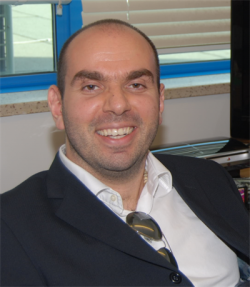
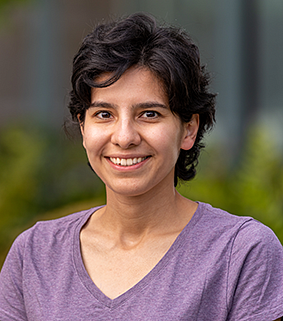
Adeel Tariq is a Post-Doctoral Researcher at the Industrial Engineering and Management department of LUT School of Engineering Sciences , Lappeenranta University of Technology, Finland. He completed his Ph.D. (2019) and MBA (2014) at the School of Management , Asian Institute of Technology, Thailand. Research Focus: Technology and innovation management, digital transformation, sustainable development, knowledge management, and leadership studies. Peer Review: Active reviewer for journals including Leadership & Organization Development Journal , Journal of Intellectual Capital , and European Journal of Innovation Management . Collaborations: Regular co-author with Waqas Tariq, Muhammad Saleem Sumbal, and Marko Torkkeli on topics like digital governance, fintech, and SME sustainability.
Maks Ovsjanikov is a Professor in the Computer Science Department at École Polytechnique, France , and a Visiting Research Scientist at Google DeepMind. His research focuses on mathematically principled approaches for geometric data analysis and synthesis, including learning on surface meshes, 3D point clouds, and graphs. Key Collaborations: Google DeepMind, Sanofi, Dassault Systèmes Research Themes: Non-rigid shape matching, 3D reconstruction, transfer learning, learning on geometric data, functional maps, deep learning for scientific discovery Recent Article Trends emphasize geometric deep learning, with publications at top venues like SIGGRAPH Asia, ICCV, and CVPR. Topics include surface reconstruction, functional maps, 3D keypoint detection, and diffusion models for shape matching. Scientific Honors include: ERC Consolidator Grant (VEGA Project, 2023) ERC Starting Grant (2017) ACM SIGGRAPH 2023 Test-of-Time Award Best Paper Awards at 3DV 2021 and 3DV 2022 Student Advisees have received prestigious awards, such as the IP Paris Best PhD Thesis Award (Souhaib Attaiki, 2023) and GdR IG-RV Runner-Up (Nicolas Donati, 2024). The GeomeriX Team at École Polytechnique drives his group's research, supported by the VEGA and AIGRETTE projects.
Dan Nguyen, Ph.D., is a faculty member in the Department of Radiation Oncology at UT Southwestern Medical Center, where he is part of the Division of Medical Physics and Engineering. He is a founding member of the Medical Artificial Intelligence and Automation (MAIA) Laboratory, collaborating closely with Dr. Steve Jiang to advance AI applications in radiotherapy. His work focuses on deep learning for treatment planning, dose prediction, auto-segmentation, and adaptive radiotherapy. Ph.D. in Biomedical Physics, University of California, Los Angeles (UCLA), 2017 Mentor: Dr. Ke Sheng Faculty appointment at UT Southwestern since 2017 Dr. Nguyen’s research is centered on applying artificial intelligence to solve critical challenges in radiation oncology. His primary interests include deep learning-based dose prediction, auto-segmentation of anatomical structures, optimization of treatment plans, and real-time adaptive radiotherapy. He has pioneered work in direct aperture optimization, 4π radiotherapy, and uncertainty quantification in AI models. His research bridges the gap between AI innovation and clinical implementation, with a focus on improving plan quality, reducing planning time, and enhancing accessibility for less experienced clinicians. The most recent publications (2023–2025) demonstrate a consistent trend in developing fast, accurate, and robust deep learning models for radiotherapy. Key themes include dose prediction with transfer and meta-learning, adaptive segmentation using test-time optimization, uncertainty assessment in AI predictions, and mathematical modeling of radiotherapy-immunotherapy synergy. These works span high-impact journals in medical physics, AI, and oncology, reflecting interdisciplinary innovation. While no specific scientific awards are listed, Dr. Nguyen’s leadership in the MAIA Lab and extensive publication record in top-tier journals indicate significant recognition in the field of medical physics and AI in medicine. Dr. Nguyen has co-authored numerous studies involving mentoring and collaborative research, particularly with trainees and junior faculty in the MAIA Lab. His work is supported by institutional and likely federal funding, given the scale and scope of AI deployment studies. He has contributed to large-scale collaborative efforts such as OpenKBP-Opt, involving international teams evaluating knowledge-based planning pipelines. The MAIA Laboratory is a multi-investigator research group focused on innovating, developing, and applying artificial intelligence technologies to empower clinicians—especially those with less experience or limited resources—for improved patient care. The lab’s work spans machine learning, deep learning, reinforcement learning, and mathematical modeling in radiation oncology.
Ghassan AlRegib is the John and Marilu McCarty Chair Professor in the School of Electrical and Computer Engineering at Georgia Institute of Technology. He directs the Omni Lab for Intelligent Visual Engineering and Science (OLIVES), the Center for Energy and Geo Processing (CeGP), and previously led Georgia Tech's MENA initiatives (2015-2018). His research spans machine learning, image processing, and seismic interpretation with real-world applications in autonomous vehicles, medical imaging, and subsurface analysis. His research focuses on trustworthy AI systems through three pillars: enhancing interpretability, improving robustness/generalizability, and tackling domain-specific challenges. Key interests include human-in-the-loop frameworks, uncertainty quantification, explainable AI, and physics-driven learning. The OLIVES lab pioneered modern machine learning applications in seismic interpretation and developed open-source datasets for geological fault analysis. Dr. AlRegib's scientific contributions include over 270 publications, multiple U.S. patents, and leadership roles as Technical Program co-Chair for ICIP 2020/2024. His work demonstrates significant impact through awards like the IEEE Fellow designation (2022) and multiple best paper awards at premier conferences. IEEE Fellow (2022) 2023 EURASIP Best Paper Award 2019 ICIP Best Paper Award 2017 Denning Faculty Award for Global Engagement CSIP Research & Service Awards (2003) He has advised numerous PhD students including Dr. Ashraf Alattar (now Auburn professor) and Dr. Zhiling Long (Kennesaw State faculty). His lab structure emphasizes collaborative teams comprising postdocs, senior/junior PhD students, and undergraduates working on high-impact problems from autonomous systems to medical diagnostics. Current research thrusts include trustworthy neural networks, human-in-the-loop frameworks, and deployment of machine learning in seismic interpretation and ophthalmology.
Mark Crowley is an Associate Professor in the Department of Electrical and Computer Engineering at the University of Waterloo , with a cross-appointment in the Cheriton School of Computer Science . He is actively involved in the Waterloo Artificial Intelligence Institute (WAII) , the Waterloo Institute for Complexity and Innovation (WICI) , and serves as National Secretary for the Canadian Artificial Intelligence Association (CAIAC) , coordinating the Canadian Conference on AI . Research interests span the theoretical and applied aspects of Reinforcement Learning , Deep Learning , Manifold Learning , and Ensemble Methods . His work addresses challenges in domains with spatial dynamics, multi-agent systems, and uncertainty, particularly in Computational Sustainability (forest fire management, sustainable forestry), Autonomous Driving , Medical Imaging , and Material Design . Recent research focuses on integrating causal modeling with generative representation learning to improve out-of-distribution robustness in motion forecasting applications. Key publications include foundational work on ChemGymRL environments for safe chemical process reinforcement learning, Generative Causal Representation Learning for robust forecasting, and collaborative work on multi-advisor reinforcement learning in multi-agent settings. He co-authored a textbook Elements of Dimensionality Reduction and Manifold Learning (Springer, 2023) with Prof. Ali Ghodsi and Prof. Fakhri Karray. Teaching includes graduate and undergraduate courses in Algorithm Design , Computational Intelligence , Reinforcement Learning , and Data Modeling at the University of Waterloo since 2018. His research group has produced several notable graduates including Benyamin Ghojogh (2021), who continued as a postdoc until 2022.
Mark Jenkinson is a Professor of NeuroImaging at the University of Oxford's Nuffield Department of Clinical Neurosciences and also holds positions at the University of Adelaide's Australian Institute for Machine Learning and the South Australian Health and Medical Research Institute (SAHMRI). He heads the Structural Modelling and Analysis Group at the FMRIB Centre, where his research focuses on multimodal population modeling and structural brain segmentation. Education: DPhil in Robotics Research (University of Oxford, 1999) BSc (Hons I) in Mathematical Physics (University of Adelaide, 1994) BE (Hons I) in Electrical and Electronic Engineering (University of Adelaide, 1993) Professor Jenkinson's research spans two major themes: multimodal modeling of populations to describe disease processes and apply to individual patient diagnoses, and structural segmentation and analysis of brain anatomy and pathology, particularly focusing on sub-cortical structures and lesions. His work integrates advanced computational methods with neuroimaging to develop tools for understanding neurological disorders. As the developer of key components of the FMRIB Software Library (FSL), he has significantly contributed to standard neuroimaging analysis pipelines used worldwide. His recent publications demonstrate a strong focus on deep learning applications in neuroimaging, uncertainty quantification in medical AI, and advanced segmentation techniques. There's a clear trend toward developing more robust, anatomically plausible models that preserve topological structures while improving diagnostic capabilities for conditions like multiple sclerosis, Huntington's, and Parkinson's diseases. Scientific Awards: Highly Cited Researcher (Clarivate Analytics 2018-2021, Thomson Reuters 2014-2016) ISMRM Outstanding Teacher Award (2009, 2014) Teaching Excellence Award, University of Oxford (2012) David Phillips Fellowship from BBSRC (2005-2010) Professor Jenkinson has supervised over 25 doctoral students whose work spans brain segmentation, connectivity analysis, and clinical applications of neuroimaging. His research is supported by significant grants including the Medical Research Future Fund (AU$2m), Wellcome Trust Centre for Integrative Neuroimaging (£11m), and NIH Human Connectome Project (US$30m), reflecting the high impact and translational potential of his work. As head of the Structural Modelling and Analysis Group at FMRIB, Jenkinson leads a team developing the FSL (FMRIB Software Library), one of the most widely used neuroimaging analysis packages globally. His group collaborates extensively with clinical researchers on applications ranging from multiple sclerosis to traumatic brain injury, translating computational advances into clinical practice.
Kjell Jorner is an Assistant Professor of Digital Chemistry in the Institute for Chemical and Bioengineering at ETH Zurich's Department of Chemistry and Applied Biosciences. His research group focuses on integrating computational methods and machine learning to address challenges in chemical synthesis, materials design, and reaction prediction. Education: PhD from Uppsala University (Photochemistry of aromatic compounds) Postdoctoral studies at AstraZeneca UK (Reaction prediction using computational chemistry and ML) Postdoctoral studies at University of Toronto (Molecular design of catalysts and organic electronic materials) Research Interests: Professor Jorner's work bridges computational chemistry, machine learning, and experimental design. Key areas include: Development of quantum mechanics-machine learning hybrid approaches for reaction feasibility prediction Inverse molecular design of functional materials (e.g., singlet-fission systems) Computational catalyst optimization and high-throughput screening methods Digital tools for chemical education and cheminformatics Publication Trends (2023-2025): Recent articles demonstrate a strong focus on machine learning applications in chemistry, including reaction prediction algorithms, catalyst design frameworks, and automated molecular generation. A recurring theme is the development of computational tools to accelerate materials discovery and optimize chemical processes. Laboratory & Team: Leads the Digital Chemistry research group at ETH Zurich (HCI E 137) exploring computational approaches to chemical challenges.
Gary M. Shaw is the Rosemarie Hess Professor and Professor (Research) at Stanford University , with courtesy appointments in the Department of Epidemiology and Population Health and Department of Obstetrics & Gynecology - Maternal Fetal Medicine . He serves as Co-PI of the March of Dimes Prematurity Research Center at Stanford and PI of the California Center for Finding Causes and Preventives of Birth Defects . His research focuses on the Epidemiology of birth defects Gene-environment interactions in perinatal outcomes Nutritional factors in reproductive health . He has developed machine learning approaches for precision parenteral nutrition and predictive models for preterm birth, while investigating persistent metabolomic signatures following hypertensive pregnancy disorders. Shaw's recent work explores Climate change impacts on reproductive health Maternal-fetal immune interactions Epigenetic mechanisms in perinatal disease with applications of multiomics to neonatal intensive care units. As a member of Bio-X and the Maternal & Child Health Research Institute , he contributes to translational research networks while serving as Associate Editor for Birth Defects Research and American Journal of Medical Genetics . He supervises Med Scholar Project student Richard Liang Doctoral co-advisor for Saskia Comess and Richard Liang Master's advisor for Lenae Joe while leading the Division of Neonatology as Associate Chair for Clinical Research (2012-2025). His laboratory work integrates Metabolomic profiling Proteomic analysis Computational modeling Machine learning for biomedical data to advance neonatal care through precision medicine approaches.
Yong Chen is a Professor of Electrical and Computer Engineering and Physics at Purdue University. His research spans quantum physics, nanotechnology, and materials science, focusing on advanced 2D materials, topological insulators, and quantum transport phenomena. Condensed Matter Physics Quantum Computing Nanotechnology Materials Science Photonics Spintronics Recent publications highlight his work on van der Waals heterostructures, Bose-Einstein condensates, Raman spectroscopy applications, and quantum interference effects. His studies often intersect with machine learning, energy storage, and synthetic magnetic field engineering of quantum systems. Yong Chen's email address is yongchen@purdue.edu , and further information can be accessed at his Purdue University profile .
Clément Mallet is a Senior Researcher and Director of the LASTIG laboratory at Université Gustave Eiffel, IGN, and École Nationale des Sciences Géographiques (ENSG) in Champs-sur-Marne, France. He leads research in geospatial computer vision, focusing on the intersection of remote sensing, computer vision, and machine learning. His responsibilities include overseeing 75 laboratory members and directing the STRUDEL research team focused on spatio-temporal information modeling. Education: Habilitation (HDR) in Geographical Information Science, Université Paris-Est (2016) PhD in Image and Signal Processing, Télécom ParisTech (2010) Engineering Degree in Geographical Information Science, ENSG (2005) Master's in Remote Sensing, Université Paris 6 (2005) Research Interests: Dr. Mallet specializes in multi-modal land-cover mapping, change detection, geohistorical image analysis, and airborne lidar processing. His work integrates deep learning with geospatial data analysis to solve complex problems in environmental monitoring, urban studies, and historical geography. Current research explores foundation models for earth observation and semantic change detection using hybrid data generation techniques. Publication Trends: Mallet's recent articles (2021-2025) demonstrate strong focus on deep learning applications for geospatial challenges: 40% address land-cover mapping innovations, 30% develop novel change detection methodologies, 20% advance lidar data processing, and 10% explore historical map analysis. His work consistently bridges computer vision theory with operational remote sensing applications. Awards and Recognition: Schwidefsky Medal from ISPRS (2016) 5x Outstanding Reviewer awards (CVPR/ECCV/ICCV 2017-2024) Best Paper Awards at GEOBIA 2016 and ISPRS 2014 Young Researcher Award from GDR ISIS (2010) EuroSDR Best PhD Thesis supervision (2020) Research Leadership: Directs multiple national and international projects including MAESTRIA (ANR-funded multi-modal EO analysis) and HIATUS (historical image analysis). Supervised 14+ PhD students in geospatial AI topics. Secured funding from ANR, CNES, EU H2020 (VOLTA, LandSense), and industrial partners. Leads the STRUDEL team developing cutting-edge methods for territory dynamics analysis. Professional Service: Editor-in-Chief of ISPRS Journal of Photogrammetry and Remote Sensing (2021-present). Organized major conferences including ISPRS Congress (2020-2022 Program Chair) and JURSE events. Active in ISPRS working groups since 2008, currently leading initiatives in large-scale machine learning applications for geospatial data.
Associate Professor LIN Zhenhua serves as a Presidential Young Professor in the Department of Statistics and Data Science at the National University of Singapore (NUS), with additional affiliation at the Institute of Data Science since 2021. His research develops cutting-edge statistical methodologies for complex data structures across multiple domains. Dr. LIN completed his Ph.D. at the University of Toronto in 2017 under Fang Yao's supervision, following M.Sc. degrees from Simon Fraser University (2013, 2010) and a B.Sc. from Fudan University (2008). Ph.D., University of Toronto, 2017 (Advisor: Fang Yao) M.Sc., Simon Fraser University, 2013, 2010 B.Sc., Fudan University, 2008 His research program spans functional data analysis (developing techniques for curves and surfaces), non-Euclidean data analysis (statistical methods on manifolds), high-dimensional statistics (p > n problems), and constrained statistical modeling. LIN's work bridges theoretical statistics with practical applications through rigorous mathematical frameworks and computational implementations. Recent publications reveal strong emphasis on bootstrap methods for high-dimensional inference, Riemannian geometry approaches for manifold-valued data, and innovative functional data techniques. His research shows consistent output with multiple 2025 publications in top journals including Biometrika, Bernoulli, and Journal of the American Statistical Association. Professional Recognition Presidential Young Professor, NUS (2019-present) Associate Editor, Bernoulli (2022-2024) Associate Editor, Statistics (2023-present) Young Researchers Committee, Bernoulli Society (2020-2024) Professor LIN actively mentors graduate students as evidenced by numerous collaborative publications with trainees. He teaches advanced courses including ST5215 Advanced Statistical Theory, DSA4211 High-dimensional Statistical Analysis, and ST5223 Statistical Models across multiple academic years. His research group develops specialized software packages including hdanova, matrix-manifold, synfd, mcfda, and iRFDA, making advanced statistical methods accessible to practitioners.
Arash Joorabchi is an Assistant Professor at the Department of Electronic and Computer Engineering, Faculty of Science and Engineering, University of Limerick, Ireland. His research focuses on the intersection of machine learning, educational technology, and digital library systems, with particular emphasis on automated assessment, text mining, and knowledge organization techniques. Research Trends: Analysis of his publications reveals sustained contributions to automated short-answer grading, Arabic text classification, and semantic integration of Wikipedia with academic resources. Key methodologies include sentence transformers, hybrid text representation models, and citation-based indexing techniques. Technical Domains: His work spans natural language processing, educational data mining, metadata management, and semantic web technologies. Specific applications include Q&A platform analysis, library resource discovery, and curriculum development systems.
Christos Gatzidis serves as Executive Dean of Bournemouth University's Faculty of Science and Technology since October 2023, overseeing six departments including Computing and Informatics, Creative Technology, and Psychology. Previously Deputy Dean (2021-2023) and Head of Creative Technology Department (2016-2021), he was appointed Professor in Creative Technology in November 2019. The Faculty leads five REF Units of Assessment and secures funding from AHRC, NIHR, and Innovate UK for research spanning digital healthcare, gaming technologies, and cultural heritage applications. His educational qualifications include: PhD in Information Science, City University London (2010) PG Cert in Research Degree Supervision, Bournemouth University (2010) MA in Computer Animation, Teesside University (2003) BSc (Hons) in Computer Studies (Visualisation), University of Derby (2002) Professor Gatzidis specializes in computer graphics with research spanning virtual reality, serious games, and digital healthcare applications. His work bridges technical innovation and practical implementation, particularly in mindfulness prototypes for healthcare and stroke rehabilitation systems. Current projects focus on the multidisciplinary application of gaming technologies in medical contexts, emphasizing user experience and therapeutic outcomes through collaborations with industry partners. His publication record (2014-2025) demonstrates evolving expertise from foundational computer graphics research in terrain generation and deformation to applied work in healthcare, cultural heritage, and music education. Key trends include virtual reality for therapeutic mindfulness, usability studies in mobile gaming, and digital cultural presentation techniques, reflecting a trajectory toward socially impactful technological solutions with strong industry translation. No scientific awards are documented in the provided information. He has supervised PhD students and secured competitive research funding, including two Innovate UK Knowledge Transfer Partnerships. His principal investigator role in a virtual reality mindfulness prototype project exemplifies his approach to translating academic research into practical industry solutions, with current focus on expanding knowledge exchange activities to support the University's civic engagement mission. As Executive Dean, he leads faculty-wide research strategy across six departments, fostering interdisciplinary collaborations particularly in digital healthcare and cultural heritage. His personal research integrates computer graphics expertise with clinical applications through partnerships with healthcare providers and technology companies, driving innovation in therapeutic VR systems and educational gaming platforms.
Robert M. Weikle, II is a Professor in the Charles L. Brown Department of Electrical and Computer Engineering at the University of Virginia, with a courtesy appointment in the Department of Physics. He earned his B.S. from Rice University (1986), M.S. (1987), and Ph.D. (1992) in Electrical Engineering from Caltech, followed by postdoctoral work at Chalmers University of Technology (1992). His research focuses on millimeter-wave and terahertz electronics , applied electromagnetics, integrated antennas, low-noise sensors, and heterogeneous integration of compound semiconductors. His work bridges electronics and photonics for spectrum access, with applications in astronomy, spectroscopy, and metrology. He has published extensively on micromachined silicon substrates, superconducting materials, and emerging technologies. Scientific Awards: IEEE Microwave Prize (1993) David A. Harrison III Award (1999) University of Virginia All-University Outstanding Teaching Award (2000) Edlich-Henderson Innovator of the Year (2016) Fulbright Scholar (2001) As Chief Technology Officer and co-founder of Dominion Microprobes, Inc., he commercializes micromachined wafer probes for high-frequency metrology. His lab, located in E220 Thornton Hall and the Jesse W. Beams Physics Building, has produced 15+ recent publications on submillimeter-wave devices, THz probes, and calibration techniques.
Parisa Hosseinzadeh is an Assistant Professor in the Department of Bioengineering at the University of Oregon. Her research focuses on computational protein design and structure-guided rational protein/peptide engineering, with applications in enzyme design, biosensors, and biomedical solutions. She holds a B.Sc. from the University of Tehran, a Ph.D. from the University of Illinois (advisor: Yi Lu), and a postdoc at the University of Washington in David Baker's lab. Her lab emphasizes interdisciplinary approaches at the intersection of computer science, chemistry, and biology, prioritizing diversity and inclusion in STEM. Key projects include designing cyclic peptides as enzyme inhibitors, developing methods for tuning redox potentials in metalloproteins, and creating tools to combat biomedical challenges. Lab members include postdocs, graduate students (e.g., Noora Azadvari, Andrew Powers), and undergraduates. Notable achievements include NSF grants, the Baxter Foundation Award, and the Hans Horse Meyer Award. The lab also emphasizes mentorship, collaborative culture, and outreach initiatives.