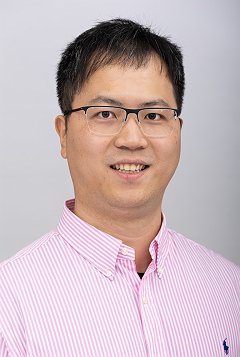
Prof. Erhardt Barth is the Deputy Director at the Institute of Neuro- and Bioinformatics (INB), University of Lübeck . His research focuses on Computer Vision and Machine Learning , drawing inspiration from biological vision systems to develop hybrid human-machine solutions. Education : PhD in Electrical Engineering (1994), Technical University of Munich Positions : Research Associate (Munich), Visiting Fellow (Melbourne), Klaus-Piltz Fellow (Berlin), NASA Vision Science Group member His work bridges computer vision and biological vision , exploring how neural mechanisms can inform algorithm design. Recent projects include deep learning applications in medical imaging (CT scans, radiographs) and bio-inspired neural architectures like FP-Nets and Min-Nets. Publications span medical diagnostics , image processing , and network efficiency . Key trends include explainable AI in healthcare, compact network design , and unsupervised learning techniques. Scientific distinctions : Recipient of the Schloessmann Award (Max Planck Society, 2000) Held prestigious Klaus-Piltz Fellowship (Institute for Advanced Study, Berlin) Prof. Barth has pioneered technology transfer initiatives, founding companies like GazeCom and gestigon while advancing automated diagnostic frameworks in clinical settings.
Giovanni Fantuzzi serves as a W1 Professor (equivalent to Assistant Professor) in the Department of Mathematics at Friedrich-Alexander University Erlangen-Nuremberg. He leads research within the FAU DCN-AvH Chair for Dynamics, Control, Machine Learning and Numerics under the Alexander von Humboldt Professorship framework, holding office in Room 03.318 with contact details including giovanni.fantuzzi@fau.de and +49 9131 85-67134. His educational background includes a PhD and Master of Engineering in Aeronautics from Imperial College London, supplemented by a research position in Engineering Science at the University of Oxford during his doctoral studies. Key academic milestones are documented through his ORCID, Google Scholar, and LinkedIn profiles. Fantuzzi's research program integrates mathematical analysis with computational optimization to solve nonlinear differential equations, focusing on deriving a priori scaling laws for heat transport and developing provable numerical schemes for PDE-constrained optimization. His methodology bridges convex optimization, polynomial optimization, and dynamical systems theory, with recent applications extending to transformer neural networks and sentiment analysis through hardmax mechanisms. Current teaching includes Data-driven methods for dynamical systems and Polynomial optimization and applications for WS 24/25. Analysis of his 15 most recent publications reveals dominant trends in fluid mechanics (particularly convection and heat transfer), polynomial optimization techniques, and data-driven dynamical systems analysis. His work consistently applies convex optimization frameworks to derive rigorous bounds in physical systems while expanding into machine learning applications like transformer model analysis. Geophysical Fluid Dynamics Fellowship at WHOI (2015) EPSRC Doctoral Prize Fellowship (2018) Imperial College Research Fellowship Fantuzzi's research program is supported by prestigious fellowships including the Imperial College Research Fellowship and EPSRC Doctoral Prize. His academic service includes organizing the FAU MoD Lecture & Workshop on AI for maths and maths for AI (June 2025) and co-hosting the #MLPDES25 Machine Learning and PDEs Workshop. He actively supervises research within the FAU DCN-AvH group, focusing on polynomial optimization applications in dynamical systems and PDEs. As core faculty in the FAU DCN-AvH Chair, Fantuzzi collaborates within a multidisciplinary team specializing in dynamics, control, machine learning, and numerical methods. The group maintains strong international connections through workshops like the Oberwolfach Seminar on Polynomial Optimization for Nonlinear Dynamics and participates in conferences including CIN-PDE and Nečas Seminar on Continuum Mechanics, driving innovation at the intersection of mathematics and computational physics.
Dr. Debayan Banerjee is a Researcher at the Institute for Business Information Systems (IIS) and part of the Professorship for Business Informatics, especially Artificial Intelligence and Explainability at Leuphana University Lüneburg. His work bridges academic research with practical applications in knowledge management, network science, and AI systems. Institute: Institute for Business Information Systems (IIS) Professorship: Business Informatics, Artificial Intelligence and Explainability Location: Universitätsallee 1, C4.308b, Lüneburg (21335) Email: debayan.banerjee@leuphana.de Research interests focus on knowledge graph integration, hybrid intelligence systems, and explainable AI. His projects include USIN5G, ARDIAS, and INSTANT, emphasizing human-AI collaboration and scholarly data accessibility. Recent publications highlight SPARQL translation automation, hybrid question answering frameworks, and environmental impact analysis of language models. Collaborative work spans DBpedia-Wikidata interoperability, DBLP knowledge graph applications, and graph embeddings for QA systems. Education and advising : Mentored students include Mathias Gross, Fatemeh Ghoochani, and Soham Majumder, focusing on final theses related to AI-driven data extraction and knowledge graph development.
Prof. Dr. Alexander Ecker is Professor of Data Science at the Institute of Computer Science, University of Göttingen, and concurrently holds the prestigious Max Planck Fellow position at the Max Planck Institute for Dynamics and Self-Organization. Since 2020 he also serves on the Executive Board of the Campus Institute Data Science in Göttingen. He leads the Neural Data Science research group, comprising 14 PhD students and 2 postdoctoral researchers, focusing on the interface of machine learning and computational neuroscience. His educational background includes a Dr. rer. nat. in Neuroscience (2014) from the Graduate School of Neural and Behavioral Sciences/IMPRS, University of Tübingen, followed by post-doctoral and group-leader positions at the University of Tübingen and the Max Planck Institute for Biological Cybernetics. Research Interests Machine Learning & Deep Learning: developing novel algorithms for representation learning and generative modeling. Computational Neuroscience: large-scale data-driven modeling of visual cortical circuits. Visual Perception: bridging biological vision and computer vision via biologically inspired architectures. His work has produced a steady stream of influential publications (2019-2025) in leading journals such as Nature Communications , Nature , Nature Methods , PLOS Computational Biology , ICLR , NeurIPS , and CVPR . The publications trend toward integrating high-resolution neural recordings with state-of-the-art machine-learning models to uncover principles of sensory processing, neuron-type classification, and behavior. Scientific Awards & Honors Max Planck Fellow, Max Planck Institute for Dynamics and Self-Organization (ongoing) Executive Board Member, Campus Institute Data Science, Göttingen (since 2020) Teaching, Advising & Grants Regularly teaches advanced courses: “Deep Learning for Image Synthesis”, “Current Topics in Deep Learning”, and “Graph Machine Learning”. Supervises 14 current PhD students and 2 postdocs within the Neural Data Science Group. Offers numerous Bachelor’s and Master’s thesis projects, with topics ranging from neuronal morphology clustering to primate vocalization analysis. Leads or co-leads large collaborative consortia with labs in Göttingen, Tübingen, Baylor College of Medicine, and other institutions across the US and Germany. Labs & Teams The Neural Data Science Group operates at the Institute of Computer Science, University of Göttingen, and is tightly integrated with the Max Planck Institute for Dynamics and Self-Organization. The group maintains active collaborations with over a dozen partner laboratories, including groups led by Fabian Sinz, Andreas Tolias, Thomas Euler, Tim Gollisch, and Viola Priesemann, fostering an interdisciplinary environment that spans computer science, physics, biology, and psychology.
Prof. Dr. Didier Stricker is a leading academic in computer science, serving as Scientific Director at the German Research Center for Artificial Intelligence (DFKI) and Professor at the University of Kaiserslautern-Landau (RPTU). His career spans over two decades, including leadership roles at Fraunhofer IGD and founding the Augmented Vision research unit at DFKI/RPTU, which now includes ~30 researchers. Education: Electrical Engineering (Technical University of Grenoble, Karlsruhe) PhD: Computer Vision-based Calibration and Tracking Methods for Augmented Reality (2002, TU Darmstadt) His research focuses on virtual and augmented reality , computer vision , human-computer interaction , and on-body sensor networks . He leads major EU/national projects like LUMINOUS (Language-Augmented XR) and SHARESPACE (Ethical Hybrid Shared Spaces), with industrial partnerships including Sony, Google, and John Deere. Recent publications emphasize 3D reconstruction , neural network optimization , and XR systems . Key trends include event camera processing , scene flow estimation , and multimodal AI for industrial applications . He holds patents in AR tracking and has received the 2006 Innovation Prize from the German Society of Computer Science. Scientific Awards : Innovation Prize (2006) Best Paper/Demonstration Awards at ISMAR, EUSIPCO, CVPR, and ICRA As a reviewer for journals and conferences in VR/AR and computer vision, he contributes to shaping research standards. His lab ( AG Augmented Vision ) combines academic and industrial collaborations to advance cognitive interfaces and extended reality systems.
Matthias Keicher is a Postdoc and Research Manager at the Chair for Computer Aided Medical Procedures at the Technical University of Munich , affiliated with the IFL Lab at Klinikum Rechts der Isar. His work focuses on deploying AI for clinical applications, particularly vision-language models and large language models for structured report generation and decision support systems. Education: Dipl.-Ing. in Mechanical Engineering and Management from TUM (2006-2013) Industry Experience: Former CTO and Managing Director at SurgicEye GmbH (2016-2018) Research Interests: Medical Vision-Language Models (VQA, structured reporting) Multimodal Deep Learning for diagnostics Interpretable AI with generative models Decision support systems integrating patient data Article Trends: Over 2024-2014, his publications span surgical phase recognition (TeCNO), vertebral fracture grading (iMIMIC best paper), chest X-ray classification (FlexR), radiology report generation (RaDialog), and toxin prediction (ToxNet). Keywords include Medical Imaging, Graph Networks, Language Models , with subfields like 3D Computer Vision, Federated Learning, Clinical Reasoning . Scientific Awards: MICCAI iMIMIC 2023 Best Paper Teaching: He organizes two lectures ( Computer Science for Medical Students , Innovation Generation in Healthcare ) and tutors courses such as Deep Learning for Medical Applications and Machine Learning in Medical Imaging . Labs & Teams: Works at the IFL Lab (Intelligent Future Lab) in Munich, leading a research team funded by the DIVA project focused on vision-language models in clinical settings.
Lena Maier-Hein serves as one of Helmholtz Imaging's center coordinators at the German Cancer Research Center (DKFZ), head of the Intelligent Medical Systems division, managing director of the Data Science and Digital Oncology cross-topic program, and is a full professor at Heidelberg University. She also holds the position of managing director at the National Center for Tumor Diseases (NCT) Heidelberg. Her research focuses on machine learning-based biomedical image analysis with specific emphasis on surgical data science, computational biophotonics, and validation of machine learning algorithms. As a fellow of both the Medical Image Computing and Computer Assisted Intervention (MICCAI) society and the European Laboratory for Learning and Intelligent Systems (ELLIS), she leads significant initiatives including presidency of the MICCAI special interest group on challenges and chairing the international surgical data science initiative. Her publication portfolio demonstrates strong focus on algorithm validation, surgical data science, and medical imaging AI, with recent work addressing critical issues in reproducibility, bias in medical AI, and practical clinical implementation. The articles reveal consistent themes around establishing rigorous validation frameworks, developing practical surgical AI tools, and addressing real-world deployment challenges in medical imaging. Her notable scientific recognition includes: 2013 Heinz Maier Leibnitz Award of the German Research Foundation (DFG) 2017/18 Berlin-Brandenburg Academy Prize European Research Council (ERC) starting grant (2015-2020) ERC consolidator grant (2021-2026) She serves on the editorial boards of prestigious journals including Nature Scientific Data, IEEE Transactions on Pattern Analysis and Machine Intelligence, and Medical Image Analysis, demonstrating her leadership in establishing standards for medical imaging research. Her work bridges fundamental AI research with practical clinical applications, particularly in surgical settings where real-time decision support is critical.
Professor Dr. Philipp Brune serves as a prominent academic leader at Neu-Ulm University of Applied Sciences (HNU), holding multiple key positions including Academic Head of TTZ Günzburg, Head of the Master of Artificial Intelligence and Data Analytics program, Head of the Centre for Secure IT Applications and Infrastructures, and Head of the Institute of Agile Product and System Development within the Faculty of Information Management. His career demonstrates a notable transition from physics research (evident in his early 2000-2004 publications) to his current focus on cutting-edge information systems and artificial intelligence. Dr. Brune's research program spans several interconnected domains with particular emphasis on facial emotion recognition systems, legacy system modernization, and secure IT infrastructure development. His work investigates fundamental challenges in AI interpretability, data quality for emotion recognition, and practical approaches to modernizing legacy applications. He has made substantial contributions to understanding the limitations of current facial expression recognition technologies and developing more robust, trustworthy alternatives. Analysis of his recent publications reveals a clear research trajectory toward explainable and trustworthy AI systems, with increasing sophistication in addressing data quality issues and model interpretability challenges. His work bridges theoretical computer science with practical applications across healthcare, marketing, and smart city technologies, demonstrating strong translational research capabilities. As an educator, Dr. Brune has developed innovative pedagogical approaches specifically tailored for non-computer science majors, with research examining student motivation in programming courses and effective methods for teaching cybersecurity concepts. His leadership in the Master of Artificial Intelligence and Data Analytics program shapes curriculum development for next-generation AI professionals. Dr. Brune directs multiple research initiatives including the Centre for Secure IT Applications and Infrastructures, which addresses critical cybersecurity challenges in modern IT environments, and the Institute of Agile Product and System Development, which explores innovative software development methodologies. His collaborative research approach is evident through extensive co-authorship networks spanning multiple institutions and disciplines.
Xin Xia is a Qiushi Distinguished Professor at the College of Computer Science and Technology, Zhejiang University. Previously, he served as the Chief Expert and Director of the Software Engineering Application Technology Lab at Huawei Technologies, China from 2021 to 2025. His academic career spans software engineering research with a focus on AI applications in the field. Ph.D. from Zhejiang University (2014) Supervised by Prof. Xiaohu Yang and Prof. Jianling Sun Visiting student at Singapore Management University (2012-2014) under Prof. David Lo Xin Xia's research primarily focuses on applying data science techniques to software engineering problems. His work spans AI for Software Engineering, Mining Software Repositories, Empirical Software Engineering, and Large Language Models for code understanding and generation. He employs data mining, information retrieval, natural language processing, search-based algorithms, and program analysis to transform software engineering data into automated tools and insights. His recent publications show a strong trend toward leveraging Large Language Models for various software engineering tasks, including code generation, vulnerability detection, and test generation. He has been exploring how to make these models more effective, reliable, and practical for real-world software development scenarios, with a particular focus on Java and Python ecosystems. ACM SIGSOFT Early Career Researcher Award (2022) ACM Distinguished Member 16 best or distinguished paper awards, including nine ACM SIGSOFT Distinguished Paper Awards Recipient of the IEEE Transactions on Software Engineering 2021 Best Paper Award Runner-Up Xin Xia has advised numerous students who have gone on to publish in top software engineering venues. His research has been supported by grants from both academic institutions and industry partners, particularly during his time at Huawei. He actively collaborates with researchers worldwide, especially with David Lo at Singapore Management University. At Zhejiang University, Professor Xia leads research in the intersection of AI and Software Engineering. His work has practical applications in improving developer productivity through automated tools that analyze software repositories and provide actionable insights.
Pinjia He is an Assistant Professor and Presidential Young Fellow at The Chinese University of Hong Kong, Shenzhen's School of Data Science. He is also recognized as a national-level young talent in China. His academic journey includes a postdoctoral position at ETH Zurich's Department of Computer Science under Prof. Zhendong Su, a Ph.D. in Computer Science and Engineering from The Chinese University of Hong Kong supervised by Prof. Michael R. Lyu, and a B.E. in Computer Science and Technology from South China University of Technology. Ph.D. in Computer Science and Engineering, The Chinese University of Hong Kong Postdoctoral Scholar, ETH Zurich B.E. in Computer Science and Technology, South China University of Technology Dr. He's research spans software engineering, natural language processing, and systems, with particular focus on (1) AI for SE (e.g., LLM for code, AIOps), (2) SE for AI (e.g., LLM safety), and (3) software testing. He is renowned for his work on robust NLP systems and software log analysis. His research has been published at top venues including ICSE, FSE, ASE, ISSTA, ICLR, and OSDI. His publication trends show a consistent focus on log analysis systems, with recent work shifting toward LLM applications in software engineering and safety evaluation of conversational AI systems. His research demonstrates strong industry impact with tools downloaded over 60,000 times by more than 450 organizations. Most Influential Paper Award (ISSRE) IEEE Open Software Services Award Dr. He actively contributes to the academic community as Social Media Co-Chair for FSE 2025, Associate Editor of TOSEM, and serves on program committees for major conferences including FSE 2025, ICSE 2025, ISSTA 2025, and ASE 2024. His GitHub repositories (logparser, loglizer, loghub) have garnered over 5,000 stars and significant industry recognition including from IBM. While specific grant information isn't detailed in the provided text, his extensive publication record and tool development suggest substantial research funding. His work has been cited over 5,000 times according to Google Scholar, and his open-source tools have been widely adopted in both academia and industry. His current research focuses on advancing the intersection of software engineering and artificial intelligence, particularly in leveraging LLMs for software development tasks while ensuring their safety and reliability.
Dr. Huaming Chen is a Senior Lecturer in the School of Electrical and Computer Engineering at The University of Sydney, Australia. His work focuses on trustworthy machine learning systems, software engineering, and software security. With numerous publications in top-tier conferences and journals, Dr. Chen has established himself as a significant contributor to the fields of AI security and software engineering. Dr. Chen's primary research interests lie at the intersection of software engineering and artificial intelligence, with a strong emphasis on trustworthy AI systems. His work spans several key areas including: Software Security for AI-enabled systems Trustworthy and Responsible AI development Computational biology applications Industrial 4.0 implementations Federated learning and privacy-preserving techniques Large language model verification and uncertainty analysis His research addresses critical challenges in ensuring AI systems are secure, reliable, and ethically sound. Dr. Chen's recent publications demonstrate a strong trend toward addressing security and trustworthiness challenges in AI systems. His work spans multiple domains including software security (particularly for AI systems), trustworthy AI development, and applications in computational biology. A significant portion of his recent work focuses on large language models, examining their vulnerabilities, verification methods, and uncertainty analysis. He also maintains active research in federated learning, adversarial machine learning, and software security techniques. Dr. Chen has received several notable awards and recognitions: 2020 IEEE CIS Student Grant for IEEE WORLD CONGRESS ON COMPUTATIONAL INTELLIGENCE (WCCI) 2017 Student and Early Career Travel Fellowship for The 16th International Conference on Bioinformatics (InCoB 2017) 2017 Student Travel Award for 2017 IEEE World Congress on Services Dr. Chen actively supervises multiple research students working on cutting-edge projects related to trustworthy AI and software security. His current students are exploring topics ranging from blockchain-based governance frameworks to open-source AI security and digital twin platforms. He also serves in numerous committee roles at top conferences including area chair for ACM MM, and PC member for ACM CCS, IJCAI, KDD, and many others. His service as a Guest Editor for journals like Computers & Security and as a Grant Reviewer for UKRI demonstrates his standing in the research community. Dr. Chen organizes workshops focused on Trustworthy and Responsible AI, reflecting his commitment to advancing the field. His research group appears to focus on practical applications of AI security techniques, with projects spanning multiple domains including healthcare, finance, and industrial systems. He maintains active collaborations with researchers across multiple institutions, as evidenced by his co-authorship on diverse publications.
Christoph Treude is an Associate Professor of Computer Science at Singapore Management University. His academic journey includes senior lecturer positions at the University of Melbourne and the University of Adelaide, and postdoctoral research at McGill University, the University of São Paulo, and the Federal University of Rio Grande do Norte. Treude's research focuses on improving software quality and developer efficiency through better access to relevant information. His methodology combines empirical studies with tool development that considers natural language artifacts in software repositories. His work spans several key areas of software engineering: Empirical studies of developer behavior and practices Integration of large language models in software development Human-AI collaboration frameworks Software documentation quality and maintenance Reproducibility in scientific software Security practices in code reviews His recent publications demonstrate a strong focus on the intersection of artificial intelligence and software engineering, examining how AI technologies can enhance developer productivity while maintaining code quality and security. His research often involves large-scale empirical studies across various software ecosystems and developer communities. Treude has received significant recognition for his contributions: ARC Discovery Early Career Research Award (2018-2020) Four best paper awards, including two ACM SIGSOFT Distinguished Paper Awards He serves on the Editorial Boards of IEEE Transactions on Software Engineering and Springer's Empirical Software Engineering journal, and holds the role of Open Science Editor for Elsevier's Journal of Systems and Software. Treude has chaired major conferences including ICSME 2020, ICPC 2023, and TechDebt 2023, and regularly participates in software engineering conference program committees. His research has been funded by industry leaders including Google, Facebook, and DST, and he has authored over 150 scientific articles with more than 250 co-authors.
Yao Wan is an Associate Professor at the School of Computer Science and Technology, Huazhong University of Science and Technology (HUST) in Wuhan, China. He leads the ONE Lab, focused on empowering machines to interact with the physical world through unified natural language interfaces (Language + X paradigm). He obtained his Ph.D. from Zhejiang University and has research visiting experience at Chinese University of Hong Kong, University of Technology Sydney, and University of Illinois Chicago. His research bridges Artificial Intelligence and Software Engineering, with core interests in: Natural Language Processing for code intelligence Large Language Model applications Multimodal learning across code, vision, and UI domains Program analysis and code generation Software engineering automation His publications demonstrate strong focus on applying transformer-based models to software engineering challenges, with recent work expanding into multimodal applications. Research spans code model security, GUI generation, data visualization, and compiler understanding, predominantly using deep learning approaches. Awards: IEEE TCSE Distinguished Paper Award for SANER 2025 publication He actively mentors students through the ONE Lab and serves on program committees for top conferences including ASE, ISSTA, and ICSE. He is seeking highly-motivated undergraduate researchers to join his team. The ONE Lab conducts cutting-edge research at the intersection of programming languages and artificial intelligence, with ongoing projects in code intelligence, multimodal learning, and LLM applications for software engineering.
Dr. Sallam Abualhaija serves as a Researcher at the Interdisciplinary Centre for Security, Reliability, and Trust (SnT) at the University of Luxembourg, where she applies cutting-edge AI technologies to software engineering challenges with emphasis on requirements engineering and regulatory compliance. Her work bridges academic research and industry applications through extensive collaboration with corporate partners. She earned her PhD in Computer Science from Hamburg University of Technology (Germany) in 2016, establishing her expertise in computational approaches to software requirements. Her research centers on leveraging natural language processing and large language models for regulatory compliance, particularly GDPR implementation in software systems. Key focus areas include automated compliance checking of privacy policies, data processing agreements, and financial regulations through techniques like question-answering systems and ambiguity resolution. This work directly addresses the critical need for trustworthy AI systems that adhere to legal frameworks while improving software development efficiency. Analysis of her recent publications reveals a strong trend toward practical tool development (e.g., CompAi) and multi-solution studies for GDPR compliance across mobile applications, financial services, and general software systems. Her research consistently integrates industry collaboration, with growing emphasis on LLM-driven approaches since 2023. Dr. Abualhaija actively contributes to the academic community through program committee roles at ASE, ICSE, and RE conferences, and as co-organizer of workshops including MO2RE (Multi-Disciplinary Requirements Engineering) and FinanSE. She has chaired tutorials on replication in NLP for requirements engineering and AI applications in regulatory compliance, demonstrating commitment to knowledge transfer and community building. As a core member of SnT, she contributes to Luxembourg's leading research hub for security, reliability, and trust in ICT systems. Her work aligns with SnT's mission through projects that develop verifiable, privacy-preserving technologies with real-world regulatory impact, particularly in European data protection contexts.
He Ye serves as an Assistant Professor at University College London (UCL), specializing in AI-driven software engineering solutions. His work bridges academic research and industry applications through EuniAI, a startup transforming research into developer tools. Research focuses on code agents for automating software tasks, with three core thrusts: Codebase context retrieval to enhance LLM capabilities Automated issue resolution systems Code agent memory construction His publications (2021-2025) demonstrate consistent innovation in fault localization and program repair. Current advising includes PhD students Zhaoyang Chu and Xiang Li (starting Fall 2025), alongside research assistants Yue Pan, Jiayi Xu, and Han Li. He co-founded EuniAI to commercialize research solutions for practical developer challenges. He actively shapes the field through workshop organization ( LMPL@SPLASH 2025 , APR@ICSE 2025 ) and program committee roles across major conferences including ASE, ICSE, and ESEC/FSE.