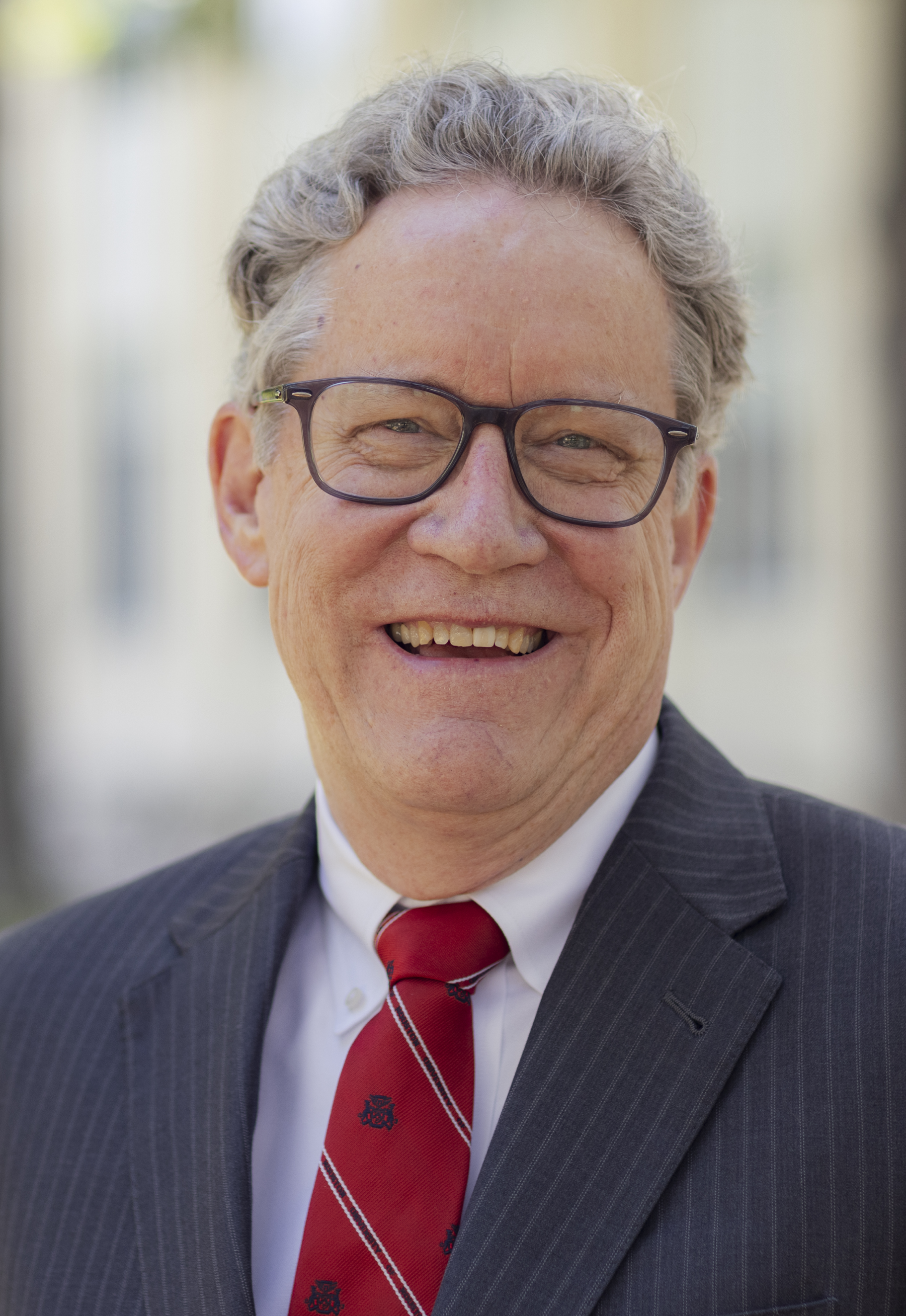
David Shattuck is an Associate Professor at the University of Houston's Cullen College of Engineering and serves as Director of Evaluation, Planning, and Assessment for the Honors College. He holds a bachelor's in Engineering Science from SUNY Buffalo and a Ph.D. in Biomedical Engineering from Duke University. Education: BS Engineering Science, State University of New York, Buffalo PhD Biomedical Engineering, Duke University His research focuses on Electronics Education , with emphasis on collaborative learning tools, circuit analysis, and online textbook development. Earlier work spans Geophysics and Ultrasound Imaging , including contributions to ground-penetrating radar and speed-of-sound estimation algorithms. Recent publications highlight his educational initiatives (2005, 2003), earlier work in geophysical modeling (1995-1998), and foundational research in ultrasonic signal processing (1982-1989). Scientific Awards W.T. Kittinger Outstanding Teacher Award, Cullen College of Engineering (2006) Distinguished Service Award, Honors College Student Governing Board (2013) Career Teaching Award, University of Houston (2013) Career Teaching Award, College of Engineering (2017) Distinguished Leadership in Teaching Excellence Award (2020) William A. Brookshire Teaching Excellence Award (2020) Dr. Shattuck also contributed to the 4th Edition of James Nilsson's Electric Circuits and served as a reviewer for journals and textbook publishers.
Pablo Giménez-Gómez is a researcher at Stockholm University's Department of Chemistry, specializing in microfluidic lab-on-a-chip devices for biomedical and environmental applications. With a PhD in Electrochemistry from the Autonomous University of Barcelona (2017) and extensive postdoctoral experience across Europe, he secures competitive grants and leads R&D projects with total budget of €1.1M. Chemical Engineer (2009, University of Murcia) Master in Occupational Health & Safety (2010, Bureau Veritas) Master in Electrochemistry (2011, Polytechnic University of Cartagena) PhD in Electrochemistry (2017, Autonomous University of Barcelona) His research focuses on: Microfabricated electrochemical transducers , Biofunctionalization techniques , Integrated biosensing systems , and Technological transfer in analytical chemistry . Recent projects include a DVD-readable opto-electrochemical Lab-on-a-Disc for obesity management and paper-based analytical devices for environmental monitoring. Publications demonstrate expertise in: Microfluidic extraction-quantification integration , Optical-microfluidic coupling , and Biocompatible sensor design . He has authored 34 publications including 24 peer-reviewed journal articles and 8 conference papers, with 1 licensed patent. 2023: First author on fiber-optic tissue stretch monitoring 2025: Developed cafetière-based soil nutrient PAD 2023: Created DIC quantification PAD for freshwater 2019-2025: Ongoing contributions to diabetes monitoring and environmental sensing Active in both fundamental research through his work with Nicole Pamme's group and applied technology development via industry contracts. His teaching includes Analytical Chemistry Basic Course (VT24).
Evaggelos Kaselouris is an Assistant Professor at the Hellenic Mediterranean University's Department of Music Technology and Acoustics and a Researcher at the Institute of Plasma Physics and Lasers (IPPL). His affiliations include prior roles as a PostDoc at IPPL (2016–2023) and a Scientific Collaborator at the Technological Educational Institute of Crete (2011–2016). He holds a PhD from the Technical University of Crete and a degree in Applied Physics and Mathematics from the National Technical University of Athens. Dr. Kaselouris's research integrates multiphysics simulations across applied physics, plasma dynamics, and vibro-acoustics. Key areas include: Laser-generated acoustic waves and their applications in material characterization and musical instrument analysis. Finite element modeling of thermo-mechanical processes in laser machining and plasma instabilities. Development of crystalline undulators for narrowband gamma-ray radiation and optically shaped gas targets for ion acceleration. His computational work employs FEM/BEM to simulate phenomena ranging from nanostructured surface modifications to violin bridge dynamics. Recent studies emphasize laser-based interferometry for instrument diagnostics and ultrafast photoacoustic transduction in thin films. He actively collaborates on European projects (e.g., TECHNO-CLS) and contributes to the ESFRI infrastructure HiPER. No awards or supervised students are documented, but his lab leverages IPPL's high-power laser systems and advanced simulation tools for experimental validation.
Prof. Kazimierz Jakubiuk is a Professor at the Department of Electrical Engineering, Faculty of Electrical and Control Engineering, Gdańsk University of Technology. He leads research in pulsed power systems and electromagnetic technologies, with active projects funded by national defense programs. His research interests span: High-power electromagnetic pulse generation and forming systems Modeling of electrodynamic phenomena for circuit protection devices Solid-state high-voltage pulse architectures Precision measurement of extreme electrical parameters Disconnecting fuse modeling for pulse-forming networks Recent publications demonstrate consistent focus on experimental and theoretical advancements in pulsed power engineering, with particular emphasis on applications in defense and energy systems. He currently leads two major research initiatives: STRATUS : Developing electromagnetic pulse systems for UAV countermeasures (funded by SZAFIR) MURENA : Researching pulsed electromagnetic gun technologies (funded by National Security and Defense program)
Dr. Lee Ted Sian serves as a Lecturer in Mechanical Engineering at Swinburne University of Technology Sarawak within the Faculty of Engineering, Computing and Science. She joined the institution as a permanent faculty member in January 2024 following a sessional teaching appointment in 2023, bringing expertise in experimental fluid dynamics and sustainable energy systems. Her academic credentials include: Ph.D. in Mechanical Engineering, Monash University Malaysia (2023) B.Eng. (Hons) in Mechanical Engineering, Monash University Malaysia (2016) Dr. Lee's research program centers on fluid-structure interaction phenomena, specializing in turbulence control through fractal geometries and piezoelectric energy harvesting from fluid flows. She integrates machine learning techniques to optimize flow control systems while maintaining strong focus on sustainability engineering principles for energy-efficient solutions. Her experimental approach combines advanced velocimetry methods with novel piezoelectric transducer designs. Recent publications demonstrate consistent output in high-impact fluid dynamics journals, revealing an evolving research trajectory from fundamental turbulence characterization (2021) toward practical applications of grid geometry effects on turbulence management (2023). This progression highlights growing expertise in translating fluid dynamic principles into energy harvesting technologies. Dr. Lee actively recruits research higher degree candidates and maintains an open-door policy for prospective students interested in experimental mechanics and sustainable energy systems. Her industry background at Daikin Research & Development provides valuable practical perspective for student projects seeking real-world engineering applications.
Lukas Haas serves as a Researcher at the Technical University of Munich (TUM), affiliated with the Chair of Measurement Systems and Sensor Technology under acting leadership of Prof. Chen. His role integrates research and teaching within TUM's engineering ecosystem, focusing on advanced measurement solutions and sensor applications. His research spans Sensor Technology , Measurement Systems , Electrical Engineering , and Instrumentation , emphasizing precision engineering for industrial and scientific measurement challenges. This work aligns with TUM's strategic focus on cutting-edge sensor design and data acquisition systems. The Chair of Measurement Systems and Sensor Technology operates within TUM's engineering infrastructure, driving innovation in transducer development and signal processing. Haas contributes to this mission through hands-on research and academic instruction, maintaining active collaboration with industry partners and academic networks.
Abhijit Kakati serves as a Postdoctoral Fellow within the Department of Microsystems at the Faculty of Technology, Natural Sciences and Maritime Sciences, University of South-Eastern Norway. His academic appointment is based at the university's Campus Vestfold, where he contributes to advanced research in micro and nanoscale systems engineering. His research spans critical domains in microtechnology development: Microsystems design and fabrication methodologies Microelectronics and semiconductor device physics MEMS sensor and actuator systems Nanoscale material applications Advanced transducer development Integrated circuit design for microsystems For academic collaboration or research inquiries, contact is available via email at abhijit.kakati@usn.no or telephone at +47 35 95 25 83. The Department of Microsystems operates within USN's strategic research framework focusing on technological innovation and practical applications in microengineering domains.
Atilla Atli is a Lecturer-Researcher at ECAM Engineering School in Lyon, France, specializing in the Department of Materials Science and Structures. With a PhD, he has established himself as a prominent researcher in sustainable materials engineering with 35 publications and over 75,000 reads on ResearchGate. Dr. Atli's research interests focus on eco-design principles applied to materials science, particularly in developing biodegradable alternatives for electronic and energy applications. His work spans piezoelectric materials (especially Rochelle salt-based systems), polymer nanocomposites, and thermal management solutions for fuel cells. He has significant expertise in material characterization, mechanical properties testing, X-ray diffraction, and additive manufacturing techniques. Analysis of his recent publications (2021-2025) reveals a strong trend toward sustainable engineering solutions, with emphasis on renewable resources like Rochelle salt, beeswax, and biopolymers. His work bridges fundamental materials science with practical applications in ultrasonic transducers, fuel cell technology, and eco-friendly piezoelectric devices, demonstrating a commitment to circular economy principles. Dr. Atli maintains an extensive collaborative network, frequently working with researchers including Etienne Lemaire, Dominique Certon, and Jean-Philippe Noyel. His research has garnered 270 citations, reflecting significant impact in the fields of sustainable materials and eco-design engineering. His laboratory work appears to focus on polymer metallization techniques, piezoelectric composite fabrication, and thermal management systems, often utilizing accessible manufacturing methods suitable for Fablab environments, making his research approachable and reproducible.
Dariusz Palmowski is an Assistant lecturer and Chief engineering and technical specialist at the Department of Metrology and Optoelectronics, Faculty of Electronics Telecommunications and Informatics, Gdańsk University of Technology. His work focuses on the intersection of electrical engineering, metrology, and energy systems, with particular expertise in micro-energy measurement techniques. Dr. Palmowski's primary research interests include: Micro-energy measurement for low-power devices Energy harvesting systems evaluation Real-time operating systems performance analysis Impedance measurement techniques Sensor technology development Automated student assessment methodologies His publication record demonstrates a consistent focus on developing and testing methods for measuring extremely small energy consumption, which is critical for the advancement of energy harvesting technologies. Over the past decade, his research has evolved from fundamental measurement techniques to more complex applications in sensor networks and medical diagnostics. A notable trend in his work is the development of specialized test equipment, particularly microcontroller-based systems that can simulate various energy consumption profiles for validation purposes. Dr. Palmowski has made significant contributions to the field of dynamic electrochemical impedance spectroscopy, developing programmable models and testing methodologies that have advanced measurement capabilities in this specialized area. His interdisciplinary work bridges electrical engineering with applications in medical diagnostics through breath analysis technologies. His teaching activities include the Metrology course taught during the third semester of studies at three different programs: Electronics and Telecommunications, Biomedical Engineering, and Automation, Cybernetics and Robotics. His research on automated verification of student work reflects his engagement with educational technology and assessment methodologies.
Dr. Tiehan Shen is an Associate Professor (Reader in Magnetism) at the University of Salford's School of Science, Engineering & Environment, with over 30 years of academic experience. His career spans appointments at the University of Leeds (Lecturer, 1992-2000) and Cardiff University (Postdoctoral Research Associate), following a PhD at Cambridge's Cavendish Laboratory. His educational background includes: BSc in Physics from Peking University PhD in Physics from the University of Cambridge Professor Shen's research focuses on experimental condensed matter physics and nanomaterials, with particular expertise in polarimetric imaging techniques and nanoscale fabrication . His work bridges fundamental physics with practical applications in clinical histopathology and environmental remediation. Recent publications demonstrate a strong trend toward developing nanomaterials for water treatment systems, particularly antibiotic degradation, while maintaining his foundational work in plasmonics and polarimetric microscopy. With over 80 peer-reviewed publications, his research output shows consistent productivity across four decades. The most active period spans 2003-2021 with significant contributions to nanowire arrays, plasmonic structures, and polarimetric measurement systems. His 2025 publication indicates ongoing research activity in environmental nanomaterials. Professor Shen actively supervises PhD students in areas including: Functional materials development Polarimetric imaging for biological/clinical applications Nanomaterials for environmental remediation His teaching encompasses physics modules across all undergraduate and MPhys levels at Salford. His research group operates within the Centre for Future Engineering, focusing on instrumentation development and practical applications of nanomaterials. Current projects emphasize translating fundamental physics discoveries into solutions for healthcare and environmental challenges, particularly through advanced imaging and novel material systems.
Dr. Morteza Hoseyni serves as a Research Associate at the University of Salford's School of Science, Engineering & Environment, where he conducts advanced research in structural dynamics and energy harvesting systems. Affiliated with the Acoustics Innovation Institute, his work focuses on vibro-acoustic virtual prototyping for industrial heavy machinery applications. His research expertise spans structural dynamics, vibration analysis, and piezoelectric energy harvesting technologies. Recent work develops novel methods for multimodal energy harvesting on plate structures using SSHI circuits, piezoelectric transducer-assisted mass normalization techniques, and biodegradable wearable sensors for physiological monitoring. His publications demonstrate strong integration of analytical modeling with experimental validation across mechanical and biomedical applications. Analysis of recent publications (2023-2025) reveals a clear research trajectory toward optimizing piezoelectric energy harvesting systems, with increasing sophistication in circuit design and structural integration. The work shows consistent application to real-world industrial problems while expanding into biomedical applications through flexible sensor development. Dr. Hoseyni's academic foundation includes: Ph.D. in Mechanical Engineering from Koç University (2018-2024) Master's Degree in Mechatronics (2012-2015) Bachelor's Degree in Mechanical Engineering (2006-2010) His research methodology emphasizes experimental validation of analytical models, particularly for complex electromechanical systems. Current projects at the University of Salford focus on industrial vibro-acoustic applications, leveraging the resources of the Acoustics Innovation Institute for virtual prototyping of heavy machinery systems.
Roger Zemp serves as an Associate Professor in the Department of Electrical and Computer Engineering within the Faculty of Engineering at the University of Alberta, concurrently holding an Adjunct Assistant Professor appointment in the Department of Biomedical Engineering. His academic profile spans advanced biomedical imaging research and specialized graduate instruction. Dr. Zemp's educational foundation includes: BSc in Physics from the University of Alberta (1998) MSc in Electrical & Computer Engineering from the University of Toronto (2000) PhD in Biomedical Engineering from the University of California, Davis (2004) His pioneering research develops novel biomedical imaging modalities to address unmet clinical needs, focusing on high-resolution optical-contrast techniques and therapeutic applications. Current projects integrate engineering precision with biological complexity: Capacitive Micromachined Ultrasound Transducers (CMUTs) for 3D imaging and therapy Photoacoustic imaging of hemoglobin saturation, tumor angiogenesis, and nanoparticle agents Ultrasound-triggered biomarker liberation for disease localization Lipid-microbubble systems for targeted cancer drug/gene delivery SERS nanoparticle-based multiplexed molecular imaging Ultra-high-frame-rate ultrasound for cardiac dynamics analysis Dr. Zemp actively mentors graduate students and secures research funding for translational projects, though specific advisees and grant details remain unlisted in available materials. His laboratory infrastructure within the Donadeo Innovation Centre enables microfabrication, optical system development, and preclinical validation, fostering cross-disciplinary collaboration between engineering and medical researchers.
Dr. Dale Harris serves as a Senior Lecturer and Research Fellow at Victoria University's Institute for Health & Sport in Melbourne, Australia, with an additional Adjunct Research Fellow position at La Trobe University since February 2024. His academic career spans multiple roles including Senior Lecturer (commencing January 2025) and Research Fellow (since January 2020), establishing him as a specialist in exercise science and neuromodulation interventions for Parkinson's disease and neurological conditions. Dr. Harris completed his educational journey with: PhD in Exercise and Sports Science from Deakin University (July 2021) Masters in Exercise and Sports Science, Strength and Conditioning from Edith Cowan University Bachelors in Exercise Science (Hons) from Deakin University Dr. Harris's research focuses on falls prevention , neuromodulation techniques , and exercise-based interventions for Parkinson's disease . His technical expertise includes transcranial magnetic stimulation (TMS), surface electromyography (EMG), functional near-infrared spectroscopy (fNIRS), balance assessment using the NeuroCom Balance Master, and clinical examinations including the Unified Parkinson's Disease Rating Scale. He developed a reliable Parkinson's disease-specific falls questionnaire now used internationally by the Struthers Institute and translated into multiple languages. Analysis of Dr. Harris's publication record reveals a strong trajectory in neuromodulation approaches for Parkinson's disease management, with increasing focus on strength and power training protocols tailored for neurological populations. His recent work demonstrates innovative integration of gym-based powerlifting adaptations for people with early-onset Parkinson's disease, alongside significant research on sex-specific exercise responses and neuromuscular adaptations across diverse populations including elite athletes and women's health. Dr. Harris has received significant recognition for his contributions: Victoria University's Early Career Research Award (2021) Shake-It-Up Foundation travel award to present at the World Parkinson's Congress in Spain (2023) Australia Active National Awards Program Finalist - Most Inclusive and Diverse Programs (2025) for his clinical trial 'Powerlifting for People with Early Onset Parkinson's disease' As an active supervisor, Dr. Harris co-supervises three HDR students with research spanning resistance training for women's health and physical activity patterns in law enforcement. He successfully secured a $50,000 AUD grant as lead investigator in 2023 for a world-first exercise training feasibility study in people with young-onset Parkinson's disease through the Bethlehem Griffiths Research Foundation. His community engagement includes expert panel discussions with Fight Parkinson's on exercise for people living with Parkinson's disease, reaching multiple community members across Victoria. Dr. Harris maintains active collaborations with clinical and research partners, contributing to both academic advancement and practical applications of exercise science in neurological rehabilitation. His work bridges laboratory research with real-world implementation, particularly evident in his community-focused outreach and innovative clinical trials.
Christine Soliman Sadek Ebeid serves as a Guest researcher in the Human Stem Cell Biology Lab at the University of Copenhagen's Faculty of Health and Medical Sciences. Her research activities are centered in Copenhagen, Denmark, with contact details including phone number +4552721412 and email christine.ebeid@sund.ku.dk. She is actively engaged in cutting-edge research in stem cell biology and developmental mechanisms. Her primary research interests lie in the intersection of stem cell biology and developmental biology, with a focus on how mechanical forces influence cell fate specification. Specifically, her work examines the role of salt-inducible kinases in the pancreatic endocrine lineage, which has significant implications for regenerative medicine and understanding congenital disorders of the pancreas. This research bridges molecular biology, mechanotransduction, and embryonic development. Dr. Ebeid's recent publication in Stem Cell Reports (2025) demonstrates that mechanical forces are transduced by salt-inducible kinases to specify pancreatic endocrine cells. This work is part of a growing trend in developmental biology that emphasizes the physical microenvironment's role in cell differentiation, contributing to the fields of diabetes research and tissue engineering. She is affiliated with the Human Stem Cell Biology Lab at the University of Copenhagen, where she collaborates on projects investigating human stem cell behavior and its applications in disease modeling and regenerative therapies.
Peter Vilmann is a Clinical Professor at the Department of Clinical Medicine, University of Copenhagen, where he has been a Full Professor of Endoscopy at Copenhagen University Hospital Herlev since 2010. He leads an Excellence Center for EUS (Endoscopic Ultrasound) and CLE (Confocal Laser Endomicroscopy) in Europe, which became operational in September 2012. His academic journey includes training at various Danish hospitals (1982-1993), positions at Herlev Hospital and Rigshospitalet, and a long tenure at Gentofte Hospital where he served as Overlæge (1995-2009) and Scientific Lecturer (2005-2010). MD (cand.med), University of Copenhagen (1981) Specialization in Gastroenterology (1994) and Surgery (1993), University of Copenhagen MD.Sc (dr.med A-disputats), University of Copenhagen (1998) Honoris Causa, University of Medicine and Pharmacy Craiova, Romania (2011) Professor Vilmann pioneered EUS with linear transducers and was the first in the world to perform EUS-guided fine needle biopsy (1991). His research focuses on advanced endoscopic techniques including EUS, EBUS, NOTES, CLE, and EUS-guided therapeutic interventions. He has made significant contributions to EUS-FNA procedures, EUS-guided pseudocyst drainage, bile duct drainage, and non-anesthesiologist propofol sedation (NAPS) programs. His work bridges diagnostic and therapeutic applications in gastrointestinal endoscopy with particular emphasis on pancreatic and biliary interventions. His recent publications (2023-2025) demonstrate continued innovation in pancreatic tumor ablation, virtual reality for colonoscopy training, advanced sedation techniques, and the integration of EUS with novel imaging technologies. The research consistently focuses on improving diagnostic accuracy, procedural safety, and developing minimally invasive alternatives to surgery for gastrointestinal conditions. Scientific Recognition: The Swedish Society of Medicine Jubileumspriset (1999) Copenhagen county employee Idea Prize (2005) Doctor Honoris Causa from University of Medicine and Pharmacy Craiova, Romania (2009) Primary Doctors at Gentofte Hospital Honorary award (2011) Visiting Professorship in Chandigarh, India (2011) Herlev Hospitals High Impact prize (2011) Professor Vilmann has secured substantial research funding including grants from The A.P. Møller and Chastine Mc-Kinney Møller Foundation ($387,045), Arvid Nilssons Foundation ($324,875), Toyota Foundation ($63,170), The Jochum Foundation ($90,243), and Aase and Ejnar Danielsen Foundation ($27,073). He serves on editorial boards for several prestigious journals including Endoscopy and Endoscopic Ultrasound, and has been instrumental in developing guidelines through the European Society of Gastrointestinal Endoscopy (ESGE) Guideline Committee. His endoscopy center at Herlev Hospital functions as a clinical and translational research environment with state-of-the-art equipment for EUS and CLE. The center supports numerous international multicentric studies including research on EUS-guided gallbladder drainage, needle-based CLE for pancreatic masses, and characterization of Crohn's disease using CLE technology.