Eirik Aasmo Finne is a Postdoctoral Fellow at the Norwegian College of Fisheries Science, UiT The Arctic University of Norway. His research focuses on Arctic ecosystems, lichen ecology, climate change impacts, and vegetation-climate interactions. Email: eirik.a.finne@uit.no Research Interests: He investigates how Arctic vegetation (especially lichens and mosses) responds to climate change, quantifies albedo variations in northern ecosystems, and applies remote sensing/AI for biomass assessment. His work bridges ecological monitoring with climate policy and reindeer herding sustainability. Recent Publications: Highlights include studies on lichen tolerance to winter warming, Arctic land use-climate linkages, and transdisciplinary approaches for ecosystem governance. Most articles focus on climate regulation, vegetation dynamics, and albedo feedback.
Prof. Dr. Jan Hasenauer holds the Hertz Professorship at the University of Bonn since August 2024, with dual affiliations to the Life & Medical Sciences Institute (LIMES) and the Hausdorff Center for Mathematics (HCM) . His work bridges computational biology , systems biology , and mathematical modeling , focusing on methods for integrating heterogeneous biological data , model-based hypothesis testing , and experimental design optimization . Develops computational frameworks for analyzing complex biological systems Active in multi-scale modeling of cellular and organismal processes Key contributor to universal differential equations and Bayesian inference tools Research Trends from 2024-2025 publications show expertise in: Integrating clinical data with multi-omics for disease modeling Designing privacy-preserving analysis tools for clinical trials Developing software standards like PEtab for reproducible modeling Applying machine learning to epidemiological forecasting The group maintains strong connections with the Transdisciplinary Research Area 'Modelling' and collaborates across mathematics , life sciences , and public health . Recent ERC Starting Grant funding (€1.5M) supports their innovative computational approaches.
A. Ianniello is a researcher active in interdisciplinary domains spanning industrial design, human-robot interaction, and emerging materials engineering. Their work bridges speculative design methodologies with applied research in robotics, healthcare, and immersive technologies. Research Focus: Human-Robot Interaction, Speculative Design, Medical Simulation, Augmented Reality Collaborations: Academic-industry partnerships in systemic design and urban mobility Methodologies: Experiential counterfactuals, co-design frameworks, immersive environments Recent publications (2022-2025) demonstrate expertise in speculative design for sustainability, spatial robotic experiences, and systemic approaches to healthcare and urban planning. They explore intersections of technology, ethics, and human-centric resilience through design-led interventions in smart cities and rural regeneration.
Lili-Ann Wolff is an Adjunct Professor at the University of Helsinki , affiliated with the Helsinki Institute of Sustainability Science and Helsinki Institute of Urban and Regional Studies . Her work focuses on sustainability education from transdisciplinary and philosophical perspectives. Doctor of Education Graduated in Science and Philosophy Research interests include: Transdisciplinary teaching and learning Phenomenon-based learning Sustainability ethics Worldview education Environmental aesthetics Bildung theories Social sustainability She leads the SusEdu research group and has managed projects like: SveaSus : Sustainable World Heritage Learning EduAnt : Education in the Anthropocene NaSEC : Nature and Sustainability as Educational Challenges Recent activities involve: Editorial work for Frontiers in Education and Multidisciplinary Digital Publishing Institute Membership in Swedish Research Council and Finnish Nature Panel Peer review for Environmental Education Research and Teaching and Teacher Education
Anna Günther-Hanssen is a Senior Lecturer at Stockholm University within the Department of Preschool Teacher Education and Preschool Research. With a PhD in didactics, she bridges theoretical frameworks with practical applications in early childhood education (ECE) and early childhood teacher education (ECTE). Research Focus: Gendering processes, transdisciplinary STEAM education (Science, Technology, Engineering, Arts, Mathematics), and equality in educational environments. Current Projects: Leading a Vetenskapsrådet (Swedish Research Council) funded initiative (2023–2026) on STEAM education's potential to transcend gender norms in preschool settings. Methodological Expertise: Practice-based research and post-qualitative approaches, emphasizing material agency and affective dynamics in educational spaces. Scientific Contributions: Key publications examine how STEAM buzzwords shape ECE research, gender performativity in STEM activities, and the role of physical phenomena in identity formation. Her work frequently engages with diffractive analysis, feminist theory, and norm-critical pedagogy.
Cesidio Parissi serves as a Lecturer in Problem Based Learning at Charles Sturt University's School of Dentistry and Medical Sciences. With over a decade of academic experience since joining CSU in 2012, he previously lectured at Western Sydney University in environmental health and management while tutoring in Problem Based Learning at their Medical School. His current work focuses on student-centered experiential education methodologies. Dr. Parissi's research spans qualitative methodologies including ethnography, grounded theory, and action research. His primary interests converge at the intersection of Indigenous knowledge systems, sustainable agriculture, and environmental governance. He employs transdisciplinary approaches to examine how traditional ecological knowledge integrates with contemporary scientific frameworks, particularly in agricultural contexts across Australia and Vanuatu. His publication portfolio demonstrates consistent engagement with Indigenous knowledge preservation, evident in recent works analyzing kastom practices in Vanuatu and collaborative frameworks for agricultural extension. The research shows increasing focus on community-based health literacy and cultural engagement in scientific contexts since 2018. University Medal for B.AppSci (Environmental Health) University Medal for B.AppSci (Honors Class 1) PhD in Environmental Management from University of Western Sydney Dr. Parissi actively supervises undergraduate and postgraduate students while facilitating Problem Based Learning sessions. His outreach includes community projects like the Aboriginal Nature and Bioscience Park (Girinyalanha) and public events such as the Sky Stories Night. Current research activities involve the Orange Research Poster Muster and NENA Conference presentations focusing on Indigenous knowledge systems.
Claudia Zingerli is a Lecturer at ETH Zürich's Department of Humanities, Social and Political Sciences and currently serves as Head of ETH Sustainability since June 2022. Her career spans roles such as senior scientist at ETH Zurich (2002-2006), education lead of Climate-KIC Switzerland, and lecturer in D-USYS (2010-2014). She also coordinated the Swiss Programme for Research on Global Issues for Development (r4d programme) and Solution-oriented Research for Development (SOR4D) between 2014-2022. Board member of Sustainable Development Solution Network (SDSN) Switzerland since 2024 Board member of Swiss Academic Society for Environmental Research and Ecology since 2010 Expert associate of Swiss Academy of Natural Sciences (SCNAT) and Swiss Academy of Social Sciences and Humanities (SAGW) Her research focuses on the political nature of natural resource management, politics of knowledge production in sustainable development, and transformation studies. She has contributed to numerous publications on transformative innovation, environmental justice, transdisciplinarity, and sustainability governance. She earned a Master’s in geography, social anthropology, and economics from University of Basel and Freiburg im Breisgau, followed by a PhD in development studies from University of East Anglia. Her recent academic outputs include 15 articles on topics ranging from climate justice to urban agriculture, with keywords spanning sustainability science, political ecology, and transdisciplinarity. She is actively involved in advancing sustainability through campus initiatives via the International Alliance for Research Universities (IARU) and serves on multiple advisory committees.
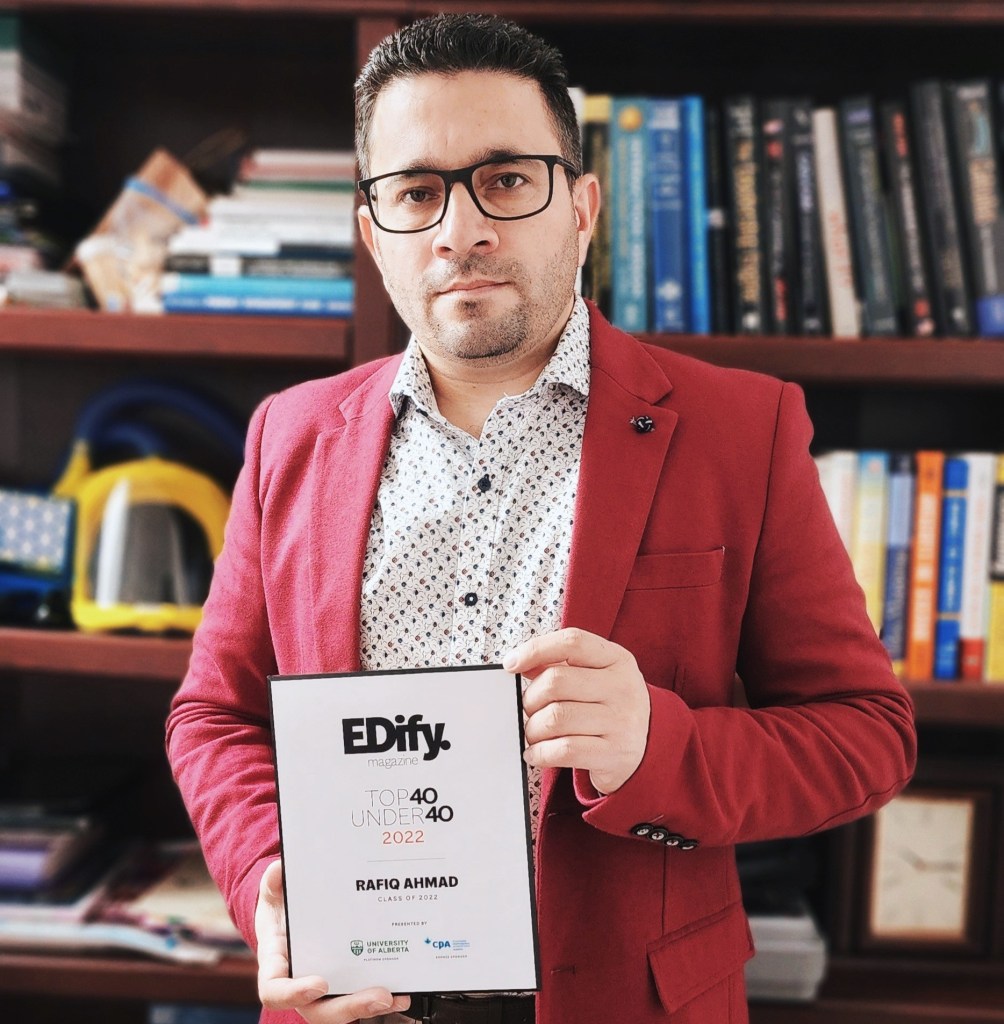
Dr. Rafiq Ahmad (PhD, P.Eng) is an Associate Professor at the University of Alberta’s Faculty of Engineering, Department of Mechanical Engineering. He directs the Smart & Sustainable Manufacturing Systems Laboratory (SMART LAB) and the Aquaponics 4.0 Learning Factory (AllFactory) . His work bridges fundamental research in design and manufacturing with advanced industrial applications. Education : PhD & MSc from French institutions (Ecole Centrale de Nantes and Ecole Arts et Metiers Paris), Postdoc at University of Luxembourg Research : Focuses on Smart Manufacturing (zero-defect production), Green Technologies (3R systems), Industrial Robotics (autonomous systems), and Sustainable Production (Aquaponics 4.0). The 15 most recent publications (2025) explore digital twins, robotics for extreme environments, hybrid manufacturing optimization, and sustainable food production. Articles span additive manufacturing, topology optimization, and AI-driven automation. Scientific Awards : 2023 ASTech Award for Digital Innovation; 2022 Edify Top 40 Under 40; multiple NSERC, Mitacs, and Alberta Innovates grants. Teaching : Offers courses in Manufacturing Systems, Lean Manufacturing, and Mechanical Measurements. Labs : SMART Lab (founded 2016) specializes in hybrid manufacturing and robotics; AllFactory focuses on sustainable aquaponics systems.
Katie Parsons is a Research Fellow at Loughborough University since 2023, focusing on Climate/Environmental Education and Adaptation as a Children's Geographer. Previously, she held part-time roles as a Research Assistant (2018–2023) and PhD Researcher (2017–2023) at the University of Hull. Her professional background spans social work (2001–2009), family advocacy, and volunteering in youth environmental initiatives. She completed a BEd in Education and Early Years (2013–2016) and a part-time PhD at the University of Hull. Her research emphasizes participatory methodologies, intergenerational dialogue, and innovative storytelling to address climate change impacts. Key themes include youth activism, flood risk engagement, hedgerow conservation, and environmental justice. She has collaborated with organizations like the National Children’s Bureau and The Deep Aquarium on ethics and family research. Publications highlight her work on immersive technologies for climate communication, community resilience models, and bridging educational frameworks with environmental action. Her volunteer roles in scouting and climate advocacy reflect a commitment to empowering youth and communities facing environmental challenges.
Le Wang is the David M. Kohl Chair and Professor in the Department of Agricultural and Applied Economics at Virginia Tech. He holds roles such as co-editor of China Economic Review and Journal of Labor Research , and associate editor of Econometric Reviews . He serves on the Board of Trustees of the Southern Economics Association, the Human Capital and Economic Opportunity Global Working Group at the University of Chicago, and the Institute for Labor Studies (IZA) in Germany. As director of the Young Scholars Program of the Global Labor Organization (GLO), he promotes interdisciplinary research and academic collaboration. He earned his Ph.D. in Economics from Southern Methodist University in 2006 and a B.A. in International Finance from Jinan University in 2001. His research focuses on applied econometrics, including causal inference and machine learning applications, as well as policy issues in energy economics, public policy, food and health systems, development economics, and labor markets. Notable contributions include studies on intergenerational mobility, gender earnings gaps, and the impact of food aid on civil conflict. Awarded the Kuznets Prize (2018) and multiple Outstanding Professor Awards, his work has been recognized for advancing methodological innovations and policy-relevant insights. Recent accolades include the 2023 Emerald Literati Award for his chapter on “Women’s Potential Earnings Distributions” and the VPR and Partnerships Award for Excellence in Transdisciplinary Research (2023). Le Wang’s expertise extends to editorial leadership and academic administration, reflecting his commitment to advancing rigorous research and equitable policy solutions.
Dr. Elizabeth M. B. Doran is a Research Professor in the Department of Civil and Environmental Engineering at the University of Vermont. Her work focuses on systems approaches to environmental challenges, particularly urban climate, land use, and socio-ecological systems. She holds a Ph.D. in Earth Science from Duke University, an M.S. in Mechanical Engineering from Duke, and a B.S. in Environmental Engineering from Tufts University. Her research integrates engineering, modeling, and sustainability to address issues like urban heat islands, energy efficiency in urban systems, and land-use impacts on freshwater ecosystems. Key areas include understanding farmer behavior in adopting sustainable practices and mitigating climate change effects on water quality. Publications highlight interdisciplinary work on heat exposure mitigation, machine learning applications in public health, and frameworks for sustainable wellbeing. Her research emphasizes actionable solutions for climate adaptation and resilient systems, leveraging systems thinking and transdisciplinary methods. Dr. Doran collaborates on projects analyzing urban heat mitigation strategies and policy impacts, with a focus on small cities and rural communities. She actively engages in interdisciplinary initiatives to bridge science and policy for sustainable environmental outcomes.
Kirti Rajagopalan is an Assistant Professor in the Department of Biological Systems Engineering at Washington State University (WSU), part of the College of Agricultural, Human, and Natural Resource Sciences. Her research focuses on transdisciplinary approaches to address water and agricultural resource challenges through systems modeling, integrating engineering, economics, and environmental science. She leads the Agricultural, Natural and Human Systems Modeling Group, which develops tools for climate adaptation, water resource management, and crop resilience. Her work emphasizes leveraging satellite imagery, machine learning, and data-driven methods to solve real-world problems in precision agriculture and environmental sustainability. Key research interests include climate change impacts on crop water demand, precision agriculture technologies (e.g., SoilScan mobile app), and sustainable water management strategies. Dr. Rajagopalan collaborates widely with experts in entomology, statistics, and agronomy to ensure interdisciplinary problem-solving. Her contributions include advancing snow-water equivalent prediction models, evaluating seasonal forecast utility for agricultural decisions, and assessing vulnerabilities in the Columbia River Basin under climate change scenarios. Her recent projects highlight innovative applications of AI, such as the IGraSS framework for infrastructure network identification via satellite imagery, and UAV-based digital trait analysis for wheat yield prediction. She also investigates legal frameworks like water right forfeiture and the economic implications of agricultural water trading. Dr. Rajagopalan’s research has been supported by high-profile initiatives, including WSU’s leadership in a $20M NSF-funded AI institute for agriculture. Notably, her work bridges science and practice through public engagement, policy analysis, and stakeholder dialogues focused on the food-energy-water nexus. She emphasizes actionable solutions for resilient agricultural systems in the face of climate uncertainty, leveraging both technical and institutional innovations.
Dr Andrea Haefner is a Senior Lecturer at the Griffith Asia Institute, part of Griffith University's Griffith Business School. Her academic roles include Deputy Director of Work-Integrated Learning (WIL) and leadership of the award-winning Griffith Asia Business Internship Program. With over 15 years of experience, she focuses on civil society governance in Southeast Asia, transboundary river basins (especially the Mekong), climate change, and water governance. She holds a PhD in International Relations from Griffith University and is a Senior Fellow of the Higher Education Academy (SFHEA). Education Background: PhD in International Relations, Griffith University Master in International Relations and Asian Studies, Griffith University Bachelor with Honours in Public Administration, University of Applied Science Kehl, Germany Research Interests: Non-traditional security, transboundary rivers, civil society dynamics Water governance and climate change mitigation in Mekong, Southeast Asia, and beyond Gender inclusion leadership programs in collaboration with DFAT Key Contributions: Published Negotiating for Water Resources: Bridging Transboundary River Basins (2016) Lead DFAT-funded projects like the Lao Leadership for Gender Inclusion Program Recipient of ABDC Award (2021), Global Orientation Award, and multiple teaching accolades Professional Activities: Secretary of Association of Mainland Southeast Asia Scholars (AMSEAS) Conference organizer for AMSEAS and International RiverSymposium Consultancy work on water legislation in Laos and regional leadership programs Labs/Teams: Active in Griffith Asia Institute's research network, collaborating with industry partners across Asia-Pacific for transdisciplinary projects.
Bipashyee Ghosh is a Visiting Research Fellow at the Science Policy Research Unit (SPRU) within the University of Sussex Business School. She also serves as a part-time lecturer in Transformative Innovation Policy and Development at University College London (UCL). Her work focuses on sustainability transitions, deep transitions, and transformative innovation policy, with particular emphasis on Global South contexts. Dr. Ghosh completed her PhD in Science and Technology Policy from SPRU at the University of Sussex, where her research investigated sustainability transitions in urban mobility systems and smart city imaginaries in Global South megacities. She holds a MSc in Innovation Sciences from Eindhoven University of Technology (TU/e), Netherlands, and an undergraduate degree in Economics from Jadavpur University, India. Her research interests span transformative innovation policy, sustainability transitions, deep transitions, urban transitions, transitions and social justice, public transportation systems, innovations and experimentation, regime transformations, transitions in the Global South, transdisciplinary research and co-creation, transformative outcomes and indicators, governance of AI, and digitalization and sharing economy. Dr. Ghosh takes a transdisciplinary approach to studying how innovations can lead to social and technological transformations toward sustainable and inclusive urban futures, with particular attention to contexts in the Global South. Dr. Ghosh's recent scholarly work reveals a strong focus on transformative innovation policy frameworks, sustainability transitions in the Global South, urban mobility systems, and the intersection of social justice with technological transitions. Her research demonstrates how transitions theory can be applied to understand and foster systemic change in diverse contexts, particularly in cities of the Global South where colonial histories continue to shape infrastructure and institutions. She has made significant contributions to understanding how transformative outcomes can be assessed and how experimentation can be used as a policy tool for deep transitions. Associate Fellow of the Higher Education Academy, UK Extensive training in unconscious bias, recruitment and selection, GDPR, diversity in the workplace, and freedom of information Dr. Ghosh has supervised MSc theses, including one on "Textile industry and energy transition in Bangladesh," and has served as a Graduate Teaching Assistant at the University of Sussex. She has developed and taught courses on "Democratizing Science and Technology," "Sustainable Development," "Governing Energy Transitions," "Transformative Innovation Policy for Inclusion," and "Innovation for Sustainability." Her teaching focuses on socio-technical transitions theory, challenges and opportunities in the Global South, urban mobility transitions, and deep transition theory. Dr. Ghosh coordinates the transitions in the Global South network within the Sustainability Transitions Research Network (STRN) and has served on the STRN Steering Group (2019-2021). She is actively involved in the Transformative Innovation Policy Consortium (TIPC) research projects and has contributed to developing a Resource Lab for Transformative Innovation Policy. She has also worked with a panel of private and public investors for Deep Transition futures.
Jorge Lucero is Full Professor of Art Education and Associate Dean for Research in the College of Fine and Applied Arts at the University of Illinois. Previously chaired the Art Education Program for eight years. Trained at Pennsylvania State University and School of the Art Institute of Chicago. Research focuses on arts-based research methodologies, community-engaged learning, and critical pedagogy in art education. Develops frameworks for empathic global citizenship through art curriculum innovation. Publications explore experimental art research, pandemic pedagogy, and community art practices. Recent work examines arts-based approaches to collective trauma representation and transdisciplinary curriculum design. Awards: National Art Education Association Higher Ed Educator of the Year (2023). Academic Service: Extensive editorial work for art education journals. Public engagement includes 'FAA Away' pandemic reflection series. Advocates for art's role in societal healing through community projects.




.jpg)