Chrissy Martin (She/Her) is an interdisciplinary performance artist and movement educator at the School of Communication, Northwestern University. Her work integrates somatic voice and movement techniques to explore embodied knowledge through curiosity, play, and ritual. A certified Pilates and GYROTONIC® instructor, she combines contemporary dance, Afro-Caribbean traditions, and physical theater to examine queer and neurodivergent identities. Education: MFA in Choreography and Performance (Smith College, 2022), BA in Music (New College of Florida, 2010) Her research emphasizes embodied knowledge co-creation with students and audiences, focusing on transdisciplinary performance art, somatic pedagogy, and identity politics. She has performed nationally with groups like Sarasota Contemporary Dance and Jawole Jo Willa Zollar, while maintaining a global presence in contact improvisation circles. Chrissy’s creative output spans professional proscenium theaters to grassroots DIY studios, prioritizing accessibility and experiential learning. She has taught at Cleveland State University, Columbia College Chicago, and DePaul University, alongside community-based work in public schools. Key Awards: American College Dance Association National Recognition As a facilitator of Chicago Contact Improvisation Jam and certified practitioner of somatic systems (Body Mind Centering, Laban/Bartenieff Fundamentals), her practice bridges academic rigor with community engagement.
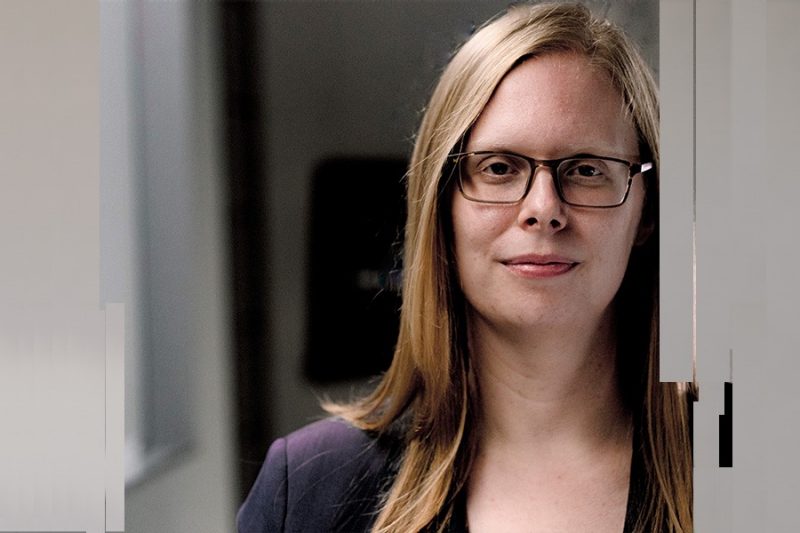
Sara Lenzi is a Lecturer at the Faculty of Engineering, University of Deusto, where she has been employed full-time since 2017. Her academic activities encompass undergraduate and postgraduate teaching, research, and extensive service contributions to the international design and sonification communities. She co-founded the Data Sonification Archive, a leading crowdsourced repository for sonification projects, and serves on the International Advisory Council of the Design Research Society. Her research integrates data sonification, audio engineering, and design methodologies with applications spanning urban soundscapes, healthcare environments, climate adaptation, and AI-driven anomaly detection. Key interdisciplinary themes include: Multimodal data representation through integrated sonification-visualization frameworks Machine listening for analyzing urban and medical soundscapes Design-driven tools for enhancing human-data interaction Transdisciplinary approaches to climate resilience and sustainable infrastructure Recent publications (2022-2025) demonstrate a strong focus on applied sonification in healthcare, environmental science, and cybersecurity. Her work frequently employs AI/ML techniques, emphasizes user-centered design, and addresses real-world challenges like sleep quality analysis and climate adaptation. Theoretical contributions include foundational frameworks for autographic sonification and cross-sensory data mapping. Dr. Lenzi has chaired six international conferences in design research and audio engineering. She has supervised six Master's theses and one PhD dissertation. As Co-Principal Investigator, she contributed to grant applications totaling €1.2M with institutions including City University of Hong Kong and TU Delft. Entrepreneurially, she previously secured €3M in private investment prior to her academic career. She leads initiatives through the Data Sonification Archive and collaborates on projects involving networked sensing systems, participatory design, and sensory ethnography. Her future research directions likely involve scaling sonification frameworks for global environmental monitoring and enhancing AI-driven soundscape analysis tools.
Kai Syng Tan (she/they) is an Associate Professor in Arts and Cultural Leadership at the University of Southampton's Winchester School of Art, joining in July 2023. An award-winning artist-academic-agitator, they have taught in over 200 universities worldwide and are known for pioneering innovative approaches at the intersection of art, leadership, neurodiversity, and social justice. Their work spans creative practice, research, and activism, with a focus on decolonial, anti-oppressive frameworks that reimagine leadership through neuro-queering and creative futurity. PhD in Fine Art (Slade School of Fine Art, University College London) MA in Art and Design (Royal College of Art) BFA (Tokyo University of the Arts) Tan's research interests explore the intersections of art, leadership, neurodiversity, and social justice through multiple interconnected strands. Their work in Running Studies has pioneered running as an artistic discourse, challenging ableist frameworks in mobility studies. In art-science collaborations, particularly through the #MagicCarpet project, they've reframed neurodivergence as creative discourse. Their disability arts work, including directing the £4.8m Paralympics ceremonies in Southeast Asia, has been praised as 'game-changing.' Most recently, they're developing 'neuro-futurism' as a framework for reimagining leadership through neuro-queering, anti-oppression, and creative futurity. Tan's recent publications reveal a clear trajectory toward reimagining leadership through neurodivergent, decolonial, and creative lenses. Their 2024-2025 works focus on 'neuro-futurism' as a toolkit for diversified, beyond-colonial leadership approaches. The publications demonstrate increasing integration of neurodiversity studies with leadership theory, creative practice, and social justice frameworks. Common themes include tentacular pedagogy, love-led leadership, and decolonized approaches to knowledge production, reflecting Tan's commitment to creating more equitable and imaginative futures through artful agitation. National Coordinating Centre for Public Engagement Culture Change Award (2018) Fellow, Royal Society of Arts (FRSA) (2014) San Francisco International Film Festival Golden Gate Award (1999) Principal Fellowship, Advance HE (PFHEA) (2022) Young Artist Award from Singapore President (2007) National Teaching Award 2023 nomination Tan actively supervises PhD students and has developed the MA in Arts and Cultural Leadership at Winchester School of Art. They've secured significant funding for creative projects including the £4.8m Paralympics ceremonies and the £1.35m Leverhulme Doctoral Scholarships project. Their Neurodiversity In/& Creative Research Network connects over 400 neurodivergent innovators globally. Current research includes 'Towards a Creative Practice Observatory' and developing frameworks for love-led leadership that challenges traditional hierarchical models through neuroqueering and anti-oppressive approaches. Tan founded and co-chairs the Neurodiversity In/& Creative Research Network (over 400 members) and the Running Cultures Research Network. Their #MagicCarpet project at King's College London established groundbreaking art-science collaborations in neurodiversity. As Visual and Communications Director for the Paralympics of Southeast Asia, they created innovative inclusive approaches that have had lasting impact. Current projects include 'Towards a Creative Practice Observatory' and developing the MA Arts and Cultural Leadership program at Southampton, which takes a critical, creative approach to shaping arts leadership for social and climate justice.
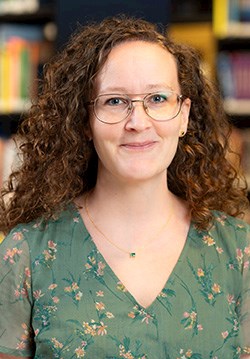
Maria Almarcha is a Postdoctoral Research Fellow at the School of Human Movement and Nutrition Sciences within the Faculty of Health, Medicine and Behavioural Sciences at the University of Queensland. Her research focuses on the intersection of exercise science, human movement, and mental health, with a particular emphasis on personalized exercise prescription and embodied education. Her research interests span exercise science, sports medicine, and human movement, with specific focus on exercise prescription for health, creative dance and its impact on creative potential, transdisciplinary embodied education in STEM, proprioception assessment, and the network physiology of exercise. She investigates how exercise interventions can enhance mental health, interoceptive awareness, and overall well-being, particularly in the context of modern challenges like teleworking. Dr. Almarcha has published 7 journal articles from 2021 to 2024, demonstrating a consistent research trajectory in personalized exercise and embodied approaches. Her work often adopts transdisciplinary methods, integrating perspectives from physiology, psychology, and education to address complex health and movement issues. She is available for supervision of research students, indicating her active role in mentoring the next generation of researchers in her field.
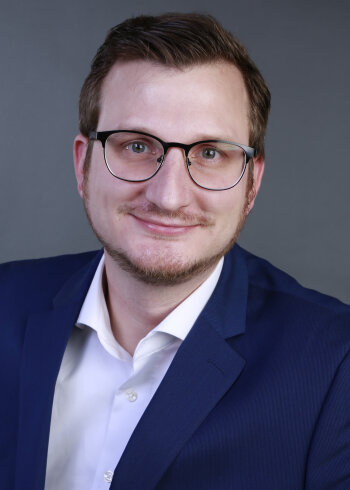
Andreas Rienow serves as Junior Professor for Interdisciplinary Geoinformation Sciences at Ruhr University Bochum, where he also holds the position of Designated Managing Director of the Institute of Geography since 2024 and Scientific Director of the Interdisciplinary Center for Geoinformation since 2020. His academic journey began with studies in Geography, Modern History and Modern German Literature at the University of Bonn, culminating in a Magister Artium degree, followed by a doctorate in 2014 on urban sprawl modeling. Dr. Rienow's research centers on spatio-temporal analysis of metropolitan transformation, interdisciplinary geodata integration, real-time geoinformation analysis, innovative earth observation education methods, and ISS-based remote sensing. His work bridges technical geospatial approaches with urban planning challenges, particularly in post-conflict settings, climate adaptation, and sustainable development contexts across diverse geographical regions including Europe, Africa, and the Middle East. His recent publication portfolio demonstrates a clear trajectory toward increasingly sophisticated integration of machine learning with geospatial analysis, focusing on urban heat islands, land use change, post-conflict urban recovery, and sustainable development monitoring. The research spans multiple continents with particular emphasis on applying advanced remote sensing techniques to pressing urban challenges in both developed and developing contexts. As an educator, Rienow has supervised over 40 master's theses, numerous bachelor's projects, and currently mentors 8 doctoral candidates working on topics ranging from urban climate adaptation to innovative geospatial education methods. His leadership extends to directing the Interdisciplinary Center for Geoinformation and participating in international collaborations such as the Transdisciplinary Center for Coupled Socio-Ecological Systems at Universidad del Azuay in Ecuador. His laboratory work focuses on the Geomatics Group within the Institute of Geography, where his team develops innovative approaches to urban remote sensing, spatial modeling, and citizen science applications for metropolitan analysis. The group actively engages in both theoretical methodological development and practical applications addressing contemporary urban challenges.
Daniel Ramp is an Associate Professor at the Transdisciplinary School (TD School) of the University of Technology Sydney (UTS), where he serves as the Founder and Director of the Centre for Compassionate Conservation. He leads the development of research, teaching, and public outreach in the Centre, focusing on stimulating innovation, novel research, and conservation practices that improve wildlife lives. With over 160 journal articles and book chapters published and more than $12 million in competitive funding secured, Ramp has established himself as a leading figure in compassionate conservation and human-wildlife interactions. His research interests span a wide range of topics including: Human-wildlife interactions and coexistence Wildlife trade and conservation practice Wild animal welfare assessment Population modeling for compassionate management Ecoclimatology and ecohydrology Road ecology and landscape conservation Ecosystem services and herbivory dynamics Ramp's research portfolio reveals a strong focus on interdisciplinary approaches to conservation challenges, particularly examining how climate change affects predator-prey dynamics, the role of introduced species in ecosystem restoration, and innovative methods for assessing wildlife welfare. His work often bridges conservation biology with social sciences, emphasizing the importance of compassionate approaches that consider individual animal welfare alongside broader ecological goals. Among his notable achievements, Ramp was a founding member of THINKK – the think tank on kangaroos, serves as a Director of Voiceless, and is a founding member of the Society for Compassionate Conservation. His research has attracted significant attention, with multiple publications receiving widespread media coverage and policy influence. Ramp actively supervises numerous Higher Degree Research students across various projects related to compassionate conservation, human-wildlife coexistence, and wildlife welfare. He has also led multiple ARC and CRC projects, collaborating with government and industry partners to drive evidence-based policy transformation that promotes multispecies coexistence and sustainability, particularly in production landscapes. He leads a research team that includes Dr. Rosalie Chapple (Deputy Director), Dr. Andrea Harvey, Dr. Arnick Abdollahi, and Dr. Achyut Aryal, among others, working on diverse projects from wildlife-friendly farming to non-invasive welfare assessment methods.
Annie Agnew is a Senior Lecturer at the University of Technology Sydney (UTS), School of International Studies & Education, with a career spanning K–12 and higher education. She specializes in initial teacher education and postgraduate learning, focusing on technology's role in pedagogy and learning design. Current Roles : Course Director for Education (Learning & Leadership) and Senior Lecturer in Education Technology at UTS. Past Role : Director of Professional Experience (2020–2021). Her research examines how technological advancements shape teaching and learning through digital agency, transdisciplinary learning, and evolving digital ecologies. She advocates for mentorship frameworks that enhance educators' autonomy and critical engagement with technology. Recent studies include virtual observation methods during the pandemic and their implications for post-COVID teacher training. These explore hybrid supervision models, international collaboration, and digital tools for real-time feedback. Teaching contributions include courses such as Initial Teacher Education - BABEd and Master of Education (Learning & Leadership) , reflecting her expertise in digital pedagogy and teacher leadership. Funded Research : Mobile technology-enhanced learning, digital agency, and virtual professional experience observation.
Elizabeth McLain is an Assistant Professor of Musicology and Director of Disability Studies at Virginia Tech. She holds a PhD and MA in Historical Musicology from the University of Michigan, along with BA degrees in Music and History from Virginia Tech. Co-founder, Disability Community Technology Center (Mellon-funded) Co-chair, Music and Disability Study Group (American Musicological Society) Faculty advisor, Disability Alliance at Virginia Tech Her research bridges 20th-century music , spirituality , and disability justice , analyzing how composers like Messiaen and Crumb integrated spiritual themes with modernist/postmodernist aesthetics. She advocates for inclusive pedagogy , Universal Design for Learning , and CripTech in gaming and arts. Recent publications include chapters in Messiaen in Context (Cambridge UP) and Mystic Modern (Church Music Association of America). Supported by ACLS and Mellon grants , her current book project, Krip Time , redefines temporality in disabled musicology. Disability Impact Award (2021) Sally Bohland Award (2020) ACLS Digital Justice Seed Grant (2022) Mellon Foundation grant (2023, co-PI) McLain leads transdisciplinary initiatives like Open the Gates Gaming and collaborates with the Disability Resource Center in New River Valley. Her work on cognitive access for TTRPGs and ethically designed CripTech emphasizes community-driven solutions.
Dr. Erin L Cortus is an Associate Professor in the Department of Bioproducts and Biosystems Engineering at the University of Minnesota's College of Food, Agricultural and Natural Resource Sciences. Her program focuses on improving livestock environments through sustainability metrics and stakeholder engagement. Research areas: Manure management, air emissions, nutrient cycling, and agricultural sustainability Active projects: Systems-approach pork ecosystems research, biosecurity protocol validation, environmental stewardship programs Collaborations: USDA partnerships, transdisciplinary graduate education initiatives Her work aligns with UN Sustainable Development Goals (SDGs) related to responsible consumption, climate action, and life on land. Current research explores bioaerosol dynamics, emission monitoring in livestock facilities, and baseline value creation for dairy farmers. While specific scientific awards aren't listed, her grant portfolio includes significant USDA funding for critical agricultural sustainability projects. She actively mentors PhD students and engages with stakeholders to translate research into practical applications.
Dr. Damian Chapman is Deputy Dean of the Faculty of Engineering, Computing and the Environment (ECE) at Kingston University and a member of the Academic Council. He leads strategic growth and learning & teaching across three schools: Computing, Engineering, and Built Environment & Geography, emphasizing industry-academic partnerships and transdisciplinary collaboration. His work focuses on systems design at the intersection of cybernetics and organizational theory to foster collaborative creative communities. Education: PhD in Information Systems Design (2025) PGCE in Learning & Teaching (UAL, 2005) MA (CSM, 1999) BA Hons (CSM, 1993) His research explores systems and agile design principles in transdisciplinary learning models, cybernetics, and organizational learning. He co-leads TheReadingGroup with Kate Doyle, TJ McLeish, and Patricia Machado Alvarez as part of the international #NewMacy group, focusing on systemic design and cybernetic processes. Chapman's recent publications highlight trends in cybernetic systems, prototyping conversations, and human-systems interaction in industries. He is a member of the Cyber and Digital research hub and a Senior Fellow of the Higher Education Academy (SFHEA). Awards include Fellow of the Higher Education Academy (FHEA).
Martijn Koek is a Senior Lecturer at the Faculty of Education, Amsterdam University of Applied Sciences. His research focuses on peer learning, collaborative learning, and educational technology, with a particular emphasis on supplemental instruction and desirable difficulties in student engagement. He actively contributes to academic discourse through presentations and publications. Current affiliation: Faculty of Education, Amsterdam University of Applied Sciences Academic rank: Senior Lecturer Research interests center on social learning dynamics, thematic analysis of educational practices, and transdisciplinary collaboration in higher education contexts. His work explores strategies to enhance peer-stimulated learning and student perspectives on emerging technologies like ChatGPT in creative pedagogy. Recent research trends include quasi-experimental studies on collaborative learning frameworks and thematic analyses of supplemental instruction effectiveness, reflecting his commitment to innovative teaching methodologies. Activities include oral presentations at conferences (e.g., 'Poëzie met ChatGPT?' in 2023 and 2025, 'Transdisciplinair samenwerken' in 2024) and media appearances, such as the 2024 podcast 'Verbeelden Verbinden.'
Tehseen Aslam is a Senior Lecturer in Automation Engineering at the School of Engineering Science , University of Skövde. As Deputy Vice-Chancellor for Industry Collaboration , they bridge academic research with industrial applications through projects like WISER (2021-2026) and Strategic Production Optimization (2017-2020). Research Interests : Simulation-based optimization, reconfigurable manufacturing systems, AI in industrial vision, digital twins, and sustainable production. Grants & Projects : Involved in Network City Skaraborg (2024), Digital Models for Energy Systems (2022), and Virtual Factory (2018-2020). Publications : 15+ works on multi-objective optimization, system dynamics, and digital manufacturing. Collaborations : Partnerships with Anna Syberfeldt, Amos H.C. Ng, and Gary Linnéusson.
Christine Etzerodt Laustsen is a Senior Lecturer in Health Sciences at Kristianstad University's Faculty of Health Sciences, Department of Nursing Education and Integrated Health Sciences. She serves as deputy director of the Health in Collaboration research platform and holds a PhD in Medical Science from Lund University (2022). As a licensed occupational therapist with municipal care experience, her work bridges academic research and practical healthcare applications. PhD, Involvement of professionals in research (Lund University 2017–2022) Master of Medical Science (Lund University 2011–2016) Her research specializes in involving knowledge users across the research process, focusing on older people , healthcare professionals , and decision-makers . Key methodologies include design thinking , group concept mapping , and participatory research . Current projects investigate healthcare staff research engagement, while recent publications examine communication training programs and person-centered leadership models. She teaches nursing program and Master's courses in health sciences, coordinating the Degree Project in Nursing and Evaluation for Change modules. Her work contributes to UN Sustainable Development Goals related to Education/Academic Qualification . Active collaborations span Sweden and Europe through projects like ComPerCe, PROLIVA, and COLOURS.
Bernadett Kiss is a Lecturer at The International Institute for Industrial Environmental Economics (IIIEE) at Lund University, Sweden. Her research and teaching focus on sustainability, urban resilience, and nature-based solutions with significant contributions to UN Sustainable Development Goals related to climate action and sustainable cities. Her research interests span Nature-Based Solutions (100% focus), Sweden (81%), Energy Conservation (81%), Urban Areas (75%), Learning (73%), Policy (72%), Efficiency (59%), and Economic and Social Development (58%). Her work investigates how urban areas can implement nature-based approaches to enhance resilience while addressing climate change challenges through interdisciplinary and participatory methods. Analysis of her publications reveals a strong thematic focus on governance dynamics of nature-based solutions, with particular attention to citizen participation, transformative learning, and cross-disciplinary collaboration. Her recent work shows increasing emphasis on educational approaches to climate resilience and the political dimensions of urban nature governance. Bernadett Kiss actively contributes to research networks and collaborative projects addressing urban sustainability challenges. As Principal Investigator for the CLARITY project (2023-2026), she leads efforts in developing transformative climate resilience education for children and youth, moving from climate anxiety to resilience, creativity, connection, and regeneration.
Charlotte Malmgren is a PartTime Lecturer in Environmental and Energy Systems Studies at Lund University's Faculty of Engineering (LTH). She earned a PhD in Classical Archaeology and Ancient History with a focus on Italian protohistory (1997), but has primarily worked as an environmental studies educator since the mid-1980s. Currently, she teaches courses in Environmental Impact Assessment, Environmental Management Systems, and transdisciplinary environmental education for engineering programs. Research Focus : Her research centers on pedagogical approaches in environmental education, particularly problem-based learning (PBL) and academic integrity frameworks. She has published on challenges and opportunities in teaching large interdisciplinary student cohorts. Projects : Actively involved in the Urban Arena project since 2022, focusing on urban sustainability and systems thinking. Collaborates with a multidisciplinary network of researchers across engineering, social sciences, and environmental fields.