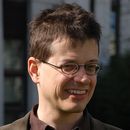
Prof. Stefan Rohdewald is a Professor of East and South-Eastern European History at the University of Leipzig since 2020. Previously, he held positions at Justus Liebig University Giessen (2013-2020), University of Passau (2003-2012), and University of Zurich (1998-2001). His research focuses on transregional histories, religious memory, and intercultural communication in Eastern Europe and the Ottoman sphere. Key roles include coordinating DFG’s Transottomanica program and leading the GiZo partnership with University of Zagreb. Education: PhD (2004, University of Zurich), Habilitation (2012, University of Passau). Research interests span memorial discourses, Ottoman-Europe relations, and sport history. Major projects include studies on Serbo-Bulgarian religious figures and transottoman mobility dynamics. He chairs conferences on minority politics and Ottoman Europe, contributing to over 70 peer-reviewed publications. Award-winning publications include Götter der Nationen (2014) and Vlad der Pfähler (2017). His work bridges Eastern European, Ottoman, and transnational histories through innovative methodological frameworks.
Stefan Rohdewald is a Professor of East and Southeast European History at the University of Leipzig since 2020. His research focuses on the historical entanglements between Eastern Europe and the Middle East, emphasizing transconfessionalism, urban history, and memory discourses. Education: Studied and completed his doctorate at the University of Zurich (2004), habilitation at Passau (2005–2012). Affiliations: Past professor at Giessen (2013–2020), research associate in Passau (2003–2012), and Max Planck scholarship for doctoral research. Research interests span Transottoman studies, examining mobility dynamics between Eastern Europe, the Ottoman Empire, and Persia. He leads the DFG priority program Transottomanica (2017–2023) and contributes to decolonial and transimperial frameworks in Ukrainian history. Recent publications include analyses of geopolitical imaginaries, edited handbooks on the Black Sea region, and studies on Ottoman-Europe knowledge exchange. His work critiques national historiographies and explores multiculturality in Habsburg Bosnia-Herzegovina.
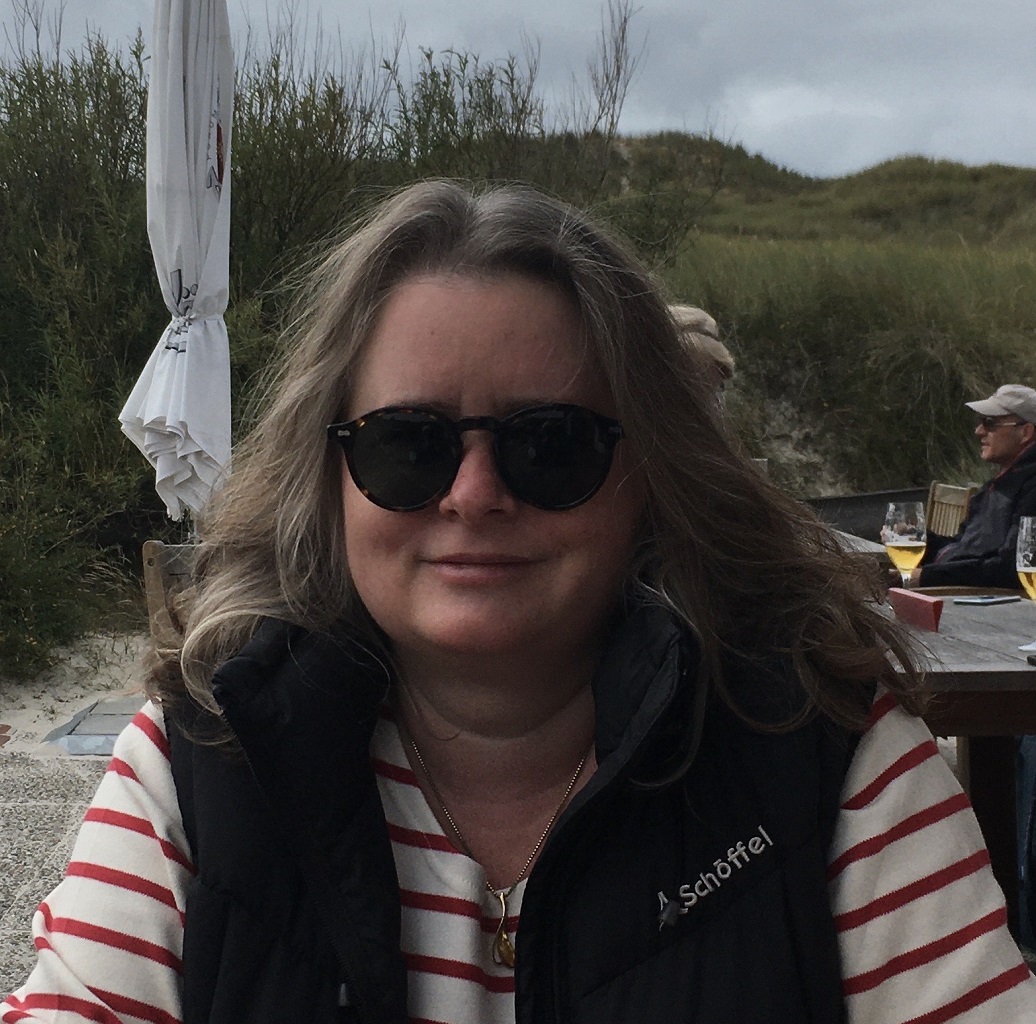
Susanne Lachenicht is a Professor of Early Modern History at the University of Bayreuth since 2009. She holds the Chair of Early Modern History within the Faculty of Cultural Studies . Her academic journey includes a Habilitation at the University of Hamburg (2009), a PhD from Ruprecht-Karls-Universität Heidelberg (2002), and studies at Université Paris 1 Panthéon-Sorbonne (1995). She has held visiting professorships at institutions in France, the UK, and the USA. Education 2009: Habilitation in Early Modern and Modern History, University of Hamburg 2002: PhD, Early Modern and Modern History, Heidelberg 1996: Magister Artium in Medieval, Early Modern, and Modern History/German Literatures, Heidelberg 1995: Maîtrise d'Histoire in Modern History, Université Paris 1 Research Interests focus on knowledge transfer in the Atlantic World , clash of knowledge systems , and formation of colonial discourse through natural histories. She examines how early modern media (e.g., periodicals, books ) facilitated cultural exchange, particularly among Huguenots, Sephardi Jews , and other diasporic groups. Her work bridges confessional boundaries , transnationalism , and historical globalization . Academic Leadership includes co-editing series like Anthem Intercultural Transfer Studies , Forum historische Forschung – Frühe Neuzeit , and Humanities . She serves on the European Research Council (ERC) Advanced Grant Review Panel SH6 and advisory boards for institutions in Paris, Berlin, and Heidelberg. Key Contributions Founded the Summer Academy of Atlantic History (SAAH) (2009) Spokesperson for the Emerging Field 'Cultural Encounters and Transcultural Processes' (2012-2023) Member of the Bayreuth Institute for American Studies (BIFAS)
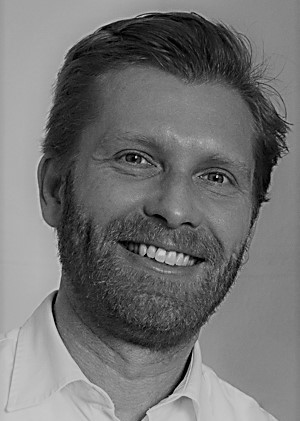
Prof. Dr. Thomas Hahn-Bruckart is Professor of Church History at the Faculty of Theology, University of Rostock, a position he has held since 2021. He previously served as a Research Associate at Johannes Gutenberg University Mainz (2011–2019), the Institute of European History in Mainz (2010–2011), and the University of Hamburg (2020–2021). He completed his habilitation (Dr. theol. habil.) at Johannes Gutenberg University Mainz in 2020 and was a Private Lecturer there. His academic journey began with studies in Protestant Theology at the University of Bonn, the Dormition Abbey in Jerusalem (on a DAAD scholarship), and the University of Kiel, where he earned his doctorate (Dr. theol.) in 2011, winning the Faculty Prize for his dissertation. His research focuses on Church and Dogmatic History, with particular emphasis on Pietism , revival movements , free churches , Reformation history , transconfessional and transatlantic religious exchange , and the cultural history of religious emotions . He has made significant contributions to the study of 19th-century transatlantic evangelical networks, the history of tract societies, and the spatial and social dynamics of early Reformation communities. The trends in his publications reveal a consistent engagement with marginalized religious movements, the formation of religious identities, and the interplay between theology and social context. His work spans monographs, critical editions, editorial leadership (e.g., Pietism Handbook ), and numerous scholarly articles in leading journals and collected volumes, covering themes from emotional cultures in Methodism to church-state relations in free church theology. Faculty Prize of the Christian-Albrechts-University of Kiel for Dissertation Prof. Hahn-Bruckart has been actively involved in academic administration, serving as Vice Dean and Dean of Studies at the Faculty of Theology, University of Rostock, from 2021 to 2024. He has led and contributed to multiple editorial projects, including bibliographies on Free Church theology and co-editing the Ebernburg-Hefte . His work reflects a strong commitment to both scholarly research and the dissemination of theological knowledge through teaching, leadership, and public engagement. He is currently on part-time parental leave and plans a research semester in the summer semester of 2025. He is engaged in ongoing editorial and research collaborations, particularly in the fields of Pietism and Reformation history, and continues to publish extensively in German and international academic venues.
Dr. Simon Siemianowski serves as Assistant Professor of Modern History at the University of Tübingen's Faculty of Humanities, Department of History. His research spans early modern global connections, focusing on Jesuit missions in Mexico, cultural translation processes, and multilingualism's role in colonial contexts. 2024–present: Assistant Professor, Department of Modern History, University of Tübingen 2019–2024: Research Assistant and Doctoral Student, Global History of the Early Modern Period, University of Tübingen 2017–2019: Research Assistant, CRC 1288 "Practices of Comparison" at Bielefeld University Education: 2017: MA in Medieval and Early Modern History (double degree) from Bielefeld and Bologna Universities 2015–2017: Student Assistant and Tutor, Bielefeld University 2011–2015: BA in History and Romance Cultures (Spanish profile), Bielefeld University His research examines linguistic and cultural translation in early modern missionary contexts, particularly Jesuit operations in Mexico (17th–18th centuries). Key themes include language acquisition dynamics, emotional expression in colonial records, and comparative practices in global history. Scientific Activities: Member of DFG Research Network "Mission, Gender and Emotion" (2022–present) Participation in multiple Cambridge-Tübingen Workshops (2021–2025) Active in Herzog August Library research programs He teaches courses in American historiography, scientific writing techniques, and interdisciplinary research methods, maintaining a strong focus on historical epistemology and comparative approaches.
Prof. Dr. Katja Makhotina is a distinguished historian specializing in Eastern European history at the University of Bonn's Department of East European History. With academic roots in St. Petersburg, Karlsruhe, Regensburg, and Munich, she has established herself as a leading scholar in memory studies, Soviet history, and cultural history of Russia and Eastern Europe. Her educational background includes a B.A. from TU Karlsruhe and Universität Regensburg (2006), an M.A. from LMU München's Elite Program in Eastern European Studies (2008), and a Ph.D. with summa cum laude from LMU München (2015) for her dissertation on WWII memory in Soviet and post-Soviet Lithuania. She completed her Habilitation in 2023 with the thesis 'Correction of the Soul: Monasteries as Multifunctional Spaces of Detention in 18th-Century Russia'. Makhotina's research explores the intersections of memory cultures, political history, and legal-religious systems in Eastern Europe. Her current project 'Laboratories of Conscience' investigates courts of conscience in the Russian Empire as transconfessional phenomena. Her work reveals how conscience discourse shaped punishment systems and social control in imperial Russia. She has received numerous prestigious awards including the Bavarian Book Prize (2022) for 'Offene Wunden Osteuropas' (co-authored with Franziska Davies), the Peregrinus-Stiftung Prize (2017), and fellowships from Yad Vashem, DHI Moscow, and the Bonn Center for Dependency and Slavery Studies. Friedrich-Ebert-Stiftung stipend (2005-2008) Robert-Bosch-Stiftung/Theodor-Heuss-Kolleg stipend (2005-2006) Yad Vashem Fellowship (2013) LMU Dissertation Prize (2015) Bavarian Book Prize (2022) Makhotina actively contributes to public discourse through media appearances and serves on advisory boards for memorial sites including the Stiftung Denkmal für die ermordeten Juden Europas and Stiftung Hamburger Gedenkstätten. Her scholarly leadership extends to the international research network 'Enfermements modernes' studying early modern confinement practices.
Dr. Andrey Doronin is a researcher affiliated with the Department of Eastern European History at the University of Bonn and the Max Weber Stiftung (Bonn), and has served as a scientific Mitarbeiter at the Deutsche Historisches Institut Moskau since 2005. His work focuses on the interplay between Renaissance humanism and early modern nation-building in Eastern Europe, with a particular emphasis on Russian and German historiography. Born in 1962 in the Moscow region PhD in History (2001) on Johannes Aventinus Alumnus of Lomonosov Moscow State University (MA in Medieval History) His research explores the cultural memory of the Rus' through transconfessional monastic networks, biblical genealogy, and the adaptation of Western ideas in the Russian Empire. He has edited interdisciplinary volumes on topics like Monastic Culture as a Transconfessional Phenomenon and Narratives of the Rus' in Early Modernity , often bridging art history and textual analysis. Dr. Doronin's academic contributions include fellowships from prestigious institutions like the Volkswagen Foundation and the Gerda Henkel Foundation. His publications analyze how Renaissance humanists constructed historical narratives of Eastern Europe, including studies of figures such as Johannes Trithemius and Hartmann Schedel, and the role of maps and encyclopedias in shaping European identity. Scientific Awards & Grants: Volkswagen Foundation (multiple) Max Planck Institute for European Legal History (multiple) Gerda Henkel Foundation Herzog August Bibliothek Wolfenbüttel He has also contributed to translation projects, including works on Soviet-German relations and Russian Orthodoxy during World War II, and co-edited a handbook on SMAD/Soviet occupation (2009). Currently, he investigates the origins of European historiography and its impact on Eastern Slavic identity formation.
PD Dr. Arwed Arnulf is a Privatdozent at the Institute of Art History, Freie Universität Berlin. A specialist in medieval and early modern art history, his work bridges historical contextualization with methodological innovation in art historical research. PhD (1992) and Habilitation (1998) at Freie Universität Berlin Focused on functional and reception history approaches to artworks His research explores: medieval and early modern artistic reception , humanist patronage networks , iconographic programs , and artistic documentation practices . He has led multiple DFG-funded projects analyzing: Humanist engagement with Renaissance art (2002-2004) Comparative analysis of early modern art explanations (2005-2007) Post-medieval reception of medieval art (2007-) Arnulf's publications demonstrate interdisciplinary expertise spanning epigraphy , theological symbolism , and visual rhetoric . His methodological focus includes Historical discourse reconstruction Literary source analysis for art history Contextualized interpretation of artworks Scientific awards include: DFG Postdoctoral Fellowship (1992-1994) Studienstiftung des Deutschen Volkes Doctoral Fellowship (1990-1992) DFG and Kalkhoff-Rose Foundation Habilitation Fellowships He has supervised: PhD candidates on topics spanning lutheran funerary culture, Vasarian programs, and Renaissance architecture Master's students on gothic sculpture adaptation and liturgical art Current projects focus on transconfessional artistic continuity and pre-Enlightenment antiquarian practices in art reception.
Dr. Anthi Andronikou is an Honorary Research Fellow at the University of St Andrews' School of Art History, specializing in medieval and early modern art with a focus on transcultural visual exchanges in the Mediterranean. She holds a PhD from St Andrews (2015) and has held prestigious fellowships including the British Academy Postdoctoral Fellowship and the Mary Seeger O'Boyle Fellowship at Princeton. Her research explores Crusader art, Byzantine-post-Byzantine dynamics, and Venetian-Cypriot artistic interactions. Education: Bachelor of Arts (BA) in Art and Archaeology, National and Kapodistrian University of Athens Master of Philosophy (MPhil) in Byzantine Art, Athens Master of Letters (MLitt) in Late Medieval/Renaissance Italian Art, University of St Andrews Doctor of Philosophy (PhD) from St Andrews (2015), thesis: 'Italy and Cyprus: Cross-Currents in Visual Culture (Thirteenth and Fourteenth Centuries)' Research Interests: Her work bridges comparative art history and cultural theory, focusing on southern Italy, Cyprus, and the Holy Land. Key areas include: Crusader material culture and transconfessional visual idioms Medieval Mediterranean transcultural networks Byzantine and Venetian art in Cyprus Pseudo-Arabic in Christian contexts Publications: Her monograph Italy, Cyprus, and Artistic Exchange in the Medieval Mediterranean (2022) investigates crosscurrents between Italy and Cyprus. Recent work includes articles on pseudo-Arabic in southern Italian art and co-editing The Pittas Collection (2019). Awards & Activities: Organized the 2021 British Academy-funded workshop 'Pluriversality at Play' Awardee of the Dumbarton Oaks Research Library and British School at Rome Recipient of the Nikolaos Drandakis Prize (2018) Teaching: At St Andrews, she lectures on Byzantine art, Crusader art, Baroque/Rococo art, and the nude body in Byzantine visual culture.
Bryan Brazeau is an Associate Professor and Reader in Liberal Arts at the University of Warwick's School for Cross-faculty Studies. He holds leadership roles as Head of Liberal Arts, Director of Undergraduate Studies, and oversees international initiatives as Venice Academic Lead and Study Abroad Coordinator. His academic journey includes a Ph.D. in Italian Studies from New York University (2015), an M.A. (2010), and a B.A. in Liberal Arts from Concordia University (2008). He is a Senior Fellow of the Higher Education Academy and Fellow of the Warwick International Higher Education Academy. Dr. Brazeau's research focuses on late medieval and early modern Italian literature, with particular emphasis on Torquato Tasso, Lucrezia Marinella, and the intersection of classical reception and Christian epic traditions. His current book project Belonging to Genre: Lucrezia Marinella and Narrative Selfhood in Counter-Reformation Italy explores feminist authorship and identity in early modern Venice. His edited collection The Reception of Aristotle's Poetics in the Italian Renaissance and Beyond (2020) emerged from a groundbreaking conference he organized at the Newberry Library. Brazeau’s teaching emphasizes interdisciplinary, place-based learning, and innovative pedagogy. He has developed courses on digital humanities and the Warwick Venice program. He has received major awards for teaching excellence and pioneered initiatives in problem-based learning and sustainability studies. His work bridges literary analysis with digital humanities, pedagogical innovation, and global cultural engagement. His grants include leadership roles in the Warwick Institute for Engagement Internationalisation Learning Circle and multi-year collaborations like the Processing the Pandemic series. He serves on editorial boards for Italian Studies and Brill's Sources in Early Poetics series, and has organized international conferences on early modern literary criticism and renaissance book history.
Elizabeth Bouldin is an Associate Professor in the Department of Political Science, Public Administration & History at Florida Gulf Coast University (FGCU), housed within the College of Arts & Sciences. She holds a Ph.D. from Emory University (2012). Her research focuses on early modern Europe and the British Atlantic, emphasizing women's roles in religious communities. Key interests include Quaker and Puritan studies, gender dynamics, and the intersection of religion with public life. Her publications explore topics such as 18th-century Quaker women, smallpox inoculation debates among Enlightenment-era religious groups, and transconfessional exchanges among radical Protestants. Her book Women Prophets and Radical Protestantism in the British Atlantic World, 1640-1730 (Cambridge University Press, 2015) examines women’s spiritual leadership in early modern religious movements. Bouldin’s work bridges historical analysis with attention to gender, religion, and social structures. She has contributed to journals like the Journal of Women’s History and Huntington Library Quarterly , and her articles address themes ranging from Puritan ethics to the socialization of children in Quaker communities.