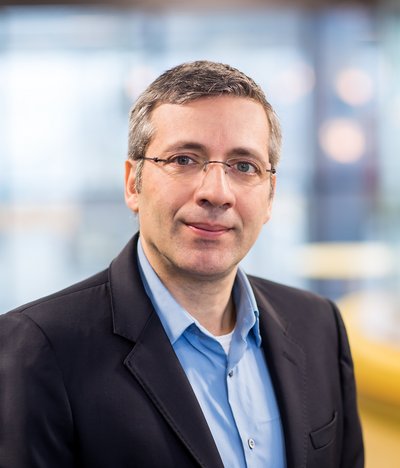
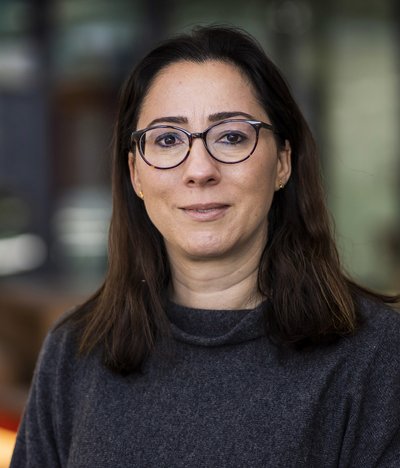
Dusan Milosevic is an Assistant Professor at Eindhoven University of Technology (TU/e) in the Electrical Engineering department. He is affiliated with the Mixed-Signal Microelectronics research group and the RF Sensing & Communication Lab. His research focuses on analog and RF electronics, particularly in power amplifiers, ultra-low-power RF systems, and energy harvesting. He holds an MSc from the University of Niš and a PhD from TU/e. Education: MSc in Electronics and Telecommunications Engineering (University of Niš, 2001) PhD in Electrical Engineering (TU/e, 2009) Research Interests: Design of RF power amplifiers and mm-wave circuits Ultra-low-power communication systems RF energy harvesting technologies High-efficiency analog circuit design His work emphasizes circuit techniques for wireless communication and integrates analog methods with digital control for improved performance. Teaching: Electronic Circuits 1 RF Transceivers 1: Fundamentals Electronics: Selected Topics Collaborations: Active in mm-wave communication, satellite links, and sensor networks. His recent work includes inter-satellite link front-ends and optoelectronic modulation systems. Labs/Teams: Leads the RF Sensing & Communication Lab, focusing on mm-wave systems and energy-efficient RF design.
Eugenio Cantatore is a Full Professor in the Integrated Circuits group at Eindhoven University of Technology (TU/e), where he leads the Emerging Technologies Lab. His research focuses on the design and characterization of electronic circuits fabricated with emerging technologies, as well as the design of ultra-low power micro-systems for biomedical applications. Education: MSc in Electrical Engineering (1993) - Politecnico di Bari, Italy PhD in Electrical Engineering (1997) - Politecnico di Bari, Italy Cantatore's research primarily centers on flexible electronics fabricated on plastic foil, including sensors interfaces, analog-digital converters and transceivers. His work enables the integration of sensors in wearables for improved well-being and seamless medical diagnostics, and can even be embedded in food packaging to measure grocery quality and reduce waste. His research spans multiple disciplines including semiconductor physics, circuit design, and biomedical engineering, with a strong focus on practical applications of emerging electronic technologies. He has made significant contributions to organic thin-film transistor amplifiers and printed flexible electronics. His publications demonstrate a consistent progression from fundamental circuit design with organic transistors to increasingly sophisticated integrated systems with practical healthcare applications. Recent work emphasizes biomedical applications like ECG monitoring systems and ultra-low power sensor interfaces, showing his commitment to translating research into real-world solutions that address societal challenges in healthcare and sustainability. Scientific Awards: IEEE Fellow (2016) - for contributions to the design of circuits with organic thin film transistors Cantatore has been actively involved in professional service, having chaired the Technology Directions subcommittee of ISSCC from 2013 to 2016 and served as ISSCC program chair in 2019. He is currently a member of the ISSCC Executive Committee, member at large of the SSCS AdCom, Associate Editor of TCAS1, and Editor in Chief of the Open Journal of the Solid-state Circuits Society. He has authored or co-authored more than 200 papers in journals and conference proceedings, and 13 patents or patent applications. He leads the Emerging Technologies Lab at TU/e, which works closely with the Center for Care & Cure Technology Eindhoven and the Center for Quantum Materials and Technology Eindhoven. His research bridges fundamental semiconductor physics with practical applications in healthcare technology, environmental sustainability, and next-generation flexible electronic systems.
Kevin Williams is Full Professor and Chair of Photonic Integration at Eindhoven University of Technology. His research focuses on scaling photonic circuits for energy-efficient optical components in communications and sensing. Key research themes include: 1) Generic integration methodologies, 2) Heterogeneous integration of photonic components with silicon electronics, and 3) Integrated nano-photonics using InP membranes. His work enables high-speed optical transceivers and novel computing paradigms. Honors include the 2010 NWO Vici Award for ultrafast optical processor chip research and the Royal Society University Fellowship. Current projects focus on InP-based photonic integration platforms for applications in AI acceleration and optical communications.
Peter Baltus is Full Professor of High-Frequency Electronics in the Department of Electrical Engineering at Eindhoven University of Technology. With industry experience at Philips/NXP and academic credentials from TU/e, his research focuses on high-frequency integrated circuit and system design. Research domains include: Ultra-low power transceivers Millimeter-wave wireless power transfer Efficient wideband beamforming Sensor swarm networks RF system architecture His educational contributions feature innovative RF laboratory designs for remote learning environments. Current projects include photonic-electronic integration and satellite communication systems.
Marion K. Matters-Kammerer is a Full Professor of Electrical Engineering at Eindhoven University of Technology, leading research in terahertz (THz) and millimeter-wave systems. She holds positions in the Center for Wireless Technology, THz Electronics and Integration Lab, and RF Sensing & Communication Lab. Her expertise includes integrated circuits, antenna design, and power amplifier systems. She has led EU projects like 3DmicroTune and ULTRA, and co-authored over 70 journal/conference papers with 13 US patents. Education: MSc in Physics from École Normale Supérieure (Paris) and TU Berlin (1999), PhD in Physics from RWTH Aachen (2007). Past roles include Senior Scientist at Philips Research (1999–2011) and Guest Professor at RWTH Aachen (2009–2010). Research focuses on THz spectroscopy, mm-wave integrated circuits, and energy-efficient wireless systems. Key projects involve THz biosensing, 60 GHz sensor networks, and co-integration of photonics and electronics. Her work addresses UN SDGs like affordable and clean energy, and industry-academia collaboration via NXP Smart Mobility projects. Recent articles highlight advancements in mm-wave power amplifiers, waveguide integration, and radar signal processing. Grants include €2.5M for TeraIBs (2025–2028) and €1.8M for Future Wireless Interfaces (2024–2029). Labs include THz Electronics Lab and RF Sensing Team, advancing sensor and communication technologies.
Patty Stabile is an Associate Professor in the Department of Electrical Engineering at Eindhoven University of Technology (TU/e), specializing in Indium Phosphide (InP) photonic integrated circuits for next-generation optical networks and computing systems. She is affiliated with the Electro-Optical Communication group and EAISI High Tech Systems. MSc in Electrical Engineering (2004) from Politecnico di Bari PhD in Nanoscience (2008) from National Nanotechnology Laboratory, Lecce Her research focuses on integrating electronics and photonics for ultra-high-speed data routing, leveraging optical parallelism inspired by brain architecture. She also explores low-cost passive coupling concepts and novel materials like 2D materials to enhance photonic platforms. Key contributions include pioneering work on InP-based switch matrices and high-speed transceiver modules, with publications in Microsystems & Nanoengineering , IEEE Photonics Technology Letters , and Journal of Optical Communications and Networking . She received the Early Career Women in Photonics – Special Recognition in 2016. Active in academic communities, Patty serves on the IEEE Photonics Benelux Chapter board, is a member of the TU/e Young Academy of Engineering, and contributes to educational programs in automotive dynamics and brain-inspired optical computation.
Diego Romero is a Researcher at the Signal Processing Systems department within the School of Electrical Engineering at Eindhoven University of Technology . His work focuses on optimizing Light-Fidelity (LiFi) systems, particularly through LED modeling and thermal management in optical wireless communication links. Education: Pursuing a Doctoral Degree in Electrical Engineering. His research interests include: Optical Wireless Communication LED Technology Thermal Effects on Communication Performance High-Current Density Applications Diego has contributed to 6 research outputs between 2022 and 2025, primarily in LiFi optimization, LED thermal modeling, and power-efficient transmitter design. His work intersects with the IEEE Industrial Electronics Society and the International Society for Optical Engineering (SPIE) . Current projects include OptiLiFi: Optimising LiFi Communication , examining exponential growth in LED-based networks, error signals, and mutual interference mitigation.
Piyush Kaul serves as an Assistant Professor in the Integrated Circuits group within the Department of Electrical Engineering at Eindhoven University of Technology (TU/e). His academic appointments include affiliation with the Center for Terahertz Science and Technology Eindhoven and the Broadband Electronics and Electronic-Photonic Integration Lab. His research interests span multiple specialized areas in high-frequency electronics, with primary focus on millimeter wave/THz integrated circuit design , electronic components for electro-optical applications (including driver amplifiers, TIAs, and VGAs), and IC to Antenna transitions for packaging and integration . Key research goals include developing integrated electronics-based spectrometers at THz frequencies, broadband amplifiers in electronic-photonic systems, and effective packaging solutions for silicon ICs with antennas. Analysis of his recent publications (2021-2024) reveals a consistent research trajectory focused on waveguide integration techniques for mm-wave applications, particularly examining power amplifier systems, spatial power combiners, and tolerance analysis for silicon IC-waveguide interfaces. His work demonstrates strong collaboration within TU/e's Electrical Engineering department, frequently co-authoring with Alhassan Aljarosha, A.B. Smolders, M.K. Matters-Kammerer, and Rob Maaskant. NWO Vidi grant no. 14852 provides funding for his research Co-chair of the technical programme committee for European Microwave Week 2025 Dr. Kaul teaches courses including RF transceivers 2: design and Electronics: selected topics , contributing to TU/e's Electrical Engineering curriculum. His office is located at Flux 7.084, and he can be contacted at p.kaul@tue.nl.
Boris Karanov is a post-doctoral research member at the Signal Processing Systems Group within the Department of Electrical Engineering at Eindhoven University of Technology since October 2020. His research focuses on applying deep learning techniques to digital signal processing in optical fibre communications. His academic background includes a Ph.D. in Electrical Engineering from University College London (awarded December 2020), where his research focused on developing new coding and detection methods for communication over the nonlinear dispersive optical fibre channel using deep learning. He also holds joint M.Sc. degrees in Photonic Networks Engineering from Aston University, Osaka University, and Technical University of Berlin (2016), and a B.Sc. in Telecommunication Engineering from Technical University of Sofia (2014). Dr. Karanov's research interests span optical fiber communications, digital signal processing, deep learning applications in communications, nonlinear fiber effects, and transceiver design. His work bridges theoretical communication principles with practical AI-driven solutions for next-generation communication systems. His recent publications demonstrate a strong trend toward applying neural networks and deep learning techniques to solve challenging problems in optical communications, radar signal processing, and speech enhancement. The research shows increasing focus on robustness of AI solutions under real-world constraints and imperfect channel conditions. Nokia 'Most innovative AI solution' award (2018) for pioneering work in machine learning applications to communication systems 'Best paper award' from IEEE/OSA Journal of Lightwave Technology (2021) Lombardi prize from Electronic and Electrical Engineering department at UCL (2021) for the most impactful thesis Dr. Karanov is actively involved in multiple research projects including RAISE SPS (Robust AI for Safe radar signal processing), RAIDAR (AI for RaDAR), and ICONIC (Increasing the Capacity of Optical Nonlinear Interfering Channels), collaborating with institutions across Europe. His work in the Signal Processing Systems Group at Eindhoven University of Technology continues to push the boundaries of applying AI to communication challenges.
Jules Vliem is a Doctoral Candidate at the Eindhoven University of Technology , affiliated with the Integrated Circuits group in the College of Engineering . His work focuses on RF coil design for MRI hardware development , spanning ultra-high to ultra-low field applications. Education : BSc (2021) and MSc (2023) in Electrical Engineering from TU/e Research Focus : MRI hardware, RF coil optimization, and electromagnetic engineering for medical imaging Key Collaborations : MRI Hardware Development Lab, international research teams
Sander Baas is an Education/Research Officer in the BioNanoTechnology department at Wageningen University. His role involves academic research and educational initiatives, focusing on developing innovative hardware solutions for NMR spectroscopy and microscopy. He holds a PhD from Wageningen University, awarded in 2024, for his thesis on DIY NMR systems, magnets, and hyperpolarization hardware. His academic career has been centered around interdisciplinary research at the intersection of engineering and life sciences. Education: Sander Baas completed his educational background at Wageningen University, where he earned his PhD in 2024. His academic journey includes: PhD in BioNanoTechnology (2024) Research Interests: Sander Baas’ research interests span NMR Spectroscopy, Nanobiotechnology, and Microfluidics. He is deeply involved in designing advanced transceiver ASICs for multinuclear NMR applications and optimizing magnet systems for enhanced spectral resolution. Additionally, his work explores the integration of CRISPR technology with microscopy frameworks for in vivo tracking and the repurposing of 3D printers into biomedical tools like programmable syringe pumps. His studies often bridge electronics engineering with molecular biology, aiming to create accessible and high-performance instrumentation for scientific research. Articles Overview: His recent publications (2021–2023) emphasize the development of affordable and versatile NMR instrumentation, including a 2 T magnet with high sensitivity and a syringe pump derived from a 3D printer kit. He also focuses on microfluidic applications, such as hyperpolarization techniques using CIDNP, and advancing ASIC-based transceiver systems for multinuclear NMR. Earlier work (2018–2019) highlights contributions to single-molecule localization microscopy and CRISPR/dCas9 tracking in live bacteria, demonstrating a consistent thread of innovation in both hardware and biological imaging technologies. Scientific Awards: No scientific awards mentioned. Advising & Grants: In his academic journey, Sander Baas was a PhD candidate in the NanoSpin project (2018–2024), supervised by Prof. A. Velders and co-supervised by Dr. V. Saggiomo. This project addressed challenges in NMR spectroscopy signal intensity and polarization transfer within nanobiotechnology. No formal grants or advising roles are explicitly listed in the provided texts. Labs & Teams: He contributed to the NanoSpin research initiative at Wageningen University, focusing on NMR spectroscopy and nanobiotechnology advancements. Collaborations include work with the Universidad de Castilla-La Mancha on microfluidic datasets and open-source hardware projects. His research also involves partnerships with institutions in Biomedical Engineering and Electronics Design.
Zhaowei Chen is a University Researcher in the Department of Electrical Engineering at Eindhoven University of Technology, specializing in photonic integration for high-performance optical systems and datacenter interconnects. His research focuses on Photonics and Optical Engineering , particularly in developing Multi-Terabit Datacenter Interconnects through co-integration of photonics and electronics, and designing Polarization-Insensitive Semiconductor Optical Amplifiers (SOAs) for optical switches. Key themes include Service-Oriented Architecture , Photonic Integrated Circuits , and System-on-Chip (SoC) optimization. Recent work highlights trends in Photonics-Electronics Integration (2023) and IMOS Technology (2021), addressing polarization sensitivity and high-speed data transmission in optical networks. Collaborations span Europe and Asia, with strong ties to institutions like Wuhan University of Technology (via recent media contributions) and TU/e's Photonic Integration group.
Zaher Mahfouz is a Lecturer in Radio Systems at the University of Twente. His research focuses on wireless communication channel modeling, electromagnetic compatibility (EMC), and ultra-narrowband network optimization. Key areas include propagation channel characterization, interference analysis, and reverberation chamber testing. Research Interests: Propagation channel modeling in reverberation chambers Ultra-narrowband communication for low-power applications EMC testing methodologies Wi-Fi and sensor network coexistence Radio frequency measurement techniques Recent Research Trends: Zaher's work explores the feasibility of ultra-narrowband communication in crowded 2.4 GHz bands, experimental characterization of propagation channels using multiprobe techniques, and the impact of narrowband interference on Wi-Fi systems. His studies often utilize reverberation chambers for empirical validation. Collaborations: Collaborators include researchers from academic and industry institutions, focusing on channel modeling and wireless system robustness.
Peter Baltus is a Full Professor at Eindhoven University of Technology (TU/e) within the Department of Electrical Engineering , leading the Integrated Circuits group. He is affiliated with multiple centers including the Center for Wireless Technology Eindhoven , RF Sensing & Communication Lab , and Center for Astronomical Instrumentation . MSc and PhD in Electrical Engineering from TU/e (1985, 2004) Industry experience at Philips (22 years) and NXP His research focuses on high-frequency integrated circuits and unconventional wireless systems , emphasizing low-power design and real-world applications . Key projects include: Low-latency wireless transceivers Millimeter-wave wireless power transfer for sensors Swarm robotics for pipeline and volcano exploration Thermal modeling in photonic/electronic ICs Remote RF education platforms Recent publications highlight advancements in satellite communication modules (2024) and thermal prediction methods (2024), alongside educational reform proposals (2023). His work bridges analog/RF circuit design with system-level innovation , featuring 16 US patents and over 150 peer-reviewed papers. Veder Award (2006) Best Master Tutor at TU/e (2013) He has directed the Centre for Wireless Technology (2007-2016) and contributes to MOOC development and curriculum reform as evidenced by his 2023 conference paper on addressing systemic challenges in Electrical Engineering education.
Vojkan Vidojkovic is an Associate Professor in the IC design group within the Electrical Engineering department at Eindhoven University of Technology (TU/e). With extensive experience bridging academia and industry, he contributes significantly to RF and mm-wave research and education at TU/e. Education: MSc degree from University of Nis, Serbia (1999) PhD degree from Eindhoven University of Technology, Netherlands (2007) Professor Vidojkovic's research focuses on RF integrated circuits and systems for wireless communications across multiple generations (2G through 5G and mm-wave). His work spans satellite communications, radar sensing technology, and next-generation wireless systems. He combines theoretical expertise with practical industry experience to develop power-efficient RF solutions for inter-satellite links, automotive radar, and communication systems. His recent publications demonstrate expertise in RF beamforming transmitters, low-power radar architectures, and mm-wave systems for communications and sensing. These works showcase advancements in efficiency, compactness, and performance for next-generation wireless applications. Scientific Recognition: TPC member of International Solid-State Circuit Conference (ISSCC) 2015-2016 Author of 3 books Holder of 5 patents Author of 3 journal papers, 3 invited papers, and 22 conference papers Professor Vidojkovic has successfully led multidisciplinary teams in both academic and industrial settings. His career path has interwoven scientific research with practical industry applications, resulting in multiple generations of transceivers that progressed from concept to high-volume production for leading phone manufacturers. He currently teaches courses including Electronic and Photonic Components, Components in Wireless Technologies, Fundamentals of Electronics, Advanced CMOS Design, and RF Transceivers 2: Design. Research Groups: RF Sensing & Communication Lab Integrated Circuits Group Center for Wireless Technology Eindhoven