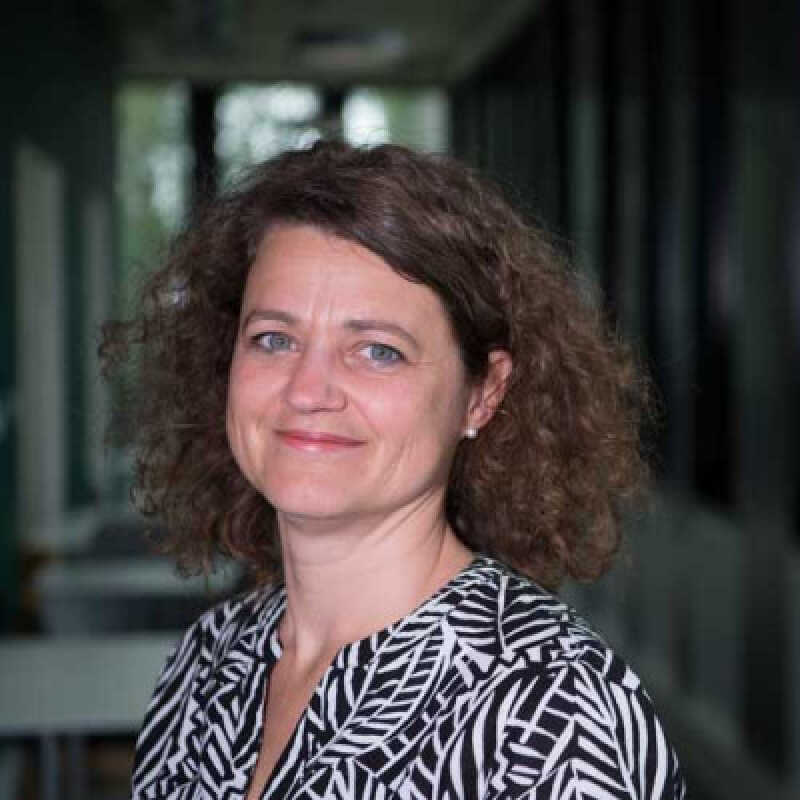
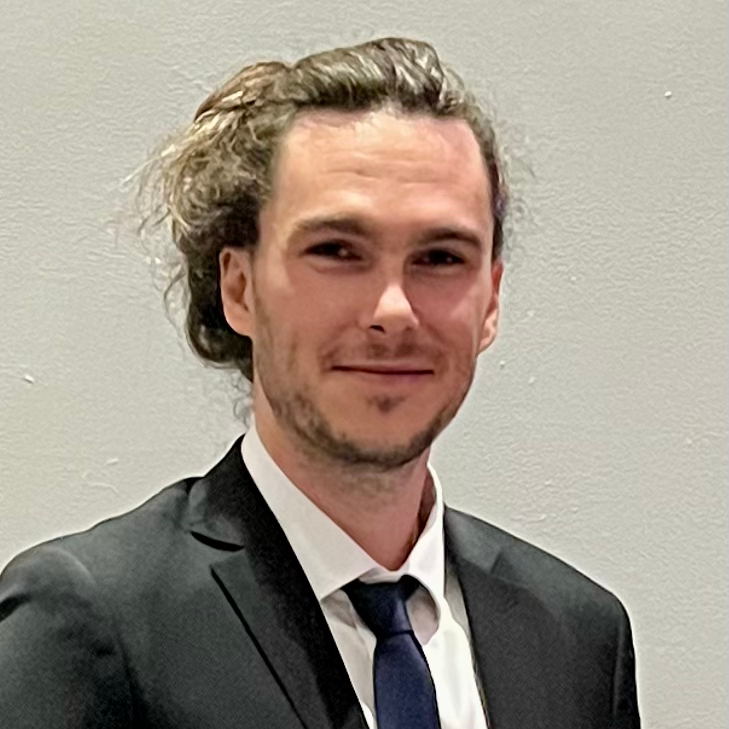
Jacquelien Scherpen is a Professor at the University of Groningen, currently serving as Rector Magnificus. She holds a position in the Engineering and Technology institute Groningen (ENTEG) within the Faculty of Science and Engineering. Her academic journey includes a PhD in Applied Mathematics from the University of Twente (1994) and post-doctoral roles at Delft University of Technology before joining Groningen in 2006. She has been a leader in systems and control research, with roles as Scientific Director of ENTEG (2013–2019) and Director of the Groningen Engineering Center (2016–2023). Her research focuses on model reduction, nonlinear control, smart energy systems, and distributed control applications in smart grids. Key achievements include the Automatica Best Paper Prize (2020), Knight of the Order of the Netherlands Lion (2019), and the Prince Friso Engineer of the Year Award (2023). She has held leadership roles in organizations like the European Control Association (EUCA) and is a Fellow of IEEE. Her professional activities include editorial roles in journals like the IEEE Transactions on Automatic Control and the International Journal of Robust and Nonlinear Control. She has organized major conferences, including the European Control Conference (ECC) 2021 and 2023. Her work bridges theoretical advancements with practical applications, emphasizing sustainability and engineering innovation.
Seffetullah Kuldas is currently a Postdoctoral Fellow at the University of Oslo's Department of Media and Communication, funded by a Marie Skłodowska-Curie Actions – Individual Fellowship (MSCA–IF). His research focuses on ethnicity-based parenting for children’s online safety, educational resilience against bullying and socioeconomic challenges, and unconscious cognitive processes. He previously held a postdoctoral position at Dublin City University’s Anti-Bullying Centre, studying Roma children’s experiences with ethnicity-based bullying. His work integrates empirical research with policy recommendations, often using EU Kids Online datasets and peer-reviewed publications. Key research interests include parental mediation strategies, transactional resiliency frameworks, and the intersection of unconscious mind theories with educational practices. He has contributed to developing validated scales for anti-bullying self-efficacy and has explored digital divides in online safety awareness. Teaching roles: Guest Lecturer at Dublin City University and the University of Science Malaysia, covering topics like ethnicity-based bullying, metacognition, and research methodologies. Awards: MSCA–IF Fellowship, Best Research Award, and multiple Best Publication accolades. Publications span 20+ peer-reviewed articles in journals like International Journal of Communication and Youth & Society , focusing on bullying prevention, digital parenting, and cognitive resilience. His projects emphasize marginalized communities, including Roma children and ethnic minorities in Europe, addressing both academic and societal impacts through collaborative research and policy engagement.
Dr. Sophie Vigneron is a Reader in Law and Director of Graduate Studies at the University of Kent's Kent Law School. Her research focuses on art and cultural heritage law, including the regulation and protection of heritage (tangible/intangible, movable/immovable) under national and international frameworks. She holds a joint PhD from the Universities of Nancy and Kent, awarded the prize for best private law thesis in 2005. Her roles include Editor-in-Chief of the International Journal of Cultural Property since 2023, and leadership in projects like the AHRC network on Cultural World Heritage Sites. She has served on review panels for the EU, ESRC, and AHRC. Research Interests: Regulation of art trade, heritage law intersections with human rights, protection during conflicts, restitution of cultural objects (e.g., WWII looting), and UNESCO conventions implementation. Publications span cultural heritage governance, Brexit impacts on heritage, repatriation of human remains, and authenticity in art law. She regularly contributes to legal encyclopedias and journals, with over 50 publications indexed in the Kent Academic Repository. Professional Memberships: Board Member of ISCHAL, co-convenor of the Socio-Legal Studies Association's Art & Heritage stream.
Associate Professor Ke Deng is affiliated with the School of Computing Technologies at RMIT University. His research focuses on urban computing, spatiotemporal data analysis, and social networks, with expertise in data mining and artificial intelligence. He holds a PhD in Computer Science from The University of Queensland (2007), a Master's in Information and Communication Technology (2001), and a Bachelor's in Electrical Engineering (1994). Previously, he was a postdoctoral researcher at CSIRO ICT Centre and a researcher at Huawei Noah's Ark Lab. His work emphasizes practical applications of AI, such as fairness-aware recommendation systems, traffic scenario modeling, and energy-efficient protocols for IoT. Dr. Deng's career includes roles as an acting lecturer at The University of Queensland and co-supervisor of a PhD student. He has supervised numerous research projects, including advancements in quantum annealing for recommenders, fake news mitigation via reinforcement learning, and smart human sensing using millimeter-wave radar. His research outputs span journals like ACM Transactions on Information Systems and IEEE Transactions on Knowledge and Data Engineering. Education: PhD in Computer Science, The University of Queensland (2007) MSc in Information and Communication Technology (2001) BEng in Electrical Engineering (1994) Key Research Themes: Urban computing and smart cities Mechanisms for fair AI systems Energy-efficient IoT protocols Spatiotemporal data mining Grants and Collaborations: ARC Australian Postdoctoral Fellowship (2010–2012) Research at Huawei Noah's Ark Lab (2013) His recent projects highlight interdisciplinary innovation, such as quantum computing for feature selection and self-supervised networks for traffic scenario clustering. Dr. Deng is actively involved in mentoring PhD/Masters students and contributes to RMIT’s research initiatives in AI and urban informatics.
Cristiano Politowski is an Assistant Professor in the Department of Computer Science at Ontario Tech University's Faculty of Science. His research focuses on software engineering for video games, automated testing, AI4SE, and empirical studies. He holds a Ph.D. in Software Engineering from Concordia University (2022), an M.Sc. in Computer Science from Universidade Federal de Santa Maria (2017), and a B.Sc. in Computer Science from Universidade Regional do Estado do Rio Grande do Sul (2014). Prof. Politowski has extensive postdoctoral experience at Université de Montréal (GEODES group) and École de Technologie Supérieure (ÉTS), focusing on game engine architecture, requirements specification, and certifiable RTOS systems. He has organized workshops like ASE4Games 2021/2022 and FaSE4Games 2024, emphasizing game software engineering. His research interests span video game development challenges, software testing methodologies, and leveraging AI for software engineering. Notable projects include analyzing game engine subsystem coupling, assessing video game balance with autonomous agents, and curating datasets like PlayMyData. Prof. Politowski has secured $20K from MITACS for a 5G infrastructure project during the pandemic and received the Concordia Accelerator Award (2021). His work has been published in venues like MSR, ICSE, and IEEE Transactions.
Jeff Huang is an Associate Professor in the Department of Computer Science & Engineering at Texas A&M University, affiliated with the College of Engineering. His research focuses on software engineering, programming languages, concurrency, and runtime verification, with notable contributions to static analysis, race detection, and vulnerability mitigation in concurrent systems. Education: Postdoc, Computer Science, University of Illinois at Urbana-Champaign (2013-2014) Ph.D., Computer Science, Hong Kong University of Science and Technology (2012) B.E., Electrical Engineering, National University of Defense Technology, China (2008) Research Interests: Huang's work bridges theoretical foundations and practical applications in concurrency debugging, static analysis tools, and cybersecurity for smart contracts. He emphasizes scalable solutions for pointer analysis, race detection, and vulnerability detection in distributed systems and blockchain technologies. Recent Trends in Publications: His recent work explores AI-driven program execution (e.g., SGLang), blockchain security (e.g., Smart Contract analysis), and dynamic/static analysis techniques for memory safety. These studies underscore advancements in automated tools for securing concurrent and distributed systems. Awards: 2023 ACM SIGSOFT Distinguished Paper Award 2019 DARPA Young Faculty Award 2016 NSF CAREER Award 2013 ACM SIGSOFT Outstanding Doctoral Dissertation Award Advising & Grants: Huang has advised PhD students including Bozhen Liu and Peiming Liu, who have contributed to OpenMP race detection and pointer analysis tools. His grants include NSF awards for pointer analysis as a service and DARPA funding for young faculty research. Labs & Teams: He leads the O2 Lab, focused on concurrency verification and cybersecurity, collaborating with industry partners like Coderrect Inc. and DOE on scalable static analysis frameworks.
Paul MacMahon is an Associate Professor of Law at LSE Law School and Director of the Executive LLM Programme. He specializes in contracts, commercial law, and international arbitration. Before joining LSE, he taught at Harvard and Cambridge Universities. His education includes degrees from Oxford (BA, BCL, DPhil) and Harvard (JD), with clerkships under U.S. Judges Guido Calabresi and John Gleeson. He is also a member of the New York Bar and serves as a Visiting Professor at Católica Global School of Law in Lisbon. Professor MacMahon’s research focuses on contractual obligations, dispute resolution mechanisms, and the intersection of common law with international commercial principles. His work explores topics such as contractual uncertainty, arbitration separability, and the historical foundations of legal jurisdictions. He has contributed to high-impact journals like the Modern Law Review , Cambridge Law Journal , and Lloyd's Maritime and Commercial Law Quarterly . His courses include LL142 Contract Law, LL143 Tort Law, and LL415E Fundamentals of International Commercial Arbitration. He advises on English law in foreign court proceedings and maintains active engagement with legal practice through his academic roles.
Petar Popovski is a Professor at the Department of Electronic Systems within the Technical Faculty of IT and Design at Aalborg University, Denmark. His research focuses on next-generation wireless communication systems, with a strong emphasis on ultra-reliable low-latency communication (URLLC), Internet of Things (IoT), multiple access, and 6G technologies. He leads several high-impact research projects, including the Classique - Center for Classical Communication in the Quantum Era funded by the Danish National Research Foundation and WATER (Wireless Architectures for intelligent and Trusted connectivity in the posT-5G ERa) supported by Villum Fonden. His research interests span key areas in modern communication theory and systems, including random access , non-terrestrial networks , satellite communication , and machine learning for reliable communication . He is actively involved in advancing the integration of sensing and communication, digital twin technologies, and quantum-era classical communication frameworks. The recent publications highlight a strong trend toward deterministic and reliable access in wireless networks, integration of sensing and communication for industrial automation, and novel physical-layer techniques using reconfigurable intelligent surfaces. These works are published in top IEEE journals such as IEEE Transactions on Communications , IEEE Transactions on Haptics , and IEEE Transactions on Vehicular Technology . Award highlights include the Best Student Paper Award (2021) , recognizing his mentorship and collaborative research excellence. Prof. Popovski serves as a principal investigator (PI) and supervisor in multiple research projects, securing significant funding from national and international bodies such as the Danish National Research Foundation and the European Space Agency (ESA). He hosts visiting researchers regularly and contributes to scientific leadership through editorial roles and conference participation. He is a key figure in the Connectivity section at Aalborg University and leads cutting-edge research in future wireless systems, contributing to both theoretical foundations and practical implementations in smart infrastructure, space communication, and dependable 6G networks.
Yan Kyaw Tun is a Tenure Track Assistant Professor in the Department of Electronic Systems at Aalborg University's Technical Faculty of IT and Design, located in Copenhagen, Denmark. His research lies at the intersection of wireless communications, edge computing, and artificial intelligence, with a strong focus on next-generation networks (5G/6G), UAV-assisted systems, and intelligent resource management. His educational background includes a Ph.D. in Computer Engineering from Kyung Hee University, South Korea, where he was awarded the Best Ph.D. Thesis Award in 2021, and a Bachelor of Engineering in Marine Electrical Systems and Electronic Engineering from Myanmar Maritime University. Dr. Tun's research interests span Edge Computing , Multi-Access Edge Computing (MEC) , Resource Allocation , Unmanned Aerial Vehicles (UAVs) , Reinforcement Learning , Energy Efficiency , and Integrated Sensing and Communication (ISAC) . His work leverages AI and optimization techniques to enhance the performance of wireless networks, particularly in space-air-ground integrated systems and satellite-HAP environments. The recent publications highlight a clear trend toward intelligent and sustainable networking: the integration of STAR-RIS (Simultaneously Transmitting and Reflecting Reconfigurable Intelligent Surfaces), Federated Learning for satellite-HAP systems, and AI-driven optimization for UAV trajectories and beamforming. These works are published in high-impact venues such as IEEE Transactions on Mobile Computing and IEEE ICC , showcasing his leadership in cutting-edge communication technologies. His scientific accolades include: IEEE ComSoc Outstanding Young Researcher Award for EMEA Region (2024) Best Ph.D. Thesis Award (2021) Student Best Paper Award at APNOMS 2019 Korea Network Operation and Management Conference Award (2020) Korea Computer Congress 2018 Award Dr. Tun is actively engaged in the academic community as an advisor and grant participant. Though no direct advisees are listed, his involvement in large collaborative projects—evidenced by co-authorship with senior researchers like Prof. Choong Seon Hong—indicates mentorship and team leadership. He has served on the editorial boards of IEEE Internet of Things Journal , IEEE Open Journal of the Communications Society , and IEEE Network , and has secured research support through participation in IEEE-organized workshops and special issues. He is a key organizer of upcoming workshops, including the 'Sustainable AI for Next-Generation Wireless Communications and Networking' at IEEE GLOBECOM 2025 and the 'Digital Twin Networks' workshop at IEEE/CIC International Communications in China 2025, reflecting his role in shaping future research directions in intelligent and green networking.
Sotirios K. Goudos is a Professor at the Department of Physics, Aristotle University of Thessaloniki (AUTH), Greece, and Director of the ELEDIA@AUTH lab within the ELEDIA Research Center Network. His research focuses on antenna design, evolutionary algorithms, wireless communications, machine learning, and IoT applications. He holds a B.Sc. in Physics (1991), M.Sc. in Electronics (1994), Ph.D. in Physics (2001), and additional qualifications in Information Systems and Electrical Engineering. Prof. Goudos is a Senior Member of IEEE and serves as Editor-in-Chief of the Telecom open access journal (MDPI) and Associate Editor for IEEE Transactions on Antennas and Propagation, IEEE Access, and IEEE Open Journal of the Communication Society. He has organized multiple special issues in journals like EURASIP Journal on Wireless Communications and Networking and has authored/edited books on antennas and AI in networks. His awards include multiple IEEE Access Outstanding Associate Editor recognitions (2019–2023) and inclusion in Stanford University's top 2% scientists list (2020–2024). He teaches courses on telecommunications, Java programming, and microwave systems, and has supervised over two dozen master's students since 2009. His work spans antenna optimization, AI-driven communications, and IoT security, with contributions to 5G/6G, RIS systems, and smart agriculture. Prof. Goudos actively contributes to IEEE Greece Section leadership roles, including Secretary (2022) and Vice-Chair (2023–2024). His labs and teams focus on ELEDIA's research in electromagnetics, optimization, and AI applications.
Dr. Valentina Tamma is a Lecturer in the Department of Computer Science at the University of Liverpool. Her research focuses on ontologies in open and distributed environments, including Semantic Web, Multi-Agent Systems, and Knowledge Graphs. She leads the Knowledge-Based Agents research group and serves as Area Editor for the Transactions on Graph Data and Knowledge journal. Her recent work explores the intersection of Generative AI and Semantic Web technologies, including competency question engineering, ontology alignment, and knowledge evaluation frameworks. She has co-authored 15+ publications (2023-2025) on topics like ontology reuse, question difficulty prediction, and autonomous agent governance. Dr. Tamma has held significant editorial and organisational roles, including Programme Co-Chair for ISWC 2020 and co-chair of the Alan Turing Institute's Knowledge Graphs Interest Group. She teaches modules such as Ontologies and Semantic Web (COMP598) and Planning Your Career (COMP221). Scientific contributions include: Ontology modularization techniques Negotiation protocols for semantic alignment Knowledge evaluation frameworks AI-driven competency question generation Knowledge Graph applications in life sciences
Professor Asif Gill is Head of Discipline for Software Engineering at the School of Computer Science, University of Technology Sydney (UTS), where he was promoted to Professor of Computer Science in January 2024. He also serves as Director of the DigiSAS Research and Innovation Lab and is actively involved in the Global Big Data Technologies Centre at UTS. As a founder of both the DigiSAS Lab and the Future Generation Enterprise Architecture Community of Practice (FGEA CoP), he has established integrated teaching-research-engagement frameworks that translate academic research into practical applications while enhancing graduate employment opportunities. Professor Gill's research interests span Adaptive Enterprise Architecture , Agile Software Development , and Design Science Research & Innovation , with a particular focus on architecting large-scale data-intensive enterprise software systems. His work addresses challenges across academia, industry, government, and society, with significant contributions to AI systems architecture, digital identity management, and enterprise knowledge graphs. His applied research has resulted in numerous collaborations with organizations including the Reserve Bank of Australia, Revenue NSW, Capsifi, Data Zoo, and the NSW Department of Planning, Industry and Environment. His publication record includes 3 books and over 190 articles in major academic journals such as IEEE Transactions on Professional Communication, Information and Management, and Information Systems. His recent work demonstrates a consistent focus on cutting-edge topics in enterprise architecture, AI systems, and digital identity, with multiple publications appearing in 2024-2025. His research trajectory shows a clear evolution from foundational work in agile software development toward more sophisticated integration of AI, enterprise architecture, and data governance. Fellow of the Australian Computer Society (ACS) Fellow of DSE (ESCP Center for Design Science in Entrepreneurship) Senior Member IEEE Associate Editor, IEEE Transactions on Technology & Society Associate Editor, Springer Nature Discover Data journals Member, Data Sharing Committee, IFIP Technical Committee 8.1 Member, Standards Australia Software and Systems Engineering Committee IT-015 Professor Gill has successfully secured numerous research grants from 2019-2026, totaling significant funding for projects related to digital identity, enterprise architecture, and AI systems. His approach emphasizes industry-academia collaboration, with many projects involving direct partnerships with government agencies and industry organizations. He has supervised multiple PhD and Master's students through industry-sponsored scholarships and maintains active collaborations with researchers across multiple institutions. Leading the DigiSAS Research and Innovation Lab, Professor Gill has created an environment that bridges theoretical research with practical implementation. The lab focuses on developing frameworks and tools for adaptive enterprise architecture, with particular emphasis on AI-enabled systems, data governance, and digital identity solutions. His work on the Data Satellite Architecture represents a significant contribution to combating data pollution in federated digital ecosystems.
Hatem Abou-Zeid is an Assistant Professor at the Department of Electrical and Software Engineering in the Schulich School of Engineering , University of Calgary. He holds Adjunct Professor appointments at Queen’s University, Carleton University, and Ontario Tech University, Canada. With a Ph.D. in Electrical and Computer Engineering from Queen’s University (2014), his academic journey includes 7 years of industry research at Ericsson and Cisco , where he led R&D projects resulting in 15+ patents. Queen's University (Ph.D., Electrical and Computer Engineering) Arab Academy for Science, Technology and Maritime Transport (B.Sc. and M.Sc., Electronics and Communications Engineering) His research focuses on 5G/6G wireless networking , immersive communications , and robust machine learning for networks. Recent projects explore trustworthy AI , joint sensing and communication , and pediatric brain-computer interfaces (BCI) . He has published extensively in top venues like IEEE JSAC , GLOBECOM , and IEEE Transactions on Networking , with over 60 publications and 19 patent filings. His scientific awards include the Research Excellence Award 2023 (UCalgary), Early Research Excellence Award 2023 (Schulich), and Best Paper Awards at EMBC 2024 (as advisor) and IEEE ICC 2022 . He leads the WAVES Research Group , mentoring 10+ graduate students and postdocs. Collaborations span institutions like the Hotchkiss Brain Institute and industry partners such as Ericsson and European Space Agency .
Nikos Komninos is a researcher at City, University of London , specializing in cybersecurity, network security, and privacy-preserving systems. His work spans Internet of Things (IoT) , mobile ad hoc networks , and cloud computing security. Research Areas : Cybersecurity frameworks, machine learning for threat detection, quantum-resistant encryption, and privacy-preserving authentication systems. His recent publications focus on ransomware detection under concept drift, DDoS mitigation in IoT, and attribute-based encryption for fog computing. He has contributed to IEEE Transactions and journals like Computers & Security , with a trend toward real-time adaptive security systems and Bayesian risk assessment .
Dr. Mingfeng Wang is a Senior Lecturer in Robotics and Autonomous Systems at Brunel University London, affiliated with the Department of Mechanical and Aerospace Engineering within the College of Engineering, Design and Physical Sciences. His research focuses on specialized robotic systems including continuum, legged, soft, precision farming, and miniaturized robots. Chartered Engineer (CEng) with Engineering Council UK Fellow of the Higher Education Academy (FHEA) Member of IEEE, IEEE-RAS, IMechE, and IFToMM Editorial roles: Associate Editor of International Journal of Advanced Robotic Systems (JCR-Q3); Associate Editor of Frontiers in Robotics and AI (JCR-Q2); Editor of Information Processing in Agriculture (JCR-Q1), Biomimetic Intelligence and Robotics (JCR-Q1), and STEM Education Research expertise includes: Continuum Robotics : Design of extra-slender continuum robots (diameter-to-length ratio Legged Robotics : Parallel mechanism-based biped and hexapod robots for extreme environments Miniaturized Robotics : Active locomotion and drug delivery in capsule endoscopes Soft Robotics : Compliant end-effectors and bio-inspired designs Precision Farming : Laser weeding systems and agricultural automation Key scientific awards: BRIEF award (2022) TAROS Best Paper Post Nomination (2022) IFToMM Asian-MMS Best Paper Award (2014) Recent publications focus on: Cochlear implant surgery robotics Passive compliance in train fluid servicing Snake-biomimetic sealing surfaces Parallel kinematic manipulators Capsule endoscope image enhancement Professional services include conference organization (TAROS 2023/2024 Steering Committee; TAROS 2024 Programme Chair) and journal refereeing for IEEE-ASME Transactions on Mechatronics and Scientific Reports.