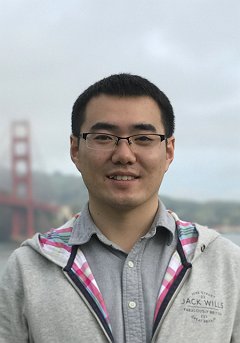
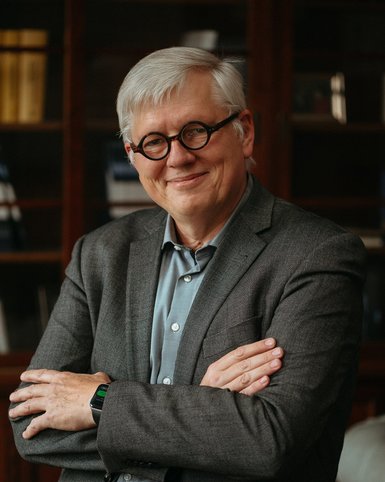
Mohammad Sadoghi is a Professor at the University of California, Davis, with former affiliations at Purdue University, IBM T.J. Watson Research Center, and the University of Toronto. His research focuses on distributed systems, blockchain technologies, consensus protocols, and fault-tolerant computing. He has contributed extensively to transaction processing, stream processing architectures, and the integration of edge-cloud systems with blockchain frameworks. Current Affiliation: University of California, Davis Former Affiliations: Purdue University, IBM, University of Toronto Research Interests include consensus algorithms, Byzantine fault tolerance, distributed ledger technologies, and scalable data processing. He has pioneered systems like ResilientDB and ByShard, addressing challenges in global-scale distributed systems and blockchain fabrics. His work bridges theoretical foundations with practical implementations, emphasizing real-world applications in edge computing and hybrid cloud-edge environments. Key publications highlight advancements in consensus protocols, blockchain scalability, and fault-tolerant architectures. Recent trends in his work focus on concurrent consensus mechanisms, DAG-based systems, and secure geo-replication. Contributions span both academic publications and industry-oriented solutions, such as the Bedrock platform for BFT protocol analysis. Grants and advising roles are implied through his extensive research output, though specific grants are not detailed in the provided text. His collaborations include projects on self-curating databases (e.g., L-Store) and systems like SplitJoin for stream processing.
Marco Polverini is an active computer networking researcher with a prolific publication record spanning over a decade, with 59 publications documented from 2012 to 2025. His work primarily focuses on advanced networking technologies including Segment Routing, Software Defined Networking, and Network Function Virtualization. His research interests center around network routing optimization, traffic engineering, and network monitoring. He has made significant contributions to Segment Routing technology, developing novel behaviors for low-latency communication, black hole detection mechanisms, and traffic matrix assessment techniques. His recent work integrates artificial intelligence approaches, particularly reinforcement learning, with traditional networking protocols to create more adaptive and efficient network systems. He has also been exploring the application of Digital Twin technology for network management and optimization. Analysis of his publication trends shows a clear evolution from foundational work on energy-efficient networking and traffic engineering to more recent innovations in Segment Routing, in-band network telemetry, and AI-driven network optimization. His publications consistently appear in top networking venues including IEEE JSAC, IEEE Transactions on Network and Service Management, INFOCOM, and NOMS, demonstrating his standing within the networking research community. Throughout his career, Polverini has maintained strong collaborative relationships, particularly with Antonio Cianfrani (54 joint publications), Marco Listanti (33 publications), and Francesco Giacinto Lavacca (16 publications), suggesting he works within a well-established research group focused on next-generation networking technologies.
Athinagoras Skiadopoulos is a computer systems researcher at Stanford University's School of Engineering, Department of Computer Science, focusing on the intersection of database systems and operating systems. His work centers around the innovative DBOS (Database-oriented Operating System) project and large-scale machine learning infrastructure, collaborating with prominent researchers including Christos Kozyrakis and Michael Stonebraker. His primary research interests include: Database-oriented Operating Systems (DBOS) Distributed systems for large-scale machine learning Resource management and optimization in data-intensive systems Transaction processing and data governance High-performance networking for accelerated computing Fault tolerance in distributed training systems Skiadopoulos's research trajectory shows a clear evolution from foundational DBOS architecture toward applications in large-scale machine learning systems. His early publications established the DBOS framework for operating system design using database principles, while his recent work addresses critical challenges in distributed training of massive neural networks. Systems like ReCycle and SlipStream demonstrate innovative approaches to pipeline adaptation and failure recovery during distributed training. His most recent 2025 work on accelerating Mixture-of-Experts training represents the cutting edge of efficient large model training infrastructure. Through his research, Skiadopoulos has established himself in both the database and systems research communities, with publications in premier venues including SOSP, OSDI, VLDB, and CIDR. His work consistently bridges theoretical database concepts with practical systems implementations, demonstrating how database techniques can solve real-world systems challenges in modern computing environments.
Jignesh M. Patel is a Professor at the University of Wisconsin, Madison, WI, USA , with over 25 years of contributions to database systems, data analytics, and hardware-aware query processing. His work bridges theoretical advancements with practical systems engineering. Research Interests span: Database systems optimization (query processing, transaction management) Hardware acceleration for analytics (eBPF, PIM, GPUs) Machine learning integration in databases (feature selection, model optimization) Efficient data structures (hashing, encoding, indexing) Multi-tenant and cloud database management Recent Work focuses on kernel-embedded databases (BPF-DB, 2025), memory-efficient dataframe processing (SplitDF, 2024), and algorithmic-hardware co-design for dense retrieval (DReX, 2025). He has pioneered techniques for adapting to data skew (VIP Hashing, 2022), leveraging static analysis in R optimization (ROSA, 2017), and rethinking benchmarking paradigms. Collaborations include key partnerships with: Systems researchers (Andrew Pavlo, José F. Martínez) Machine learning experts (Arun Kumar, Kevin Skadron) Education-focused colleagues (Adalbert Gerald Soosai Raj, Richard Halverson) Industry leaders (David J. DeWitt, Microsoft Research)
Marcus Birkenkrahe serves as an active Professor at the Berlin School of Economics and Law within the Faculty of Business Administration and Department of Business Informatics. His academic work bridges information technology with business management, focusing on practical applications in corporate and educational environments across Germany and Europe. His research spans E-Learning methodologies, Knowledge Management frameworks, Digital Community dynamics, and Leadership strategies. He pioneered virtual teaching systems and organizational learning tools, notably developing systemic constellations for change management and lean IT solutions for enterprise optimization. His work consistently explores technology-driven transformations in both academic and multinational business contexts. Publication analysis from 2000-2010 reveals dominant themes in knowledge management evolution within the new economy, organizational learning systems, and digital community governance. His research trajectory shows progression from theoretical foundations (2000-2001) toward practical applications in multinational corporations (2002-2004) and innovative educational models (2006-2010), with recurring emphasis on systemic approaches to complex organizational challenges. His distinguished awards include: Best article in the UA Business Review (2002) Fellow of the Royal Society of Arts (RSA) London (1998) Best campus-wide information site on the WWW (1994) Best online course offering on the WWW (1994) Professor Birkenkrahe has significantly advanced digital education infrastructure and knowledge-sharing platforms, though specific current advising roles and grant details aren't documented in available sources. His early 1990s web innovations established foundational models for online course delivery and campus information systems that received international recognition.
Yuhong Nan is an Associate Professor in the School of Software Engineering at Sun Yat-sen University, China, specializing in software security and privacy leakage analysis for emerging platforms including IoT, mobile systems, and blockchain. Previously a Post-doctoral Research Associate at Purdue University under Prof. Dongyan Xu, she builds practical security tools to detect and mitigate vulnerabilities in real-world systems. Dr. Nan earned her PhD from Fudan University in 2018 supervised by Prof. Min Yang. Her academic journey spans rigorous research in security engineering with emphasis on empirical validation and tool development for complex platform ecosystems. Her research program focuses on uncovering systemic security flaws through innovative analysis techniques. Key contributions include vulnerability detection in smart contracts (e.g., state dependencies, reentrancy), privacy leakage analysis in mobile/IoT ecosystems, and countermeasures against deceptive UI patterns. She employs hybrid approaches combining static/dynamic analysis, machine learning, and large-scale empirical studies to develop deployable security solutions. Analysis of her 15 most recent publications (2023-2025) reveals dominant themes in blockchain security (60%), particularly smart contract/DApp vulnerabilities, with significant work in mobile privacy (30%) and cross-platform threats (10%). Her methodology consistently leverages fine-grained static analysis, semantic enrichment, and feedback-driven fuzzing, yielding tools like SmartAxe and Midas that have influenced industry practices. Dr. Nan actively mentors graduate researchers with 17 advisees including Tencent-employed graduates, and serves as a trusted reviewer for premier journals (IEEE TDSC, TMC, TOPS) and conference committees (ASIACCS, ICICS). Her leadership in security communities bridges academic research with practical defense mechanisms. At Sun Yat-sen University, she directs a high-output research group that collaborates with industry partners to address evolving threats in decentralized systems, maintaining her position among top publishing authors in USENIX Security, CCS, and NDSS venues through rigorous technical innovation.
Dr. Kenneth Salem is a Professor at the University of Waterloo, Canada , with a distinguished career spanning over three decades in database systems, distributed computing, and data management. His work has significantly influenced transaction processing, replication, and scalability in modern databases. Institution: University of Waterloo Collaborations: Frequent co-author with Hector Garcia-Molina, Ashraf Aboulnaga, Umar Farooq Minhas, Khuzaima Daudjee Research Interests: Dr. Salem’s research focuses on database systems, particularly in transaction processing , distributed databases , cloud computing , and energy-efficient data storage . He has pioneered techniques for schema design in NoSQL , adaptive caching , and RDMA-based data transfer . His work often addresses challenges in high availability , workload-aware optimization , and cardinality estimation . Recent Article Trends: His latest publications (2023-2025) explore ad hoc transactions , eventual durability , and summary-based cardinality estimation , emphasizing practical solutions for real-world database scalability and consistency. Earlier works (2018-2022) covered memory power optimization , RDMA abstractions , and workload-aware CPU scaling , reflecting a sustained focus on performance and efficiency. Advising and Collaborations: Dr. Salem has mentored numerous co-authors in database research, including Ashraf Aboulnaga, Umar Farooq Minhas, and Khuzaima Daudjee. His collaborative projects span Apache Spark caching , RemusDB high availability , and DimmStore memory optimization . Labs and Teams: He has been a key contributor to the DaMoN and Versatile Database Systems workshops, focusing on hardware-aware database design. His work with teams at Waterloo and collaborations with institutions like ETH Zurich and MIT has advanced self-managing databases and edge replication technologies.
Detlev Marpe is a leading researcher at the Fraunhofer Heinrich Hertz Institute (HHI), serving as Head of the Video Coding & Analytics Department and Head of the Image & Video Coding Group. His work focuses on advancing video compression standards, including HEVC (H.265) and its extensions. He has contributed significantly to tools like entropy coding, transform coding, and scalable video coding. His research emphasizes efficient compression techniques, such as adaptive context models and wavelet-based methods, with applications in multimedia communication and low-delay video encoding. Affiliations: Fraunhofer Institute for Telecommunications HHI, Berlin, Germany Roles: Department Head, Research Group Leader, and Adjunct Lecturer at TU Berlin (2013/14) Research Interests: Video coding standards (HEVC, H.264/AVC), entropy coding (CABAC), wavelet-based compression, scalable video coding (SVC), multiview video coding (MVC), and rate-distortion optimization. His work bridges theoretical advancements with practical implementations, addressing challenges in compression efficiency, scalability, and real-time applications. Publications & Awards: Over 200 publications in top-tier journals and conferences, including IEEE Transactions and SPIE. Notable awards include the Chester Sall Best Paper Award and multiple Best Paper Awards from IEEE journals. His contributions to video coding standards have been adopted in global specifications like MPEG and ITU-T. Grants & Labs: Involved in major research projects on HEVC extensions, 3D video coding, and low-delay applications. Collaborates with industry partners and academic institutions globally. His team at HHI develops reference software and test models for emerging standards.
Prof. Norbert Ritter is the Dean of the Faculty of Mathematics, Computer Science and Natural Sciences (MIN) at the University of Hamburg since August 2022. He holds a full professorship in the Department of Informatics, leading the Databases and Information Systems group. Previously, he served as an associate professor (2002–2005) and assistant professor (1998–2002) at the Technical University of Kaiserslautern and the University of Hamburg. His research focuses on advanced database technologies, including NoSQL systems, scalable cloud data management, big data analytics, and information integration. Key areas include service-oriented computing, federated database systems, and transaction management. He has authored over 149 publications, with recent work emphasizing polyglot data stores, spatio-temporal data processing, and web performance optimization. Education: M.Sc. (1991), Ph.D. (1997) in Computer Science from the University of Kaiserslautern Professional Activities: Dean of MIN Faculty (since 2022), former head of DBIS group Labs/Teams: Leads the Databases and Information Systems research group His advising record includes over 274 student theses, spanning PhD and master's projects in database design, data integration, and web performance engineering. Collaborative projects include Beaconnect (continuous web A/B testing) and Compaz (shared dictionary compression).
Björn Schembera is a Researcher at the Institute of Applied Analysis and Numerical Simulation (IANS) at the University of Stuttgart, focusing on Research Data Management (RDM), metadata standards, and ontologies. He holds a Dr.-Ing. (Engineering Doctorate) and a Diplom-Informatik (Computer Science) degree, with interdisciplinary training in philosophy. His current work centers on FAIR principles, knowledge graphs, and dark data in computational and mathematical sciences, particularly within the MaRDI (Mathematical Research Data Initiative) project under NFDI funding. Education and Professional Background: After completing his doctoral studies on dark data in simulations at HLRS (2011–2022), he joined IANS in 2022. His research bridges technical RDM challenges with societal implications of information technology. Research Interests: Schembera’s work emphasizes metadata models (e.g., EngMeta), ontology development for mathematics and engineering, and ethical aspects of data stewardship. He contributes to projects like bwDataArchive and NFDI4Cat, addressing interoperability and standardization in research data infrastructures. Teaching: He leads the course 'Schlüsselqualifikation Forschungsdatenmanagement' since 2023/24, promoting open science and RDM practices. Key Achievements: His 2023 Best Paper Award (MTSR Conference) recognizes contributions to metadata and semantic research. Over 50 publications span journals like Energies, IEEE Transactions, and conference proceedings on metadata, ontologies, and simulation workflows. Projects: He collaborates on MaRDI (mathematical data infrastructure), NFDI4Cat (catalysis sciences), and bwDataArchive (long-term storage).
Prof. Dr. Jana-Rebecca Rehse serves as Assistant Professor for Management Analytics at the University of Mannheim Business School, where she leads the Chair of Management Analytics within the Information Systems department. Her academic work bridges theoretical research with practical business applications, focusing on data-driven approaches to business process optimization. Her primary research interests encompass User Behavior Mining , Process Mining , and AI applications in business process management . Rehse investigates how organizations can leverage process mining techniques to extract meaningful insights from event logs, with particular attention to conformance checking, process resilience assessment, and the practical implementation challenges businesses face when adopting these technologies. Her work frequently addresses the intersection of human behavior and process execution, examining how user interactions with IT systems can be analyzed to improve process design and user experience. Analysis of her recent publications reveals a clear research trajectory toward increasingly sophisticated integration of artificial intelligence with traditional process mining techniques. Starting with foundational work on reference model mining and process discovery methodology, her research has evolved to address cutting-edge applications of generative AI, explainable AI, and predictive analytics in business process contexts. The majority of her work appears in top-tier information systems and business process management journals including Information Systems, Process Science, and ACM Transactions publications, demonstrating her significant contributions to the field. Professor Rehse actively collaborates with industry partners including Siemens and MEHRWERK, offering thesis opportunities and research projects that address real-world business challenges. Her current call for applications includes work-study programs at Siemens and master thesis topics focused on conformance checking in cooperation with MEHRWERK. She has recently introduced innovative thesis topics exploring the use of Generative AI for Emotion Identification, reflecting her forward-looking research agenda that anticipates emerging technological trends and their business implications.
Professor Jonathan I. Maletic is affiliated with the University of Kent, UK, and is a leading researcher in software engineering with a particular focus on program comprehension and eye tracking in software development. He has published extensively in top venues such as Empirical Software Engineering, IEEE Transactions on Software Engineering, and the International Conference on Program Comprehension.
Ulrich Hommel is a Professor of Corporate Finance and University Finance at EBS Business School, where he also serves as Vice Dean and Director of the Strategic Finance Institute (SFI). His academic career spans multiple leadership roles including Dean (2000-2002) and Rector/Managing Director of EBS (2003-2006). He holds a doctorate in economics from the University of Michigan (Ann Arbor) and completed his habilitation in business administration at WHU. Hommel's research focuses on corporate finance, university finance, risk management, and entrepreneurial finance, with significant contributions to understanding venture capital structures, payment systems, and business school administration. His work demonstrates a consistent interest in how financial mechanisms operate within educational institutions and broader market contexts, particularly examining governance structures, risk allocation, and quality management frameworks. His recent publications reveal trends toward analyzing corporate venture capital governance, payment system evolution, and the impact of external shocks like the pandemic on responsible management education. The research shows increasing attention to ESG considerations within private equity and the transformation of business education models in response to digital disruption and global challenges. Hommel has directed the Strategic Finance Institute at EBS Business School, focusing on interdisciplinary research at the intersection of finance, risk management, and educational leadership. His collaborative work spans multiple continents, reflecting the global nature of contemporary finance research and business education challenges.
Prof. J. Rod Franklin, PhD is a Full Professor of Logistics and Academic Director of Executive Education at Kühne Logistics University (KLU) in Hamburg, Germany. With an extensive background spanning both academia and industry, Professor Franklin brings deep practical experience to his academic role. He has held significant leadership positions at KLU, including Dean of Programs, and was instrumental in the university's planning stages as he states: "KLU is near and dear to my heart, because I was one of the individuals that helped plan the university." His unique blend of academic rigor and industry expertise makes him a central figure in KLU's mission of providing world-class logistics education and research. Professor Franklin's academic foundation is impressive: Doctorate of Management, Case Western Reserve University, USA (2000) Master of Business Administration, Harvard Graduate School of Business, USA (1979) Master of Science in Mechanical Engineering, Stanford University, USA (1975) Bachelor of Science in Mechanical Engineering, Purdue University, USA (1974) His research focuses on applying modern management techniques to supply chain operations, with pioneering work in sustainable business models, green logistics, corporate social responsibility, and cloud-based supply chain management. Professor Franklin is a leading authority on the Physical Internet concept, which seeks to revolutionize logistics through interconnected systems inspired by the digital internet. His research consistently bridges theoretical frameworks with practical industry applications, addressing critical challenges in modern logistics networks while promoting sustainability and efficiency. Professor Franklin's publication record over the past two decades reveals a clear evolution from traditional logistics service innovation toward cutting-edge research on the Physical Internet, predictive analytics, and big data applications in supply chains. His recent work demonstrates increasing emphasis on urban logistics solutions, sustainability challenges, and the integration of digital technologies with physical logistics networks. His seminal 2020 paper "From the Digital Internet to the Physical Internet" has significantly advanced the conceptual framework for this emerging field, while his 2024 protocol design work continues to push the boundaries of practical implementation. Professor Franklin leads significant research initiatives including "Accelerating the Path Towards Physical Internet - SENSE," "Internet of Food and Farm 2020," and "URBANE - Upscaling innovative green urban logistics solutions." His work has been published in top-tier journals including Journal of Business Logistics, IEEE Transactions on Systems, Man and Cybernetics, and International Commerce Review, demonstrating substantial scholarly recognition. While specific individual awards aren't detailed in available information, his leadership in major funded research projects indicates significant institutional support for his work. As Academic Director of Executive Education at KLU, Professor Franklin oversees programs that effectively bridge academic theory with industry practice. His teaching portfolio includes MBA courses on Critical Thinking, Design Thinking, Managing Multiple Complex Expectations, and Systems Thinking - all emphasizing practical application of theoretical concepts. His extensive industry background, including executive roles at Kühne + Nagel and other major logistics firms, directly informs his approach to academic supervision and executive education. Professor Franklin has successfully secured research funding for multiple projects focused on sustainable logistics innovation, demonstrating his ability to translate theoretical concepts into impactful research initiatives. Professor Franklin leads collaborative research teams focused on the Physical Internet concept and its applications in modern logistics. Through projects like SENSE and URBANE, he works with international researchers, industry partners, and policymakers to develop innovative solutions for sustainable urban logistics. His research integrates expertise from computer science, operations research, and business management to address complex supply chain challenges. The BizSLAM App, developed as part of his work on multi-level SLA management, exemplifies his team's ability to create practical tools with direct industry applications, demonstrating the real-world impact of his research vision.
Lakhmi C. Jain is a distinguished academic affiliated with the University of South Australia. As a Professor, she has made significant contributions to the fields of Artificial Intelligence, Computational Intelligence, and Fuzzy Systems. Her research spans neural networks, decision support systems, robotics, and data analysis, with a focus on interdisciplinary applications. Her career includes over 445 publications, including books like Complex Networks in Software, Knowledge, and Social Systems (2019) and E-Learning Systems - Intelligent Techniques for Personalization (2017). She has held editorial roles in journals such as the International Journal of Intelligent Decision Technologies (IDT) and the Journal of Intelligent & Fuzzy Systems. Jain's work emphasizes practical applications of computational intelligence, including efforts in software development, biomedical signal processing, and multi-agent systems. She has collaborated extensively with researchers globally, contributing to advancements in AI-driven technologies and decision-making frameworks.