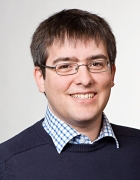
Muhammad Waqas is a researcher affiliated with COMSATS University Islamabad , where he holds a position in the Department of Meteorology under the School of Applied Sciences and Humanities . His academic collaborations span institutions like Bahria University, National University of Technology, and University of Bahrain, indicating a multidisciplinary approach. Research interests include Mechanisms for integrating fuzzy logic and machine learning in health monitoring Application of deep learning to medical imaging and clinical diagnostics Development of smart sensors for wearable technology in biomechanics Analysis of social media data for public health surveillance and sentiment analysis Investigation of digital citizenship and ICT leadership in educational contexts Trends in his 15 most recent publications (2025-2024) reveal a focus on medical diagnostics (e.g., monkeypox, breast cancer), smart infrastructure (e.g., sensor placement, structural health monitoring), and social media analytics for health and behavioral insights. These works leverage machine learning , fuzzy systems , and multi-objective optimization .
Peiyi Wang is an Assistant Professor at Peking University's School of Electronics Engineering and Computer Science, Institute for Artificial Intelligence. With strong research output spanning both natural language processing and robotics, Wang maintains significant collaborations with Southern University of Science and Technology and National University of Singapore, particularly in soft robotics research with Professor Cecilia Laschi. Additionally, Wang is actively involved with DeepSeek-AI, contributing to several major language model initiatives including DeepSeek-R1 and DeepSeek-V2. Peking University, School of EECS, Institute for Artificial Intelligence (Primary) Southern University of Science and Technology (Collaborative) National University of Singapore (Collaborative) DeepSeek-AI Research Organization Dr. Wang's research spans two primary domains with significant intersection points. In natural language processing, Wang focuses on large language model reasoning capabilities, mathematical verification, uncertainty estimation, and preference alignment. The robotics work centers on soft robotics, particularly origami-inspired designs, strain-based modeling, and control systems for continuum manipulators. These domains converge in Wang's work on vision-language models, embodied AI, and multimodal reasoning systems. Recent work demonstrates particular innovation in mathematical reasoning verification (Math-Shepherd), soft robotic control systems, and red teaming frameworks for language model safety. Wang's publication record shows remarkable productivity, with over 40 publications between 2021-2025 across top-tier venues including ACL, EMNLP, CVPR, and IEEE Transactions on Robotics. The work demonstrates consistent progression from foundational NLP tasks to increasingly sophisticated multimodal and reasoning systems. The most recent publications (2024-2025) show particular emphasis on mathematical reasoning verification, soft robotics control, and language model safety evaluation. While specific awards aren't documented in the provided materials, Wang's work has clearly gained significant recognition through acceptance at top-tier conferences and collaborations with leading researchers in both NLP and robotics fields. Wang's research demonstrates strong interdisciplinary connections, bridging theoretical NLP work with practical robotics applications. The work with DeepSeek-AI suggests active industry collaboration while maintaining strong academic research output. Current research directions appear focused on improving language model reasoning reliability while developing novel soft robotic systems that can interact safely and effectively with complex environments.
Professor Dr. Christoph Kumpan, LL.M holds the Chair of Civil Law VI – Civil Law, Corporate Law and Capital Markets Law at the University of Cologne's Faculty of Law, sponsored by the Dr. Harald Hack Foundation. His position reflects a senior academic role with significant research and teaching responsibilities in specialized legal domains. Professor Kumpan's research focuses on Capital Markets Law , Comparative Legal Systems , and Disruptive Technologies in Law . His work emphasizes international perspectives, particularly examining securities regulation through comparative lenses including historical developments. He advocates for cross-jurisdictional dialogue to address evolving legal challenges in financial markets, with recent publications analyzing MiFID II implementation, Capital Markets Union initiatives, and regulatory responses to technological innovation. Analysis of his 15 most recent publications reveals consistent specialization in EU financial regulation, with dominant themes including securities disclosure requirements (appearing in 70% of articles), corporate governance frameworks (60%), and comparative legal methodology (50%). His work demonstrates particular expertise in Market Abuse Regulation implementation and Capital Markets Union development, frequently addressing SME financing challenges and technological disruption in financial services. Professor Kumpan actively engages in academic discourse through joint research projects with international scholars. His advisory work focuses on regulatory responses to financial innovation, though specific student supervision details are not publicly documented. Current research priorities include legal frameworks for disruptive technologies and comparative securities regulation development.
Rainer Böhme is a Professor at the University of Münster, Germany. His research focuses on cyber security, cryptography, steganography, digital forensics, and blockchain technology. He has made significant contributions to understanding cyber risk quantification, central bank digital currencies (CBDCs), and the socio-technical challenges in cryptocurrency systems. Key areas of research include steganalysis (analysis of hidden data in digital media), forensic techniques for neural network inference pipelines, and the economic implications of cyber insurance. He actively contributes to conferences like the Financial Cryptography Workshops (FC) and the Workshop on Information Hiding and Multimedia Security (IH). Böhme's work bridges theory and practice, addressing real-world issues such as privacy in CBDCs, adversarial attacks on AI systems, and the role of law enforcement in cryptocurrency markets. His recent studies explore the security implications of image orientation in JPEG files and the detection of privileged parties in blockchain transactions. He has collaborated with institutions like the University of Vienna and ETH Zurich, and his research has been published in top-tier venues such as IEEE Transactions on Information Forensics and Security and the ACM Conference on Computer and Communications Security (CCS).
Tsung-Yi Ho is a Professor in the Department of Computer Science at National Tsing Hua University, Taiwan. He holds the Hans Fischer Fellowship at the Technical University of Munich's Institute for Advanced Study (TUM-IAS). His primary research focuses on design automation for microfluidic biochips and nanometer integrated circuits, emphasizing reliability, optimization, and interdisciplinary applications in bioengineering. Ho received his Ph.D. in Electrical Engineering from National Taiwan University in 2005. He has held positions at National Cheng Kung University and National Chiao Tung University before joining National Tsing Hua University. His work bridges algorithmic design with practical biochip fabrication, addressing challenges like contamination control, routing optimization, and fault tolerance in microfluidic systems. His research interests span design automation for emerging technologies, including paper-based biochips and 3D microfluidic architectures. He has pioneered methods for integrating hardware-software co-design principles into biochip development, enhancing both functionality and reliability. His contributions include novel routing algorithms, contamination mitigation techniques, and reliability-aware synthesis frameworks. Ho has authored over 100 publications, including influential papers in IEEE Transactions on CAD and ACM journals. He serves on the editorial boards of multiple top-tier journals and chairs professional chapters for ACM and IEEE. His awards include the Humboldt Research Fellowship, Dr. Wu Ta-You Memorial Award, and Best Paper Awards at VLSI Test Symposium and IEEE Transactions on CAD. His current projects involve optimizing control-fluidic co-design for paper-based biochips and developing AI-driven frameworks for microfluidic functionality prediction. He collaborates widely, leading cross-disciplinary initiatives at TUM-IAS and Taiwan's academic institutions.
Liji Shen is Professor of Operations Management and Chairholder at WHU – Otto Beisheim School of Management, Campus Vallendar, Germany. She is affiliated with the Supply Chain Management Group and leads research in scheduling, optimization, and sustainable manufacturing. Her academic journey includes a Ph.D. and Habilitation from Technische Universität Dresden, and she has held visiting scholar positions at institutions including École des Mines de Saint-Étienne and Huazhong University of Science and Technology. Ph.D. (Dr.rer.pol.), summa cum laude, Technische Universität Dresden (2009) Habilitation, Technische Universität Dresden (2015) Master of Business Administration (Dipl.-Kffr.), Technische Universität Dresden (2006) Liji Shen's research focuses on Operations Management , particularly scheduling optimization in manufacturing systems. Her work spans flexible job shops , parallel machine scheduling , energy-efficient production , and sequence-dependent setup times . She applies advanced techniques such as evolutionary algorithms , hybrid metaheuristics , and mathematical programming to solve complex industrial problems. Her recent publications emphasize sustainability through energy-aware scheduling and time-of-use pricing models. The 15 most recent publications highlight a consistent research trajectory in production scheduling , with increasing emphasis on energy efficiency , distributed manufacturing , and real-world constraints like eligibility and delivery times. Her work frequently appears in top journals such as European Journal of Operational Research , IEEE Transactions on Evolutionary Computation , and Computers & Operations Research , often in collaboration with leading researchers like Dauzère-Pérès, Mönch, and Buscher. Scientific Awards: European Journal of Operational Research, Best Paper Award (2021) DFG and TU Dresden, 'Support the Best' Prize for Outstanding Researchers (2013) Dr. Feldbausch-Prize for Best Dissertation, TU Dresden (2010) Scholarship for Young Researchers in Saxony (2006–2009) DAAD Prize for Best Foreign Students (2007) Best Master’s Thesis, German Operations Research Society (2007) Liji Shen has been an active advisor and researcher, leading projects in operations research and industrial optimization. Her editorial role on Operations Research Perspectives underscores her standing in the academic community. She has directed research labs and collaborated internationally, contributing to both theoretical advancements and practical applications in manufacturing and logistics. No specific grants are mentioned, but her sustained publication record and leadership roles indicate strong research support. She leads the Operations Management research group at WHU, focusing on algorithmic solutions for complex scheduling problems. Her team investigates energy-aware production, hybrid flow shops, and distributed systems, aiming to bridge the gap between theoretical models and industrial implementation. The lab collaborates with researchers across Europe and China, fostering a global research network in operations research and supply chain management.
Oleg Lashinin is an active researcher in the field of Recommender Systems , with a focus on Machine Learning , Temporal Modeling , and User Behavior Analysis . He has contributed to 15 recent publications spanning 2021–2025, including conference papers at ECIR, SIGIR, RecSys, and workshops like KaRS@RecSys and ORSUM@RecSys. His work explores advanced techniques such as Self-Attention Models , Time-Aware Item Weighting , and Cost-Constrained Recommendations . Key research trends in his publications include Deep Learning for sequential recommendation tasks, Crowdsourcing for explanation evaluation, and Temporal Dynamics in user behavior. Notable projects include the GPT3RecBot Telegram chatbot and the RecBaselines2023 dataset for benchmarking recommender systems.
Surajit Chaudhuri is a Researcher at Microsoft , with a career spanning decades in database systems and data management . He has received the prestigious SIGMOD Edgar F. Codd Innovations Award (2011) for his contributions to query optimization , index tuning , and data lakes . Research Interests : His work focuses on database tuning , approximate query processing , fuzzy similarity joins , automated data transformations , and machine learning integration for scalable data systems. Recent Publications : In 2025, his research includes Auto-Test for unsupervised error detection in tables, Esc for budget-aware index tuning, and MMTU for multi-task table understanding benchmarks. Earlier works in 2024–2023 address spreadsheet formula recommendation , low-overhead index filtering , and time-series pattern recognition . Scientific Impact : He has co-authored influential papers in SIGMOD , VLDB , and IEEE Transactions , shaping practices in cloud databases , query optimization , and self-service BI . His collaborations span institutions like Microsoft, MIT, and ETH Zurich.
Stefan Decker is a full University Professor (Universitätsprofessor) at RWTH Aachen University, Germany, where he heads the Chair of Information Systems and Databases (Informatik 5) within the Faculty of Mathematics, Computer Science and Natural Sciences. He is actively involved in teaching, research, and the supervision of numerous ongoing and completed doctoral, master’s, and bachelor theses. Education & Academic Background Doctorate (Dr. rer. pol.) – field of Information Systems or related (exact institution/year not stated in text). Appointed as University Professor and Chair of Information Systems and Databases at RWTH Aachen University. Research Interests Prof. Decker’s work lies at the intersection of databases, knowledge graphs, semantic web technologies, data science, and cybersecurity . He investigates architectures and algorithms for large-scale, privacy-preserving, decentralized data analytics , develops ontology-driven information systems , and explores the use of large language models (LLMs) for educational technology, anomaly detection, and incident-response playbooks. Additional focal areas include smart energy systems, mixed-reality learning environments, FAIR data principles, and federated machine learning . Scientific Contributions & Trends His recent publications (2022-2025) demonstrate a clear trend toward explainable AI, LLM-enhanced systems, secure data spaces, and semantic interoperability . Key contributions include novel anomaly-detection frameworks for encrypted power-grid communications, knowledge-graph-driven chatbots for higher-education support, and methodological advances in decentralized analytics and FAIR data sharing. These works are disseminated in top-tier venues such as AAAI, IEEE ISGT Europe, ESWC, IDEAL, and various Springer LNCS and IEEE Transactions. Supervision & Grants Doctoral Theses Advised: A. T. Neumann – “Chatbots as professional companions in large-scale community information systems” (2024) S. M. Welten – “Methods for practical data sharing and decentralized analytics” (2025) Master’s Theses Co-Advised: A. R. Küsters – “Object-centric process constraints using variable bindings” (2025) Additionally supervising more than 30 ongoing bachelor, master, and doctoral projects covering topics such as LLM-driven cybersecurity playbooks, knowledge-graph construction for German law, privacy-preserving analytics in smart grids, and mixed-reality learning agents. Principal investigator or senior researcher in large collaborative projects including NFDI4DS, WestAI, champI4.0ns and several EU/national initiatives on sovereign data spaces and AI services. Labs & Teams Prof. Decker leads the Information Systems & Databases (DBIS) Research Group . The group operates well-equipped laboratories for knowledge-graph engineering, mixed-reality applications, privacy-enhancing technologies, and secure distributed analytics . Current team size exceeds 30 researchers including PhD candidates, postdocs, and scientific programmers, supported by national and EU funding streams.
Yu Jiang is an Associate Professor at the School of Software, Tsinghua University, China. His research focuses on software security with emphasis on fuzz testing, embedded systems, and database security. He leads the Software System Security Assurance Group which has discovered over 1,000 bugs in major system software with 300+ CVEs registered. Dr. Jiang's research interests include Software Engineering , Embedded Systems Security , and Cross-Layer Fuzzing . His work addresses vulnerabilities in operating systems, databases, communication protocols, and IoT firmware through innovative fuzzing frameworks. Key contributions include semantic-aware fuzzing for heterogeneous software stacks and learning-based vulnerability detection for embedded systems. His recent publications demonstrate strong trends in database security (Hulk, PUPPY, THANOS), ransomware defense (Fawkes, Preventing Disruption), and web security (JANUS). Research spans both theoretical advances in fuzzing techniques and practical industrial applications, with significant impact evidenced by numerous distinguished paper awards. Career Award, NSFC: 2026 Distinguished Paper Award, ISSTA: 2025 First Prize for Technical Invention, CCF: 2024 Distinguished Paper Award, USENIX Security: 2024 SIGSOFT Distinguished Paper Award, FSE: 2022 Dr. Jiang has advised over 50 graduate students including 20 PhD candidates. His research is supported by major grants including NSFC projects ($600,000 for Software Trustworthiness Construction and $350,000 for Distributed Database Reliability), Huawei ($80,000 for LLM-Powered Fuzzing), and Tencent ($120,000 for LLM-Powered Unit Testing). The Software System Security Assurance Group maintains strong industry partnerships with Huawei, Alibaba, Tencent, and Webank. The group operates cutting-edge infrastructure for fuzz testing across multiple domains including database systems, operating kernels, blockchain platforms, and industrial control systems. Current projects integrate LLM technologies with traditional fuzzing techniques to enhance vulnerability detection in complex software stacks.
Shari Trewin is a prominent researcher in accessibility and human-computer interaction at IBM Research with over 25 years of scholarly contributions. Her work focuses on making digital technologies accessible to people with disabilities, particularly in web and mobile contexts. She has published extensively in top-tier venues including ACM SIGACCESS conferences (ASSETS, W4A) and journals, CHI, and other leading HCI publications. Dr. Trewin's research interests span web accessibility, mobile accessibility for users with physical and cognitive disabilities, inclusive design methodologies, and the application of artificial intelligence to improve accessibility. Her work addresses both theoretical foundations and practical implementations of accessible technologies, with particular emphasis on user-centered design approaches and evaluation methodologies. She has made significant contributions to understanding how people with disabilities interact with digital interfaces and how to design systems that accommodate diverse user needs. Her publication record shows a clear progression from foundational work on input devices and keyboard accessibility in the 1990s to contemporary research on AI fairness for people with disabilities. Recent publications demonstrate her leadership in addressing emerging challenges at the intersection of AI and accessibility, particularly around algorithmic fairness and inclusive design practices for AI systems. Among her notable contributions are editorial work for ACM Transactions on Accessible Computing and co-editing conference proceedings for the ASSETS conference. She has collaborated extensively with leading researchers in the field including Vicki L. Hanson, Gregg Vanderheiden, and Calvin Swart. Dr. Trewin has advised junior researchers including Jessica J. Tran, and her work has influenced both academic research and industry practices in accessibility. Her research has practical implications for web developers, designers, and policy makers working to create more inclusive digital experiences.
Prof. Dr.-Ing. Stefan Schulte is a Full Professor at Hamburg University of Technology, leading the Institute for Data Engineering and the Christian Doppler Laboratory Blockchain Technologies for the Internet of Things (CDL-BOT). He holds a diploma in Economics and a Bachelor's in Computer Science from the University of Oldenburg, followed by a Master's in Information Technology (with Merit) from the University of Newcastle. After completing his PhD at TU Darmstadt in 2010, he held roles as Postdoctoral Researcher at TU Wien, Assistant Professor (tenure-track), and eventually Associate Professor before joining TU Hamburg in 2021. His research focuses on data engineering, blockchain technologies applied to IoT, elastic computing, and quality-of-service (QoS) aspects in smart systems. Notable contributions include work on fog computing, federated learning, and cross-blockchain interoperability. He has published over 140 papers in top-tier venues like IEEE Transactions on Services Computing and ACM Computing Surveys. Key awards include Best Paper Awards at the IEEE International Conference on Blockchain (2020) and the European Conference on Service-Oriented and Cloud Computing (2023). Prof. Schulte chairs major conferences such as the IEEE International Conference on Fog and Edge Computing (ICFEC 2025) and serves on editorial boards for journals like IEEE Transactions on Services Computing. He leads CDL-BOT, a lab exploring blockchain applications in IoT and manufacturing. His industrial collaborations include projects like SIMPLI-CITY (smart mobility) and CREMA (cloud-based manufacturing). Current research emphasizes blockchain interoperability, federated learning frameworks, and edge-AI systems. He actively reviews proposals for the German Research Foundation, EU programs, and industry initiatives.
Dr. Victor Gabriel Lopez Mejia is a postdoctoral researcher at the Institute of Automatic Control Engineering, Faculty of Electrical Engineering and Computer Science, Leibniz University Hannover. His work focuses on data-driven control systems, reinforcement learning, and multi-agent system synchronization. PhD in Electrical Engineering (2019), University of Texas at Arlington M.Sc. in Electrical Engineering (2013), CINVESTAV, Mexico B.Sc. in Telecommunications and Electronics (2010), Universidad Autonoma de Campeche Research interests include: Neural network applications in control systems Reinforcement learning for cooperative control Game-theoretic analysis of multi-agent systems Data-based modeling of nonlinear dynamics Publications highlight advancements in data-driven predictive control, Gaussian process-based estimation, and nonlinear system analysis, with recent work in IEEE Transactions on Automatic Control and conferences like CDC and ECC. He has held academic roles including Adjunct Professor at the University of Texas at Arlington and Research Assistant at UTARI (2016-2019).
Thomas Neumann is a full-time Professor at the Department of Database Systems within the TUM School of Computation, Information and Technology at the Technical University of Munich . Research Focus : Query optimization and processing in database systems Hardware-aware database engine design Scalable RDF/semantic data management Hybrid OLTP/OLAP processing Join optimization algorithms Scientific Recognition : Gottfried Wilhelm Leibniz Prize (2020), Germany's most prestigious research award Academic Contributions : His recent publications focus on high-performance query execution strategies, hybrid transactional/analytical systems using virtual memory snapshots, and scalable graph processing techniques. These works demonstrate consistent advancements in database engine optimization for modern hardware architectures and large-scale semantic data management.
Prof. Dr. Francesca Biagini is a full Professor at the Department of Mathematics, University of Munich (LMU Munich) , leading the Stochastics and Financial Mathematics working group. She serves as Vice President for International Affairs and Diversity at LMU Munich since October 1, 2019, and as President of the Bachelier Finance Society (2022–2023). She is also a Correspondent of the Deutsche Aktuarvereinigung (DAV) and a member of the Executive Board of the Munich Risk and Insurance Center (MRIC) since 2017. Her research focuses on stochastic processes in financial markets , particularly asset price bubbles , default risk modeling , and robust hedging under model uncertainty. Recent work includes deep learning applications to bubble detection and non-linear affine processes for market dynamics. She actively contributes to academic leadership through teaching and publications, including 15+ recent articles on topics like liquidity-induced bubbles, machine learning calibration, and systemic risk transfer equilibrium. Her workgroup collaborates on quantLab initiatives and DAV certificate programs .