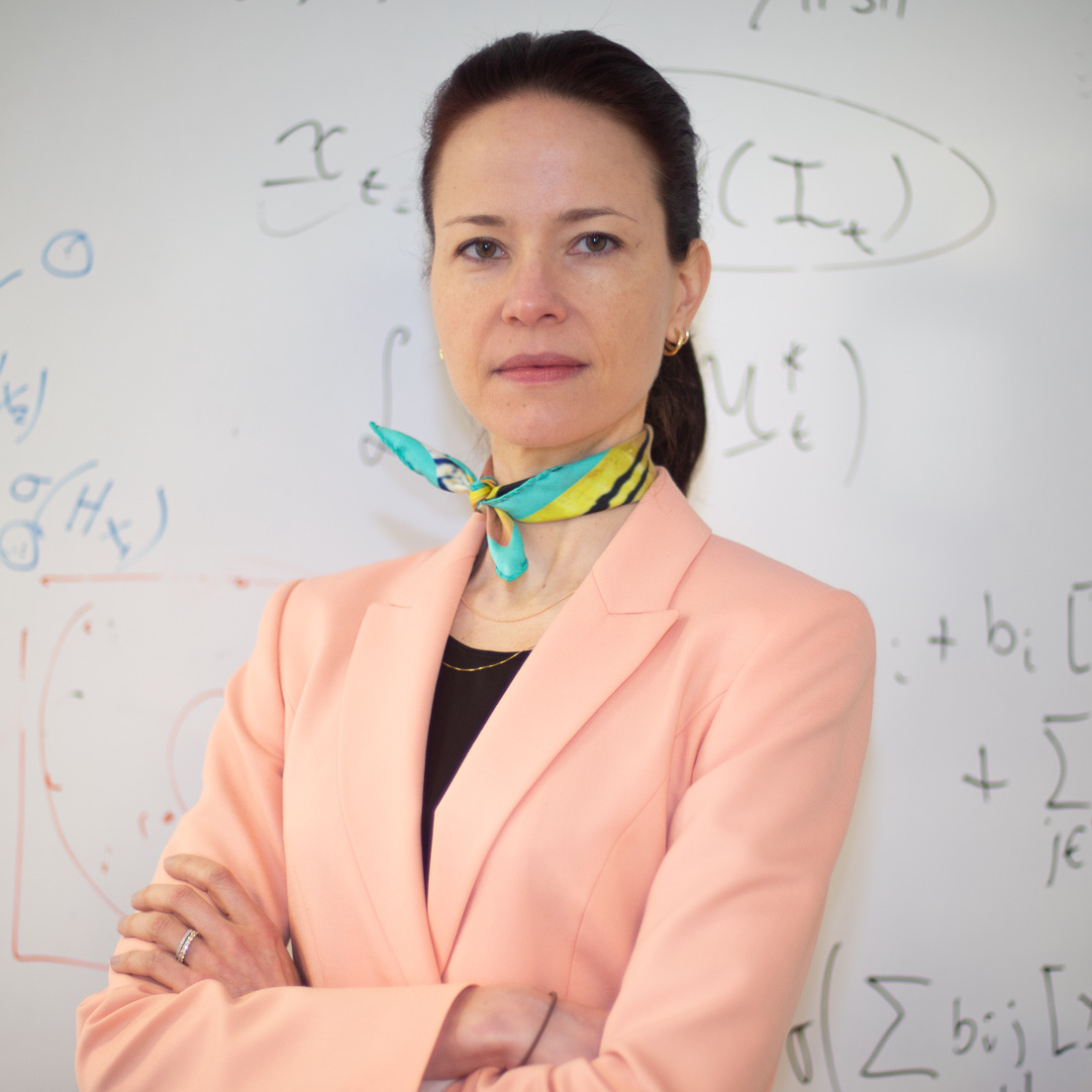
Dr. Brady Nelson is an Associate Professor in the Department of Psychology at Stony Brook University, specializing in clinical affective neuroscience. He holds a Ph.D. from the University of Illinois at Chicago (2013). His primary research examines the neural mechanisms underlying anxiety disorders and depression, focusing on reward sensitivity and unpredictable threat reactivity in developmental populations. Key methodologies include EEG, fMRI, and psychophysiological measures. Current projects include the iPANDA longitudinal study tracking reward sensitivity and depressive symptoms in adolescent girls. Dr. Nelson has secured $9.1 million in federal research funding since 2018, including NIH grants for studies on psychopathology biomarkers and pandemic mental health impacts. He directs the Laboratory for Clinical Affective Neuroscience and has authored over 80 peer-reviewed articles. His work emphasizes translational neuroscience, bridging basic research to clinical applications for mental health prevention and intervention. Active grants include investigations into maternal parenting interventions and the neurobiological foundations of internalizing disorders. Dr. Nelson advises on graduate studies but will not review applications for the 2025-2026 academic year.
Prof Noel O'Connor is a Full Professor at Dublin City University's School of Electronic Engineering, specializing in cutting-edge research at the intersection of artificial intelligence (AI), medical imaging, robotics, and smart city technologies. His work spans applications such as cardiac MRI reconstruction, robotic manipulation using reinforcement learning, and the development of the Smart DCU Digital Twin for autism-friendly university environments. Research interests include AI-driven medical diagnostics, multimodal data fusion, and adaptive systems. His contributions to cardiac MRI reconstruction and transformer-based medical imaging analysis reflect a strong focus on healthcare innovation. He also explores ethical AI practices to reduce social bias in foundation models. Recent work emphasizes smart infrastructure projects, such as optimizing parking recommendations for electric vehicles and enhancing accessibility through digital twin frameworks. His research often integrates real-time sensor data and multi-agent systems to address complex urban challenges. No scientific awards are listed. Collaborations include the ASU-DCU International Research Program on Sensors and Machine Learning. Advising details and grant information are not explicitly provided.
T V Raziman is a Researcher in the Department of Mathematics at Imperial College London within the Faculty of Natural Sciences. He specializes in nanophotonics, focusing on light-matter interactions through theoretical models and simulations. His academic journey includes postdoctoral roles at Eindhoven University of Technology (2017–2021) and École Polytechnique Fédérale de Lausanne (2016–2017), and holds a PhD from EPFL and an Integrated MSc in Physics from IIT Kanpur. Raziman's research spans Optical Physics , Applied Mathematics , and Artificial Intelligence , with a strong emphasis on Nanophotonics . He explores cutting-edge topics like synthetic optical motion, retinomorphic machine vision, and topological optimization of nanostructures. His work bridges theoretical frameworks with practical applications in photonics and materials science. Key contributions include studies on semiconductor network lasers, surface lattice resonance lasers, and neural network-driven laser mode control. He collaborates within the Complex Nanophotonics Group , advancing interdisciplinary projects at the intersection of photonics and machine learning. No scientific awards are explicitly mentioned, but his prolific publication record highlights sustained innovation in photonics research. He has advised no recorded students, focusing primarily on independent and collaborative research efforts.
Dr. Masahiro Ono is a Reader in Immunology at Imperial College London's Department of Life Sciences, within the Faculty of Natural Sciences. He leads research on T-cell regulation, focusing on autoimmunity, infections, and cancer. His lab pioneered the Tocky system, using Fluorescent Timer proteins to study T-cell activity dynamics in vivo. Dr. Ono holds affiliations with the CRUK Convergence Science Centre, Infection and Immunity, and Integrative Systems Biology. His academic journey includes an MD from Kyoto University (1993-1999) and a PhD in regulatory T cells (2002-2006). He was awarded a HFSP Fellowship (2009) and BBSRC David Phillips Fellowship (2012), establishing his UCL lab before joining Imperial in 2015. Research Interests : Dr. Ono's work bridges immunology, genomics, and systems biology. His lab explores T-cell activation mechanisms, tumor immunology, and bioinformatics tools for single-cell analysis. Key innovations include the Tocky system for real-time cell kinetics tracking and integrative approaches like GatingTree for cytometry data analysis. Awards : HFSP Fellowship (2009) BBSRC David Phillips Fellowship (2012) Grants & Advising : Dr. Ono's grants have supported projects on viral latency, tumor microenvironment modulation, and immune checkpoint therapies. His lab actively collaborates on translational research, though specific grant details are not listed here. Labs & Teams : His lab at Imperial focuses on Tocky-based technologies and interdisciplinary convergence science through the CRUK Centre. Collaborations span virology, oncology, and bioengineering to address unmet clinical needs in immunotherapy.
Professor Amanda Prorok leads the Prorok Lab at the University of Cambridge's Department of Computer Science and Technology, focusing on multi-agent and multi-robot systems. Her work integrates machine learning, planning, and control to coordinate intelligent agents in shared environments, with applications in transport, environmental monitoring, and search-and-rescue. She is a Fellow of Pembroke College and holds editorial roles at IEEE Robotics and Automation Letters and Autonomous Robots. Education: Ph.D., EPFL (Switzerland); Postdoctoral Research, University of Pennsylvania (USA). Research Interests: The lab pioneers methods like differentiable communication between learning agents and develops decentralized algorithms for navigation, coverage, and coordination. Key themes include neural diversity in collective learning, resilient swarm systems, and environment-aware control. Notable Achievements: ERC Starting Grant, Amazon Research Award, EPSRC New Investigator Award ABB Prize for Best Thesis in Computer Science (EPFL) Teaching: Leads Computing for Collective Intelligence (MPhil/Part III) modules. Lab & Infrastructure: The Prorok Lab operates the Cambridge RoboMaster platform and develops testbeds for connected vehicles and robot swarms. Recent work emphasizes scalable reinforcement learning and graph neural networks for decentralized decision-making.
Dr. Yangchen Pan is a Departmental Lecturer in Machine Learning at the University of Oxford's Department of Engineering Science. His research focuses on achieving sample-efficient generalization in machine learning, particularly in settings involving distribution shifts (e.g., adversarial learning, domain adaptation) and adaptive capabilities like offline/online reinforcement learning and continual learning. He has contributed to foundational work in reinforcement learning, robustness, and risk-averse optimization. Education and Academic Background: While specific degree details are not explicitly listed, his academic trajectory includes roles at leading institutions such as the University of Alberta (PhD, 2017-2020), where he collaborated with prominent researchers like Martha White and Amir-massoud Farahmand. Additional affiliations include teaching roles at the University of Waterloo, University of Toronto, and Indiana University. Research Interests: Pan's work spans machine learning theory and applications, with emphasis on scalable algorithms for complex decision-making systems. Key areas include adversarial robustness, offline reinforcement learning, and mitigating distribution shifts in real-world deployments. His recent contributions explore risk-aware policy optimization and novel approaches to sample efficiency. Professional Service: Pan serves on the program committees of top conferences like NeurIPS, ICML, and ICLR. He has reviewed for journals including the Journal of Machine Learning Research and Transactions on Machine Learning Research. Teaching: Pan teaches advanced courses in optimization, machine learning, and AI at the University of Oxford, including C25 Optimization and AI/ML with Python. He has also taught at the University of Alberta and Indiana University. Labs/Teams: While no specific lab name is mentioned, his research is closely tied to Oxford's Engineering Science department and collaborative projects with institutions like the ZERO Institute (as seen in event leadership at IMAD2025).
Dr. Martin Zuidhof is a Professor in the Department of Agricultural, Food & Nutritional Science at the University of Alberta. His primary research focus is on Poultry Systems Modeling and Precision Feeding, particularly in optimizing broiler breeder management and energy partitioning. He holds a PhD in Animal Science from the University of Alberta and has pioneered transformative precision feeding systems that achieve unprecedented flock uniformity ( Education: PhD, Animal Science, University of Alberta Research Interests: Dr. Zuidhof’s work centers on advancing precision livestock systems through mathematical modeling (e.g., multiphasic growth models), optimizing pullet body weight for reproductive efficiency, and addressing societal concerns about animal welfare in poultry production. His innovations in precision feeding systems reduce nutrient waste while enabling precise metabolic studies. Publications: Over 50 peer-reviewed articles since 2004, spanning topics from energy partitioning to smart farming technologies. Recent work emphasizes low-cost sensor applications and Big Data integration in poultry systems. Teaching: Instructs courses like Applied Poultry Science (AFNS 571/AN SC 471) and Principles of Animal Agriculture , emphasizing experiential learning and critical scientific thinking. Grants/Advising: No explicit grants listed, but his research has received institutional support. No advisee names found in provided texts.
Oscar Mendez Maldonado is a Lecturer in Robotics and Artificial Intelligence at the University of Surrey's School of Computer Science and Electronic Engineering, affiliated with the Robotics Department and CVSSP Centre. He holds a PhD (2018) and BEng (2013) from the University of Surrey. His research focuses on Machine Learning, Computer Vision, and Robotics, with emphasis on autonomous systems, localisation, and SLAM applications. Key projects include the Autonomous Valet Parking (AVP) system for indoor navigation and the SMILE project for sign language assessment using AI. He has supervised students like James Ross (Autonomous Vehicles), Xihan Bian (Reinforcement Learning), and Nimet Kaygusuz (Visual Odometry). Notable achievements include the Sullivan Thesis Prize (2018) and impactful publications in IEEE conferences (e.g., ICRA, CVPR, IROS). Research spans topics like 3D hand pose estimation via diffusion models, graph-based visual odometry fusion, and Raman spectroscopy for localisation. He contributes to open-source tools (e.g., RaSpectLoc GitHub) and collaborates with industry partners like Parkopedia. His work bridges theoretical advances with real-world applications in autonomous systems and healthcare.
Associate Professor Liz Ratnam is a leading academic in the Department of Electrical and Computer Systems Engineering at Monash University, serving as Deputy Postgraduate Director of Education ECSE. Her expertise spans power systems control, energy optimization, and resilient grid design. She holds a BEng (Hons I) and PhD in Electrical Engineering from the University of Newcastle (2006 and 2016), with postdoctoral research at UC San Diego and Berkeley. She previously served as Senior Lecturer and Sub-Dean for Educational Programs at ANU's College of Engineering & Computer Science, supported by a Future Engineering Research Leader (FERL) Fellowship. Her current research focuses on advancing transactive energy markets, EV coordination in distribution networks, and secure grid operations. She leads major grants including the National Facility for Electricity Grid Security (ARC LIEF 2023) and projects on EV fast-charging infrastructure. Education Background: - BEng (Hons I) in Electrical Engineering, University of Newcastle (2006) - PhD in Electrical Engineering, University of Newcastle (2016) Research Interests: Resilient, carbon-neutral power grid design Control and optimization of energy systems Synchrophasor-based estimation for grid stability Transactive multi-agent systems for energy markets Electric vehicle integration and coordination in unbalanced grids Grants & Projects: ARC Linkage Infrastructure Grant LE23010058 (2023): National Facility for Electricity Grid Security ARC Discovery Project DP22010135 (2022): Neural Architecture Search for Deep Learning ARC Linkage Project LP21200473 (2022): Building Australia's EV Fast-Charging Infrastructure Awards & Memberships: Fellow of Engineers Australia Senior Member of IEEE FERL Fellowship (ANU)
Chiara Bodei is an Associate Professor at the Department of Computer Science, University of Pisa. She specializes in cybersecurity, formal methods, and programming languages. Her teaching responsibilities include courses such as 'Programming Fundamentals with Laboratory' and 'Security Methods and Verification' at both undergraduate and graduate levels. She has contributed to research in automotive cybersecurity, IoT security, and formal analysis of software systems. Her work emphasizes secure communication protocols, privacy policies in automotive data, and context-aware security mechanisms. She collaborates with industry and academia on projects related to software-defined vehicles and IoT security. Her research has been published in top-tier conferences and journals, focusing on practical and theoretical advancements in computer security and formal methods. Research Interests: Cybersecurity, Formal Methods, Automotive Systems Security, IoT Security, Programming Languages, Context-Aware Systems. She has co-authored numerous papers on topics such as vehicular communication security, secure automotive protocols, and privacy in IoT systems. Teaching: Bodei has taught courses like 'Fondamenti di Programmazione' (undergraduate), 'Security Methods and Verification' (graduate), and 'Language-Based Technology for Security' (master’s level) across multiple academic years. She emphasizes practical programming skills and theoretical foundations in her courses. Labs/Teams: Her work is supported by the Department of Computer Science labs at the University of Pisa, focusing on applied research in cybersecurity and formal systems.
Prof. Rob Goverde is a Professor of Railway Traffic Management & Operations at the Department of Transport & Planning, TU Delft, and Director of the Digital Rail Traffic Lab. He holds a PhD in Railway Operations (2005) from TU Delft and an MSc in Mathematics from Utrecht University (1993). His research focuses on resilient railway timetabling, disruption management, energy-efficient train control, and railway safety. He teaches MSc courses like 'Railway Operations and Control' and coordinates the MSc Annotation Railway Systems and a collaborative BSc program with Beijing Jiaotong University. Research interests include railway operations optimization using operations research, max-plus algebra, and data analytics. Projects funded by Shift2Rail, NSFC, and NWO address topics like high-speed rail network capacity and resilient railway systems. He leads the Railway Systems theme at TU Delft Transport Institute and serves as Editor-in-Chief of the Journal of Rail Transport Planning & Management. His work bridges mathematical methodologies with railway domain knowledge to enhance system performance and sustainability.
Guanrui Li is an Assistant Professor at Worcester Polytechnic Institute's Robotics Engineering Department and the director of the Aerial-robot Control and Perception Lab (ACP Lab). He holds a Ph.D. in Electrical and Computer Engineering from NYU (2024), an M.S. in Robotics from the University of Pennsylvania (2018), and a B.E. in Theoretical and Applied Mechanics from Sun Yat-sen University (2016). His research focuses on aerial robotics, including control methodologies for collaborative transportation, human-robot interaction, and perception-aware systems. Key contributions include Hybrid Perception-Aware MPC frameworks, cooperative manipulation algorithms, and simulation tools like RotorTM. Education: Ph.D., Electrical and Computer Engineering, NYU (2024) M.S., Robotics, University of Pennsylvania (2018) B.E., Theoretical and Applied Mechanics, Sun Yat-sen University (2016) Research Interests: Control and perception of aerial robots, human-robot collaboration, cooperative manipulation, and autonomous systems. Notable work addresses challenges in payload transportation, sensor fusion, and safety-critical navigation. Awards: NSF CPS Rising Stars (2023) Outstanding Deployed System Paper Finalist (IEEE ICRA 2022) NYU Dante Youla Award (2022) NYU Outstanding Dissertation Award (2024) Lab & Team: ACP Lab focuses on advancing aerial robotics through interdisciplinary research. Current projects include mixed reality interfaces for human-robot interaction and fault-tolerant control systems. Recent collaborations include workshops on Rust for Robotics (ICRA 2025) and embodied-AI for aerial systems (ICUAS 2025).
Manju Puri is the J.B. Fuqua Professor of Finance at Duke University's Fuqua School of Business. She holds a Ph.D. in Finance from New York University and an MBA from the Indian Institute of Management, Ahmedabad. Previously, she was an Associate Professor at Stanford Business School. Her research focuses on financial intermediation, corporate finance, household finance, entrepreneurship, and FinTech. Her work examines traditional and emerging financial systems, including digital payments, Buy Now Pay Later (BNPL) models, and FinTech credit scoring. She explores implications for financial inclusion, regulatory frameworks, and market dynamics. Puri's publications emphasize empirical analysis of banking stability, venture capital, digital finance, and behavioral incentives. Recent trends highlight FinTech innovations, regulatory challenges, and geopolitical impacts of digital currencies. Awards & Honors: Sloan Research Fellowship Four FMA Annual Meeting Best Paper Awards Brennan Best Paper Award (Review of Financial Studies) Fellow of the Financial Management Association Multiple NSF grants She mentors Ph.D. students placed at institutions like MIT, Yale, and Columbia. She has advised the Federal Reserve, FDIC, and governments globally.
Professor Frank Kelly holds the Professor of the Mathematics of Systems at the University of Cambridge , affiliated with the Department of Pure Mathematics and Mathematical Statistics (DPMMS). His work bridges theoretical insights with practical applications in random processes , networks , and optimization . Academic Rank: Professor Department: DPMMS Research Themes: Stochastic systems, network resource allocation, mathematical modeling Kelly’s research focuses on stochastic networks , including congestion control in communication systems, fair bandwidth sharing , and electricity grid optimization . His work often incorporates proportional fairness principles and Markov models to analyze complex systems. Recent publications reveal a trajectory in network dynamics and resource allocation , with applications to electric vehicles, satellite routing, and virtualized networks. His work shows interdisciplinary impact across computer science , telecommunications , and energy systems . Kelly has contributed foundational works like Stochastic Networks (2014) and pioneered models for loss networks and congestion control . He maintains active collaborations and has advised on policy matters, including spectrum auctions and network regulation.
Haotian Wu is a Senior Lecturer in the School of Mathematics and Statistics at The University of Sydney, where he maintains an active research program in geometric analysis. His academic appointments include membership in the Geometry, Topology and Analysis Research Group, and he has been involved in organizing significant mathematical events including the AMSI Summer School 2025 and the Symposium on Geometric Analysis and Non-linear PDEs. Dr. Wu's educational background includes a PhD in Mathematics from The University of Texas at Austin (2013) and dual Bachelor's degrees in Mathematics and Physics from Lafayette College (2007). His research aligns with the University's Faculty of Science Research Strengths in Understanding the Universe, Fundamental Laws of Nature, and Complex Systems. Wu's research focuses on geometric evolution equations, particularly Ricci flow and mean curvature flow. His work investigates singularity formation, stability properties, and asymptotic behavior in these flows, with significant contributions to understanding Type-II singularities. His research bridges pure mathematics and mathematical physics, with applications to general relativity and geometric analysis. He has developed novel analytical techniques for studying nonlinear partial differential equations arising in geometric contexts. Analysis of Wu's publication record shows a consistent trajectory of high-impact research in geometric analysis, with increasing focus on numerical methods for studying geometric flows in recent years. His work demonstrates strong international collaboration, particularly with researchers in the United States, including notable collaborations with Garfinkle, Isenberg, Knopf, and Zhang. The publications reveal a progression from foundational work on Ricci flow to increasingly sophisticated analyses of mean curvature flow and related geometric evolution equations. Australian Research Council (ARC) Discovery Early Career Researcher Award (DECRA) 2018 for 'Singularity Analysis for Ricci Flow and Mean Curvature Flow' Faculty of Science Faculty Startup Scheme 2023 for 'Elliptic and parabolic problems in geometric analysis' Dr. Wu currently supervises research students including Alexander BEDNAREK (working on General Kahler Ricci Flow) and Tiernan CARTWRIGHT (working on Hölder regularity of solutions to degenerate complex Monge–Ampère equations). He has received multiple research grants supporting his work in geometric analysis. Wu has been actively involved in teaching undergraduate mathematics courses including MATH1021 Calculus of One Variable, MATH2061 Linear Mathematics and Vector Calculus, and specialized courses like MATH3968 Differential Geometry. As an active member of the mathematical community, Wu co-organizes significant research events including the AMSI Summer School 2025 and the International Conference on Nonlinear Partial Differential Equations honoring Professor Neil Trudinger's 80th birthday. His research group focuses on geometric analysis problems with connections to mathematical physics and differential geometry.