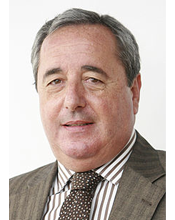
Professor Mohammad FARD is a faculty member at RMIT University's School of Engineering, specializing in Mechanical Engineering and Intelligent Systems. He leads research in autonomous vehicles, crash safety, and driver monitoring using AI. His industry experience includes six years at Nissan Technical Centre, focusing on vehicle body design. He holds a PhD from Tohoku University and has collaborated across Engineering, Health, and Science disciplines, achieving international media coverage for work on driver drowsiness and road safety. Research Interests: Autonomous Vehicles Advanced Crash Safety Driver State Monitoring AI in Noise/Vibration Human Factors/Ergonomics Teaching & Projects: Teaches Advanced CAE, Vehicle NVH, and research supervision in areas like crash simulation and vibration control. Current projects include Formula One safety barriers and driver education for autonomous vehicles. Awards & Labs: No awards listed. Active in cross-disciplinary teams and labs addressing automotive innovation and safety.
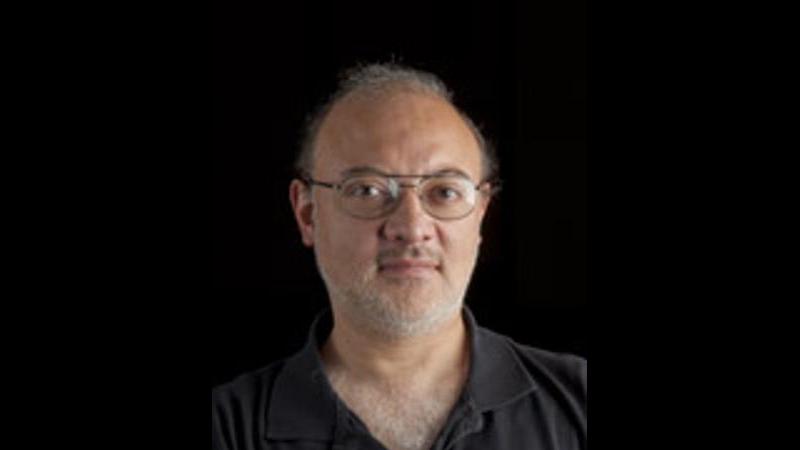
WANG Ye is an Associate Professor in the Department of Computer Science at the School of Computing, National University of Singapore (NUS). He holds a PhD in Information Technology from Tampere University of Technology, Finland, and has been a tenured faculty member at NUS since 2002, following his industry research role at Nokia Research Center. He is the director of the Sound and Music Computing Lab at NUS, leading cutting-edge research in AI-driven music and health technologies. PhD, Information Technology, Tampere University of Technology, Finland (2002) MSc, Telecommunications, Braunschweig University of Technology, Germany (1993) BSc, Telecommunications, South China University of Technology, China (1983) His research is centered on Sound and Music Computing for Human Health and Potential (SMC4HHP) , with a focus on eHealth, eLearning, mobile/wearable computing, and music information retrieval. His work spans AI for stroke rehabilitation, language learning through singing, singing voice synthesis, and automatic music transcription. He has pioneered systems like SLIONS (language learning via karaoke), CocoLyricist (AI co-creation for stroke recovery), and SinTechSVS (expressive singing voice synthesis). The latest articles highlight a strong trend in AI-driven music and health technologies , particularly in controllable lyric generation, singing voice synthesis, automatic pronunciation assessment, and multimodal music transcription. The research increasingly integrates large language models, explainable AI, fairness, and real-world deployment, reflecting a shift from theoretical exploration to practical, human-centered applications in healthcare and education. Dr. Wang has received numerous scientific honors, including: Best Paper Awards at ACM MM, ISMIR, IEEE ISM, and CHI First Prize, Asia Pacific Assistive, Rehabilitative, and Therapeutic Technologies Challenge (2015) Faculty Teaching Excellence Award, NUS School of Computing (2024) Top Paper Award, ACM Multimedia 2022 AI in Medicine Collaborative Grant for CocoLyricist project He has supervised over 11 PhD and 20 MComp students and is currently guiding six PhD candidates. His grants come from MOE, NRF, A*STAR, Nokia, and Smule. He has served as General Chair of ISMIR2017 and TPC Co-Chair of ICOT2017, and is on the editorial boards of IEEE Transactions on Multimedia and Journal of New Music Research. He has also developed and taught the first course on Sound and Music Computing in Singapore. Dr. Wang leads the Sound and Music Computing Lab (SMC Lab) , a multidisciplinary team exploring the synergy of music computing, AI, mobile technology, and cloud systems for health and education. The lab actively collaborates with medical institutions such as NUS Yong Loo Lin School of Medicine, Singapore General Hospital, and Harvard Medical School, and is currently working on projects in AI-supported language learning, stroke rehabilitation, and intelligent music interfaces.
Norwegian University of Science and TechnologyNorway
Albert Lau is an Associate Professor of Civil and Environmental Engineering at the Norwegian University of Science and Technology (NTNU), located in Trondheim, Norway. He specializes in railway engineering, structural dynamics, and transportation systems. Lau holds leadership roles as the Study Program Leader for the MSc in Road, Railway, and Transportation Engineering, overseeing curriculum development and program coordination. His research focuses on railway track design, dynamic modeling of train-track interactions, and infrastructure maintenance, with projects such as the MeTinT initiative (Measurement with Train in Regular Traffic). He has extensive experience supervising master’s and PhD students, and his work emphasizes innovation in rail infrastructure and sustainable transportation solutions. Education and Professional Background: Lau earned his PhD from NTNU in 2018, focusing on numerical simulations of railway turnouts. Prior roles include Postdoc (2018–2020) and Assistant Professor (2017–2018) at NTNU, and teaching at Oslo Metropolitan University (2020). His industry experience includes roles as a Design Engineer (2010–2012) and Project Engineer (2013–2014) in Malaysia, where he managed construction projects and structural design. Research Interests: Lau’s work spans railway track dynamics, infrastructure health monitoring, and machine learning applications in transportation. Key projects include developing digital twins for railway test sites and analyzing ground displacement impacts on track anomalies. His contributions to the Road, Railway and Transport Group at NTNU aim to advance rail safety and efficiency through interdisciplinary approaches. Teaching and Outreach: Lau coordinates courses such as TBA4225 (Railway Engineering) and BA6012 (Fundamental Railway Technology). His outreach includes expert commentary on railway incidents, such as an interview on NRK (2024) discussing potential causes of a train accident. Current initiatives focus on revitalizing regional rail services and optimizing train positioning systems.
Professor Diana Inkpen is a faculty member at the School of Electrical Engineering and Computer Science, University of Ottawa. She holds a Ph.D. from the University of Toronto's Department of Computer Science and degrees from the Technical University of Cluj-Napoca, Romania (M.Sc. and B.Eng.). Her research focuses on computational linguistics, natural language processing (NLP), and artificial intelligence, with specialties in natural language understanding/generation, lexical semantics, and semantic web agents. Education: Ph.D., Computer Science, University of Toronto M.Sc., Computer Science and Engineering, Technical University of Cluj-Napoca B.Eng., Computer Science and Engineering, Technical University of Cluj-Napoca Affiliations: Director, NLP Lab Editor-in-Chief, Computational Intelligence journal Associate Editor, Natural Language Engineering journal Her research has led to roles such as program co-chair for AI 2012 and leadership in organizing international workshops. She has received funding from NSERC, SSHRC, and OCE, and was honored with a Visiting Professor title at the University of Wolverhampton, UK. Her teaching spans courses like Information Retrieval, Natural Language Processing, and Prolog programming. Professor Inkpen's work bridges NLP innovations with societal challenges, including mental health surveillance via social media analysis and bias mitigation in AI systems. She actively contributes to interdisciplinary projects, such as detecting hate speech and legal text entailment, while maintaining a global research network through collaborations and international conference involvement.
Hongkai Wen is a Professor (Chair in Machine Learning Systems) in the Department of Computer Science at the University of Warwick, UK. He holds dual appointments as a Fellow of the Alan Turing Institute (serving as Independent Scientific Advisor for BridgeAI and member of Turing Research Ethics team) and previously worked as Senior Research Scientist at Samsung AI Centre Cambridge and postdoctoral researcher at Oxford University. Education: Computer Science, Keble College, University of Oxford Research Focus: Develops intelligent multi-modal perception systems for real-world deployment with extreme computational efficiency. Core expertise spans ML systems optimization, neural architecture search, and cross-disciplinary applications in robotics, urban mobility, and wearable/IoT security. Pioneered event-based vision techniques and training-free NAS frameworks. Publication Trends: Recent work (2023-2025) demonstrates accelerating innovation in diffusion model efficiency, on-device AI deployment, and sensor fusion techniques. Dominant themes include computational resource optimization for edge devices, multi-modal temporal modeling, and privacy-preserving spatial analytics, with significant contributions to NeurIPS, ICML, and CVPR venues. Scientific Recognition: Best Paper Award, AutoML Conf 2023 (T-CET) Best Paper Runner-up, SenSys 2024 (AdaFlow) Best Paper Awards: IPSN 2014 & EWSN 2013 1st/2nd Place, Zero Cost NAS Competition (AutoML'22) Mentorship & Funding: Actively supervises PhD candidates through thesis committees at Warwick, Ulster, and Queensland universities. Secured National AI Strategy Fund for Macro Neural Architecture Search research. Recruits annually for PhD positions with scholarships from UKRI, Turing Institute, and industry partnerships. Research Leadership: Heads the AI/ML Systems (AMS) Division at Warwick, directing a 15+ member team developing deployable ML frameworks for mobile/robotic platforms. Maintains active collaborations with Samsung AI Centre and Turing Institute's BridgeAI programme on ethical AI deployment.
Dr. Fatemeh Golpayegani is an Assistant Professor at the School of Computer Science, University College Dublin. She leads the Multi-agent Systems and Sustainable Solutions lab (MAS3.ucd.ie) and has secured over €1.5M in research grants. Her academic roles include BSc Stage 4 Coordinator and Chair of Women@CS (2012–2023). She holds a PhD from Trinity College Dublin (2018) and professional qualifications in university teaching from UCD. Education: PhD in Computer Science, Trinity College Dublin (2018) Professional Diploma in University Teaching & Learning, University College Dublin (2024) Professional Certificate in University Teaching & Learning, University College Dublin (2023) Research Interests: Focuses on multi-agent systems, sustainability, intelligent transport systems, autonomous decision-making, and edge computing. Her work integrates reinforcement learning, ontology-based models, and adaptive systems to address challenges in smart cities, energy grids, and infrastructure monitoring. Grants & Projects: Principal Investigator for the EU-funded RE-ROUTE project (€multi-million, 2023–2026) on intelligent transport networks. Co-Principal Investigator for the Augmented CCAM project on connected/cooperative autonomous mobility. Funded investigator in SFI centres (I-Form, CONNECT, Biorbic). Awards & Recognition: Researcher of the Year Award (2022) Member of Young Academy of Ireland (2023) Teaching & Mentoring: Coordinates modules in algorithms, Java programming, and operating systems. Supervises PhD students in SFI centres and mentors postdoctoral researchers. Active in promoting EDI as Chair of d-real doctoral training centre. Labs & Collaborations: Leads the MAS3 lab, collaborating on projects like CAPTAIN CARBON (sustainable transport gamification) and ontology-enhanced traffic signal control systems.
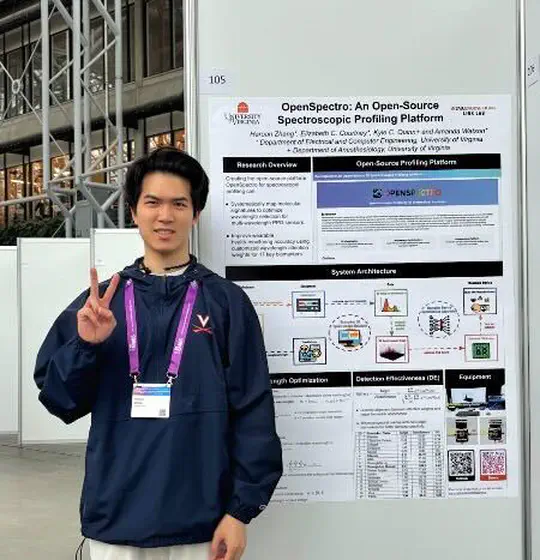
Amanda Watson is an Assistant Professor in Electrical and Computer Engineering at the University of Virginia, with joint appointments in Computer Science. She leads the Watson Research Lab within the UVA Link Lab, a multidisciplinary center for Cyber-Physical Systems (CPS) and Internet of Medical Things (IoMT) research. Her work bridges wearable technology with healthcare and athletic performance applications, focusing on noninvasive monitoring, physiological signal analysis, and safety-critical medical devices. She is also the cofounder and CEO of Luminosity Wearables, commercializing a noninvasive continuous glucose monitor. Education: PhD in Computer Science (2020) - College of William & Mary MSc in Computer Science (2016) - College of William & Mary Bachelors in Computer Science and Mathematics (2014) - Drury University Her research spans multiple domains including: Wearable spectroscopy for nutrition and skin health Machine learning for drug overdose and fall risk detection Biomechanical monitoring in sports medicine Wearable support for visual and neurological impairments IoMT device integration and analytics Recent publications (2024-2025) show strong emphasis on calibration-free physiological monitoring systems, with technical contributions in spectral analysis , multi-wavelength sensing , and rapid prototyping for healthcare wearables. Applications range from maternal health to gerontological social isolation detection. Lab and Team: The Watson Research Lab at UVA develops wearable solutions for clinical and athletic contexts, with ongoing collaborations in the PRECISE Center at University of Pennsylvania and LENS lab at William & Mary alumni network. She works with multidisciplinary teams including engineers, clinicians, and data scientists.
Troy McDaniel is an Assistant Professor at Arizona State University's School of Manufacturing Systems and Networks, specializing in haptic interfaces and assistive technologies for people with disabilities. With over 50 peer-reviewed publications and two authored books, his work bridges engineering, computer science, and healthcare to develop innovative rehabilitation solutions. Ph.D. from Arizona State University His research focuses on haptic perception and human augmentation through wearable technologies, with emphasis on assistive devices for motor and cognitive rehabilitation. Key areas include vibrotactile communication systems, social robotics for elderly care, and machine learning applications for activity recognition. His work prioritizes user-centered design for real-world disability challenges. Recent publications (2023-2025) demonstrate strong trends in haptic neuro-spatial rehabilitation, executive function therapy apps, and social robot companionship systems. His research increasingly integrates privacy-preserving AI for smart city health applications while maintaining clinical validity through partnerships with institutions like Mayo Clinic. Multiple Top 5% teaching awards for faculty at the Ira A. Fulton Schools of Engineering Dr. McDaniel advises graduate students in manufacturing systems and robotics through dissertation committees (MFG 799, CSE 799), with recent projects spanning haptic training simulations to PERACTIV activity monitoring systems. His research funding includes significant NSF grants like the IGERT program on person-centered technologies for disabilities and collaborations with Intel Corp on smart stadium applications. He contributes to ASU's Smart Living Research initiative, developing haptic neuro-spatial rehabilitation devices and social robotics frameworks within interdisciplinary teams focused on translating lab innovations to community health solutions.
Prof. Dr. Angelika Braun is a full Professor of Phonetics at the University of Trier since October 2009, with a career spanning forensic phonetics, sociophonetics, and cross-cultural speech analysis. She previously held roles at the Bundeskriminalamt (Wiesbaden/Düsseldorf) and Philipps-Universität Marburg, where she habilitated in Phonetics and Speech Processing (2000). Her work bridges academic research with forensic practice. Research Focus: Her Sociophonetics (language and emotions, gender-specific speech) Forensic Phonetics (speaker identification, voice analysis) Contrastive and Hawaiian Phonetics Speech prosody and toxin effects (smoking, alcohol) Intercultural dubbing studies Academic Contributions: Over 15 recent articles explore voice quality, emotional speech, forensic age estimation, and cross-cultural dubbing effects. Key conferences include Interspeech, International Congress of Phonetic Sciences, and ISCA. Her work appears in journals like Forensic Linguistics and The Phonetician . Scientific Honors: Fellow of the American Academy of Forensic Sciences (AAFS) Founder Member and former Chairperson of the International Association for Forensic Phonetics (IAFP) Life-Member of the International Phonetic Association (IPA) Leadership roles in ISPhS and GAL Practical Impact: Developed the Almeida-Braun Transcription System for dialect analysis and contributed to forensic audio enhancement protocols (e.g., Rodney King case). Serves as reviewer for Language and Speech , Forensic Linguistics , and JIPA . Collaborates on longitudinal studies of vocal aging and speaker identification.
Professor Ling Li is a faculty member at Curtin University's School of Electrical Engineering, Computing and Mathematical Sciences (EECMS), within the Faculty of Science and Engineering. Their research focuses on interdisciplinary applications of machine learning, computer vision, and deep learning in structural engineering and materials science. Notable contributions include advancements in structural health monitoring, blast loading prediction, and 3D displacement measurement using monocular vision. Professor Li has authored numerous peer-reviewed articles and collaborates on projects involving civil infrastructure resilience, smart materials, and AI-driven solutions for engineering challenges. They hold an office in the New Technologies Building at Curtin Perth and can be reached at L.Li@curtin.edu.au.
Prof. Dr. Wolfgang Taube is a leading academic at the University of Fribourg , affiliated with the Faculty of Science and Medicine and specializing in Motor Control and Neuroplasticity within the Movement and Sport Sciences department. His work bridges Neuroscience , Physiology , and Rehabilitation through rigorous experimental designs. Role: Professor Location: PER 21 bu. F429, Bd de Pérolles 90, 1700 Fribourg, Switzerland Contact: wolfgang.taube@unifr.ch ORCID: 0000-0002-8802-2065 His research explores neural mechanisms of motor learning , age-related adaptations , and interventions to enhance balance and sensorimotor function . Key areas include: Modulation of GABAergic inhibition through training fNIRS/fMRI studies on cortical activation patterns Biomechanical analysis in sports performance Neurorehabilitation strategies for chronic pain Recent publications demonstrate a focus on age-related neuroplasticity , external focus of attention , and technology-driven training interventions across sports like football and swimming. Methodologically, he integrates randomized trials , meta-analyses , and machine learning applications in motor control studies.
Pedro M. B. Silva Girão is a Full Professor in the Department of Electrical Engineering at Instituto Superior Técnico (IST), University of Lisbon (UL), and a Senior Researcher at Instituto de Telecomunicações where he heads the Instrumentation and Measurements Group and coordinates the Basic Sciences and Enabling Technologies area. His dual institutional roles position him at the forefront of academic research and technological innovation in Portugal. His research program focuses on instrumentation, transducers, and measurement techniques with specialized applications in biomedical and environmental domains. Key interests include wireless sensor networks for health monitoring, metrology standards, and digital data processing methodologies. This work bridges engineering principles with real-world healthcare and ecological challenges, emphasizing practical implementations in diagnostic systems and environmental sensing. Analysis of his 2019-2024 publications reveals a strong thematic trajectory in IoT-enabled healthcare solutions and precision environmental monitoring. Recurring motifs include gait rehabilitation through mixed reality systems, advanced dosimetry for liver cancer radioembolization, microvascular reactivity assessment, and water quality sensor networks. His output demonstrates consistent interdisciplinary collaboration between engineering, medical, and environmental science communities. Dr. Girão's scientific recognition includes: IEEE Senior Member status IEEE IMS Distinguished Lecturer appointment Honorary Chairmanship of IMEKO TC19—Environmental Measurements As leader of the Instrumentation and Measurements Group at Instituto de Telecomunicações, he directs a multidisciplinary team developing next-generation measurement systems. Current initiatives integrate microwave Doppler radar, wearable biopotential sensors, and wireless networks for unobtrusive health monitoring and environmental assessment, with active partnerships across medical institutions and ecological agencies.
Gustavo Rodriguez-Rivera is an Associate Teaching Professor in the Department of Computer Science at Purdue University, part of the School of Science. He joined the department in 2000 and holds a Ph.D. in Computer Science from Purdue University (1998), an M.S. in Electrical Engineering from ITESM Campus Monterrey (1990), and a B.S. in Electrical Engineering from the same institution (1985). His research focuses on Operating Systems, Computer Networks, Memory Management, Embedded Systems, Real-Time Systems, and broader areas like Numerical Analysis and Artificial Intelligence. Dr. Rodriguez-Rivera has received multiple teaching awards, including the ACM Faculty Award in Computer Science (2020, 2023) and Best Teacher in the School of Science (2014, 2016). His work spans software engineering education, structural health monitoring for wind turbines, and memory management algorithms. Notable publications include studies on garbage collection techniques, real-time project tracking in programming courses, and vibro-acoustic modulation for turbine blade inspection. He has advised numerous projects and contributed to grants such as the NSF-funded work on wind turbine blade monitoring. His academic contributions also include developing secure programming course modules and tools for interactive debugging systems.
Andreas Stollwitzer is a researcher affiliated with the Research Area Steel Construction at TU Wien. His academic titles include Univ.Ass. (University Assistant), Dipl.-Ing. (Diplom-Ingenieur), and Dr.techn. (Doctor of Technical Sciences). His research focuses on railway bridge dynamics, track-bridge interaction, and structural health monitoring. Key areas of investigation include the behavior of ballasted tracks on railway bridges, dynamic characteristics of bridge-track systems, and vibration analysis in high-speed rail infrastructure. His work emphasizes experimental and numerical methods to study phenomena such as longitudinal/lateral track-bridge interaction, dynamic stiffness and damping measurement, and destabilization of ballast beds under vertical vibrations. He has contributed to projects like DYS-GROS, analyzing the dynamic interaction between track components and bridge structures through both simulations and in-situ testing. Recent publications (2021–2023) highlight advancements in damping factor calculations, comparison of vehicle-bridge interaction approaches, and the application of indirect structural health monitoring techniques using vehicle-based sensors. His findings aim to improve bridge safety, reduce computational uncertainties in dynamic analyses, and optimize railway infrastructure design under high-speed conditions. He collaborates with institutions and researchers in Austria and internationally, focusing on railway engineering challenges. While no formal awards are listed, his extensive publication record reflects significant contributions to civil engineering dynamics and infrastructure systems.
Satoru Hayamizu is a Professor at Waseda University 's Green Computing Systems Research Organization , with a career spanning over four decades. His research focuses on Audio-Visual Speech Recognition , Machine Learning , and Medical Informatics , as evidenced by 126 publications and an h-index of 18. Education: The University of Tokyo (PhD in Mechanical Engineering) Prior affiliations: Gifu University (2002-), National Institute of Advanced Industrial Science and Technology (1981-2001) Research Interests include: Audio-visual speech recognition with sparse representation and DNN techniques Development of low-cost CNN-based road condition detection systems Swallowing function evaluation using acoustic and image processing Human behavior analysis for service operation estimation Research Trends reveal consistent work in multimodal signal processing (2006-2024), deep learning applications (2012-2024), and medical diagnostic systems (2006-2017). His publications show integration of sparsity modeling (2012-2021), industrial equipment diagnostics (2018-2021), and social impact technologies (2013-2024). Research Projects funded by Japan Society for the Promotion of Science include: Swallowing timing estimation (2018-2021) Multimodal silent speech recognition (2016-2020) ICT-based piano learning systems (2013-2016) Keyword display mechanisms (2010-2012) Labs & Collaborations include partnerships with Satoshi Tamura (co-author on 12+ papers), Hidekazu Fukai , and Chiyomi Miyajima . His work bridges academic research and industrial applications , particularly in manufacturing AI (2024 book) and Timor-Leste infrastructure monitoring.