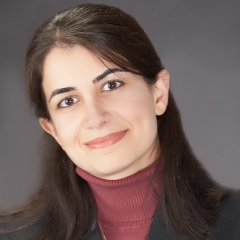
Professor Yasamin Mostofi is a faculty member in the Department of Electrical and Computer Engineering at the University of California, Santa Barbara. She is also affiliated with the Department of Computer Science and the Center for Control, Dynamical Systems and Computation. Her work bridges wireless systems, robotics, and machine learning. PhD, Stanford University MS, Stanford University MS, Sharif University of Technology Research Interests : Her lab focuses on wireless systems and autonomous agents , developing novel mathematical models for RF sensing and communication-aware robotics. Current directions include WiFi/millimeter wave/6G-based imaging and analytics, networked robotics for cellular systems, human-robot collaboration, and machine learning integration. Recent Publications : Her work spans through-wall crowd analytics , robot-assisted connectivity , and vision-aided wireless sensing , with applications in smart health, security, and retail optimization. Key trends include cross-modal integration (WiFi and vision), synthetic data generation, and real-world clinical validation. Scientific Recognition : Presidential Early Career Award for Scientists and Engineers (PECASE) Antonio Ruberti Prize, IEEE Control Systems Society NSF CAREER Award IEEE Region 6 Outstanding Engineer Award IEEE Fellow (2020) Advising and Leadership : She mentors PhD students in systems research, with graduates joining leading companies like Qualcomm and Google. She co-founded NPJ Wireless Technology (Nature Portfolio) and serves on editorial boards including IEEE Transactions on Control of Network Systems .
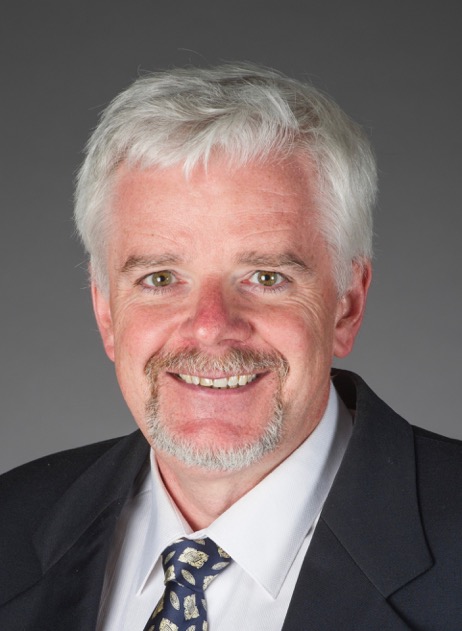
Prof. Martin Haenggi is the Frank M. Freimann Professor of Electrical Engineering and Concurrent Professor in the Department of Applied and Computational Mathematics and Statistics at the University of Notre Dame. He holds a Dr.sc.techn. (Ph.D.) from ETH Zurich and has been at Notre Dame since 2000. His research focuses on stochastic geometry and wireless networks, including cellular, heterogeneous, vehicular, and millimeter-wave systems. He has held sabbaticals at UCSD (2007–2008), EPFL (2014–2015), and ETH Zurich (2021–2022). Education: Dipl.-Ing. (M.Sc.), ETH Zurich, 1995 Dr.sc.techn. (Ph.D.), ETH Zurich, 1999 Research interests emphasize stochastic geometry for analyzing network performance, including coverage, interference, and reliability in wireless systems. Key areas include meta distributions, spatial-temporal analysis, and network optimization. His work has been recognized with IEEE Fellow status, Clarivate Highly Cited Researcher distinction, and NSF CAREER Award (2005). Grants and Awards: NSF Award (Deep Stochastic Geometry: 2020–2023) NSF Award (Toward a Stochastic Geometry for Cellular Systems: 2015–2019) Rice Prize (2017), Best Survey Paper Award (2017), and Best Tutorial Paper Award (2010) from IEEE Communications Society Teaching includes advanced courses on stochastic geometry, wireless networks, and signal processing. His lab focuses on theoretical and applied aspects of network modeling, with collaborations in industry and academia.
Dr. Kyle Jamieson is a Professor of Computer Science at Princeton University, leading the Princeton Advanced Wireless Systems (PAWS) lab within the Department of Computer Science. He is also Affiliated Faculty in the Department of Electrical and Computer Engineering. His research focuses on wireless networking systems, 5G architecture, IoT networks, and quantum computing applications in wireless communication. He has pioneered work in reconfigurable intelligent surfaces, MIMO detection algorithms, and metamaterials for millimeter-wave networks. Dr. Jamieson has developed courses such as COS 597S: Recent Advances in Wireless Networks (graduate seminar), COS 463: Wireless Networks , and COS 418: Distributed Systems . His teaching emphasizes interdisciplinary approaches to networking challenges, including physical-layer design, computational structures for wireless processing, and cross-layer optimization. His lab’s research spans smart surfaces for 5G networks, quantum annealing for MIMO processing, and edge computing for live video analytics. Recent work includes deploying reconfigurable metamaterials for enhanced mmWave networks and developing tools like NR-Scope for 5G telemetry. While no awards are listed in the provided text, his contributions to wireless systems have advanced both academic and industrial applications in areas such as network resilience, IoT scalability, and quantum-enabled wireless processing. Dr. Jamieson’s advising focuses on graduate and undergraduate students working in wireless systems, though specific advisee names are not provided. His lab collaborates on projects like Wall-Street for roadside networking and Spider for multi-hop mmWave video analytics. External collaborations include work with Microsoft Research and guest lecturing roles at Berkeley. His research bridges theoretical foundations with practical implementations, often addressing real-world challenges in wireless infrastructure and next-generation communication systems.
Emilio Frazzoli is a Full Professor at ETH Zurich’s Department of Mechanical and Process Engineering. He leads the Institute for Dynamic Systems and Control and the Center for Sustainable Future Mobility, focusing on autonomous systems, robotics, and socio-technical control frameworks. Current affiliations: ETH Zurich (Dynamic Systems and Control, Sustainable Future Mobility) Research: Autonomous mobility-on-demand, game theory for resource allocation, and safety verification in multi-agent systems His work bridges robotics, control theory, and economics, with projects like the open-source AMoDeus simulation framework for autonomous taxis and karma-based resource allocation systems. Recent publications emphasize trustworthy AI, reproducibility in autonomous vehicle control, and human-robot interaction challenges. Notable projects include nuReality (VR-based pedestrian interaction studies) and CARSI II (context-driven vehicle interfaces).
Marco Di Renzo is a CNRS Research Director (Professor) and Head of the iPhyCom group at the Laboratory of Signals and Systems (L2S) at Paris-Saclay University, France. He is affiliated with both CNRS and CentraleSupélec. His roles include: Member of L2S Management Committee and Board Council Member of the Ph.D. School Admission Committee Academic Vice Chair, ETSI Industry Specification Group on RIS Editorial and leadership roles in IEEE communications journals Education: Laurea (cum laude) and Ph.D. in Electrical Engineering from University of L’Aquila (2003, 2007) Habilitation à Diriger des Recherches from Paris-Saclay University (2013) Research focuses on 6G networks , reconfigurable intelligent surfaces (RIS) , and integrated sensing and communications (ISAC) . He explores electromagnetic theory, machine learning applications, and energy-efficient wireless systems. His work addresses challenges in near-field communications, multi-user MIMO, and holographic beamforming. He advocates for physics-driven design principles in next-gen networks. Key awards include IEEE/IEE Fellowships, the Michel Monpetit Prize, and multiple IEEE Best Paper Awards. He holds international visiting professorships at institutions like the University of Oulu (Finland) and Nanyang Technological University (Singapore). Active in standardization via ETSI ISG RIS and contributes to global initiatives like the ITU 6G Vision. His research bridges theoretical models with practical implementations, emphasizing interdisciplinary collaboration between physics, signal processing, and AI.
Habib Ullah is an Associate Professor in Data Science at the Norwegian University of Life Sciences (NMBU), Norway, where he conducts research at the intersection of computer vision and machine learning. He is affiliated with the Institute of Data Science under the Faculty of Science and Technology. He has previously held academic positions at COMSATS University Islamabad, Pakistan, and the University of Ha'il, Saudi Arabia, and served as a postdoctoral researcher at The Arctic University of Norway. Educational Background: PhD in Information and Communication Technology (Computer Vision), University of Trento, Italy (2011–2015) MSc in Electronics and Computer Engineering, Hanyang University, South Korea (2007–2009) BSc in Computer Systems Engineering, NWFP University of Engineering and Technology, Pakistan (2002–2006) Habib Ullah's research is primarily focused on computer vision and machine learning, with applications in aquaculture, agriculture, and human behavior analysis. He investigates underwater fish feeding sounds using audio classification, develops zero-shot learning models for recognizing unseen classes, and applies deep learning to detect stress in salmon via skin dot patterns. He also explores AI-driven controlled environment agriculture, leveraging sensors and automation for optimal crop growth. His work emphasizes practical AI solutions for real-world challenges in environmental and biological domains. The recent publications highlight a strong trend in leveraging deep learning for zero-shot and semi-supervised learning, particularly in computer vision tasks such as sea ice classification, crowd anomaly detection, and agricultural monitoring. His research spans remote sensing, biomedical signal processing, and human activity recognition, demonstrating interdisciplinary versatility. The keywords reflect a focus on robust feature representation, knowledge transfer, and model generalization. Scientific Awards and Funding: Industrial PhD grant 'Advancing Controlled Environment Agriculture AI' from The Research Council of Norway (Project number 354125, 2 million NOK, 2024) Team member (Coordinator-Participant) in the Battery Cell Assembly Twin (BatCAT) project funded by Horizon Europe (7 mEuro, 2023–2027) Development of an AI-Based Image Analysis System for Monitoring Plant Status (Funding: 1.8 mNOK, starting 2025) Habib Ullah actively supervises PhD projects and contributes to academic service through editorial and organizational roles. He has served as an Associate Editor for IEEE Access, Guest Editor for MDPI Remote Sensing, and Editor of the Springer book Machine Learning Techniques and Sensor Applications for Human Emotion, Activity Recognition, and Support (ML-SHEARS) . He has also been a Track Chair and Program Committee Member for several international conferences, reflecting his leadership in the academic community. His research is supported by significant grants and collaborative projects, indicating strong institutional and international engagement. He is involved in multiple research teams and projects, including the BatCAT project on battery manufacturing and AI applications in controlled environment agriculture with RIFT LABS AS. His lab work integrates deep learning, sensor fusion, and data analytics for environmental and biological monitoring systems.
Michael Feeley is an Associate Professor in the Department of Computer Science at the University of British Columbia (UBC), affiliated with the Institute for Computing, Information and Cognitive Systems (ICICS). His research focuses on operating systems, distributed systems, and their applications in scalable file systems, cloud storage, and mobile computing. He leads projects such as the Unico file system, Parallax storage system, and Remus virtual machine replication framework. His research interests include peer-to-peer file systems, mobile ad hoc networks, interference mitigation in wireless networks, and system software for workstation clusters. He has supervised numerous graduate students, contributing to advancements in distributed systems and networking. His work often addresses challenges in resource management, fault tolerance, and performance optimization. Publications span topics like interference detection in WiFi networks, dynamic program analysis (Tralfamadore), and distributed storage solutions. Feeley teaches courses such as CPSC 213, emphasizing operating systems fundamentals. His office is located in CISR 393, with contact details available via email and phone.
Justine Sherry is the A. Nico Habermann Associate Professor of Computer Science at Carnegie Mellon University, affiliated with the College of Engineering. She holds a PhD (2016) and MS (2012) from UC Berkeley and a BS/BA (2010) from the University of Washington. Her research focuses on networked systems, including middleboxes, cloud computing, congestion control, and hardware acceleration (e.g., SmartNICs/FPGAs). Notable projects include Pigasus (open-source 100Gbps IDS), APLOMB (cloud-based middlebox scaling), and BlindBox (encrypted traffic scanning). Her academic roles include serving on the SIGCOMM CARES Committee, DARPA ISAT Study Group, and ACM CoNEXT Steering Committee. Awards include the Alfred P. Sloan Fellowship, VMware Systems Award, and IETF Applied Networking Prize. She advises over 15 students and collaborates with industry partners like Intel and VMware. Research highlights include radical shifts in datacenter architectures (SmartNIC compute control), fairness in congestion algorithms (BBR analysis), and database-proxy innovations (Tigger with eBPF). Her teaching emphasizes systems as science labs, integrating experimental design and hypothesis testing into projects. Education: PhD UC Berkeley (2016), MS UC Berkeley (2012), BS/BA University of Washington (2010) Labs/Teams: CyLab, SNAP Research Group, CMU Portugal Collaboration Grants: NSF, Intel, Google Faculty Awards
Associate Professor Jiwon Kim is a leading researcher in Transport Engineering at the University of Queensland's School of Civil Engineering. She serves as Director of Higher Degree by Research and was a DECRA Fellow from 2019-2022. Holding degrees from Korea University and Northwestern University, she specializes in AI/ML applications for transportation systems. PhD, Northwestern University BS & MS, Korea University Her research focuses on Artificial Intelligence and Machine Learning applications in transportation, including: Deep learning for traffic management Reinforcement learning in mixed traffic environments Multi-agent systems for urban mobility optimization Spatiotemporal trajectory analysis Recent publications demonstrate expertise in: Eco-driving strategies Traffic incident prediction Queue length estimation Crash risk modeling Scientific recognition includes: ARC DECRA Fellowship (2019-2022) She supervises doctoral students in: Transportation data analytics Autonomous vehicle systems Intelligent traffic management Current projects explore real-time traffic monitoring, synthetic mobility data generation, and connected vehicle technologies.
Gian Antonio Susto is an Associate Professor at the Department of Information Engineering , University of Padova . With a Ph.D. in Information Technology and post-doctoral experience at National University of Ireland, Maynooth, he leads research in Machine Learning , Semiconductor Manufacturing , and Industrial IoT . His work bridges Anomaly Detection , Continual Learning , and Algorithmic Fairness with applications in Hydroelectric Power Plants , Particle Accelerators , and Smart Mobility . B.Sc. and M.Sc. in Controls Engineering, University of Padova (cum laude) Ph.D. in Information Technology, University of Padova (2013) Post-Doc at National University of Ireland, Maynooth (2012-2013) Assistant Professor at University of Padova (2013-2021) His research focuses on Explainable AI , Virtual Metrology , and Deep Learning for manufacturing and infrastructure monitoring. Recent projects include the AIMS5.0 (AI for Manufacturing Sustainability) and MICS (Circular Economy in Italy) initiatives. His publications span Engineering Applications of Artificial Intelligence , IEEE Transactions , and Information Processing & Management , with 15+ recent papers on topics like Fault Diagnosis , Continual Learning , and Fair Ranking . Key scientific awards include: IEEE CCTA Best Student Paper Award (2021) IP&M 2020 Ph.D Paper Award Best Industry Paper Award, European Workshop on Advanced Control and Diagnosis (ACD 2019) He has supervised Ph.D. students on projects involving Particle Accelerators , Plant Behavior Modeling , and Explainable AI , with alumni now at institutions like Max Planck Institute , IBM , and Scripps Research . Current teaching includes Reinforcement Learning and Explainable Machine Learning at graduate and Ph.D. levels.
Dominik Schörkhuber is a PreDoc Researcher at the Vienna University of Technology (TU Wien) in the Computer Vision department. With a background in Informatics (BSc, Dipl.-Ing.), he focuses on computer vision applications for autonomous driving, robotics, and human-machine interaction. His work spans driver action recognition, pedestrian prediction, and adaptive lighting systems. Current projects: Empathic Vehicle (2024–2026), SyntheticCabin (2021–2025), SmartProtect (2020–2025) Research themes: Video transformers, synthetic data transfer learning, multi-task learning, and sensor-lighting integration Specializes in 3D sensing, nighttime driving analysis, and mobile video creation tools
Subir Biswas is a Professor in the Department of Electrical and Computer Engineering (ECE) at Michigan State University (MSU), part of the College of Engineering. His research focuses on wireless networking, low-power protocols, vehicular networks, and health monitoring systems, conducted through the NeEWS laboratory. He holds a Ph.D. from the University of Cambridge and degrees from Jadavpur University. Education: Ph.D., Computer Engineering, University of Cambridge (1994) M.S., Electrical Engineering, Jadavpur University (1989) B.S., Electrical Engineering, Jadavpur University (1987) Professional Experience: Professor, MSU ECE (2011–present) Associate Professor, MSU ECE (2003–2010) Research interests include traffic analysis firewalls, pricing calculus for social wireless networks, low-energy green networking, and ultrasound-based sensor systems . He leads the NeEWS lab, exploring embedded systems and network middleware. His work spans IoT, cybersecurity, and biomedical applications like wearable sensors for autism monitoring and hydration tracking. Publications emphasize innovative protocols (e.g., pulse position coding) and machine learning for network optimization. Collaborations include NSF-funded projects and industry partnerships (e.g., Tellium Optical Systems).
Dr. Srinivas Peeta is the Frederick R. Dickerson Chair and Professor in Transportation Systems Engineering at the Georgia Institute of Technology’s School of Civil and Environmental Engineering. He previously held the Jack and Kay Hockema Professorship at Purdue University, where he served for 24 years. He is also the Associate Director of the USDOT Center for Connected and Automated Transportation. Education: B. Tech. from IIT Madras, M.S. from Caltech, and Ph.D. from UT Austin, all in Civil Engineering. His research focuses on large-scale transportation systems, infrastructure interdependencies, and connected/automated vehicles. He has authored over 345 publications and secured over $48M in research funding. Research Interests: Dynamic traffic networks and driver behavior modeling Information-based navigation in vehicular systems Systems perspectives for complex adaptive infrastructure Autonomous vehicle integration and human-vehicle interactions Key Achievements: Developed DYNASMART software for traffic operations Recipient of NSF CAREER Award (1997) and ASCE Walter Huber Prize (2009) Directed NEXTRANS UTC and pioneered USDOT’s real-time route guidance systems Grants & Outreach: Secured funding from USDOT, NSF, FHWA, and international agencies Initiated NEXTRANS internship programs and K-12 outreach Labs/Teams: Active in Georgia Tech’s ACT Lab, focusing on autonomous transportation systems and human-vehicle-environment interactions.
Cathy Wu is an Associate Professor at MIT, with affiliations in the Laboratory for Information and Decision Systems (LIDS), Department of Civil and Environmental Engineering (CEE), and Institute for Data, Systems, and Society (IDSS). Her research group focuses on integrating machine learning with model-based optimization to solve complex problems in transportation systems and cyber-physical systems. Academic Leadership: Class of 1954 Career Development Associate Professor (MIT) Research Grants: NSF CAREER Award, Amazon Robotics, Mathworks, MIT Mobility Initiative, US DOT, Microsoft Research, Cintra, Symbotic Research Interests : Wu's work bridges AI and engineering challenges in transportation. Key areas include: Hybrid ML/Model-based Optimization (large neighborhood search, branch-and-cut) Sustainable Mobility (Project Greenwave, eco-driving) Multi-Agent Coordination (warehouse automation, cooperative driving) Cyber-Professional Systems (generalization in RL, transfer learning) Recent work demonstrates significant advances in eco-driving (11-22% emissions reduction), large-scale multi-agent path finding (1000+ agents), and foundational RL methods for traffic control. Her group has produced 15+ major publications since 2015, with notable media coverage in Science, Wired, and NewScientist. Selected Scientific Awards NSF CAREER Award (2023) Ole Madsen Mentoring Award (2025) IEEE ITSS WiE/YP Fellowship (2024) Harold L. Hazen Teaching Award (2022) Her lab has advised 12+ graduate students and postdocs, including: Vindula Jayawardana (PhD '24, now at Anthropic) Sirui Li (PhD '25, now at Microsoft Research) Yining Ma (Postdoc, active researcher) Zhongxia Yan (PhD '24, now at Anthropic)
Michael Lepech is a Professor of Civil and Environmental Engineering and Senior Fellow at the Woods Institute for the Environment at Stanford University. His research focuses on integrating sustainability into civil engineering through quantitative assessment and multi-scale modeling, particularly via the Sustainable Integrated Materials, Structures, Systems (SIMSS) framework. He also leads the Stanford Center at the Incheon Global Campus (SCIGC) in South Korea, exploring smart city technologies for urban sustainability. Education : PhD in Civil and Environmental Engineering (2006), MBA in Finance and Strategy (2008) from the University of Michigan. Research Areas : Sustainable infrastructure design, biopolymer composites, life cycle assessment, digital twinning, smart city technologies, and multi-physics deterioration modeling. Leadership : Director of SCIGC, advancing research on smart and sustainable urban environments in Songdo, South Korea. His recent publications focus on biopolymer-bound composites, traffic signal optimization, and life cycle sustainability analysis. He has received recognition as a Senior Fellow at Stanford’s Woods Institute for environmental research.