
Professor Alex Klein-Paste is affiliated with NTNU's Department of Civil and Environmental Engineering, focusing on winter operations of roads and airports. His research emphasizes snow and ice engineering, anti-icing strategies, and friction dynamics. He leads the NTNU SnowLab, a specialized facility supporting education and research in snow engineering. Klein-Paste teaches courses on road planning, maintenance in cold climates, and infrastructure management. His research spans experimental studies on de-icing chemicals, snow compaction, and winter maintenance optimization. Key contributions include developing regression models for maintenance efforts and analyzing cross-country ski friction mechanics. He collaborates widely, with recent work addressing automated vehicle infrastructure needs and bicycle rolling resistance in winter conditions. Labs/Teams: Director of NTNU SnowLab, part of the roads, railways, and transport research group. His work bridges experimental engineering and real-world applications, influencing both academic and industrial sectors.
جستجوی استاد راهنمای دانشگاهی
برای مسیر پژوهشیتان، استاد راهنما، استاد دانشگاه و پژوهشگر مناسب را پیدا کنید و با آنها ارتباط بگیرید.
نمایش ۷۳۶-۷۵۰ از ۷٬۵۴۴ استاد راهنما
اطلاعات پروفایلها از صفحات عمومی دانشگاهها گرفته شده و ممکن است بهروز نباشد.

Mogens Fosgerau is a Professor in the Department of Technology, Management and Economics at the Technical University of Denmark (DTU), where he conducts research in transport policy and transportation science. His work spans econometrics, travel behavior modeling, and transport economics, contributing to sustainable urban mobility and policy design. Institution: Technical University of Denmark Department: Department of Technology, Management and Economics Email: mogens.fosgerau@econ.ku.dk ORCID: https://orcid.org/0000-0002-6452-5215 His research focuses on discrete choice modeling, travel time valuation, scheduling preferences, and congestion pricing. He develops theoretical and empirical models to understand how individuals make travel decisions under uncertainty and how these behaviors affect urban transport systems. His work integrates economic theory with data-driven methods, often using large-scale datasets and advanced econometric techniques. The recent trend in his publications highlights innovations in perturbed utility models for route choice, stochastic traffic assignment, and the analysis of induced demand for cycling. His research bridges transportation science, behavioral economics, and operations research, with applications in urban planning and policy evaluation. Scientific awards received include: The International Choice Modeling Conference (ICMC) award for Most Innovative Application (2022) Best Overall Paper Award, ITEA Conference (2015) Best Paper Awards from BIVEC-GIVET (2007), Kuhmo-Nectar (2008) Hedorfs Fonds Pris for Transportforskning (2011) Mogens Fosgerau has supervised PhD students such as Fentie Abegaz and has been involved in multiple externally funded research projects, including URBAN (Innovation Fund Denmark), IRUC (Danish Council for Strategic Research), and Horizon 2020 initiatives. He has also served on review panels, including for the Norwegian Research Council, and contributed to peer review and editorial duties. He is actively engaged in research networks and has presented his work at international conferences. His projects often involve interdisciplinary collaboration with researchers in economics, engineering, and urban planning.
- Genetic Programming
- Coevolution
- Reinforcement Learning
- +۱۲ مورد دیگر
Dr. Malcolm Heywood is a Professor in the Faculty of Computer Science at Dalhousie University, Halifax, Canada. He leads the Network Information Management and Security (NIMS) Lab and is actively involved in research on genetic programming, coevolution, reinforcement learning, and big data analytics. His research interests span: Genetic Programming and Evolutionary Computation Coevolution and Competitive Learning Problem Decomposition and Hierarchical Models Streaming Data Analysis and Anomaly Detection Network Security and Insider Threat Detection Reinforcement Learning in Games (Atari, ViZDoom, Dota 2) Dr. Heywood's recent publications focus on emergent behaviors in reinforcement learning using Tangled Program Graphs (TPG), benchmarking genetic programming for streaming data, and applications in cybersecurity and computational finance. His work demonstrates a strong trend toward scalable, efficient evolutionary models for complex, real-world problems. His scientific awards include: Silver placed at Human-Competitive (Humies) Competition (2018) Best Paper at EuroGP (2017) Best Paper at DETA track, ACM GECCO (2017) Best Paper at RWA track, ACM GECCO (2018) Nomination for Best Paper at DETA track, ACM GECCO (2019) He has supervised numerous graduate students, including PhD and Master's candidates, many of whom have continued research in evolutionary computation. His lab has developed open-source code distributions for Tangled Program Graphs and Symbiotic Bid-Based GP. Dr. Heywood teaches courses in Computer Organization, Introduction to AI with Gaming Applications, and Genetic Algorithms and Programming.
Shamik Sengupta is the Ralph E. and Rose A. Hoeper Professor at the University of Nevada, Reno (UNR) , where he serves as Professor in the Department of Computer Science & Engineering and Executive Director of the Cybersecurity Center . He holds a PhD in Computer Science from the University of Central Florida (2007) and a BE in Computer Science from Jadavpur University (2002). IEEE Senior Member Director, UNR Cybersecurity Center NSF CAREER Award Recipient
Zheng Yang is a Professor at Tsinghua University's School of Software, with significant research contributions in cryptography, cybersecurity, and privacy-preserving systems. His work spans multiple institutions including collaborations with University of Helsinki's Secure System Group and Chongqing University of Technology. He maintains active research in both theoretical and applied security domains, with particular focus on industrial applications. Professor Yang's research interests center on cryptographic protocols, authentication mechanisms, and security for emerging technologies. His work addresses critical challenges in Cyber-Physical Systems security, Industrial Internet of Things protection, and privacy-preserving computation. He has made significant contributions to secure key exchange protocols, authentication systems, and defenses against sophisticated network attacks including DDoS mitigation strategies. His research bridges theoretical cryptography with practical implementations for resource-constrained environments. Analysis of Professor Yang's recent publications reveals a strong trend toward practical security solutions for industrial and embedded systems. His work increasingly focuses on balancing security with performance constraints in Cyber-Physical Systems and Industrial IoT environments. Key research themes include lightweight cryptography for resource-constrained devices, privacy-preserving location services, and novel authentication mechanisms that maintain security while minimizing computational overhead. His publications demonstrate consistent innovation in adapting cryptographic techniques to real-world security challenges. Professor Yang has established himself as a leading researcher through his extensive publication record in top security venues including IEEE Security & Privacy, USENIX Security, and ACM conferences. His work has been published consistently in high-impact journals and conferences, demonstrating sustained research productivity and influence in the security community. Professor Yang maintains active research collaborations with numerous institutions globally, evidenced by his extensive co-authorship network. His research has attracted significant funding for projects addressing critical security challenges in emerging technologies. His work on secure authentication protocols and privacy-preserving systems has practical applications across multiple industry sectors. Professor Yang leads research initiatives focused on secure Cyber-Physical Systems and Industrial IoT security. His laboratory work emphasizes practical implementations of cryptographic protocols for real-world systems, with particular attention to performance constraints in embedded environments. Current research directions include secure communication for programmable logic controllers, privacy-preserving location services, and adaptive defenses against sophisticated network attacks.
Alejandro Henao is a Researcher in Civil Engineering at the National Renewable Energy Laboratory (NREL), specializing in on-demand mobility systems. His work focuses on optimizing emerging transportation modes, curb management, and performance metrics for mobility and energy efficiency. He has presented extensively at national and international conferences. Current Research Areas: On-demand mobility, ride-sourcing, ride-hailing (e.g., Uber/Lyft), curb management, mobility optimization, energy efficiency metrics Geographic Focus: Texas (Houston, Arlington, Austin), Denver, Colorado Methodologies: Case studies, spatial-temporal modeling, behavioral analysis, policy frameworks His publications and presentations demonstrate a consistent focus on understanding transportation network companies' impacts on urban mobility, vehicle ownership, and energy consumption. Henao also explores sustainable public transport solutions using clean energy technologies. Recent research outputs (2023-2025) emphasize automated and electrified on-demand mobility, curb space allocation optimization, and energy productivity metrics for transit systems. Key trends include integration of renewable energy in transportation, resilience planning for mobility networks, and behavioral responses to shared mobility services. Henao's work combines empirical studies with analytical modeling to provide actionable insights for cities seeking to reduce auto dependence and improve mobility efficiency. His collaborations span academic institutions, municipal governments, and transportation agencies across the United States. At NREL, he leads technical reports and presentations on mobility innovation, focusing on sustainable infrastructure adaptation for evolving transportation needs. His research often involves multi-disciplinary approaches to transportation challenges.
Nikhil Bansal holds the prestigious Patrick C. Fischer Professorship of Theoretical Computer Science in the Department of Computer Science & Engineering at the University of Michigan's College of Engineering. His research program has established him as a leading figure in theoretical computer science, with significant contributions to algorithm design and analysis, particularly in discrete optimization problems. Bansal's research focuses on theoretical computer science with emphasis on design and analysis of algorithms for discrete optimization problems. His work spans multiple areas including discrepancy theory, approximation algorithms, randomized algorithms, combinatorial optimization, complexity theory, machine learning theory, and probability. He has made significant contributions to understanding the limits of approximation algorithms and developing novel techniques for combinatorial optimization problems. Analysis of Bansal's recent publications reveals a strong focus on discrepancy theory, online algorithms, and combinatorial optimization. His work often bridges theoretical computer science with discrete mathematics and probability theory. A recurring theme across his publications is the development of novel algorithmic techniques for solving NP-hard problems with provable guarantees. His research has evolved from foundational work in approximation algorithms to more recent contributions in quantum computing complexity and stochastic optimization. Patrick C. Fischer Professor of Theoretical Computer Science Bansal has advised numerous PhD students including Marek Elias, Shashwat Garg, and Greg Koumoutsous, as well as mentoring several postdoctoral researchers. He has served on editorial boards for top journals including Journal of the ACM, Theory of Computing, and Stochastic Models, and has been active on program committees for major conferences such as STOC, FOCS, SODA, and ICALP, including serving as chair for ICALP 2021. Bansal has organized multiple academic workshops including the STOC 2020 Workshop on Recent Advances in Discrepancy and Applications, several SDP Days at CWI Amsterdam, and the Semester on Bridging Continuous and Discrete Optimization at UC Berkeley in Fall 2017.
Jorg Liebeherr is a Professor in the Department of Electrical and Computer Engineering at the University of Toronto, holding the Nortel Chair of Network Architecture and Services. His research focuses on computer networks , particularly network calculus , self-organizing networks , protocol design , and traffic scheduling . Education: Diplom-Informatiker (with distinction), University of Erlangen (Germany), 1988 PhD, Computer Science, Georgia Institute of Technology, 1991 His recent work includes low-cost LoRa mesh networks for environmental sensing and mathematical frameworks for traffic control in 5G and IoT systems. Publications span journals like IEEE Internet of Things Journal and conferences such as IEEE Infocom and ACM Sigmetrics . Scientific Awards: IEEE Fellow (2008) Outstanding Service Award, IEEE ComSoc TC on Computer Communications (2006) ACM Sigmetrics Best Student Paper Award (2005) NSF CAREER Award (1996) Advising and Grants: Supervised 15+ theses (MASc/PhD) and secured grants from NSF, Virginia Engineering Foundation, and industry partners. Labs: Leads the Network Research Lab and HyperCast projects, an open-source platform for application-layer internetworking.

Hatem Abou-Zeidمشاهده پروفایل
استادیار
Hatem Abou-Zeid is an Assistant Professor at the Department of Electrical and Software Engineering in the Schulich School of Engineering , University of Calgary. He holds Adjunct Professor appointments at Queen’s University, Carleton University, and Ontario Tech University, Canada. With a Ph.D. in Electrical and Computer Engineering from Queen’s University (2014), his academic journey includes 7 years of industry research at Ericsson and Cisco , where he led R&D projects resulting in 15+ patents. Queen's University (Ph.D., Electrical and Computer Engineering) Arab Academy for Science, Technology and Maritime Transport (B.Sc. and M.Sc., Electronics and Communications Engineering) His research focuses on 5G/6G wireless networking , immersive communications , and robust machine learning for networks. Recent projects explore trustworthy AI , joint sensing and communication , and pediatric brain-computer interfaces (BCI) . He has published extensively in top venues like IEEE JSAC , GLOBECOM , and IEEE Transactions on Networking , with over 60 publications and 19 patent filings. His scientific awards include the Research Excellence Award 2023 (UCalgary), Early Research Excellence Award 2023 (Schulich), and Best Paper Awards at EMBC 2024 (as advisor) and IEEE ICC 2022 . He leads the WAVES Research Group , mentoring 10+ graduate students and postdocs. Collaborations span institutions like the Hotchkiss Brain Institute and industry partners such as Ericsson and European Space Agency .
Nikos Komninosمشاهده پروفایل
پژوهشگر
Nikos Komninos is a researcher at City, University of London , specializing in cybersecurity, network security, and privacy-preserving systems. His work spans Internet of Things (IoT) , mobile ad hoc networks , and cloud computing security. Research Areas : Cybersecurity frameworks, machine learning for threat detection, quantum-resistant encryption, and privacy-preserving authentication systems. His recent publications focus on ransomware detection under concept drift, DDoS mitigation in IoT, and attribute-based encryption for fog computing. He has contributed to IEEE Transactions and journals like Computers & Security , with a trend toward real-time adaptive security systems and Bayesian risk assessment .
Maria Grazia Alaimo is a Researcher in the Department of Earth and Marine Sciences at the University of Palermo . Her work focuses on environmental geochemistry, atmospheric pollution analysis, and biomonitoring using plants, lichens, and human biological matrices. She has conducted extensive studies on trace element distribution in urban and industrial areas of Sicily. Current affiliation: University of Palermo Academic rank: Researcher Research Interests: Her research spans trace element geochemistry , urban air quality , and human exposure to heavy metals . Key areas include: Atmospheric pollution dynamics Soil and plant interactions Biomonitoring techniques Industrial contamination effects Health risk assessment Recent publications demonstrate expertise in PM10/PM2.5 analysis , lichen biomonitoring , and heavy metal accumulation in mushrooms and human hair . While no explicit awards or students are listed in available data, her work contributes to environmental health and pollution mitigation strategies.
Jiazhen Zhouمشاهده پروفایل
دانشیار
Jiazhen Zhou is an Associate Professor and Chair of the Department of Computer Science at the University of Wisconsin-Whitewater. His research focuses on Internet of Things security and privacy, cryptography, machine learning-based attack and defense mechanisms, and emergency communications. He teaches courses in cybersecurity and computer networking including CYBER 101, COMPSCI 354, and COMPSCI 455. His educational background includes: Ph.D. in Computer Science from the University of Missouri–Kansas City, USA M.S. in Intelligent Control Engineering from Chinese Academy of Sciences–Shenyang Institute of Automation, P. R. China B.S. in Mathematics from Shandong University, P. R. China Dr. Zhou's research centers on IoT security vulnerabilities in medical devices, cryptographic solutions for privacy protection, and machine learning applications for attack detection. His emergency communications work develops caching strategies for stressed networks during disasters, with recent emphasis on protecting older adults using smart medical devices. The Wireless Systems Lab he founded in 2012 serves as the primary research hub for these investigations. His publication record spans 14 years with 11 significant works, showing an evolution from fundamental networking research (2009-2013) toward applied IoT security (2016-2023). Recent publications demonstrate increasing focus on healthcare applications and privacy concerns for vulnerable populations, particularly in his 2023 HIMSS conference paper on medical devices for older adults. Scientific recognition includes: Grant writing fellowship ($5,000) in 2013 Summer research fellowship advisor awards ($2,500 each) in 2016, 2018, and 2019 Dr. Zhou has supervised over 30 undergraduate researchers and three graduate students through the Wireless Systems Lab, producing journal publications, conference posters, and educational demonstrations. His secured funding includes a $105,757 Tommy Thompson Center grant for IoT privacy in older adults (2021-2022), a $50,000 UW System Regent Scholar grant for wireless vehicle communications (2021-2022), and a $2 million U.S. Department of Labor Cybersecurity Apprenticeship grant (2020-2024). The Wireless Systems Lab, established in 2012, conducts hands-on research in medical IoT security, emergency communication protocols, and real-time monitoring systems. Current projects include security attacks on medical IoT devices with Jesse Ostrander and Jackson Richman, while past work has resulted in classroom demonstrations for K-12 students and novel cache deployment solutions for disaster scenarios.
Mohammad Shojafar (M'17-SM'19) is an Associate Professor at the Institute for Communication Systems within the Faculty of Engineering and Physical Sciences at the University of Surrey , UK. He has secured over £1.9M in research funding as Principal Investigator for projects like ORAN-TWIN (EPSRC), PRISENODE (MSCA-IF), TRACE-V2X (MSCA-SE), and D-XPERT (Innovate UK), among others. Previously held positions include Senior Researcher at University of Toronto and Toronto Metropolitan University, Senior Researcher at Italian universities (Telecom Italia Mobile), and Postdoc at University of Padua Key affiliations: Associate Editor for IEEE Transactions on Network and Service Management, Intelligent Transportation Systems, Green Communications and Networking, and Consumer Electronics Magazine Research Specialism: 5G/6G Security and Privacy Open-RAN Security Green Networking Adversarial Machine Learning Applied Cryptography Publication Trends: Focus on Open RAN security challenges (bearer context migration poisoning, KPI poisoning attacks), IoT/Fog security (GAN-based attacks, distributed intrusion detection), Lightweight Cryptography (multi-signature protocols, authentication schemes), and AI-driven Network Optimization (federated learning, reinforcement learning applications). Recent work addresses security in vehicular networks, smart grids, and video streaming frameworks. Scientific Recognition: Marie Curie Individual Fellowship (MSCA-GF-IF) Intel Innovator ACM Professional Member Sustainability Fellow at Institute for Sustainability IEEE Senior Member Supervision: Currently supervising 6 PhD students and has graduated 5 PhD/MSc students since 2021. Active in 5G/Open RAN security research with over 20 related publications since 2022.

Mihai Marasteanu serves as Professor and Miles Kersten Chair in the Department of Civil, Environmental, and Geo-Engineering at the University of Minnesota, with affiliations at the Center for Transportation Studies. His research bridges fundamental material science and practical pavement engineering solutions for Minnesota's infrastructure network. His primary research focuses on asphalt pavement engineering , specializing in fracture mechanics and viscoelasticity applied to low-temperature cracking analysis. Key interests include recycled material integration , asphalt binder-mixture property relationships , and innovative testing methodologies for quality control. His work emphasizes cost-effective solutions for local roads while advancing predictive models for pavement performance. Recent publications (2022-2024) demonstrate strong trends in asphalt mixture optimization , probabilistic density modeling , and nanomaterial-enhanced asphalt (e.g., graphene nanoplatelets). The research consistently targets Minnesota-specific challenges including cold-climate durability, recycled material validation, and field-compaction efficiency. Professor Marasteanu maintains active funding through 9 current projects including: Tools to improve asphalt pavement durability (MN DOT, 2025-2027) Asphalt lift thickness impact on density (MN DOT, 2024-2026) Sawing/sealing joints for cracking control (MN DOT, 2023-2026) EV data for pavement quality assessment (FHWA, 2023-2025) His national leadership includes coordinating pooled fund studies with Wisconsin, Iowa State, and Illinois researchers on low-temperature cracking. While specific lab names aren't documented, his team operates within University of Minnesota's testing facilities, utilizing advanced rheometers and computational models to validate size-effect theories and representative volume element concepts for asphalt mixtures.
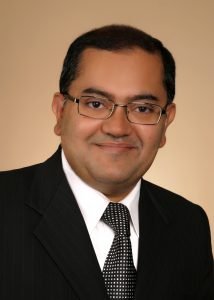
Samarjit Chakraborty is the William R. Kenan, Jr. Distinguished Professor in the Department of Computer Science at the University of North Carolina at Chapel Hill. He previously held the Chair of Real-Time Computer Systems at the Technical University of Munich (2008–2019) and was an assistant professor at the National University of Singapore (2003–2008). His research spans real-time embedded systems, cyber-physical systems (CPS), and automotive security. Research Interests include distributed embedded systems, hardware/software co-design, low-power systems, energy storage, electromobility, and sensor network-based information processing. His work addresses challenges in scheduling algorithms for autonomous vehicles, timing predictability in automotive networks, and safety-critical controller implementations. Recent Publications highlight advancements in Timing analysis for automotive networks Energy modeling of Bluetooth Low Energy Autonomous vehicle perception computing Security in automotive systems Flexible manufacturing with process dynamics Scientific Awards include the ETH Medal, European DAAD Outstanding Doctoral Dissertation Award, multiple best paper awards at conferences (ISLPED, ICCD, RTCSA, etc.), the 2023 Humboldt Professorship, and IEEE Fellowship. Advising active PhD students: Clara Hobbs, Shengjie Xu, Sharmin Aktar, and postdoc Enrico Fraccaroli. His research is supported by NSF grants and industry partnerships with General Motors, Intel, Google, BMW, Audi, Siemens, and Bosch.
نمایش نتایج تا ۷۵۰ مورد اول. برای یافتن نتایج دقیقتر، جستجوی خود را با فیلترها محدود کنید.