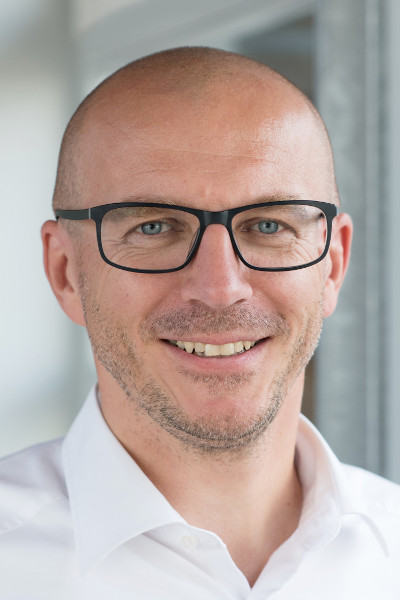
Enrico Rukzio is a Full Professor of Human-Computer Interaction at the University of Ulm, leading the Human-Computer Interaction group and directing the Institute for Media Research and Media Development. His research spans interactive systems design, focusing on automotive UIs, extended reality, accessibility, and sustainable interaction. He holds a Ph.D. in Computer Science from the University of Munich and has held prior roles at Lancaster University and the Ruhr Institute for Software Technology. Roles: Faculty Dean (2017–2020), Admissions Committee Chairman, Doctoral Committee Chairman Educations: Ph.D., Munich; Lecturer qualifications from Lancaster and Duisburg-Essen Research emphasizes enabling efficient, inclusive, and sustainable interactions through novel interfaces. His work addresses automated vehicles, health-supporting tech, and accessibility for visually impaired users. Recent articles explore Bayesian optimization for UI design, automated vehicle communication, and urban air mobility visualization. Notable awards include best paper recognitions at CHI, EuroVR, and IEEE VR. His grants come from BMBF, DFG, and industry partners like Mercedes-Benz Group. Advises on over 20 funded projects and has mentored award-winning students.
Dr. Cynthia Coles is an Associate Professor in the Department of Civil Engineering at Memorial University of Newfoundland's Faculty of Engineering and Applied Science. She specializes in environmental engineering, water resources, and geo-environmental engineering. Her research focuses on metal interactions with soils/sediments, arsenic distribution/removal, and mining impacts on groundwater. She teaches courses including Water and Wastewater Treatment, Environmental Pollution Mitigation, and Renewable Energy. Education: PhD (Geo-environmental Engineering) and M.Eng. (Water Resources) from McGill University, B.Eng. (Civil Engineering Structures) from McGill University. Industrial experience includes construction supervision in Sierra Leone and work with Conestoga-Rovers and Associates. Research Highlights: Over 15 peer-reviewed publications since 2000, focusing on heavy metal adsorption mechanisms, groundwater remediation techniques, and climate change impacts. Recent work addresses arsenic removal via sand filtration and peat-based sorbents. Teaching: Offers graduate courses in water treatment, soil chemistry, and environmental pollution control. Undergraduate instruction includes hydrology, municipal engineering, and environmental geotechnics. Current Opportunities: Accepting M.Env.Sci. students for research in geo-environmental engineering.
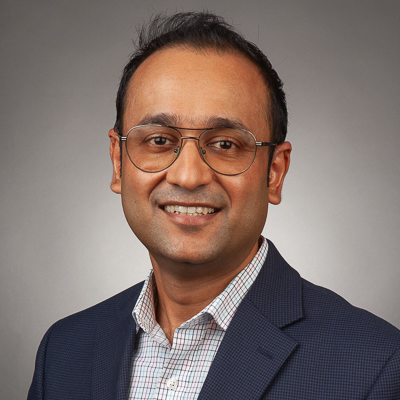
Shaurya Agarwal is an Associate Professor in the Department of Civil, Environmental, and Construction Engineering at the University of Central Florida (UCF), where he has been a faculty member since 2018. He is the founding director of the URBANITY Lab (Urban Intelligence and Smart City Lab) and currently serves as the director of the Future City Initiative. Prior to joining UCF, he was an Assistant Professor in the Electrical and Computer Engineering Department at California State University, Los Angeles (2016–2018). Ph.D. in Electrical Engineering, University of Nevada, Las Vegas (2015) Postdoctoral Research, New York University (2016) B.Tech. in Electronics and Communication Engineering, Indian Institute of Technology (IIT), Guwahati Dr. Agarwal's research lies at the intersection of cyber-physical systems, intelligent transportation systems, and smart cities. He employs interdisciplinary methodologies integrating control theory, data-driven techniques, physics-informed machine learning, and mathematical modeling to address challenges in connected and autonomous mobility. His work emphasizes real-world applications such as traffic state estimation, signal-free intersections, and pedestrian safety using LiDAR perception. His recent publications demonstrate a strong trend in applying physics-informed deep learning and Koopman operator theory to model complex traffic dynamics. These works leverage both Lagrangian and Eulerian data frameworks and aim to improve accuracy under sparse sensor conditions. The research spans transportation, public health, and social systems, indicating a broad interdisciplinary impact. Dr. Agarwal is a senior member of IEEE and serves as an Associate Editor for IEEE Transactions on Intelligent Transportation Systems . His research has been funded by agencies including the Federal Highway Administration (FHWA), Florida Department of Transportation (FDOT), and Oculus. Senior Member, IEEE Associate Editor, IEEE Transactions on Intelligent Transportation Systems He actively mentors Ph.D. students in the Civil, Environmental, and Construction Engineering Department and leads the URBANITY Lab, a research team focused on next-generation urban mobility solutions. The lab develops real-time 3D object detection algorithms, operates a small-scale CAV test-bed, and explores hybrid approaches bridging theory, simulation, and practice.
Dimitris Karlis is a Professor in the Department of Statistics at the Athens University of Economics and Business (AUEB), within the School of Information Sciences and Technology. He has been a key academic figure since earning his BSc and PhD in Statistics from AUEB in 1992 and 1999, respectively, and was promoted to Associate Professor in 2012 before advancing to full Professor. Education: BSc in Statistics, AUEB (1992) PhD in Applied Statistics, AUEB (1999) His research spans computational statistics, mixture models, EM algorithms, copulas, multivariate discrete data, and applications in sports, insurance, and seismicity. He has published extensively in top-tier statistical journals such as the Journal of the Royal Statistical Society and Statistics in Medicine . The 15 most recent publications reveal a strong focus on multivariate count data, integer-valued time series, model-based clustering using copulas, and applications in actuarial science and health. His work frequently involves mixture models, Bayesian inference, and innovative extensions of Poisson-based frameworks. Scientific Service and Recognition: Associate Editor: Metron, Communications in Statistics, IMA Journal of Management Mathematics, Stochastic Environmental Research and Risk Assessment Editor: Biometrics Bulletin of IBS Member: American Statistical Society, International Statistical Institute, International Association of Statistical Computing, Hellenic Statistical Institute Publicity Officer: Eastern Mediterranean Region, International Biometric Society Advising and Grants: He has supervised 4 completed PhDs and 18 Master’s theses, with several more in progress. He has led and participated in research projects funded by the European Union and EUROSTAT, particularly in official statistics. His advising spans methodological and applied topics in statistics. Labs and Teams: While no formal lab is named, he collaborates extensively with researchers in actuarial science, transportation, biostatistics, and environmental risk, often through joint projects and publications.
Diana G. Ramirez-Rios is an Assistant Professor at the State University of New York at Buffalo, specializing in Industrial and Systems Engineering within the School of Engineering and Applied Sciences. She holds a Ph.D. in Transportation Engineering from Rensselaer Polytechnic Institute and a B.S./M.S. in Industrial Engineering. Her research focuses on disaster response logistics, urban freight transportation, and supply chain optimization, with an emphasis on policy-driven and empirical approaches. Education: Ph.D. in Transportation Engineering (Rensselaer Polytechnic Institute), B.S./M.S. in Industrial Engineering. Research interests include disaster logistics (e.g., post-disaster healthcare access, facility location models), urban freight systems (e.g., parking policies, emission reduction strategies), and game-theoretic models for supply chain collaboration. She has secured grants such as the NSF RAPID grant (2024) for studying interdependent infrastructure impacts in Puerto Rico and a Natural Hazards Center grant (2021) on healthcare accessibility in disaster zones. Scientific awards include the Karen and Lester Gerhardt Prize (2021), Thomas Archibald Price (2021), and scholarships from WTS International and INFORMS. Her work bridges theoretical models with practical policy solutions, addressing challenges like freight externalities and socially vulnerable communities' recovery needs. Her grants and advising contributions involve interdisciplinary collaborations, with a focus on sustainable urban logistics and humanitarian aid systems. She actively participates in professional councils, such as the INFORMS Sub-Divisions Council and POMS Regional Vice Presidency in the Americas.
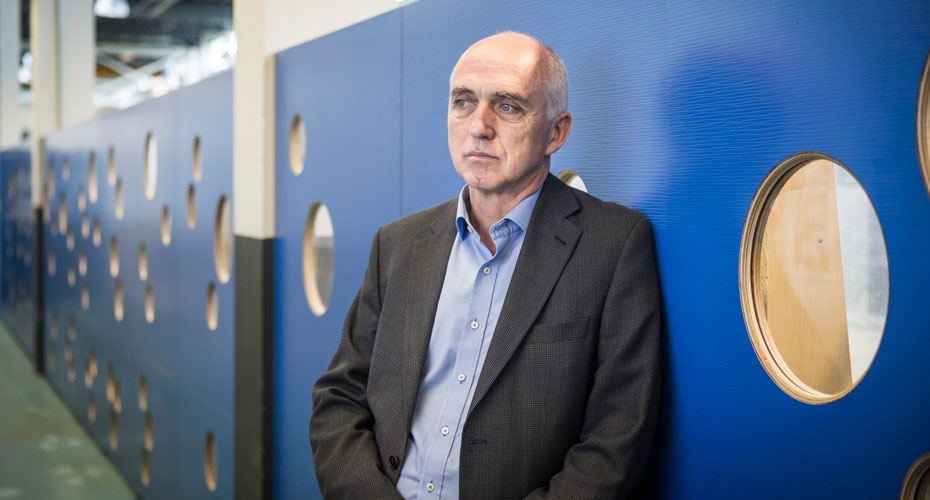
Professor Eugene O’Brien is a leading academic in UCD School of Civil Engineering, part of University College Dublin. His research focuses on enhancing bridge safety through innovative traffic loading analysis methods. He co-founded ROD-IS, a consultancy applying academic insights to real-world infrastructure projects, including assessments of the Malahide Railway Viaduct and Firth of Forth Bridge in Scotland. His work integrates Weigh-in-Motion (WIM) sensors and camera-based monitoring to address critical gaps in assessing long-span bridges under congested traffic conditions. Key projects include developing probabilistic models for bridge lifetime safety, optimizing traffic management to extend bridge lifespans, and reducing environmental impacts through carbon footprint minimization. He has secured significant EU funding, including an €890,000 grant for bridge longevity research. His research group collaborates internationally on projects like the Chacao Channel Bridge in Chile, emphasizing sustainable infrastructure solutions.
Mogens Fosgerau is a Professor in the Department of Technology, Management and Economics at the Technical University of Denmark (DTU), where he conducts research in transport policy and transportation science. His work spans econometrics, travel behavior modeling, and transport economics, contributing to sustainable urban mobility and policy design. Institution: Technical University of Denmark Department: Department of Technology, Management and Economics Email: mogens.fosgerau@econ.ku.dk ORCID: https://orcid.org/0000-0002-6452-5215 His research focuses on discrete choice modeling, travel time valuation, scheduling preferences, and congestion pricing. He develops theoretical and empirical models to understand how individuals make travel decisions under uncertainty and how these behaviors affect urban transport systems. His work integrates economic theory with data-driven methods, often using large-scale datasets and advanced econometric techniques. The recent trend in his publications highlights innovations in perturbed utility models for route choice, stochastic traffic assignment, and the analysis of induced demand for cycling. His research bridges transportation science, behavioral economics, and operations research, with applications in urban planning and policy evaluation. Scientific awards received include: The International Choice Modeling Conference (ICMC) award for Most Innovative Application (2022) Best Overall Paper Award, ITEA Conference (2015) Best Paper Awards from BIVEC-GIVET (2007), Kuhmo-Nectar (2008) Hedorfs Fonds Pris for Transportforskning (2011) Mogens Fosgerau has supervised PhD students such as Fentie Abegaz and has been involved in multiple externally funded research projects, including URBAN (Innovation Fund Denmark), IRUC (Danish Council for Strategic Research), and Horizon 2020 initiatives. He has also served on review panels, including for the Norwegian Research Council, and contributed to peer review and editorial duties. He is actively engaged in research networks and has presented his work at international conferences. His projects often involve interdisciplinary collaboration with researchers in economics, engineering, and urban planning.
Thor Inge Fossen is a Professor of Navigation and Marine Craft Control at the Department of Engineering Cybernetics, Faculty of Information Technology and Electrical Engineering at the Norwegian University of Science and Technology (NTNU). He is a key scientist at the Norwegian Centre for Embodied AI (NCEI) and internationally recognized for his work in navigation systems, guidance systems, and control of marine vessels, aircraft, and drones. Professor Fossen holds a PhD in Engineering Cybernetics and an MSc in Marine Technology. His academic journey has led him to become a Fellow of AAIA, IEEE, and IFAC, reflecting his significant contributions to the field. His research spans several critical areas in marine and aerospace systems: Marine craft hydrodynamics and motion control Navigation, guidance, and control systems for marine craft, aircraft, and drones Cybersecurity of autonomous vehicles Sea-state estimation and wave analysis Attitude control and estimation Fossen's marine craft model, which is widely used in the industry Professor Fossen's publication record demonstrates a strong focus on adaptive control systems, particularly Line-of-Sight (LOS) guidance laws, with numerous papers on 3D path following for marine and aerial vehicles. His recent work (2023-2025) shows increasing integration of machine learning techniques with traditional control systems, particularly in areas like constrained control allocation using deep neural networks. There's also a growing emphasis on cybersecurity aspects of autonomous vehicle guidance systems. His scientific recognition includes: Fellow of the American Institute of Aeronautics and Astronautics (AAIA) Fellow of the Institute of Electrical and Electronics Engineers (IEEE) Fellow of the International Federation of Automatic Control (IFAC) Professor Fossen has been actively involved in advising graduate students, with numerous PhD and MSc graduates. He has led significant research projects including the Marine Systems Simulator (MSS) and the Python Vehicle Simulator, which are widely used tools in the field. His current appointments include being a Study Program Coordinator for the Master's program in Cybernetics and Robotics at NTNU and a Key Scientist at the Norwegian Centre for Embodied AI. He leads research teams focused on embodied AI applications for marine systems, with particular emphasis on safe and secure autonomous operations in complex maritime environments. His work bridges theoretical control systems with practical marine applications, making significant contributions to both academic research and industry implementation.
Simone Ferlin is an Adjunct Senior Lecturer at Karlstad University working with 5G and Internet evolution. She completed her PhD in computer science in 2017 at the Simula Research Lab and Universitetet i Oslo under the supervision of Dr. Ozgu Alay and Prof. Michael Welzl. Her PhD dissertation focused on increasing robustness in multipath transport with MPTCP. Dr. Ferlin's educational background includes a PhD in Computer Science from the Simula Research Lab and Universitetet i Oslo (2017). Her doctoral research centered on enhancing robustness in multipath transport protocols, specifically focusing on MPTCP (Multipath TCP). She also completed undergraduate work that contributed to a book project with Prof. Friedrich Oehme on electronics and circuit technology. Dr. Ferlin's research spans multiple domains at the intersection of networking, systems, and performance engineering. Her primary interests include network and system measurements, performance analysis, security, and congestion control. She investigates how networks like the Internet evolve, examining technology development, adoption patterns, and their impacts on various entities. Additionally, she explores ways to harmonize security and privacy while making them more usable and assessable. Her work particularly focuses on transport layer and multipath transport protocols, examining their performance and security aspects. She also investigates application and transport layer performance, automation, and monitoring. Her research extends to network programming in both Linux kernel and user space, mobile broadband networks from 2G to 5G, and their intersection with the Internet. She is deeply engaged in observability, distributed and system performance monitoring, and automation. Analysis of Dr. Ferlin's recent publications reveals a strong focus on next-generation networking technologies. Her work spans multiple domains including 5G/6G networks, transport protocols (particularly QUIC and MPTCP), network virtualization, container orchestration, and the application of machine learning to networking problems. She has increasingly incorporated large language models into network configuration and automation research. Her publications demonstrate a consistent emphasis on performance measurement, optimization, and security across diverse networking environments from the edge to the cloud. Dr. Ferlin has received notable recognition for her research contributions: Best paper award at IEEE ICIN'21 for 'Learning-based Incast Performance Inference in Software-Defined Data Centers' Applied Networking Research Prize (ANRP)'25 winner for 'NetConfEval: Can LLMs Facilitate Network Configuration?' Dr. Ferlin is actively involved in mentoring the next generation of networking researchers. She has co-supervised numerous Master's and PhD students across multiple institutions including Karlstad University, KTH, TU Berlin, University of Oslo, and universities in Brazil. Her students have worked on diverse topics including NAT64 performance comparison, system tracing visualization, network observability, ML applications to multipath transport, FEC integration with QUIC, high-performance networking for 5G, congestion control, shared bottleneck detection, multipath IoT applications, and container runtime performance. She is also involved in several significant research projects including Vinnova's SEMLA (Securing Enterprises via Machine-Learning-based Automation), Horizon Europe's CODECO (Cognitive Decentralised Edge Cloud Orchestration), and the Knowledge Foundation of Sweden's DRIVE (Data-driven Latency-Sensitive Mobile Services for a Digitized Society). Dr. Ferlin serves as Workshop Chair for ACM SIGCOMM '25, is a member of the ACM/IRTF Applied Networking Research Workshop (ANRW) steering committee, and co-chairs the Internet Congestion Control Research Group (ICCRG) at the IRTF. She previously served as Associate Technical Editor for IEEE Communications Magazine and has been active on numerous program committees for major networking conferences including SIGCOMM, CoNEXT, IMC, and PAM.
Elif Ak is a Researcher at Istanbul Technical University's Department of Computer Engineering, College of Engineering. Her work focuses on cutting-edge network technologies and digital twin systems. Current research in 6G communication frameworks Active in AI-enabled network management Digital twin methodology specialist Her research interests span Digital Twin , 6G Networks , and Machine Learning applications in telecommunications. Recent publications highlight advancements in backbone network security , UWB localization , and semantic communication systems. Key publication trends show 7 Scopus citations with 33 Mendeley readers, featuring collaborations with international experts in IEEE Transactions and Communications Magazine . Research outputs (21 total) demonstrate consistent annual contributions since 2019.
Professor Tom Rye is a faculty member at Edinburgh Napier University within the School of Engineering and The Built Environment . His work focuses on Transport Policy , Sustainable Transport , and Public Transport Governance , with specific expertise in institutional dynamics, policy implementation, and urban mobility. Research Themes Transport economics and social equity Smart cities and mobility innovation Freight policy and collaborative governance Institutional analysis in transport planning Notable Contributions Hybrid policy implementation theory EU-funded projects on sustainable mobility (PROSPERITY, DYNAMO, CIVITAS CAPITAL) Analysis of formal/informal governance structures Supervision Director for Clare McTigue's bus policy research Second supervisor for Shelly-Ann Julien's port efficiency study Grants £187,417 (EU Park4SUMP) £254,160 (EU PROSPERITY) £62,823 (EU CIVITAS CAPITAL)
Jorg Liebeherr is a Professor in the Department of Electrical and Computer Engineering at the University of Toronto, holding the Nortel Chair of Network Architecture and Services. His research focuses on computer networks , particularly network calculus , self-organizing networks , protocol design , and traffic scheduling . Education: Diplom-Informatiker (with distinction), University of Erlangen (Germany), 1988 PhD, Computer Science, Georgia Institute of Technology, 1991 His recent work includes low-cost LoRa mesh networks for environmental sensing and mathematical frameworks for traffic control in 5G and IoT systems. Publications span journals like IEEE Internet of Things Journal and conferences such as IEEE Infocom and ACM Sigmetrics . Scientific Awards: IEEE Fellow (2008) Outstanding Service Award, IEEE ComSoc TC on Computer Communications (2006) ACM Sigmetrics Best Student Paper Award (2005) NSF CAREER Award (1996) Advising and Grants: Supervised 15+ theses (MASc/PhD) and secured grants from NSF, Virginia Engineering Foundation, and industry partners. Labs: Leads the Network Research Lab and HyperCast projects, an open-source platform for application-layer internetworking.
Hatem Abou-Zeid is an Assistant Professor at the Department of Electrical and Software Engineering in the Schulich School of Engineering , University of Calgary. He holds Adjunct Professor appointments at Queen’s University, Carleton University, and Ontario Tech University, Canada. With a Ph.D. in Electrical and Computer Engineering from Queen’s University (2014), his academic journey includes 7 years of industry research at Ericsson and Cisco , where he led R&D projects resulting in 15+ patents. Queen's University (Ph.D., Electrical and Computer Engineering) Arab Academy for Science, Technology and Maritime Transport (B.Sc. and M.Sc., Electronics and Communications Engineering) His research focuses on 5G/6G wireless networking , immersive communications , and robust machine learning for networks. Recent projects explore trustworthy AI , joint sensing and communication , and pediatric brain-computer interfaces (BCI) . He has published extensively in top venues like IEEE JSAC , GLOBECOM , and IEEE Transactions on Networking , with over 60 publications and 19 patent filings. His scientific awards include the Research Excellence Award 2023 (UCalgary), Early Research Excellence Award 2023 (Schulich), and Best Paper Awards at EMBC 2024 (as advisor) and IEEE ICC 2022 . He leads the WAVES Research Group , mentoring 10+ graduate students and postdocs. Collaborations span institutions like the Hotchkiss Brain Institute and industry partners such as Ericsson and European Space Agency .
Yacine Atif is a Professor of Information Technology at the University of Skövde, affiliated with the School of Informatics and Department of Information Technology. He maintains an active research profile with numerous publications spanning from 2002 to the present, demonstrating sustained academic contribution in his field. His research interests focus on Internet of Things (IoT), Cybersecurity, Cyber-Physical Systems, Digital Transformation, Cloud Computing, and Educational Technologies. Professor Atif's work bridges theoretical research with practical applications, particularly in smart city technologies, critical infrastructure protection, and educational innovations. His research has evolved from early work in e-commerce trust (2002) to contemporary work on metaverse learning experiences (2023) and vehicle collision prediction (2025). Analysis of his recent publications (2018-2025) reveals a strong focus on cybersecurity applications for cyber-physical systems, particularly in critical infrastructure protection. His work demonstrates a progression from foundational IoT concepts toward sophisticated integration of machine learning and cognitive approaches in security analysis. The research portfolio shows consistent collaboration with both academic and industry partners across multiple countries. Professor Atif leads or contributes to significant research projects including the ongoing 'Intelligent Driver Support Systems and Safety Enhancement' (I2Connect) project (2023-2026) focused on developing next-generation Advanced Driver Assistance Systems for trucks, and previously led the 'Infrastructure Resilience – ELVIRA' project (2017-2020) which developed time-based infrastructure dependency analysis for power-grid risk assessment. His teaching responsibilities include multiple courses at both bachelor's and master's levels, with course credits ranging from 3 to 7.5 credits across various technology domains. His office is located in room PA420K at the University of Skövde, and he can be contacted at yacine.atif@his.se or by phone at 0500-448312.
Stephanie Forrest is a Professor of Computer Science at Arizona State University and serves as Director of the Biodesign Center for Biocomputation, Security and Society . She holds affiliations with the School of Computing and Augmented Intelligence , Global Futures Laboratory , and Santa Fe Institute External Faculty . Education: B.A. from St. John's College M.S. and Ph.D. in Computer Science from the University of Michigan Research Interests: Forrest specializes in the intersection of biology and computation , with key contributions to cybersecurity (anomaly detection, instruction-set randomization), automated software repair (evolutionary methods), and biological modeling (immune systems, SARS-CoV-2 spread). Her work bridges complex adaptive systems , AI/ML , and defense applications . Scientific Contributions: 2020 IEEE S&P Test of Time Award 2019 ICSE Most Influential Paper Award 2011 ACM/AAAI Allen Newell Award NSF Presidential Young Investigator (1991) IEEE Fellow Evolutionary Computation Pioneer award Publications & Grants: Her research appears in top venues (ICSE, IEEE S&P, PNAS) and is funded by the National Science Foundation , DARPA , Air Force Research Lab , and Santa Fe Institute . Key projects include Crispy (CRISPR-inspired DoS defense), GenProg (automated bug correction), and SIMCoV-GPU (agent-based pandemic modeling).