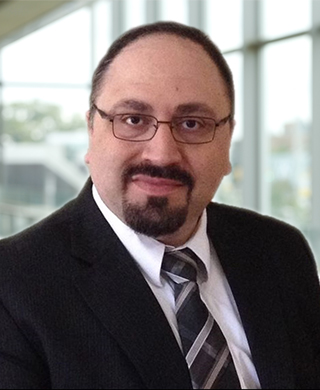
Dr. Hanna Maoh is a Professor in the Department of Civil and Environmental Engineering at the University of Windsor. She holds a BSc from Bethlehem University (1996), MSc from McMaster University (1999), and PhD from McMaster (2005). Her research focuses on integrating transportation and land use models, freight transportation analysis, sustainable transportation strategies, and big data applications in GIS. She leads the Traffic Lab, exploring innovative solutions for cross-border logistics, electrification of fleets, and environmental impact mitigation. Key professional affiliations include the Transportation Association of Canada, Professional Engineers Ontario, and the Transportation Research Board. Her work emphasizes policy-relevant research, such as modeling Canada-US border crossing efficiency, optimizing electric vehicle charging networks, and assessing freight infrastructure resilience. Recent publications highlight advancements in truck stop location optimization using GPS data, fleet electrification demand analysis, and border crossing behavior studies. Her research consistently bridges academic insights with practical applications, informing sustainable urban planning and environmental policy.
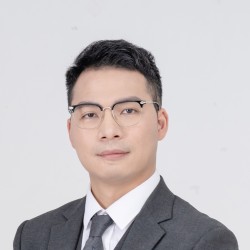
Dr. Yinglong He is a Lecturer in Automated Electrified Transport (AcT) Systems at the School of Mechanical Engineering Sciences, University of Surrey, UK, and an Honorary Assistant Professor at the School of Engineering, University of Birmingham. His research focuses on intelligent transportation systems, energy management, vehicle dynamics, and AI-driven optimisation. He has held positions including Postdoctoral Research Associate at the University of Cambridge and Technology Expert at the European Commission's Joint Research Centre (JRC). Research interests include autonomous vehicle control, traffic simulation, hybrid/electric vehicle dynamics, and sustainable transport solutions. Notable contributions include advancing microscopic traffic models for automated vehicles and optimising energy systems for hybrid powertrains. His work integrates machine learning, multi-agent systems, and data-driven approaches to address challenges in transport decarbonisation and safety. Recent publications highlight advancements in hybrid vehicle dynamics simulation, lithium-air battery modelling, and energy mapping of urban buildings. He has received the Chinese Government Award for Outstanding Self-Financed Students (2022) and is a Fellow of the Institute for Sustainability (IfS). His expertise spans interdisciplinary collaborations in automotive engineering, energy systems, and smart infrastructure.
Dr. Ioannis Kaparias is an Associate Professor at the University of Southampton and Honorary Lecturer at Imperial College London. His expertise spans transport engineering, Intelligent Transport Systems (ITS), and sustainable mobility solutions. He holds a MEng from Imperial College London (2004) and a PhD in reliable dynamic in-vehicle navigation (2008). His research focuses on traffic management, active travel, public transport optimization, and the integration of new technologies like CAVs and MaaS. He leads the Transportation Research Group (TRG) at Southampton and has contributed to projects funded by the EU, UK authorities, and industry partners like BMW. Key areas include network reliability, cyclist safety, and land use-transport interaction. He is Deputy Editor-in-Chief of the IET Intelligent Transport Systems journal and serves on TRB committees. Teaching includes Highway & Traffic Engineering modules at Southampton and他曾指导过多个研究生项目。他精通希腊语、英语、德语、法语和意大利语。
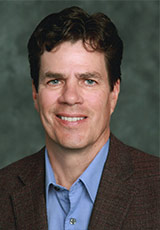
Dr. Ir. Wouter Schakel is a full-time O&O researcher at Delft University of Technology's Faculty of Civil Engineering and Geosciences, specializing in Transport & Planning. His research focuses on microscopic simulation of driver behavior, particularly lane change modeling and traffic flow optimization. He has developed the LMRS lane change model and contributes to OpenTrafficSim. His academic roles include teaching programming courses for transport engineering students and supervising BSc/MSc projects. Education: Civil Engineering (BSc & MSc) from TU Delft, followed by a PhD on freeway driving advice systems. Research highlights include the Greenshields prize-winning LMRS model and work on in-car advisory systems. He teaches courses like 'Programming and MATLAB' and 'Intelligent Vehicles Design and Assessment'. Current projects involve urban traffic simulation validity improvements and lane change strategy extensions.
Bryce Chao serves as a Researcher in the Department of Civil and Environmental Engineering at Universitat Politecnica de Catalunya (UPC), operating under the Barcelona School of Civil Engineering and affiliated with the BIT - Barcelona Innovative Transportation research group. His work focuses on advancing intelligent transportation systems and sustainable mobility solutions within European frameworks. Research interests center on connected and autonomous vehicles, traffic flow dynamics, and sustainable infrastructure optimization. He investigates platooning strategies for automated vehicles and lane management techniques to enhance highway capacity through simulation modeling, addressing critical challenges in urban mobility and environmental sustainability. His 2024-2025 publications reveal consistent focus on vehicle automation and traffic management, utilizing advanced simulation to evaluate platooning efficiency and lane strategies. This work bridges theoretical modeling with practical applications, directly supporting UN Sustainable Development Goals 9 (Industry/Innovation), 11 (Sustainable Cities), and 13 (Climate Action). No scientific awards are documented in available information. Chao actively participates in competitive research funding, notably the MED-EUROPA project—a European transnational initiative testing novel solutions for public transport's transition toward energy and resource efficiency in the Mediterranean region. Within the research ecosystem, Chao collaborates through the BIT group while extending networks via CARNET and CER-AMA. These partnerships foster interdisciplinary research on future mobility, leveraging expertise from multiple European institutions to develop innovative transportation solutions for the Euro-Med area.
John F. Shortle is a Professor and Chair in the Department of Systems Engineering and Operations Research at George Mason University (GMU), part of the Volgenau School of Engineering. He specializes in applying queueing theory and stochastic processes to aviation safety, air transportation systems, and energy systems. Shortle has led major research initiatives funded by the FAA, NASA, and the Department of Energy, focusing on improving air traffic safety through advanced simulation and risk analysis techniques. Affiliations: Center for Air Transportation Systems Research (CATSR), GMU Education: PhD (UC Berkeley), MS (UC Berkeley), BS (Harvey Mudd College) Research Interests Shortle’s work emphasizes simulation methodologies, queueing theory applications, and stochastic modeling for critical infrastructure systems. Key areas include: Collision risk analysis in air transportation Aviation safety modeling (e.g., wake turbulence, event tree analysis) Energy systems reliability (e.g., blackout analysis) Autonomous systems validation Publications & Awards He co-authored the widely used textbook Fundamentals of Queueing Theory (5th ed., Wiley, 2018) and holds over 100 peer-reviewed publications. Notable awards include the Daniel H. Wagner Prize (2000) and the Military Operations Research Journal Award (2016). Leadership & Service President, INFORMS Simulation Society (2016–2018) Board Member, Winter Simulation Conference (2023–present) Editorial roles: IEEE Transactions on Reliability , Journal of Probability and Statistical Science Teaching Teaches advanced courses in stochastic processes (OR 645), queueing theory (OR 647), and dynamic systems (SYST 320).
Professor Wafaa Saleh is affiliated with Edinburgh Napier University , where she contributes to the School of Computing Engineering and the Built Environment . Her research spans Transport Policy , Pedestrian Safety , and Travel Demand Management , with a focus on sustainable mobility and behavioral impacts of technology on road safety. Research Interests : Transportation sustainability, pedestrian behavior at junctions, motorcycle emissions, congestion pricing, and AI applications in transportation. Advisees : Supervised students in studies involving road safety in Qatar, bus passenger discomfort analysis, and mode choice modeling using behavioral theories. Grants & Projects include funding from the European Commission for gender inclusion in transport systems, the Qatar National Research Fund , and Tabuk University for Saudi Arabian transport behavior studies. Key publications address helmet compliance , pedestrian red-light violations , and congestion charging impacts . Collaborations span institutions in Taiwan, Saudi Arabia, and the UK, with work featured in journals like Transportation Research Part A and Accident Analysis and Prevention . Her Transport Research Innovation Centre involvement highlights interdisciplinary approaches to road safety and emissions reduction.
Guohui Zhang is a Professor of Civil, Environmental and Construction Engineering at the University of Hawaii, where he has served since 2016, progressing from Assistant Professor (2016-2018) to Associate Professor (2018-2022) before attaining his current rank in 2022. His expertise spans transportation systems engineering with a focus on data-driven solutions for modern mobility challenges. His educational foundation includes: Ph.D. in Civil Engineering, University of Washington, Seattle (2008) M.S. in Systems Engineering, Tsinghua University, China (2003) B.S. in Control Engineering, Harbin Institute of Technology, China (2000) Professor Zhang's research integrates advanced computational methods with transportation theory across six core domains: Large-Scale Transportation Systems Modeling, Traffic Control and Operations, Sensor Data Analysis, Cyber-Transportation Security, Congestion Pricing, and Safety/Security systems. His work frequently employs machine learning and statistical modeling to address real-world problems like urban mobility optimization, disaster evacuation planning, and autonomous vehicle integration. Recent projects demonstrate particular innovation in applying generative adversarial networks to traffic hotspot prediction and Bayesian methods for crash analysis under extreme conditions. Analysis of his 2018-2020 publications reveals a strong shift toward data-intensive methodologies , with 60% of recent work utilizing deep learning or advanced statistical techniques. Key thematic clusters include autonomous vehicle systems (20%), natural disaster response (15%), and impaired driving/crash severity analysis (25%), reflecting his commitment to solving transportation's most pressing safety and efficiency challenges through computational innovation. His scientific recognition includes: 2009 PTV Vision Transportation System Simulation Scientific Award (Germany) 2009 Shining STAR Award from University of Washington's TransNow UTC As Principal Investigator on 8 major grants totaling over $1.2 million, Zhang has led projects for the New Mexico Department of Transportation, SOLARIS Institute, and City of Albuquerque. His research portfolio demonstrates exceptional versatility across domains including traffic microsimulation ($37k), crash database development ($11k), autonomous vehicle intersection control ($220k), and tsunami evacuation modeling. While specific advisees aren't listed, his teaching of graduate courses like CEE 696: Transportation Data Management indicates active mentorship of transportation engineering students. Professional leadership includes Guest Editor roles for IEEE Intelligent Transportation Systems Magazine and Transportation Research Part C , plus active committee service with the Transportation Research Board.
Chiara Colombaroni is a Researcher (Ricercatore a Tempo Determinato di Tipo A) at the Department of Civil, Building and Environmental Engineering at Sapienza University of Rome, within the Faculty of Civil and Industrial Engineering. She holds a PhD in Infrastructures and Transportation from Sapienza (2011) and Master’s and Bachelor’s degrees in Transportation Systems Engineering (2006 and 2003). Colombaroni specializes in transportation engineering, with a focus on traffic modeling, logistics optimization, and intelligent transportation systems (ITS). She has led and contributed to numerous national and international projects, including research on container operations, road safety, and smart mobility solutions through initiatives like ITS Italia 2020. Her work integrates advanced methodologies like machine learning, big data analysis, and simulation-optimization techniques to address urban mobility challenges. She teaches courses such as Programming for Transport Systems and Freight Transport and Logistics at Sapienza, and supervises doctoral research in transportation systems. Her research outputs span over 17 indexed publications, with an H-index of 8 and impactful contributions to journals like Transportation Research Part C and IET Intelligent Transport Systems. Education: PhD in Infrastructures and Transportation, Sapienza University (2011) MSc in Transportation Systems Engineering, Sapienza University (2006) BSc in Transportation Engineering, Sapienza University (2003) Research Focus: Urban traffic simulation and optimization Intelligent transportation systems (ITS) Logistics and supply chain optimization Big data applications in transportation Electric vehicle integration and sustainable mobility Recent Trends in Articles: Her recent work emphasizes leveraging machine learning for traffic pattern analysis, optimizing urban logistics with electric vehicles, and integrating IoT for waste management. Projects like the ‘Two-Echelon Electric Vehicle Routing Problem’ and ‘Industry 4.0 in Waste Management’ highlight her focus on sustainable and tech-driven solutions. She also explores post-COVID mobility trends and smart city infrastructure design. Grants & Projects: Coordinated the Qatar Strategic Transport Model Update project (2017–present) Contributed to the EU-funded MULTITUDE project on traffic simulation validation (2010–2013) Participated in the ‘PASSIAMO’ project for smart mobility in Lazio (POR FESR 2014–2020) Labs/Teams: Member of the Sapienza Transport and Logistics Research Center (CTL) Collaborated with institutions like CNIT, ENEA, and international partners (e.g., University of South California)
Eric D. Hildebrand is a Professor of Civil Engineering at the University of New Brunswick (UNB), specializing in Highway Safety, Transportation Planning, and Traffic Engineering. He holds a PhD from the University of Waterloo and BScE/MScE degrees from UNB. His research focuses on road safety engineering, traffic simulation, accident reconstruction, and elderly driver mobility. Education: PhD in Civil Engineering (University of Waterloo), BScE and MScE (University of New Brunswick). Research interests include: Road Safety Audits and Reviews Microsimulation for Transportation Planning Climate Change impacts on Highway Design Intelligent Transportation Systems (ITS) GIS-based Travel Demand Modeling Publications span topics like roundabout safety, traffic signal optimization, and driver adaptation to infrastructure changes. Recent awards include the 2023 Lifetime Achievement Award (CARSP) and the Sanford Fleming Award (2017). He chairs or participates in key organizations: Past President, Canadian Transportation Research Forum Transportation Association of Canada (Road Safety Standing Committee) Canadian Association of Road Safety Professionals Teaching includes courses on Transportation Engineering, Traffic Engineering, and Road Safety Engineering.
Anna Grana is an Associate Professor in the Department of Roads Railways Airports at the University of Palermo's College of Engineering. She specializes in road infrastructure engineering with a focus on road safety, traffic operations, and sustainable transportation systems. Her educational background includes a Classical high school diploma from Umberto I classical high school in Palermo (1991), a Degree in Civil Engineering with honors (1995/1996), a PhD in Road Infrastructure Engineering (2002), and a Specialization diploma in Public Management (1999). Dr. Grana's research focuses on the analysis of risk associated with road traffic, functional design of road geometry (particularly non-signalized intersections and roundabouts), and environmental sustainability of transport infrastructures. Her work covers preventive analysis of road safety, safety and reliability of transport infrastructure, and crash analysis and modeling. Over the past decade, her research has evolved toward smart mobility solutions, with increasing focus on cooperative driving systems and the integration of connected and automated vehicles into existing infrastructure. Her recent publications demonstrate strong engagement with intersection design, traffic simulation, and resilience assessment in urban environments. Editor-in-chief for the Journal of Sustainable Development (since 2011) Associate editor for the International Journal of Statistics and Probability (since 2011) Member of SIIV (Italian Society of Road Railway and Airport Infrastructures) since 2003 Elected member of SIIV Board since 2010, serving as treasurer since 2013 Dr. Grana has been actively involved in teaching, serving as a member of PhD committees for Road Railway and Airport Engineering, Architecture of Systems for Mobility, and Civil and Environmental Engineering programs. She has supervised numerous final year students and has been instrumental in developing postgraduate courses focused on sustainable transport infrastructure. Her research has been supported by multiple National Relevant Research Programs (PRIN) and collaborations with the Municipality of Palermo, focusing on urban road safety and traffic management solutions. She has led research projects on non-standard roundabouts and urban road intersections, contributing significantly to the field of transportation engineering.
Dr. Varga István is a Full Professor at the Budapest University of Technology and Economics (BME) in the Faculty of Transportation Engineering and Vehicle Engineering, and a Scientific Advisor at the HUN-REN Institute for Computer Science and Control. He holds a D.Sc. from the Hungarian Academy of Sciences (2020), a Ph.D. (2007), and an M.Sc. in Transportation Engineering (1998). His primary research focuses on road traffic control and traffic automation systems , with expertise in intelligent transportation solutions and vehicle mechatronics. His research integrates control theory with practical applications in urban mobility, including dynamic traffic light systems, autonomous vehicle impacts, and emission modeling. Recent work explores V2X communication, platooning technologies, and microscopic traffic simulation for urban optimization. He has led major projects such as the national innovation project 'Dynamic, adaptive traffic control services based on digital data sources' (2020-2024) and industrial collaborations with Knorr-Bremse, Siemens, and nuclear energy sectors. Awards include the Hungarian Academy of Sciences Young Prize (2007) and multiple recognitions for technological innovation. Educational activities include courses on Road Traffic Control, Mathematical Methods, and Vehicle System Modeling. Laboratory leadership includes the Road Traffic Control Lab with industry partnerships like Bosch and SWARCO.
Rod E. Turochy is the James M. Hunnicutt Professor of Traffic Engineering in the Department of Civil and Environmental Engineering at Auburn University, part of the Samuel Ginn College of Engineering. He also serves as Associate Director for Outreach at the Auburn University Transportation Research Institute. He earned his Ph.D. in Civil Engineering from the University of Virginia in 2001, an M.S. from Virginia Tech in 1997, and a B.S. from the same institution in 1991. He has been licensed as a Professional Engineer in Alabama and Virginia. Ph.D., Civil Engineering, University of Virginia, 2001 M.S., Civil Engineering, Virginia Tech, 1997 B.S., Civil Engineering, Virginia Tech, 1991 Dr. Turochy's research focuses on traffic operations, road safety, and pedestrian safety, with additional work in work zone safety, freeway management, and pavement design. His current projects include improving pedestrian facilities in Alabama’s Black Belt region, analyzing queue warning systems, and enhancing work zone mobility. His work often emphasizes safety for vulnerable road users and historically underserved communities. His recent publications span topics such as breakdown probability models, calibration of traffic simulation tools, trip generation for student housing, and wrong-way driving analysis. The research reflects a strong integration of data analysis, simulation, and real-world application in transportation planning and safety. Dr. Turochy has received multiple teaching awards, including the James M. Robbins National Excellence in Teaching Award and Auburn’s Undergraduate Teaching Excellence Award. His contributions to transportation education are evident in his numerous publications on curriculum development and instructional practices. James M. Robbins National Excellence in Teaching Award from Chi Epsilon Auburn Alumni Association's Undergraduate Teaching Excellence Award Outstanding Faculty in Civil Engineering Excellence in Teaching Award for the Southern District of Chi Epsilon William F. Walker Award for Teaching Excellence from the Samuel Ginn College of Engineering He has advised numerous students and collaborated on federally and state-funded research projects through centers like STRIDE and the Alabama Transportation Assistance Program. His leadership in outreach includes directing ATAP from 2018 to 2022 and developing educational programs for K-12 students. He leads research teams focused on transportation safety, data analysis, and infrastructure resilience, often collaborating with state agencies and national research bodies.
Rhonda Kae Young , Ph.D., PE, is an Associate Dean of Faculty Affairs and Professor of Civil Engineering at Gonzaga University , where she has worked since 2015. With an academic career spanning since 2002, she teaches undergraduate and graduate courses in Transportation Engineering and freshman/sophomore engineering curricula. Education: Ph.D. (2002), M.S. (1999), Graduate Certificate (2001) from University of Washington; B.S. (1992) from Oregon State University Research Focus: Transportation safety, Connected Vehicle Technology for adverse weather operations, and equity in infrastructure Professional Affiliations: Registered Professional Engineer in Washington and Wyoming; active participant in Transportation Research Board, American Society of Engineering Education, and Institute of Transportation Engineers Recognitions: No specific scientific awards mentioned in available data Teaching: Courses include CENG 418 Transportation System Design, CENG 318 Transportation Engineering, and CENG 193 FYS: Equity & Infrastructure Rhonda's publications demonstrate expertise in weather-responsive traffic control systems , variable speed limit corridors , and pedagogical approaches to transportation engineering education. Her work with National Science Foundation grants indicates collaboration with multi-institutional teams on curriculum development. Current research explores Connected Vehicle Technology applications for adverse weather operations and bicycle rolling stop laws through simulator studies. She actively contributes to transportation safety analysis and public involvement frameworks in infrastructure planning.
Margarita Martinez Diaz is a researcher at the Departament d'Enginyeria Civil i Ambiental, Polytechnic University of Catalonia, affiliated with the BIT - Barcelona Innovative Transportation research group. Her work focuses on sustainable mobility, autonomous vehicle platooning, and gender equity in transportation systems. Department: Civil and Environmental Engineering University: Polytechnic University of Catalonia Research Group: BIT - Barcelona Innovative Transportation Research interests include: Connected and autonomous vehicle platooning Traffic flow optimization Gender-inclusive mobility solutions Active transportation infrastructure Equitable urban planning Sustainable development policy Recent publications analyze platooning safety, lane management strategies, and gender equity in mobility. Projects include Horizon Europe initiatives and national competitive R+D grants. Scientific awards: XXI Abertis Spain Award for Sustainable Mobility Best Master's Thesis Gerecht mobil Life E.V. Berlin