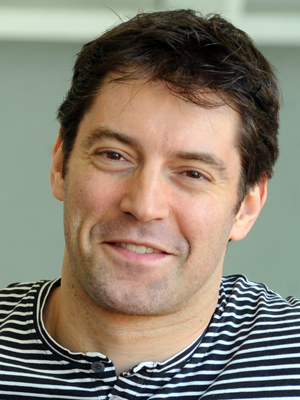
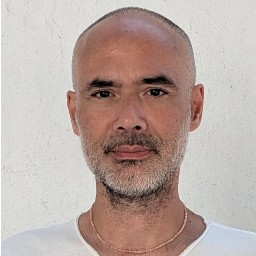
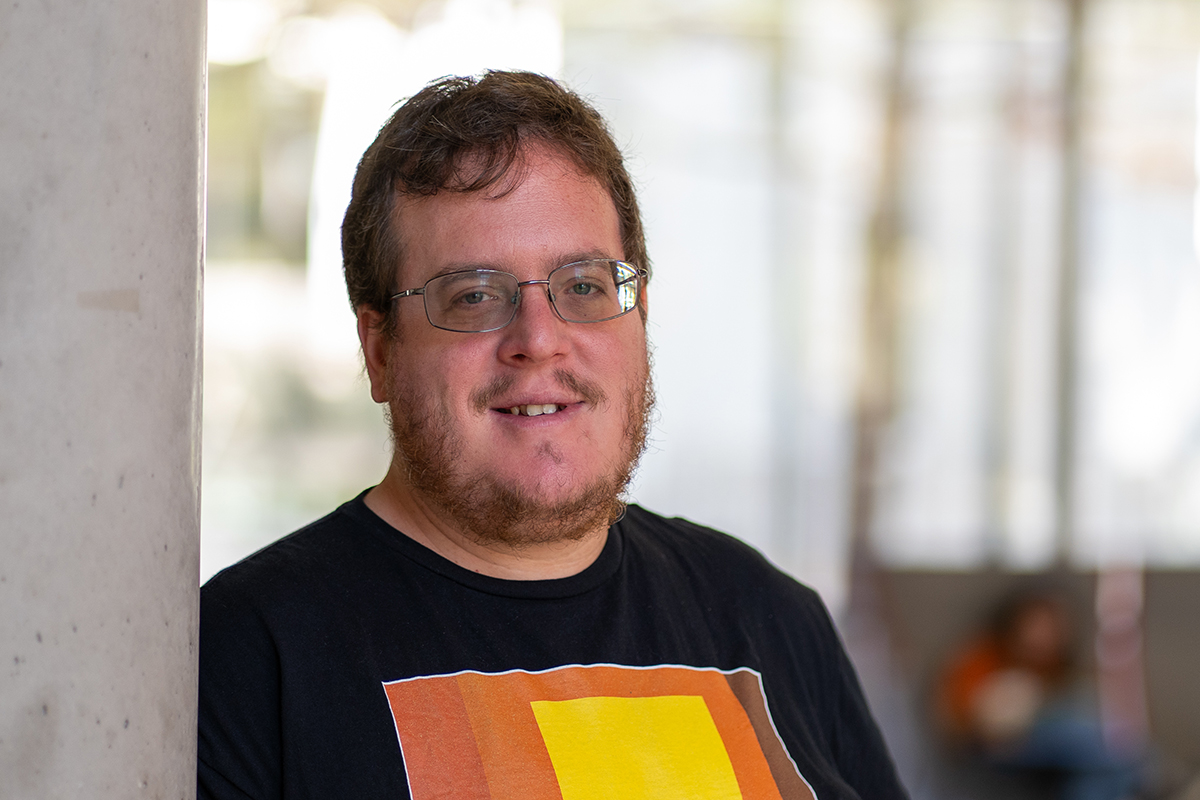
Dan Rubenstein is an Associate Professor in the Department of Computer Science at Columbia University . He is affiliated with multiple research centers including the Data, Media and Society , Foundations of Data Science , and Smart Cities initiatives. His research spans network technologies, performance analysis, and emerging applications in quantum computing and wireless systems. Education: Ph.D. in Computer Science from University of Massachusetts, Amherst Rubenstein's work focuses on optimizing network performance, wireless communication protocols, and novel applications in serverless computing and peer-to-peer systems. Recent publications highlight trends in quantum network verification , Bloom filter error modeling , and zero-rating policy analysis . NSF CAREER Award IBM Faculty Award ACM SIGMETRICS, IEEE CNP 2003, and ACM CoNext paper awards He serves as Editor-in-Chief of IEEE/ACM Transactions on Networking and chaired the ACM Sigmetrics 2011 conference. His collaborations extend to networked sensor systems, content delivery, and energy-harvesting architectures.
Claire Tomlin is a Professor at the University of California, Berkeley, holding the Charles A. Desoer Chair in Engineering. She works at the intersection of hybrid systems, control theory, and robotics, with applications to air traffic management, biological cell networks, and autonomous systems. Ph.D. (EECS) UC Berkeley (1998) M.Sc. (Electrical Engineering) Imperial College, London (1993) B.A.Sc. (Electrical Engineering) University of Waterloo (1992) Research Interests: Her work focuses on hybrid systems (combining continuous/discrete dynamics), decentralized optimization , and human-automation systems . Key applications include UAV control , air traffic automation , and biological modeling (e.g., HER2+ cancer, Drosophila development). Selected Articles (2024-2025) span topics from dynamic programming for autonomous farms to deep learning-based safety filters , multi-agent reinforcement learning , and perception uncertainty analysis . Recent trends emphasize certifiable safety in AI-driven systems and Hamilton-Jacobi reachability for high-dimensional problems. Scientific Honors: MacArthur Fellow (2006) IEEE Fellow (2010) National Academy of Engineering Member (2019) American Academy of Arts and Sciences Member (2019) IEEE Transportation Technologies Award (2017) Advising & Collaborations: She has advised 21 Ph.D. students and 5 postdoctoral researchers. Her group collaborates with institutions like OHSU, LBNL, and Stanford. She leads the VeHICaL project on verified human-robot interfaces. Labs & Teams: Affiliated with the Berkeley Artificial Intelligence Research Lab (BAIR), VeHICaL, and the Berkeley Center for New Media (BCNM). Her work integrates with the UC Berkeley robotics ecosystem, including the SWARM Lab and FORCES.
Robert D. Kleinberg is an Associate Professor in the Department of Computer Science at Cornell University, where he conducts research on algorithm design and analysis with applications in learning, economics, and networking. His work bridges theoretical foundations with practical implementations in large-scale systems. Education Ph.D. in Computer Science from MIT (2005) Prior industry experience at Akamai Technologies (3 years) Research Focus Kleinberg's research centers on algorithms and theoretical computer science, with emphasis on economic aspects of algorithms, online learning applications, and random processes in networks. His work explores how algorithms interact with strategic agents, optimize under uncertainty, and solve complex network problems. Recent investigations include fairness in prophet inequalities, recalibration methods for online predictors, and reconfigurable network architectures. Publication Trends His recent publications (2024-2017) reveal dominant themes in algorithmic game theory, network optimization, and online learning. Key patterns include resource-constrained bandit problems, calibration techniques for strategic forecasting, and theoretical limits of oblivious routing. His work consistently connects theoretical breakthroughs with real-world applications in networking and economic systems. Scientific Recognition Microsoft Research New Faculty Fellowship Alfred P. Sloan Foundation Fellowship NSF CAREER Award Best Paper Award at ACM Conference on Economics and Computation (EC 2014) Mentorship and Research Leadership Kleinberg has advised 13 PhD students including current advisees Raunak Kumar, Princewill Okoroafor, and Tegan Wilson, and former students such as Bruno Abrahao and Hyung-Chan An. He has mentored 8 postdocs including Yoav Kolumbus and Saeed Alaei. His research is supported by major grants including the NSF CAREER Award and Microsoft Research funding, with significant contributions to program committees for STOC, FOCS, and EC conferences. Collaborative Environment As part of Cornell's Algorithms and Theory group, Kleinberg collaborates extensively with researchers across computer science, operations research, and economics. His work with the Networks Lab and involvement in the Fall 2016 Simons Institute program on Algorithms and Uncertainty demonstrate his integrated approach to theoretical and applied challenges.
Honorary Professor Marcus Watson is affiliated with the School of Psychology at The University of Queensland. His work spans healthcare simulation, medical education, and human factors in clinical and driving contexts. He has contributed extensively to patient monitoring systems and ergonomic design. Recent research focuses on hazard perception training, colonoscopy simulation, respiratory rate measurement accuracy, and 3D visualization in surgical settings. His publications highlight systematic reviews, experimental studies, and simulation frameworks. Key trends in his articles include integrating human factors into medical device design, developing training tools for clinical and driving environments, and analyzing cognitive workload in healthcare. Collaborative studies with Andrew Hill and Mark Horswill demonstrate interdisciplinary approaches. No scientific awards or students are explicitly documented in the provided materials. His email address ( m.watson2@uq.edu.au ) reflects ongoing academic engagement.
Adam Berry is a Professor and Deputy Director of the Human Technology Institute at the University of Technology Sydney (UTS). He previously served as Deputy Director of the UTS Data Science Institute from 2021-2024. His work focuses on leading inclusive, responsible and innovative artificial intelligence for Australia, with emphasis on translating data into real-world impact through data curation, machine learning, and statistical approaches. Education: PhD in Computer Science, University of Tasmania (2004-2008) BSc (Hons) in Computer Science, University of Tasmania (1999-2003) Professor Berry's research spans ethical AI, energy systems, and accessibility. His work consistently bridges theoretical research with practical implementation, focusing on human-centered AI that delivers value while upholding rights and preventing harm. He has a strong track record in multi-disciplinary collaboration, bringing together expertise from computer science, social science, electrical engineering, and ethics. His recent publications reveal a strategic evolution from foundational work in energy systems and reinforcement learning toward increasing focus on ethical and responsible AI frameworks. While maintaining strong contributions to energy analytics (electricity price forecasting, carbon intensity prediction), his 2021 survey on ethical AI principles marks a significant pivot toward governance and implementation frameworks for trustworthy AI systems. Scientific Awards: CSIRO Collaboration medal (inaugural winner) Professor Berry has secured substantial funding from diverse sources including the Digital Health CRC, Australian Renewable Energy Agency, Department of Home Affairs, and industry partners. He has led multi-million dollar initiatives like the National Energy Analytics Research Program and currently oversees the Human Technology Institute's mission for responsible AI. His industry collaborations include partnerships with Reejig (ethical talent AI), Sydney Trains (delay prediction systems), and numerous energy sector organizations. He actively contributes to the Disability Research Network, applying data-driven approaches to improve outcomes in the disability sector. As part of the Trustworthy Digital Society research center, he advances human-centered AI through cross-disciplinary work that integrates technical expertise with social considerations. His leadership spans research design, capability development, and strategic partnership building across government, industry, and academic sectors.
Fabrizio Bonatesta is a Reader in Thermofluids at Oxford Brookes University, affiliated with the School of Engineering, Computing and Mathematics. He holds a PhD from the University of Nottingham and has been a permanent academic staff member at Oxford Brookes since 2010. His research and teaching focus on thermofluids, internal combustion engines, and emissions reduction, with strong collaborations with Ford, Siemens, and other UK universities. Educational Background: PhD in Engine Research, University of Nottingham, UK Research Interests: Fabrizio Bonatesta's research centers on experimental and numerical modeling of combustion and emissions in gasoline and diesel engines, particularly focusing on particulate matter in modern GDI engines. He has extensive expertise in reactive flow and CFD modeling using commercial and open-source software. His work also extends to sustainable energy systems, including 3D CFD modeling of transpired solar collectors for energy-efficient building heating. His research group, Propulsion and Pollution Modelling (PPM), actively collaborates with Ford, Siemens, Loughborough University, and the University of Nottingham. Recent Research Trends: His recent publications (2015–2024) highlight a strong trajectory in CFD-based modeling of fuel injection, combustion, and soot formation in GDI engines, alongside interdisciplinary work on urban pollutant dispersion and solar thermal systems. The integration of chemical kinetics with CFD and the focus on real-world emission reduction strategies are recurring themes. Scientific Awards: Central Research Funds Award (2013-14) Central Research Funds Award (2014-15) Research Excellence Award (2015-16) Research Excellence Award (2016-17) Research Leadership and Grants: Dr Bonatesta leads significant research projects, including the APC6 DynAMO project (co-sponsored by the Advanced Propulsion Centre, £22M total, £1.35M to Brookes) with Ford, Loughborough, Bath, Siemens, and others. He is also Principal Investigator on the 'Cavendish' project (Innovate UK) developing zero-CO2 hydrogen combustion systems for heavy-duty transport. His sustained funding from internal and external sources reflects the impact and relevance of his work. Research Groups and Labs: He leads the Propulsion and Pollution Modelling (PPM) research group at Oxford Brookes and is affiliated with the Centre for AI, Culture and Society (CAICS). His lab conducts advanced CFD simulations and experimental work in collaboration with industry and academic partners. He also supports interdisciplinary research with the Architectural Engineering Research Group on sustainable heating technologies.
Dritan Nace is a Professor in the School of Engineering at the University of Evry , specializing in network optimization , robust resource allocation , and communication systems . His work bridges computer science , operations research , and telecommunications , focusing on max-min fairness , elastic routing , and survivable network design . Recent research includes: Probabilistic controller placement for 5G networks (2025) Robust VNF reconfiguration models (2024) Weather-resilient FSO network optimization (2021) His scientific contributions span: Network Fairness : Foundational work on max-min fairness and flow thinning 5G Optimization : Innovation in virtual network function placement Air Traffic Systems : Chance-constrained flight level assignment models Nace's collaborative work with researchers like Michal Pióro and Jacques Carlier has shaped telecom infrastructure design and resource-constrained scheduling methodologies.
Adam Czubak serves as an Assistant Professor ( adiunkt ) in the Department of Computer Science at the University of Opole, Poland. His institutional email is adam.czubak@uni.opole.pl, and he maintains an active research profile with ORCID 0000-0003-1336-2839. His research spans multiple critical areas of modern networking and security, with primary focus on Computer Networks , Network Security , and Wireless Sensor Networks . His work addresses fundamental challenges in routing algorithms, cryptographic protocols, and vulnerability analysis. Recent publications demonstrate a clear trajectory toward practical cybersecurity applications, particularly in vulnerability assessment frameworks and attack modeling. Analysis of his publication timeline reveals an evolution from theoretical networking foundations (2009-2013) toward applied security research (2014-present). His work bridges algorithmic complexity, cryptographic implementation, and real-world network vulnerabilities, with notable contributions to SDN security, firewall analysis, and Chacha20 cryptography. The consistent focus on performance-cost tradeoffs across WAN/SDN systems demonstrates practical engineering sensibilities. Career metrics include 17 publications, 1 research project, and 1 media appearance. His bibliometric profile shows a Web of Science h-index of 2, SNIP of 0.401, and CiteScore of 0.7, with a Polish ministerial research score of 390 points. Professor Czubak maintains active scholarly presence through Google Scholar, Scopus, and LinkedIn profiles, with documented collaborations through multi-center publications. His research output reflects strong alignment with contemporary cybersecurity challenges while maintaining rigorous theoretical foundations in network science.
Dr. Ali Al-Sherbaz is an academic leader at the University of Gloucestershire , serving as the Academic Director for Digital Skills with a focus on Data Science, AI, and Cybersecurity. He holds a PhD in Computing from the University of Buckingham and has over 25 years of experience in teaching, research, and strategic leadership. Expertise in mobile and network security , 5G, Blockchain, and applied AI Co-founder of the Institute of Cybersecurity and Digital Innovation Secured funding for PhD research and established a Blockchain Lab His research spans cybersecurity, AI, IoT, and SDN, with over 80 peer-reviewed publications including an award-winning conference paper and a UK patent . He has supervised over 20 doctoral students and serves as a reviewer for international journals. Contributions to REF-recognized research Active in IEEE, IET, and BCS professional societies He champions industry-academia partnerships , curriculum innovation aligned with national priorities, and inclusive learning environments. His strategic work includes positioning the Cyber Security and Digital Innovation Centre as a business-facing unit and achieving Ofsted and NCSC accreditations .
Raimund Schatz is a Senior Scientist and Thematic Coordinator at the AIT Austrian Institute of Technology , where he leads research on Human-Centered Automation and Assistance . He also holds post-doctoral and lecturing positions at Alpen-Adria Universität Klagenfurt and Vienna University of Technology , respectively. His academic background includes a PhD in Informatics (TU Vienna), an MSc in Telematics (TU Graz), and certifications in Machine Learning (Stanford), Big Data Engineering (Yandex), and Data Science (Johns Hopkins). Research Focus Dr. Schatz's work spans Quality of Experience (QoE) in broadband networks, Extended Reality (XR) Training , Human-Computer Interaction (HCI) , and Pervasive Computing . He specializes in video streaming optimization, accessibility for low-vision users, and immersive technologies for healthcare and industrial applications. His research integrates user behavior analysis with AI-driven network management. Scientific Contributions He has received multiple Best Paper Awards at PCS 2024 , QoMEX 2022 , and QoMEX 2020 Finalist in the 5G Vienna Use Case Challenge (2019) His 150+ publications focus on QoE modeling, adaptive streaming, and XR training effectiveness. Projects Current leadership includes METICOS (H2020): Predictive models for technology acceptance SHOTPROS (H2020): VR training for law enforcement under stress Zero 3 (FFG): AI-driven industrial automation XRTrain (AK Digifond): Healthcare training applications Academic Affiliations He actively participates in COST Actions (IC1003 Qualinet, IC1304 ACROSS) IEEE and ACM societies NGMN Alliance for mobile networks
Elad Liebman is an Assistant Professor of Instruction at the Department of Computer Science , University of Texas at Austin , with prior roles as a PhD student and researcher at UT Austin and Tel Aviv University. His research spans machine learning , artificial intelligence , multiagent systems , and computational creativity , often intersecting with music and human decision-making. His academic contributions include peer-reviewed publications on topics such as Distributed Multi-Agent Reinforcement Learning (AAAI-23) Music-Driven Decision Bias (Cognition and Emotion, 2017) Adaptive Playlist Generation (MIS Quarterly, 2019) He has received accolades like the Dean’s Excellence Award and Blavatnik School of Computer Science Excellence Prize . Elad has served as a Senior Data Scientist at SparkCognition (2018-2024) Applied Scientist at Amazon (2024) His technical expertise includes Python, Java, and C++, with fluency in Hebrew and English.
Dawit Mengistu is a Senior Lecturer in Computer Engineering at the Department of Computer Science, Faculty of Natural Science, Malmö University. His research focuses on deep learning applications, edge computing, and distributed simulation systems. 2022: Deep Learning Approaches for Crack Detection in Bridge Concrete Structures 2024: Concrete Crack Detection Using Multi-Source Data Augmentation in Deep Learning Models 2018: Session Key Agreement for End-to-End Security in Time-Synchronized Networks His research spans artificial intelligence and system performance optimization , with specific interests in: Multi-agent simulation scalability Edge computing for IoT devices Concrete structural analysis via neural networks Grid environment resource management Article trends show increasing focus on infrastructure AI and distributed systems , while earlier works concentrated on simulation algorithms and middleware. No recent scientific awards listed in available data.
Tacettin Ayar is a Lecturer at Istanbul Technical University's Department of Artificial Intelligence and Data Engineering. He holds a Master's degree in Computer Engineering from the same institution (1999-2003). His research specializes in computer networks with emphases on TCP performance optimization, transparent proxy architectures, and network load balancing solutions. His technical investigations focus on: Designing robust TCP proxies resistant to packet reordering Mitigating vulnerabilities in multipath TCP implementations Per-packet load balancing in core network infrastructures Network emulation and performance evaluation methodologies His publication history demonstrates consistent focus on network protocol optimization, with recent work (2018-2019) exploring proxy-based solutions for TCP enhancements in core networks. Earlier research (2003-2004) included distributed systems and simulation interfaces.
Prof. Dr. Kirsten Thommes is Professor of Organizational Behavior at the University of Paderborn's Faculty of Economics, Department of Organizational Behavior, where she has held a chair since April 2018. Her work bridges organizational psychology, human-computer interaction, and management science, with a focus on how companies build relationships with employees and how organizational structures impact behavior. She leads the Chair of Organizational Behavior research group and is actively involved in the Collaborative Research Center Transregio 318 as Project Manager for A03 and C02, while also contributing to the Paderborn Research Center for Sustainable Economy (PARSEC) and Intelligent Technical Systems profile area. Education: Business administration studies at Phillips University Marburg Doctorate from Friedrich Schiller University Jena Postdoctoral work at Radboud University Nijmegen and RWTH Aachen University Prof. Thommes' research centers on understanding employee behavior in organizations and how organizational characteristics affect this behavior. Her evidence-based management approach helps decision-makers find better organizational solutions. She pursues numerous practitioner-collaborative projects alongside university research, focusing on three main areas: teamwork dynamics, organizational identity formation, and human-machine interaction in workplaces. Her interdisciplinary approach draws from economic, sociological, and psychological theories with strong empirical grounding through statistical analysis. Recent work increasingly examines AI integration in organizational contexts, exploring how employees interact with algorithmic decision systems across various sectors from transportation to healthcare. Analysis of Prof. Thommes' recent publications reveals a clear trajectory toward understanding human-AI collaboration in organizational settings. Her work spans explainable AI (XAI), decision-making with algorithmic support, energy efficiency interventions, and team dynamics in technological contexts. A significant portion examines how different explanation formats affect user trust and reliance on AI systems. Another strand investigates sustainable behavior in organizations, particularly how leadership communication can motivate energy-efficient practices. Her publications demonstrate methodological diversity, employing experiments, field studies, and mixed-methods approaches across various organizational contexts. Prof. Thommes actively mentors doctoral and master's students, with several successful doctorates completed at her chair as recently as July 2025. Her research is supported through multiple collaborative projects including: Working World Plus: Creating a regional competence center for 'AI in the working world of industrial SMEs' (KIAM) as part of the it's OWL technology cluster Constructing Explainability: DFG-funded Collaborative Research Center examining transparency in algorithmic decisions EcoDrive: Field experiments with professional truck drivers studying effective telematics implementation PredictTeams: Developing a framework for predictive competence management for agile teams The Chair of Organizational Behavior operates as a vibrant research hub with multiple doctoral researchers, research assistants, and student assistants. The team maintains strong industry connections through the it's OWL technology cluster and collaborates with various practitioners. They actively engage with students and alumni through LinkedIn and Instagram, reflecting their commitment to bridging academic research with practical organizational applications.
Felipe Cerezo Andreo is an Associate Professor in Underwater Archaeology at the University of Cádiz , affiliated with the Instituto de Investigación Marina (INMAR) and research groups HUM-440 (UCA) and E041-02 (UM). His work spans nautical archaeology, underwater cultural heritage , and geoarchaeology , with a focus on Mediterranean and Iberian coastal systems. Education : PhD in Archaeology from the University of Murcia (2016), thesis on ancient harbors of Cartagena (Outstanding Cum Laude, International Mention). His research integrates geoarchaeological analysis , GIS mapping , and maritime visibility studies to reconstruct ancient coastal landscapes. Recent publications examine shipwreck contexts (e.g., Arapal, La Ballenera) and digital dissemination tools for heritage preservation. Key grants include the FEDER UCA-18-107327 Herakles Project (€154k), TIDE Interreg Project (€314k), and CREAMARE EU Cooperation Project . He coordinates the Underwater Archaeology Laboratory and Cádiz's Research Vessel Archaeological Management . Scientific Awards : International Mention (University of Murcia) Juan de la Cierva Postdoctoral Fellowship He directs the Official Master's Degree in Nautical and Underwater Archaeology (55% teaching load), supervises 26 Master's theses , and co-directs 2 doctoral theses . Outreach includes UNESCO/ICOMOS collaborations and public workshops on submerged heritage.