

Jyh-An Lee is a Professor and founding Executive Director of the Centre for Legal Innovation and Digital Society (CLINDS) at The Chinese University of Hong Kong (CUHK) Faculty of Law. He leads the New Ventures Legal Team (NVLT) and holds advisory roles at institutions like the European Center for E-Commerce & Internet Law and National University of Singapore. Education : JSD (Stanford), LLM (Harvard), MBA & LLB (National Taiwan University) Admissions : Practicing lawyer in Taiwan His research interests focus on Intellectual Property , AI and the Law , Law & Digital Technology , and Asian Law . He has contributed to landmark studies on NFTs, metaverse legal frameworks, cybersecurity, and IP litigation in Asia. The scientific awards he has received include: CUHK PhD IMPAC Award (2024-25) CUHK Vice-Chancellor’s Exemplary Teaching Award (2023, 2019) CUHK Outstanding Research Impact Award (2022-23) Numerous other university and faculty-level honors His work has been cited by major international courts and agencies. He is also a TRAIL Academic Fellow and active in policy advisory roles for Creative Commons and IP offices in Taiwan and Hong Kong.
جستوجوی استاد و پژوهشگر
استاد راهنما، استاد دانشگاه یا پژوهشگر مناسب برای مسیر پژوهشیتان را پیدا کنید و با او ارتباط بگیرید.
نمایش ۱-۱۵ از ۱۳۰ استاد راهنما
اطلاعات این پروفایلها از صفحات عمومی دانشگاهها جمعآوری شده و ممکن است بهروز نباشد.
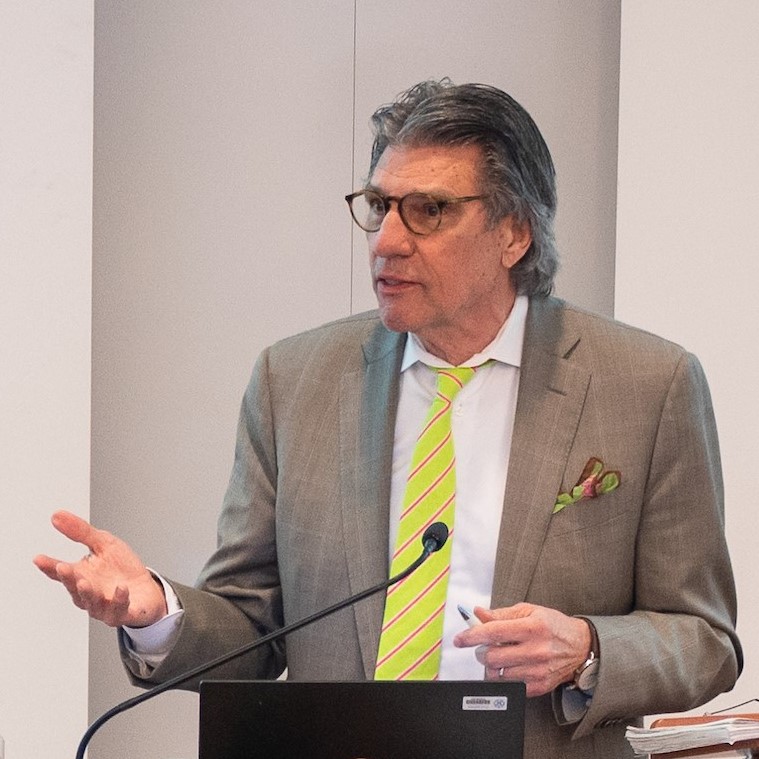
David S. Caudill is a Professor of Law and the inaugural Arthur M. Goldberg Family Chair at Villanova University’s Widger School of Law since 2005. He also holds the title of Senior Fellow at the University of Melbourne Law Faculty. Caudill has held visiting appointments at the University of Texas, Southern Illinois University, Cardozo School of Law, and the University of Florida. Education: J.D., University of Houston Law Center (1981) Ph.D., Philosophy, Free University of Amsterdam (1989) B.A., Philosophy, Michigan State University (1973) Postdoctoral work: Science & Technology Studies at Virginia Tech (2001) and Washington Psychoanalytic Institute (1994-95) Caudill’s research bridges law and science studies , law and literature , and sports and entertainment law . His recent work examines the legal implications of scientific consensus, confidentiality in business contexts, and the ethical dimensions of literary narratives in jurisprudence. His five 2025 publications reflect interdisciplinary engagement with legal ethics, scientific evidence in courtrooms, and the intersection of law with cultural and scientific discourse. Articles address topics like non-disclosure agreements, climate change litigation, and the use of literature in legal ethics training. Scientific Awards: SKAPP grant (2007) Société de Chimie Industrielle Fellow (2007/2008) Before academia, Caudill practiced real estate and sports law, clerked for the Fifth Circuit, and taught as an adjunct professor at the University of Texas. His presentations span themes like expertise crises, psychoanalytic theory in law, and religious aspects of legal epistemology.

Dr. Vikram Nanda is the O.P. Jindal Distinguished Chair Professor of Finance at the Naveen Jindal School of Management, University of Texas at Dallas. He holds a PhD in Finance from the University of Chicago, MBA from Yale University, and a Bachelor of Technology from Indian Institute of Technology Kanpur. His research focuses on corporate finance, financial institutions, and behavioral finance, with emphasis on topics like hedge fund strategies, managerial overconfidence, and corruption's economic impacts. Key research highlights include studies on multi-market trading (best paper award), litigation risk effects on contracting, and cryptocurrency bubble detection. He has served on editorial boards for Journal of Financial Research and Financial Letters , and contributed to non-academic publications like Barron’s . His work spans 30+ years across top-tier institutions including USC, University of Michigan, and Georgia Tech. Current research explores AI's role in investment management, gender diversity in executive roles, and legal frameworks affecting corporate behavior. Awards include Smith Breeden Prize nominations and Q-Group research grants. Educations: PhD (Chicago), MBA (Yale), B.Tech (IIT Kanpur) Affiliations: Financial Intermediation Research Society, European Finance Association Labs/Teams: Behavioral Finance Research Group, Corporate Governance Initiative He advises on strategic financial decisions and has authored/coauthored over 50 publications. Recent work examines environmental, social, and governance (ESG) investment strategies and the impact of trade secret laws on financial opacity.

David Almeling is a Lecturer at UC Berkeley School of Law where he teaches Trade Secret Law, while maintaining his primary role as a partner at O'Melveny & Myers LLP in San Francisco. He is widely recognized as one of the country's leading authorities in trade secret law, with Chambers USA ranking him in Band 1 (its highest category) among the top seven trade secret lawyers nationwide. His practice spans the full range of trade secret and employee mobility issues, from advising on protection programs to investigating alleged thefts to litigating trade secret cases in state and federal court. Mr. Almeling earned his J.D. from Duke University School of Law with high honors, where he was Order of the Coif, note editor of Duke Law Journal, and a member of the Moot Court Board. He completed his undergraduate studies at the University of Florida with highest honors as valedictorian and Phi Beta Kappa. His research interests focus on trade secret law, intellectual property strategy, and the intersection between patent and trade secret protection. He has published extensively on trade secret law, including the fourth edition of his book Trade Secret Law and Corporate Strategy (LexisNexis 2024) and numerous scholarly articles. His work demonstrates a consistent focus on practical applications of trade secret law for corporate strategy, with particular attention to identification of trade secrets, monetary remedies, and the relationship between trade secrets and noncompete agreements. Mr. Almeling has received numerous prestigious awards recognizing his expertise, including being named to the 'Hall of Fame' by The Legal 500 US for Trade Secrets (2023-2025), ranked in Band 1 by Chambers USA, and recognized by World Intellectual Property Review as Highly Recommended. He has also been named one of Law360's 'Rising Stars' and featured in The National Law Journal's list of 'Intellectual Property Trailblazers & Pioneers.' As Chair of O'Melveny's Trade Secret Group and Chair of the Sedona Conference Working Group on trade secrets, Mr. Almeling has significant leadership responsibilities in his field. He has testified before Congress on safeguarding trade secrets and serves as co-author of the 'Trade Secret Case Management Judicial Guide,' a 400-page treatise published by the Federal Judicial Center. His practice includes representing clients in high-stakes trade secret litigation resulting in significant settlements and victories, including a $22.5M settlement that would rank among the top-ten trade secret jury verdicts.
Filippo Mezzanottiمشاهده پروفایل
عضو هیئت علمی
- Corporate Finance
- Innovation
- Entrepreneurship
- +۳ مورد دیگر
Filippo Mezzanotti is an Associate Professor of Finance at the Kellogg School of Management, Northwestern University. His research bridges corporate finance with innovation economics, fintech, and historical analysis of financial systems. He teaches Finance II (Corporate Finance), focusing on capital structure, investment decisions, and valuation methods. Doctor of Philosophy (2016), Business Economics, Harvard University Master of Arts (2014), Economics, Harvard University Master of Science (2010), Economics, Universita Commerciale Luigi Bocconi Bachelor of Arts (2008), Economics, Universita Commerciale Luigi Bocconi Mezzanotti's work examines how financial frictions shape real economic activity. Key areas include technology adoption dynamics during liquidity shocks, patent policy effects on corporate innovation, and private equity's role in crisis resilience. His empirical approach frequently leverages historical events like the Great Depression and Sherman's March for modern economic insights. Recent publications analyze critical issues in financial technology (mobile payments in India), corporate R&D allocation under funding constraints, and legal frameworks affecting patent litigation. His research reveals connections between demographic factors, debt restructuring mechanisms, and institutional recovery patterns. Faculty Research Fellow, National Bureau of Economic Research (2024-present)

- Intellectual Property
- Intellectual Property Protection for Pharmaceutical and Biotechnology
- Competition Law
- +۱ مورد دیگر
Su-Hua Lee is a Professor of Law at National Taiwan University (NTU) and an affiliate professor in the School of Pharmacy. She has served as a full-time faculty member at NTU since 2016, following academic positions at National Tsing Hua University and National Taipei University. Her expertise spans intellectual property law with specialized focus on pharmaceutical and biotechnology applications, competition law, and civil law. Her educational background includes: Bachelor of Laws from National Taipei University Master of Laws (Magister iuris comparativi, M. iur. Comp.) from Rheinischen Friedrich-Wilhelms-Universität Bonn Doctor of Laws (PhD) from National Taiwan University in 2006 Professor Lee's research examines the complex interplay between intellectual property frameworks and specialized industries, particularly pharmaceuticals and biotechnology. She has conducted extensive comparative analysis of German and Taiwanese legal systems, informed by her time as a visiting researcher at the Max Planck Institute for Innovation and Competition in Munich (2005-2007). Her scholarship addresses critical issues including patent linkage systems, infringement damages calculation, trade secret protection, and the application of competition law to digital platforms. She frequently bridges theoretical legal concepts with practical policy implications, making her work highly relevant to legislative and regulatory development. Analysis of her recent publications (2022-2024) reveals three dominant trends: 1) Examination of IP challenges in digital environments (internet marketing, social media trademarks), 2) Pharmaceutical regulation issues (patent linkage, term extension, public health crises), and 3) Economic dimensions of IP enforcement (damages calculation, multi-sided platform economics). Her work consistently incorporates comparative perspectives, particularly from German legal frameworks, while addressing Taiwan-specific legal and policy contexts. Professor Lee leads a research team that has been instrumental in drafting Taiwan's drug approval-patent linkage legislation since 2015. She serves on governmental expert committees related to intellectual property and pharmaceutical affairs and participates in regional academic networks focused on Asian intellectual property law development. Her research has been supported by multiple grants from Taiwan's Ministry of Science and Technology, Ministry of Health and Welfare, Intellectual Property Court, and Fair Trade Commission. Her scholarly contributions span numerous law journals in Taiwan and internationally, with publications covering patent law, trademark enforcement, trade secrets, and the intersection of intellectual property with competition policy. She has also contributed chapters to several edited volumes on intellectual property systems in Asia and comparative approaches to patent enforcement.

- Law of obligations
- Economic Law
- Civil Law
- +۲ مورد دیگر
Julie Klein is a full professor at Sciences Po and Dean of the Sciences Po Law School. She is affiliated with the Law School's Research Center and specializes in Law of obligations and Economic Law, with a focus on the interaction between civil and commercial law. Education : PhD in Private Law from University Paris II Panthéon-Assas (2010); passed agrégation in Private Law and Criminal Science (2011). Professional Roles : Former director of the Master’s degree in General Private Law at University of Rouen (2011-2019); co-director of the Entreprises, Marchés, Régulation (EMR) program at Sciences Po (2020-present); Scientific Director of Semaine juridique édition entreprise (JCP E) since 2018; member of the High Committee for Corporate Governance (HCGE) since 2019. Her research explores the confrontation of civil law and commercial law rules, particularly in evidence law, burden of proof, and prescription periods. She has contributed to the reform of the regime of obligations under the Ministry of Justice (2011-2012) and writes the general regime of obligations chronicle for the Revue des contrats (since 2012). Recent articles address evidence admissibility, trade secrets, GDPR compliance, and procedural fairness. She received the Anthony Mainguené prize for her work. Scientific Awards : Anthony Mainguené prize. Klein is actively involved in the Law School's Research Center and collaborates with legal practitioners on corporate governance and economic law reforms.

- Evidence Law
- Antitrust Law
- Business Torts
- +۴ مورد دیگر
Professor Michael Hutter is a faculty member at Albany Law School, where he teaches Advanced Evidence, Antitrust, Business Torts, and related courses. He has been a member of the faculty since 1976 and is recognized as a leading expert in New York Evidence Law. A.B., Brown University J.D., Boston College Law School As a scholar, Professor Hutter focuses on Evidence Law , Antitrust , and Business Torts , with his work cited by multiple courts and legislators. His Google Scholar publications demonstrate expertise in judicial procedure, trade secrets, and legal reform. Professor Hutter has served on the Commission on Judicial Nomination and contributed to legal education through his bi-monthly column in the New York Law Journal . He has argued appeals in the New York Court of Appeals, Appellate Divisions, and Second Circuit Court of Appeals. Teaching Awards from Western New England Law School and Albany Law School Elected member of the American Law Institute Fellow of the American Bar Association and New York State Bar Association

Prof. Nishantha Sampath Punchihewa is a Professor of Commercial Law and currently serves as Dean of the Faculty of Law at the University of Colombo, Sri Lanka. He has been a Senior Fellow in the sub-project 'Digital Access to Library Content – Legal Frameworks in Germany and Sri Lanka' at the Centre for Advanced Study since 2024. His academic journey includes LL.B. from the University of Colombo (2000), LL.M. from Augsburg and Munich (2009), and a doctoral thesis on intellectual property law in Sri Lanka (2015). He was admitted to the bar in 2001 and has held teaching positions at multiple Sri Lankan universities since then, formalizing his role as a full professor in 2022. His research focuses on intellectual property rights and innovation, competition law, consumer protection, biotechnological inventions, IT law, and the interplay between human rights and IP. Notable areas of study include Sri Lanka's legal frameworks for patents, copyrights, and geographical indications like Ceylon Tea. He advocates for enhancing SME access to IP-based financing and promoting second-tier patent systems for local innovators. Punchihewa’s work bridges legal theory with practical applications, addressing challenges in digital rights management, tourism IP strategies, and sustainable innovation policies. His publications emphasize Sri Lanka’s unique legal landscape and its alignment (or misalignment) with global standards in IP and antitrust matters. He has advised extensively on policy reforms related to technology transfer, education curricula integration of IP concepts, and leveraging IP assets for national economic growth. His contributions have positioned him as a leading voice in South Asian legal scholarship, particularly in balancing commercial interests with ethical and developmental priorities.
Professor Rochelle C Dreyfuss of the University of Cambridge, Faculty of Law, is a leading scholar in intellectual property law with a focus on international dimensions of patenting, trade secrets, and access to medicines. Her work bridges legal theory with practical implications for global innovation policy. Key research areas: TRIPS Agreement implementation Genetic material patenting Transnational IP dispute resolution Business method patent economics Trade secrecy and national security Global health policy impacts Her recent publications examine: Post-Brexit IP frameworks (2018) Experimental use defense in biotech (2017) Specialized patent adjudication (2017) Max Planck IP principles (2013) DNA patenting ethics (2013) Contact: Squire Law Library , Cambridge CB3 9DZ

Luigi Alberto Franzoni is a Professor of Public Economics at the University of Bologna , specializing in Law and Economics. He serves as Director of the international Ph.D. programme 'European Doctorate in Law and Economics' (Bologna, Hamburg, Rotterdam, Rennes) and is a leading scholar in intellectual property rights and liability law. Education : D.Phil. in Economics (Nuffield College, Oxford, 1996), Dottorato in Finanza Pubblica (Università di Pavia, 1994), MA in Economics (Warwick University, 1992), Laurea in Economia e Commercio (Università di Bologna, 1989). His research focuses on economic analysis of law, particularly intellectual property and liability law . Recent publications examine legal change under uncertainty, trade secrets, and liability frameworks for risk-correlated accidents. Key article trends include economic modeling of legal systems , innovation incentives through IP law , and liability rules under ambiguity . His work bridges legal theory with practical economic implications. Scientific Awards : Distinguished Article Prize (2015), Fulbright Scholarship (1998), Prize 'Rivista il fisco' (1997), Bok Visiting Professor (2018), Honorary Professor (2012). He has directed the European Doctorate in Law and Economics (since 2007) and co-founded the Italian Society for Law and Economics (2007-2010). Grants include €6 million for the EDLE Erasmus Mundus project (2008).

- Evidence Law
- Antitrust Law
- Business Torts
- +۷ مورد دیگر
Professor Michael J. Hutter is a distinguished faculty member at Albany Law School, where he has served since 1976 and is recognized as the senior member of the faculty. He holds the rank of Professor of Law and teaches core subjects including Evidence, Antitrust, Business Torts, and Trade Regulation. His expertise is nationally recognized, particularly in New York evidence law, where he serves as a legal columnist and advisor to the state judiciary. His educational background includes an A.B. from Brown University and a J.D. from Boston College Law School, where he was Editor-in-Chief of the law review and elected to the Order of the Coif. After clerking for Judge Matthew J. Jasen of the New York Court of Appeals, he practiced litigation before transitioning to academia. Professor Hutter’s research focuses on evidence, antitrust, trade secrets, and business torts. His scholarship is widely cited by courts across New York and federal circuits, and has influenced state legislation. He has authored a major reference work, Model Jury Charges in Business Torts Cases , and published over 75 bi-monthly columns in the New York Law Journal on evidence developments. The 15 most recent publications reflect a consistent focus on evidence law, judicial procedure, and torts, with recurring themes in hearsay, business records, and appellate decisions in New York. His work bridges academic scholarship and practical legal application, particularly for judges and trial attorneys. Teaching Award, Albany Law School Teaching Award, Western New England Law School Highly Qualified Rating, New York State Bar Association Elected Member, American Law Institute Fellow, American Bar Association Fellow, New York State Bar Association Professor Hutter has advised and argued in numerous appellate cases, including landmark decisions in the New York Court of Appeals. He has served on multiple state commissions, including the Commission on Judicial Nomination and the Judicial Advisory Committee on Evidence, where he was appointed Reporter. He has delivered over 200 presentations to bar associations and legal education programs. He has also held leadership roles such as President of the Albany County Bar Association and Director of the Office of Capital Defenders. He is actively involved in judicial education, regularly presenting at programs for newly appointed judges and legal staff through the New York State Judicial Institute. He was appointed by the Chief Judge to compile a comprehensive Guide to New York’s evidence law, enhancing judicial access to consolidated legal rules.

Mary LaFrance is the IGT Professor of Intellectual Property Law at the William S. Boyd School of Law, University of Nevada, Las Vegas (UNLV), where she has served as faculty since 1999. Previously, she taught at Florida State University College of Law (1990-1999) and served on the faculty of the Florida State University School of Motion Pictures, Television, and Recording Arts. At UNLV, she held the position of Associate Dean for Academic Affairs from 2001 to 2004. Her educational credentials include: A.B. summa cum laude from Bryn Mawr College M.A. in Philosophy from Duke University School of Graduate Studies (1986) J.D. with High Honors from Duke University School of Law (1986), where she was Executive Editor of the Duke Law Journal Professor LaFrance's research focuses on domestic and international intellectual property law across copyright, trademark, patent, and trade secrets domains, with specialized expertise in entertainment law applications and taxation of intellectual property assets. Her recent work examines digital-era challenges including eBook lending models, sound recording performance rights, and the intersection of copyright with library systems in bridging the digital divide. She has also analyzed territorial limitations of trademark law following Abitron litigation. Current publication trends (2023-2025) reveal concentrated scholarship on copyright's adaptation to digital technologies, particularly in library ecosystems and collective management systems, alongside ongoing contributions to trademark theory through international comparative studies. Her work demonstrates consistent engagement with evolving global IP frameworks and practical industry applications. No scientific awards or honors are referenced in the provided materials. While the text confirms her role as an active scholar and conference participant, no formal Ph.D. or Master's student advisees are documented. Her professional engagements include collaborative work with institutions like the World Intellectual Property Organization and participation in the Vanderbilt Music Law Summit, but specific grant funding details remain unmentioned. Professor LaFrance maintains significant involvement with international IP organizations including the Association for Teaching and Research in Intellectual Property (ATRIP), Intellectual Property Researchers of Europe (IPRE), and the Conference on Innovation and Communications Law (CICL). She regularly contributes to State Bar of Nevada Intellectual Property Law Section events and participated in UC Berkeley's Contractual Override Workshop examining licensing provisions that eliminate copyright exceptions.

- Intellectual Property Law
- Contract Law
- Tort Law
- +۳ مورد دیگر
Harald Irgens-Jensen is a Professor at the Department of Private Law, Faculty of Law, University of Oslo. His academic work focuses on Intellectual Property Law , Contract Law , and Market Law , with a particular emphasis on trade secrets, copyright, and their intersections with employment and competition law. Editor of Knoph's overview of Norwegian law and Oslo Law Review Chairman of the Norwegian Copyright Association Active in IPR policy and innovation efforts at the University of Oslo His research explores EU legal frameworks for IP protection, contractual deviations from background rights, and the balance between employee ingenuity and corporate secrecy. Recent publications analyze co-ownership of trade secrets, sanctions in IP cases, and R&D collaboration agreements. Key article trends include EU Trade Secrets Directive, employee confidentiality clauses, and comparative IP law. His editorial roles and leadership in copyright organizations highlight his influence in legal academia and policy. Scientific contributions include: Editorial leadership in Norwegian legal textbooks and journals Chairmanship in the Norwegian Copyright Association Advisory roles in IPR policy
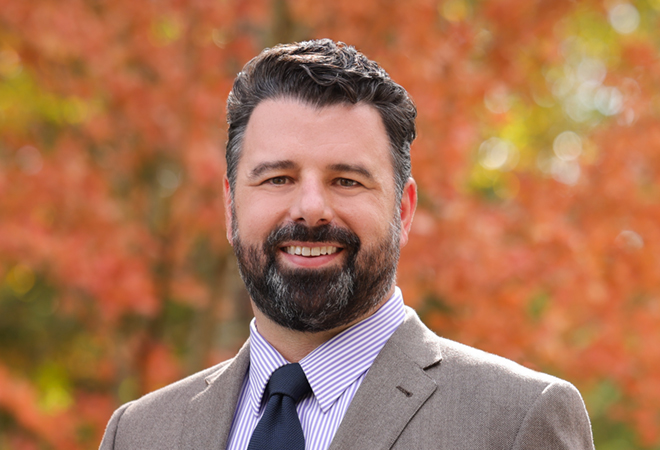
Christopher Buccafusco is the Edward & Ellen Schwarzman Distinguished Professor of Law at Duke Law School, joining in 2022 after teaching at Cardozo Law School and Chicago-Kent College of Law. His research integrates intellectual property law with empirical methods, focusing on creativity, innovation, and well-being. Education: Georgia Tech (B.S.), University of Georgia School of Law (J.D.), University of Chicago (M.A., history of culture) Key Research Areas: Empirical studies of IP law, copyright and music litigation, pharmaceutical patents, design law, and happiness-based policy analysis Buccafusco's recent work examines trademark distinctiveness in the wine market, gun safety technologies, and copyright's impact on creativity. His empirical studies challenge traditional assumptions about authorship, market fairness, and social norms in IP law. Scientific Awards: Distinguished Teaching Award, Duke Bar Association (2024) Student Bar Association Professor of the Year, Chicago-Kent University-wide Teaching Excellence Award, Chicago-Kent