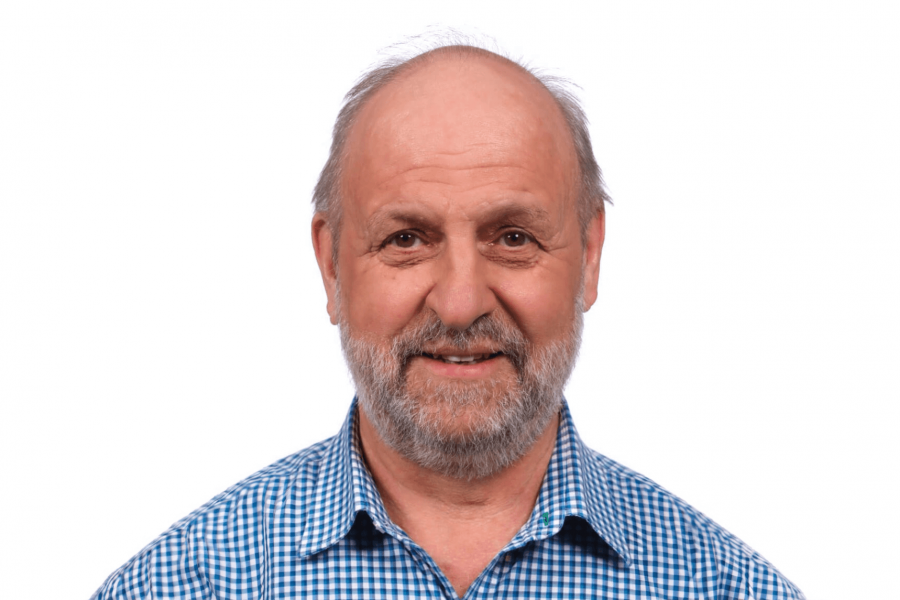
Patrick O'Shea is an Affiliate Professor at the University of Maryland, specializing in accelerator physics and beam dynamics. He is affiliated with the University of Maryland Electron Ring (UMER) program, focusing on high-intensity electron beam experiments and free-electron laser technologies. His research spans photocathode development, space-charge effects in beams, and terahertz radiation generation. Education details are not explicitly provided, but his work emphasizes advanced studies in particle accelerators and laser systems. Key projects include the DarkLight experiment at Jefferson Lab and contributions to photocathode material science. Research interests include beam dynamics modeling, nonlinear phenomena in charged particle beams, and applications of free-electron lasers in X-ray and THz regimes. His recent publications (2023–2025) highlight advancements in beam centroid dynamics, polarization control, and compact laser design. No awards or grants are listed, but his involvement in major facilities like UMER and CERN indicates collaborative research impact. His advising role is unclear, though he contributes to experimental teams through his research activities. Lab affiliations include the UMER facility and Jefferson Lab, focusing on beam physics and laser-driven experiments.
Tiina Rinne is an Assistant Professor (tenure track) in the Department of Civil Engineering at the University of Tampere, affiliated with the Transport Research Centre Verne 2025. Her research focuses on geospatial data analysis, urban green infrastructure, and outdoor recreation patterns. She collaborates extensively on projects involving 3D mapping, GPS tracking, and satellite imagery to study human-environment interactions. Her work integrates interdisciplinary approaches to urban planning and environmental monitoring, with a particular emphasis on Tampere’s urban landscapes. Recent studies include analyzing mobility opportunities in Hervanta and Kaleva districts through resident surveys and exploring recreational behavior using geospatial data fusion techniques. Rinne has published three peer-reviewed articles and a commissioned report in 2025, highlighting her contributions to urban forestry, hospitality tourism, and spatial data analysis. She is a key member of collaborative networks in Finland and beyond, advancing research in geospatial technologies and their societal applications.
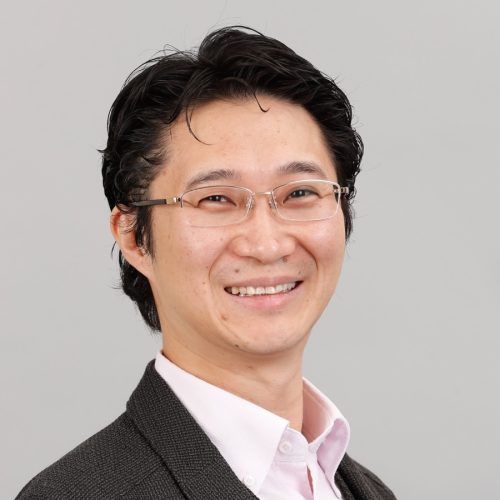
Takayuki Mizuno is an Associate Professor at the National Institute of Informatics and SOKENDAI (The Graduate University for Advanced Studies), where he leads interdisciplinary research at the intersection of informatics, econophysics, and computational social science. His work focuses on analyzing complex global systems such as economic networks, financial markets, human mobility, and geopolitical dynamics using big data and network science. Doctor of Science, Chuo University (Physics) JSPS Research Fellow (2004) Lecturer, Institute of Economic Research, Hitotsubashi University (2007–2010) Associate Professor, University of Tsukuba (2011–2013) Senior Research Fellow, Canon Institute for Global Studies (2009–present) His research interests include computational social science, econophysics, network science, wealth inequality, financial bubbles, cryptocurrency regulation, public opinion manipulation, and global supply chain ethics. He develops models to understand market dynamics, detect hidden financial influences, and visualize geopolitical power shifts. The recent articles highlight a consistent trend in applying big data and network analysis to real-world socio-economic problems: visualizing China's indirect control in global shareholder networks, detecting financial risks, analyzing online market competition, studying supply chain ethics, and understanding cultural integration through human mobility. The work bridges physics, economics, computer science, and political science. Scientific Awards: Best Paper Award, Japanese Society for Artificial Intelligence (2019) Best Paper Award, Information Processing Society of Japan (2019, 2013) Student Encouragement Award, IPSJ (2019) Best Paper Award, Transdisciplinary Federation of Science and Technology (2019) JSPS Research Fellow (2004) Dr. Mizuno advises multiple Ph.D. and master’s students and leads the Mizuno Laboratory, which conducts cutting-edge research on global challenges. He has secured significant research grants from JSPS, JST (Sakigake), and other funding bodies. His work is frequently featured in major media outlets including Nikkei, NHK, The Wall Street Journal, and Yomiuri Shimbun, indicating broad societal impact. He is actively involved in professional service, including as Director of the Society for Computational Social Science of Japan and member of the Editorial Board of the Japanese Society for Artificial Intelligence. He also participates in government advisory committees on big data, economic policy, and telecommunications. His lab, the Mizuno Laboratory, focuses on the fusion of political economy and data science, aiming to disentangle complex global networks to address issues like economic bubbles, terrorism, and social polarization.
David Menotti is a prominent researcher in computer vision and machine learning, with a focus on biometrics, license plate recognition, and video analysis. He has collaborated extensively with institutions and researchers globally, contributing to over 171 publications between 2003-2025. Key research areas include face recognition, synthetic data generation, and zero-shot learning Major contributions in license plate super-resolution, sign language translation, and ocular biometrics Active in organizing competitions like FRCSyn and OCFR to advance synthetic data applications His work often combines diffusion models, CNN architectures, and multimodal approaches to solve real-world problems in unconstrained environments. Notable recent projects involve enhancing face recognition with synthetic data, vehicle color recognition under adverse conditions, and Libras-to-Portuguese translation. Menotti's publications appear in journals like Information Fusion , IEEE Access , and conferences including CVPR, SIBGRAPI, and IJCNN. He frequently collaborates with researchers such as Rayson Laroca, William Robson Schwartz, and Pedro Vidal.
Professor Gita Alaghband is Chair and PhD Director at the Department of Computer Science and Engineering, University of Colorado Denver. Her work bridges high-performance computing with AI applications in computer vision, facial recognition, and deep learning optimization. Current research focuses on real-time multi-human tracking for autonomous systems Develops explainable AI solutions for medical and financial domains Leads the Parallel Distributed Systems (PDS) Lab Key publication trends include: 2025: Medical imaging AI for pediatric trauma analysis 2024: Financial forecasting with causal econometrics and adversarial defense systems 2023: Trajectory prediction models and HEVC compression frameworks Scientific recognition: IRC Best Paper Award (2020) for facial recognition research Students advised include industry leaders at Google, VMWare, and Nissan, with research spanning parallel computing, medical imaging AI, and autonomous systems.
Xinwei Wang is a Professor at Nanjing University of Aeronautics and Astronautics with an extensive publication record spanning over two decades. Their research primarily focuses on autonomous systems, UAV trajectory planning, medical imaging, and computer vision applications. Wang has established significant collaborative networks with researchers including Yan Zhou, Liang Sun, Xichao Su, and Lei Wang across multiple Chinese institutions. Wang's research interests center on the intersection of robotics, artificial intelligence, and practical engineering applications. Their work demonstrates particular expertise in UAV coordination systems, medical diagnostic technologies, and underwater imaging solutions. Recent publications reveal a growing emphasis on explainable AI systems for medical applications and safety-critical trajectory planning for autonomous vehicles. The publication trends show a consistent output of high-impact research, with recent work increasingly focusing on practical implementations of AI systems in medical diagnostics, autonomous vehicle navigation, and aerospace applications. Wang's research bridges theoretical control systems with real-world engineering challenges, particularly in safety-critical domains requiring precise motion planning and reliable decision-making. Wang has contributed significantly to both theoretical frameworks in optimal control and practical implementations in medical imaging and autonomous systems. Their work on UAV cooperative task assignment and flight deck operations demonstrates strong connections to aerospace engineering applications, while medical imaging research shows interdisciplinary collaboration with healthcare professionals.
Virginia Polytechnic Institute and State UniversityUnited States
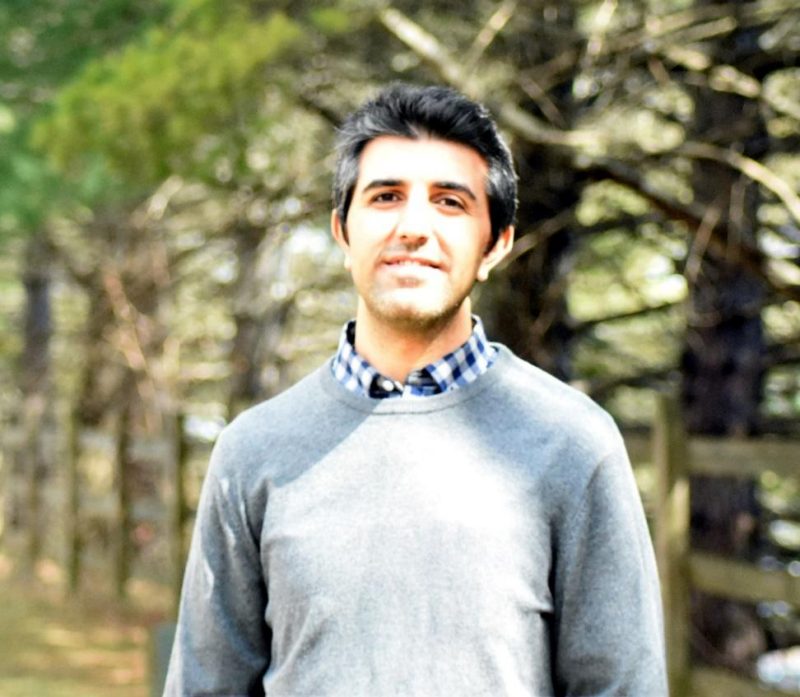
Hasan Seyyedhasani is an Assistant Professor at the School of Plant and Environmental Sciences, Virginia Polytechnic Institute and State University (Virginia Tech), where he holds a 60% research and 40% teaching appointment. His work bridges engineering and agriculture, focusing on smart farm ecosystems using robotics, automation, and data-driven technologies. Education: Ph.D. in Biosystems and Agricultural Engineering, University of Kentucky, 2017 M.S. in Electrical and Computer Engineering, University of Kentucky, 2017 M.S. in Mechanics of Agricultural Machinery, University of Tehran, 2010 B.S. in Mechanics of Agricultural Machinery, University of Tehran, 2006 His research interests center on precision agriculture , agricultural robotics , sensing systems , and AI-assisted smart farming . He develops engineering solutions to improve efficiency in both specialty and row crop production, with a focus on human-robot collaboration, input optimization, and sustainable productivity. His work integrates IoT, UAVs, and machine systems management. The analysis of his recent publications reveals a strong trend in field robotics , route optimization , and UAV-based monitoring . His research consistently applies computational models and real-world validation to solve practical agricultural challenges, particularly in harvesting, spraying, and fleet logistics. Key subfields include dynamic rerouting, human-robot interaction, and biomass localization using drones. Scientific Awards: No awards listed in the provided text. Advising and Grants: No formal advisees or students are listed. No grants or funding sources are mentioned. He has collaborated with faculty at the Center for Advanced Innovations in Agriculture and previously held research positions at UC Davis, University of Wisconsin-Madison, and Southern Illinois University. Labs and Teams: While no specific lab name is provided, his work is associated with smart farm and precision agriculture initiatives at Virginia Tech, likely involving interdisciplinary teams in agricultural engineering and data analytics.
Urbano J. Nunes is a Full Professor at Coimbra University and Senior Researcher at the Institute for Systems and Robotics (ISR-UC) , where he coordinates the Human-Centered Mobile Robotics Lab . His career spans national and international funded projects in mobile robotics , intelligent vehicles , and human-machine interfaces , with over 160 publications in journals and conferences. He has supervised 13 completed PhD students and currently guides 4 more. Key Roles : IROS Advisory Committee (2013-), IEEE ITS Society Vice President (2011-2012), IEEE RAS Technical Committee Cochair (2006-2011) Editorial Leadership : Associate Editor for IEEE Transactions on Intelligent Vehicles (2015-), former Associate Editor for IEEE Transactions on Intelligent Transportation Systems (2007-2016) Research Interests focus on human-centered mobile robotics , including mobile service robotics , assistive robotics , autonomous vehicle navigation , pattern recognition , and machine learning . His recent work involves 3D LiDAR processing, multispectral imaging in agriculture, and brain-computer interface (BCI) reliability improvements. Scientific Awards : IEEE ITS Society Outstanding Service Award (2006) IEEE RAS Most Active Technical Committee Award (2006) NiSIS Competition Winner for Automotive Dataset Analysis (2007) Grant Leadership includes 33 funded projects from 2001 to 2025 across domains like digital agriculture (GreenBotics), green automotive innovation (GreenAuto), and telerehabilitation platforms (INPACT), with international collaborations spanning EU programs and Portugal’s FCT grants. Labs & Teams : Coordinates the Human-Centered Mobile Robotics Lab at ISR-UC, integrating cross-disciplinary teams in robotics, AI, and BCI research. His group partners with institutions like CERN and European Commission JRC in cybernetic transportation systems.
Tony Szturm is a Professor and Senior Scholar in the Department of Physical Therapy at the College of Rehabilitation Sciences, University of Manitoba. His work bridges clinical rehabilitation and engineering innovation, focusing on technology-assisted and game-based therapeutic interventions delivered through telerehabilitation platforms. Institution: University of Manitoba School: College of Rehabilitation Sciences Department: Department of Physical Therapy Location: Bannatyne Campus, Winnipeg, MB Dr. Szturm holds a BSc in Biology and a BSc in Physical Therapy from the University of Western Ontario, and a PhD in Neurophysiology from the University of Manitoba. His research is deeply interdisciplinary, integrating wireless sensors, digital media, and interactive systems to support rehabilitation in both clinical and home environments. His primary research interests include technology-assisted rehabilitation , telerehabilitation , game-based motor training , and neurological recovery across diverse populations such as stroke survivors, children with neurodevelopmental disabilities, individuals with traumatic brain injuries, Parkinson’s patients, and aging adults. A key focus is enhancing accessibility, accountability, and engagement in therapy through innovative, low-cost digital tools. The 15 most recent inferred articles reflect a strong trend toward digital health innovation , remote monitoring , and interdisciplinary rehabilitation engineering . These works span areas such as upper limb recovery, balance and gait training, dual-task performance, vestibular rehabilitation, and patient engagement. The integration of wearable sensors, real-time feedback, and gamification principles is a consistent theme, demonstrating his commitment to translating research into practical, scalable solutions. Dr. Szturm is actively involved in mentoring, supervising postdoctoral fellows, PhD, and master's students through the Mentoring of Highly Qualified Personnel (HQP) Program, fostering collaboration between rehabilitation sciences and engineering disciplines. While no formal scientific awards are listed, his leadership in high-impact, publicly featured research projects underscores his contribution to the field. His lab and research group focus on developing and evaluating plug-and-play rehabilitation technologies that can be deployed in resource-limited settings, including international applications such as projects in India. These initiatives emphasize affordability, usability, and clinical effectiveness, aiming to expand access to high-quality rehabilitation globally.
Mariana Catela Jacob Rodrigues is an Assistant Professor in the Department of Applied Digital Technologies at Iscte – University Institute of Lisbon and an Associate Researcher at the Institute of Telecommunications – IUL, where she works within the Instrumentation and Measurements Group. She holds a PhD in Information Technologies and Systems from Iscte, completed in 2024, following a Master’s and Bachelor’s degree in Telecommunications and Computer Engineering from the same institution. Her research interests span a multidisciplinary range of topics, including: Internet of Things (IoT) Assisted Living Environments Smart Sensors and Wearable Devices Cardiorespiratory and Physiological Monitoring Environmental and Air Quality Monitoring Artificial Intelligence in Healthcare Mobile Application Development Virtual Reality in Rehabilitation The analysis of her recent publications reveals a strong focus on the integration of sensor technologies and AI for health and environmental applications. Her work frequently involves the development and evaluation of unobtrusive monitoring systems in ambient assisted living contexts, with specific attention to indoor localization, fall detection, and the impact of environmental stimuli—such as lighting and music—on autonomic nervous system responses. Much of her research is published in IEEE conferences and journals related to instrumentation, sensors, and medical measurements. Her scientific achievements include: Best Student Paper Award at the IEEE International Symposium on Medical Measurements and Applications (2022) ISTA Top Talent 2018-2019 (awarded in 2020) Best Student Paper Award at the 2nd International Symposium on Sensing and Instrumentation in IoT Era (2019) Mariana Rodrigues is actively involved in academic service and outreach. She has served on the organizing committees of multiple scientific events, including the International Symposium on Sensing and Instrumentation in IoT Era and several summer schools on Smart Systems for Ambient Assisted Living. She currently holds leadership positions in IEEE, serving as Chair of the IEEE Women in Engineering (WIE) Affinity Group and the IEEE Instrumentation and Measurement Society Chapter at Iscte. She has also contributed to science communication through events like the ISCTE Summer School on “Healthy and Sustainable Environment.”
Femke Ongenae is an Associate Professor at Ghent University's Faculty of Engineering and Architecture within the Department of Information Technology . She leads research at the IMEC postdoctoral level in areas bridging eHealth, predictive healthcare, and knowledge graph technologies . Her work focuses on context-aware systems, stream reasoning, and hybrid AI for healthcare and smart infrastructure applications. Key research domains: Artificial Intelligence , Health Informatics , Knowledge Graphs Leadership roles: Digital Innovation for Man and Society research unit, eBehaviourChange group Her recent publications (2023-2025) highlight advancements in: Semantic rule mining for decision support systems Anomaly detection in healthcare and water networks Context-aware machine learning for COPD and migraine monitoring Knowledge graph embeddings for industrial process monitoring Collaborative projects involve: Developing INK framework for knowledge graph rule mining Building DIVIDE system for adaptive IoT querying Creating MASSIF platform for semantic IoT services Advancing stream reasoning for real-time healthcare applications
D.S. Armstrong is the Chancellor Professor of Physics at the College of William & Mary , where he leads a research group focused on experimental nuclear and particle physics. He conducts major experiments at Jefferson Lab, including Qweak, PREx, CREx, and the upcoming MOLLER experiment, all aimed at precision tests of the Standard Model through parity-violating electron scattering. Chancellor Professor of Physics, College of William & Mary Primary research site: Jefferson Lab, Newport News, VA Research group leads in precision weak interaction measurements and hadronic structure Education B.Sc., McGill University, 1981 M.Sc., Queen's University, 1984 Ph.D., University of British Columbia, 1988 Armstrong's research centers on experimental nuclear and particle physics , particularly precision measurements of the proton's weak charge and the neutron skin in nuclei. His group uses polarized electron beams to probe parity-violating asymmetries in electron-nucleus scattering, providing stringent tests of the Standard Model and insights into quark contributions to nucleon structure. His work on the G0 experiment explored strange quark effects, while Qweak delivered the first direct measurement of the proton’s weak charge, published in Nature (2018). Current efforts focus on the MOLLER experiment , which will achieve even higher precision in weak mixing angle measurements. The recent publications reflect a strong trend toward precision electroweak physics , with increasing focus on detector calibration , tracking efficiency , and background suppression in next-generation experiments like MOLLER. The subfields span parity violation, hadronic structure, strange quark contributions, and advanced simulation techniques using GEANT4. Scientific Awards: Monica Potkay Advisor of the Year, 2022 Armstrong has advised over 30 PhD and senior thesis students, many of whom have pursued academic and research careers at institutions like MIT, Stanford, Jefferson Lab, and NASA. His research is supported by the National Science Foundation (NSF) and Department of Energy (DOE), including recent funding for the MOLLER experiment from NSF and the Canadian Foundation for Innovation (CFI). He also contributes to broader scientific service, including faculty governance and development of open-source educational resources like the Virginia Physics Flexbook. His team collaborates extensively with national laboratories, particularly Jefferson Lab, and includes active graduate students such as Ezekiel Wertz, Kate Evans, and Tasneem Raza. The group emphasizes both experimental hardware development and advanced data analysis, including machine learning applications for particle identification and track reconstruction.
Miguel A. Nunes serves as Assistant Researcher and Deputy Director at the Hawaiʻi Space Flight Laboratory (HSFL) within the University of Hawaiʻi at Mānoa's College of Engineering. Specializing in small satellite design and multi-agent robotic systems , he leads systems engineering for missions like Neutron-1 and HyTI, while teaching space systems design in programs including the Vertical Integrated Project Aerospace Technologies and Earth and Planetary Exploration Technology (EPET) capstone courses. PhD in Aerospace Engineering (2010) focusing on autonomous satellite swarm control Developed COSMOS mission operations system for managing multiple spacecraft Key work in thermal control systems for hyperspectral imagers and satellite constellations His 10+ years of subsystem expertise spans ADCS, OBC, flight software, and radio communications. Recent publications highlight advancements in T2SL detector arrays and active thermal management for CubeSats. As Deputy-PI for HyTI mission, he contributes to volcanic monitoring and agricultural sensing applications through high-resolution thermal imaging. Research trends show consistent focus on distributed satellite systems and autonomous operations , transitioning from foundational work on multi-agent control to current applications in Earth observation constellations . His collaborations span JPL, NASA, and Saraniasat Inc., with technical contributions to 6U CubeSat standardization and onboard computing architectures.
Zhenjie Zhang is a Professor in the Department of Computer Science at East China Normal University's School of Computer Science and Software Engineering, with a distinguished research career spanning nearly two decades. His work bridges theoretical computer science with practical industrial applications, maintaining strong international collaborations with researchers from TU Wien, National University of Singapore, and industry partners including ByteDance. Dr. Zhang's research focuses on the intersection of database systems, machine learning, and industrial applications. His early work centered on database privacy and query processing, evolving toward causal inference, fault diagnosis systems, and industrial AI applications. His recent publications demonstrate a strategic shift toward solving real-world engineering problems using advanced machine learning techniques, particularly in manufacturing, transportation, and cloud systems. The consistent publication trajectory across top venues like IEEE TKDE, VLDB, and ACM Transactions shows sustained research excellence and adaptability to emerging technical challenges. His publication record reveals significant contributions to causal inference methods, evidenced by multiple papers on causal discovery and transfer learning. The research demonstrates practical impact through industrial collaborations, particularly in fault diagnosis systems for mechanical equipment and adaptive control for unmanned vehicles. The recent work shows increasing focus on deploying AI models efficiently in resource-constrained environments, reflecting awareness of practical implementation challenges. Dr. Zhang has mentored numerous junior researchers who have become active contributors in the field, including Ruichu Cai and Zining Zhang. His collaborative network spans multiple continents, indicating strong research leadership and international recognition. The consistent flow of publications in top venues suggests successful grant funding and research group management, though specific grant details aren't provided in the source material.
Xiangyang Xue is a Professor at Fudan University in Shanghai, China, with an extensive research portfolio spanning computer vision, machine learning, and artificial intelligence. His work demonstrates significant contributions to object-centric representation learning, 3D reconstruction, person re-identification, and semantic segmentation. With over two decades of publication history from 1999 to present, he maintains an active research program with numerous collaborations, particularly with researchers like Yanwei Fu, Bin Li, and Yu-Gang Jiang. Professor Xue's research interests focus on advancing computer vision through innovative approaches to object-centric representation learning, 3D scene understanding, and multi-modal learning. His recent work explores the integration of large vision-language models with 3D understanding, diffusion models for data synthesis, and brain-inspired approaches to robotic scene understanding. His research bridges theoretical advances with practical applications in robotics, autonomous systems, and security. Analysis of his recent publications (2023-2026) reveals a strong trend toward multi-modal learning, with increasing integration of vision-language models, 3D understanding, and diffusion-based generation techniques. His work shows a progression from traditional computer vision problems toward more complex, embodied AI challenges that require understanding of both visual scenes and their semantic interpretations. Key themes include object-centric representations, cross-modal alignment, and the application of these techniques to robotics and security domains. Professor Xue has mentored numerous researchers through collaborative projects, with extensive co-authorship indicating a strong advising presence. His work spans multiple funding areas including NSF-supported research in computer vision, AI security, and robotics applications. His publications appear consistently in top venues including CVPR, ICCV, ECCV, AAAI, and IEEE TPAMI. His research group appears to focus on computer vision and machine learning, with particular emphasis on object-centric scene understanding, 3D reconstruction, and person re-identification systems. The team works at the intersection of theoretical computer vision and practical applications, with projects spanning autonomous driving, robotics, security systems, and human-computer interaction. Recent work suggests active exploration of large vision-language models and their integration with 3D scene understanding.