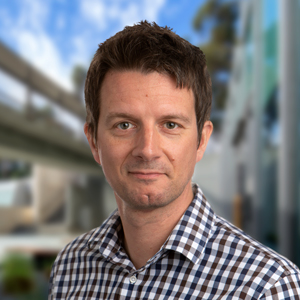
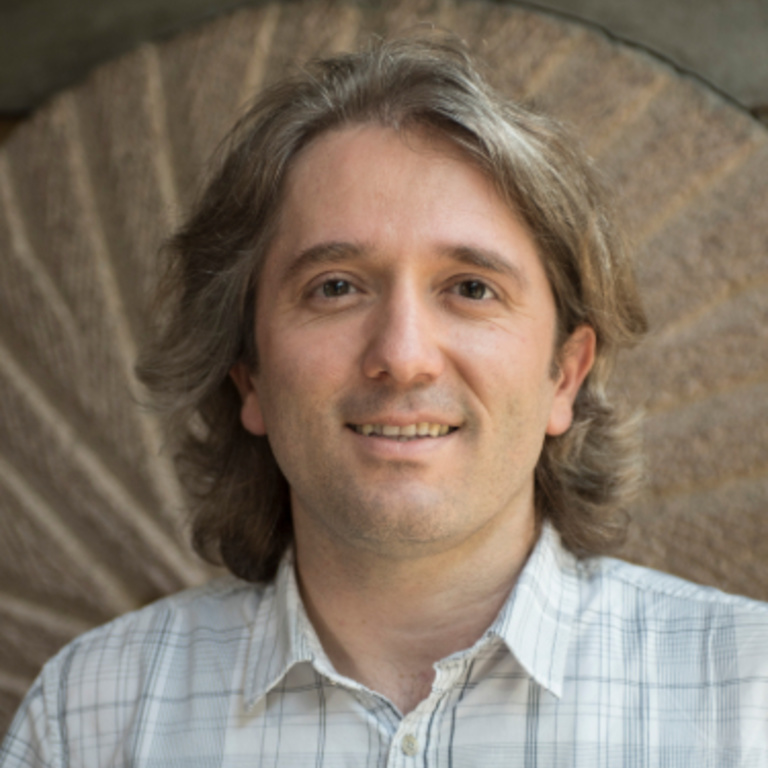
Patrick Singleton is an Associate Professor in the Department of Civil and Environmental Engineering at Utah State University, specializing in transportation research. His work bridges travel behavior, safety analysis, and health impacts of transportation systems, with a focus on active transportation and data science applications. Academic Background: PhD in Civil and Environmental Engineering (Portland State University, 2017) Research Areas: Travel behavior, transportation-electrification, pedestrian safety, health-wellbeing in transport Recent research trends emphasize data-driven approaches to pedestrian and bicycle safety, transportation electrification, and the impact of environmental factors like air quality on travel patterns. His lab develops tools for pedestrian data analysis and systemic safety improvements. Scientific recognition includes multiple UDOT awards and a 2017 Best Paper award. He mentors graduate students in transportation modeling and safety analysis.
Dr. Yao-Tai Li is a Senior Lecturer in Sociology and Social Policy at UNSW's School of Social Sciences. He holds a PhD from UC San Diego, with prior roles including Assistant Professor at Hong Kong Baptist University (HKBU, 2017–2021). His research focuses on race/ethnicity, migration, contentious politics, and social media analysis, with a particular emphasis on East Asian diasporas and Hong Kong's sociopolitical dynamics. Education: PhD (UC San Diego), MA and BA (National Taiwan University). Awards include the Dean’s Award for Early Career Research (UNSW, 2024) and data journalism accolades for his Hong Kong Lennon Wall documentation. He advises PhD and master’s students on topics ranging from border regimes to queer activism. Key projects include tracking rhetorical shifts in Chinese-Australian community responses to racism since 1973, and analyzing Hong Kong's protest movements through urban sociology and data activism lenses. Active in 45+ journals as a reviewer/editor, and holds leadership roles in migration studies (ISA RC31) and policy initiatives. Grants include UNSW's ADA Seed Funding (2024), National Library of Australia grants (2023), and Hong Kong RGC Early Career support (2020–21). His forthcoming book *Protest Walls* (CUP, 2025) examines physical/digital protest spaces in transnational contexts.
Karen Joyce is an Associate Professor at James Cook University (JCU) with expertise in remote sensing and environmental monitoring. She holds a PhD in Geographical Sciences from the University of Queensland (2005). Her work focuses on developing remote sensing tools for applications in marine, coastal, and savanna ecosystems. Notable contributions include advancing drone technology for coral reef mapping, mangrove phenology modeling, and disaster management integration. She co-founded She Maps, a social enterprise promoting women in STEM through drone education, and GeoNadir, emphasizing geospatial innovation. Education: PhD in Geographical Sciences (University of Queensland, 2005) Key Roles: Co-Founder of She Maps and GeoNadir Former Geomatic Engineering Officer in the Australian Army Her research interests center on optimizing remote sensing models to quantify Earth observation data, with applications in coral reef health, mangrove ecosystems, and invasive species management. Recent projects include She Flies Drone Camps to build STEM confidence in girls and hyperspectral drone technology for bathymetric mapping. Her publications emphasize drone-based data acquisition, spectral analysis for coral cover, and automated image processing using tools like Google Earth Engine. Despite no listed academic awards, her work has significant practical impact in conservation and disaster preparedness. Key grants include projects like 'Is satellite technology telling the truth? Perspectives from a coral reef' (2015–2017) and 'Developing hyperspectral drone technology' (2016–2017). She collaborates extensively with institutions like the Australian Army, New Zealand conservation agencies, and Kakadu National Park researchers.
Amelia Acker is an Associate Professor and Graduate Advisor/Director of Masters Studies at the University of Texas at Austin's School of Information. Her work focuses on the emergence of new information objects in wireless networks, digital preservation, and cultural memory. She holds a PhD with award-winning research on SMS standardization and mobile communication infrastructure. Prior to UT Austin, she served as an Assistant Professor at the University of Pittsburgh's iSchool and worked as an archivist/librarian in Southern California. Her research is funded by NSF and IMLS grants, and has been published in journals like JASIST and Archival Science. She teaches courses on metadata, information studies, and cultural heritage informatics. Her current projects address digital traces in mobile computing and data justice issues. She previously worked with artist John Baldessari as an arts cataloger and has extensive experience in library preservation practices. Key contributions include analyses of Venmo social payments, Palantir's surveillance systems, and API-driven social media archives. She emphasizes interdisciplinary approaches to sociotechnical systems and data ethics in emerging technologies.
Jun Zhou is Professor and Deputy Head of School (Research) at Griffith University's School of Information and Communication Technology. His research specializes in hyperspectral imaging, computer vision, and pattern recognition with applications in agriculture, environmental monitoring, and remote sensing. Zhou leads significant projects including the ARC Research Hub for Driving Farming Productivity and Disease Prevention. His work develops innovative computer vision systems for agricultural automation, environmental conservation, and industrial quality control. He has received the ARC Discovery Early Career Researcher Award and secured extensive research funding from ARC, CSIRO, and industry partners. Zhou's publications demonstrate consistent contributions to hyperspectral image analysis, object tracking, and deep learning applications. As Deputy Director of the ARC Industrial Transformation Research Hub, he coordinates multi-institutional research teams developing AI-powered solutions for farming productivity and disease prevention.
Dr. Michael Otto is affiliated with the University of Ulm, Department of Computer Science, within the Faculty of Engineering. His research focuses on virtual technologies for production planning, immersive virtual assembly assessments, and markerless motion capture systems. He has contributed to projects like ARVIDA (Cost-efficient motion capture systems) and INTERACT (Human-centered workplaces). His work bridges computer science, manufacturing systems, and human factors. Key contributions include developing frameworks for motion capture, virtual reality benchmarking, and augmented reality applications in industrial contexts. Notable achievements include receiving the Best Industrial Paper award (2015) for his work on ubiquitous tracking using depth cameras. His research addresses challenges in assembly planning, ergonomic assessments, and spatial interaction in manufacturing environments. Education/Background: Former External PhD Candidate at University of Ulm. Research Interests: Dr. Otto’s work emphasizes practical applications of virtual and augmented reality in manufacturing. He explores how technologies like markerless motion capture and immersive environments can optimize assembly processes, enhance worker ergonomics, and improve production verification workflows. His projects often involve interdisciplinary collaboration with industry partners. Articles Overview: His publications (2014–2025) span topics such as augmented reality visualization, motion tracking algorithms, and VR-based simulation tools. These contributions highlight advancements in scalable systems, sensor fusion, and human-motion analysis within industrial contexts.
Kristian G. Andersen is a Professor in the Department of Immunology and Microbiology at Scripps Research, with joint appointments in the Department of Integrative Structural and Computational Biology and the Skaggs Graduate School of Chemical and Biological Sciences. He directs the Infectious Disease Genomics program at the Scripps Research Translational Institute. His research focuses on understanding host-pathogen interactions, particularly the emergence, evolution, and spread of viruses like SARS-CoV-2, Ebola, Zika, and Lassa. Andersen earned his PhD in Immunology from the University of Cambridge and completed postdoctoral work at Harvard University and the Broad Institute under Pardis Sabeti. He has pioneered large-scale international collaborations using genomic sequencing, computational biology, and fieldwork to study viral outbreaks. His lab integrates computational methods with experimental biology to track viral evolution and improve outbreak responses. Recent work has included identifying the Wuhan market as the early epicenter of the SARS-CoV-2 pandemic, analyzing mpox outbreaks in West Africa, and developing wastewater surveillance systems for infectious diseases. Andersen has advised on pandemic preparedness initiatives, including the CDC-funded California COVIDNet and SEARCH programs. His team collaborates globally through networks like the Viral Hemorrhagic Fever Consortium and the West African Research Network for Infectious Diseases.
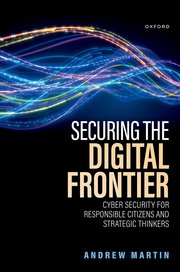
Professor Andrew Martin is a leading academic in Systems Security at the Department of Computer Science, University of Oxford, and a Governing Body Fellow at Kellogg College. His research focuses on trusted computing, cybersecurity, and secure distributed systems, with applications in cloud computing, IoT, and smart grids. He has been instrumental in advancing secure architectures using hardware-based trust mechanisms such as Intel SGX and Trusted Platform Modules. Research Interests: His work spans Systems Security , Trusted Computing , Confidential Computing , Secure Multi-Party Computation , and Privacy in Distributed Systems . He investigates how hardware-enforced security can mitigate risks in large-scale environments, particularly where privacy and trust are paramount. Publication Trends: His recent publications reveal a strong focus on Trusted Execution Environments (TEEs), remote attestation, and secure cloud architectures. He critically examines the feasibility of using hardware enclaves for both defensive and offensive security, emphasizing architectural soundness and real-world applicability. Scientific Awards: No specific awards mentioned in the provided text. Advising and Grants: Professor Martin has supervised numerous PhD and Master’s students in cybersecurity and systems research. His projects include CRANE , Trustworthy Logging , webinos , TCLOUDS , and Secure Networking by Design (SNbD) . He has secured funding for research in trusted computing and secure distributed systems, contributing to both theoretical foundations and practical implementations. Labs and Teams: He leads a research group focused on systems security and trusted computing, collaborating with industry and academic partners on large-scale security challenges. His team works on developing secure middleware, analyzing vulnerabilities in consumer devices, and designing privacy-preserving protocols for smart infrastructure.
Dr. Sabine Graf is a Full Professor at the School of Computing and Information Systems, Athabasca University. She holds a PhD in Computing and Information Systems from Vienna University of Technology (2007) and has been a faculty member since 2009. Her research focuses on user adaptive systems, learning/academic analytics, personalization, and game-based learning, with over $2.3M in external funding and 130+ peer-reviewed publications (cited 8,200+ times). She leads the OMEGA+ educational game project and the User Adaptive Systems (UAS) research cluster. Education: PhD in Computing and Information Systems, Vienna University of Technology, 2007 MSc in Computing and Information Systems, University of Vienna, 2003 Research Interests: Dr. Graf specializes in making learning systems more intelligent through adaptive interfaces, AI-driven recommendations, and data analytics. Her work bridges educational technology, artificial intelligence, and collaborative learning. Recent projects include developing OMEGA+, analyzing student behavior in online courses, and enhancing adaptive learning systems with context-aware features. Grants & Funding: NSERC Discovery Grant ($205,000), 2020 CFI John R. Evans Leaders Fund ($164,573), 2020 AU IDEA Lab Grant ($5,000), 2021 Multiple Mitacs Globalink Internships, NSERC awards, and AU-funded projects. Advising & Team: Dr. Graf has mentored over 30 students, including PhD, MSc, and postdoctoral fellows. Notable advisees include Moustafa Mahmoud (NSERC Scholar) and Mohammad Belghis-Zadeh (3MT Competition winner). The research team collaborates globally, with members from Brazil, Taiwan, Spain, and beyond. Labs & Initiatives: The Academic Analytics Tool (AAT) project and the OMEGA+ game platform are central to her work. The UAS cluster connects researchers worldwide to advance adaptive systems research.
David Daney is a Senior Researcher (Directeur de recherche) at Inria and HDR-qualified academic, currently serving as Head of Science for the Inria Center at the University of Bordeaux since July 2024. He is the team leader of the Auctus research group, focusing on robotics, cobotics, and human-robot interaction. He is affiliated with Inria and the École Nationale Supérieure de Cognitique (ENSC) at the University of Bordeaux, within the College of Engineering and the Department of Robotics. His research interests include Robotics, Cobotics, Human-Robot Interaction, Human Posture Analysis, Cable-driven Robots, Parameters Identification, Calibration, Interval Analysis, and Haptic Guidance. His work bridges theoretical robotics with industrial applications, particularly in aerospace, automotive, and sustainable agriculture. He has led and participated in numerous industrial collaborations with Airbus, Stellantis, Solvay, AKKA, and Farm3. His recent publications (2023–2025) demonstrate a strong focus on human-robot physical interaction, including real-time capacity estimation (Pycapacity), haptic guidance, model predictive control for dynamic environments, and musculoskeletal modeling for collaborative robotics. These works appear in top-tier journals such as IEEE Transactions on Robotics, Journal of Biomechanical Engineering, and Robotics and Autonomous Systems. HDR (Habilitation à Diriger des Recherches) Principal Investigator of ANR Pacbot Head of Science for Inria Center at University of Bordeaux Erdös number = 3 David Daney supervises multiple PhD students, including Alicia Barsacq, Ahmed-Manaf Dahmani, and Alexis Boulay. He has been principal investigator in several research projects such as LiChIE and ANR Pacbot, focusing on satellite production and human-robot collaboration. He also leads the SHAARE associate team with KAIST’s IRiS lab, advancing shared haptic control. His team develops tools for teleoperation, ergonomic analysis, and robot calibration, with applications in industrial and assistive robotics. He leads the Auctus team at Inria, which develops control and analysis techniques for human-robot physical interaction. The team collaborates with KAIST (SHAARE), ONERA, Pprime Institute, and industrial partners. The MOVER project studies human motor variability for ergonomics, and the Farm3 collaboration explores teleoperated vertical farming robotics.
Farshad Arvin is a Professor of Robotics in the Department of Computer Science at Durham University. Prior to this, he held academic positions at The University of Manchester (2018-2022) and worked as a Research Assistant at the University of Lincoln (2012-2015). He holds a BSc in Computer Engineering (2004), an MSc in Computer Systems Engineering (2010), and a PhD in Computer Science (2015). His research focuses on Swarm Robotics , Bio-inspired Swarms , and Autonomous Multi-agent Systems . He pioneered the Swarm & Computation Intelligence Laboratory (SwaCIL) at Durham, leading projects like H2020-FET RoboRoyale (€3.27M), Horizon Europe Sensorbees (€3.2M), and BioDiMoBot (€8M), with total funding exceeding £4M. Recent publications highlight advancements in swarm trajectory optimization (T-STAR), collision-free multi-robot coordination, and bio-hybrid environmental monitoring. His work integrates bio-inspired algorithms with practical applications in autonomous vehicles, aerial drones, and hazardous environments. Scientific Awards: Marie Skłodowska-Curie fellowship Notable Projects: EU H2020-FET RoboRoyale (2021-2026) Horizon Europe Sensorbees (2024-2029) Horizon Europe BioDiMoBot (2025-2030) H2020-FET Robocoenosis (2020-2025) Supervision: Mentors 8 postgraduate students at Durham, including Hanadi Alhamdan, Hang Wang, and Honghao Pan.
Zhe Hou is a Senior Lecturer at the School of Information and Communication Technology , Griffith University, Australia. His academic journey includes a PhD in automated reasoning for separation logic from the Australian National University (2015) and prior research roles at Nanyang Technological University, Singapore (2015-2017). He joined Griffith University in 2017 and became permanent faculty in late 2019. Research Interests : Formal methods for software verification Automated reasoning with logical frameworks Blockchain technology and security Quantum computing verification Integration of LLMs with rigorous reasoning Sports analytics via model checking Recent Publications demonstrate expertise in neural-symbolic reasoning, blockchain security, quantum SAT solvers, and runtime verification frameworks. His work combines formal logic with machine learning for applications in cybersecurity and AI trustworthiness. Scientific Awards : ACM SIGSOFT Distinguished Paper Award (2025) Supervision Roles : Principal/Associate Supervisor for 6+ doctoral projects in blockchain security, AI verification, and network security. Professional Activities : Editor for Springer-Nature and Formal Aspects of Computing special issues, conference chair for ICFEM, ICECCS, and ISACE symposia.
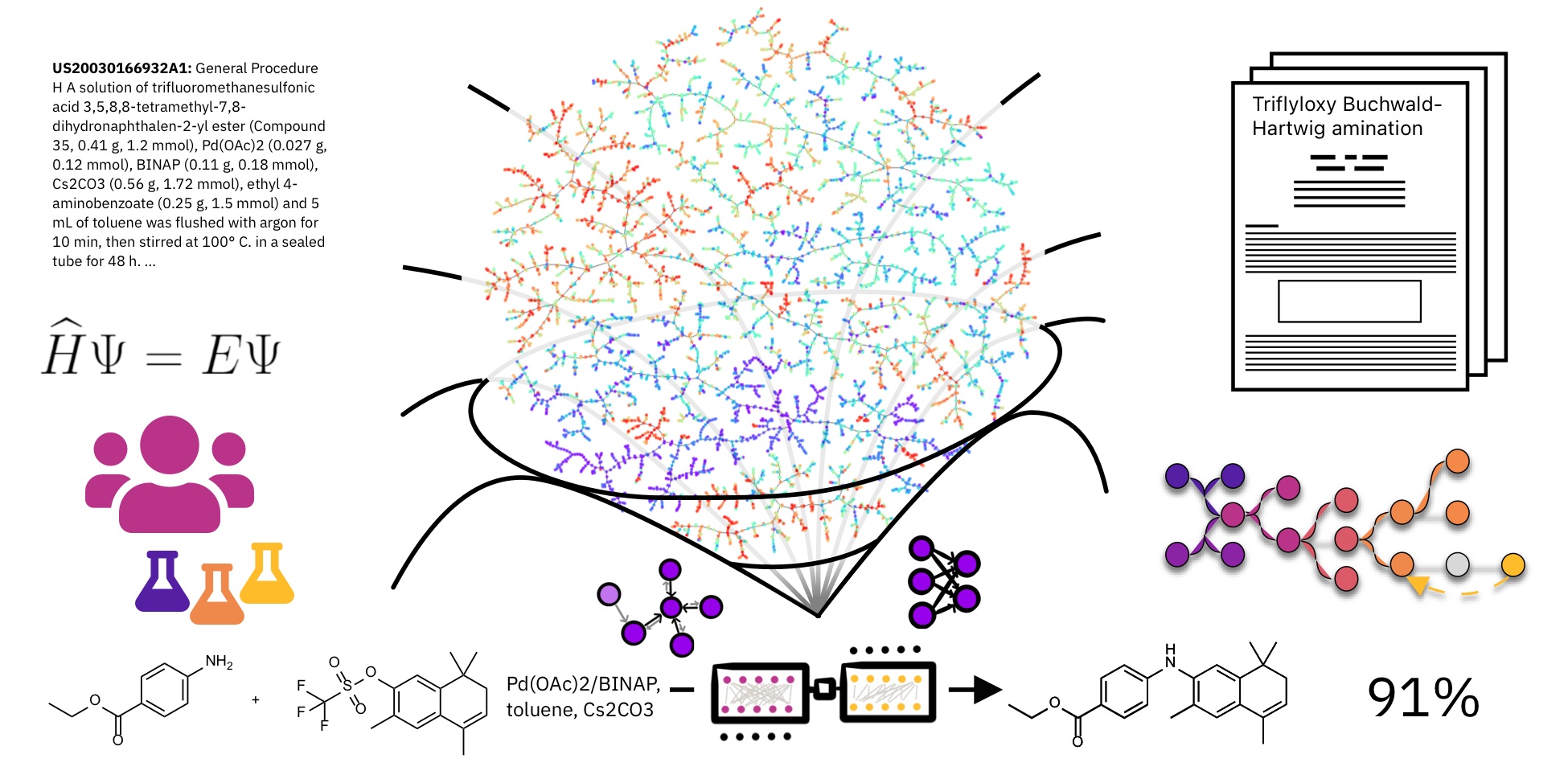
Philippe Schwaller is a Tenure Track Assistant Professor at École Polytechnique Fédérale de Lausanne (EPFL), School of Basic Sciences, within the Institute of Chemical Sciences and Engineering. He leads the Laboratory of Artificial Chemical Intelligence (LIAC), a research group focused on leveraging artificial intelligence to accelerate molecular discovery and sustainable chemistry. He is also a core Principal Investigator of the NCCR Catalysis, a national Swiss research center. His research lies at the intersection of chemistry, materials science, and computer science, with a strong emphasis on developing machine learning models for molecular design and synthesis. LIAC's work is driven by real-world sustainability challenges, aiming to reduce the time and cost of discovering new functional molecules and materials. The recent publications and projects from his lab highlight a strong trend in generative AI for chemistry, including memory-augmented models, hypergraph neural networks, and large language models tailored for scientific discovery. These efforts are complemented by educational initiatives such as the 'AI for Chemistry' course and practical programming resources for chemists. He actively supervises a diverse group of PhD students and contributes to multiple doctoral programs at EPFL, including EDCH and EDPY. His teaching portfolio includes courses on computational chemistry, AI applications in chemistry, and scientific machine learning. Philippe Schwaller is deeply involved in advancing AI-driven scientific discovery through both research and education, positioning his lab at the forefront of artificial chemical intelligence. The lab maintains active open-source contributions on GitHub, fostering collaboration and transparency in scientific AI development.
Amrita Basak serves as an Associate Professor in the Department of Mechanical Engineering within the College of Engineering at Pennsylvania State University. Her research focuses on advancing metal additive manufacturing technologies, particularly for gas turbine applications. She maintains her laboratory in 233 Reber Building at University Park, PA. Her primary research interests center on laser-based additive manufacturing processes including Laser Powder Bed Fusion (L-PBF) and Laser Directed Energy Deposition (LDED). Specific expertise spans nickel-based superalloys, melt pool dynamics, microstructure-property relationships, fatigue behavior of additively manufactured components, and AI-driven process optimization. Her work addresses critical challenges in thermal distortion control, surface roughness effects, and high-temperature performance of turbine components. Analysis of her recent publications reveals strong emphasis on integrating machine learning with experimental methods to optimize additive manufacturing processes. Key trends include Gaussian process regression for melt pool modeling, Bayesian optimization for thermal management, reinforcement learning for parameter control, and multi-fidelity modeling approaches. Her research bridges fundamental materials science with practical engineering applications in aerospace and energy sectors. Scientific Awards: NSF CAREER Award (2024) for gas turbine research DARPA Young Faculty Award (2022) for multi-laser additive manufacturing Materials Research Institute Roy Award (2023) Professor Basak actively mentors graduate students including R. Pal, N. Menon, and A. Kushwaha who appear as first authors on multiple publications. Her research is supported by significant grants including NSF CAREER funding, Office of Naval Research grants (2024), and DARPA funding. Current projects include 'On-Demand 3D Printing of Food-Grade Biopolymer-Encapsulated Ferrate(VI) for Individualized and Equitable Access to Drinking Water' and metal additive manufacturing research for gas turbine hot section components.
Ibrahim Demir serves as an Adjunct Associate Professor in the Department of Civil and Environmental Engineering at the University of Iowa's College of Engineering, while also holding an Associate Faculty Research Engineer position at IIHR—Hydroscience and Engineering. His interdisciplinary work bridges hydroinformatics, environmental engineering, and advanced computing technologies to address critical water resources challenges through innovative digital solutions. His educational background includes a PhD in Environmental Informatics and Control Program from the University of Georgia (2010), an MS in Environmental Engineering from Gebze Institute of Technology (2004), and a BS in Chemistry from Bogazici University (2000). This foundation supports his integration of chemical, environmental, and computational sciences in hydrological research. Dr. Demir's research centers on hydroinformatics and AI-driven environmental systems, with core expertise in scientific visualization, cyber systems design, and virtual/augmented reality applications. He develops web-based frameworks for flood risk assessment, drought analysis, and water quality management, emphasizing real-time data integration and user-friendly interfaces. Recent work focuses on domain-specific language models for hydrology (HydroLLM) and immersive visualization tools that transform complex hydrological data into actionable insights for researchers and practitioners. Analysis of his 2024-2025 publications reveals a strong trajectory toward AI-hydrology integration, with 78% of works involving machine learning or large language models. Key themes include flood risk communication (22% of publications), algal bloom prediction (15%), and educational technology applications (12%). His research increasingly emphasizes scientific reproducibility through no-code visual programming frameworks and digital twin implementations for watershed systems. Dr. Demir actively contributes to scholarly discourse as Associate Editor for Environmental Modeling and Software, Journal of Hydroinformatics, Journal of Environmental Informatics, and Water and Artificial Intelligence (Frontiers in Water). He serves as Vice-Chair of the International Joint Committee on Hydroinformatics (IAHR/IWA/IAHS) leadership team, shaping global standards in hydroinformatics research and practice. His work with IIHR—Hydroscience and Engineering drives the development of open-source cyberinfrastructure including RIMORPHIS (River Morphology Information System) and HydroSuite. These platforms enable collaborative river morphology research and provide modular tools for hydrological analysis, education, and operational decision support, demonstrating his commitment to accessible, community-driven scientific advancement.