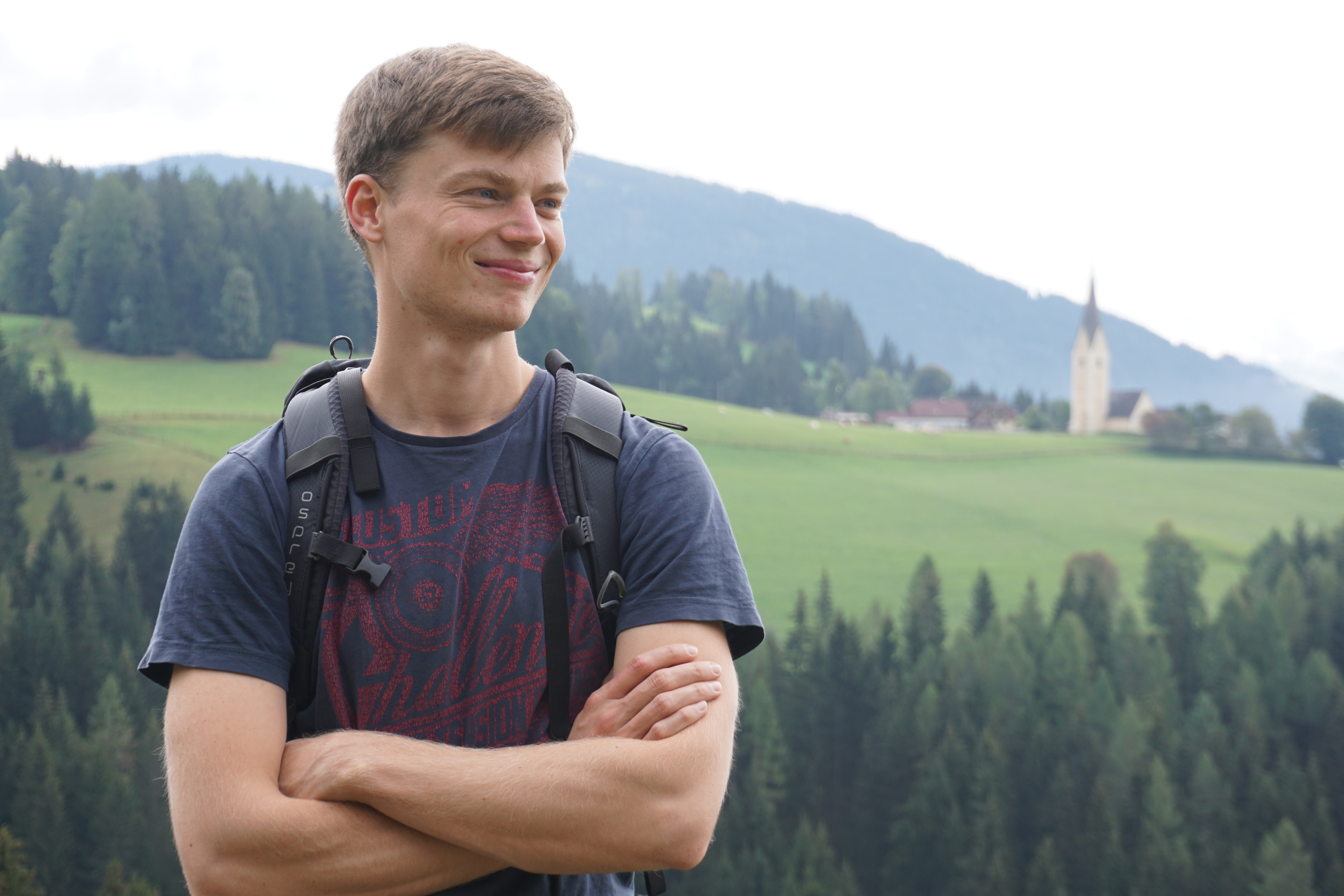
Linus Schauer is a researcher and PhD student at the Helmholtz Centre for Environmental Research - UFZ , Department of Hydrogeology , since November 2022. His work focuses on Data-driven modeling Analysis of spatiotemporal variability in water quality Tracer-aided rainfall-runoff modeling . He previously served as a Project Engineer at Bjoernsen Consulting Engineers Erfurt GmbH (Geoinformatics department) from July 2021 to September 2022. His academic background includes M.Sc. in Geoecology from University of Bayreuth (2018-2021) with thesis on catchment modeling and dissolved organic carbon export B.Sc. in Biogeoscience from Friedrich-Schiller-University Jena (2014-2017) . His research aligns with projects like AGRIO (greenhouse gas emissions in river-ocean systems), FluSeeQ (surface water thermal potentials), and INVENTWATER (climate change impact on water quality). He contributed to the 2025 Hydrological Processes publication and presented at the EGU General Assembly 2025 on space-time variance of water chemistry in river networks.
Christian Birkel is a Visiting Professor at the Department of Ecohydrology and Biogeochemistry. His work centers on isotope hydrology, ecohydrological partitioning, and drought dynamics. Key Topics: Hydrological Modeling, Biogeochemical Cycles, Climate Change Impact Recent research focuses on integrating GRACE satellite data for groundwater drought modeling, tracer-aided hydrological frameworks, and urban green space dynamics. His studies span tropical cyclones, beaver-impacted catchments, and floodplain connectivity. Collaborations include Dörthe Tetzlaff, Chris Soulsby, and teams across Europe and Latin America. Contact via email .
Dr. Jochen Wenninger is a researcher specializing in catchment hydrology, water resources assessment, and tracer-based hydrological processes. His work focuses on understanding water flux dynamics across spatial and temporal scales, with expertise in groundwater-surface water interactions, isotope tracing, and climate-driven hydrological modeling. He has conducted field studies in Europe, Africa, the Middle East, and Asia, addressing challenges in water resource management, particularly in semi-arid and mountainous regions. Dr. Wenninger teaches in the MSc Hydrology and Water Resources program and supervises graduate students, contributing to both academic training and applied research. His research integrates hydrometric, isotopic, and geophysical methods to explore complex hydrological systems such as hyporheic zones, lake dynamics, and WEFE Nexus trade-offs. Recent studies include quantifying groundwater contributions to streamflow, modeling lake level variations using global data, and analyzing runoff generation in glacier-páramo ecosystems. He has also investigated agricultural water use efficiency in semi-arid regions like the Hailiutu River catchment in China. His work emphasizes interdisciplinary approaches to address water scarcity and climate change impacts in vulnerable ecosystems. Dr. Wenninger's research spans multiple continents, with notable projects in Ethiopia, Kenya, and Rwanda focusing on water resource assessment in ungauged catchments. He has developed models to evaluate policy impacts on water availability and explored evaporation dynamics in tropical forests and afforested arid zones. His expertise in distributed temperature sensing and electrical resistivity tomography aids in mapping subsurface flow pathways, enhancing understanding of hydrological processes at the hillslope scale. Despite no explicitly listed awards, his extensive publication record reflects sustained contributions to hydrological science. His advising roles highlight mentorship in both MSc and PhD programs, fostering the next generation of hydrologists. Ongoing work includes advancing the WEFE Nexus framework for sustainable resource management and improving water balance modeling under climate change scenarios.