Vittorio Solina is a Researcher at the Department of Mechanical, Energy and Management Engineering (DIMEG) of the University of Calabria, specializing in industrial systems simulation and digital twin technologies. His work spans Industry 4.0/5.0 applications, supply chain optimization, and human-robot collaboration. Affiliation: University of Calabria Academic Role: Researcher (Legge 240/10) Research Focus: Digital twins, simulation modeling, sustainable manufacturing His research emphasizes advanced simulation tools for decision support, including applications in Industry 4.0 , Smart Manufacturing , and Agri-Food Supply Chains . Recent work explores adaptive simulation optimization for Industry 5.0 and 5G-enabled robotics. Key publication trends include: (1) Digital twin integration for supply chain resilience (2024-2025), (2) Simulation automation methodologies (2025), and (3) Human-robot collaboration frameworks (2024).
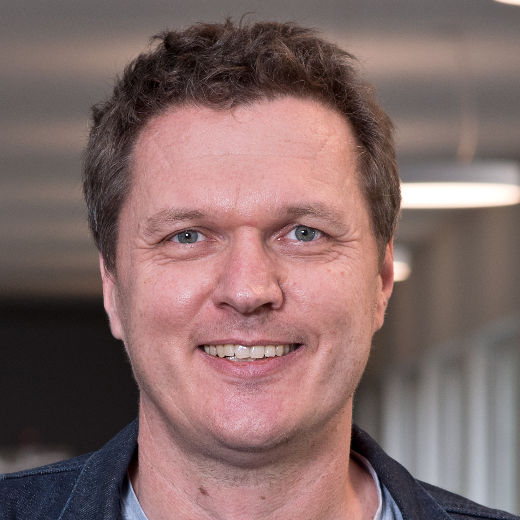
Michael Haller is a Full Professor at the Faculty of Engineering, Free University of Bozen-Bolzano, Italy, where he serves as founder and director of the Media Interaction Lab. Based at NOI Techpark, his work focuses on next-generation human-computer interfaces, leading a team of over 10 researchers and students in developing innovative interaction technologies for automotive and wearable applications. He earned his Dipl.-Ing. (1997), Dr. techn. (2001), and Habilitation (2007) degrees from Johannes Kepler University of Linz, Austria. Haller's research centers on Human-Computer Interaction with specialized expertise in Smart Textile Interfaces, Physical Prototyping, and Ubiquitous Computing. His lab pioneers user-centered design of next-generation interfaces through industry collaborations with BMW, KTM, SEFAR, and Tratter Engineering. Current work emphasizes sustainable materials for flexible sensors, touchless interaction, and reducing plastic components in automotive interfaces while maintaining ergonomic functionality. His 15 most recent publications (2023-2025) demonstrate a clear trajectory toward sustainable sensor technologies, particularly biodegradable substrates (wood, animal-based, stone, gelatin) for temperature and pressure sensing. These works bridge materials science with HCI, targeting automotive interfaces, health monitoring, and eco-fashion through textile-based solutions that prioritize environmental sustainability without sacrificing performance. His scientific accolades include: Erwin Schrödinger Fellowship Award Google Research Award Europrix Top Talent Award Best ACM SIGGRAPH Emerging Technologies Award Microsoft Imagine Cup 7 Best Paper and Honorable Mention Awards at ACM CHI and ACM UIST Haller directs major research projects including SmartCover (2024-2026) for developing smart laminated dashboards that replace plastic components with gesture-based textile interfaces, and iPlayground (2024-2026) establishing an industrial-scale smart textile lab. He mentors researchers in prototyping and empirical evaluation, with industry grants supporting the development of washable touchless fabrics and next-generation vehicle interfaces. His work bridges academic research and commercial product development through direct industry partnerships. The Media Interaction Lab operates from NOI Techpark with industrial knitting/sewing machines, confocal microscopes for surface analysis, and a collaborative Idea Space for rapid prototyping. Current infrastructure enables development of warp-knitted smart textiles for automotive consoles and sustainable fashion applications, focusing on reducing plastic waste while creating intuitive touchless interaction experiences through magnetoresistive and inductive sensing technologies.
Matteo Giovanardi serves as a Visiting Professor at the Interuniversity Department of Regional and Urban Studies and Planning (DIST) at Politecnico di Torino. He has been actively engaged as a course collaborator for architecture and urban planning programs since the 2019/20 academic year, teaching modules in Architectural Technology, Advanced Environmental Technological Design, and Environmental Technological Design across both Bachelor's and Master's degree courses. His research focuses on the intersection of sustainable architecture, digital technologies, and urban planning, with particular emphasis on: Urban climate and microclimate modeling tools for Sustainable Development Goals Internet of Things applications for building process innovation Circular economy approaches in façade and building envelope design Environmental sensing systems for healthy urban districts Urban agriculture solutions for self-sufficient cities Giovanardi's publication record demonstrates an evolving research trajectory toward integrating digital technologies with sustainable building practices. His recent work shows increasing emphasis on IoT for building traceability, circular construction methodologies, and sophisticated environmental modeling techniques that bridge architecture, environmental engineering, and urban policy. His 2023 doctoral thesis on IoT applications for building envelope design represents a significant contribution to this field. He maintains active collaborations with researchers including Riccardo Pollo (who served as his doctoral advisor), Matteo Trane, Thaleia Konstantinou, and Tillmann Klein, producing interdisciplinary work that addresses contemporary urban challenges related to climate change adaptation, resource efficiency, and healthy city development.
Barbara Bigliardi is an Associate Professor at the Department of Engineering and Architecture, University of Parma, with national scientific qualification for full professor in Economic-Management Engineering (SSD ING-IND/35). She serves as President of the Management Engineering Program at University of Parma and Director of Bachelor's/Master's programs at University of San Marino, co-leading double-degree initiatives between the two institutions. Over 100 publications (57 SCOPUS-indexed) with H-index=20 Editorial roles: Cambridge Scholars Publishing (2019), MDPI Sustainability, Sci, European Journal of Innovation Management Key research areas: Open Innovation, Technology Transfer, Food Industry Innovation, Industry 4.0, Supply Chain Sustainability Recent Publications (2024-2025) demonstrate leadership in: Industry 4.0 integration with circular economy AI applications in public administration and healthcare Digitalization of food supply chains Green startup resource orchestration Simulation-based optimization in remanufacturing Sustainable additive manufacturing Scientific Recognition : 2005 Emerald Highly Commended Award 2013 Most Cited Paper in Trends in Food Science & Technology 2019 Highly Cited Paper in Review of Policy Research Research Leadership includes: National Observatory on Start-ups (President since 2021) National Observatory on Reputation (Vice President since 2019) INAIL-funded mobile risk assessment systems (2018-2020) INAF space technology transfer projects (2018-present) Academic Contributions : Supervised over 300 theses Deputy Coordinator of Industrial Engineering Doctoral Program Director of Management Engineering Programs (Parma & San Marino) Founder of academic spin-offs: Sistemi per il marketing di contenuto S.r.l. (2016-present), Univenture SrL (2006-2010)
Alexander Kocian is an Assistant Professor at the Department of Computer Science, University of Pisa. He holds a Ph.D. in Electrical and Electronic Engineering from Aalborg University (Denmark) and a Master's in Electrical Engineering from TU Vienna (Austria). His research focuses on Machine Learning, IoT, Agro Informatics, Health Informatics, and Real-time embedded systems. He has led major projects like AGRITECH (€40M funded by PNRR) and FuorisuoloSmart, advancing smart agriculture and healthcare technologies. Dr. Kocian serves as IEEE Senior Member (since 2024) and EAI Fellow (since 2022). He is Associate Editor of IEEE Access (2025–present), and Editorial Board member of Stats (2019–present) and Signals (2020–present). He has organized conferences like the EAI Int. Conf. on Intelligent Transport Systems (INTSYS) as General Chair (2024) and Steering Committee Member (2023). His work includes 50+ peer-reviewed publications, 4 patents, and contributions to telemedicine platforms like TESHEALTH (ESA-funded). Key projects span precision farming, IoT-based greenhouses, and AI-driven healthcare solutions. Current efforts emphasize data spaces for agritech and health informatics interoperability.
Prof. MARIA ROSARIA MARCONE is a Full Professor at the Department of Management, Polytechnic University of Marche. Her research focuses on Business Economics and Management, with emphasis on supply chain resilience, innovation management, sustainability, and digital transformation in manufacturing and agritech sectors. She explores topics such as knowledge management, international SME strategies, and the role of technology in reshaping industry dynamics. Her work frequently addresses global challenges like green transformation and digital platforms' impact on creativity. Contact: mrmarcone@univpm.it or m.r.marcone@univpm.it . Research Interests: Supply Chain Management & Resilience Sustainable Business Models Innovation Ecosystems Knowledge Transfer Mechanisms Agritech & Manufacturing Digitization SME Internationalization Strategies Recent Trends in Publications: Recent work highlights the interplay between digital technologies and sustainability, with studies on green transformation in China's real estate, innovative supply chain ecosystems, and the role of third-party actors in business relationships. She also investigates how digital platforms enhance remote worker creativity through knowledge sharing. Labs/Teams: Active in interdisciplinary research groups focusing on supply chain innovation and sustainability, leveraging her university's strategic location in Marche's manufacturing districts.
Michele Gattullo serves as an Assistant Professor within the Department of Mechanics, Mathematics & Management at the Polytechnic University of Bari, Italy, specializing in design methods for industrial engineering (ING-IND/15). His research bridges cutting-edge extended reality technologies with practical industrial applications, focusing on human-centered solutions for manufacturing, maintenance, and workplace design. Dr. Gattullo's research portfolio centers on Augmented Reality, Virtual Reality, and Biophilic Design, with significant contributions to Human-Computer Interaction in industrial contexts. He investigates how nature-inspired elements in virtual workspaces enhance employee well-being and productivity, while simultaneously developing practical AR tools for assembly guidance, technical documentation, and maintenance support. His work uniquely integrates ergonomics, cognitive psychology, and industrial engineering to optimize human-technology interaction in complex production environments. Analysis of his 15 most recent publications reveals two dominant research trajectories: biophilic design frameworks for virtual/metaverse workspaces (2023-2025) and industrial AR authoring methodologies. The biophilic stream establishes evidence-based guidelines for digital nature integration, while the AR stream delivers validated tools like ADAM and minimal AR approaches that streamline technical documentation creation. Both trajectories emphasize user experience validation through rigorous industrial studies, demonstrating strong interdisciplinary impact across computer science, industrial engineering, and environmental psychology. Scientific Awards: No awards or honors were documented in the available sources. Advising and Grants: The provided materials contain no information regarding graduate student supervision, research grants, or funding sources. His academic profile emphasizes publication output over mentoring activities or project financing details. Laboratories and Teams: While Dr. Gattullo's research involves advanced XR technologies, the source text does not specify laboratory facilities, research groups, or collaborative teams associated with his work at Politecnico di Bari.
Prof. Alessandro Bertucci is an Associate Professor at the University of Parma, Department of Chemical, Life and Environmental Sustainability Sciences, specializing in Analytical Chemistry (CHIM/01). He earned his Ph.D. in Chemical Sciences through a dual Italian-French program at the University of Parma and the University of Strasbourg, receiving the "Best Scientific Thesis in France" award. Education: Master's in Chemistry (2011, University of Parma), Ph.D. in Chemical Sciences (2015, University of Parma/Strasbourg) Postdoctoral Experience: University of Rome Tor Vergata (2015-2016), Sanford Burnham Prebys Medical Institute (2016), University of Melbourne (2016), UC San Diego (2017-2020) His research integrates molecular recognition with synthetic design for biomolecular systems programming , focusing on nanoscale diagnostics and precision medicine . Key methodologies include DNA nanotechnology, electrochemical biosensing, and responsive nanomaterials. Recent publications highlight CRISPR-based diagnostics and low-cost spectrophotometric platforms . His work has been recognized with the Galileo Galilei International Prize (2021) and ISSNAF Young Investigator Finalist (2018). Scientific Awards: Galileo Galilei Prize (2021), ISSNAF Finalist (2018) Fellowships: Marie Skłodowska-Curie Global Fellowship (2017), Endeavour Research Fellowship (2016), Umberto Veronesi Fellowship (2020) He teaches Bioanalytical Methods (Master's in Genomic, Molecular and Industrial Biotechnology) and Analytical Chemistry for Materials (Bachelor's in Materials Science), with extensive experience in course coordination and curriculum development.
Angelo Corallo is an Associate Professor at the Department of Experimental Medicine, University of Salento, specializing in technologies and methodologies for collaborative processes in industrial systems. His research spans Digital Business Ecosystems , Cybersecurity , and Collaborative Product Design , focusing on the interplay between technology and organizational dynamics. He leads interdisciplinary research divisions in Open Networked Business Management , Learning and Innovation , and Collaborative Product Design . Research Interests : Corallo's work integrates Information and Communication Technologies (ICT) with Business Management, particularly in Digital Twins for healthcare and manufacturing Knowledge Modeling and Ontology Engineering Industry 4.0 and Smart Manufacturing Agri-Food Sustainability through digitalization Scientific Contributions : His recent articles explore trends in Cybersecurity for Industrial IoT Metaverse Applications in business models Traceability Systems in food supply chains Collagen-Based Biomaterials from aquaponics
Marco Milazzo is a Full Professor in the Department of Earth and Marine Sciences at the University of Palermo (Unipa), Italy. His research focuses on marine ecosystems, particularly in the Mediterranean Sea, with expertise in ocean acidification, climate change impacts, and marine conservation. He maintains regular office hours on Tuesdays from 10:00 to 11:00 at Via Archirafi 20, 4th floor. Professor Milazzo's research interests center on marine ecology and the impacts of climate change on Mediterranean ecosystems. His work extensively examines ocean acidification through natural analogues like volcanic CO2 seeps, which serve as laboratories for understanding future ocean conditions. He investigates how changing environmental conditions affect marine biodiversity, community structure, and ecosystem functioning. His research spans across multiple disciplines including marine protected areas effectiveness, fisheries management, invasive species dynamics, and biogenic habitat conservation. Notably, he has conducted significant research on vermetid reefs, which are threatened biogenic formations in the Mediterranean Sea. Analysis of Professor Milazzo's recent publications reveals a strong focus on climate change impacts, particularly ocean acidification and warming effects on marine organisms and ecosystems. His work increasingly incorporates interdisciplinary approaches, combining ecological studies with social science perspectives, especially regarding small-scale fisheries and marine protected area governance. A significant portion of his research utilizes natural CO2 seeps as experimental sites to study long-term effects of acidification. His publication record shows consistent productivity with over 100 publications spanning two decades, demonstrating sustained research activity and evolving interests that now include technological approaches for marine monitoring and conservation planning. Professor Milazzo has contributed to numerous research projects examining Mediterranean marine ecosystems under changing environmental conditions. His work on marine protected areas has provided valuable insights into their effectiveness for conservation and fisheries management. He has been involved in international collaborations studying natural analogues of future ocean conditions, particularly through volcanic CO2 seeps which serve as natural laboratories for climate change research. His research has important implications for marine conservation policy and management strategies in the face of global environmental change.
Umberto Garlando is a Fixed-Term Assistant Professor and Researcher at the Department of Electronics and Telecommunications (DET) of Politecnico di Torino (PoliTO) . He is also a member of the Interdepartmental Center PIC4SeR (PoliTO Interdepartmental Centre for Service Robotics). His academic role focuses on integrating electronics with agritech applications. Current positions: Fixed-Term Assistant Professor (Law 240/10 art.24-a) Department: Electronics and Telecommunications (DET) Research centers: PIC4SeR Garlando's research spans Electrical and Electronic Engineering , Smart Electronic Systems , and Sustainable Agriculture . He specializes in Agritech applications, including sensor systems for plant health monitoring , smart irrigation systems , and tracking systems for the food chain . His work also explores Nanocomputing , particularly CAD tools for emerging technologies . Recent publications highlight his contributions to low-power integrated circuits for agricultural monitoring, IoT-based water stress detection , and energy-autonomous sensor systems for plant impedance analysis. These works reflect his focus on precision agriculture and sustainable farming technologies . Garlando currently supervises PhD students Vincenzo Giannone and Luca Rolle in Electrical, Electronics, and Communications Engineering . His teaching responsibilities include Embedded Systems Integration and Sensors and Data Transmission/IoT for Agriculture at both Electronic Engineering and Agritech Engineering programs.
Riccardo Pollo is an Associate Professor at the Interuniversity Department of Territorial Sciences, Planning and Policies (DIST) of the Polytechnic University of Turin. He serves as Scientific Manager for multiple research projects and is a member of the Future Urban Legacy Lab. Research Interests: Healthy City, Urban Metabolism, Sustainable Architecture, Environmental Design ERC Sectors: PE8_3 (Civil Engineering & Architecture), PE8_11 (Sustainable Design), SH2_9 (Urban Studies) SDGs: Goal 11 (Sustainable Cities), Goal 12 (Responsible Consumption) Scientific Awards: 2004: Award from Sustainable Building Conference Board (Poland) 2014–2017: Fellow, SITDA Italian Society of Architectural Technology 2017–2020: Fellow, SITDA Recent Publications focus on urban climate modeling, IoT applications in building technology, and modular approaches to community healthcare facilities, aligning with his expertise in sustainable urban transitions and architectural technology. Teaching includes courses on Healthy and Connected Built Environment, Design for Adaptive Innovation, and Final Design Studio D. He supervises PhD students in Urban and Regional Development. Research Networks: TECHNE Journal Editorial Board (2014–2017) TECHNE Journal Assistant Editor (2017–2020) Coordinator of TESIS Interuniversity Research Center (2017–2030)
Salvatore Rampone is an Associate Professor at the Department of Law, Economics, Management and Quantitative Methods (DEMM) of Università degli Studi del Sannio (Unisannio). His research focuses on Machine Learning , Internet of Things (IoT) , and Cybersecurity , with applications in intrusion detection, bioinformatics, and financial systems. Research Interests : Privacy-preserving Machine Learning Hybrid Cloud-IoT Architectures Genetic Programming Neural Network Applications Data Processing in Distributed Environments Recent Publication Trends : His work spans federated learning for IoT security ( 2025 ), DNA splicing site prediction ( 2020 ), meningitis classification ( 2019 ), RFID-based traceability systems ( 2015 ), and geological data analysis using neural networks ( 1995-1996 ). Key technologies include Apache Spark , MLlib , and Wavelet Transform . Teaching Activities : He teaches courses like Applied Machine Learning and Principles of Computer Sciences across multiple degree programs including Statistical and Actuarial Sciences and Economics and Management .
Andrea Tuni serves as an Associate Professor at Politecnico di Torino, Italy, within the Department of Management and Production Engineering (DIGEP), specializing in the scientific disciplinary sector IIND-05/A - Mechanical Industrial Systems (Area 0009 - Industrial and Information Engineering). His academic career includes previous research positions at the University of Strathclyde from 2018-2022. Dr. Tuni's research program centers on circular and sustainable supply chain management, employing both qualitative and quantitative methodologies to address complex sustainability challenges across multiple industries. His work spans circular business models, supply chain design, reverse logistics, performance measurement systems, textile supply chains, and food distribution logistics, with particular expertise in assessing social and environmental sustainability across multi-tier supply chains. He has developed specialized knowledge in applications for smallholder farmers in developing countries and textile industry sustainability. His publication portfolio demonstrates consistent scholarly output with a clear thematic focus on circular economy applications. Recent research examines digital product passports in textile supply chains, risk assessment in circular business models, social sustainability assessment methodologies, circular economy applications in renewable energy sectors, and eco-intensity based environmental assessment methods. His work frequently appears in high-impact journals including Journal of Cleaner Production, Business Strategy and the Environment, and Waste Management. EURO Prize for OR for the Common Good (2022) from EURO - The Association of European Operational Research Societies Dr. Tuni maintains an active teaching portfolio across multiple academic levels at Politecnico di Torino, supervising PhD candidate Stefano Richeri whose research focuses on social and sustainable procurement practices. His research intersects with multiple UN Sustainable Development Goals, particularly Goals 1 (No Poverty), 2 (Zero Hunger), 9 (Industry Innovation), 10 (Reduced Inequalities), and 12 (Responsible Consumption).
Alfredo Benso is a Full Professor in the Department of Control and Computer Science (DAUIN) at the Polytechnic University of Turin, where he is also a member of the Interdepartmental Center PolitoBIOMed Lab - Biomedical Engineering Lab. He has been continuously involved in the Doctoral College for Computer and Systems Engineering since 2008, guiding PhD education across numerous cycles. His academic roles span teaching and research leadership in bioinformatics, systems biology, and computer engineering. Research interests: Bioinformatics and computational biology Systems biology and gene regulatory networks Artificial intelligence and machine learning in biomedicine Molecular modeling and multiscale simulation Biological database systems and data integration Health informatics and public health modeling His recent publications reflect a strong trend in applying AI and machine learning to biological and medical challenges, including protein function prediction, Alzheimer’s and Multiple Sclerosis modeling, food fraud detection, and viral genome analysis. These works span journals and conferences in bioinformatics, computational biology, and biomedical engineering, demonstrating interdisciplinary innovation. Scientific Awards: BIOINFORMATICS 2014 BEST PAPER AWARD (INSTICC, United Kingdom) Advising and Grants: He supervises PhD students, including Sofia Ostellino, and leads major research initiatives such as the BIGMECH (2023–2025) and FISHUB (2016–2018) projects. He has served as Scientific Director for collaborative agreements with public administrations and as Principal Investigator on EU, national (PRIN), and regional research grants focused on bioinformatics, space systems, and reliable digital technologies. Labs and Teams: He is a key member of the SBG - System Biology Group (DAUIN) and contributes to PolitoBIOMed Lab, fostering collaborative research in biomedical engineering and computational biology.