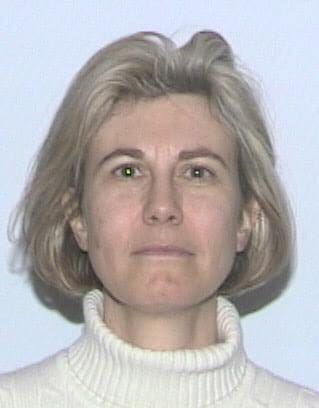
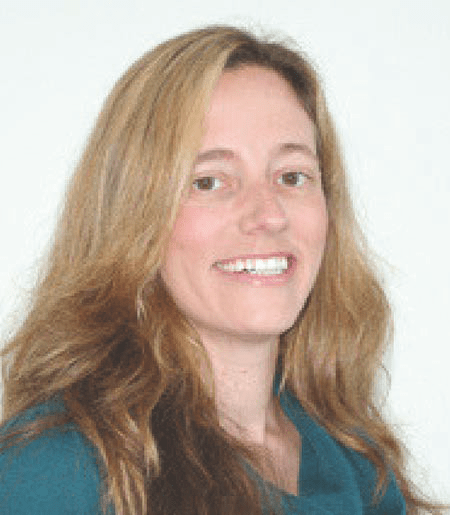
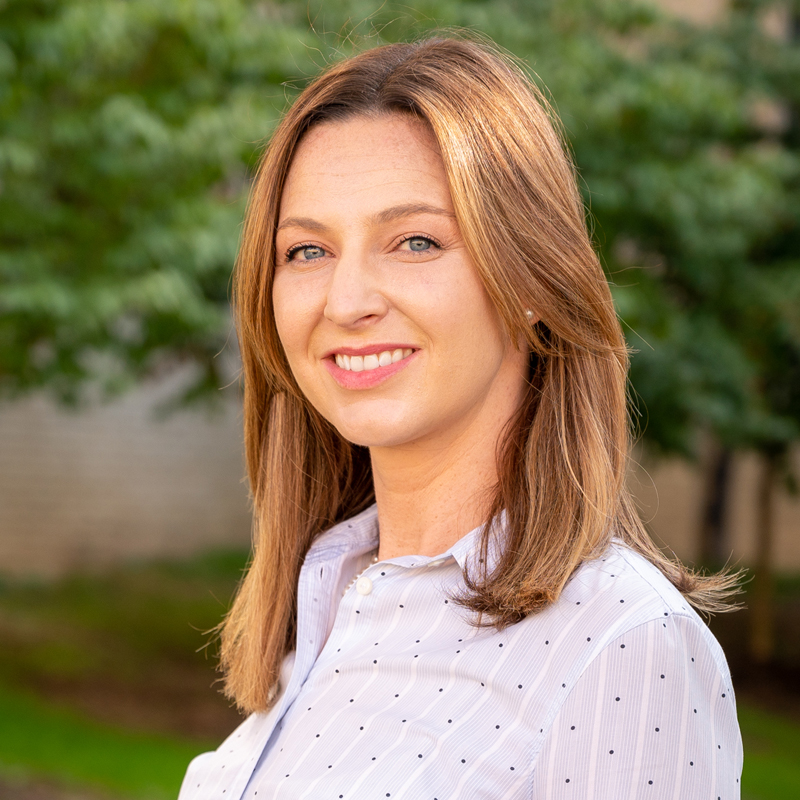
Sug Woo Shin is a Professor of Mathematics at the University of California, Berkeley ( Math Genealogy , MathSciNet Profile ). His research focuses on Number Theory and Automorphic Forms, with significant contributions to the Langlands Program, Shimura varieties, and cohomology of arithmetic spaces. Editorial roles: Astérisque , Manuscripta Mathematica , Journal of the Korean Mathematical Society Recent research explores cohomological properties of locally symmetric spaces, tempered A-packets for classical groups, and modularity of symplectic Galois representations Collaborators include Ana Caraiani, Mark Kisin, Arno Kret, and Peter Scholze He has supervised PhD theses on topics like affine Deligne-Lusztig varieties, specialization maps in Scholze's category of diamonds, and statistical properties of automorphic representations. Teaching includes graduate courses on Number Theory (254A/254B), undergraduate Linear Algebra (110), and Calculus (1A), as well as seminars on global Langlands reciprocity and p-adic cohomology theories. Co-organized conferences include the BIRS workshop on Langlands programs (2025), PRIMA algebraic number theory sessions (2022), and KAST Symposium on automorphic forms (2021). His work appears in journals like Annals of Mathematics, Duke Mathematical Journal, and Compositio Mathematica.
Tasho Kaletha is a Professor in the Department of Mathematics at the University of Michigan. His research focuses on the Langlands program, intersecting number theory, representation theory, algebraic geometry, and analysis. He holds a Ph.D. from the University of Chicago (2010). Key research interests include representation theory of reductive groups, harmonic analysis, Galois cohomology, and automorphic representations. Education: Ph.D., University of Chicago (2010). Research interests revolve around the Langlands conjectures, endoscopy, and the structure of reductive groups. His work addresses representation theory of real/p-adic groups, cohomology of Galois groups, and automorphic spectra. Recent publications explore Bruhat-Tits theory, discrete series L-packets, and global rigid inner forms. He has authored a monograph with Gopal Prasad and contributed to foundational papers in Duke Mathematical Journal and Inventiones Mathematicae . Notable contributions include studies on supercuspidal L-packets, endoscopic classification, and commensurability growth in algebraic groups. His work bridges abstract algebraic structures with analytic techniques, advancing the Langlands program's goals.
Caterina Consani is a Professor of Mathematics at Johns Hopkins University's Krieger School of Arts & Sciences. She holds a PhD from the University of Chicago (1996) and a Dottore di Ricerca in Matematica from the Universities of Genoa and Turin (1993). Her research focuses on arithmetic geometry, non-commutative geometry, and the development of absolute geometry over the 'absolute point.' She has contributed to foundational work on the BC-system, the Arithmetic Site, and the Scaling Site, linking number theory with geometric frameworks. Education: PhD in Mathematics, University of Chicago (1996); Dottore di Ricerca in Matematica, Universities of Genoa & Turin (1993). Prior to Johns Hopkins, she taught at MIT (1996–1999) and the University of Toronto (1999–2005). Research Interests: Arithmetic geometry, non-commutative geometry, absolute geometry in characteristic one, connections to number theory and the Riemann Hypothesis. Collaborations include work with Alain Connes on adele class spaces and non-commutative algebraic geometry. Awards: Fellow of the American Mathematical Society (2024); 2025 Best Paper AOFA Award (Annals of Functional Analysis). Editorial roles include the Journal of Number Theory and Journal of Noncommutative Geometry. Teaching: Offers advanced courses in algebraic geometry and number theory, including topics like étale cohomology and the yoga of weights in 'Weil II.' Grants: Supported by the Simons Foundation. Organized major conferences such as the JAMI Conference on Riemann-Roch in Characteristic One (2019).
Peter Selinger is a Professor in the Department of Mathematics and Statistics at Dalhousie University , with a cross-appointment in Computer Science. He specializes in mathematical methods in computer science, particularly quantum computing and combinatorial game theory . His work on quantum programming languages like Quipper and foundational research in category theory has garnered international recognition. Education : Ph.D. in Mathematics (University of Pennsylvania, 1997), undergraduate studies in Mathematics (Technische Universität Darmstadt). Research Interests span quantum computing, category theory, and combinatorial game theory. He has pioneered formalisms for quantum programming languages, developed categorical models for quantum mechanics, and analyzed game-theoretic structures in games like Hex. His recent work includes linear dependent type theory , quantum circuit synthesis , and combinatorial game classification . Publications demonstrate expertise in quantum programming languages, categorical semantics, and game theory. Key trends include Hamiltonian simulation , Clifford+T circuits , and monotone game realization . Scientific Honors include the Killam Professorship (2017–2022), Faculty of Science Award for Excellence in Teaching (2023), and fellowships from the Alfred P. Sloan Foundation and German National Scholarship Foundation . Students he has supervised include PhD graduates Xiaoning Bian , Francisco Rios , and Neil J. Ross , along with MSc students like Fahimeh Bayeh and Seth Greylyn . He has advised 16 postdoctoral researchers.
Professor Francis Butler is a Full Professor at University College Dublin's School of Biosystems and Food Engineering, where he has been since 1990. His academic roles include research leadership in food safety, food chain integrity, and microbial risk assessment. He leads the UCD Institute for Food and Health and the UCD Centre for Food Safety as a Principal Investigator. Education: BE, Grad Dip University Teaching & Learning, MBA, and PhD from University College Dublin. Research Focus: His work centers on food safety hazards, quantitative risk assessment, and next-generation sequencing for pathogen identification. Recent projects include Listeria monocytogenes growth modeling, norovirus in oysters, and hepatitis E in pork products. He has secured over €6 million in research grants, including EU-funded projects like FOODINTEGRITY and SIGMACHAIN. Awards & Recognition: European Food Safety Authority Fellowship, Marie Sklodowska-Curie Fellowship, and UCD Teaching Grant. He coordinates international educational programs, including the UCD MSC Food Safety and Risk Analysis. Professional Activities: Member of EFSA advisory committees, editorial boards (e.g., Microbial Risk Analysis ), and international conference chairs. His work bridges academia, industry, and policy to enhance food safety standards globally.
Maria Fitzpatrick is Professor in Cornell University's Department of Policy Analysis and Management and Director of the Cornell Institute for Public Affairs. A Research Associate at the National Bureau of Economic Research, she holds a Ph.D. from the University of Virginia (2008) and specializes in child/family policy and education economics. Research examines early childhood education impacts, teacher compensation and retirement systems, child maltreatment reporting, and incarceration effects on families. Notable studies analyze universal pre-kindergarten programs, teacher pension reforms, and maternal incarceration's impact on birth outcomes. Current projects investigate child welfare decision-making algorithms and prison visitation policies. Fellowships include the Henry Luce Foundation/ACLS Early Career Fellowship and postdoctoral positions at Stanford's Institute for Economic Policy Research. She has advised government agencies including the Australian Prudential Regulation Authority and Queensland Rail.
Raphaël Beuzart-Plessis is a CNRS Research Fellow affiliated with Aix-Marseille University and the Institute of Mathematics of Marseille (I2M) at Luminy Campus. He specializes in advanced areas of mathematics, including harmonic analysis, automorphic forms, representation theory, and number theory, with a focus on unitary groups and conjectures like Gan-Gross-Prasad. His work bridges algebraic geometry, differential geometry, and operator theory. Arithmetic, Geometry, Logic and Representations Group (AGLR) 2022-2027 ERC RELANTRA grant recipient Research interests span automorphic representations, L-functions, periods of automorphic forms, and harmonic analysis on real spherical spaces. He works extensively on the local and global Gan-Gross-Prasad conjectures, endoscopy, and supercuspidal representations. His recent publications analyze Plancher1el formulas, spherical characters, and congruences of automorphic forms. His 15 most recent publications (2014-2022) address topics such as the Gan-Gross-Prasad conjecture, Jacquet-Rallis's fundamental lemma, and the Asai Rankin-Selberg integrals. These works reflect his expertise in automorphic forms, representation theory, and number theory, often involving collaborations with leading mathematicians. 2016-2017 Peccot Prize for young mathematicians under 30 2022-2027 ERC RELANTRA grant for research in automorphic forms and representation theory Beuzart-Plessis has no listed students or laboratory teams but participates in the AGLR-RGR (Reduction Group Representations) team and has been an invited speaker at the 2022 International Congress of Mathematicians. His career includes guest lectures at Collège de France, including four sessions on Period factorizations and Plancherel formulas in 2017.
Professor Tim Dokchitser is the Heilbronn Chair in Algebraic/Arithmetic Geometry at the School of Mathematics, University of Bristol. His research focuses on algebraic number theory, elliptic curves, arithmetic of L-functions, Galois theory, and computational algebra. He actively explores connections between number theory and finite groups, using computer experiments to advance conjectures like the Birch-Swinnerton-Dyer Conjecture. BSc, Lund University MSc, Lund University PhD, University of Utrecht MA, University of Cambridge His research spans hyperelliptic curves over local fields, Weil representations, tame Galois torsion, and finite group character formulas. Recent work includes computational approaches to Frobenius traces and étale cohomology in hyperelliptic curve quotients. Articles (2023-2025) highlight advancements in arithmetic geometry, zero-knowledge cryptography, and Galois representation theory. Scientific awards include a University Research Fellowship (2011-2014) for elliptic curves and L-functions. He leads projects like the 2015-2018 study on hyperelliptic curves and contributes to collaborations across arithmetic geometry. His computational methods have inspired conjectures in motivic cohomology and modular deformations.
Michael Anshelevich is a Professor of Mathematics at Texas A&M University, affiliated with the College of Arts & Sciences. His research focuses on Functional Analysis, Operator Theory, and Free Probability, with contributions to non-commutative stochastic processes, orthogonal polynomials, and operator-valued distributions. He holds a Ph.D. from the University of California, Berkeley (2000) and a B.S. from the California Institute of Technology (1994). His work bridges combinatorial methods with advanced probability theory, addressing topics like free Lévy processes and free convolution powers. Research interests span non-commutative probability frameworks, including free stochastic measures, Fock space representations, and applications of combinatorial structures to stochastic calculus. Recent articles explore exponential products in operator algebras, Hermite polynomials in Brownian motion contexts, and depth-two actions in Fock spaces. His contributions to free probability include extending classical limit theorems to non-commutative settings and analyzing multiplicative free convolutions. Publications highlight interdisciplinary connections between functional analysis and stochastic processes, with a focus on operator-valued distributions and Jacobi parameters. While no specific awards are listed, his extensive bibliography reflects sustained impact in mathematical physics and operator theory. Advising and grants sections remain unspecified, though his research often involves collaborative projects in stochastic analysis and free probability.
Mahdi Asgari is an Associate Professor in the Department of Mathematics at Oklahoma State University. He specializes in Automorphic Forms , Number Theory , and Representation Theory , with a focus on L-functions, local Langlands conjectures, and functoriality for classical and spin groups. PhD in Mathematics from Purdue University (2000) Active in organizing the Texas-Oklahoma Representations and Automorphic Forms (TORA) conference series since 2012 His recent research involves Rankin-Selberg L-functions, combinatorics of Arthur trace formulas, and toric varieties. He has collaborated with prominent mathematicians like Freydoon Shahidi, Ralf Schmidt, and James W. Cogdell. Mahdi Asgari has taught a wide range of courses at Oklahoma State University, including advanced linear algebra, combinatorics, calculus, and specialized topics like automorphic forms on GL(n) and spectral theory of automorphic forms.
Ken Ono is the STEM Advisor to the Provost and the Marvin Rosenblum Professor of Mathematics at the University of Virginia. He also holds courtesy appointments as Professor of Electrical and Computer Engineering, Professor of Data Science, and Professor of Statistics. Additionally, he is a Fellow of the Shannon Center for Advanced Studies and serves on the Institute for Advanced Study board of trustees and the National Security Agency Advisory Board. His educational background includes a Ph.D. in Mathematics from UCLA (1993) and a B.A. in Mathematics from the University of Chicago (1989). Throughout his distinguished career, Ono has held leadership roles including Vice President of the American Mathematical Society, Chair of the Mathematics Section of the American Association for the Advancement of Science, and Chairman of the Department of Mathematics at UVa. Ken Ono specializes in Number Theory, Combinatorics, Algebra, and Arithmetic Geometry, with recent work expanding into sports analytics and swimming optimization. His research has produced numerous publications on partition theory, modular forms, and related areas, continuing the mathematical legacy of Srinivasa Ramanujan. His recent publications demonstrate a continued focus on partition theory, modular forms, and their connections to prime numbers and combinatorial structures. The work shows sophisticated connections between classical number theory and modern mathematical physics, with applications in cryptography and data science. Guggenheim Fellowship David and Lucile Packard Fellowship Alfred P. Sloan Foundation Fellowship NSF CAREER Award Presidential Early Career Award (2000) National Science Foundation Director's Distinguished Teaching Scholar (2005) University of Chicago Alumni Medal for Professional Achievement (2023) Fellow of the American Mathematical Society Ono has advised 34 PhD students and 17 postdocs, mentoring numerous award winners including 2 Breakthrough Mirzakhani Prize winners, 9 Morgan Prize winners, and 9 Schafer Prize winners. He founded and directs the Spirit of Ramanujan Global STEM Talent Search, which has awarded 125 budding scientists from 23 countries. His research grants have supported extensive REU programs, with continuous undergraduate research opportunities for 25 years. Beyond academia, Ono serves as a technical consultant for elite swimmers, has worked as an Associate Producer on the film The Man Who Knew Infinity , and is actively involved with the Infinity Arts Foundation. His interdisciplinary work spans from pure mathematics to practical applications in sports science, where he has developed data-driven approaches to optimize swimming performance and served as a consultant for Olympic medalists. He co-founded the Velocity Swim Camp with Olympic coach Todd DeSorbo, combining mathematical analytics with elite swimming training.
Robin Neumayer is an Assistant Professor in the Department of Mathematical Sciences at Carnegie Mellon University. Her research focuses on the intersection of calculus of variations, partial differential equations (PDE), and geometric analysis, with a particular emphasis on stability and regularity in geometric inequalities. Education: Ph.D. in Mathematics, University of Texas at Austin, supervised by Alessio Figalli and Francesco Maggi. Her work explores problems related to Sobolev inequalities, isoperimetric problems, scalar curvature, and free boundary phenomena. Recent publications highlight collaborations with leading researchers and address topics such as quantitative stability, anisotropic geometries, and nonlinear PDE. Scientific Awards and Fellowships: NSF Grant DMS-2155054 (2022-2025) RTG Postdoctoral Fellow at Northwestern University (2017-18, 2019-21) Institute for Advanced Study member (2018-19) She teaches courses such as Introduction to Differential Equations and maintains active research collaborations with institutions like the Center for Nonlinear Analysis.
Fangzhou Jin is an Assistant Professor at the School of Mathematical Sciences, Tongji University. His research focuses on advanced topics in Algebraic Geometry , particularly in Motivic Homotopy Theory , Algebraic K-theory , and Real Algebraic Geometry . He has extensive experience in collaborative mathematical research, having worked with prominent mathematicians such as Frédéric Déglise, Enlin Yang, and Marc Levine. Education : Ph.D. in Mathematics (2016, École Normale Supérieure de Lyon), M.Sc. in Pure Mathematics (2012, Université Paris-Diderot), Diploma of ENS (2013) His work bridges Algebraic Cycles with Étale Cohomology , exploring Weight Structures in mixed motives and Chern Classes in motivic contexts. Jin has contributed to the theory of Trace Maps and Local Terms in motivic homotopy, as well as the study of Flat Cohomology and Real Schemes . Key trends in his publications include: 2025: Cohomology of singular varieties via real cycle class maps 2024: Trace maps and local terms in motivic homotopy 2023: Moving lemmas in homotopy colevel theory 2022: Quadratic conductors, perverse homotopy, and pro-Chern classes 2021: Rational motivic homotopy and Künneth formulas 2020: Gersten complexes and real flat cohomology 2018: Algebraic G-theory in motivic categories 2016: Borel-Moore homology and weight structures Scientific Awards & Grants : Fundamental Research Funds for Central Universities (2021-2025) National Natural Science Foundation of China Grants 12101455 (2022-2024), 12471014 (2025-2028) National Key R&D Program of China 2021YFA1001400 (2022-2026) DFG Priority Programme SPP 1786 & ERC Project QUADAG (2018-2020) Advising & Teaching : Jin has supervised exercise classes and seminars at multiple institutions, including Universität Duisburg-Essen and Tongji University. His teaching spans Algebraic Topology , Étale Cohomology , and Algebraic Geometry . Labs & Collaborations : Active in international collaborations, he is a key member of the Algebraic Geometry and Ramification Seminar at Tongji University and has participated in DFG Research Training Group 2553 during his postdoctoral period.
Dr. Ruth E Gornet is an Associate Professor in the Department of Mathematics at the University of Texas at Arlington. She holds a PhD from Washington University and specializes in spectral geometry, differential geometry, and topology. Her research focuses on isospectral manifolds, nilmanifolds, and the application of spectral theory to geometric problems. She has received multiple teaching awards, including the Outstanding Honors College Faculty Award and Professor of the Year honors from the MAA undergraduate program. Her research interests include: Spectral geometry and isospectrality Differential geometry of nilmanifolds Length spectrum analysis Mathematical education and curriculum development Dr. Gornet's publications predominantly explore spectral invariants in Riemannian geometry, with recent work focusing on magnetic geodesics and eta invariants. Her articles demonstrate consistent engagement with high-dimensional topology and computational spectral methods. She has received significant recognition for her work: Alumni Hall of Honor (2023, 2019) Teaching Recognition by FLOC (2019, 2012) Outstanding Honors College Faculty Award (2017) Professor of the Year (2015, 2013) Dr. Gornet actively mentors graduate students, chairing dissertation committees and supervising PhD candidates in spectral geometry. She has secured multiple NSF grants for undergraduate education enhancement, including SURGE and GAANN fellowships, totaling over $4M in funding.
Thomas J. Haines is a Professor in the Department of Mathematics at the University of Maryland, College Park. His academic work centers on advanced topics in number theory and algebraic geometry, with significant contributions to the Langlands program and related fields. He maintains an active research profile with recent publications spanning geometric representation theory and arithmetic geometry. Research Focus: His primary interests include Shimura varieties, flag varieties and Grassmannians for groups and loop groups, representations of p-adic groups, and the Langlands program. These areas intersect with cutting-edge developments in arithmetic geometry and automorphic forms, particularly in the context of local models and geometric Satake theory. The analysis of his recent publications reveals a strong emphasis on geometric structures underlying number-theoretic objects. Key themes include the study of singularities in local models, normality properties of Schubert varieties, and combinatorial models for representation-theoretic constructions. His work frequently bridges abstract algebraic geometry with concrete arithmetic applications. Teaching Responsibilities: Currently instructing Math 406 (Introduction to Number Theory) and Math 636 (Representation Theory) for Fall 2024. His course materials extend to graduate-level topics including commutative algebra and Hecke algebras, reflecting his research expertise. Haines collaborates extensively with leading mathematicians including Timo Richarz, Joao Lourenco, and Ulrich Goertz. His editorial work includes co-editing the 2020 Cambridge University Press volume Shimura Varieties in the London Mathematical Society Lecture Note Series. While no explicit student lists or award mentions appear in available records, his sustained publication record since the early 2000s demonstrates significant scholarly impact.