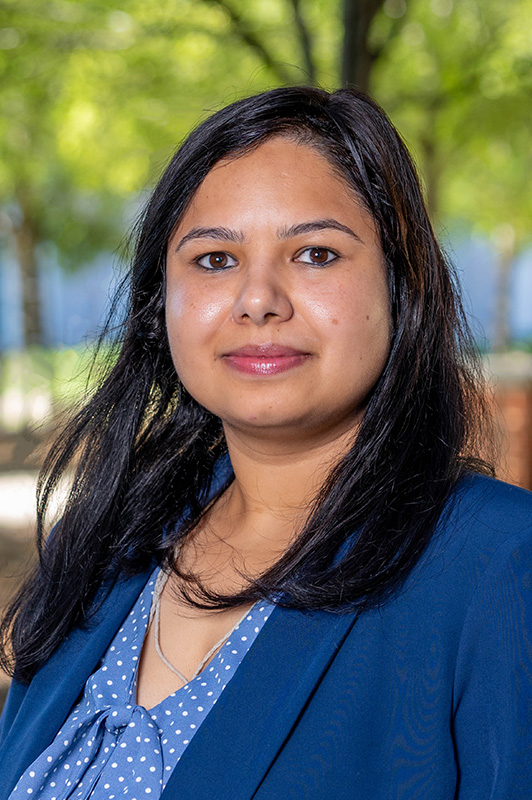
Neha Sharma is an Assistant Professor in the Department of Civil and Environmental Engineering at Auburn University. Her research focuses on nutrient recovery, electrochemical resource recovery, water reuse, trace metal cycling, and pollutant fate and removal.
George Perry is a Professor of Anthropology at Pennsylvania State University, with research intersections in Biology, Evolutionary Medicine, and Genomics. He is affiliated with the Huck Institutes' Center for Infectious Disease Dynamics, Ecology, Molecular Cellular and Integrative Biosciences, and Bioinformatics and Genomics programs. Perry directs the Anthropological Genomics Lab , focusing on paleogenomics and evolutionary adaptation. Research areas: anthropological genomics, parasite evolution, human body size transitions, and evolutionary medicine Key collaborations: international teams in Madagascar, Europe, and Africa Leadership: Bioinformatics and Genomics Chair (2019–2023) His 2025–2022 publications span evolutionary responses to invasive species, human migration health impacts, chemosensory gene adaptation, and primate genomic diversity. Notable methodological contributions include ancient DNA recovery and comparative paleogenomics. Perry advises graduate students like Vanessa Garcia and Annette Mercedes, with grants including NIH support for Cuban health disparity studies. Scientific leadership includes tenure-line promotions (2023) and NASA Space Grant collaborations.
Dr. Stephanie Spahr is a Research Group Leader at the Leibniz Institute of Freshwater Ecology and Inland Fisheries (IGB) in Berlin, Germany, where she leads the Organic Contaminants research group within the Department of Ecohydrology and Biogeochemistry. Previously, she served as a Junior Research Group Leader at the University of Tübingen's Center for Applied Geoscience (2019-2021) and as a Postdoctoral Researcher at Stanford University's Department of Civil and Environmental Engineering (2016-2019). Dr. Spahr earned her PhD in Environmental Chemistry from the Swiss Federal Institute of Technology Lausanne (EPFL) and the Swiss Federal Institute of Aquatic Science and Technology (Eawag) in 2016. Her doctoral research focused on the formation of N-nitrosodimethylamine during water disinfection with chloramine. She completed her MSc in Geoecology at the University of Tübingen in 2012, with thesis work on carbon and nitrogen isotope analysis of benzotriazoles conducted at Eawag, and her BSc in Geoecology/Ecosystem Management at the same institution in 2010. Dr. Spahr's research focuses on trace organic contaminants in aquatic systems, with particular expertise in transformation processes of contaminants in natural and engineered systems, advanced oxidation processes for water treatment, urban blue-green infrastructure, and compound-specific isotope analysis. Her work bridges environmental chemistry, engineering, and ecology to address water quality challenges in urban and natural water systems. She employs advanced analytical techniques to track contaminant sources and transformation pathways, with a strong emphasis on practical applications for water treatment and environmental protection. Her recent publications demonstrate a strong focus on biochar-based water treatment technologies, particularly for stormwater management. She investigates how biochar amendments can remove trace organic contaminants from urban runoff, with recent work examining persulfate activation mechanisms, the role of chloride in reactive species formation, and the performance of engineered media filters under dynamic conditions. Her research also extends to understanding contaminant transport in rivers, the ecological impacts of pollutants, and developing analytical methods for environmental monitoring. The interdisciplinary nature of her work connects chemical processes with ecological outcomes. Outstanding Review Paper Award 2023 in Environmental Science: Water Research & Technology Selected for the Falling Walls Female Science Talents Intensive Track 2023 Selected mentee in the Leibniz Mentoring Programme 2022-2023 Best poster award (1st prize) at the Wasser 2022 of the Water Chemistry Society Selected fellow in the Postdoc Academy for Transformational Leadership 2020-2022 (Robert Bosch Stiftung) Selected fellow in the Athene Program for early female career researchers at the University of Tübingen, 2020-2021 As a Research Group Leader, Dr. Spahr supervises multiple research projects including 'POllution in UrbaN ponds, eco-evolutionary Dynamics, and Ecosystem Resilience (POUNDER)', 'Dynamic hyporheic zone', 'NYMPHE', and the 'Incident-related special investigation programme for the environmental disaster in the Oder River'. She serves on the Executive Board of the German Water Chemistry Society and heads its Expert Committee on 'Oxidative Processes'. Her collaborative work spans numerous institutions across Germany and internationally, addressing critical water quality challenges through interdisciplinary approaches. Dr. Spahr leads the Organic Contaminants research group at IGB Berlin, which focuses on understanding the fate and treatment of organic pollutants in water systems. Her team employs advanced analytical techniques including compound-specific isotope analysis to track contaminant sources and transformation pathways. The group collaborates extensively with other departments at IGB and with international partners on projects addressing urban water challenges and ecological impacts of pollution. Current research emphasizes innovative water treatment technologies, particularly biochar-based systems for stormwater management, and investigating the complex interactions between contaminants, aquatic ecosystems, and human activities.
Sophie Dove is an Honorary Associate Professor at the School of Biological Sciences , University of Queensland, and an Affiliate Associate Professor at the Global Change Institute . Her research focuses on coral reef photobiology, climate change impacts, and symbiotic relationships in marine ecosystems. PhD in Biological Sciences, University of Sydney MA in Philosophy, University of Southern California MA (Hons) in Mathematics and Philosophy, University of Edinburgh Her work examines coral-dinoflagellate symbiosis , particularly how host and symbiont interactions maintain reef productivity under climate stress. Key questions include the role of symbiont parasitism, coral heterotrophy, and reef accretion-erosion balance under ocean acidification and warming. She collaborates with institutions like the Great Barrier Reef Marine Park Authority and CSIRO Publishing. Recent publications span coral bleaching mechanisms , ocean acidification effects , and biochemical adaptations in symbiotic organisms. Her studies integrate molecular biology, biogeochemistry, and ecophysiology to predict reef futures under climate stress. She has contributed to scientific consensus reports on the Great Barrier Reef and developed methodologies for analyzing coral and sponge physiology. Her interdisciplinary approach bridges marine ecology, protein biochemistry, and climate science.
Jean-Pierre Gattuso is a CNRS Research Professor at the Laboratoire d'Océanographie de Villefranche (Sorbonne University) and Associate Scientist at the Institute for Sustainable Development and International Relations (IDDRI-SciencesPo, Paris). His research focuses on the impacts of ocean acidification and warming on marine ecosystems, as well as ocean-based solutions to climate change mitigation and adaptation. Current Roles : CNRS Research Professor, Associate Scientist at IDDRI-SciencesPo Past Positions : Research Professor at Shantou University (2006–2009), Visiting Scientist at Rutgers University and NCAR (2004–2005), Group Leader at Laboratoire d'Océanographie de Villefranche (1998–2004), and others. His research interests span ocean acidification , carbon and carbonate cycling , climate change impacts on marine ecosystems , and ocean-based mitigation strategies . He co-edited the first book on ocean acidification and contributed to IPCC AR5 and AR6 reports. Recent publications highlight his work on ocean alkalinity enhancement , CO2 sequestration , and climate policy integration . He has developed tools like FOCE systems for in situ ocean acidification experiments and standardized ocean carbonate chemistry analysis. Scientific Awards : Ruth Patrick Award (2020), Blaise Pascal Medal (2014), Vladimir Vernadsky Medal (2012), and others. Academic Memberships : Foreign member of the Chinese Academy of Sciences, elected member of the European Academy of Sciences, Academia Europaea, and founder of the European Geosciences Union. Gattuso has led the Ocean Acidification International Coordination Centre at the International Atomic Energy Agency and will co-chair the 2025 One Ocean Science Congress.
Dr. Yuanzhi Tang is the Georgia Power Professor at the Georgia Institute of Technology with joint appointments in the School of Earth and Atmospheric Sciences and School of Civil and Environmental Engineering. He directs the Center for Critical Mineral Solutions, co-founded the Georgia Partnership for Essential Minerals, and serves as Associate Co-Director of Interdisciplinary Research at the Brook Byers Institute for Sustainable Systems. He is also Co-Editor-in-Chief of Chemical Geology and Associate Editor of Geochimica et Cosmochimica Acta . His research investigates molecular-scale interfacial processes in natural and engineered systems, focusing on: Contaminant fate/transport at microbe-mineral-water interfaces Biogeochemical cycling of metals and nutrients Resource recovery from waste streams Synchrotron applications in environmental science Recent publications emphasize rare earth element recovery, waste valorization, and sustainable energy materials, employing advanced spectroscopic techniques to understand reaction mechanisms. Professor Tang leads an active research group with multiple postdoctoral researchers, graduate students, and undergraduates. His externally funded projects include: NSF: Rare earth elements in sedimentary systems DOE: Critical metal recovery from waste streams NASA: Manganese oxide formation mechanisms DoD: Rare earth separation technologies
Professor Jukka Konttinen serves as Professor of Chemistry of Biorefining at Tampere University within the Faculty of Engineering and Natural Sciences and Department of Materials Science and Environmental Engineering. Previously, he held professorships at the University of Jyväskylä (2009-2014) and research positions at Åbo Akademi University and industry firms including Carbona Inc. His expertise spans thermochemical biomass conversion and sustainable energy systems. Education: D. Sc. (Chemical Engineering), Åbo Akademi University, 1998 Research Interests: Konttinen specializes in biorefining via thermochemical conversion processes including gasification, pyrolysis, hydrothermal liquefaction, and combustion. His work encompasses hybrid energy systems integrating solid/liquid biofuels, biogas, and solar power at distributed scales. He develops chemical process engineering solutions through modeling, simulation, and experimental validation from laboratory to commercial implementation. Publication Trends: His recent publications (2013-2024) demonstrate concentrated expertise in biomass conversion technologies, emphasizing process optimization for lignocellulosic feedstocks, syngas quality enhancement, and techno-economic-environmental assessments. Key themes include pretreatment methods, gasification kinetics, and integration of thermochemical processes with circular economy principles across agricultural and industrial waste streams. Scientific Awards: Supervisor of Best Academic Dissertation (Tiina Keipi) by Tampere University (2019) Supervisor of Best Academic Dissertation (Tiina Keipi) by Academic Engineers and Architects in Finland TEK (2019) Advising and Grants: Konttinen has supervised 13 PhD students (10 completed, 3 ongoing), 70 Master's theses, and 25 Bachelor's theses. His funding portfolio includes €250k as PI for Bio4all (Business Finland, 2024), €861k as WP leader for BL2F (EU Horizon, 2019-2024), plus €425k in confidential contracts (2014-2024) and €1.5M in prior grants. Labs and Teams: He leads the Bio and Circular Economy research unit and previously directed the Laboratory of Chemistry and Bioengineering (2017-2018). Current projects include EU Horizon's BL2F and Business Finland's Bio4all initiatives focused on climate-neutral energy systems and biorefinery commercialization.
Matthew J. Cracknell is a Senior Lecturer in Geodata Analytics at the University of Tasmania's School of Natural Sciences, specializing in Earth Sciences. He holds a PhD in Computational Geophysics (2014) and BSc (Hons) in Geophysics (2009), both from the University of Tasmania. His research integrates geoscience with machine learning to address challenges in mineral exploration, environmental remediation, and sustainable resource management. Key focuses include automated detection of geological features in drillcore imagery, decarbonization of energy systems via ore deposit discovery, and legacy mine waste characterization. Cracknell leads the CODES Research Program 6 (Geophysics and Computational Geosciences) and Module 2 of the AMIRA P1249 project. He has secured significant industry and government funding, including projects with Boliden AB, Anglo American, and the Tasmanian Government. His work emphasizes collaboration with mining partners and agencies like Geoscience Australia and Mineral Resources Tasmania. Teaching roles include developing courses on the mining value chain, climate resilience, and geodata analytics. As Graduate Research Coordinator, he promotes HDR student well-being and supervises over 20 doctoral and masters students. Awards include the 2019 Oz Minerals Explorer Challenge Prize. Key affiliations include the International Association for Mathematical Geosciences, Australian Society of Exploration Geophysicists (Tasmanian Branch Secretary), and Geological Society of Australia.
Athanasios C. Pappas serves as an Associate Professor in the Department of Nutritional Physiology and Feeding at the Agricultural University of Athens, Greece. His academic trajectory includes appointments as Lecturer (2010) and Assistant Professor (2016) with research emphasizing sustainable poultry nutrition systems and physiological mechanisms. His educational qualifications include: BSc in Agricultural Sciences, Agricultural University of Athens (2002) PhD in Poultry Nutrition, University of Glasgow (2006) Dr. Pappas' research centers on poultry antioxidant systems, trace element metabolism (particularly selenium), and circular economy applications for food waste in animal diets. Key investigations address antioxidant-pro-oxidant balance, maternal nutrition impacts on offspring development, mycotoxin mitigation, and elemental fingerprinting for food authentication. His work bridges fundamental nutritional physiology with practical agricultural sustainability challenges. Recent publications demonstrate strong focus on valorizing food waste streams for animal feed, with multiple studies analyzing safety parameters and quality outcomes in pig and poultry production. Concurrent research explores trace element interactions—especially selenium-zinc-cadmium dynamics—in enhancing product quality and mitigating toxicity. He has directly supervised 2 PhD and 8 MSc students while serving on committees for 10 PhD and 6 MSc candidates, in addition to mentoring over 150 undergraduate researchers. His research portfolio includes coordination of 3 projects, deputy coordination of 4, and participation in 19 funded initiatives spanning nutritional physiology and sustainable feed development. Dr. Pappas conducts experimental work through the Laboratory of Nutritional Physiology & Feeding at the Agricultural University of Athens, utilizing specialized facilities for poultry nutrition trials, antioxidant analysis, and feed formulation studies.
Dr. Sean K. Carey is a Professor in the School of Earth, Environment and Society at McMaster University, where he directs the Watershed Hydrology Group. His research focuses on hydrological and land surface processes in natural and human-impacted environments, with particular expertise in cold regions hydrology and northern environments. Dr. Carey holds a BSc (Hons) from the University of Guelph (1994), an MSc from McMaster University (1996), and a PhD from McMaster University (2000). His educational background established the foundation for his research in northern hydrology and climate change impacts. His research examines climate change processes and surface water hydrology, particularly in subarctic and alpine environments. Key interests include: Hydrological responses to climate change in cold regions Land surface processes in natural and disturbed landscapes Ecohydrological interactions in northern ecosystems Water resource management in mining-affected regions Long-term watershed monitoring and modeling Dr. Carey's extensive publication record focuses on hydrological processes in changing cold regions, with recent work examining permafrost interactions, watershed biogeochemistry, and ecosystem recovery in reclaimed landscapes. His research consistently addresses climate change impacts on northern water resources. He leads the Watershed Hydrology Group, which conducts field-based research across northern Canada including Yukon Territory and Alberta's oil sands region. Current work investigates the effects of climate warming on hydrological cycles and ecosystem functions in vulnerable northern environments.
Professional Summary Dr. Vibor Roje is an Assistant Professor at the University of Zagreb's Faculty of Forestry and Wood Technology , specializing in environmental chemistry and analytical spectrometry. He holds a PhD and has held academic positions since 1999, progressing from Junior Assistant (1999–2004) to Senior Research Associate (2013–present). His work focuses on trace element analysis in environmental samples, particularly soils and waters, using advanced techniques like ICP-AES and ICP-MS. Research Interests Multi-element analysis of environmental samples (soil, water, plant material) Development of spectrometric methods for trace metal quantification Geochemical studies of Croatian ecosystems (e.g., Medvednica Mountain, Plitvice Lakes) Soil pollution assessments in urban and industrial areas Affiliations & Roles In addition to teaching courses like Basics of Chemistry and Documentation and Informatics in Scientific Work , Dr. Roje collaborates with institutions like the Ruđer Bošković Institute (2004–2009) and has contributed to projects such as Wood4STEM promoting STEM education in forestry. His research emphasizes sustainable environmental practices and interdisciplinary approaches to ecological challenges. Grants & Collaboration Contributed to institutional research projects at the Faculty of Forestry and Wood Technology Active in international conferences (e.g., BIOSTAT, European Urban Forestry Forums)
Rupali Datta is a Professor of Biological Sciences at Michigan Technological University (MTU), affiliated with the Great Lakes Research Center (GLRC). Her research focuses on applying plant biochemistry, genetics, and microbiology to address environmental contamination through phytoremediation and plant-microbe interactions. She holds a PhD from the University of Hyderabad, India. Dr. Datta collaborates with experts in environmental geochemistry, soil science, and analytical chemistry to study contaminant bioavailability in aquatic and terrestrial systems. Her work emphasizes remediation of heavy metals (arsenic, lead), explosives (TNT/RDX), antibiotics, and petroleum hydrocarbons using green technologies. She leads projects funded by agencies like the Department of Defense, EPA, and HUD. Key research areas include: Phytoremediation of contaminated soils and water using vetiver grass and hyperaccumulator plants Bioavailability of contaminants in human and environmental systems Development of sustainable remediation technologies like biochar and water treatment residuals Health effects of metal exposure in cell and animal models Recent grants include a $2.5M DoD project on PFAS remediation (2023–2025) and a HUD initiative to reduce lead bioavailability in residential soils (2021–2024). Dr. Datta’s lab also partners with SIROM Scientific Solutions, LLC, advancing environmental R&D. Her work bridges fundamental science and applied solutions, addressing global challenges in pollution and sustainability.
PD Dr. Günter Hoch is a Senior Lecturer in the Department of Environmental Sciences – Botany at the University of Basel , Switzerland. His research centers on the ecophysiology of trees , with a particular emphasis on carbon storage dynamics , drought stress responses , and the resilience of forest ecosystems to climate change. Research Focus: Carbon allocation and storage in trees under carbon limitation Physiological controls of non-structural carbohydrate reserves (e.g., starch, lipids) Drought-induced tree mortality and recovery mechanisms Whole-tree carbon balance and growth under environmental stress Scaling from individual tree responses to ecosystem-level processes Approach: His team integrates field observations , experimental manipulations , and biophysical modeling to understand how trees regulate carbon reserves and water relations under stress. A key goal is to identify biomarkers (e.g., starch concentrations in sapwood) that reflect the carbon status and health of trees. Recent Work: His publications span high-impact journals like Nature Reviews Earth & Environment , New Phytologist , and Global Change Biology , addressing topics such as hydraulic failure, carbon starvation, and the impacts of extreme droughts (e.g., 2018 Central European drought) on forest ecosystems. Collaborations: He contributes to large-scale networks like TreeNet , a Swiss initiative monitoring drought and growth indicators in forests, and collaborates internationally on projects linking plant ecophysiology to biogeochemical cycles. Contact: guenter.hoch@unibas.ch | Tel: +41 (0)61 207 35 14
David Olefeldt is an Associate Professor and Director of Graduate Studies in the Renewable Resources Department at the University of Alberta's Faculty of Agricultural, Life and Environmental Sciences. His research focuses on catchment carbon cycling in boreal and Arctic landscapes, emphasizing wetland functions, permafrost thaw impacts, and greenhouse gas fluxes. He investigates both terrestrial and aquatic aspects of carbon dynamics, including methane emissions and dissolved organic carbon transport. Olefeldt combines fieldwork, laboratory analysis, and remote sensing to address climate change feedbacks in northern ecosystems. Affiliations: Catchment and Wetland Sciences Research Group (CAWS) Teaching: Courses include BIOL 333 (Wetland Science and Management), REN R 250 (Water Resource Management), and REN R 333 (Wetland Sciences and Management). His work bridges soil and aquatic sciences, with recent studies on permafrost carbon vulnerability, wildfire effects on carbon export, and global wetland methane synthesis. He emphasizes connecting small-scale studies to large-scale climate projections, particularly in peatland-rich regions. Labs/Teams: Active in the CAWS group, focusing on integrated catchment studies and wetland science.
Annika Björn is an Associate Professor at the Theme Environmental Change (TEMAM) within Linköping University . Her research focuses on Biogas Production , Anaerobic Digestion , and Environmental Chemistry to enhance sustainable energy systems through optimized microbial processes. PhD in Environmental Chemistry (2007), Linköping University MSc in Chemistry (1997), Linköping University Major research initiatives include: Coordinating process and technology development at the Biogas Solutions Research Center Leading KNUT project for science education integration Investigating Trace Element Dynamics in biogas reactors Optimizing Hydrolysis Efficiency for complex substrates Key findings from her 15 recent publications (2010-2025) demonstrate: Strategies to enhance biogas yield from lignocellulosic and industrial waste Techniques for rheological control through microbial metabolites Meta-analyses on pretreatment efficacy across diverse substrates Development of educational frameworks for energy sustainability Process improvements in UASB and CSTR reactor systems Characterization of underutilized organic fractions in digestate